The Ultimate Guide to Easy Homemade Pork Potstickers: Crispy, Juicy, and Irresistible
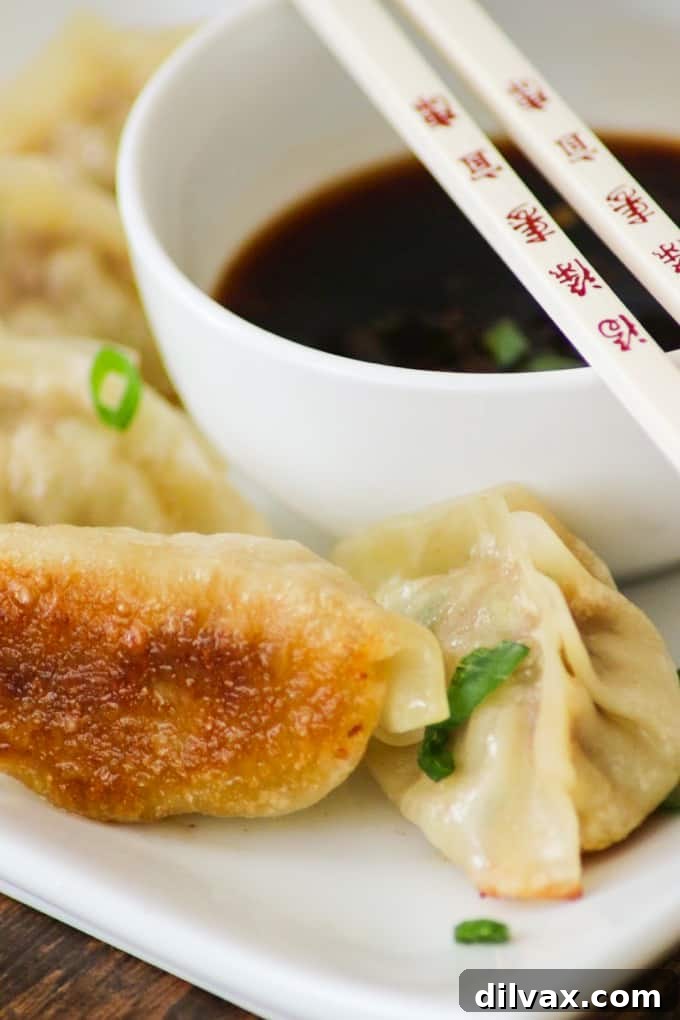
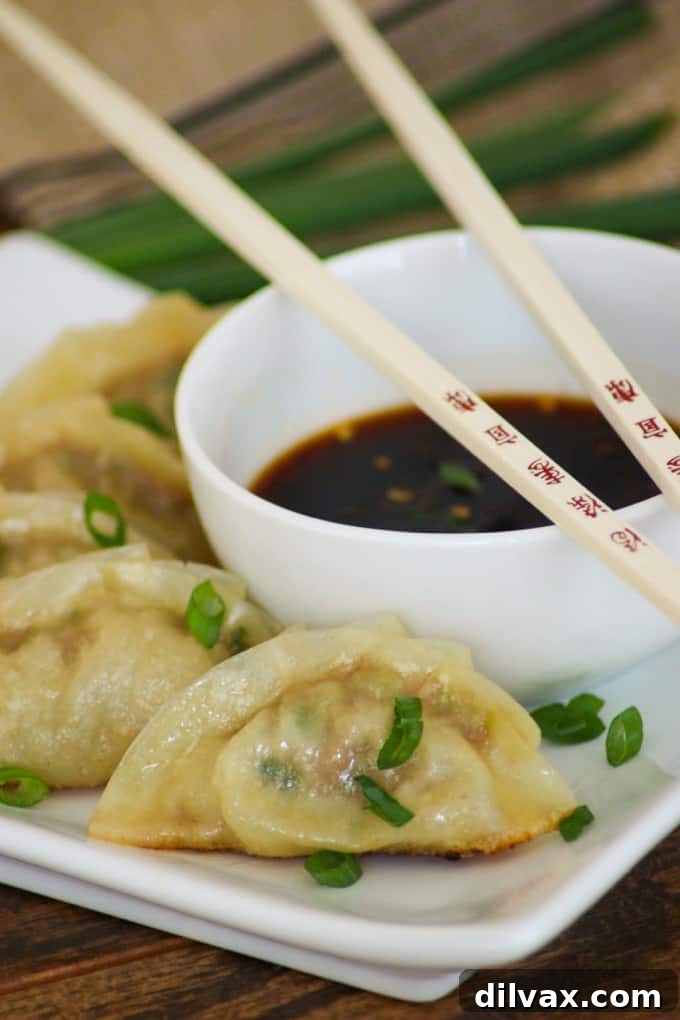
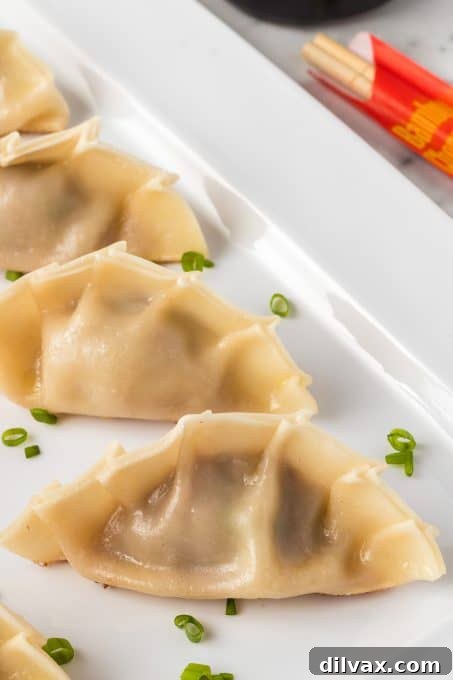
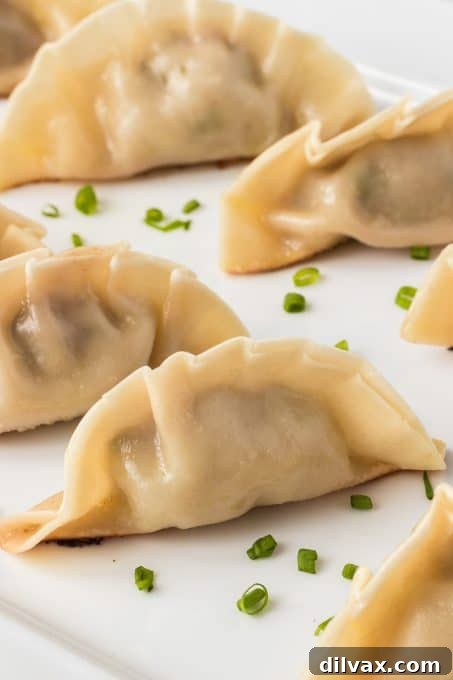
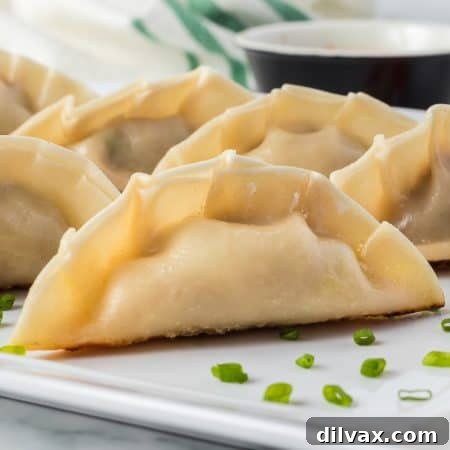
Craving authentic Asian flavors? This incredible Pork Potstickers recipe is destined to become a staple in your kitchen. Designed for simplicity without compromising on taste, these homemade potstickers are filled with a savory blend of seasoned ground pork, fresh ginger, aromatic garlic, rich soy sauce, and tender cabbage. They’re perfectly encased in a delicate wrapper, pan-fried to achieve that signature golden-brown, crispy bottom, and then steamed to juicy perfection. Whether served as a delightful appetizer or a satisfying main course, these potstickers promise a culinary experience you’ll want to revisit time and again.
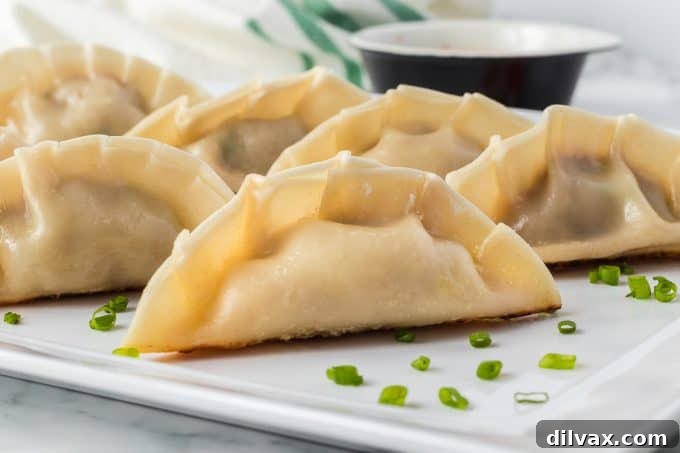
This recipe is proudly brought to you in partnership with the National Pork Board. Their commitment to quality pork makes these potstickers exceptionally delicious. As always, all opinions and enthusiasm for this dish are 100% my own. I extend my sincere gratitude for your continued support of 365 Days of Baking and More, and for embracing the brands I genuinely believe in and promote.
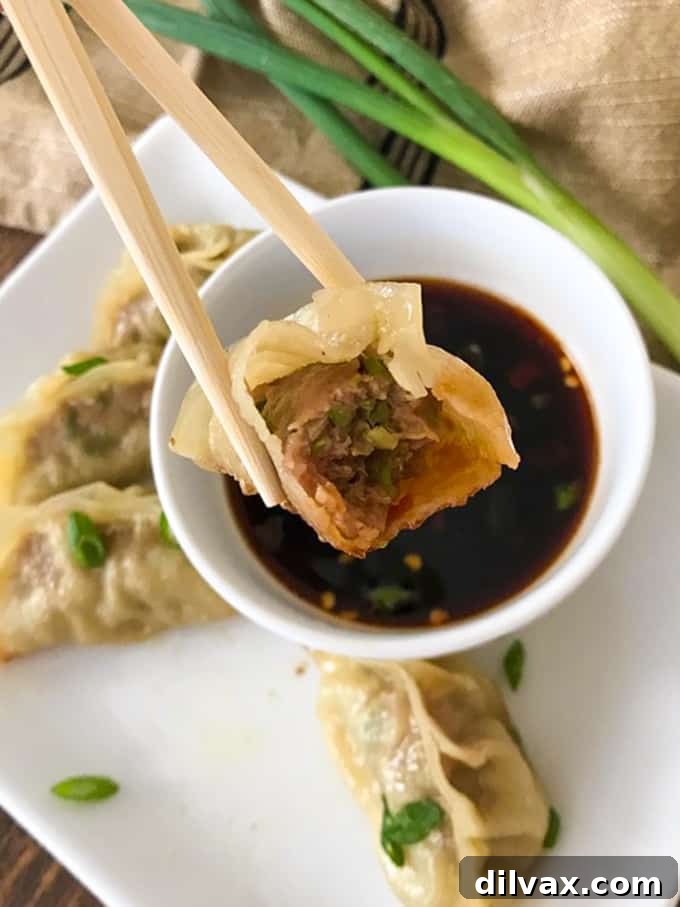
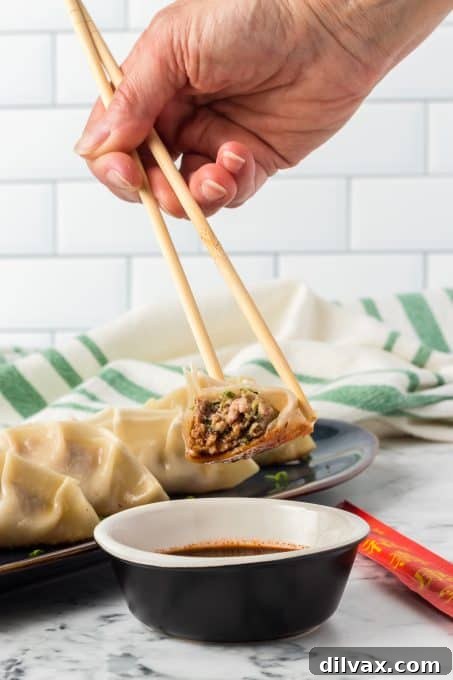
There’s something truly magical about pork potstickers. For me, it’s the exquisite contrast of the succulent, flavor-packed filling nestled within a tender dough, perfectly complemented by that irresistible, classic crispy bottom. Each bite is a symphony of textures and tastes. And let’s not forget the dipping experience: a quick dunk into a tangy, savory vinegar sauce elevates these culinary gems to an even higher level of deliciousness!
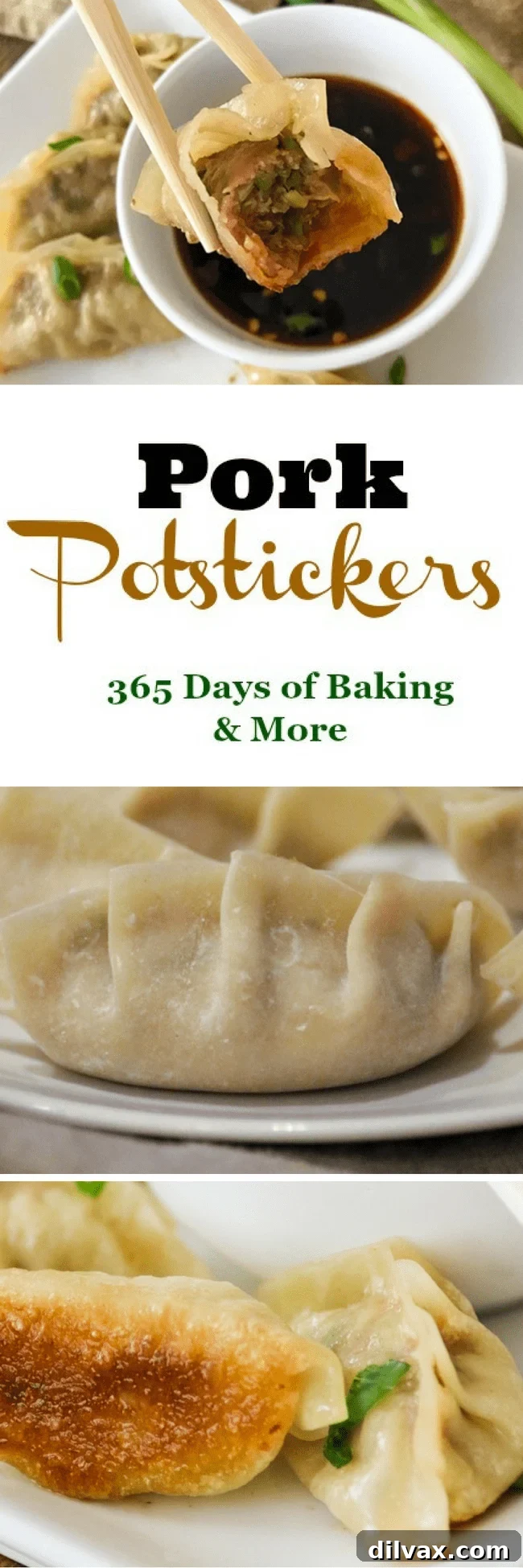
SAVE THIS DELICIOUS PORK POTSTICKERS RECIPE TO YOUR FAVORITE PINTEREST BOARD!
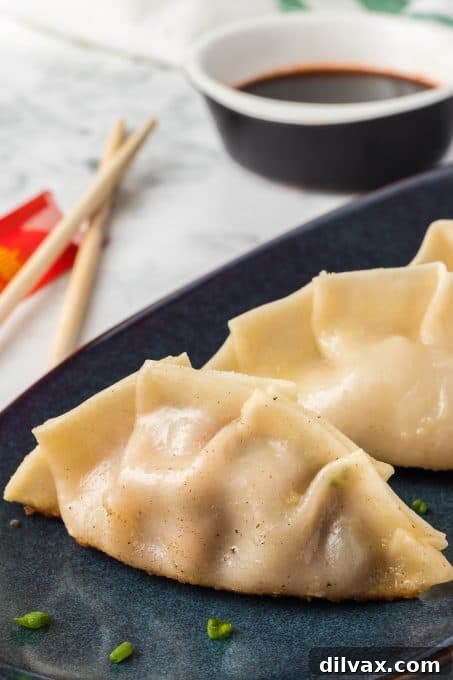
Understanding the Difference: Potstickers, Gyoza, and Dumplings
When exploring the vast and delicious world of Asian cuisine, it’s common to encounter various terms that seem interchangeable. However, knowing the nuances between dumplings, gyoza, and potstickers can enhance your appreciation and understanding of these culinary delights. While often grouped together, each boasts distinct characteristics.
Dumplings: The Broad Category
The term “dumpling” is a wonderfully broad and inclusive one, encompassing a vast array of dough-wrapped fillings found in nearly every cuisine around the globe. From Italian ravioli to Polish pierogi, and even sweet fruit dumplings, the possibilities are endless. Dumplings can be savory or sweet, and their cooking methods are just as diverse: they can be boiled, steamed, baked, fried, or even simmered in soups and stews. Essentially, if it’s a portion of dough, often wrapped around a filling, and cooked, it can be called a dumpling.
Gyoza: The Japanese Delicacy
Gyoza are a specific type of Japanese dumpling, typically characterized by their thin, delicate wrappers and finely minced fillings. These delectable pockets often contain a mix of ground meat (usually pork) and vegetables like cabbage and chives, seasoned with garlic, ginger, and soy sauce. Gyoza are most commonly prepared by pan-frying, followed by a brief steam, or simply steamed. Their smaller size and finer dough make them a lighter option compared to their Chinese counterparts, offering a crisp-tender texture that’s highly prized.
Potstickers: The Crispy Chinese Classic
Potstickers, on the other hand, are a distinctive type of Chinese dumpling, celebrated for their unique cooking method and satisfying texture. The legend behind their name is quite charming: it’s said that a chef accidentally left his boiling dumplings unattended, causing the water to evaporate and the dumplings to stick and crisp up on the bottom of the wok. This fortuitous mistake led to the creation of the beloved potsticker.
What sets potstickers apart is their wrapper, which is typically made from a slightly thicker, chewier dough than gyoza. The defining characteristic is the “fry-steam-fry” cooking technique. First, they are pan-fried until their bottoms are beautifully golden and crispy. Then, water is added, and the pan is covered to steam them, cooking the filling thoroughly and tenderizing the wrapper. Finally, the lid is removed, and any remaining water is allowed to evaporate, crisping the bottoms once more to achieve that perfect crunch. This method results in a dumpling that is simultaneously tender, juicy, and wonderfully crisp – a true potsticker experience!
Choosing the Best Pork for Your Potstickers
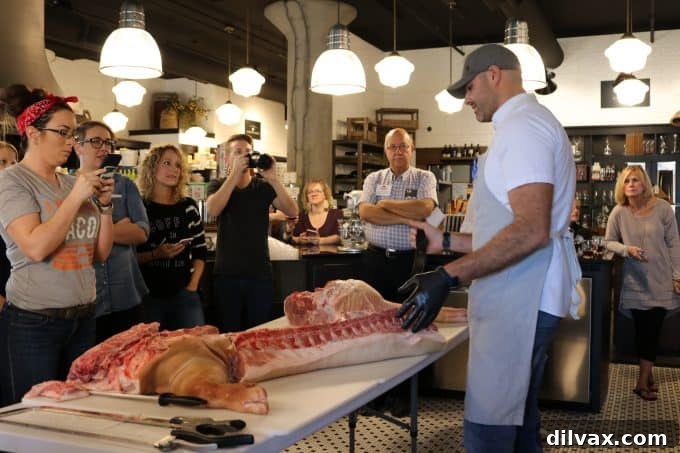
For this potsticker recipe, we rely on the versatile and flavorful ground pork. Did you know that ground pork often comes from the pork shoulder? This cut is also widely known as “butt” or “Boston Butt” – a name with an interesting historical origin.
The term “Boston Butt” dates back to colonial New England. Butchers in the region would store less expensive cuts of pork, particularly the front shoulder of the pig, in large wooden barrels. These barrels were commonly referred to as “butts.” Over time, this specific cut of pork, stored in these “butts,” became a specialty of New England and eventually became known across the country as the Boston Butt. Its balanced fat content and rich flavor make it an excellent choice for grinding, yielding a juicy and tender filling that’s perfect for potstickers. When selecting ground pork, look for a good lean-to-fat ratio (usually 70-80% lean) to ensure a flavorful and moist filling.

Essential Ingredients for Flavorful Pork Potstickers
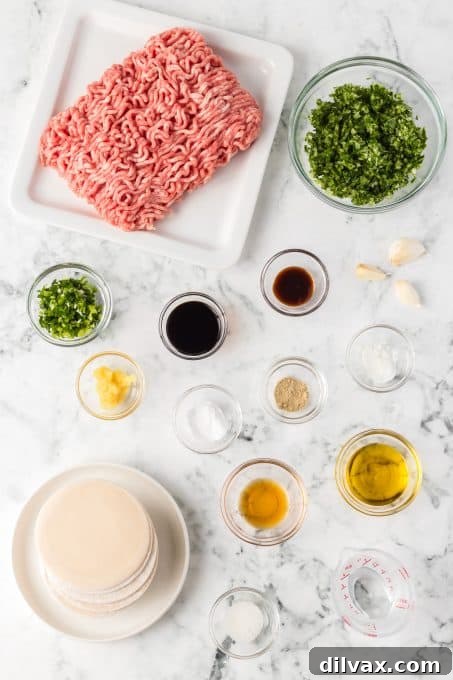
Creating truly delicious potstickers starts with a thoughtful selection of fresh, high-quality ingredients for the filling. Each component plays a vital role in building the complex, savory profile that makes these dumplings so addictive:
- Ground Pork: The star of our filling, providing a rich, tender base.
- Minced Garlic: Adds a pungent, aromatic foundation to the flavor.
- Freshly Grated Ginger: Essential for that bright, zesty, and slightly spicy kick that defines Asian dumplings. While fresh is best, dried ginger can be used in a pinch.
- Soy Sauce: Contributes deep umami and savory notes.
- Hoisin Sauce: A sweet and savory Chinese barbecue sauce that adds complexity and a beautiful glaze-like quality to the filling.
- Sesame Oil: Delivers a distinctive nutty aroma and flavor, crucial for authentic taste.
- Shredded Cabbage: Provides a pleasant crunch and subtle sweetness, balancing the richness of the pork.
- Green Onions: Adds a fresh, mild oniony flavor and a pop of color.
- Cornstarch: Acts as a binder, helping the filling hold its shape and preventing it from becoming watery, ensuring a smooth texture.
- Sugar: Balances the savory flavors and enhances the natural sweetness of the pork and cabbage.
- Baking Soda: A secret ingredient that helps tenderize the pork, resulting in an incredibly juicy and succulent filling.
- White Pepper: Offers a milder, more floral pepperiness than black pepper, commonly used in Asian cuisine to complement delicate flavors.
For the indispensable dipping sauce, you’ll whisk together low-sodium soy sauce, bright rice vinegar, and a touch of chili paste for a perfectly balanced savory, tangy, and subtly spicy accompaniment. A sprinkle of sesame seeds adds an extra layer of texture and visual appeal if desired.
Crafting the Irresistible Pork Potsticker Filling
One of the best shortcuts to making homemade potstickers is to use store-bought wrappers. You can easily find high-quality potsticker or gyoza wrappers in the refrigerated section of most Asian markets or even major grocery stores, saving you significant time and effort without sacrificing authenticity.
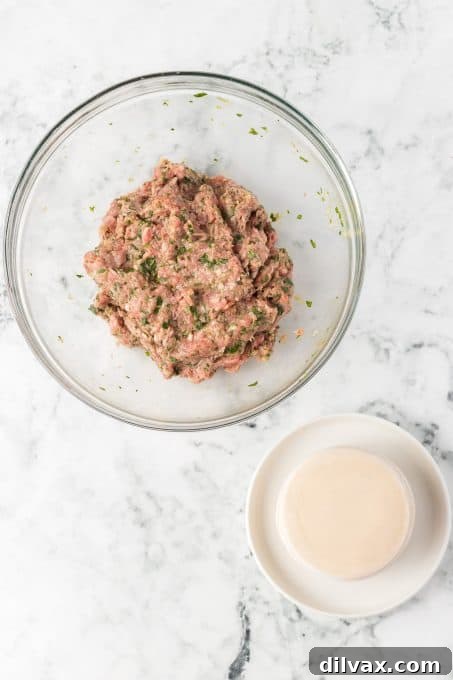
Preparing the filling is straightforward. Begin by whisking together the cornstarch, sugar, baking soda, and white pepper in a small bowl. This dry mixture is key to the texture and tenderness of your filling. Next, in a large mixing bowl, combine the ground pork with the minced garlic, soy sauce, freshly grated ginger, Hoisin sauce, sesame oil, shredded cabbage, and chopped green onions. Add the whisked cornstarch mixture to the pork and vegetable blend.
Using a wooden spoon or even your hands (gloves recommended!), mix all the ingredients thoroughly until they are well combined. It’s important to mix until you see no dry spots and the mixture has a uniform consistency. Once mixed, cover the bowl tightly with plastic wrap and refrigerate for at least 30 minutes. This chilling time is crucial as it allows the flavors to meld together beautifully and the ingredients to firm up, making the filling much easier to work with when it’s time to assemble your potstickers.
The Science Behind Cornstarch and Baking Soda in Potstickers
You might wonder about the inclusion of cornstarch and baking soda in a meat filling. These two ingredients are culinary powerhouses in this recipe. The cornstarch acts as a superb binder, helping the filling maintain its shape while cooking and preventing it from becoming loose or watery. It also contributes to a smoother, more cohesive texture. Baking soda, on the other hand, is a fantastic tenderizer. When added to ground meat, it helps to break down muscle fibers, resulting in an exceptionally juicy and tender pork filling that’s never dry or tough. Together, they ensure your potstickers are perfectly textured and bursting with flavor.
The Art of Folding Potstickers: Manual Method and Dough Press
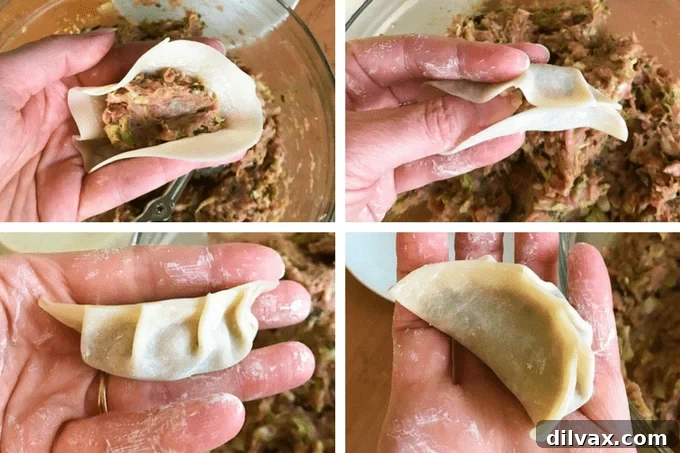
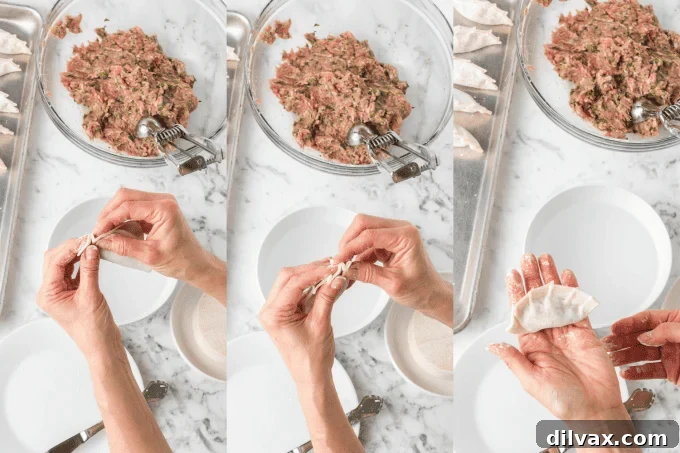
Assembling potstickers can seem daunting at first, but with a little practice, you’ll be creating beautifully pleated dumplings in no time. If you’re a visual learner, I highly recommend finding online video tutorials for folding potstickers; many resources demonstrate various techniques, including the classic pleat. These videos can be incredibly helpful in guiding your hands. Here’s a detailed written explanation for the traditional hand-folding method:
Manual Folding Technique:
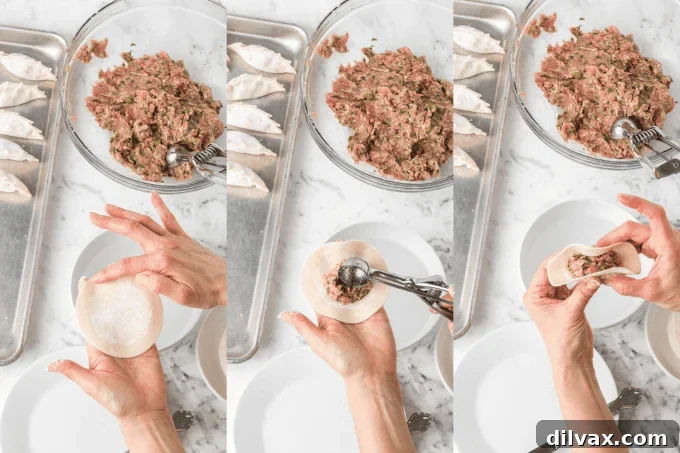
- Gently cradle one potsticker wrapper in your non-dominant hand.
- Dip a finger lightly into a small bowl of hot water and moisten the entire edge of the wrapper. This water acts as a glue, ensuring a tight seal.
- Using a small cookie scoop or two teaspoons, place approximately two teaspoons of filling into the center of the wrapper. Avoid overfilling, as this can make sealing difficult.
- Fold the wrapper in half over the filling, creating a half-moon shape. Don’t press the edges together just yet.
- Pinch one end of the wrapper securely to create a starting point for your pleats.
- Now, place the thumb of the hand holding the potsticker just above the filling, inside the wrapper. With your opposite hand, gently push the side of the wrapper furthest from you slightly towards the sealed end, creating a small fold or pleat. Grab and seal this pleat together with the other side of the wrapper.
- Continue this motion, creating three to four more pleats along one side of the potsticker, pressing the dough firmly together as you go. This will naturally form a beautiful crescent shape.
- Finally, seal the other end of the potsticker. When finished, your potstickers should have a slightly curved body, a flattened bottom (for stability in the pan), and about 4-5 neat pleats along the top edge.
Using a Dough Press for Simplicity:
If the pleating technique feels a bit intimidating, a dough press can be a fantastic tool to simplify the process and speed up assembly. Here’s how to use it effectively:
- Place a potsticker wrapper over one side of the open dough press.
- Dip your finger into a bowl of water and generously moisten the edges of the wrapper. Ensure there’s enough moisture for a complete seal.
- Place a cookie scoop of filling into the center of the wrapper on the press.
- Fold the dough press over, pressing down firmly to seal the edges of the potsticker. The press will create a crimped edge, giving your potstickers a uniform look.
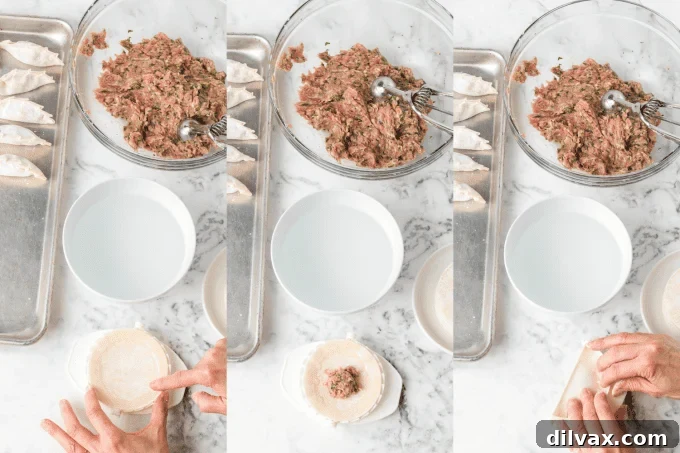
A Note on Dough Presses: While I found that using a dough press significantly sped up the assembly process, it’s crucial to ensure a strong seal. Occasionally, some edges might not stick together perfectly and could open during cooking. To prevent this, always make sure you’re adequately wetting the wrapper edges and applying sufficient pressure when closing the press. Both hand-folding and using a press yield delicious results, so choose the method that you find most enjoyable and effective!
Mastering the Fry-Steam-Fry Method for Perfect Potstickers
The distinctive “fry-steam-fry” cooking method is what gives potstickers their legendary crispy bottom and perfectly tender, juicy interior. Here’s how to achieve culinary perfection:
- When you’re ready to cook, heat a non-stick skillet over medium-high heat. Add a tablespoon of olive oil, allowing it to shimmer slightly.
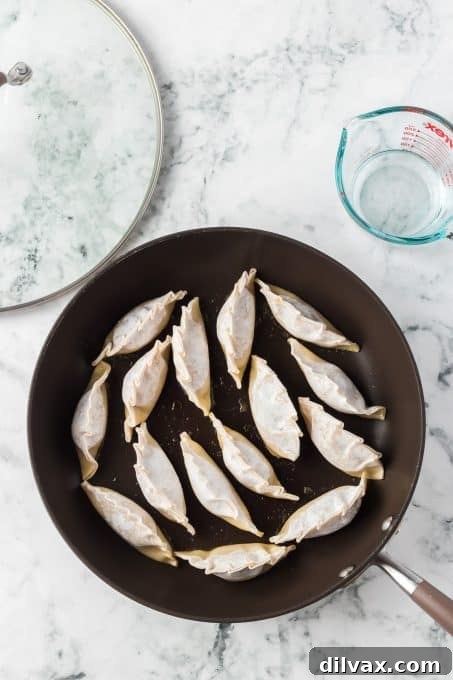
- Carefully place your assembled potstickers into the hot pan, flat side down, ensuring they are in a single layer. Do not overcrowd the pan; work in batches if necessary. In a 10-inch non-stick skillet, I can comfortably fit about 15 potstickers.
- Cook for about one minute without touching them. This initial frying develops that crucial golden-brown, crispy bottom.
- Once the bottoms are beautifully golden, carefully pour ¼ to ⅓ cup of water into the pan. Immediately cover the pan with a tight-fitting lid. (I often use ⅓ cup of water when cooking 15 potstickers at a time).
- Reduce the heat to medium and allow the potstickers to steam for 3-4 minutes, or until all the water has completely evaporated. The steam cooks the filling through and tenderizes the wrapper.
- Remove the lid and continue to cook for an additional minute. This final minute of frying ensures the bottoms are extra crispy again, after being softened by the steam.
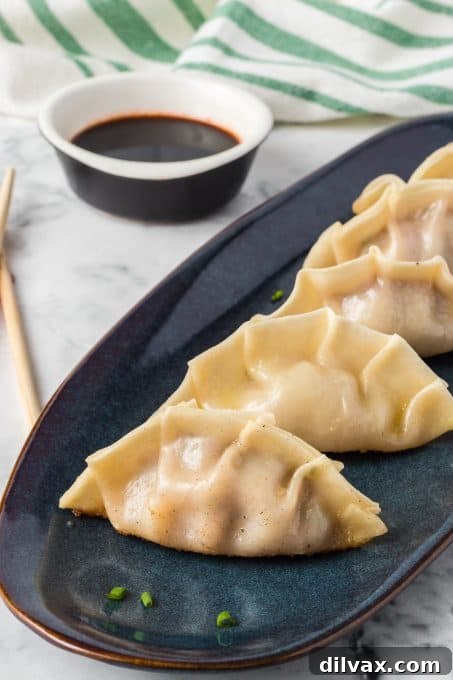
While your potstickers are cooking, quickly whisk together your dipping sauce. Drizzle a little over the finished potstickers before serving, or present it on the side for individual dipping pleasure. The combination of textures and flavors will be absolutely sublime!
Nutritional Information: How Many Calories Per Serving?
This recipe yields approximately 46 delicious potstickers. For your convenience, the nutritional information has been calculated based on a serving size of 5 potstickers per person, intended for 9 people (plus an extra one for the hardworking chef, of course!). Each serving contains approximately 285 calories, making them a satisfying and flavorful option.
Can I Make Potstickers Ahead of Time?
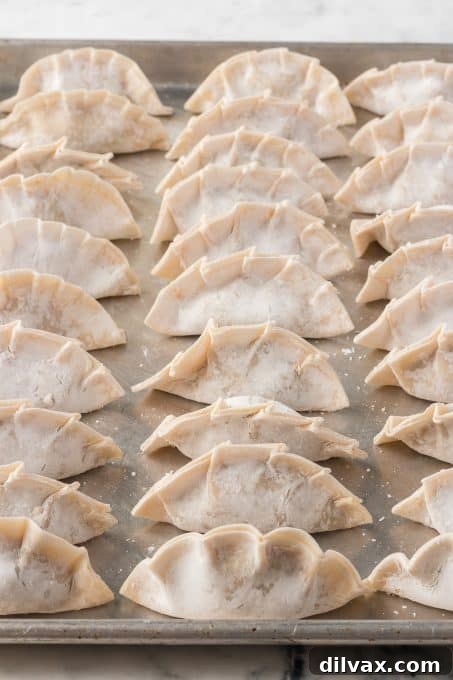
Yes, you can absolutely prepare uncooked potstickers a day in advance. Simply assemble them as instructed, then place them in a single layer on a parchment-lined baking sheet and refrigerate. Once firm, transfer them to a tightly sealed airtight container and keep them in the refrigerator. However, I recommend cooking them within two days at most. Beyond that, the uncooked dough wrappers can start to become mushy, and it’s always best to cook raw meat fillings promptly for optimal freshness and safety.
Storing Cooked Potstickers in the Refrigerator
Once your potstickers are cooked and have cooled completely, store any leftovers in an airtight container in the refrigerator. They will maintain their quality for up to 2 days. After this period, the wrappers tend to become soggy and lose their appealing texture, so it’s best to enjoy them fresh or freeze them.
Freezing Leftover Potstickers for Later Enjoyment
Freezing potstickers is an excellent way to enjoy homemade goodness whenever a craving strikes! After you’ve filled and folded them (while still uncooked), arrange them in a single layer on a parchment-lined baking sheet, ensuring they don’t touch each other. Place the baking sheet in the freezer for at least 8 hours, or until the potstickers are completely frozen solid.
Once frozen, transfer the solid potstickers to a freezer-safe plastic bag or an airtight container. They can be stored in the freezer for several months. When you’re ready to cook them, there’s no need to thaw! Simply cook them from frozen, adding a few extra minutes to the steaming time to ensure they are thoroughly cooked through. This makes for a convenient and quick meal or appetizer anytime!
If You Love Pork Potstickers, You’ll Also Enjoy These Other Delicious Pork Dishes:
- Slow Cooker Spicy Orange Pork Roast
- Jack Daniels Pork Tenderloin
- Dijon Herb Roasted Pork with Cranberry-Pear Chutney
- Sweet and Spicy Coca-Cola Shredded Pork Bites
- Rosemary Pork Medallions with Mushroom Wine Sauce
FOLLOW ME
FACEBOOK ~ PINTEREST
INSTAGRAM ~ TWITTER
YOUTUBE
Keep an eye out for more of my easy recipes each week!
Pork Potstickers
Created by: Lynne Feifer
Course: Appetizer, Dinners
Cuisine: Asian
Prep Time: 30 minutes
Cook Time: 6 minutes
Total Time: 1 hour 6 minutes
These easy Pork Potstickers with ground pork, ginger, garlic, cabbage and soy sauce wrapped in a light dough are perfect as an appetizer or main course!
Yields: 9 servings (approx. 46 potstickers total)
Ingredients
Potstickers
- 1 teaspoon cornstarch
- 1 teaspoon sugar
- ¾ teaspoon baking soda
- ¼ teaspoon white pepper
- 1 lb. ground pork
- 3 cloves garlic, minced
- 1 tablespoon soy sauce
- 1 ½ teaspoons freshly grated ginger
- 1 teaspoon Hoisin sauce
- 1 teaspoon dark sesame oil
- 1 cup shredded cabbage, chopped
- 2 green onions – greens and whites, chopped
- 50 potsticker wrappers
- Small bowl of water
- 1 tablespoon olive oil
- ¼ – ⅓ cup water
Dipping Sauce
- 3 ½ tablespoons low sodium soy sauce
- 1 tablespoon rice vinegar
- ¾ teaspoon chili paste
- Sesame seeds (if desired)
Instructions
For the Filling
- In a small bowl, whisk together the cornstarch, sugar, baking soda, and white pepper.
- In a large bowl, combine the pork, garlic, soy sauce, ginger, Hoisin sauce, sesame oil, cabbage, green onions, and the cornstarch mixture. Mix with a wooden spoon until well combined.
- Cover with plastic wrap and refrigerate for at least 30 minutes.
To Assemble (Manual Folding)
- Cradle one potsticker wrapper in your non-dominant hand. Lightly dip your finger in the bowl of water and wet all around the edge.
- Using a small cookie scoop or two teaspoons of filling, place the filling into the center of the wrapper.
- Fold the edges up, but do not put them together yet.
- Pinch one end of the wrapper together.
- Place the thumb of the hand holding the potsticker just above the filling in the wrapper. Push the side of the wrapper furthest away from you slightly towards the sealed end, grabbing and sealing it together with your opposite hand. By doing this, you’ll create a small fold each time and form a natural crescent shape.
- Do that for another three or four folds, sticking the dough together as you go and seal the other end.
- When finished, they should have a body that is slightly curved, and a flattened bottom with about 4 – 5 pleats on the top.
Instructions for Using a Dough Press
- Place a potsticker wrapper on top of the dough press. Dip your finger into the bowl of water to wet around the edge, making sure that there is enough moisture to completely seal.
- Put a cookie scoop of filling into the center of the wrapper and fold the press over. Push down hard to apply enough pressure to seal the edges.
- Note: While the dough press significantly speeds up the process, ensure you apply enough water to the edges and press down firmly to achieve a complete seal, as some edges might occasionally open during cooking otherwise.
Cooking the Potstickers
- When ready to cook, heat a non-stick skillet over medium-high heat and add the tablespoon of olive oil.
- Place the potstickers flat side down into the pan in a single layer. (A 10-inch non-stick skillet typically fits about 15 comfortably).
- Cook for one minute without touching, or until the bottoms are golden brown.
- Pour ¼ cup (or ⅓ cup for 15 potstickers) of water into the pan and immediately cover it with a lid.
- Reduce heat to medium and cook for 3-4 minutes, or until all the water has disappeared.
- Remove the lid and cook for an additional minute to re-crisp the bottoms.
To Make the Dipping Sauce
- In a small bowl, whisk together the soy sauce, rice vinegar, and chili paste.
- Drizzle with sauce over the potstickers or serve it on the side for dipping.
Notes
- This recipe makes about 46 potstickers, and nutritional information has been calculated for 5 potstickers per person.
- For visual guidance on folding, refer to online video tutorials for “How to Assemble” potstickers.
- To prevent oil spattering when adding water to the hot pan, temporarily remove the pan from the heat, add the water, and quickly cover before returning it to the burner.
Nutrition
Serving: 1 serving | Calories: 285kcal | Carbohydrates: 27g | Protein: 14g | Fat: 13g | Saturated Fat: 4g | Polyunsaturated Fat: 2g | Monounsaturated Fat: 6g | Cholesterol: 40mg | Sodium: 703mg | Potassium: 233mg | Fiber: 1g | Sugar: 1g | Vitamin A: 45IU | Vitamin C: 4mg | Calcium: 37mg | Iron: 2mg
Did you make this recipe?
Share it with me on Instagram and make sure to follow me on Pinterest for more recipes.
Pin Recipe
Share Recipe
This post was originally published November 16, 2017. It has been updated in format and with new pictures on July 5, 2023.