Indulge Guilt-Free: The Best Gluten-Free Double Chocolate Cookies for Sensitive Diets
Embarking on a new dietary journey can often feel daunting, especially when it involves beloved treats. Just a week ago, my daughter and I started an experiment: a gluten-free diet to see if it would help alleviate her acne. This shift immediately brought a craving for familiar comforts, and while pre-made mixes offer convenience, there’s nothing quite like a homemade cookie. My daughter, ever the connoisseur of baked goods, soon expressed a desire for something beyond the usual chocolate chip, a yearning for a rich, decadent gluten-free option.
Driven by her longing and my desire to support her dietary changes with delicious alternatives, I embarked on a mission to find the perfect recipe. A trip to Barnes & Noble proved fruitful, revealing an impressive selection of cookbooks catering to various special dietary needs. It’s truly encouraging to see the culinary world embracing inclusivity, making it easier for families like ours to navigate dietary restrictions without sacrificing flavor. My specific quest was for a reliable recipe from a trusted publisher, which led me to “The Gluten-Free Kitchen.” This gem, published by Three Rivers Press, a division of Random House, Inc., by author Roben Ryberg (ISBN 0-7615-2272-7), held the promise of a delightful discovery. And indeed, nestled on pages 182-183, I found exactly what we needed: a recipe for Double Chocolate Cookies that promised to be both gluten-free and utterly satisfying.
Why Go Gluten-Free? Understanding the Benefits for Health and Well-being
Before diving into the delectable details of these cookies, it’s worth exploring why many individuals, including my daughter, are opting for a gluten-free lifestyle. Gluten, a protein found in wheat, barley, and rye, can be problematic for a significant portion of the population. For those with Celiac disease, an autoimmune disorder, gluten ingestion damages the small intestine, leading to nutrient malabsorption and a host of symptoms. However, many others experience non-celiac gluten sensitivity, which can manifest in various ways, including digestive issues, fatigue, headaches, and even skin conditions.
My daughter’s journey into gluten-free eating was prompted by persistent acne. While research on the direct link between gluten and acne is still evolving, many individuals report improvements in their skin health after eliminating gluten. The theory often points to gluten’s potential to cause inflammation in the body, which can exacerbate skin conditions. By removing a potential inflammatory trigger, the body might have a better chance to heal and balance itself, leading to clearer skin. Beyond specific conditions, a well-planned gluten-free diet, rich in whole foods, can be a path towards healthier eating habits, encouraging a focus on naturally gluten-free grains, fruits, vegetables, and lean proteins. It opens up a world of new culinary experiences and a deeper understanding of food and its impact on our bodies.
Mastering the Art of Gluten-Free Double Chocolate Cookies
Finding a recipe that truly satisfies without gluten can be a culinary triumph. These Double Chocolate Cookies are more than just a sweet treat; they’re a testament to the fact that dietary restrictions don’t have to mean sacrificing flavor or texture. This recipe yields a generous batch of 3½ – 4 dozen cookies, perfect for sharing (or secretly stashing away!).
Ingredients for Your Gluten-Free Double Chocolate Delight:
- ¼ cup softened butter (ensure it’s at room temperature for optimal creaming)
- ¾ cup dark brown sugar (packed firmly for moisture and rich flavor)
- 2 egg yolks (these add richness and help with binding in gluten-free baking)
- 1 teaspoon vanilla flavoring (pure vanilla extract is always preferred for depth)
- ⅓ cup water (essential for hydration in gluten-free doughs)
- ¼ cup oil (a neutral oil like vegetable or canola works well)
- ½ cup potato starch (contributes to a tender crumb and light texture)
- ½ cup corn starch (another key for tenderness and binding without gluten)
- ¼ cup cocoa (unsweetened natural cocoa powder for intense chocolate flavor)
- ¼ teaspoon baking soda (for lift and spread)
- ½ teaspoon xanthan gum (a crucial gluten-free binder, mimicking gluten’s elasticity)
- ½ teaspoon salt (enhances all the other flavors)
- 1¼ cup semi-sweet chocolate chips (the more, the merrier for double chocolate!)
Step-by-Step Baking Guide: Crafting Your Perfect Gluten-Free Cookies
Baking gluten-free doesn’t have to be complicated, but it does sometimes require a slight adjustment in technique and understanding of how different ingredients interact. Follow these steps carefully to ensure a batch of perfectly baked, soft, and chewy double chocolate cookies.
- Prepare Your Oven: Begin by preheating your oven to 350°F (175°C). Proper preheating is essential for even baking, especially with cookies. While the oven warms up, gather all your ingredients to ensure a smooth baking process.
- Cream the Fats and Sugar: In a large mixing bowl, combine the softened butter and dark brown sugar. Using an electric mixer (handheld or stand mixer), cream them together on medium speed until the mixture is light, fluffy, and well combined. This process incorporates air, which contributes to the cookies’ texture.
- Incorporate Wet Ingredients: To the creamed butter and sugar, add the egg yolks, vanilla flavoring, water, and oil. Mix thoroughly until all these liquid components are fully incorporated into the mixture. Scrape down the sides of the bowl to ensure everything is evenly blended.
- Add Dry Ingredients (Except Chocolate Chips): Now, it’s time for the gluten-free flours and leavening agents. Add the potato starch, corn starch, cocoa powder, baking soda, xanthan gum, and salt to the wet mixture. Mix everything well. It’s particularly important with gluten-free doughs to ensure there are no lumps of starch or cocoa. Mix until a cohesive dough forms. Avoid overmixing, as this can lead to a tougher cookie, even without gluten.
- Fold in the Chocolate Chips: Gently fold in the semi-sweet chocolate chips. Use a spatula to incorporate them evenly throughout the dough without crushing them. You want those generous pockets of melty chocolate in every bite!
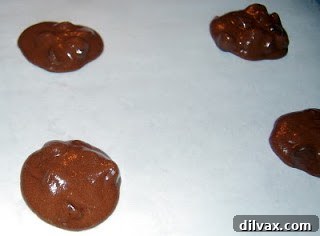
- Portion and Bake: Prepare a baking sheet by greasing it lightly or lining it with parchment paper. Drop the cookie dough by rounded teaspoonfuls onto the prepared sheet, leaving enough space between each cookie for spreading.
- Bake to Perfection: Place the baking sheet in the preheated oven and bake for 8-10 minutes. Watch them carefully, as baking times can vary slightly depending on your oven. The edges should be lightly set, and the centers might still look slightly soft. They will firm up as they cool.


Storage and Serving Tips: Keeping Your Cookies Fresh
One of the delightful characteristics of these gluten-free double chocolate cookies is how they behave after baking. They are wonderfully soft, and they tend to retain that tenderness. If you store these cookies in an airtight container, they will soften even further, becoming quite delicate. This isn’t a flaw, but rather a unique trait of gluten-free baked goods. For best results and to maintain a slightly firmer texture for serving, especially if you prefer a bit more bite:
- Airtight Storage: Yes, they will soften, but an airtight container is still the best way to keep them fresh for a few days.
- Revitalizing Soft Cookies: If you find them too soft from storage, simply give them a few minutes of exposure to air before serving. This allows some moisture to evaporate, firming them up slightly.
- Freezing Extras: These cookies freeze beautifully! Once completely cooled, place them in a single layer on a baking sheet and freeze until solid. Then transfer them to a freezer-safe bag or container, separating layers with parchment paper. They can be stored for up to 2-3 months. Thaw at room temperature or warm gently in the oven for a freshly baked experience.
My Family’s Honest Review: A Daughter’s Delight and a Mother’s Perspective
The moment of truth arrived when my daughter tasted her first homemade gluten-free double chocolate cookie. She loved them! Using her unique rating system of 1-4, with 4 being the absolute best, she enthusiastically awarded them “3 rolling pins.” This is high praise from a discerning young lady, especially when adapting to new dietary constraints. Her positive reaction was truly rewarding, confirming that our baking experiment was a success in her eyes.
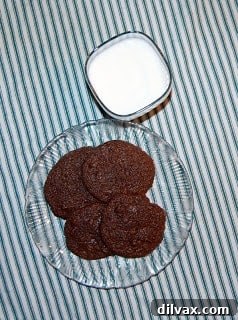
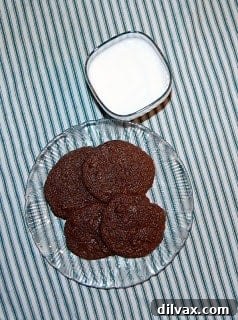
From my perspective, as the baker and chief taste-tester, I found them to be quite good, albeit distinctly different from traditional wheat-based cookies. They certainly offered a rich chocolate flavor, which was exactly what we were aiming for. The texture was noticeably flatter than most cookies I’ve baked in the past, a characteristic that is somewhat visible in the accompanying photographs. This flatter profile is quite common in gluten-free baking. Without the elastic network provided by gluten, doughs tend to spread more during baking, resulting in a less puffy, yet often wonderfully chewy, cookie. This difference in texture is something new gluten-free bakers quickly learn to embrace.
Beyond the Recipe: Gluten-Free Baking Essentials and Tips
Venturing into gluten-free baking can be a rewarding journey, and armed with the right knowledge, it becomes much less intimidating. Here are a few essential tips for those just starting out, or for anyone looking to refine their gluten-free baking skills:
- Embrace Blends: Gluten-free baking often relies on a combination of different flours and starches (like potato starch, corn starch, tapioca starch, rice flour, almond flour, etc.) to achieve the desired texture and balance. Don’t be afraid of recipes that call for multiple types.
- The Power of Binders: Ingredients like xanthan gum (as used in this recipe) and guar gum are vital in gluten-free baking. They mimic the elasticity and binding properties of gluten, preventing your baked goods from being crumbly. Follow recipe instructions for their amounts, as too much can result in a gummy texture.
- Measure Accurately: Especially with gluten-free flours and starches, accuracy is key. Using a kitchen scale to weigh ingredients is often more precise than volumetric cup measurements, leading to more consistent results.
- Hydration is Different: Gluten-free doughs and batters often require more liquid than their traditional counterparts. They can also feel different – sometimes more crumbly before baking, or stickier. Trust the recipe!
- Don’t Overmix: While gluten-free doughs don’t develop gluten (which can make traditional baked goods tough when overmixed), overmixing can still incorporate too much air or negatively affect the texture. Mix until just combined.
- Give it a Rest: Sometimes, letting your gluten-free dough rest for 15-30 minutes before baking allows the flours to fully hydrate, improving the final texture.
- Adjust Expectations: Gluten-free baked goods will often have a slightly different texture or appearance than their gluten-containing cousins. Embrace these differences and enjoy them for what they are – delicious and inclusive treats!
Conclusion: The Joy of Baking for Everyone
This journey into gluten-free double chocolate cookies started with a simple request from my daughter and blossomed into a delightful baking experience. It underscores the importance of adapting and finding creative solutions to support the health and happiness of our loved ones. Whether you’re exploring gluten-free options for health reasons, dietary sensitivities, or simply out of curiosity, this recipe offers a fantastic starting point for a truly indulgent treat.
The smiles these cookies brought to my daughter’s face, coupled with the satisfaction of creating something delicious from scratch that fits her dietary needs, was immeasurable. So, gather your ingredients, preheat your oven, and prepare to fill your home with the irresistible aroma of freshly baked double chocolate cookies. Happy baking, and may your kitchen be a place of endless delicious discoveries for everyone!