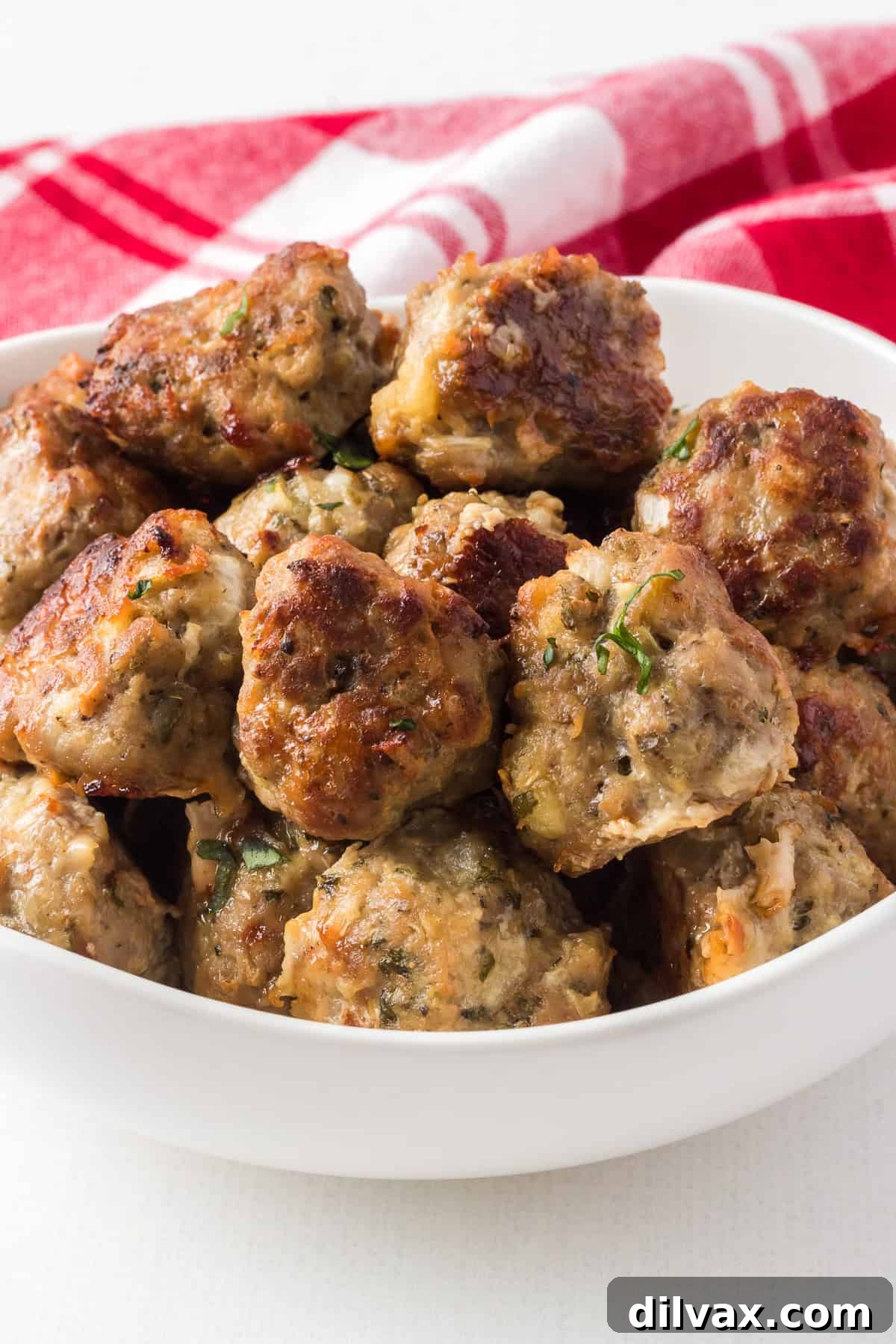
Indulge in the heartwarming comfort of classic Homemade Meatballs, a recipe designed to become a cherished family favorite. Forget store-bought alternatives; these tender, incredibly flavorful meatballs elevate any meal, whether nestled in a rich pasta sauce, served in a satisfying sub sandwich, or enjoyed simply on their own with a side of fresh vegetables. Get ready to transform your kitchen into a haven of delicious aromas and create meatballs that truly taste like home.
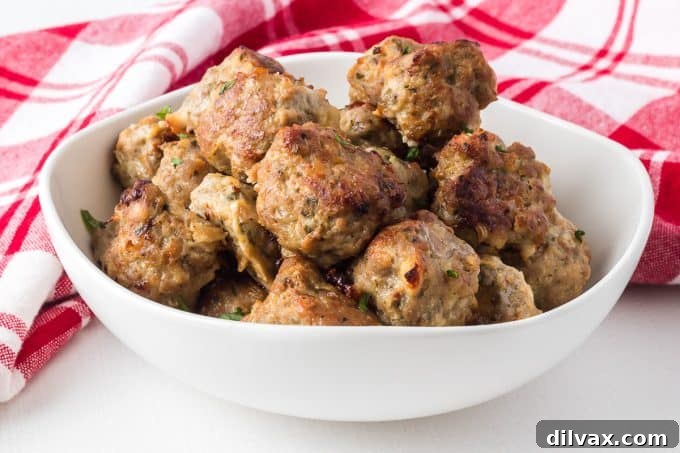
Why Choose Homemade Meatballs Over Store-Bought?
While frozen meatballs offer undeniable convenience, especially on busy weeknights, there’s an undeniable magic in preparing them from scratch. This homemade meatball recipe isn’t just about saving money; it’s about unlocking a depth of flavor and a superior texture that pre-made options simply can’t match. Here’s why making your own meatballs is always the better choice:
- Unparalleled Flavor & Texture Control: When you craft meatballs at home, you dictate every ingredient. This allows for precise seasoning adjustments, ensuring they align perfectly with your family’s preferences and dietary needs. You can choose premium cuts of meat and fresh herbs, leading to a much richer, more nuanced flavor profile.
- Superior Tenderness and Moisture: The right blend of ingredients, such as milk-soaked breadcrumbs and eggs, is crucial for achieving that melt-in-your-mouth tenderness. Homemade meatballs are inherently more delicate and juicy than their often dense and dry store-bought counterparts. This recipe ensures your meatballs stay wonderfully moist from the inside out.
- The Joy of Home Cooking: There’s immense satisfaction in creating a meal from scratch. Rolling meatballs by hand can be a surprisingly therapeutic and rewarding experience, allowing you to infuse your cooking with a special touch of care and love that truly enhances the dining experience for everyone at the table.
- Healthier Choices: By preparing your own, you can avoid preservatives, artificial flavors, and excessive sodium often found in commercially produced products. You have the power to select organic ingredients, leaner meat blends, and control the fat content, making them a healthier option for your family.
- Customization Options: From mild to spicy, savory to herbaceous, homemade meatballs are a blank canvas for culinary creativity. Want to sneak in some extra vegetables? Crave a hint of smoky flavor? The possibilities are endless, making this recipe incredibly versatile.
SAVE THIS RECIPE FOR THE BEST HOMEMADE MEATBALLS TO YOUR FAVORITE PINTEREST BOARD!
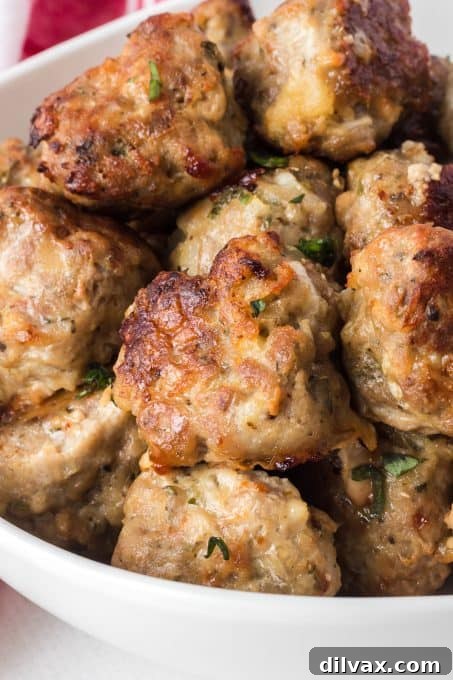
Meatball Recipe Variations and Customizations
One of the best aspects of this homemade meatball recipe is its adaptability. Don’t hesitate to experiment with different ingredients and flavor profiles to suit your taste or what you have on hand. Here are some popular variations:
- Meat Blend Alternatives: The original recipe calls for a “meatloaf mix” (a combination of ground beef, veal, and pork) for optimal flavor and texture. If this isn’t available, you can easily create your own blend using 8 ounces each of ground beef, ground veal, and ground pork. Alternatively, for a richer flavor, you could use a 50/50 mix of ground beef and ground Italian sausage.
- Leaner Options: For a lighter, healthier version, substitute the meatloaf mix with ground turkey or ground chicken. Just be sure to check out a dedicated Turkey Meatballs recipe, as the fat content differs and may require slight adjustments to binders to maintain moisture.
- Hidden Veggies for Extra Nutrition: Boost the nutritional value and add extra moisture by incorporating finely grated or chopped vegetables into the meat mixture. Onions, carrots, zucchini, bell peppers, or even spinach (squeezed dry) are excellent choices. They blend seamlessly, adding flavor and nutrients without anyone suspecting – a great trick for picky eaters!
- Spice It Up: For those who enjoy a little heat, introduce a spicy kick. Add crushed red pepper flakes, a dash of cayenne pepper, chili powder, or your favorite hot sauce directly into the meat mixture. Adjust the quantity to achieve your desired level of spice.
- Herb and Cheese Exploration: While this recipe uses classic Italian herbs and Parmesan, feel free to experiment. Try fresh dill, thyme, or rosemary. Swap Parmesan for Pecorino Romano for a sharper taste, or add some shredded mozzarella or provolone for a cheesy center.
- Gluten-Free Option: If you’re avoiding gluten, simply replace the bread with gluten-free bread, gluten-free breadcrumbs, or alternative binders like finely ground oats or almond flour. Ensure your other ingredients are also gluten-free.
Essential Ingredients for Tender, Flavorful Homemade Meatballs
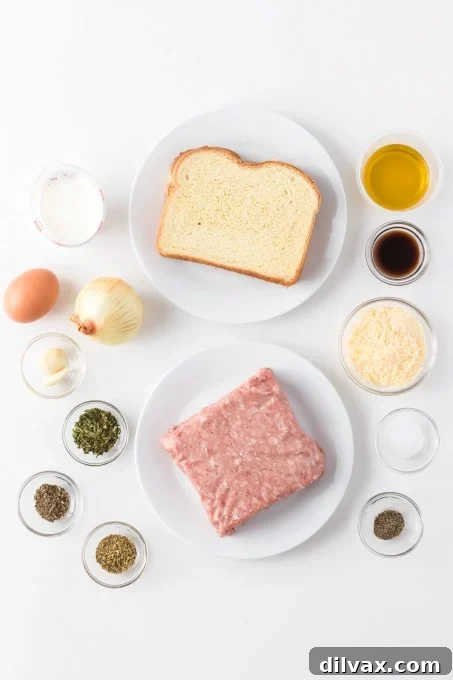
Crafting the perfect homemade meatballs requires a thoughtful selection of fresh, high-quality ingredients. Each component plays a vital role in achieving that desirable moist texture and rich, savory flavor. Here’s a closer look at what you’ll need and why each element is important:
- Bread (crusts removed): This acts as a binder and moisture retainer. Soaking the bread in milk creates a “panade” which is key to incredibly tender meatballs, preventing them from becoming dry and dense. Any white bread, such as potato bread, works wonderfully.
- Milk: Used to soak the bread, the milk adds essential moisture, making the meatballs exceptionally juicy and tender. You can use whole milk, low-fat milk, or even a dairy-free alternative if preferred.
- Meatloaf Mix (Ground Beef, Veal, and Pork): This classic combination is the secret to rich, complex flavor and perfect texture. The beef provides robust flavor, veal adds tenderness, and pork contributes moisture and richness. If a pre-mixed blend isn’t available, simply combine equal parts of each ground meat.
- Freshly Shredded Parmesan Cheese: Skip the pre-grated bottled stuff for this recipe; freshly shredded Parmesan cheese offers a far superior, sharper, and saltier flavor that truly enhances the meatballs. It also contributes to the binding and texture.
- Onions (minced): Finely minced fresh onion provides aromatic depth and a subtle sweetness, balancing the richness of the meat. Ensure they are very finely minced so they meld seamlessly into the mixture.
- Garlic (minced): Essential for that classic Italian-American flavor profile, fresh minced garlic delivers a pungent, savory punch. Don’t skimp on this!
- Worcestershire Sauce: A secret weapon for umami flavor! Just a couple of teaspoons deepen the savory notes of the meat and add a layer of complexity that makes these meatballs irresistible.
- Dried Herbs (Parsley, Basil, Oregano): These classic Italian herbs are crucial for the aromatic backbone of your meatballs. While dried herbs are convenient, you can certainly use fresh. Remember the general rule of thumb: use three times the amount of fresh herbs for every measure of dried herbs (e.g., 2 teaspoons dried parsley = 6 teaspoons fresh parsley). Fresh herbs will impart a brighter, more vibrant flavor.
- Kosher Salt and Freshly Ground Black Pepper: Proper seasoning is paramount. Kosher salt provides a clean, even saltiness, and freshly ground black pepper adds a pungent kick. Adjust to your taste preferences.
- Large Eggs (lightly beaten): Eggs act as a binder, holding all the ingredients together and preventing the meatballs from falling apart during cooking. They also contribute to the overall moisture.
- Olive Oil: Used for browning the meatballs before baking, olive oil adds flavor and helps create a beautiful golden-brown crust, locking in juices and adding texture.
For precise measurements of each ingredient, please refer to the detailed recipe card below.
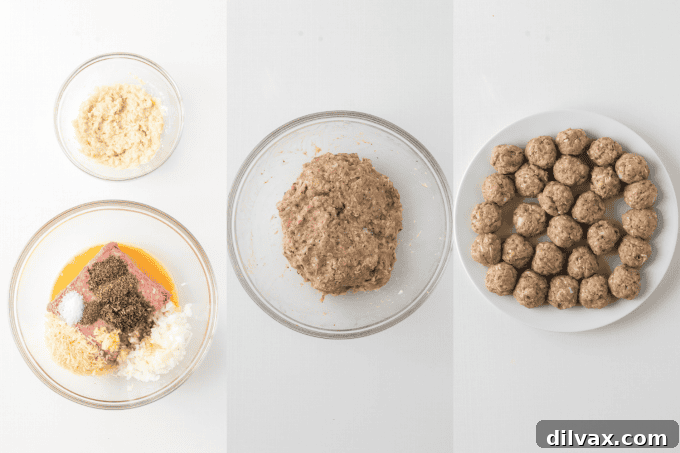
How to Make The Best Homemade Meatballs in the Oven
Creating these tender and flavorful meatballs is a straightforward process that’s both fun and rewarding. Follow these steps to achieve perfectly baked meatballs:
Step 1: Prepare the Panade and Meat Mixture
- In a small bowl, place the bread slices and pour the milk over them. Let the bread soak for about 5 minutes until it’s fully saturated and softened. This step is crucial for moisture.
- While the bread is soaking, combine the meatloaf mix, freshly shredded Parmesan cheese, Worcestershire sauce, minced onion, minced garlic, dried parsley, dried basil, dried oregano, kosher salt, freshly ground black pepper, and the lightly beaten egg in a large mixing bowl.
- Once the bread is soft, mash it with a fork to form a smooth paste. Add this bread paste to the meat mixture.
- Using your hands (this is the easiest and most effective method!), gently mix all the ingredients together until just combined. Be careful not to overmix, as this can lead to tough meatballs.
- For optimal flavor development, cover the bowl with plastic wrap and refrigerate the meat mixture for at least two hours. This allows the flavors to meld beautifully. However, if you’re short on time, you can proceed directly to forming the meatballs.
Step 2: Form the Meatballs
- Lightly dampen your hands with water or a little olive oil to prevent sticking. Using a cookie scoop (approximately 2 tablespoons in size) or your hands, portion out the meat mixture.
- Gently roll each portion between your palms to form uniform, round meatballs. Aim for consistency in size to ensure even cooking. Place the formed meatballs on a clean plate or baking sheet as you go.
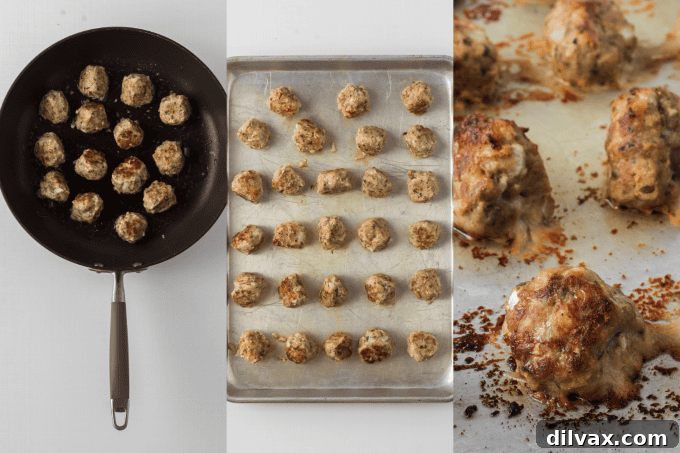
Step 3: Cook and Bake the Meatballs
- Preheat your oven to 350°F (175°C). Prepare a large baking sheet by lightly greasing it or lining it with parchment paper for easy cleanup.
- Heat 1 to 2 tablespoons of olive oil in a large skillet over medium heat. Once hot, carefully place half of the meatballs into the skillet, ensuring not to overcrowd the pan.
- Brown the meatballs on all sides for a few minutes until they develop a nice golden-brown crust. This step adds immense flavor and helps them hold their shape.
- Transfer the browned meatballs to the prepared baking sheet. Repeat the browning process with the remaining meatballs, adding more olive oil to the skillet if needed.
- Once all meatballs are browned and on the baking sheet, transfer the sheet to the preheated oven. Bake for 20-25 minutes, or until the internal temperature reaches 160°F (71°C) and they are cooked through.
Step 4: Serve and Enjoy!
- These versatile meatballs are ready to be enjoyed in countless ways! Serve them hot over a bed of your favorite pasta, generously coated in marinara sauce.
- For a hearty meal, tuck them into toasted sub rolls with melted provolone cheese to make Homemade Meatball Subs.
- Alternatively, enjoy them on their own as an appetizer or a main course, sprinkled with extra freshly grated Parmesan cheese and a side of crusty garlic bread or a fresh green salad.
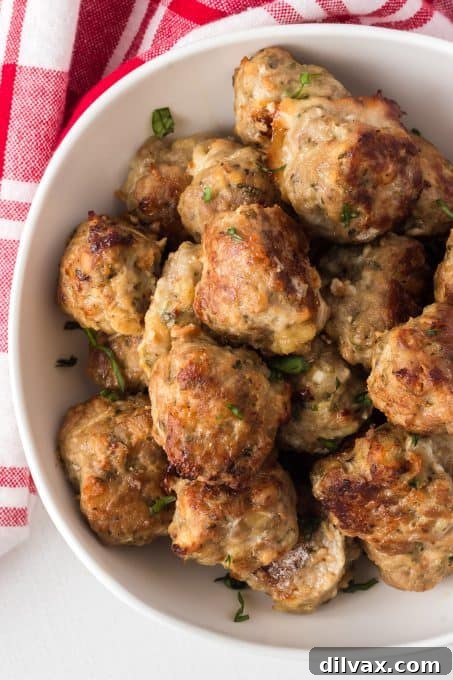
Expert Tips for Perfect Homemade Meatballs Every Time
Achieving consistently delicious and tender meatballs is simple if you keep a few key tips in mind:
- Don’t Overmix the Meat: This is perhaps the most crucial tip. Overworking the meat mixture develops the proteins, resulting in tough, dense meatballs. Mix just until all ingredients are evenly combined, then stop. Use a gentle hand or a light touch.
- Embrace the Meat Mixture: The combination of ground beef, veal, and pork is a traditional Italian-American choice for a reason. Beef provides flavor, veal adds tenderness, and pork ensures moisture and richness. This blend creates the best overall texture and taste. Don’t skip it if you can help it!
- Moisture is Key: Ingredients like the milk-soaked bread (panade) and eggs are essential for keeping the meatballs moist and tender. They prevent the meat from drying out during cooking, ensuring a juicy bite every time.
- Avoid Overcrowding the Pan: When browning your meatballs, cook them in batches in a single layer. Overcrowding lowers the pan’s temperature, causing the meatballs to steam instead of brown, which means they won’t develop that delicious crust.
- Chilling the Mixture: While optional if you’re in a hurry, chilling the meat mixture for at least 30 minutes (or up to 2 hours) allows the flavors to meld and helps the meatballs hold their shape better during cooking.
- Uniform Size Matters: Use a cookie scoop or simply eyeball your portions to ensure all meatballs are roughly the same size. This guarantees even cooking, so you don’t end up with some overcooked and some undercooked.
- Internal Temperature Check: For food safety and optimal tenderness, use a meat thermometer to ensure your meatballs reach an internal temperature of 160°F (71°C). They will be tender, but fully cooked.
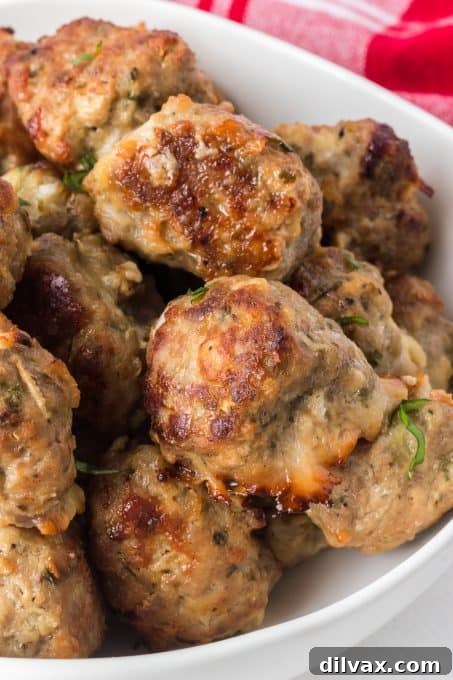
Frequently Asked Questions (FAQs) About Homemade Meatballs
Can I use just one kind of meat for my meatballs?
Absolutely, you can use a single type of ground meat if you prefer. However, using a combination like beef, veal, and pork creates a richer, more complex flavor and a superior, more tender texture. If you opt for just one, ground beef is a popular choice, but for leaner meatballs, ground turkey or chicken works well (though you might need to adjust for moisture).
Can I make homemade meatballs without bread as a binder?
Yes, you can. If you need a gluten-free option or simply prefer not to use bread, alternatives like rolled oats (finely ground), crushed gluten-free crackers, or almond flour can act as binders. Just make sure to adjust the liquid content slightly, as different binders absorb moisture differently.
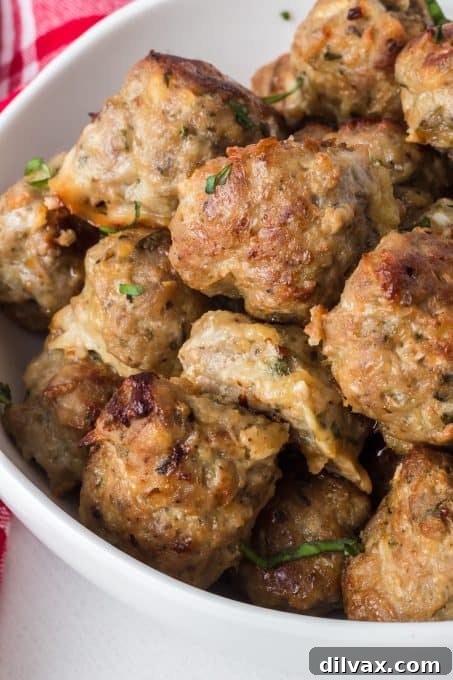
How do I keep the meatballs from falling apart during cooking?
Several factors contribute to meatballs holding their shape. Ensure you use enough binder (like eggs and the milk-soaked bread) but don’t overmix. Gently combining the ingredients helps prevent crumbling. Chilling the meat mixture before forming and cooking also helps them firm up and maintain their structure. Finally, a good initial sear in a hot skillet helps create a crust that reinforces their shape.
How do I know when the meatballs are cooked through?
The most reliable way is to use a meat thermometer. Insert it into the center of a meatball; it should read an internal temperature of 160°F (71°C) for ground meat. Alternatively, you can cut one open to check that there’s no pink remaining in the center. Don’t be fooled by their tenderness; perfectly cooked homemade meatballs can feel very soft, which is a sign of their juicy, non-overcooked state!
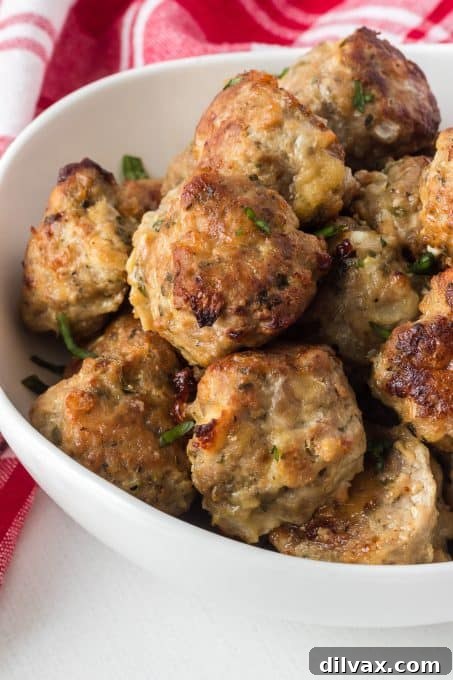
Can I make meatballs ahead of time?
Absolutely! Meatballs are fantastic for meal prepping. You can prepare the meat mixture and form the meatballs, then refrigerate them uncooked for up to 24 hours. When ready to cook, proceed with browning and baking as usual. For longer storage, freeze uncooked meatballs by placing them in a single layer on a baking sheet until solid, then transfer them to a freezer-safe bag or container. This prevents them from sticking together. They can be frozen for up to 3 months.
How do I store and reheat leftover Baked Meatballs?
Store any leftover cooked meatballs in an airtight container in the refrigerator for 2-3 days. For longer storage, freeze cooked meatballs in freezer bags or containers for up to 3 months. To reheat, you can warm them in the oven at 350°F (175°C) for about 15-20 minutes, or gently simmer them in your favorite sauce on the stovetop until heated through. This helps them retain their moisture and flavor.
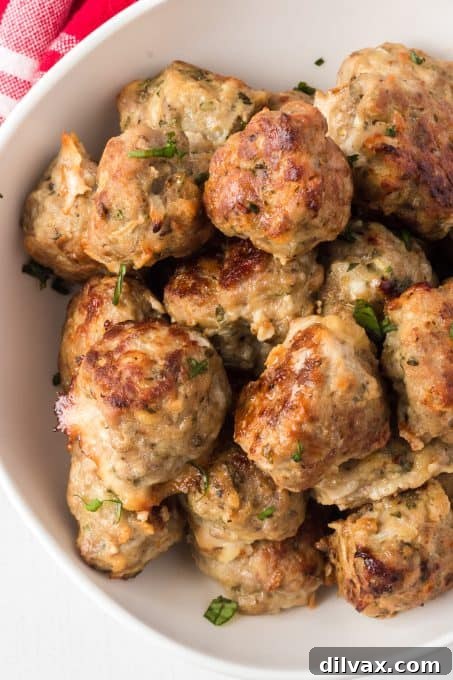
Delicious Ways to Enjoy Your Homemade Meatballs
Once you’ve mastered this classic homemade meatball recipe, a world of culinary possibilities opens up! These versatile meatballs are fantastic on their own, but they truly shine when incorporated into other dishes. Here are some favorite ways to serve them:
- Spaghetti and Meatball Braid: A creative and delicious twist on classic spaghetti and meatballs, perfect for a family dinner or potluck.
- Homemade Meatball Subs: Pile them high on a crusty roll with marinara sauce and melted cheese for an incredibly satisfying sandwich experience.
- Classic Spaghetti and Meatballs: The quintessential comfort meal. Serve with your favorite pasta and a rich, slow-simmered tomato sauce.
- Meatball Pizza Topping: Slice them in half or quarters and scatter over a pizza before baking for a hearty, flavorful topping.
- Meatball Appetizers: Serve warm meatballs in a Crock-Pot with a sweet and savory sauce (like grape jelly and chili sauce) for an easy party appetizer.
- Meatball & Polenta: Spoon meatballs and sauce over creamy polenta for a rustic, comforting Italian dish.
- Meatball Soup: Add smaller meatballs to a hearty vegetable or Italian wedding soup.
And don’t stop there! Explore different flavor profiles with these inspired meatball recipes:
- Easy Cranberry Meatballs: A festive and tangy option, often served as an appetizer.
- Mozzarella Stuffed Meatballs: A delightful surprise of gooey cheese in the center of each bite.
- Buffalo Chicken Meatballs: For a spicy, zesty twist, perfect for game day.
- Swedish Meatballs: A creamy, savory classic often served with lingonberry jam.
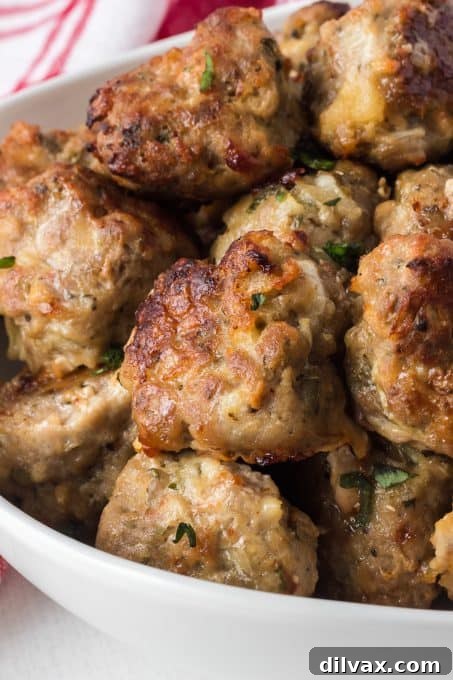
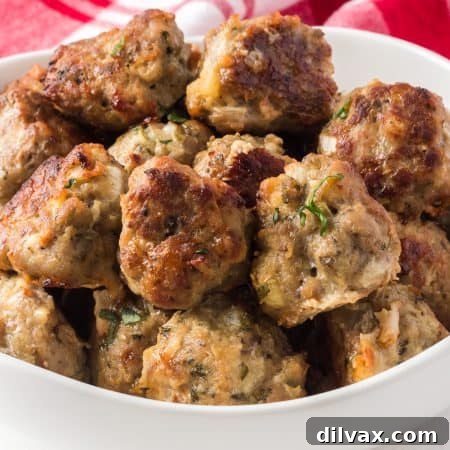
Homemade Meatballs
Course: Main Course
Cuisine: American
Prep Time: 20 minutes
Cook Time: 45 minutes
Total Time: 3 hours 5 minutes (includes chilling time)
Created by: Lynne Feifer
Summary
Enjoy a bit of comfort food with this classic Homemade Meatballs recipe that’s sure to become a family favorite. These tender, flavorful meatballs are perfect with pasta, in a sub, or just with a side of veggies.
Servings: 6
Ingredients
- 2 slices of bread (crust removed, cut into small pieces – potato bread or any white bread works well)
- ¼ cup milk
- 16 ounces meatloaf mix (a combination of ground beef, veal, and pork. See notes for alternative if unavailable)
- ⅓ cup freshly shredded Parmesan cheese (not pre-grated)
- 1 small onion (minced)
- 2 large garlic cloves (minced)
- 2 teaspoons Worcestershire sauce
- 2 teaspoons dried parsley (or 6 teaspoons fresh, minced)
- 1 ¼ teaspoons dried basil (or 3 ¾ teaspoons fresh, minced)
- 1 ¼ teaspoons dried oregano (or 3 ¾ teaspoons fresh, minced)
- 1 teaspoon kosher salt
- ¼ teaspoon freshly ground black pepper
- 1 large egg (lightly beaten)
- 4 tablespoons olive oil
Instructions
- Place the bread in a small bowl and pour the milk over it. Allow it to soak for 5 minutes until soft.
- In a large bowl, combine the meatloaf mix, Parmesan cheese, Worcestershire sauce, onion, garlic, parsley, basil, oregano, salt, pepper, and the beaten egg.
- Mash the soaked bread mixture to form a paste and add it to the meat mixture. Combine all ingredients thoroughly, preferably with your hands, being careful not to overmix.
- Cover the bowl with plastic wrap and place in the fridge for two hours. This step helps the flavors meld, but can be skipped if you’re short on time.
- Preheat your oven to 350°F (175°C). Lightly grease a large baking sheet.
- Form the meatballs: Using about 2 tablespoons of the mixture for each, roll the meatball mixture into round balls with your hands.
- Heat 1 to 2 tablespoons of olive oil in a large skillet over medium heat. Brown half of the meatballs for a few minutes on each side until golden. Transfer the browned meatballs to the prepared baking sheet.
- Repeat the browning process with the remaining meatballs, adding more olive oil if necessary, and then transfer them to the baking sheet.
- Place the cookie sheet in the oven and bake for 20-25 minutes, or until the internal temperature reaches 160°F (71°C) and they are cooked through.
- Serve warm with your favorite sauce, pasta, or in a sandwich.
Notes
- Meatloaf Mix Alternative: If you cannot find the 16-ounce meatloaf mix, you can create your own by using 8 ounces each of ground beef, ground veal, and ground pork. If doing so, adjust the following ingredients: 3 slices white bread, 1/3 cup milk, 1/2 medium onion, 1/2 cup shredded Parmesan cheese, 3 cloves garlic, 1 tablespoon parsley, 1 1/2 teaspoons basil, 1 1/2 teaspoons oregano, 1 tablespoon Worcestershire sauce, 1 1/4 teaspoons kosher salt, and 1/2 teaspoon pepper. Follow the instructions as listed above. This will yield slightly more meatballs.
- Nutritional Information: The nutritional information provided is calculated based on 4 meatballs per serving, with a few extra meatballs expected from the recipe.
Nutrition Information (Approximate per serving)
- Serving Size: 1 serving
- Calories: 286 kcal
- Carbohydrates: 3 g
- Protein: 20 g
- Fat: 23 g
- Saturated Fat: 6 g
- Polyunsaturated Fat: 1 g
- Monounsaturated Fat: 8 g
- Trans Fat: 0.003 g
- Cholesterol: 89 mg
- Sodium: 574 mg
- Potassium: 76 mg
- Fiber: 0.4 g
- Sugar: 1 g
- Vitamin A: 118 IU
- Vitamin C: 1 mg
- Calcium: 97 mg
- Iron: 2 mg
Made these delicious meatballs?
Share your culinary creations with me on Instagram! Don’t forget to follow me on Pinterest for even more mouth-watering recipes and inspiration.
Pin Recipe
Share Recipe