The open road, a symbol of freedom and adventure, can sometimes transform into a crucible of frustration, especially when navigating multi-lane highways. During a recent drive to my son’s volleyball camp, a familiar annoyance resurfaced with full force: drivers who stubbornly occupy the high-speed lane without any intention of passing. This isn’t just a minor pet peeve; it’s a widespread habit that can disrupt traffic flow, heighten road rage, and even pose significant safety risks. While I’ve encountered this phenomenon in various states, it feels particularly prevalent here in Arizona, where the left lane often seems to become a default cruising lane for many.
Understanding the High-Speed Lane Etiquette: More Than Just a Suggestion
For those of us who diligently studied our driver’s manuals, the rule is clear: the leftmost lane on a multi-lane highway is primarily designated for passing slower vehicles. It’s often referred to as the “passing lane” or “fast lane,” but its purpose is not to serve as a perpetual cruising lane for those who wish to maintain their speed indefinitely. The fundamental principle is to “keep right except to pass.” This simple rule is designed to ensure efficient traffic movement, minimize congestion, and enhance overall road safety. When drivers disregard this, they force others to pass on the right, which is generally less safe and can create unpredictable traffic patterns.
It’s fascinating how different driving habits trigger different reactions. While some people, like my daughter, get particularly bothered by drivers who fail to use their turn signals, I find that a minor inconvenience compared to the persistent occupation of the passing lane. My personal frustration stems from years of emphasizing road rules to my own daughters, particularly the critical importance of staying to the right unless actively overtaking another vehicle. It seems some drivers may have either forgotten this crucial instruction or, perhaps, never truly internalized it during their licensing process.
This isn’t an age-specific issue; it’s not “just old people,” as some might assume. I’ve observed drivers of all ages, in various types of vehicles, leisurely occupying the passing lane. While I confess to having a tendency to drive a bit faster than I probably should, this habit undeniably slows me down when I’m in a hurry, creating a cascade effect on my schedule and patience. However, I must interject with a small point of personal pride: after nearly 27 years behind the wheel, I have yet to receive a single speeding ticket. This achievement feels particularly remarkable given that for the past two years, my car’s speedometer has been broken and remains unfixed. I’ve become surprisingly adept at estimating my speed, a skill born out of necessity and a deep understanding of road dynamics.
The Ripple Effect: Why a Seemingly Small Infraction Matters
The impact of a slow driver in the fast lane extends far beyond personal annoyance. It contributes to what’s known as “phantom traffic jams” – congestion that appears without an obvious cause like an accident or roadwork. When faster-moving vehicles are blocked by slower ones in the passing lane, they must either slow down significantly or weave aggressively through other lanes, creating bottlenecks and increasing the risk of collisions. This constant braking and accelerating also leads to decreased fuel efficiency and increased emissions, making it an environmental issue as well. It’s a fundamental breakdown in the implicit contract of road sharing, where all drivers are expected to contribute to the smooth and safe flow of traffic.
Road safety isn’t just about avoiding collisions; it’s also about reducing driver stress and frustration. The constant need to adapt to unpredictable lane usage can lead to heightened anxiety, aggressive driving behaviors, and a general decline in the quality of the driving experience. So, the next time you find yourself cruising in the leftmost lane, take a moment to consider if you’re actively passing someone. If not, a quick check of your mirrors and a smooth lane change to the right could significantly contribute to safer and more pleasant journeys for everyone on the road. After all, mindful driving isn’t just about following the law; it’s about being a considerate participant in a shared space.
But enough about the frustrations of the asphalt jungle. Let’s shift gears to a much sweeter, and often more rewarding, kind of adventure: baking. My recent culinary journey involved a recipe from The New DoubleDay Cookbook, pp. 815, 819, by authors Jean Anderson and Elaine Hanna, published by Doubleday, a division of Random House, Inc. (ISBN 0-385-19577-X). It promised “Easy Butterscotch-Spice Cupcakes,” and I was eager to dive in.
Baking Adventures: Easy Butterscotch-Spice Cupcakes with Decadent Cream Cheese Frosting
There’s something uniquely comforting about the aroma of freshly baked goods filling the home. This week, my kitchen became the setting for an exploration into the world of “Butterscotch-Spice Cupcakes.” The recipe called for a blend of familiar spices and the promise of a rich butterscotch undertone, making it an intriguing choice for a weekend baking project. While the journey had a few unexpected twists, it was ultimately a valuable learning experience, crowned by an absolutely stellar frosting.
Easy Butterscotch-Spice Cupcakes: A Flavorful Journey
These cupcakes aim to offer a delightful fusion of warm spices and the sweet, caramel-like notes of butterscotch. They are designed to be straightforward to prepare, making them suitable for both novice and experienced bakers looking for a comforting treat. The combination of cinnamon and nutmeg promises a cozy, aromatic experience, while the brown sugar and maple flavoring hint at a deeper, more complex sweetness. The structure of the cupcake is intended to be light and springy, providing the perfect canvas for a rich frosting.
Ingredients for the Cupcakes:
- 1 1/3 cups sifted all-purpose flour
- 2 teaspoons baking powder
- ¼ teaspoon salt
- ½ teaspoon ground cinnamon
- ½ teaspoon ground nutmeg
- ¾ cup firmly packed light brown sugar
- ¼ cup vegetable shortening
- 2/3 cup whole milk
- 1 large egg
- 1 teaspoon maple flavoring
Instructions for Baking the Cupcakes:
- Preheat Oven & Prepare Muffin Tins: Preheat your oven to 375ºF (190ºC). Line a 12-cup muffin tin with paper cupcake liners. This step is crucial for easy removal and cleanup.
- Sift Dry Ingredients: In a large mixing bowl, combine the sifted flour, baking powder, salt, cinnamon, and nutmeg. Sifting ensures there are no lumps and that the leavening agents and spices are evenly distributed, leading to a smoother batter and a finer crumb.
- Combine Wet & Dry (Initial Blend): Add the vegetable shortening and milk to the dry ingredients in the bowl. Stir briefly with a spoon or spatula until just combined.
- First Beat: Using an electric mixer, beat the mixture on a slow speed for approximately 1½ minutes. This step helps to incorporate the fats and liquids into the dry ingredients, beginning to develop the cake’s structure. Be careful not to overmix at this stage.
- Add Remaining Wet Ingredients: Introduce the egg and maple flavoring to the batter.
- Second Beat: Continue to beat the mixture slowly with the electric mixer for another 1½ minutes. Scrape down the sides of the bowl occasionally to ensure all ingredients are well combined. The batter should be smooth but not overworked.
- Fill Muffin Tins: Evenly spoon the batter into the prepared muffin tins, filling each cupcake paper about halfway. Filling them too full can lead to overflow or uneven baking.
- Bake: Transfer the muffin tin to the preheated oven. Bake for 20-25 minutes, or until the cupcakes are golden brown and springy to the touch when gently pressed in the center. A wooden skewer or toothpick inserted into the center should come out clean.
- Cool: Once baked, remove the cupcakes from the oven. Let them cool in the muffin tin for a few minutes before transferring them to a wire rack to cool completely. Cooling on a rack prevents the bottoms from becoming soggy.
The Unexpected Twist: Sunken Treasure and Flavor Surprises
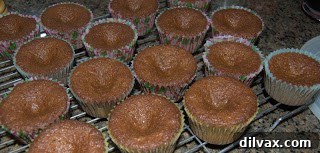
My baking journey with these cupcakes had a moment of unexpected drama. After placing them in the oven, a curious urge to capture the baking process with a photograph led me to open the oven door a little too soon. Alas, this seemingly innocent act likely contributed to the “sunken treasure” effect I observed – the middles of the cupcakes looking somewhat concave upon removal from the oven. As many experienced bakers know, opening the oven door too early, especially during the crucial rising phase, can cause delicate cakes to collapse due to the sudden temperature change. It was a classic baking lesson learned the hard way!
Beyond the structural setback, the flavor profile also presented a surprise. Despite being titled “Butterscotch-Spice Cupcakes,” the predominant taste was decidedly more spice cake than butterscotch. Neither my family nor I could discern much, if any, butterscotch flavor. This was a bit of a bummer, as I had envisioned a distinct butterscotch sweetness complementing the warm spices. Perhaps a stronger butterscotch extract or even butterscotch chips incorporated into the batter would be necessary to truly live up to the name. It highlights the importance of ingredient quality and quantity when aiming for specific flavor notes in a recipe.
The Saving Grace: Decadent Cream Cheese Frosting
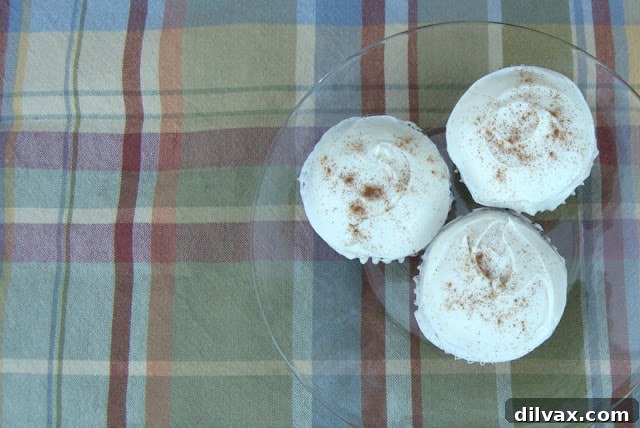
While the cupcakes themselves didn’t quite hit the mark, the accompanying Cream Cheese Frosting was an absolute triumph. The cookbook didn’t suggest a specific frosting, so I entrusted the choice to my daughter, and she absolutely nailed it! This frosting was the hero of the day, transforming an otherwise disappointing cupcake into something undeniably delicious.
Ingredients for Cream Cheese Frosting:
- 2 (3-ounce) packages cream cheese, softened to room temperature (total 6 ounces)
- 1 (1 lb.) package confectioners’ sugar (powdered sugar), sifted
- 1 teaspoon vanilla extract
- 1-2 tablespoons milk (whole milk recommended for richness)
Instructions for Making Cream Cheese Frosting:
- Soften Cream Cheese: Ensure your cream cheese is at true room temperature. This is critical for achieving a smooth, lump-free frosting. You can let it sit out for about an hour or gently soften it in the microwave for a few seconds.
- Beat Cream Cheese: In a medium mixing bowl, beat the softened cream cheese with an electric mixer until it is very soft and creamy, approximately 1-2 minutes. This incorporates air and removes any lumps.
- Gradually Add Sugar: Gradually add the sifted confectioners’ sugar to the cream cheese, beating slowly at first to prevent a cloud of sugar from forming, then increasing speed. Continue beating until all the sugar is incorporated and the mixture is smooth and fluffy. Sifting the sugar beforehand is essential to prevent a grainy texture.
- Mix in Flavoring & Liquid: Stir in the vanilla extract. Then, add milk one tablespoon at a time, mixing until you reach your desired spreading consistency. You might not need all two tablespoons, or you might need a tiny bit more, depending on the thickness of your cream cheese and humidity. The goal is a frosting that is easy to spread but holds its shape.
- Chill (Optional): If the frosting seems too soft, you can chill it in the refrigerator for 15-30 minutes before frosting the cupcakes to firm it up slightly.
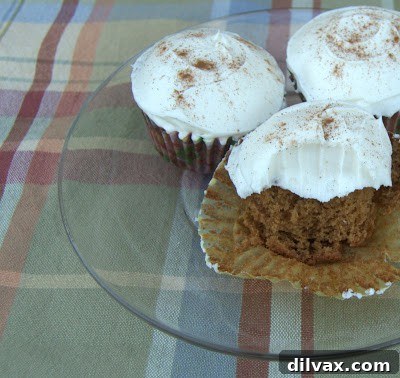
The Verdict: A Mixed Review and a Promising Future for Frosting
When it came to the overall experience, the “Butterscotch-Spice Cupcakes” earned a rating of 2 rolling pins on my personal scale of 1-4 (with 4 being the best). While they weren’t a complete disaster, the lack of a discernible butterscotch flavor and the sunken middles left us feeling somewhat disappointed. It’s unlikely I’ll be making these particular cupcakes again, at least not without significant modifications to enhance the butterscotch and ensure a more stable rise.
However, the cream cheese frosting? That’s a different story entirely. Its rich, tangy, and perfectly sweet profile rescued the entire dessert. It will absolutely be making a return appearance in my kitchen, perhaps paired with a different cupcake or cake recipe that can truly live up to its deliciousness. This baking adventure served as a potent reminder that even when parts of a recipe don’t go as planned, there’s always an opportunity to learn, adapt, and still find immense joy in the process – especially when a fantastic frosting is involved!
Happy baking, and may your culinary experiments always lead to delicious discoveries!