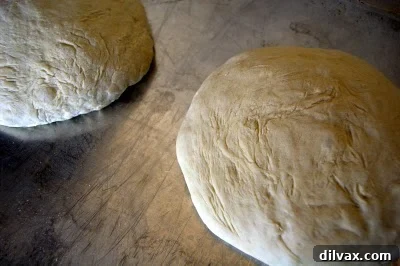
From the earliest days of my childhood, my grandparents’ house was a sanctuary of warmth, comfort, and most memorably, incredible aromas. It was a place where love was expressed through hearty meals and divine baked goods, all lovingly prepared by my grandmother. She wasn’t just a good cook; she was a truly gifted baker whose kitchen was the heart of our family home. I vividly recall the irresistible scent of her cream cheese cookies and the comforting sweetness of her snickerdoodles. But her magnum opus, my undeniable absolute favorite, was her jam-filled sugar cookies, a recipe I’ve tried to replicate with varying success (and certainly plan to master!).
Beyond these sweet delights, Grandma excelled at a diverse range of culinary creations. Her cinnamon rolls were simply unmatched, a standard of perfection I still strive for in my own baking. And who could forget her O’Henry Bars, rich and utterly delightful? Her repertoire wasn’t limited to baked goods; she also whipped up a phenomenal chicken cacciatore and a classic Manhattan clam chowder, among countless other mouth-watering dishes. Yet, above all these cherished memories, one particular creation held a special place in my heart, a simple yet profoundly comforting staple that always made my heart sing: her incredible Homemade Italian Bread.
This rustic, golden-crusted Italian bread was more than just food; it was an experience. The moment it emerged from the oven, filling the entire house with its yeasty, warm aroma, was pure magic. The best part? Slicing into a still-warm loaf and watching a generous pat of butter melt instantly into its soft, airy crumb. Oh, the sheer bliss! That unforgettable taste and texture became a touchstone of my childhood, a flavor memory so strong that it compelled me to embark on a culinary quest: to recreate Grandma’s iconic Italian Bread recipe in my own kitchen.
The memory of that bread alone is enough to transport me back to those cherished days. Its crust, perfectly golden and slightly crisp, yielded to a soft, tender interior that was simply divine. And as mentioned, there was nothing quite like tearing into a still-warm slice, its steam gently rising, and watching a generous dollop of butter slowly surrender to its warmth, infusing every bite with an unparalleled richness. That particular sensory experience, etched deeply into my memory, was the driving force behind my decision: I *had* to learn how to make this authentic Italian Bread for myself, to keep a piece of Grandma’s legacy alive.
My quest truly began when I stumbled upon Grandma’s recipe box after my mother’s passing. It was a treasure trove of family history, filled with handwritten cards, many bearing the familiar script of both my mother and grandmother. My heart leaped when I found a card specifically labeled for her beloved Italian Bread recipe. This was it, I thought – the secret to replicating that childhood favorite was finally in my hands!
However, my initial excitement quickly gave way to a peculiar mix of bewilderment and comedic frustration. As I carefully examined the recipe card, a critical problem emerged. A rather significant, utterly baffling problem.
The Mystery of the Missing Steps: A Half-Baked Recipe
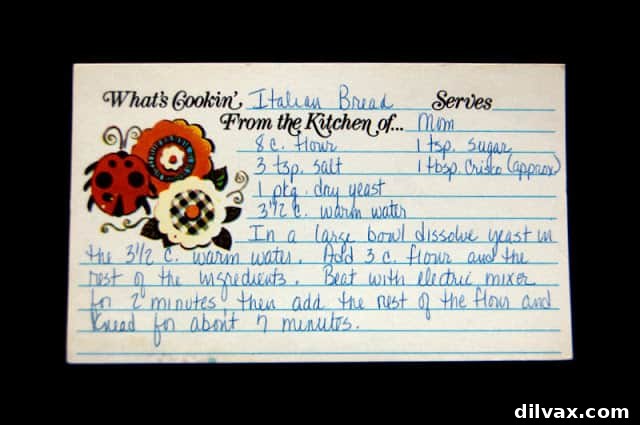
Above, you can see the front of the recipe card. Looks promising, right? All the ingredients listed, a few initial steps. But then, as I flipped it over…

And there it was – or rather, there it *wasn’t*. The back of the card, equally charming in its faded ink, simply continued the saga of the incomplete recipe. My first thought, perhaps like yours, was: “You’ve got to be kidding me, right?!”
Seriously, take another look at those recipe card images. Do you notice what’s conspicuously absent? The vital information! We’re talking about the crucial baking temperature, the precise baking time, and perhaps most importantly for any yeast bread, the rising durations. These aren’t minor details; they are the bedrock of successful bread making! How could two such brilliant women, my grandmother and my mother (whose handwriting clearly graces this card), leave out the very steps that determine whether this bread becomes a culinary triumph or a dense disaster?
The thought gnawed at me: didn’t they have some kind of unwritten kitchen code, a baker’s etiquette, that demanded a complete recipe? I imagined my mother, pen in hand, dutifully transcribing Grandma’s words, and wondered why she wouldn’t have pressed for the missing instructions. “Come on, Grandma! How long does it rise? What temperature for the oven?” I wished I could shout those questions across the years.
Of course, silence was my only answer. My beloved Grandma and Mom are no longer with us, but in that moment of culinary bewilderment, I desperately yearned for their guidance. As I started preparing the dough, I even found myself instinctively reaching for Grandma’s old KitchenAid mixer, a faithful appliance that now hums to life in my own kitchen. I foolishly hoped that perhaps, through some unspoken connection, the mixer itself would transmit the forgotten wisdom – a gentle vibration indicating the perfect proofing time, a subtle whir revealing the ideal oven temperature for this cherished Grandma’s Italian Bread.
Alas, no such magical intervention occurred. The mixer whirred, the dough came together, but the answers remained elusive. Grrrrr… It was a stark reminder that some mysteries of the kitchen are meant to be solved through perseverance, not supernatural aid.
Yet, even without direct guidance, vivid memories of Grandma’s baking flooded my mind. I could almost see her placing the shaggy dough into her familiar green porcelain bowl, covering it with a clean kitchen towel, and setting it aside to rise. I remembered how she would expertly divide the risen dough, ensuring we would enjoy not just one, but two magnificent loaves of her divine homemade Italian bread. But despite these crystal-clear images, the critical details – the duration of the rise, the oven setting, the exact baking time – remained maddeningly out of reach. Perhaps, in her hands, it truly *was* magic.
Today, however, I knew no such magic would simply materialize. So, after a slight mishap with the initial mixing (a tale for *after* we get through the recipe!), I turned to the modern oracle: the internet. My mission was clear: research similar Italian bread recipes, gather common techniques, and piece together the missing puzzle pieces to bring Grandma’s creation back to life. While it wasn’t an exact science, I believe I managed to pull together a recipe that adequately captured the essence of her original. Below, you’ll find what I did, marrying the fragments of Grandma’s recipe card with contemporary baking wisdom to create a truly delicious loaf of traditional Italian Bread.
Grandma’s Classic Homemade Italian Bread Recipe
Yields: 2 beautiful loaves
This recipe is my best attempt at recreating the glorious homemade Italian bread my grandmother used to bake. It combines the fragments of her original recipe with methods I’ve learned through research, aiming for that perfect balance of crisp crust and soft, airy interior.
Ingredients:
1 package (2 1/4 teaspoons) active dry yeast
3 1/2 cups warm water, ideally between 120°F and 130°F (important for activating the yeast)
8 cups of all-purpose flour, divided (approximately 3 cups for initial mixing, 5 cups for gradual addition)
3 teaspoons salt (fine sea salt works wonderfully)
1 teaspoon granulated sugar (to feed the yeast)
1 tablespoon shortening (for tenderness)
Instructions:
1. Activate the Yeast: In a generously sized mixing bowl, gently dissolve the active dry yeast in the 3 1/2 cups of warm water. Let it sit for about 5-10 minutes until foamy, indicating the yeast is alive and active. This is a crucial step for a good rise in your traditional Italian bread.
2. Initial Mix: Attach the paddle attachment to your stand mixer. To the yeast mixture, add 3 cups of the measured all-purpose flour, along with the salt, sugar, and shortening. Beat these ingredients on a medium speed for precisely 2 minutes. This initial mixing helps to combine everything thoroughly and start developing the gluten.
3. Add Remaining Flour: Switch to the dough hook attachment. Gradually begin adding the remaining 5 cups of flour, one cup at a time, allowing each addition to be fully incorporated before adding more. Continue mixing until a cohesive, shaggy dough forms and pulls away from the sides of the bowl. This process will develop the gluten structure necessary for a good crumb.
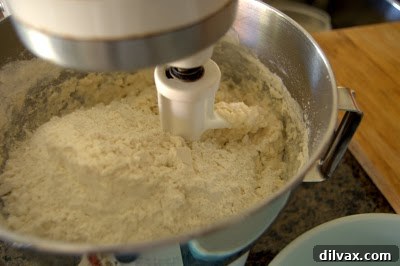
4. First Kneading: Knead the dough in the stand mixer with the dough hook for approximately 4 minutes. The dough should start to become smoother and more elastic.
5. Hand Kneading & Texture Check: Turn the dough out onto a generously floured work surface. Continue to knead by hand for another 3-4 minutes. Add as little extra flour as possible, only enough to prevent sticking. The goal is to achieve a smooth, elastic, and slightly tacky dough that springs back when gently poked. This hand kneading ensures proper gluten development for a light, airy loaf of Italian bread.
6. First Rise (Bulk Fermentation): Lightly grease a large clean bowl with olive oil. Place the dough into the bowl, then turn it once to coat all sides with the oil. This prevents the dough from drying out. Cover the bowl securely with a clean kitchen towel or plastic wrap. Place it in a warm, draft-free spot (like a slightly warmed oven that’s been turned off, or near a sunny window) and allow the dough to rise undisturbed for a full 2 hours, or until it has doubled in size. This is crucial for flavor and texture.
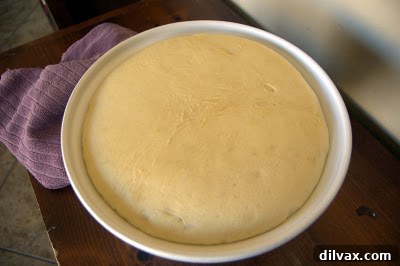
7. Punch Down & Shape: Once risen, gently punch the dough down in the bowl to release the accumulated gases. Turn the dough out onto a lightly floured surface. Divide the dough equally into two halves. Shape each half into an oblong loaf, reminiscent of classic Italian bread.
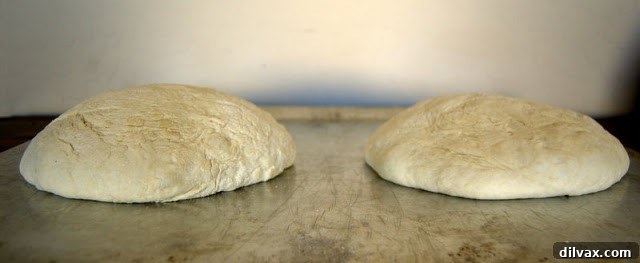
8. Second Rise (Proofing): Generously grease a large cookie sheet or baking pan and sprinkle it lightly with cornmeal (this helps prevent sticking and adds a rustic touch). Place the shaped loaves onto the prepared baking sheet. Cover the loaves again with a clean towel and return them to that same warm, draft-free spot to rest and rise for another 1 hour. During this time, the loaves should visibly puff up.
9. Prepare for Baking: While the loaves are on their second rise, preheat your oven to 425°F (220°C). This ensures the oven is at the correct temperature when the bread goes in, promoting a good crust.
10. Score & Hydrate: Once the oven is preheated and the loaves have proofed, use a very sharp knife or a bread lame to cut two or three shallow, 1/4-inch deep slices lengthwise or diagonally across the tops of both loaves. These “scores” allow the bread to expand properly in the oven and create a beautiful artisanal look. Lightly mist or sprinkle the tops of the loaves with a small amount of water. This creates steam in the oven, contributing to a wonderfully crispy crust.
11. Bake: Carefully transfer the baking sheet with the loaves to the preheated oven. Bake for approximately 45 minutes, or until the loaves are deep golden brown and sound hollow when tapped on the bottom. The internal temperature should register around 200-210°F (93-99°C) for fully baked bread.
12. Serve Warm: Once out of the oven, transfer the loaves to a wire rack to cool slightly. The hardest part is waiting! For the ultimate experience, slice a piece of this warm, fragrant Grandma’s Italian Bread, generously spread it with butter, and watch it melt into every crevice. Then, savor every glorious bite of this homemade goodness!
The Verdict: My First Attempt at Grandma’s Italian Bread
In the flurry of baking excitement, I confess I completely forgot to capture a photograph of the finished loaves! A genuine oversight I’ll rectify on my next baking adventure. While the bread didn’t quite achieve the majestic puffiness of Grandma’s iconic creations, and it wasn’t an *exact* replica, I can enthusiastically confirm: it tasted absolutely delicious!
Reflecting on the process, I suspect one of my experimental maneuvers might have hindered its rise. I found myself repeatedly “slamming” the dough onto the floured surface during kneading and shaping. I had read on various baking forums that such aggressive handling could help develop gluten, leading to a lighter, airier crumb. However, I don’t recall Grandma ever engaging in such vigorous dough-thumping! Next time, I’ll adopt a gentler approach to see if it yields a more voluminous loaf, closer to the memory of her perfectly risen homemade Italian bread.
In fairness, I must admit there was a certain therapeutic satisfaction in aggressively working that dough! It served as an excellent outlet for any pent-up aggression – quite a fun, albeit possibly detrimental, part of the process. I did it a couple of times during the initial kneading, and then again when I divided the dough into individual loaves. That second round of enthusiastic “slapping” might very well have been the culprit, not “killing” the bread entirely, but certainly flattening its aspirations for a grander rise.
Despite my concerns about its appearance, the flavor was truly outstanding. The crust, thanks to the water sprinkling technique (a detail I distinctly remember my Gram performing with her trusty spray bottle!), was wonderfully crispy. This delightful crunch gave way to an interior that was soft and pleasantly moist. While it wasn’t as overtly airy as it could have been – leaning a little more towards the dense side – its texture was still incredibly inviting, especially as butter melted into it perfectly.
My Baking Rating System: Rolling Pins Score
I use a personal rating system for my daily baking endeavors, scoring them on a scale of 1 to 4, with 4 being the absolute best. For this inaugural attempt, my recreated Grandma’s Italian Bread earned a respectable 2 1/2 rolling pins. This indicates a good, enjoyable bake with room for improvement. I am fully committed to making this recipe again, with the specific goal of refining my technique, particularly by sparing the dough from my overly enthusiastic “beating” and observing the impact on its overall rise and texture.
A Confession and a Crucial Tip!
Oh, and one more thing I nearly forgot to mention – a valuable lesson I learned the hard way! In my excitement, I didn’t *strictly* follow the recipe’s instructions regarding flour addition. Instead of adding 3 cups initially, then the wet ingredients, and *gradually* incorporating the remaining 5 cups, I confess I threw in the initial 3 cups of flour along with the wet ingredients *and* all the rest of the flour at once. Duh!
As specified in the rewritten recipe instructions above, and as I painstakingly deciphered from Grandma’s card, the proper method is indeed to add the first 3 cups, then the salt, sugar, and shortening, *followed by a gradual incorporation* of the remaining 5 cups of flour. This incremental addition is vital for proper gluten development and dough consistency.
A final, lighthearted but earnest tip from my own experience: when you’re meticulously measuring out your flour or any ingredients, try to minimize distractions! Don’t answer the phone, or make a quick trip to the refrigerator for a drink. You’ll thank yourself later when you don’t have to re-count everything from scratch. (Not that *I* ever made that mistake, of course! Just a friendly heads-up.)
I hope this detailed journey inspires you to try your hand at this wonderful homemade Italian bread recipe. It’s a truly rewarding experience, connecting you to generations of bakers and filling your home with an aroma that spells pure comfort.
Happy baking, everyone! Sending you all BIG baking hugs and many delicious muffins!