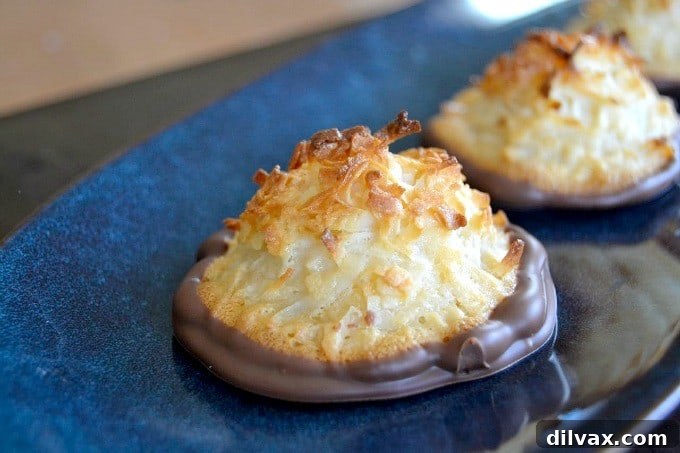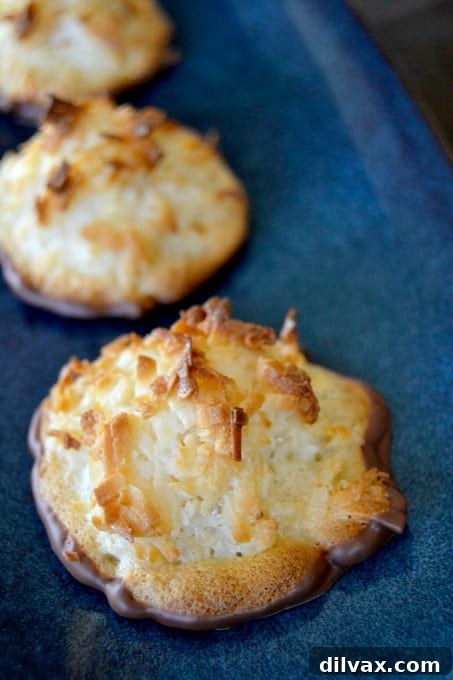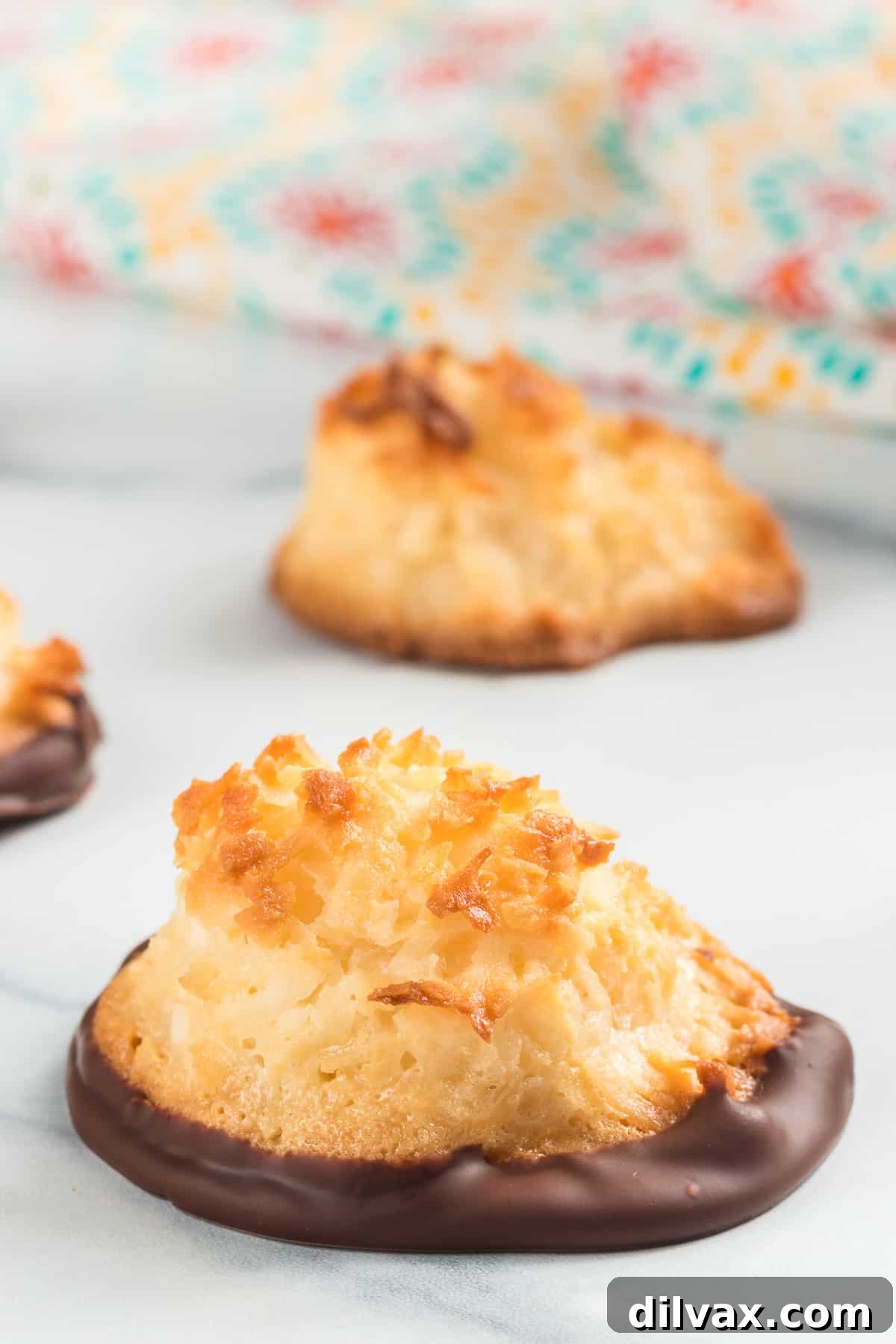
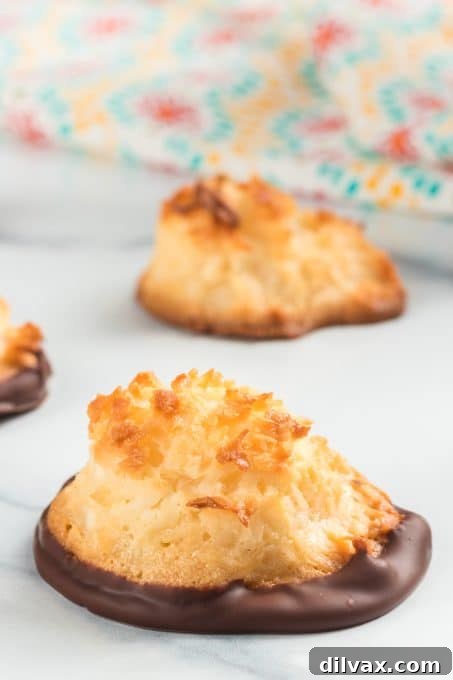
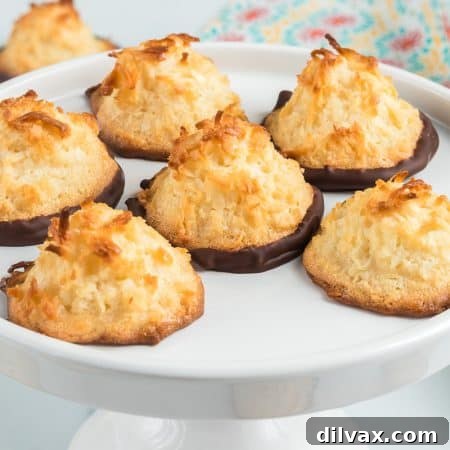
Coconut Macaroons are a delightful classic, celebrated for their irresistibly chewy texture and rich coconut flavor. Crafted with a blend of sweetened condensed milk, shredded coconut, and fluffy egg whites, these cookies achieve a perfect balance: a slight crispness on the outside yielding to an incredibly tender, moist interior. While utterly delicious on their own, a decadent dip in melted chocolate transforms them into an even more extraordinary treat, making them a favorite for any occasion.
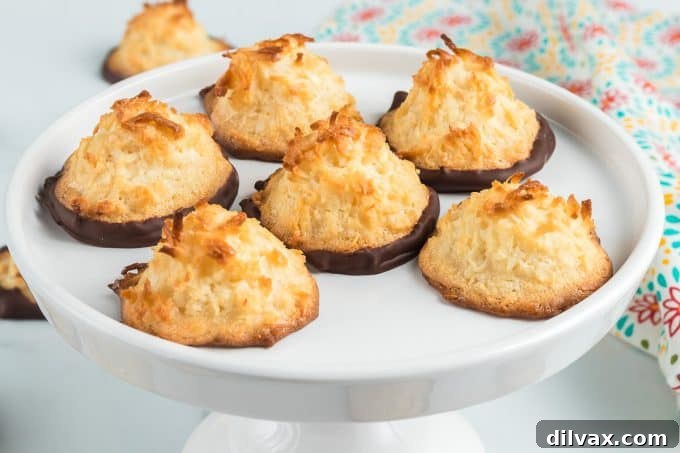
There’s an undeniable charm to the simplicity of a classic coconut macaroon. Its pure, unadulterated coconut essence is a joy in itself, offering a wonderfully sweet and chewy experience. However, a little indulgence can go a long way. The moment you introduce a luxurious coating of melted chocolate, these humble cookies ascend to a new level of decadence. Seriously, once you’ve tried them chocolate-dipped, you might find it hard to go back to plain!
SAVE THIS COCONUT MACAROON RECIPE TO YOUR FAVORITE PINTEREST BOARD!
Understanding the Distinction: Coconut Macaroons vs. French Macarons
It’s a common point of confusion, and understandably so, given the similar-sounding names: “macaroons” and “macarons.” While their names are close, these two confections are distinct in their ingredients, preparation, and resulting texture. Knowing the difference will not only broaden your baking knowledge but also help you choose the perfect treat for your craving!
Coconut Macaroons are delightfully rustic, free-form drop cookies. Their foundation typically consists of egg whites, sugar, and, most prominently, generous amounts of shredded coconut. Some recipes, like this one, also incorporate sweetened condensed milk, which contributes to their signature chewiness and rich, sweet flavor. Occasionally, a touch of almond paste or a small amount of all-purpose flour might be added for structure, though many traditional recipes, including this one, remain naturally gluten-free.
In contrast, French Macarons are elegant, refined sandwich cookies. They are characterized by their smooth, dome-shaped meringue shells (made from finely ground almonds, egg whites, and granulated sugar) and their characteristic “feet” – a ruffled edge that forms at the base during baking. These delicate shells are then filled with a variety of creamy fillings, such as ganache, buttercream, or fruit curd, creating a harmonious blend of textures and flavors. Macarons are known for being notoriously difficult to master, requiring precise techniques and careful temperature control.
Despite their differences, both cookies share a fascinating historical lineage, tracing their origins back to the Italian “Maccarone.” This ancient term referred to a type of sweet cake or biscuit made with almonds and egg whites. Over centuries, these recipes diverged, with different regions adapting them to local tastes and available ingredients. The common thread of egg whites and sugar, often paired with ground nuts (almonds for macarons, coconut for macaroons), connects these two beloved treats across time and geography. While French macarons demand meticulous attention, our chewy coconut macaroons offer a wonderfully forgiving and equally satisfying baking experience.
What Simple Ingredients Make These Coconut Macaroons So Delicious?
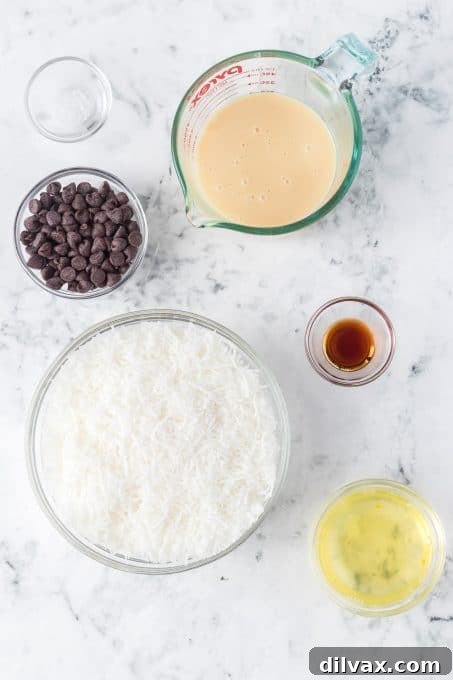
One of the best aspects of this coconut macaroon recipe is its reliance on a small handful of readily available, pantry-friendly ingredients. You won’t need to hunt for obscure items; just a few staples come together to create something truly special:
- Sweetened Shredded Coconut Flakes: This is the star of the show, providing both texture and intense coconut flavor.
- Sweetened Condensed Milk: A crucial ingredient that binds the macaroons, adds sweetness, and contributes significantly to their signature chewy, moist texture.
- Pure Vanilla Extract: Enhances the overall sweetness and provides a warm, inviting aroma.
- Large Egg Whites: Whipped to stiff peaks, they create the light, airy structure that gives macaroons their unique mouthfeel.
- Kosher Salt: A pinch of salt balances the sweetness and brings out the depth of the coconut flavor.
- Milk Chocolate Chips (Optional): For those who love a chocolate-dipped indulgence, adding a layer of melted milk chocolate takes these macaroons to the next level. Dark or white chocolate can also be used for variation.
While pure vanilla extract is my go-to for a classic flavor profile, don’t hesitate to experiment! A touch of almond extract can introduce a subtle nutty undertone, complementing the coconut beautifully. For an even more pronounced tropical taste, consider adding a dash of coconut extract. When experimenting with additional extracts, start with just a quarter or half teaspoon and adjust to your preference, as their flavors can be quite potent.
Are Coconut Macaroons Naturally Gluten-Free?
Yes, good news for those with gluten sensitivities or anyone looking for a delicious gluten-free treat! When prepared according to this recipe, our coconut macaroons are entirely gluten-free. This is primarily because the core ingredients – shredded coconut, sweetened condensed milk, vanilla extract, egg whites, and salt – are all naturally free of gluten.
Most brands of sweetened condensed milk on the market today are gluten-free, but it’s always wise to double-check the label if you have severe allergies. Similarly, pure shredded coconut is inherently gluten-free. This makes homemade coconut macaroons an excellent and safe option for gluten-free diets, without compromising on flavor or texture. However, if you’re purchasing macaroons from a bakery or store, it’s essential to confirm with the producer, as some commercial recipes might include wheat flour as a binder or thickener, which would render them not gluten-free.
Crafting Chewy Coconut Macaroons: An Easy Guide
These sweet, chewy treats are incredibly simple to bring together, making them perfect for bakers of all skill levels. With just a few straightforward steps, you’ll be enjoying perfectly formed, golden macaroons in no time. Here’s how to achieve that ideal chewy texture with a delicate crispness:
1. Prepare Your Workspace: Begin by positioning your oven racks in the upper and lower thirds of the oven. This ensures even baking across two sheets. Then, preheat your oven to 325 degrees F (160 degrees C). Prepare two large baking sheets by lining them with parchment paper. Parchment paper is essential here as it prevents sticking and helps the macaroons maintain their shape.
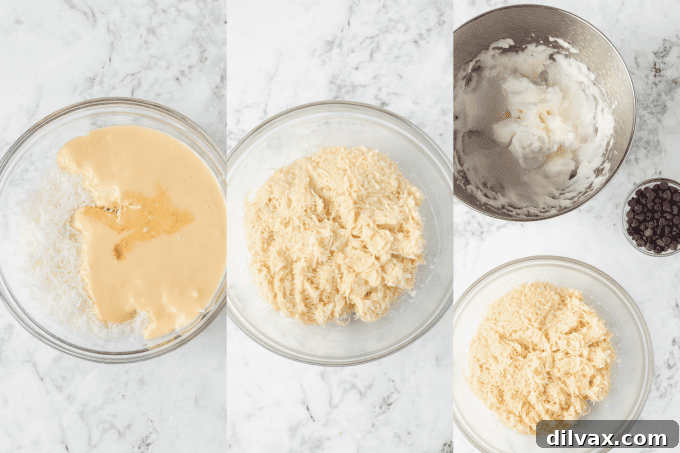
2. Create the Coconut Base: In a medium-sized mixing bowl, combine the sweetened shredded coconut, sweetened condensed milk, and vanilla extract. Stir these ingredients thoroughly until the coconut is fully coated and the mixture is evenly moist. This step lays the foundation for your macaroons’ rich flavor and chewy texture. Set this bowl aside while you prepare the egg whites.
3. Beat the Egg Whites: In the clean, dry bowl of an electric stand mixer (or using a hand mixer) fitted with the whisk attachment, beat the large egg whites on high speed. As they begin to froth, gradually add the kosher salt. Continue beating until the egg whites form stiff, glossy peaks. This means that when you lift the whisk, the peaks will stand firm and hold their shape without collapsing. Achieving stiff peaks is crucial for the macaroons’ light and airy interior.
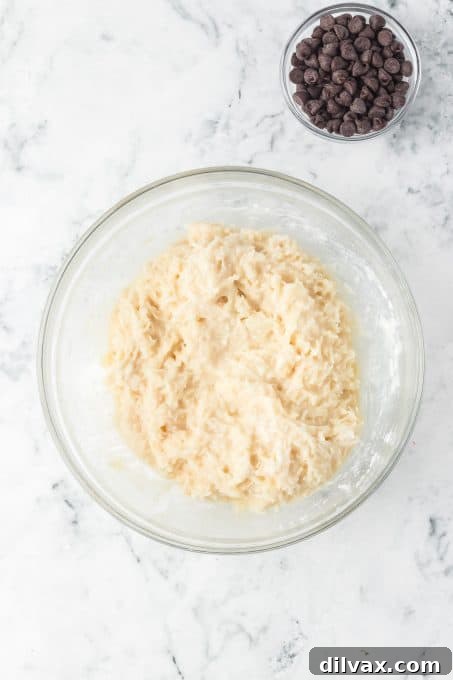
4. Gently Fold and Form: Carefully and gently fold the beaten egg whites into the coconut mixture using a rubber spatula. The key here is to incorporate the egg whites without deflating them, preserving their airiness. Once combined, drop heaping tablespoons of the mixture onto your prepared baking sheets, forming small, rustic mounds. Leave about an inch of space between each macaroon to allow for slight spreading.
5. Bake to Golden Perfection: Place the baking sheets in your preheated oven and bake for approximately 25 minutes. The macaroons are ready when their tops turn a beautiful golden brown. Avoid over-baking, as this can lead to dry macaroons. Once baked, remove them from the oven and let them cool on the baking sheets for about five minutes. This brief cooling period helps them firm up before you transfer them to a wire rack to cool completely to room temperature.
Elevate Your Treat: How to Make Decadent Chocolate-Dipped Macaroons
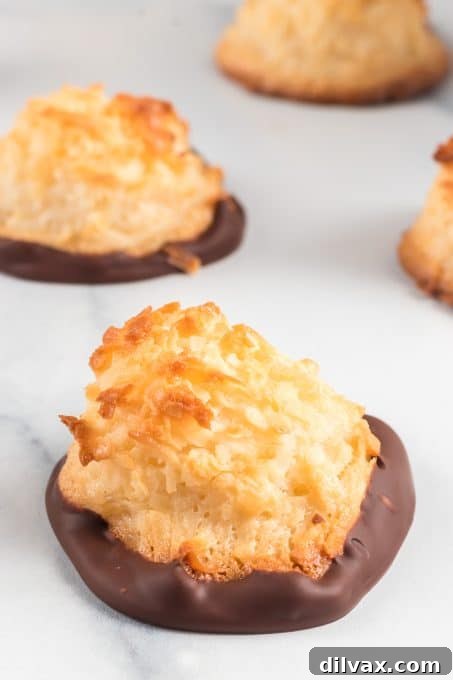
While plain coconut macaroons are a delight, dipping them in chocolate transforms them into an even more irresistible indulgence. The contrast between the sweet, chewy coconut and the rich, smooth chocolate is simply divine. Here’s how to achieve perfectly coated, chocolate-dipped macaroons:
1. Melt Your Chocolate: Begin by placing your preferred chocolate chips (milk, dark, or white) into a microwave-safe bowl. Microwave the chocolate for 30 seconds. Remove and stir thoroughly. Continue microwaving in 10-second intervals, stirring well after each interval, until the chocolate is completely smooth and melted. Be careful not to overheat the chocolate, as this can cause it to seize. Alternatively, you can use a double boiler method for a more controlled melting process: place a heat-proof bowl over a saucepan of simmering water (ensure the bowl doesn’t touch the water) and stir until melted.
2. Prepare for Dipping: Once your macaroons are completely cooled to room temperature and your chocolate is melted and smooth, prepare a clean, room-temperature baking sheet. Line it with parchment paper; this will prevent the chocolate-dipped macaroons from sticking as the chocolate sets.
3. Dip and Coat: Take one cooled macaroon and gently dip its bottom into the melted chocolate. Ensure the entire base and the lower edges are thoroughly covered with chocolate. You can use a fork or a skewer to assist with dipping if needed, allowing any excess chocolate to drip off.
4. Set the Chocolate: Carefully place each chocolate-dipped macaroon onto the prepared parchment-lined baking sheet. Once all macaroons are dipped, transfer the baking sheet to the refrigerator. Allow them to chill for about 10-15 minutes, or until the chocolate is completely firm and set. This step ensures a crisp, satisfying chocolate shell.
- Note on Chocolate Choice: This recipe uses milk chocolate chips for a classic sweet touch, but feel free to customize! Dark chocolate offers a more intense, slightly bitter counterpoint to the sweet coconut, while white chocolate provides a creamy, milder finish. You can also drizzle melted chocolate over the tops for a decorative flair.
Expert Tips for Baking Perfect Coconut Macaroons Every Time
Achieving that ideal balance of crispy exterior and wonderfully chewy interior for your macaroons is easier than you think, especially with a few helpful pointers. To avoid common pitfalls like dry, crumbly, or overly sticky cookies, keep these tips in mind:
- Stiff Peaks Are Key: The quality of your whipped egg whites directly impacts the texture of your macaroons. Do not stop beating when your egg whites reach the soft peak stage; you need them to form stiff, glossy peaks that hold their shape firmly when the whisk is lifted. For best results, ensure your mixing bowl and whisk are impeccably clean and completely dry. Any trace of fat can prevent the egg whites from whipping properly. Many bakers find that cold egg whites and a chilled metal bowl help achieve stiff peaks faster.
- Consider Coconut Texture: For a denser, more uniform cookie that bakes evenly, consider pulsing your shredded coconut briefly in a food processor before incorporating it into the batter. This breaks down larger flakes into smaller, more consistent pieces, which helps prevent the macaroons from spreading too much and contributes to a smoother texture.
- Troubleshooting Spreading: If you notice your macaroons spreading excessively during baking, the batter might be too wet. You can try adding a tablespoon of all-purpose flour at a time to the coconut mixture (before folding in egg whites) to absorb some moisture. Be aware that adding flour will make them no longer gluten-free. Alternatively, ensure your egg whites were whipped to truly stiff peaks.
- Addressing Stickiness: If your macaroons turn out excessively sticky, it could indicate too much sweetened condensed milk. Next time, try holding back a tablespoon or two of the condensed milk, especially if your coconut seems particularly moist or your climate is humid.
- Uniformity for Even Baking: For consistently baked macaroons, aim for uniform sizes. Using a cookie dough scoop (a 1.5-inch or 2-inch scoop works well) is an excellent way to create perfectly proportioned mounds. This not only makes your cookies look professional but also ensures they bake evenly, preventing some from being underdone while others are overdone.
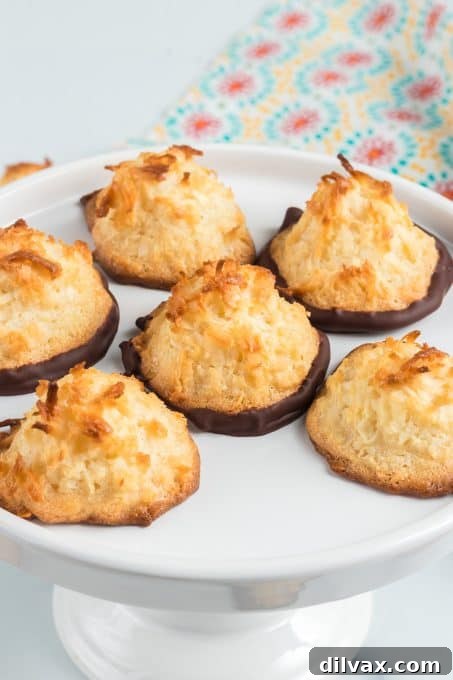
- Avoid Over-baking: Over-baking is the primary culprit behind dry, hard macaroons. Keep a close eye on them during the last few minutes of baking. The ideal sign of readiness is a light golden-brown color on the tops and edges. They should still feel slightly soft to the touch when gently pressed; they will firm up as they cool.
Making Macaroons in Advance: Planning for Perfect Treats
Planning ahead can make entertaining or enjoying these treats even easier. While the macaroon batter, due to its whipped egg white component, doesn’t store well raw, you can certainly bake these cookies in advance. The best approach is to fully prepare and bake the macaroons as directed in the recipe, allowing them to cool completely. Once cooled, you can store them until you’re ready to serve, ensuring their freshness and delicious texture for days.
Optimal Storage for Freshness: How to Keep Coconut Macaroons Delicious
Proper storage is key to maintaining the delightful chewiness and flavor of your homemade coconut macaroons. Fortunately, these cookies are quite resilient and easy to store:
- Room Temperature Storage: For immediate enjoyment, macaroons are best kept at room temperature. Simply place them in an airtight container to prevent them from drying out. Stored this way, they will remain wonderfully fresh and chewy for up to one week. If you’ve dipped them in chocolate, the chocolate will firm up nicely at room temperature, though refrigeration can help it set faster and maintain its snap, especially in warmer climates.
- Freezing for Longer Enjoyment: If you’ve baked a large batch or want to prepare them for future occasions, coconut macaroons freeze beautifully. After they have been fully baked and completely cooled, wrap each individual macaroon tightly in plastic wrap. Then, place the wrapped cookies in an airtight freezer-safe container or a heavy-duty freezer bag. They can be frozen for up to 3 months. When you’re ready to enjoy them, simply thaw them at room temperature for an hour or two.
Whether you’re a devoted coconut enthusiast or simply someone who appreciates a sweet, chewy confection, these coconut macaroons, bursting with rich tropical flavor, are the perfect treat to satisfy your cravings. They are ideal for holidays, parties, or just a comforting snack with your afternoon tea.
Discover More Irresistible Coconut Recipes You’ll Adore!
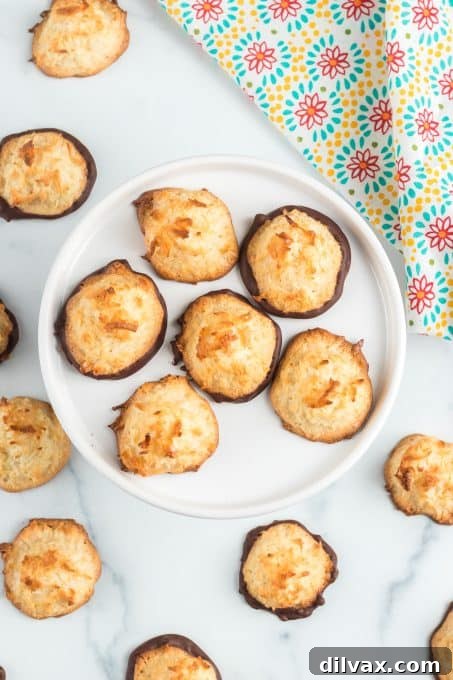
Coconut is an incredibly versatile ingredient, lending its unique tropical sweetness and texture to a wide array of dishes, from refreshing beverages to decadent desserts and even savory meals. Its presence instantly evokes warmth and exotic flavors, making it a favorite in countless kitchens. Beyond these delightful macaroons, there’s a whole world of coconut-infused treats waiting to be explored. You can incorporate shredded coconut as a delightful garnish or blend it into a creamy drink, like in this invigorating Toasted Coconut Almond Shake, which is perfect for a quick breakfast or a revitalizing snack. For a truly show-stopping dessert, coconut finds its way into rich pastry creams, enhancing cakes such as this magnificent Double Chocolate Coconut Cream Filled Bundt Cake. If you enjoy the simplicity of cookies, another easy and bright option featuring coconut is this recipe for Lemon Coconut Sugar Cookies, where the sweet coconut perfectly complements the tangy lemon for a vibrant flavor combination.
Here are even more enticing coconut recipes to inspire your baking adventures:
- Toffee Coconut Oatmeal Bars: A chewy, sweet, and crunchy bar with the perfect blend of toffee and coconut.
- Chocolate Coconut Cookies: For the ultimate chocolate and coconut pairing in a soft cookie form.
- Coconut Cooler: A refreshing beverage that transports you straight to the tropics.
- Brown Butter Coconut Krispie Chocolate Chip Cookies: A unique twist on classic chocolate chip cookies with added texture and flavor.
- Coconut Macadamia Sugar Cookies: A delightful combination of nutty macadamia and sweet coconut.
This exquisite coconut macaroon recipe was lovingly adapted and inspired by a fantastic recipe originally shared on Once Upon a Chef, a source for reliable and delicious recipes.
Classic Coconut Macaroons Recipe
Created by: Lynne Feifer
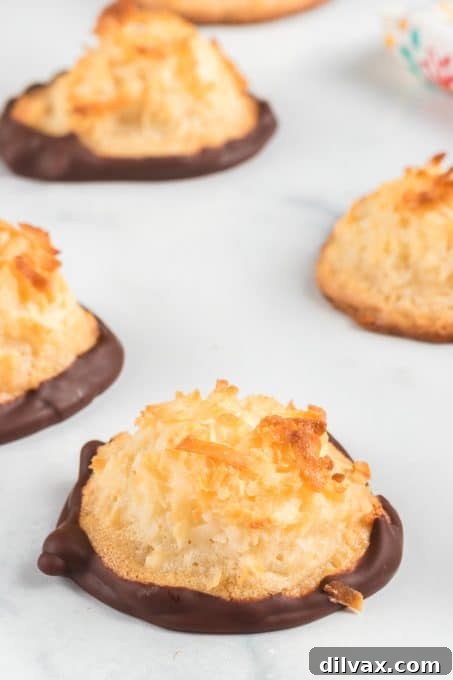
These delightful Coconut Macaroons, made with sweetened condensed milk, offer a perfect balance of crispy exterior and tender, chewy interior. Optional chocolate dipping elevates them to a truly decadent treat.
- Course: Dessert
- Cuisine: American
- Prep Time: 20 minutes
- Cook Time: 25 minutes
- Total Time: 1 hour 5 minutes
- Yields: 40 cookies
Ingredients
- 14 ounces sweetened shredded coconut
- 14 ounces sweetened condensed milk
- 1 teaspoon pure vanilla extract
- 2 large egg whites
- ¼ teaspoon kosher salt
- 1 ½ cups milk chocolate chips (melted – if desired, this amount will coat about 36 cookies)
Instructions
- Position oven racks in the upper and lower thirds of your oven.
- Preheat your oven to 325 degrees F (160 degrees C).
- Line two baking sheets with parchment paper for non-stick baking.
- In a medium bowl, combine the shredded coconut, sweetened condensed milk, and vanilla extract. Mix well until everything is evenly incorporated. Set this mixture aside.
- In the clean, dry bowl of an electric mixer (or using a hand mixer) fitted with the whisk attachment, beat the large egg whites on high speed. Add the kosher salt gradually as you beat. Continue beating until stiff peaks form. This means when you lift the whisk, the egg whites hold their shape firmly.
- Gently fold the beaten egg whites into the coconut mixture using a rubber spatula. Use a light touch to maintain the airiness of the egg whites.
- Drop heaping tablespoons of the macaroon batter onto the prepared baking sheets, leaving approximately one inch of space between each cookie to prevent them from sticking together.
- Bake for 25 minutes, or until the tops of the macaroons are beautifully golden brown.
- Allow the macaroons to cool on the baking sheet for about 5 minutes before carefully transferring them to a wire rack to cool completely to room temperature.
- For Chocolate Dipping (Optional): Once the macaroons are completely cooled, prepare a clean, room-temperature baking sheet by lining it with fresh parchment paper.
- Melt the milk chocolate chips. You can do this in a microwave-safe bowl: microwave for 30 seconds, stir, then continue microwaving in 10-second intervals, stirring thoroughly after each, until the chocolate is smooth and fully melted. Alternatively, melt the chocolate using a double boiler method.
- Dip the bottom of each cooled macaroon into the melted chocolate, ensuring the entire bottom and edges are coated. Place the chocolate-dipped macaroons onto the prepared cool baking sheet.
- Refrigerate the chocolate-dipped macaroons for 10-15 minutes, or until the chocolate is completely set and firm.
Nutrition Information (per 1 cookie serving)
- Calories: 127 kcal
- Carbohydrates: 16 g
- Protein: 1 g
- Fat: 7 g
- Saturated Fat: 5 g
- Polyunsaturated Fat: 0.1 g
- Monounsaturated Fat: 0.4 g
- Cholesterol: 3 mg
- Sodium: 56 mg
- Potassium: 98 mg
- Fiber: 0.4 g
- Sugar: 15 g
- Vitamin A: 26 IU
- Vitamin C: 0.3 mg
- Calcium: 36 mg
- Iron: 0.2 mg
Did you make this recipe?
We’d love to see your creations! Share a photo with us on Instagram and don’t forget to follow us on Pinterest for more inspiring recipes and baking tips.
Pin Recipe
Share Recipe
This post was originally published on March 10, 2015, and has been thoughtfully updated on February 27, 2023, with an enhanced format, refreshed content, and new images to provide the best possible experience for our readers. The original post shared a personal story about our beloved dog, Keiser, and his journey to peace.