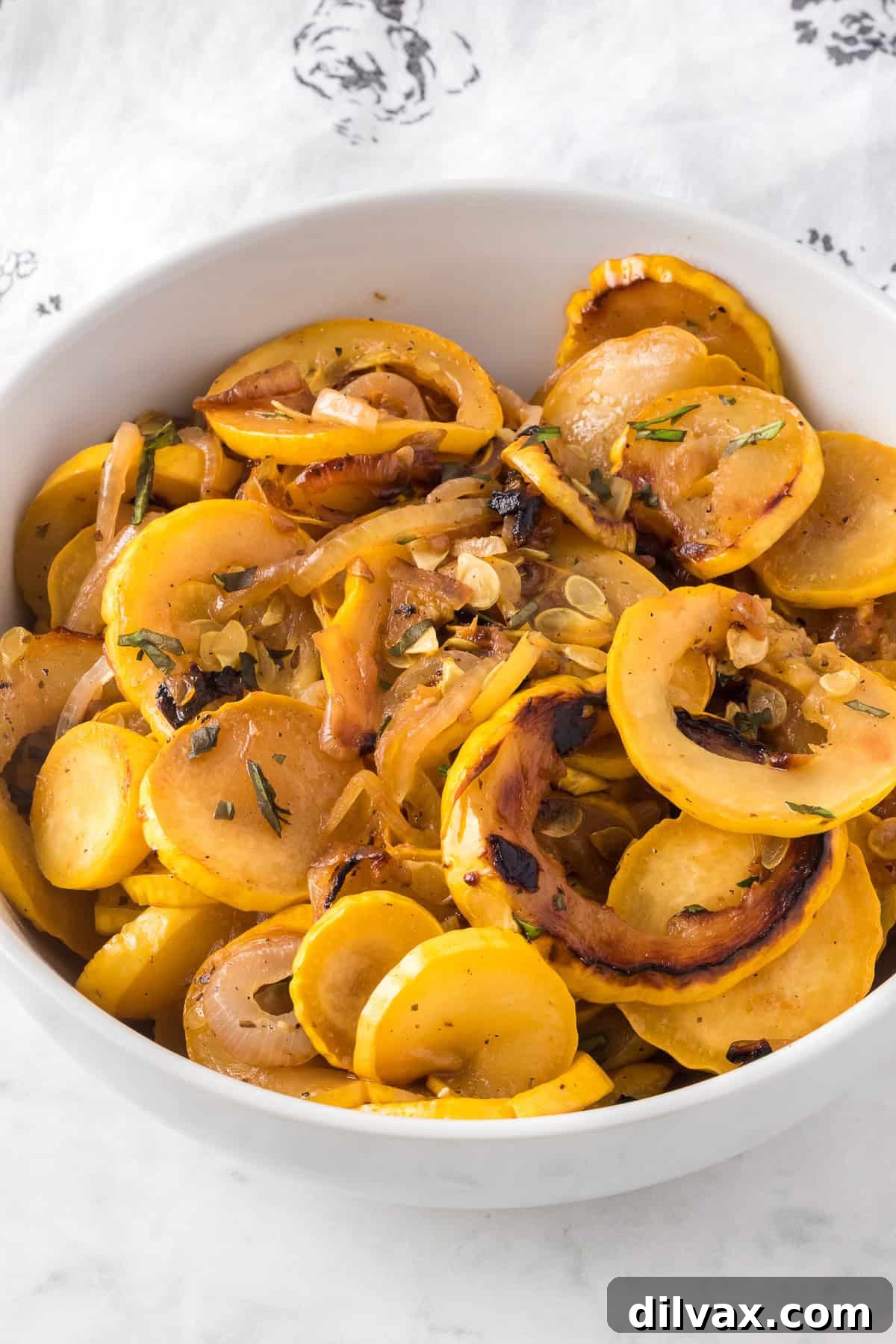
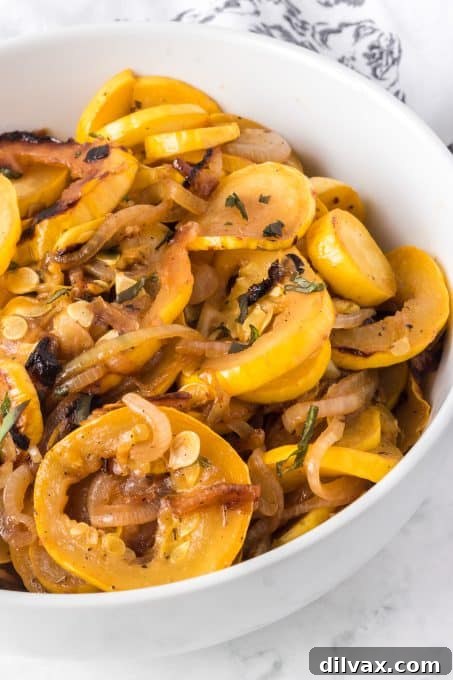
This one-pan Sauteed Squash is a quick and easy side dish that’s bursting with fresh flavor! Harvest some beautiful squash from your garden, pair it with a sweet onion, aromatic garlic, and a medley of fresh herbs and seasonings, and you’ll create a quintessential summer recipe that the whole family will adore. Simple, healthy, and incredibly delicious, it’s the perfect addition to any meal.
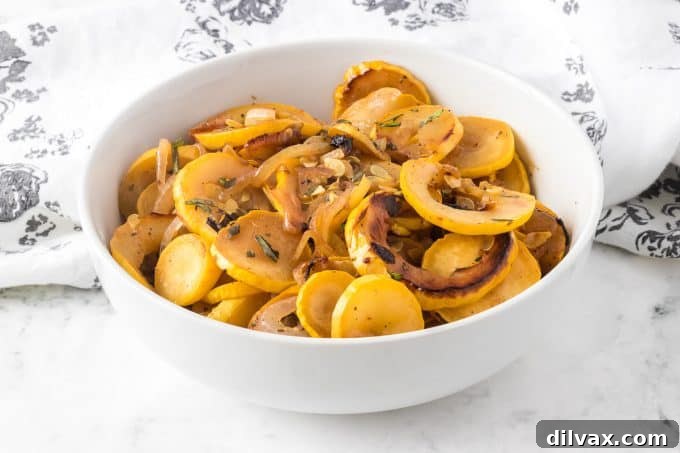
In the whirlwind of a busy week, finding time to prepare a nutritious and delicious meal can often feel like an insurmountable challenge. The siren call of convenience foods, like frozen pizzas, is strong when time is short and energy is low. But what if there was a healthy, homemade alternative that was even faster?
Enter our incredible Sautéed Yellow Squash recipe. This vibrant side dish comes together in just 15 minutes or less, making it a true game-changer for those hectic weeknights. It’s not just quick; it’s made entirely in one pan, drastically cutting down on cleanup time. Imagine, a wholesome, flavorful vegetable dish ready on your table faster than your oven can preheat for that frozen pizza!
This recipe proves that eating well doesn’t have to mean sacrificing precious time. In fact, it’s so quick and versatile that you can even serve it alongside that very pizza, transforming a simple meal into a well-rounded feast. It’s a win-win, offering both convenience and a boost of fresh, garden-fresh goodness that elevates any plate. Embrace the ease and flavor of this summer staple and say goodbye to unhealthy compromises!
SAVE THIS SAUTEED SUMMER SQUASH RECIPE TO YOUR FAVORITE PINTEREST BOARD!
Exploring Squash Varieties for Your Sauté
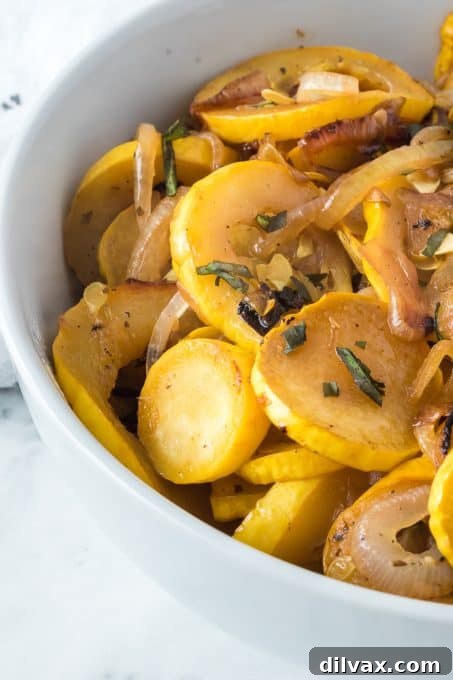
The beauty of this sautéed squash recipe lies in its adaptability, particularly when it comes to the star ingredient itself. While yellow summer squash is a classic choice, this delicious side dish is equally fantastic with sautéed zucchini squash, or even a delightful combination of both. These two popular summer squashes share a similar delicate texture and mild flavor profile, making them interchangeable in most recipes.
Yellow squash, often recognized by its vibrant sunny hue, can come in straightneck or crookneck varieties. It tends to be slightly softer and sweeter than zucchini when cooked, offering a tender bite. Zucchini, on the other hand, typically has a firmer texture and a subtly earthy flavor, holding its shape a bit more firmly during sautéing. Both are typically harvested during the warmer months, reaching their peak freshness towards the end of summer, often in abundance from home gardens or local farmer’s markets.
Don’t stop there, though! Other varieties of summer squash, such as pattypan squash (also known as scallop squash), with their distinctive disc-like shape and scalloped edges, can also be a wonderful addition. They offer a slightly firmer texture and a unique visual appeal. Whichever variety you choose, the key is to select fresh, firm specimens for the best results, ensuring a flavorful and tender-crisp sauté every time.
Essential Ingredients for Flavorful Sautéed Squash
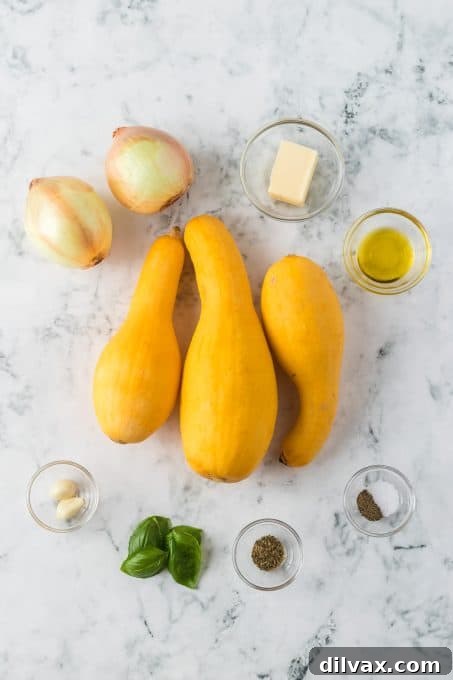
Crafting this incredibly easy and delicious sautéed squash requires just a handful of simple, wholesome ingredients. The magic happens when these fresh components come together in one pan, creating a symphony of flavors that perfectly complements any meal. Here’s what you’ll need to gather:
- **Yellow Squash or Zucchini:** We recommend using 3 medium-sized squash, or a combination of both. Fresh, tender squash is key to the best texture.
- **Medium Onions:** Thinly sliced onions caramelize beautifully and add a wonderful sweetness and depth of flavor.
- **Butter:** A touch of butter provides a rich, irresistible flavor and helps achieve that golden-brown crust.
- **Olive Oil:** Paired with butter, olive oil ensures even cooking and adds a healthy fat component.
- **Garlic Cloves:** Minced fresh garlic infuses the dish with its signature aromatic and pungent notes. Don’t skimp on the fresh garlic for maximum flavor!
- **Italian Seasoning:** This classic blend of dried herbs like oregano, basil, thyme, and rosemary provides an instant burst of savory, Mediterranean-inspired flavor.
- **Kosher Salt:** Essential for seasoning and bringing out the natural flavors of the vegetables.
- **Ground Black Pepper:** Adds a subtle warmth and aromatic finish.
- **Fresh Basil Leaves:** Roughly chopped fresh basil, added at the end, brightens the dish with its vibrant, sweet, and peppery notes. It’s the perfect herbaceous flourish.
The beauty of this recipe lies in its reliance on these foundational ingredients, allowing the natural goodness of the summer squash to shine through. You’ll find all the precise measurements conveniently listed in the comprehensive recipe card below, ensuring you have everything you need to create this fantastic dish with confidence!
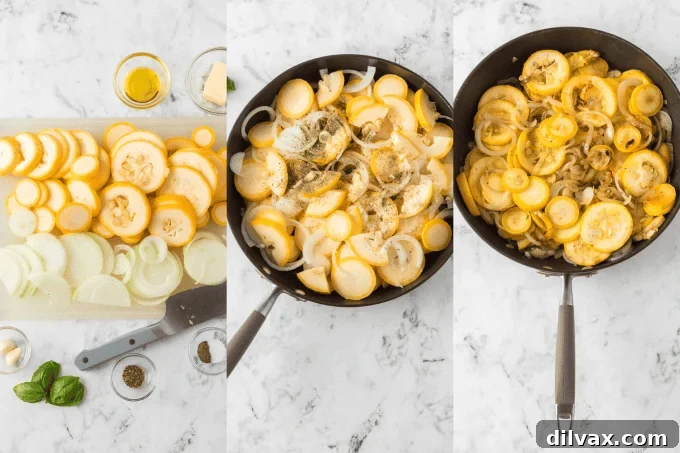
How to Make Sautéed Yellow Squash: Step-by-Step Perfection
The absolute best thing about this delightful summer side dish is its incredible simplicity. It’s a truly perfect recipe for anyone, from novice cooks to seasoned chefs, and even a fantastic way to get children involved in the kitchen. Following these straightforward steps will lead you to perfectly tender, flavorful sautéed squash every time:
- **Prepare Your Produce:** Begin by thoroughly washing your chosen squash (yellow, zucchini, or a mix) under cool running water. Pat them completely dry with a clean kitchen towel or paper towels. This drying step is crucial for achieving good caramelization and preventing steaming. Using a sharp knife, carefully trim off both ends of the squash. Then, slice the squash into uniform rounds – aim for about ¼ to ½ inch thickness. Consistency in slicing ensures even cooking. Next, thinly slice your medium onions, separating the rings as you go. Finally, mince your garlic cloves finely and roughly chop your fresh basil leaves. Having all your ingredients prepped “mise en place” makes the cooking process seamless.
- **Heat the Pan and Fats:** Place a large, sturdy skillet (cast iron or a heavy-bottomed non-stick pan works best) over medium-high heat. Allow it to heat for about a minute before adding the butter and olive oil. The combination of butter provides rich flavor and browning, while olive oil helps raise the smoke point and promotes even cooking.
- **Initiate the Sauté:** Once the butter has completely melted and begins to shimmer (but not burn), add your prepared sliced squash, sliced onion, minced garlic, Italian seasoning, kosher salt, and ground black pepper to the hot pan. Give everything a good stir with a wooden spoon or spatula to ensure all the vegetables are coated in the butter and oil and seasonings are evenly distributed. This initial coating is essential for flavor penetration and even browning.
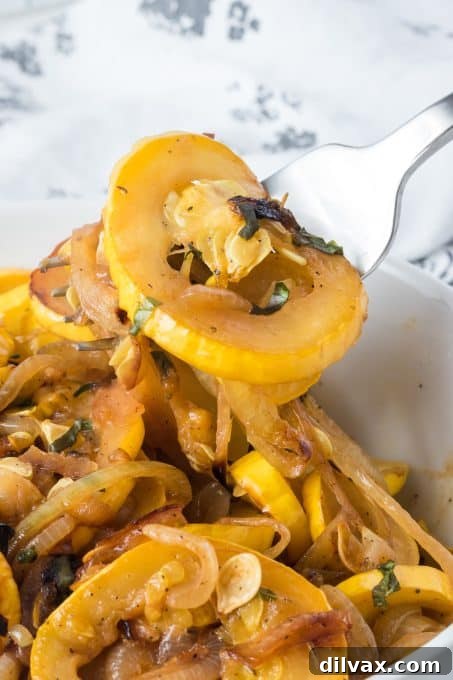
- **Caramelize Without Stirring:** Here’s a key step for achieving fantastic texture and flavor: Cook the mixture for approximately 7 minutes without stirring over medium heat. This allows the squash and onions to develop a beautiful golden-brown crust and caramelize on the bottom, intensifying their natural sweetness. Resist the urge to stir during this initial phase! You’ll see delicious browning begin to form.
- **Continue Cooking to Perfection:** After the initial 7 minutes, stir the contents of the skillet well, flipping the browned sides up. Continue to cook for an additional 5 minutes, stirring occasionally if you prefer a less caramelized (or “burnt” as the original recipe notes) result. Be attentive and avoid overcooking during this stage, as squash can quickly become mushy if cooked too long. You’re looking for tender-crisp vegetables with a slight give.
- **Add Fresh Basil and Serve:** Finally, add about three-quarters of your chopped fresh basil to the skillet. Stir it in and cook for just an additional 2 minutes, allowing the basil’s aroma to infuse the dish without losing its vibrant color. Once cooked to your liking, remove the skillet from the heat. Sprinkle the remaining fresh basil over the squash just before serving. This dish is truly best enjoyed warm, straight from the pan.
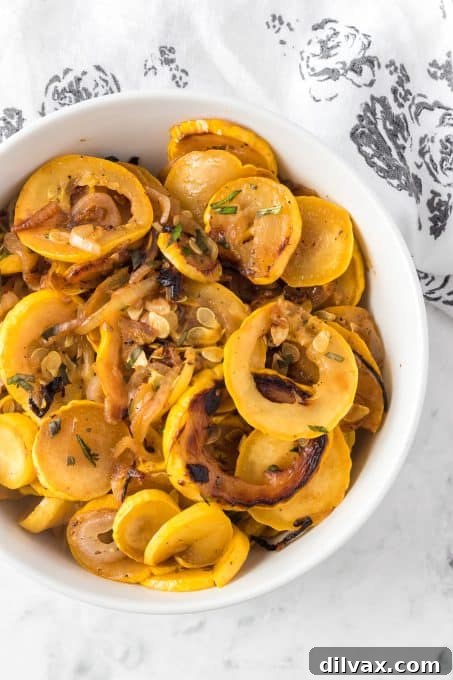
Expert Tips and Tricks for the Best Sautéed Squash
While the recipe itself is wonderfully straightforward, a few expert tips can elevate your sautéed squash from good to absolutely phenomenal. Consider these recommendations to tailor the dish perfectly to your palate and achieve a truly unforgettable result:
- **To Peel or Not to Peel:** A common question with summer squash! For this recipe, there’s no need to peel the squash. The skin is thin, edible, and packed with nutrients. Leaving it on also helps the squash maintain its structure during cooking and adds a touch of color.
- **Achieving Desired Caramelization:** The cooking method emphasizes an initial period without stirring. This is crucial for developing deep caramelization and a slightly “burnt” or charred flavor on the onions and squash, which many find incredibly delicious. If you prefer a lighter browning and a softer texture, feel free to stir more frequently from the start. Experiment to find your perfect balance!
- **Slicing for Texture:** While rounds are traditional and easy, slicing your squash into half-moons or even small cubes can alter the final texture and how much surface area gets caramelized. Half-moons, in particular, often achieve that desirable golden-brown color more easily. Aim for uniform pieces, regardless of shape, for consistent cooking.
- **Make it Vegan:** It’s incredibly easy to adapt this recipe for a vegan diet. Simply omit the butter and use an additional tablespoon of olive oil (or another plant-based oil like avocado oil) for sautéing. The flavor will still be fantastic!
- **Boost the Flavor Profile:**
- **Add Some Heat:** For those who enjoy a little kick, a pinch of red pepper flakes added with the Italian seasoning will introduce a pleasant warmth.
- **Herb Variations:** Beyond Italian seasoning, feel free to experiment with other fresh or dried herbs. A sprinkle of dried oregano, a dash of thyme, or even some fresh rosemary can add different aromatic dimensions.
- **A Touch of Acidity:** A squeeze of fresh lemon juice or a splash of balsamic vinegar at the very end can brighten the flavors and add a zesty finish.
- **Cheesy Indulgence:** For an extra layer of savory richness, sprinkle some freshly grated Parmesan cheese over the warm sautéed squash just before serving. The cheese will melt slightly, creating a delightful topping.
- **Don’t Overcrowd the Pan:** If you are doubling the recipe, consider cooking in batches or using two skillets. Overcrowding the pan lowers the temperature and causes the vegetables to steam instead of sauté, preventing that desired caramelization.
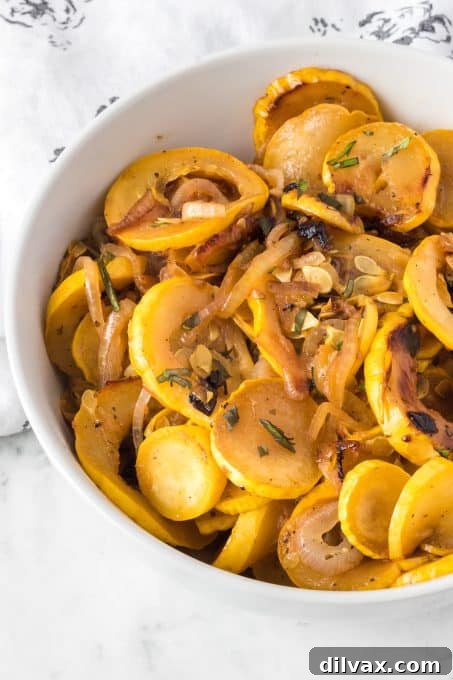
How to Choose the Best Zucchini or Yellow Squash: A Buyer’s Guide
The success of any simple vegetable dish often starts with the quality of your produce. When selecting zucchini or yellow squash for your sauté, a keen eye at the grocery store or farmer’s market can make all the difference. Here are some key tips to ensure you pick the best:
- **Size Matters:** Contrary to popular belief, bigger isn’t always better for summer squash. Look for smaller to medium-sized vegetables, ideally between 6 to 8 inches long for zucchini and similar proportions for yellow squash. As these squashes grow larger, they tend to take on more water, which dilutes their flavor and can lead to a watery, less firm texture when cooked. Larger squash also often have more prominent seeds and a tougher skin.
- **Feel for Firmness:** Gently squeeze the squash. It should feel firm and solid, not soft or spongy. A soft squash indicates it might be old, starting to rot, or has been improperly stored.
- **Examine the Skin:** Look for squash with vibrant, glossy, and unblemished skin. The color should be uniform – a bright yellow for yellow squash and a deep green for zucchini. Avoid any squash with cuts, nicks, soft spots, wrinkles, or dull patches. These are signs of age or damage, which can affect both flavor and shelf life.
- **Check the Stem and Ends:** The stem end should look fresh and green, not dried out or shriveled. A healthy stem is another indicator of freshness.
- **Weight in Hand:** A good quality squash should feel heavy for its size. This usually means it’s dense and full of flavor, rather than hollow or watery.
By following these guidelines, you’ll be able to consistently choose the freshest, most flavorful summer squash, laying the groundwork for a truly delicious sauté every time.
How to Store and Reheat Leftover Sautéed Squash
While sautéed squash is best enjoyed fresh off the pan, it’s completely understandable to have leftovers or to want to prep a larger batch for future meals. Proper storage and reheating techniques are key to maintaining its delicious flavor and texture.
For short-term storage, allow any leftover sautéed squash to cool completely to room temperature. Then, transfer it to an airtight container and store it in the refrigerator. It will keep well for up to 3-4 days. Storing it in an airtight container prevents it from absorbing other odors from the fridge and helps maintain its freshness.
When it comes to reheating, avoid the microwave if possible, as it can make the squash overly soft and watery. For the best results, reheat your sautéed squash in a skillet on the stovetop. Add a tablespoon of olive oil or butter to a non-stick skillet over medium heat. Once hot, add the leftover squash and toss it gently, heating until it’s hot throughout. This method helps restore some of its original texture and allows for slight re-caramelization, making it almost as good as fresh.
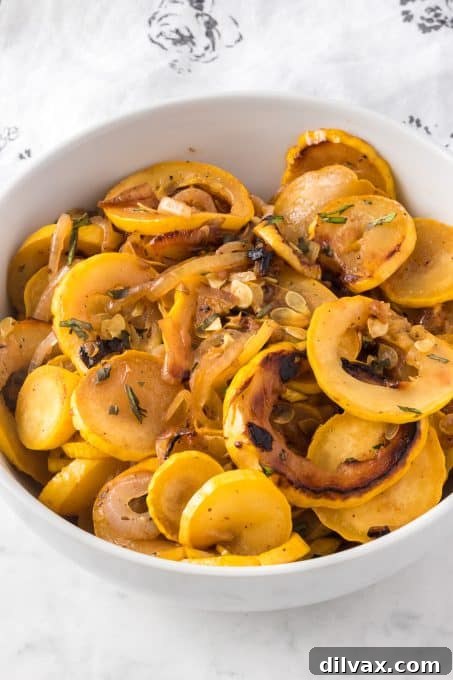
Can You Freeze Sautéed Squash?
Unfortunately, this sautéed squash recipe does not hold up well to freezing. Summer squash, including yellow squash and zucchini, has a very high water content. When thawed after freezing, this water leaches out, resulting in a mushy, watery, and unappetizing texture that loses much of its original appeal and firmness.
For this reason, we highly recommend enjoying this dish fresh or reheating leftovers from the refrigerator the very next day. If you have an abundance of fresh squash from your garden and wish to preserve it, it’s generally better to freeze it raw after blanching and chopping, or to incorporate it into dishes designed for freezing, such as casseroles or soups, where a softer texture is more acceptable.
However, for the best culinary experience with this sautéed version, plan to consume it within a few days of preparation.
Versatile Serving Suggestions for Sautéed Squash
Sautéed Squash isn’t just a simple side dish; it’s a wonderfully versatile component that can elevate a wide array of meals. Its mild, fresh flavor and tender texture make it an excellent accompaniment to virtually any main course. Here are some creative serving suggestions to inspire your next meal:
- **Classic Main Dish Pairings:** It’s the quintessential partner for grilled or roasted proteins. Serve it alongside perfectly cooked Pork Burgers, juicy Spicy Pork Tenderloin, comforting Roasted Chicken, or flaky Chimichurri Salmon. It also pairs beautifully with steak or lamb.
- **Pasta Perfection:** Toss the sautéed squash directly into your favorite pasta dishes. It adds a fresh vegetable element to a simple aglio e olio, a creamy Alfredo, or a hearty marinara.
- **Grain Bowls and Salads:** Add a scoop of warm sautéed squash to your lunchtime grain bowls with quinoa or rice, along with other roasted vegetables and a protein. It’s also a fantastic warm addition to a vibrant green salad.
- **Breakfast Booster:** Don’t limit it to dinner! Sautéed squash is a delicious addition to breakfast scrambles, omelets, or even as a flavorful side to eggs and toast.
- **Tacos and Wraps:** Use it as a vegetable filling for vegetarian tacos, burritos, or wraps, adding texture and flavor.
- **Stir-Fries:** Incorporate it into a quick weeknight stir-fry with your favorite protein and sauce for a healthy and satisfying meal.
- **Savory Tarts and Quiches:** Mix it into the filling for a summer vegetable tart or quiche, adding moisture and flavor.
With its simple preparation and delicious results, sautéed squash is a side dish that truly shines in its versatility, making it a valuable recipe to keep in your culinary repertoire.
More Delicious Squash Recipes
If you’re looking to utilize the abundance of squash from your garden or simply explore more ways to enjoy this versatile vegetable, here are some other fantastic and delicious veggie side dish recipes to try:
- Sausage Spaghetti Squash
- Yellow Squash Casserole
- Roasted Butternut Squash
- Roasted Acorn Squash with Goat Cheese
- Roasted Butternut Squash Risotto
FOLLOW ME
FACEBOOK ~ PINTEREST
INSTAGRAM ~ TWITTER
YOUTUBE
Keep an eye out for more of my easy recipes each week!
Want to Save This Recipe?
Enter your email & I’ll send it to your inbox. Plus, get great new recipes from me every week!
By submitting this form, you consent to receive emails from 365 Days of Baking and More.
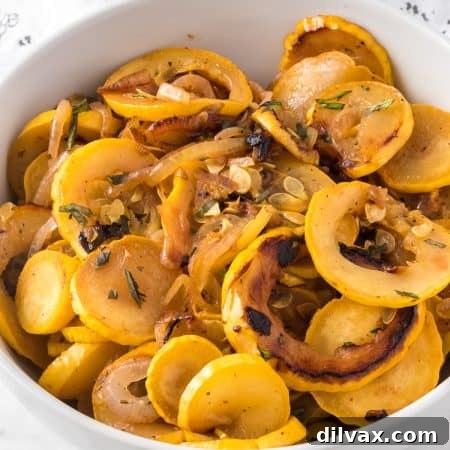
Sauteed Squash
Course Side Dish
Cuisine American
Prep Time 10 minutes
Cook Time 15 minutes
Total Time 25 minutes
Ingredients
- 3 medium yellow squash can substitute zucchini or use a combination of the two
- 2 medium onions sliced thin
- 3 tablespoons butter
- 1 tablespoon olive oil
- 2 garlic cloves minced
- ½ teaspoon Italian seasoning
- ½ teaspoon kosher salt
- ¼ teaspoon pepper
- 5-10 fresh basil leaves chopped
Instructions
-
Heat a large skillet to medium high and add the butter and olive oil.
-
Once butter has melted, add the squash, onion, minced garlic, Italian seasoning, salt, and pepper, and mix. Cook for 7 minutes without stirring. *See note.
-
Stir contents well and cook for an additional 5 minutes, stirring, if desired. Add ¾ of the chopped basil, and cook for an additional 2 minutes.
-
Sprinkle squash with the remaining basil before serving.
Notes
- This is a personal preference, but I only stir the squash once or twice the whole time it’s cooking as we like the onions really caramelized to the point of almost burnt, and the squash a bit burnt as well. Please feel free to adjust to your liking!
Nutrition
Did you make this recipe?
Share it with me on Instagram and make sure to follow me on Pinterest for more recipes.
Pin Recipe
Share Recipe