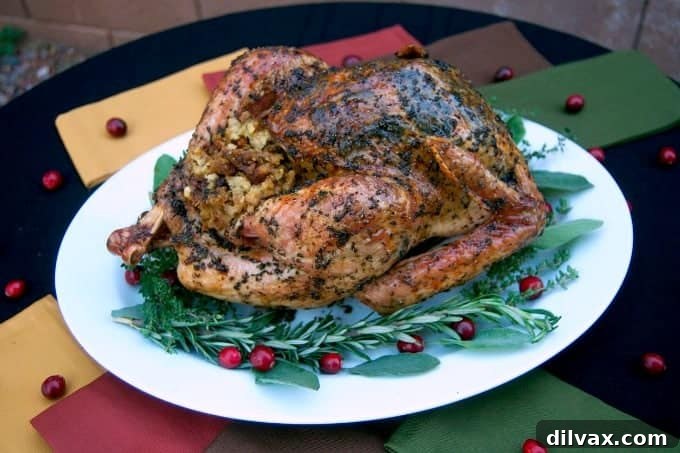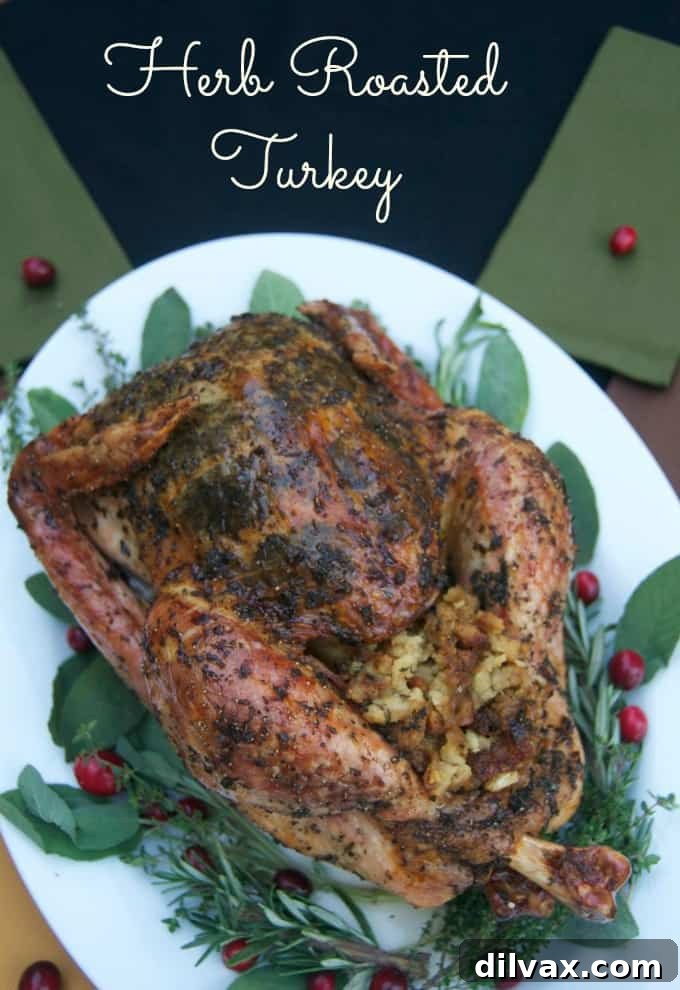
Herb-Roasted Turkey: The Ultimate Holiday Centerpiece
The holiday season is a magical time dedicated to gathering with cherished loved ones, indulging in sumptuous meals, and forging unforgettable memories. And what could possibly anchor such a joyous feast more perfectly than a magnificently prepared Herb-Roasted Turkey? This timeless culinary classic consistently proves to be a crowd-pleaser that never fades in popularity, and for very good reason. The enchanting aroma of fresh, earthy herbs harmonizing with the savory richness of roasted turkey is enough to make anyone’s mouth water and instantly transport them to a festive mood.
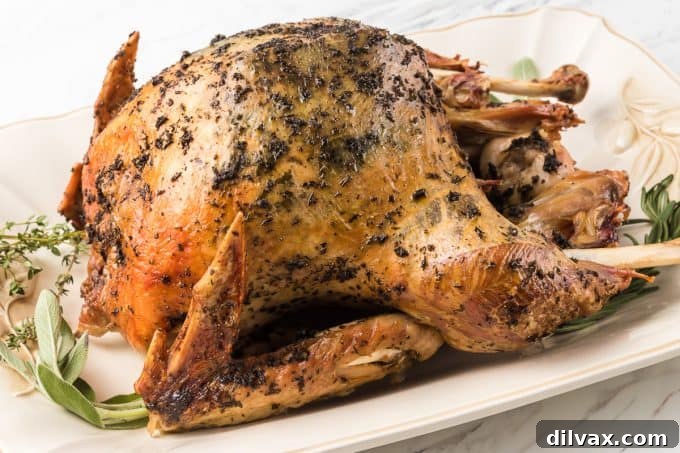
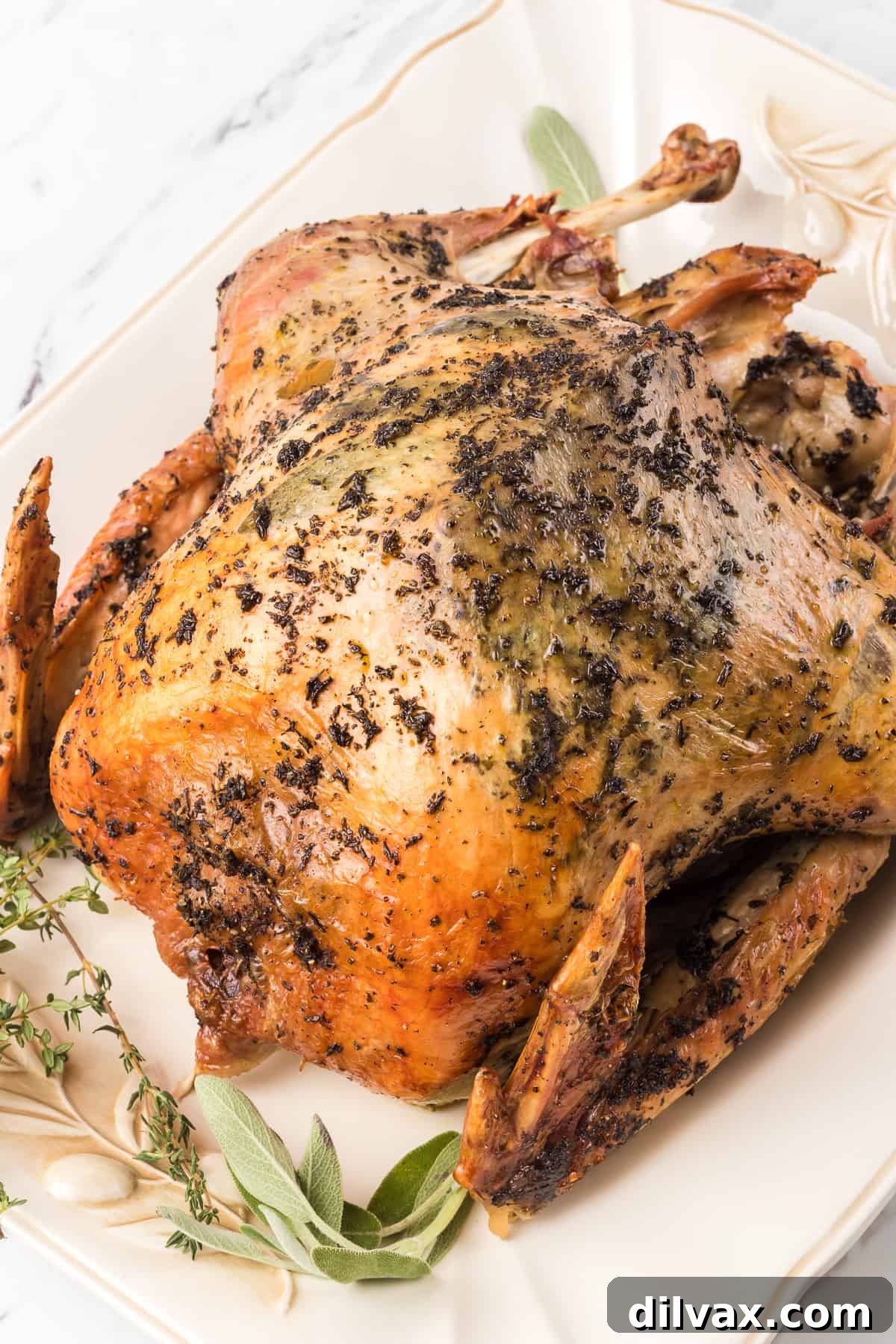
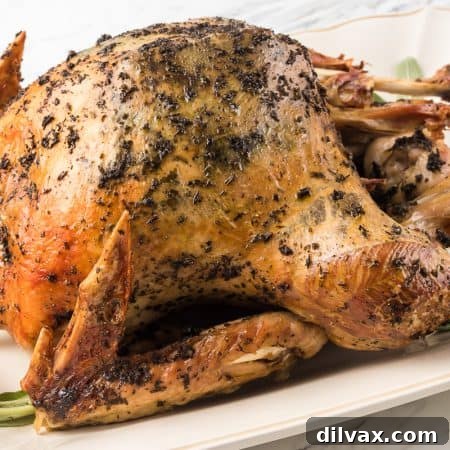
But it’s not merely about the exquisite taste. A truly well-executed roasted turkey is also a breathtaking spectacle, featuring gloriously crispy, golden-brown skin that crackles with every slice, revealing incredibly juicy and tender meat underneath. This culinary masterpiece is guaranteed to impress even the most discerning guests. Whether you are hosting a grand Thanksgiving dinner, a celebratory Christmas feast, or any special occasion, an herb-roasted turkey stands as the ultimate showstopper, ensuring everyone will be eager for second — and perhaps even third — helpings. Be sure to select a bird generous enough to provide not just a bountiful main meal, but also plenty of delicious leftover turkey sandwiches and other creative dishes for the days that follow!
Join us on a culinary journey as we unlock the secrets to crafting the most perfect, aromatic, and succulent herb-roasted turkey for your next cherished holiday gathering!
Exploring Diverse Turkey Preparation Methods for Every Taste
The culinary landscape for preparing Thanksgiving or Christmas turkey has expanded far beyond traditional roasting. While the classic method remains beloved, many home cooks now experiment with various techniques to achieve distinct flavors, textures, or to suit different cooking preferences and crowd sizes. Let’s delve into some popular alternatives and related delights that might inspire your holiday meal planning.
For instance, an increasing number of cooks are discovering the wonders of deep-frying turkey. This method is lauded for its ability to deliver incredibly crispy skin and remarkably moist meat in a surprisingly short amount of time, a perfect choice for those seeking speed and an extra-crisp exterior. Another ingenious technique gaining traction involves roasting the entire turkey upside down. This approach capitalizes on gravity, allowing all the rich juices to naturally seep down into the turkey breast throughout the cooking process, ensuring that the often-drier breast meat remains exceptionally tender and moist.
If you’re catering to a smaller gathering this holiday season, or simply wish to streamline your cooking, a Smoked Turkey Breast is an outstanding option. Infused with a deep, complex smoky flavor and often enhanced with a custom homemade dry rub, this easy recipe can be ready in just about two hours, providing a delicious and efficient alternative to roasting a whole bird.
While modern trends offer exciting innovations, I personally gravitate towards roasting my turkey the time-honored way: right-side up, generously coated with a symphony of flavorful herbs, and almost always unstuffed. This traditional method, for me, brings back a flood of warm memories of the many women in my family who lovingly prepared countless turkeys before me. Although I typically prefer an unstuffed bird now, I still hold very fond recollections of Thanksgivings past, eagerly sneaking pieces of that crusty, semi-homemade stuffing before my Grandpa had the chance to begin his ceremonial carving.
For those who appreciate the speed and convenience of modern kitchen appliances, an Air Fryer Turkey Breast is a fantastic choice. Coated with the same vibrant herbs, it’s incredibly simple to make and ready in less than an hour, making it a perfect solution for a quick holiday meal or even a flavorful weeknight dinner outside of the festive season.
And for a delightful pre-dinner treat that keeps with the festive spirit, consider serving this charming Turkey Cheeseball. While not turkey itself, this fun and creative appetizer will undoubtedly delight everyone at your dinner party or Friendsgiving celebration.
No matter which preparation method resonates most with you, the act of cooking the Thanksgiving meal is often deeply rooted in family history and tradition. I am incredibly excited to share my beloved Herb Roasted Turkey Recipe with you this holiday season, hoping it helps you create your own delicious memories and traditions!
SAVE THIS EASY TURKEY RECIPE TO YOUR FAVORITE PINTEREST BOARD!
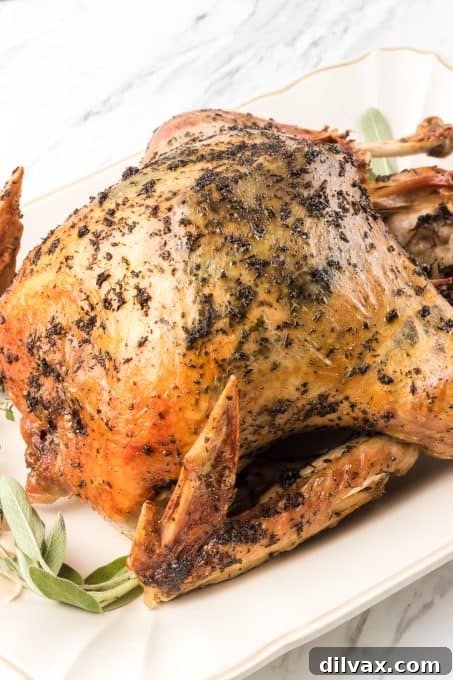
Selecting Your Perfect Holiday Turkey
The foundation of a truly delicious herb-roasted turkey lies in the initial, crucial step of choosing the right bird. This decision impacts not only the flavor and texture of your holiday centerpiece but also ensures you have enough to feed all your guests and enjoy those eagerly anticipated leftovers. When shopping for a turkey, a helpful rule of thumb is to estimate about 1 pound of turkey per person. If your family cherishes leftover turkey sandwiches, pot pies, or soups as much as the main meal, you might consider opting for a slightly larger turkey, perhaps 1.5 pounds per person, to guarantee an abundance.
When given the choice, always lean towards a fresh turkey. Fresh turkeys generally offer a superior flavor profile and a more tender, desirable texture compared to their frozen counterparts, as they haven’t undergone the freezing and thawing cycle that can sometimes affect meat quality. However, if a fresh turkey isn’t readily available or suits your planning better, a frozen turkey can yield equally impressive results, provided it is thawed thoroughly and safely before roasting. This thawing process is absolutely critical for even cooking and preventing food safety issues. Depending on the size of your turkey, thawing can take up to several days in the refrigerator, so advance planning is key. Please consult the detailed thawing chart provided below to ensure your turkey is perfectly ready for roasting.
Once you’ve acquired your chosen turkey, the preparatory steps are straightforward but essential. Begin by removing the turkey from its packaging. Next, locate and discard the giblets and neck, which are typically found within the main body cavity and sometimes a smaller cavity near the neck. Following this, give the entire turkey a thorough rinse, both inside and out, with cold running water. This helps to remove any residual particles. The final, and arguably most important, step in preparation is to generously pat the turkey completely dry with paper towels. A dry turkey skin is paramount for achieving that coveted crispy, golden-brown exterior and ensures that your flavorful herb rub adheres beautifully and evenly. With these steps completed, your turkey is perfectly prepped and poised for its transformation into a magnificent holiday roast.
Essential Turkey Thawing Guide: How Many Days Do You Need?
Properly thawing your turkey is a non-negotiable step for both ensuring food safety and achieving a delicious, evenly cooked holiday meal. Improper thawing can lead to dangerous bacterial growth or result in parts of your turkey remaining frozen while other parts cook, leading to an uneven and disappointing result. The safest and most recommended method is slow thawing in the refrigerator, which requires significant time. As an alternative for quicker thawing, the cold water method can be employed, though it demands more active attention. Use the following indispensable chart from FoodSafety.gov to precisely determine how long you will need to thaw your turkey. For the cold water method, remember to change the water every 30 minutes to maintain a safe temperature, and crucially, any turkey thawed this way must be cooked immediately after it’s fully thawed.
| To thaw in a refrigerator, allow about 24 hours for every 4 to 5 pounds. For cold water thawing, allow about 30 minutes per pound. A turkey thawed in cold water should be cooked right after thawing. | ||
| Turkey Size | Thaw in Refrigerator (set to 40°F (4°C) or below) |
Thaw in Cold Water (change water every 30 minutes) |
|---|---|---|
| 4 to 12 lbs. | 1 to 3 days | 2 to 6 hours |
| 12 to 16 lbs. | 3 to 4 days | 6 to 8 hours |
| 16 to 20 lbs. | 4 to 5 days | 8 to 10 hours |
| 20 to 24 lbs. | 5 to 6 days | 10 to 12 hours |
Planning your thawing time according to this chart will eliminate last-minute stress and ensure your turkey is perfectly prepared for roasting.
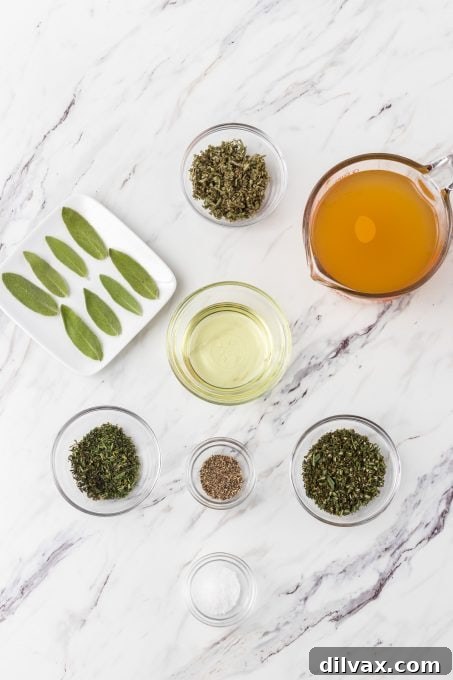
Essential Ingredients for an Aromatic Herb-Roasted Turkey
This recipe has been meticulously developed and tested with a 10-pound turkey, designed to yield a remarkably tender, juicy, and intensely flavorful bird. Should your turkey be a different size, you may need to make slight, proportionate adjustments to the quantities of the herbs and oil to ensure optimal flavor and coverage. Here is a precise list of the fresh, high-quality ingredients you’ll require to create this show-stopping holiday centerpiece:
- 2 tablespoons chopped fresh rosemary: This potent herb delivers a fragrant, piney, and slightly peppery punch, which is a classic and indispensable flavor alongside poultry.
- 2 tablespoons chopped fresh sage (plus additional whole leaves): Sage contributes a distinctive earthy, slightly minty, and peppery note that is the hallmark of traditional turkey seasoning. The additional whole leaves will be used for deeper infusion.
- 1 tablespoon chopped fresh thyme: Offering a delicate, subtle, yet profoundly aromatic presence, thyme beautifully complements and balances the stronger flavors of rosemary and sage.
- ¾ teaspoon kosher salt: Beyond merely seasoning, salt is crucial for enhancing the turkey’s natural flavors and helping to create that desirable crispy skin.
- ¾ teaspoon freshly grated black pepper: Freshly grated pepper provides a sharp, pungent warmth that awakens the palate and adds depth to the herb mixture.
- 3 tablespoons canola oil: A neutral-flavored oil, canola serves as an excellent binding agent for the herb rub, ensuring it adheres well to the turkey and promotes a beautifully crisp skin.
- 2-4 cups turkey or chicken broth: This liquid is vital for maintaining a moist roasting environment in the pan, preventing the turkey from drying out, and forms the rich base for your pan drippings and subsequent gravy.
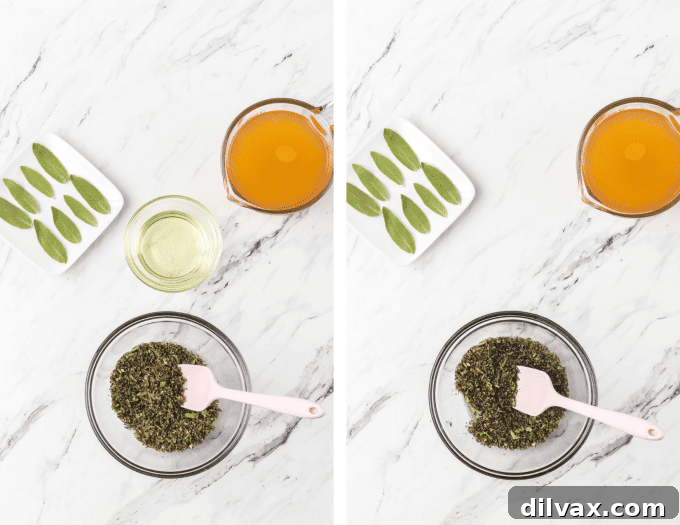
Mastering Turkey Preparation for Optimal Roasting
Before your magnificent bird even gets its flavorful herb rub, there are a few foundational steps to ensure maximum flavor and a picture-perfect presentation. These preparatory techniques are simple yet profoundly impact the final taste and texture of your roasted turkey.
A secret weapon for infusing deep, internal flavor is the creation of a fresh herb bouquet for the turkey’s cavity. I highly recommend taking a handful of robust springs of fresh thyme, rosemary, and sage – going beyond the chopped amounts for your rub – and gently nestling this fragrant bundle inside the turkey’s main cavity. This ingenious step allows the aromatic oils from the herbs to slowly permeate the meat from the inside out as it roasts, creating an incredible depth of flavor that complements the exterior rub beautifully. This subtle infusion makes a remarkable difference in every bite.
Alternatively, if you’re not keen on placing herbs directly inside the cavity, or if you’re roasting an unstuffed turkey, you can achieve a similar aromatic effect by placing this herb bouquet directly into your roasting pan. Add it about an hour before you expect to remove the turkey from the oven. This ensures the drippings, which are the base for your delicious gravy, become richly infused with those wonderful herbal notes.
I cannot overstate what a transformative difference this simple herb bouquet makes to the meat! It’s a small, effortless addition to the process, but in my culinary experience, it consistently results in the most exquisitely flavored and tender roasted turkey, time and time again.
Finally, to ensure uniform cooking and to achieve an elegant, compact presentation, you’ll want to properly truss your bird. Begin by gently tucking the wings underneath the body of the turkey. This prevents the delicate wing tips from overcooking and becoming dry or burnt. Next, securely tie the legs together with a length of sturdy kitchen twine. This action keeps the legs and thighs close to the body, promoting more even cooking throughout the entire bird and resulting in a more appealing, symmetrical shape when presented at the table. While this step contributes to both aesthetics and cooking consistency, if you prefer a more rustic or natural look, you can certainly opt to leave the legs untied.
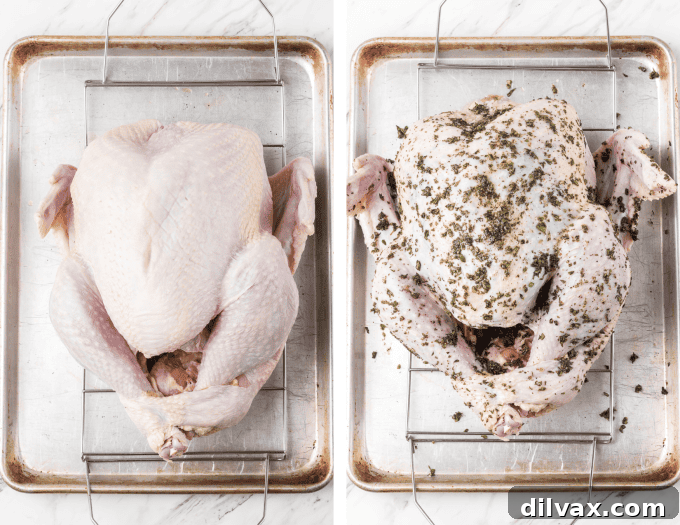
Crafting the Signature Herb Butter Rub for Maximum Flavor
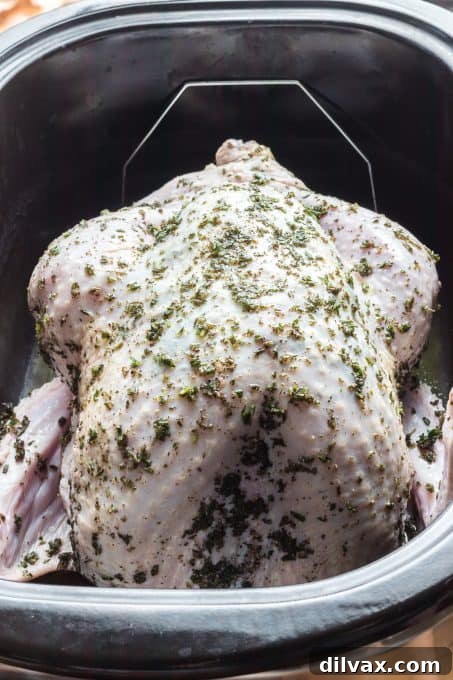
The secret to achieving that coveted crispy, golden skin and infusing deep, aromatic flavor throughout your turkey lies in the preparation and application of our signature herb rub. In a small bowl, combine your finely chopped fresh rosemary, sage, and thyme with the kosher salt, freshly grated black pepper, and canola oil. Mix these ingredients thoroughly until they form a fragrant, vibrant paste. This mixture is far more than just a seasoning; it’s a powerful flavor enhancer and a protective barrier for your magnificent bird.
Now, for the most satisfying step: generously slather this aromatic rub over every inch of your turkey. Don’t be timid! For unparalleled flavor penetration and to guarantee astonishingly juicy breast meat, meticulously lift the skin – particularly over the breast area – and spread a significant portion of the herb mixture directly underneath it. This critical technique ensures that the herbs directly season the meat, rather than just the skin, and the oil helps to keep the delicate breast meat from drying out during the long roasting process.
Continue to cover as much of the turkey’s exterior as humanly possible, paying extra attention to the legs, thighs, and even the back (the side that will be resting on the roasting rack). This comprehensive application of the rub not only contributes to the development of that beautiful crispy skin but also effectively locks in moisture and infuses every single bite with the irresistible, earthy notes of the fresh herbs. The oil component of the rub also acts as a crucial barrier, preventing the skin from drying out while simultaneously promoting a stunning, even golden-brown crust that will be the envy of your holiday table.
Achieving Roasting Perfection: A Step-by-Step Guide
To embark on the journey of roasting your turkey to absolute perfection, you’ll first need the appropriate equipment. A large, sturdy roasting pan is paramount to comfortably accommodate your bird and collect its precious, flavorful drippings. Alternatively, I am an enthusiastic proponent of using a portable roaster oven. This ingenious appliance is an absolute game-changer for holiday cooking, as it brilliantly frees up your main oven to bake all your beloved side dishes and desserts, thereby significantly reducing stress on a busy cooking day. Whether you opt for a heavy-duty roasting pan or a disposable aluminum one, ensure it is robust enough to safely support the turkey’s weight. If utilizing a disposable pan, always remember to place it on a sturdy baking sheet to prevent any bending, buckling, or unfortunate spills.
Before carefully positioning your turkey, pour approximately 2 cups of low-sodium chicken or turkey broth into the bottom of the roasting pan. This strategic addition of liquid serves several crucial purposes: it creates a steamy environment that helps keep the turkey exceptionally moist, prevents the bird from sticking to the pan, and, most importantly, lays the savory foundation for your incredibly flavorful pan drippings, which are essential for gravy. For an added layer of aromatic depth and complexity, consider scattering roughly chopped onions, carrots, and celery into the bottom of the pan alongside the broth. These vegetables will caramelize beautifully, contributing a wonderful sweetness and richness to your drippings.
Preheat your oven to a consistent 325°F (163°C). Once the oven reaches temperature, carefully place the prepared turkey, breast-side up, on the rack within the roasting pan. This orientation ensures that the delicate breast meat cooks gently and remains succulent. Roast the turkey in the preheated oven for the recommended duration, diligently basting it with the accumulating pan juices every 30-45 minutes. Basting is a key technique for keeping the skin moist, promoting an even, appealing golden-brown color, and continually infusing the turkey with its own savory juices. If you notice the pan juices diminishing, do not hesitate to add more turkey or chicken broth to maintain enough liquid for consistent basting.
Continue roasting the turkey according to the detailed time guidelines provided in our comprehensive chart below, or until the internal temperature reaches the safely cooked and perfectly succulent mark of 165°F (74°C). (Important Note: The specific cooking time stated in the recipe card is tailored for the 10 lb. turkey used in this recipe. It is crucial to always refer to the detailed Turkey Roasting Time by Size chart provided immediately below to accurately determine the precise roasting duration based on the exact weight of your particular turkey.) Maintain a vigilant eye on the turkey’s skin; if it begins to brown too rapidly before the internal temperature is reached, loosely tent the top of the turkey with a sheet of aluminum foil. This prevents over-browning while allowing the meat to continue cooking to perfection.
Comprehensive Turkey Roasting Time Chart at 325°F (163°C)
Accurately determining the roasting time for your turkey is one of the most critical factors in achieving a perfectly cooked and safe holiday meal. Whether you choose to stuff your bird or prefer it unstuffed, adhering to recommended cooking durations ensures succulence without undercooking or over-drying. The following chart provides a reliable estimation for turkeys roasted at a consistent 325°F (163°C). Always remember that these times are guidelines, and a meat thermometer remains your most accurate tool for confirming doneness.
Turkey Roasting Time by Size
| Set oven temperature to 325°F (163°C). Minimum internal temperature = 165°F (74°C) | ||
| Turkey Size | Unstuffed | Stuffed |
|---|---|---|
| 4 to 6 lbs. (breast) | 1 ½ to 2 ¼ hours | Not usually applicable |
| 6 to 8 lbs. (breast) | 2 ¼ to 3 ¼ hours | 3 to 3 ½ hours |
| 8 to 12 lbs. | 2 ¾ to 3 hours | 3 to 3 ½ hours |
| 12 to 14 lbs. | 3 to 3 ¾ hours | 3 ½ to 4 hours |
| 14 to 18 lbs. | 3 ¾ to 4 ¼ hours | 4 to 4 ¼ hours |
| 18 to 20 lbs. | 4 ¼ to 4 ½ hours | 4 ¼ to 4 ¾ hours |
| 20 to 24 lbs. | 4 ½ to 5 hours | 4 ¾ to 5 ¼ hours |
This invaluable chart, sourced from FoodSafety.gov, is an indispensable resource for holiday meal planning. Keep in mind that variations exist between ovens and even individual turkeys, so always rely on your meat thermometer for the final, definitive word on your turkey’s doneness. Checking multiple spots, especially the deepest part of the thigh and breast, is recommended.
Ensuring Your Herb-Roasted Turkey is Perfectly Cooked: Doneness Indicators
Knowing precisely when your magnificent herb-roasted turkey has reached its peak of perfection is absolutely paramount for both food safety and achieving that tender, incredibly juicy result everyone craves. There are two primary and highly reliable indicators to observe, with the use of a meat thermometer being the most accurate and crucial method:
First and foremost, always, always utilize an instant-read meat thermometer. This indispensable tool is your most accurate gauge of the turkey’s internal temperature. Carefully insert the thermometer into the thickest part of the turkey’s thigh, ensuring that the probe does not make contact with any bone, as bones can generate misleadingly higher temperature readings. The turkey is considered safely cooked when the thermometer consistently registers 165°F (74°C). For the breast meat, aim for the same temperature reading. While some culinary traditions advocate for slightly higher temperatures for the thigh (up to 180°F or 82°C) to achieve an even more “fall-off-the-bone” tenderness, 165°F is the minimum safe and universally recommended temperature for all poultry.
Another helpful, albeit secondary, visual cue to confirm doneness is to observe the clarity of the juices. Once the turkey is believed to be fully cooked, carefully pierce the thickest part of the thigh with a clean knife or skewer. The juices that emerge from the turkey should be perfectly clear and translucent, devoid of any traces of pink or red. If the juices still appear pinkish, it’s a clear signal that your turkey requires a little more time in the oven to cook through completely. Remember, while clear juices offer reassuring confirmation, the meat thermometer is your ultimate and most reliable assurance of a perfectly cooked and safe turkey.
Once both of these crucial indicators are met, your beautifully roasted Herb-Roasted Turkey is ready to be removed from the oven and moved to the next vital stage: the all-important resting period!
Resting, Carving, and Serving Your Glorious Herb-Roasted Turkey
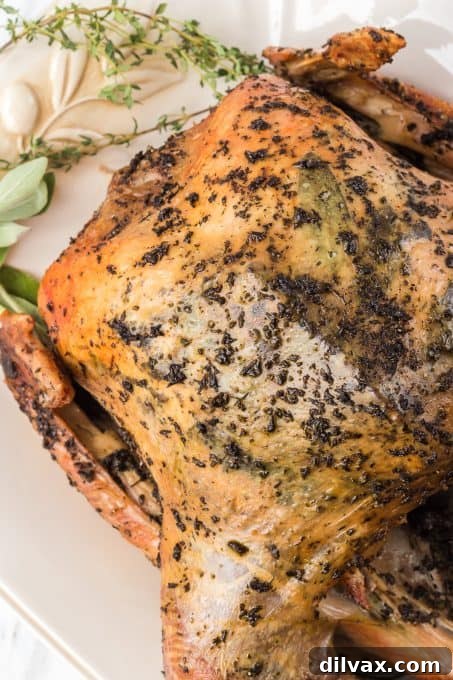
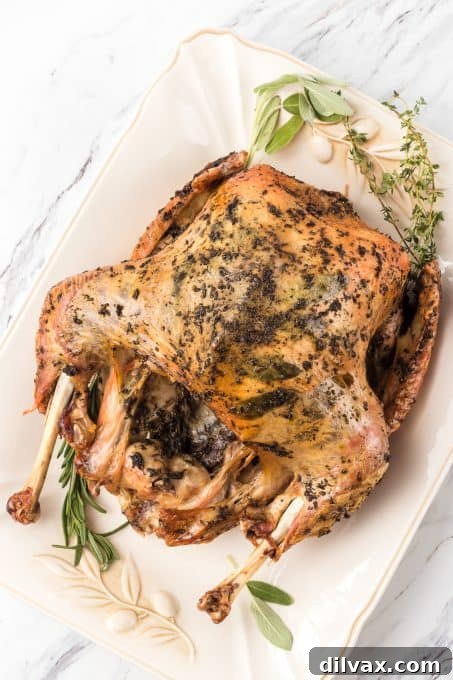
Congratulations, your magnificent herb-roasted turkey has emerged from the oven, a stunning, golden-brown masterpiece filling your kitchen with intoxicating aromas! Before you eagerly reach for that carving knife, there is an absolutely vital step that many home cooks mistakenly overlook: allowing the turkey to rest. This resting period is crucial for ensuring every slice of meat is as tender and juicy as possible. By loosely tenting the turkey with aluminum foil and letting it rest for at least 15-30 minutes (the duration depends on its size), you allow the internal temperature to evenly distribute and, more importantly, permit the precious juices to redistribute throughout the meat fibers. Skipping this step often results in dry meat, as all the flavorful juices will simply run out onto your cutting board when you start carving.
Once rested, it’s time for the grand finale: carving the turkey. In the traditional kitchens of yesteryear, a regular carving knife was often deemed sufficient. However, I can personally attest that investing in a high-quality electric carving knife was a true game-changer for holiday carving. It makes the entire process incredibly faster, significantly cleaner, and effortlessly more efficient, gliding through both skin and meat with remarkable ease. While it might only make an appearance a couple of times a year for Thanksgiving, Christmas, or when preparing other large roasts, its ability to simplify what can sometimes be a daunting task makes it an invaluable addition to your kitchen arsenal.
To begin carving your perfectly roasted turkey, first carefully remove any kitchen twine used to tie the legs. Next, gently detach the legs by cutting through the joint where they connect to the body, then separate the drumsticks from the thighs. Following this, remove the wings and set them aside. For the prized breast meat, make horizontal slices across the grain, aiming for even, uniform pieces that are easy to serve and enjoy. Finally, carve the remaining meat from the thighs and drumsticks. Artfully arrange all the carved, succulent meat on a large, pre-warmed serving platter. Garnish with a few sprigs of fresh herbs for an inviting presentation, and prepare yourself for the appreciative murmurs and eager appetites of your hungry guests!
Complementary Sides and Sauces for Your Herb-Roasted Turkey Feast
When you have an herb-roasted turkey as exquisitely delicious and aromatic as this one taking center stage on your holiday table, it absolutely calls for an equally magnificent ensemble of side dishes and sauces to complete the ultimate festive feast. The key is to select accompaniments that balance the rich, savory flavors of the turkey with fresh, vibrant, or comforting contrasts to create a truly harmonious and unforgettable meal.
For potato aficionados, both our creamy and subtly sweet Vanilla Mashed Potatoes and the irresistibly crispy Smashed Roasted Cheesy Potatoes have been enormous hits at my holiday gatherings, offering delightful variations in texture and flavor. If you’re a devoted fan of sweet potatoes, my Maple Roasted Sweet Potatoes are an absolute must-try; they typically disappear so rapidly that I often barely get to savor a bite myself! For those who appreciate a perfect marriage of sweet and savory, Maple Bacon Brussels Sprouts add a wonderfully smoky and rich dimension to your plate. And for a naturally sweet, earthy, and comforting vegetable dish, this Roasted Butternut Squash is so incredibly delicious, you might find yourself with no leftovers!
No grand turkey dinner would ever be truly complete without a rich, velvety gravy. Fortunately, you can easily craft an exceptional gravy using the flavorful pan drippings collected from your perfectly roasted turkey. Simply whisk in a little flour (or cornstarch for a gluten-free option) to create a roux, then gradually add chicken or turkey broth, simmering and whisking continuously until it thickens to your desired, luscious consistency. Beyond gravy, consider offering a vibrant and tart cranberry sauce to cut through the richness, or a comforting and slightly sweet apple sauce. Any sauce that beautifully complements and enhances the robust flavors of the turkey will be a truly welcome addition to your festive spread, elevating the entire meal.
Creative Ways to Enjoy Every Bit of Leftover Turkey
One of the true delights and advantages of preparing a grand holiday feast is the abundance of flavorful leftover turkey! It’s important not to let a single succulent piece go to waste. Proper storage is paramount for maintaining freshness and safety: allow the carved turkey meat to cool completely to room temperature before slicing the remaining meat off the bone and storing it in an airtight container in the refrigerator. This ensures it stays fresh and delicious for several days, ready for its next culinary transformation.
The culinary possibilities for leftover turkey are virtually boundless and incredibly delicious! Repurpose your remnants into comforting, hearty turkey sandwiches, perhaps elevated with a dollop of cranberry sauce, a layer of savory stuffing, and a touch of mayonnaise or mustard. Or, get truly creative with more elaborate and warming dishes such as a classic, creamy turkey pot pie, a soothing and nutritious turkey noodle soup, or even a robust and flavorful turkey chili. For something a little different and exciting, consider whipping up a batch of savory turkey spinach enchiladas, a rich and comforting turkey tetrazzini, or a quick and easy turkey hash for breakfast or brunch. Each option offers a delightful and innovative way to extend the cherished flavors of the holiday season far beyond the main event, ensuring no delicious morsel is forgotten.
What’s your absolute favorite way to prepare a turkey for the holidays, or what cherished recipe do you use? We sincerely invite you to try this aromatic Herb-Roasted Turkey recipe, and please, share your thoughts, tips, and experiences with us in the comments below!
More Holiday Inspiration: Delectable Side Dishes & Dessert Ideas
To further inspire and enrich your holiday menu planning, we’ve curated a collection of fantastic recipes that perfectly complement any festive meal, offering a delightful array of tastes and textures:
- For an elegant yet incredibly easy appetizer, these charming Cranberry Pecan Goat Cheese Bites are always a resounding hit at Thanksgiving, Christmas, or any festive dinner party, combining sweet, savory, and tangy notes.
- Cheese enthusiasts will undoubtedly adore this rich and creamy Cauliflower Gratin, offering a decadent vegetable option. Additionally, the unique and comforting Baked Apple and Cheese Casserole provides an unexpected blend of flavors that will intrigue your guests.
- When it’s time for dessert, you can truly never go wrong with a classic, comforting slice of Pumpkin Pie with Condensed Milk, especially when crowned with a generous dollop of our airy Homemade Cool Whip. However, if you’re seeking something a little different and equally delightful, I personally cherish a serving of this no-bake Pumpkin Lush, or my all-time sentimental favorite, my Aunt’s legendary Apple Cream Pie.
- For more irresistible autumnal delights, our luscious Bacon Caramel Apple Crisp, with its smoky-sweet notes, and the rich, nutty Best-Of-All Pecan Pie are two more perennial favorite desserts that would be absolutely perfect additions to your Thanksgiving dessert spread this year.
Stay Connected with Us!
Join our vibrant culinary community! Connect with us on social media for daily inspiration, the latest new recipes, helpful cooking tips, and exclusive behind-the-scenes glimpses into our kitchen adventures. We absolutely love hearing from you and seeing your delicious creations!
FACEBOOK ~
PINTEREST
INSTAGRAM ~
TWITTER
YOUTUBE
Keep an eye out for more of my easy, delicious recipes each week!
Want to Save This Recipe?
Enter your email & we’ll send it directly to your inbox. Plus, get great new recipes from us every week!
Sign up for our newsletter to get this recipe and more delicious ideas sent directly to your inbox. We respect your privacy and will never share your email address.
Herb Roasted Turkey
Ingredients
- 10 lb. turkey
- 2 tablespoons chopped fresh rosemary
- 2 tablespoons chopped fresh sage plus 8 additional whole leaves to place under the turkey’s skin
- 1 tablespoon chopped fresh thyme
- ¾ teaspoons Kosher salt
- ¾ teaspoon freshly grated pepper
- 3 tablespoons canola oil
- 2 cups low sodium turkey or chicken broth plus more if needed for basting
Instructions
-
Preheat oven to 325 degrees F (163°C).
-
Remove all contents (giblets and neck) from the cavities of the fresh or thawed turkey. Be sure to check both ends of the turkey as these items are sometimes stored separately and at different ends.
-
Rinse the turkey inside and out with cold water, then pat completely dry with paper towels. Place onto a rack, breast side up, in a large roasting pan.
-
In a small bowl, mix together the chopped rosemary, sage, thyme, kosher salt, and freshly grated pepper.
-
Add the canola oil to the herb mixture and thoroughly combine until a paste forms.
-
With the fingers of one hand, gently loosen the skin from the breast of the bird. This can be done easily and slowly with sweeping motions of your fingers between the skin and the breast meat.
-
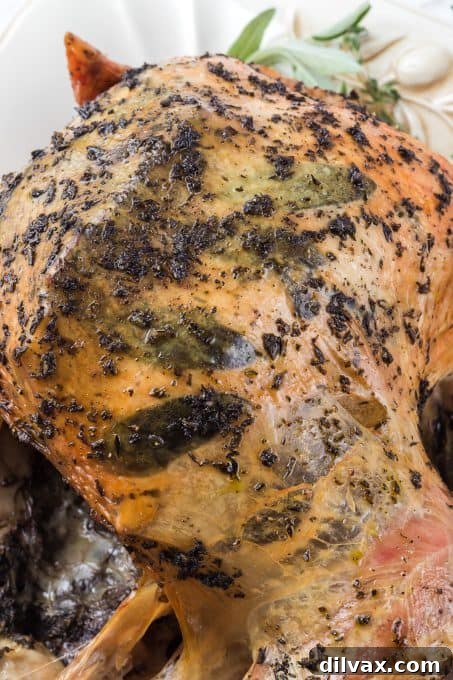
Evenly rub about one tablespoon of the herb mixture all over the breast, specifically underneath the skin.
-
Arrange 8 whole sage leaves in a diagonal pattern under the skin of the turkey breast (four on each side) for additional flavor infusion and visual appeal.
-
Rub the remaining herb mixture over the entire exterior of the turkey, including the legs, thighs, and the portion closest to the rack. Tuck wings under the body and tie legs together with kitchen twine.
-
You may or may not choose to stuff your turkey before placing it into the oven. If stuffing, loosely fill the cavity. See Note for cooking time adjustments.
-
Pour 2 cups of turkey or chicken broth into the bottom of the roasting pan. Cook the turkey in the preheated oven. For a 10 lb. turkey, roast for 3 1/4 – 3 1/2 hours if stuffed, or 2 ¾ – 3 hours if unstuffed. Refer to the roasting chart in the post for other turkey sizes.
-
Every 45 minutes, be sure to baste the turkey generously with the drippings in the roasting pan. It may be necessary to add additional broth to the pan for basting purposes if the liquid level runs low. If the turkey’s skin is browning too quickly before it has finished roasting, loosely cover the top with a sheet of aluminum foil.
-
To confirm doneness, use an instant-read meat thermometer. Insert it into the thickest part of the thigh (avoiding bone) and the thickest part of the breast. The internal temperature should read 165°F (74°C) in both areas. Some prefer the thigh to reach 180°F (82°C) for extra tenderness. The juices should run clear when pierced.
-
Once cooked, transfer the turkey to a large cutting board and allow it to rest, loosely tented with foil, for at least 15-30 minutes before carving. This crucial step allows the juices to redistribute, ensuring a tender and succulent result.
Notes
Nutritional information and cooking times provided in this recipe card are specifically for a 10 lb. unstuffed turkey.
Optional Flavor Enhancement: After applying the herb rub to the turkey, consider cutting 1-2 onions, 1-2 lemons, and an orange into quarters, similar to the technique used in this Lemon Herb Roasted Chicken recipe. Gently place these aromatic fruit and vegetable pieces into the turkey’s cavity. Doing this will infuse additional, wonderful layers of flavor into the turkey as it cooks. If you choose this option, you may need to increase the total cooking time by approximately 15 minutes to ½ hour.
Nutrition
Did you make this recipe?
We’d love to see your culinary creations! Share a picture with us on Instagram and make sure to follow us on Pinterest for even more delicious recipes and holiday inspiration.
Pin Recipe
Share Recipe
This post was originally published November 14, 2014. It has been extensively updated in format and with new pictures on October 25, 2023, to provide the most current and comprehensive guide.