The Ultimate Homemade Cinnamon Rolls: A Timeless Comfort Food Recipe
Mmmm… few aromas can compare to the sweet, inviting scent of freshly baked cinnamon rolls wafting through your kitchen. This beloved treat, with its irresistibly soft dough, fragrant cinnamon swirls, and generous topping of luscious glaze, is more than just a pastry—it’s an experience. While store-bought options can satisfy a quick craving, nothing truly compares to the magic of crafting homemade cinnamon rolls from scratch. This cherished recipe, adapted from the classic Fannie Farmer Cookbook Thirteenth Edition (page 530), originally by Marion Cunningham and published by Alfred A. Knopf, Inc., a division of Random House (ISBN 0-394-56788-9), promises to guide you to cinnamon roll perfection. Prepare to fill your home with an intoxicating fragrance and your taste buds with pure, unparalleled bliss.
What Makes Homemade Cinnamon Rolls So Irresistible?
Cinnamon rolls are a delightful sweet roll, typically enjoyed for breakfast, brunch, or as a decadent dessert. They are fundamentally composed of a yeast-leavened dough, which is meticulously rolled flat, generously coated with a cinnamon-sugar mixture, then coiled tightly, sliced into individual portions, and finally baked until golden. The baking process works wonders, transforming the simple dough into a fluffy, tender texture. Simultaneously, the cinnamon-sugar filling melts and caramelizes within the swirls, creating pockets of rich, sticky, and incredibly aromatic goodness. The final touch, a decadent glaze or cream cheese frosting, is drizzled over the warm rolls, adding an essential layer of sweetness and moisture that makes them utterly divine. This particular recipe, however, takes a slightly different approach, incorporating the cinnamon directly into the dough itself, offering a unique and equally delicious depth of flavor in every bite.
Making them at home gives you complete control over the ingredients, ensuring freshness and allowing for personal customization. You can adjust the sweetness, the amount of cinnamon, and even experiment with different types of flour or add-ins. Plus, the act of baking itself, from kneading the dough to watching it rise, is a wonderfully therapeutic and rewarding process that culminates in a truly spectacular culinary creation.
Gather Your Ingredients for Heavenly Homemade Cinnamon Rolls
The journey to crafting the perfect batch of homemade cinnamon rolls begins with selecting high-quality ingredients. Each component plays a vital role in achieving that sought-after soft, pillowy texture and incredibly rich flavor. For optimal results, ensure your eggs and milk are at lukewarm or room temperature, as this critical detail significantly aids in the activation of the yeast and promotes proper dough development.
For the Dough:
- 1 package (2¼ teaspoons) active dry yeast
- ¼ cup warm water (ideal temperature: 105-115°F / 40-46°C)
- 4½ cups all-purpose white flour (approximately) – it’s wise to reserve a portion for kneading and dusting.
- 1 cup lukewarm milk (ideal temperature: 105-115°F / 40-46°C)
- ¾ cup granulated sugar
- 1 teaspoon fine sea salt or table salt
- 1 tablespoon ground cinnamon – this is mixed directly into the dough for integrated flavor.
- 2 large eggs, at room temperature
- 2 tablespoons unsalted butter, softened to room temperature
- ½ cup raisins (optional) – these add a delightful chewiness and sweetness; feel free to omit if preferred.
For Brushing Before Baking:
- A little extra milk (about 2 tablespoons)
For the Irresistible Glaze:
- ¾ cup confectioners’ sugar (also known as powdered sugar)
- 1 teaspoon pure vanilla extract
- 4 teaspoons warm water (adjust as needed to reach desired consistency)
Pro Ingredient Tip: Using unsalted butter allows you precise control over the overall saltiness of your rolls. If you opt for salted butter, consider slightly reducing the amount of added salt in the dough. Always measure your flour by spooning it into a measuring cup and then leveling it off, rather than scooping directly, to avoid a dense dough.
Baking Bliss: Your Step-by-Step Guide to Perfect Cinnamon Rolls
Follow these meticulously detailed instructions to ensure your homemade cinnamon rolls emerge from the oven incredibly soft, wonderfully fluffy, and bursting with an aromatic cinnamon flavor. While baking is often referred to as a science, a little patience, precision, and attention to these steps will enable you to master this truly rewarding recipe in no time.
-
Activate the Yeast
Your baking journey begins with activating the yeast. In a small, clean bowl, gently sprinkle the entire package of active dry yeast over the ¼ cup of warm water. It’s crucial that the water temperature falls within the 105-115°F (40-46°C) range – water that is too hot will sadly kill the yeast, rendering it ineffective, while water that is too cold will fail to activate it properly. Allow this mixture to sit undisturbed for precisely 5 minutes. You’ll know your yeast is vibrantly active and ready to perform its magic when it transforms into a foamy, bubbly layer on the surface, indicating it’s alive and ready to help your dough rise beautifully. If you don’t observe this foamy reaction, your yeast might be past its prime or the water temperature was incorrect; it’s best to discard it and begin anew with a fresh package.
-
Prepare the First Dough Mixture (The Sponge)
In a generously sized mixing bowl, combine the activated, foamy yeast mixture with 1 cup of lukewarm milk and 3 cups of the white all-purpose flour. Using a sturdy spoon or a dough whisk, mix these ingredients thoroughly until they are well blended and coalesce into a shaggy, somewhat rough dough. This initial mixture forms what bakers often refer to as a “sponge,” which allows the yeast to commence its fermentation process and begin developing essential flavors and elasticity within the dough. Cover the bowl securely with a clean kitchen towel or a piece of plastic wrap, then place it in a warm, draft-free environment. Allow it to rise for approximately 45-60 minutes, or until you observe that it has visibly doubled in bulk. This crucial first rise is fundamental for developing the dough’s ultimate texture and pliability.
-
Incorporate Remaining Dough Ingredients
Once your sponge has successfully doubled in size, it’s time to enrich the dough further. To the bowl, add the remaining ¾ cup of granulated sugar, 1 teaspoon of salt, 1 tablespoon of ground cinnamon, the 2 large room-temperature eggs, and the 2 tablespoons of softened unsalted butter, along with the remaining ¾ cup of flour. Mix all these components together until they are just combined. At this stage, the dough will still be quite soft and noticeably sticky, which is the perfect and expected consistency before kneading.
-
Knead the Dough to Perfection
Generously dust a clean, sturdy work surface or a large pastry board with a light coating of flour. Carefully turn the soft dough out onto this floured surface. Begin the kneading process gently, slowly incorporating the remaining ¾ cup of flour, adding just a little at a time, only as needed. Continue to knead the dough for a sustained period of about 8-10 minutes. The ultimate objective here is to achieve a dough that is wonderfully smooth, elastic, and no longer excessively sticky, making it easy to handle without clinging stubbornly to your hands or the work surface. If you’ve chosen to include raisins, gently knead them into the dough during the last few minutes of the kneading process until they are uniformly distributed throughout. Remember, avoid the temptation to add too much flour, as an over-floured dough can result in dry, tough rolls; only use enough to make the dough manageable and prevent sticking.

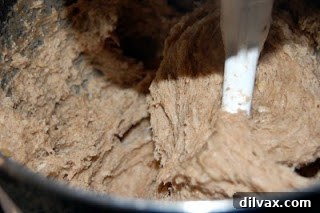
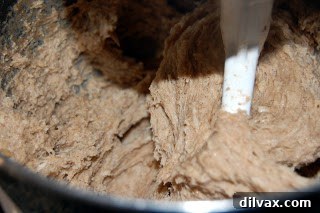
The dough after its first rise, perfectly proofed and ready to be worked with.
-
Shape the Cinnamon Rolls
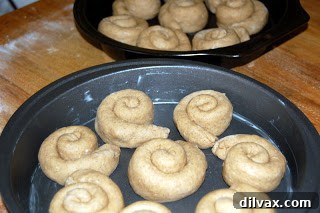
With your dough now perfectly kneaded and supple, it’s time for the enjoyable task of shaping your individual cinnamon rolls. Pinch off pieces of dough, each roughly the size of a medium lemon (this usually translates to about 2 to 3 ounces per piece for consistent roll size). On your lightly floured work surface, meticulously roll each individual piece of dough into a thin rope, aiming for a length of approximately 8 inches. To create the classic spiral shape, carefully wind each dough rope into a tight coil, gently tucking the very end of the rope underneath the coil to secure its shape. This particular winding technique not only imparts the rolls with their signature aesthetic but also ensures they bake evenly and maintain their delightful structure.
Beautifully coiled cinnamon rolls, awaiting their crucial second rise.
-
Second Rise (Proofing)
Prepare your baking vessels by lightly buttering two 9-inch round cake pans, or by lining a large baking sheet with parchment paper if you prefer. Carefully arrange the shaped cinnamon roll coils within the prepared pans, ensuring you leave a little bit of space between each roll, as they will expand considerably during this next rise. Cover the pans loosely with a clean kitchen towel or a sheet of plastic wrap. Place them back into a warm, draft-free spot and allow them to rise again until they have noticeably doubled in bulk. This typically takes another 30-45 minutes, depending on the warmth of your environment. This second rise, commonly referred to as proofing, is absolutely vital for achieving the light, airy, and truly tender texture that distinguishes exceptional cinnamon rolls. Towards the very end of this rising period, gently brush the tops of the rolls with a small amount of milk; this simple step helps them achieve a gorgeous golden-brown hue and contributes to a softer crust once baked.
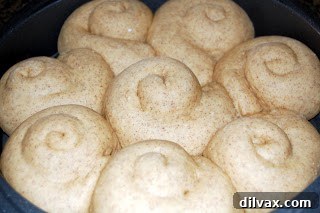
They certainly did rise! Look at that perfect proof!
The rolls after their successful second rise, plump and perfectly proofed for the oven.
-
Bake to Golden Perfection
As the rolls are completing their second rise, preheat your oven to 375°F (190°C). Once the rolls have fully doubled in size, carefully transfer the pans into the preheated oven. Bake for approximately 25 minutes. It’s important to monitor them closely, as the exact baking time can vary slightly depending on the calibration and specific characteristics of your oven. The rolls should emerge from the oven boasting a beautiful golden-brown color on their tops and be thoroughly cooked through. If you notice the tops are browning a little too rapidly, you can loosely tent them with a piece of aluminum foil for the final 5-10 minutes of baking to prevent over-browning while allowing the centers to finish cooking.
-
Prepare and Apply the Irresistible Glaze
While your mouth-watering cinnamon rolls are baking, it’s the perfect time to prepare the simple yet irresistible glaze. In a small bowl, thoroughly whisk together the ¾ cup of confectioners’ sugar, 1 teaspoon of pure vanilla extract, and 4 teaspoons of warm water. Continue mixing until the glaze is completely smooth and entirely free of any lumps. The ideal consistency should be easily pourable but not overly thin – you want it to lovingly cling to the surfaces of the rolls. If the glaze appears too thick, incorporate a tiny bit more warm water, just a few drops at a time; if it seems too thin, gradually add a little more confectioners’ sugar until the perfect consistency is achieved.
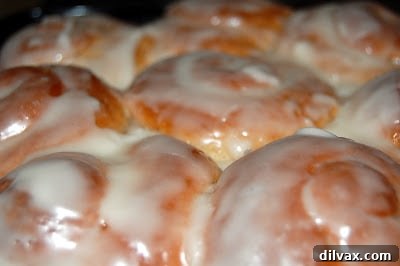
The moment you remove the hot cinnamon rolls from the oven, immediately proceed to spread a thin, even layer of this freshly prepared glaze over their warm tops. The residual heat from the rolls will help the glaze melt ever so slightly and soak beautifully into the pastry, creating that signature gooey, sticky finish that everyone adores. For an extra indulgent treat, we highly recommend doubling the glaze recipe, especially if you, like many of us, prefer an “ooey-gooey-sticky-all-over-your-fingers-good” experience!
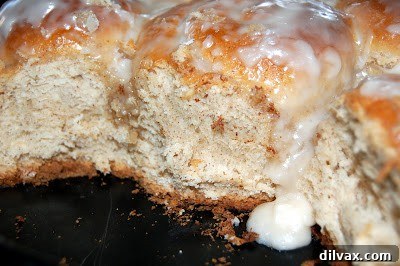
Hot from the oven and glazed to perfection – an irresistible sight.
A tantalizing close-up of pure cinnamon roll deliciousness, ready to be devoured.
Baking Insights & Pro Tips for Cinnamon Roll Success
Even with a meticulously crafted recipe, baking can sometimes present unexpected nuances or challenges. Here are some valuable insights and practical tips, drawn from real-world baking experiences, designed to help you achieve cinnamon roll perfection every single time.
Navigating the High-Altitude Baking Conundrum
Baking at higher elevations often necessitates specific adjustments to recipes, primarily due to lower atmospheric pressure. At altitude, liquids evaporate more quickly, and leavening agents (like yeast) become more vigorous, causing doughs to rise faster and sometimes over-proof or even collapse. The experience of the rolls browning more quickly than expected, despite being removed when the aroma suggested doneness, is a classic high-altitude symptom. Ovens can also behave differently at elevation, and foods generally require a longer cooking time to be thoroughly baked through, even if they appear done on the outside. This means that while a recipe might suggest 25 minutes, you might need to bake for 30-35 minutes, or potentially even longer, possibly at a slightly lower temperature (e.g., 350°F / 175°C), to ensure the interior is fully cooked without over-browning the exterior. Trusting your senses, particularly your sense of smell, is an excellent baker’s instinct, but it’s crucial to also factor in adjustments for your specific environmental conditions. Investing in an oven thermometer can be incredibly helpful to verify your oven’s true internal temperature, which often varies from the dial setting, especially at altitude.
The Art of the Glaze: Beyond the Basic
While the classic glaze of confectioners’ sugar, vanilla, and water is wonderfully simple and universally loved, never hesitate to experiment and elevate your cinnamon rolls further! A rich and creamy cream cheese frosting can transform your cinnamon rolls into an even more decadent treat. To make one, simply combine 4 ounces of softened cream cheese, ¼ cup of softened unsalted butter, 1½ cups of confectioners’ sugar, and ½ teaspoon of vanilla extract. Mix until the frosting is perfectly smooth and creamy. For an added layer of complexity or a more sophisticated flavor profile, you could also introduce a tiny pinch of salt or a splash of milk or heavy cream to fine-tune the consistency to your liking.
Grandma’s Secret vs. Our Unique Twist
Many cherished traditional cinnamon roll recipes, much like those lovingly prepared by grandmothers for generations, distinctly feature a separate sugar and cinnamon mixture that is generously spread and rolled into the center of the dough. This method creates a visually striking, beautiful spiral of spice and often results in a wonderfully gooey, caramelized core within each roll. Our current recipe, however, takes a different approach by mixing the cinnamon directly into the dough itself. This method provides a more integrated and consistent flavor profile throughout the entire roll, ensuring a comforting warmth and spice in every single bite. Both methods yield incredibly delicious results, and ultimately, personal preference often dictates which one earns the title of family favorite. We encourage you to try both approaches and discover which style of cinnamon roll captures your heart (and your stomach!) the most.
Storage and Reheating for Lingering Enjoyment
Homemade cinnamon rolls are undeniably at their absolute best when enjoyed fresh and warm, straight from the oven. However, should you be fortunate enough to have any leftovers, proper storage ensures you can savor them later. Store your cooled cinnamon rolls in an airtight container at room temperature for up to 2-3 days, or extend their freshness by refrigerating them for up to 5 days. To bring them back to their soft, warm glory, simply pop an individual roll into the microwave for 15-30 seconds. Alternatively, for a batch, warm them in a preheated oven at 300°F (150°C) for about 5-10 minutes until they are soft and heated through. If you’re planning ahead, you can prepare the dough up to the shaping stage, cover the shaped rolls, and refrigerate them overnight. In the morning, allow them to come to room temperature and complete their second rise for an hour or two before baking as directed.
The Joy of Baking: A Sweet Reward Worth Every Effort
There’s an undeniable and profound satisfaction that comes from creating something so utterly delicious and comforting entirely from scratch. Despite any minor baking mishaps – such as a slightly darker crust (which is often a valuable lesson in oven calibration or altitude adjustments!) – the ultimate reward of soft, fragrant, and perfectly glazed homemade cinnamon rolls is always, without exception, worth every bit of effort. The delightful fact that the interior of these rolls remained “very soft and delicious” stands as a testament that a little imperfection on the outside can never diminish the true homemade goodness within. This recipe, earning a solid and well-deserved “3 rolling pins” for its delightful and consistent results, serves as an open invitation to embrace the joyful process of baking and to savor every sweet, cinnamon-infused moment. Happy baking, and may your kitchen perpetually be filled with the wonderful, comforting scent of cinnamon!