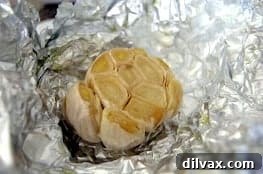
Unlock Culinary Magic: Your Essential Guide to Roasting Garlic and Red Peppers
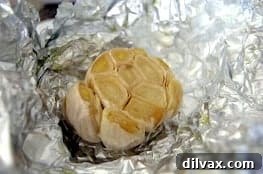
Mastering the art of roasting garlic and red peppers is more than just a culinary technique; it’s a fundamental skill that opens up a world of flavor possibilities in your kitchen. These simple, yet transformative processes convert everyday ingredients into sublime, versatile flavor powerhouses. Imagine the sweet, caramelized notes of roasted garlic melting in your mouth, or the smoky, tender richness of roasted red peppers enhancing your favorite dishes. This guide will walk you through easy, step-by-step directions, ensuring you can confidently add these incredible ingredients to your culinary repertoire. Knowing how to roast garlic and a red pepper can genuinely spark creativity, inspire new recipes, and profoundly enhance the dining experience, making every meal a celebration of deep, nuanced flavors.
Roasted garlic, in particular, undergoes an incredible metamorphosis. Its sharp, pungent bite mellows into a buttery, sweet, and spreadable delicacy that can elevate countless dishes. Whether you spread it generously on warm crusty bread, whisk it into a vinaigrette, or stir it into a creamy pasta sauce, its distinct flavor profile is utterly irresistible. I vividly recall the first time I tasted freshly roasted garlic straight from the oven – the temptation was too great, and a single clove quickly turned into several. It’s a taste test I highly recommend!
The Art of Roasting Garlic: A Culinary Essential
Roasting garlic is perhaps one of the simplest yet most rewarding kitchen tasks. The high heat of the oven transforms raw garlic cloves, breaking down their sulfur compounds and sugars, resulting in a remarkably sweet, nutty, and irresistibly soft texture. This mellowed flavor is a stark contrast to raw garlic, offering a sophisticated addition to both savory and sweet dishes. Beyond its incredible taste, roasted garlic is also celebrated for its potential health benefits, delivering antioxidants and anti-inflammatory properties in a delicious form.
Ingredients You’ll Need:
- One whole head of garlic
- Approximately 1-2 teaspoons of olive oil (extra virgin is preferred for flavor)
- A pinch of salt (optional, but enhances flavor)
- Aluminum foil
Equipment:
- Sharp knife
- Cutting board
- Baking sheet
Step-by-Step Directions to Perfectly Roasted Garlic:
- Preheat Your Oven: Begin by preheating your oven to 400 degrees Fahrenheit (200 degrees Celsius). This consistent high heat is crucial for achieving the perfect caramelization and tender texture.
- Prepare the Garlic Head: Take a whole head of garlic and gently peel off the outermost papery layers of skin. It’s important to leave the skin on the individual cloves, as this protects them during the roasting process and helps steam them into a soft consistency.
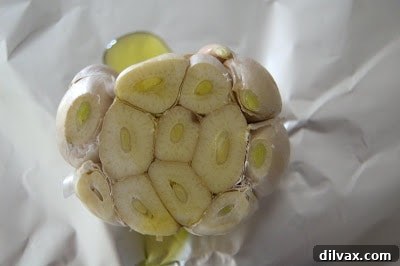
- Trim the Top: Using a sharp knife, carefully slice about 1/4 to 1/2 inch off the very top of the garlic head. This exposes the tips of the individual cloves, allowing the olive oil to penetrate and the flavors to deepen while roasting.
- Drizzle with Olive Oil: Place the prepared garlic head onto a piece of aluminum foil that’s large enough to wrap around it completely. Drizzle the exposed cloves generously with olive oil. The olive oil not only adds flavor but also helps the garlic to roast beautifully without drying out, contributing to its luscious, soft texture.
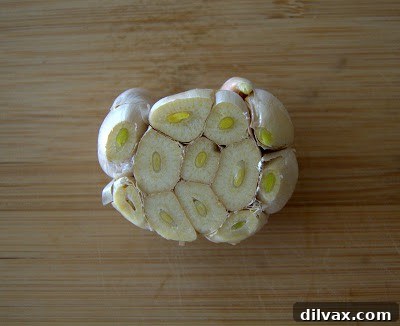
- Massage the Oil In: Gently rub the olive oil into the exposed cloves with your fingers, ensuring they are well coated. This step helps distribute the oil evenly for optimal roasting.
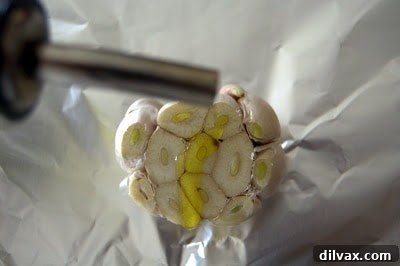
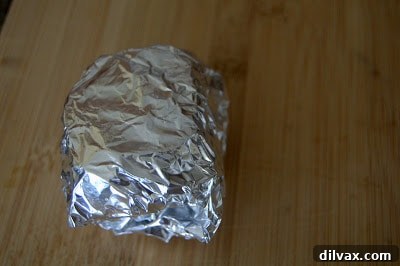
- Wrap Securely: Carefully wrap the garlic head entirely in the aluminum foil, creating a sealed packet. This ensures that the garlic steams and roasts simultaneously, resulting in a wonderfully tender interior.
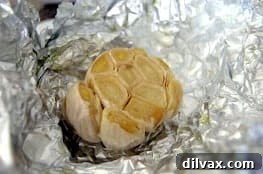
- Bake to Perfection: Place the foil-wrapped garlic packet directly onto a baking sheet and transfer it to your preheated oven. Bake for approximately 30 to 45 minutes. The roasting time can vary depending on the size and freshness of your garlic. You’ll know it’s done when the cloves are deeply golden brown, incredibly tender, and easily squeezed from their skins.
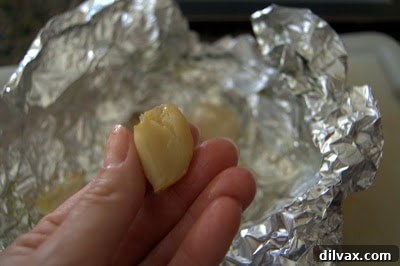
- Cool and Extract: Once roasted, remove the garlic from the oven and let it cool in the foil packet for about 10-15 minutes. It should be cool enough to handle comfortably. To extract the individual cloves, you can either slice through the skin with a small knife or, my preferred method, gently squeeze each clove from the bottom. They should easily pop out, revealing their creamy, sweet goodness.
Uses for Roasted Garlic:
The possibilities are endless! Spread it on crostini, mix it into hummus, mash it into mashed potatoes, whisk it into salad dressings, add it to pasta sauces, incorporate it into compound butters, or simply enjoy it straight as a delightful snack.
Storage Tips:
Store roasted garlic cloves in an airtight container in the refrigerator for up to one week. For longer storage, you can submerge the cloves in olive oil in a jar (ensuring they are completely covered) and refrigerate for up to two weeks. Alternatively, roasted garlic can be frozen for several months.
Mastering Roasted Red Peppers: Sweet, Smoky, and Versatile
Roasted red peppers are another culinary jewel, transforming from crisp, sometimes bitter, raw peppers into incredibly sweet, smoky, and tender delicacies. The roasting process caramelizes their natural sugars and imparts a wonderful char, which then aids in peeling the skin, resulting in a silken texture and deep flavor. Roasted red peppers are rich in vitamins A and C, and their vibrant color makes them a visually appealing addition to any dish.
Ingredients You’ll Need:
- 1 large red bell pepper
- Olive oil (for storage, optional)
- Garlic slivers (for storage, optional)
Equipment:
- Tongs
- Large bowl
- Plastic wrap or a plate
- Fine mesh sieve
- Sharp knife
- Cutting board
Step-by-Step Directions to Perfectly Roasted Red Peppers:
- Prepare the Pepper: Start by removing any stickers from the red pepper. Thoroughly wash and completely dry the pepper. Any moisture can hinder the charring process.
-
Choose Your Roasting Method: There are several effective ways to roast a red pepper, each imparting a slightly different nuance of flavor:
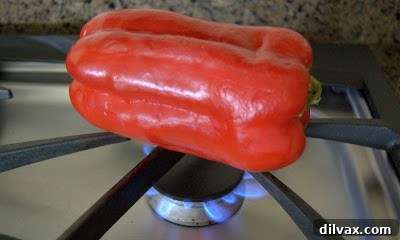
- Gas Stove Method (Most Recommended for Smokiness): Turn a burner on your gas stove to high heat. Carefully place the whole red pepper directly onto the grate over the flame. Using tongs, rotate the pepper frequently, allowing all sides to char evenly until the skin is blackened and blistered. This method provides the most intense smoky flavor.
-
- Grill Method: If you have a grill, you can achieve similar results. Place the pepper directly over medium-high heat, turning frequently with tongs until all sides are evenly charred.
- Oven Broiler Method (Electric Stoves): If you have an electric stove, set your oven broiler to high. Place the pepper on a foil-lined baking sheet and position it about 4-6 inches from the broiler element. Broil, turning every few minutes, until the skin is blackened and blistered on all sides. For consistent high heat, it’s often helpful to leave the oven door slightly ajar.
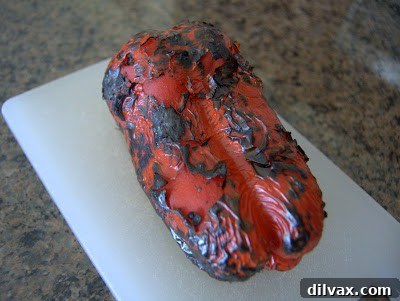
During the roasting process, don’t be alarmed by popping or hissing sounds. This is completely normal; it’s simply the pepper’s skin blistering and the internal moisture evaporating, creating a mesmerizing visual transformation.
- Steam and Cool: Immediately after the pepper is fully charred, transfer it to a bowl and cover the bowl tightly with plastic wrap or a plate. This crucial step traps the steam, which helps loosen the skin, making it much easier to peel. Resist the urge to peek or lift the cover too soon; allow the pepper to steam for at least 15-20 minutes, or until it’s cool enough to handle. While some might forget this step and still manage to peel the pepper, steaming significantly simplifies the process.
- Prepare for Cleaning: Place a fine mesh sieve over another bowl. This setup will be used to collect seeds and any drained liquid, preserving the precious smoky juices.
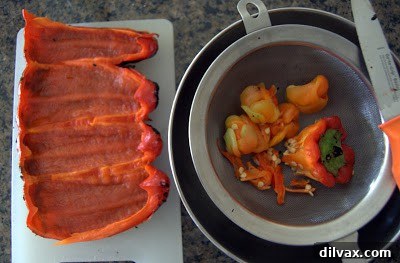
- Core and Seed: Once the pepper has cooled sufficiently, hold it over the sieve. With a very sharp knife, carefully cut around the stem at the top of the pepper. You should be able to pull out the stem and the seed pod in one go. Place the stem and seed pod into the sieve. Hold the pepper upside down over the sieve to allow any accumulated water or juices to drain into the bowl below.
- Flatten and Deseed: Slice down the length of the pepper, opening it up so it lays flat on your cutting board. Carefully remove any remaining seeds from the interior, adding them to the sieve.
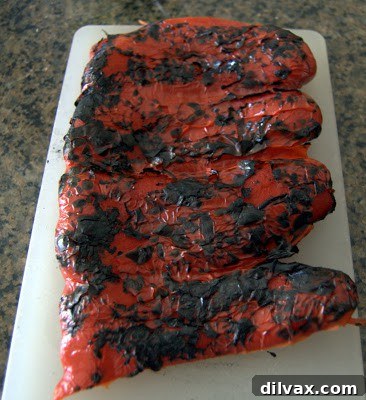
- Peel the Skin: Turn the pepper over so the charred skin faces up. Using the back of your knife (or a spoon), gently scrape off the blackened skin. Wipe your knife or spoon on the sieve as you go to keep it clean. You may find some small bits of skin stubbornly clinging, but resist the temptation to rinse the pepper under water. Rinsing will wash away much of that hard-earned smoky flavor that makes roasted peppers so special.
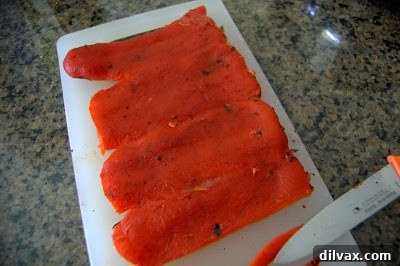
- Slice and Store: Once peeled, slice the pepper into strips. Place these strips into a clean bowl, incorporating any collected juices from under the sieve. To preserve and enhance their flavor, cover the strips with good quality olive oil and, if desired, add a few slivers of fresh garlic. Refrigerate them in this manner, and they will keep wonderfully for one to two weeks. If you plan to use them immediately in a recipe, you might opt to skip the olive oil bath for that portion.
Uses for Roasted Red Peppers:
Roasted red peppers are incredibly versatile. Blend them into creamy soups or sauces, add them to salads, layer them in sandwiches or pizzas, incorporate them into pasta dishes, or serve them as part of an antipasto platter. Their sweet and smoky notes add depth to almost any savory creation.
Combining the Flavors:
Both roasted garlic and roasted red peppers are stars on their own, but when combined, they create an explosion of rich, harmonious flavors. Imagine a dip made with both, or a sauce where their individual complexities intertwine to form something truly extraordinary.
Now armed with this newfound knowledge and these detailed instructions, you are ready to embark on your own culinary adventure. Go forth and transform ordinary ingredients into extraordinary flavors. Your taste buds, and perhaps even your dinner guests, will thank you!
Happy roasting, and enjoy the delicious journey!