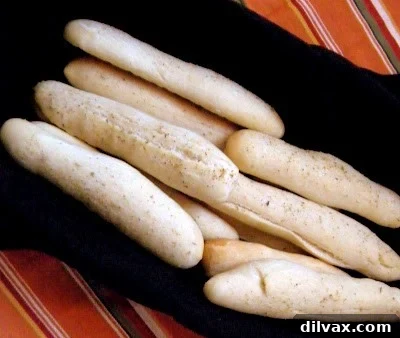
Homemade Olive Garden Breadsticks: The Ultimate Copycat Recipe Guide
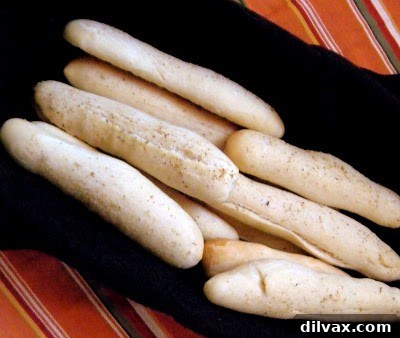
Are you among the millions who adore Olive Garden’s iconic breadsticks? That perfectly soft, pillowy texture, brushed with garlic butter and sprinkled with a whisper of salt, has a way of transporting you straight to an Italian-American comfort food paradise. For many, a trip to Olive Garden isn’t complete without indulging in these unlimited, warm, and inviting breadsticks. But what if you could recreate that magic in your own kitchen? What if you could enjoy that beloved flavor and texture anytime, without leaving your home?
Well, get ready, because today we’re diving deep into crafting the ultimate copycat Olive Garden Breadsticks. This isn’t just another recipe; it’s your comprehensive guide to achieving bakery-quality breadsticks that rival the restaurant’s best. Prepare to impress your family and friends with a batch of these irresistible, buttery, and garlicky delights.
The Irresistible Allure of Copycat Recipes
My culinary journey often leads me down the delightful path of copycat recipes, especially when it comes to baked goods. There’s something uniquely satisfying about cracking the code of a cherished restaurant favorite. You might remember my obsession with the Texas Roadhouse Rolls – a recipe that, if you haven’t tried, you absolutely must. Those rolls are, quite frankly, to die for! The quest for reproducing that fluffy, slightly sweet yeast roll experience at home was incredibly rewarding, and the results were nothing short of spectacular.
My love for carbs is undeniable, and bread in all its glorious forms holds a special place in my heart. From rustic loaves to delicate pastries, the aroma of freshly baked bread is pure bliss. So, it was only a matter of time before Olive Garden’s breadsticks became my next culinary challenge. These aren’t just any breadsticks; they’re a staple, a comforting presence on the table, and for many, the main reason to visit the restaurant.
My Olive Garden Adventures and Inspiration
Olive Garden holds a special place in my family’s dining history. We’re truly “nuts” about their breadsticks and their famous salad. It seems like every meal there is a delicious experience, or at least the food itself is consistently good. Of course, life happens, and not every dining experience is without its memorable (and sometimes chaotic) moments. I recall one particular incident where our waiter, in a moment of unfortunate clumsiness, managed to spill an entire glass of lemonade over our table and, more notably, my beloved leather jacket. The silver lining? We received a thoughtful discount on our “lemonade-laden” ravioli and a gift card for future visits. It turned what could have been a frustrating situation into a rather humorous anecdote.
Then there were the times with the kids. Any parent knows the unique challenges of dining out with young children. On one memorable occasion, our daughters were being particularly boisterous – so much so that we made the executive decision to pack up our meal to go, even before it reached our table. Driving 25 minutes to a restaurant, only to leave with takeout, wasn’t ideal, but prioritizing the peaceful dining experience of others felt like the right move at the time. Another family outing with our daughters, aged four and two, generated another story for the ages – but you’ll have to wait for my book for that full saga! Some stories are just too good to give away for free, right? 😉
These experiences, both delightful and occasionally trying, have only deepened my appreciation for the comfort and familiarity of Olive Garden’s offerings. It was this deep-seated affection that fueled my desire to bring the magic of their breadsticks home. So, when I stumbled upon this recipe on Cate’s World Kitchen, I knew instantly that I had found my next project. The promise of “easy and delicious” was all the motivation I needed. Little did I know, my own kitchen quirks would add another layer to the learning process.
The Art of Following a Recipe (and My Personal Tweaks)
I confess, I have a persistent habit: I often find myself straying from recipe instructions, convinced that my small modifications will elevate the dish. More often than not, this backfires spectacularly. It’s a classic case of “if it ain’t broke, don’t fix it,” a lesson I seem to relearn repeatedly in the kitchen. For these breadsticks, my urge to innovate led to a couple of minor missteps that, while not ruining the final product, definitely prevented them from achieving their absolute peak perfection. But we’ll delve into those valuable lessons after the recipe itself. For now, let’s focus on the path to breadstick bliss, exactly as intended.
Copycat Olive Garden Breadsticks Recipe
Yields: 16 Breadsticks
Prep Time: Approximately 20 minutes (active)
Rise Time: 45-60 minutes
Cook Time: 15 minutes
Total Time: Approximately 1 hour 45 minutes to 2 hours
Ingredients:
- For the Dough:
- 1 3/4 cups warm water (100-110°F / 38-43°C – crucial for activating yeast)
- 1 tablespoon active dry yeast (this is slightly less than two standard 1/4-ounce packets)
- 4 1/4 cups all-purpose flour (plus extra for dusting)
- 2 tablespoons unsalted butter, softened to room temperature
- 2 tablespoons granulated sugar
- 1 1/2 teaspoons fine sea salt
- For the Signature Topping:
- 3 tablespoons unsalted butter, melted
- 1/4 teaspoon fine sea salt
- 1/4 teaspoon garlic powder
- 1/4 teaspoon dried oregano, gently crushed between your fingers to release aroma
Instructions:
-
Prepare Your Workspace: Begin by lining two large baking sheets with parchment paper. This prevents sticking and makes cleanup a breeze. Set them aside.
-
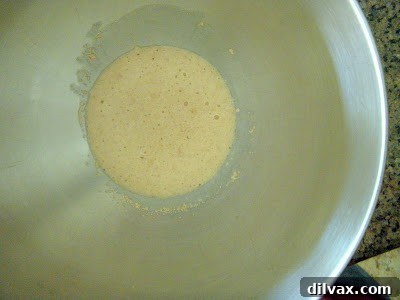
Activate the Yeast: In the bowl of your electric stand mixer (or a large mixing bowl if kneading by hand), combine 1/4 cup of the warm water with the yeast and sugar. Stir gently and let this mixture stand undisturbed for 5-7 minutes. You’ll know your yeast is active and ready when it becomes foamy and visibly bubbly on the surface. This step is crucial, as it confirms your yeast is alive and will give your breadsticks their wonderful rise.

-
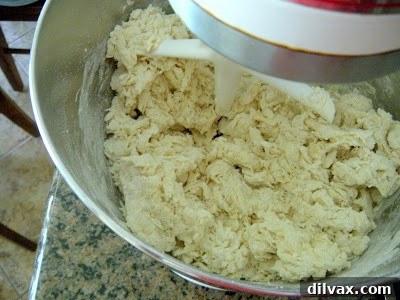
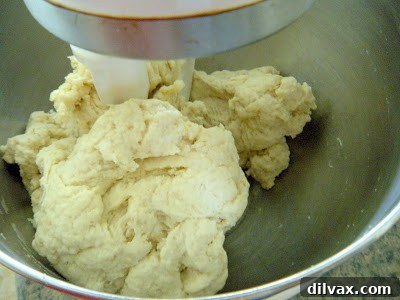
Combine Dough Ingredients: To the foamy yeast mixture, add the remaining 1 1/2 cups of warm water, the all-purpose flour, 2 tablespoons of room temperature butter, and 1 1/2 teaspoons of salt. Using the paddle attachment of your stand mixer, mix on medium-low speed until the ingredients come together and form a shaggy, cohesive dough. If the dough seems too dry, add additional warm water, 1-2 tablespoons at a time, until it starts to pull away from the sides of the bowl.
-
Knead the Dough: Switch from the paddle attachment to the dough hook. Knead the dough on medium speed for approximately 4-6 minutes. The goal is to achieve a smooth, elastic, and pliable dough that is no longer sticky. You should be able to gently stretch a small piece of dough without it tearing immediately. This kneading develops the gluten, giving your breadsticks their characteristic chewiness and structure.
-
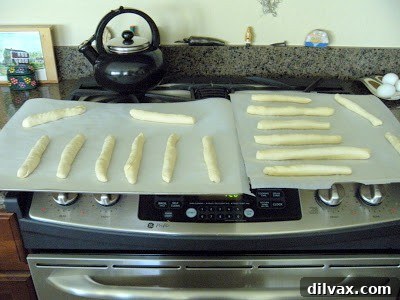
Portion and Shape: Lightly flour a clean work surface. Transfer the dough onto it. Divide the dough into 16 equal pieces. A simple way to do this is to halve the dough, then halve each half, and so on, until you have 16 roughly even portions. This method helps ensure more consistent breadstick sizes. Roll each piece into a log about 7 inches long. Aim for a uniform thickness across each breadstick. Arrange the shaped breadsticks on your prepared baking sheets, leaving about 2 inches of space between each to allow for rising.
-
First Rise (Proofing): Loosely cover the breadsticks on the baking sheets with a clean, *dry* kitchen towel (take note of my later reflection on this!). Allow them to rise in a warm, draft-free place for 45-60 minutes, or until they have visibly plumped up and look airy. They won’t quite double in size but should look noticeably larger and softer.
-
Prepare the Topping and Preheat: While the breadsticks are rising, combine the melted butter, fine sea salt, garlic powder, and crushed oregano in a small bowl. Whisk thoroughly to combine. Preheat your oven to 400°F (200°C).
-
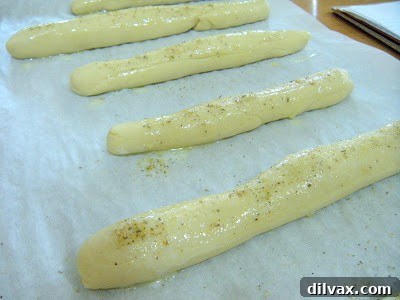
First Seasoning & Bake: Once risen, gently brush each breadstick with half of the melted butter and sprinkle half of the seasoning mixture evenly over them. Be gentle not to deflate the delicate dough. Place the baking sheets in the preheated oven and bake for 15 minutes. Resist the urge to overbake, even if they don’t look deeply golden – a soft, pale exterior is often desired for these breadsticks.
-
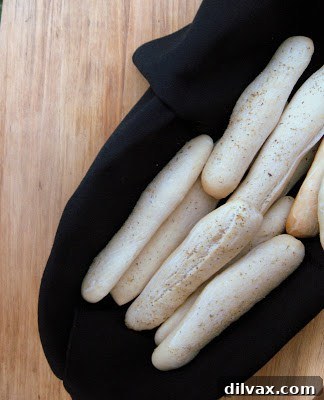
Second Seasoning & Serve: Carefully remove the breadsticks from the oven. While still hot, brush each breadstick again with the remaining melted butter and sprinkle with the rest of the seasoning mixture. The warm breadsticks will absorb the butter and seasoning beautifully. Serve them immediately while they are still warm and at their peak of softness and flavor.
Reflections from the Kitchen: My Journey to Perfect Breadsticks
In my personal rating system, where 4 is the pinnacle of baking success, these Copycat Olive Garden Breadsticks proudly earned 3 rolling pins. A solid score, indicating a truly delicious and satisfying outcome. However, with a couple of crucial adjustments, they could easily have reached 3 1/2, or even a perfect 4!
My score reflects a couple of key learning moments – those instances where my aforementioned habit of “improving” a recipe backfired. The first misstep was covering the rising dough with a damp cloth instead of a dry one. In my mind, the dampness might have encouraged a softer rise, but in reality, it likely created a slightly sticky surface and potentially hindered the beautiful crust development. Lesson learned: always use a clean, dry kitchen towel for proofing dough unless a recipe explicitly states otherwise.
The second, and perhaps more impactful, misstep involved my baking time. The recipe clearly stated 15 minutes. When the timer went off, I peeked in, and the breadsticks, while risen, weren’t quite as “brown” as I intuitively expected. So, I thought, “Two more minutes won’t hurt.” Still not quite brown enough for my liking, I gave them another two minutes. Totaling 19 minutes in the oven, it turned out to be just a little too long. While they still tasted fantastic, the bottoms were harder than the signature soft Olive Garden breadstick experience demands. I believe they would have been absolutely perfect – soft and tender throughout – if I had pulled them out at precisely 15 minutes, embracing their pale, pillowy appearance. Sometimes, less browning truly is more, especially when aiming for that characteristic softness.
Such is the life of a home baker: you live and you learn. Every “mistake” is an invaluable lesson in disguise. I can assure you, there will be a next time for these breadsticks, and armed with the knowledge of a dry towel and a strict 15-minute baking schedule, I am confident they will achieve that elusive 4-rolling-pin perfection. This recipe is too good not to master!
Tips for Success and Common Pitfalls to Avoid:
- Yeast Activation is Key: Ensure your water is the correct temperature (100-110°F). Too hot will kill the yeast; too cold won’t activate it. Seeing that foam is your green light!
- Don’t Skimp on Kneading: Proper kneading develops gluten, which gives bread its structure and chew. A well-kneaded dough will be smooth, elastic, and pass the “windowpane test” (you can stretch a small piece thin enough to see light through it without tearing).
- Mind the Rise: A warm, draft-free spot is ideal for proofing. If your kitchen is cool, try placing the covered dough in a slightly warmed (but turned off!) oven.
- The Dry Towel Rule: As I learned, always cover your rising dough with a dry, clean kitchen towel. A damp towel can stick to the dough, potentially causing issues with the crust.
- Trust the Baking Time (Mostly): For these breadsticks, 15 minutes at 400°F is usually sufficient. Don’t chase a deep golden-brown color, as it can lead to a tougher exterior. Look for a pale golden hue and a soft texture.
- Even Shaping Matters: Taking the time to shape your breadsticks uniformly ensures even baking. If some are thick and others thin, they won’t cook at the same rate.
Serving Suggestions and Delicious Variations:
These homemade Olive Garden breadsticks are incredibly versatile. Of course, they are perfect alongside a bowl of soup and a fresh salad, just like at the restaurant. But don’t stop there!
- Dipping Sauces: Pair them with marinara sauce, a creamy alfredo dip, or even a simple olive oil and balsamic vinegar blend.
- Garlic Cheese Breadsticks: Before the second bake, sprinkle a generous amount of shredded mozzarella or a Parmesan blend over the buttered breadsticks for a cheesy twist.
- Herb Variety: Experiment with different dried herbs in your topping mixture, such as dried basil, thyme, or a pinch of Italian seasoning.
- Breakfast Treat: Surprisingly, these also make a delightful accompaniment to a savory breakfast, perhaps alongside eggs and bacon.
- Sandwich Rolls: Make them slightly thicker and shorter to create soft, individual rolls perfect for sliders or small sandwiches.
Final Thoughts & A Culinary Invitation
There’s immense joy in bringing the flavors of our favorite restaurants into our homes. These copycat Olive Garden breadsticks are more than just a recipe; they are an experience. They are a testament to the fact that with a little patience and the right guidance, you can achieve incredible results in your own kitchen. The aroma filling your home as these bake is simply intoxicating, a promise of the deliciousness to come.
I genuinely encourage you to try this recipe. Don’t be afraid to get your hands a little floury; the reward is truly worth it. And remember, every bake is a learning opportunity. Embrace the process, savor the creation, and most importantly, enjoy every buttery, garlicky bite of these incredible homemade breadsticks. I’m sending you all BIG baking hugs and mountains of delicious muffins (or in this case, breadsticks)! Happy baking!