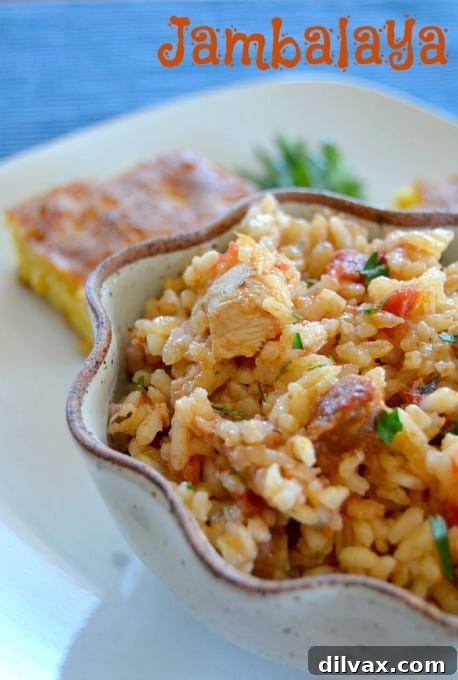
Embark on a culinary journey to the heart of Louisiana with this incredibly flavorful Jambalaya recipe. This iconic Cajun-Creole dish, brimming with savory meats, aromatic vegetables, and fragrant spices, promises a taste experience that will delight even the most discerning palates. Our detailed recipe guides you through crafting a hearty, robust tomato-based masterpiece, complete with tender chicken, spicy Andouille sausage, and the option to add succulent shrimp for an extra touch of Gulf Coast luxury.
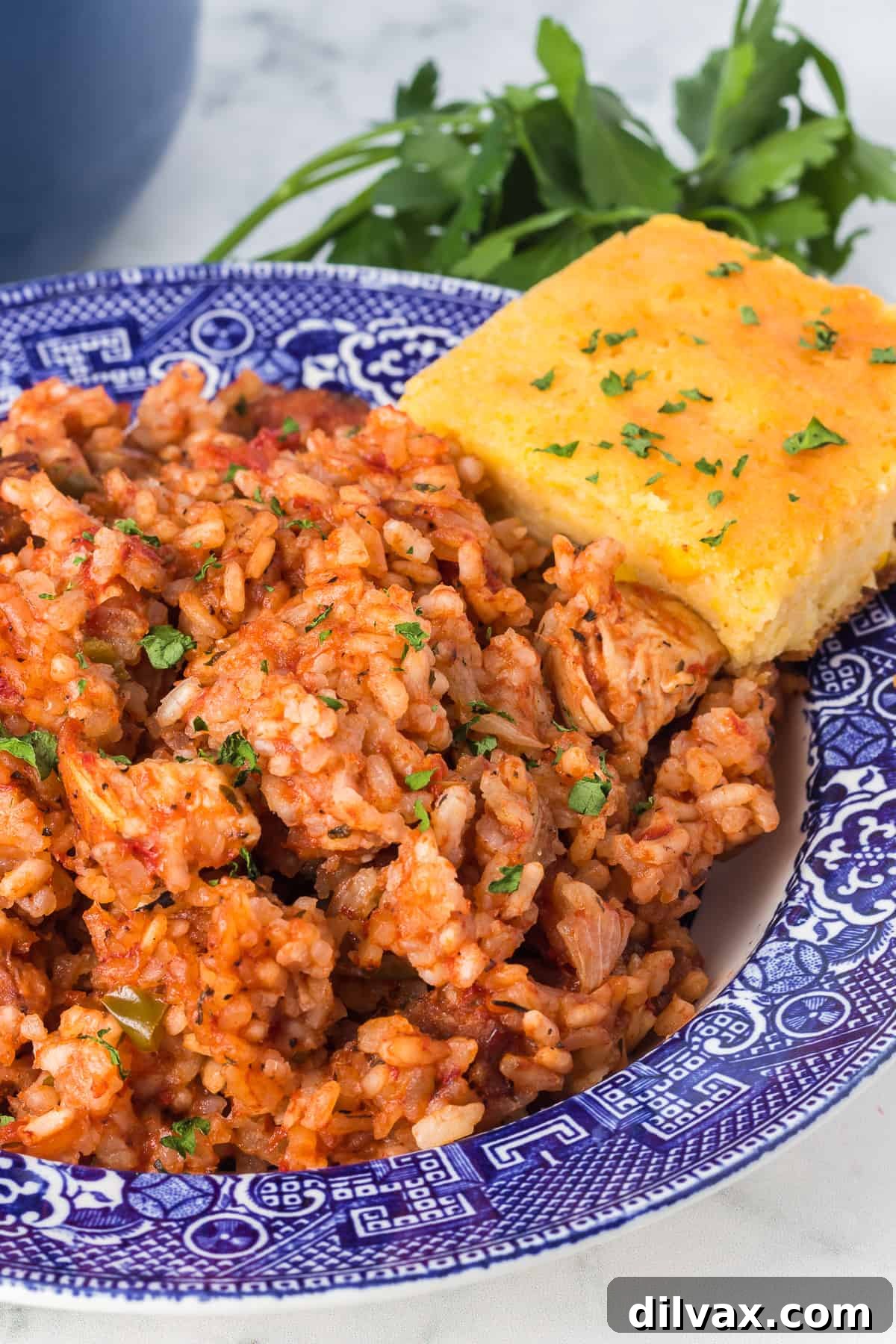
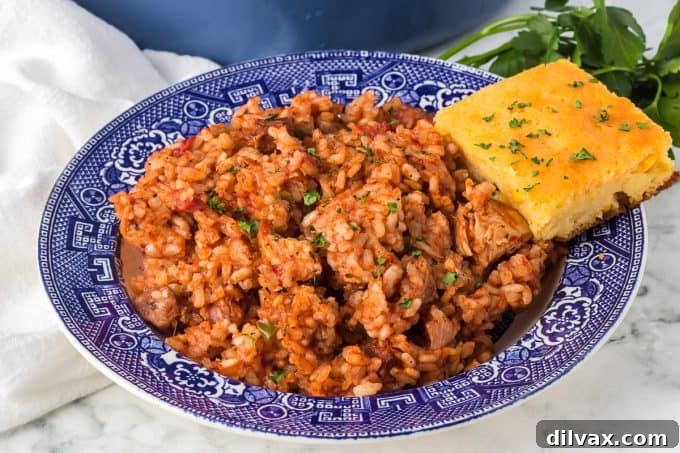
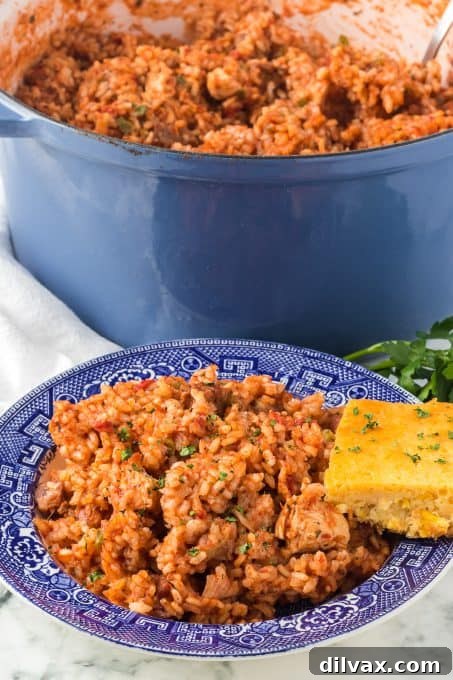
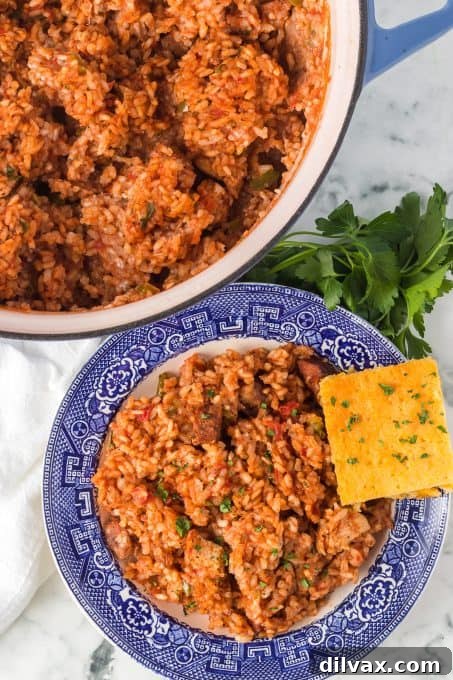
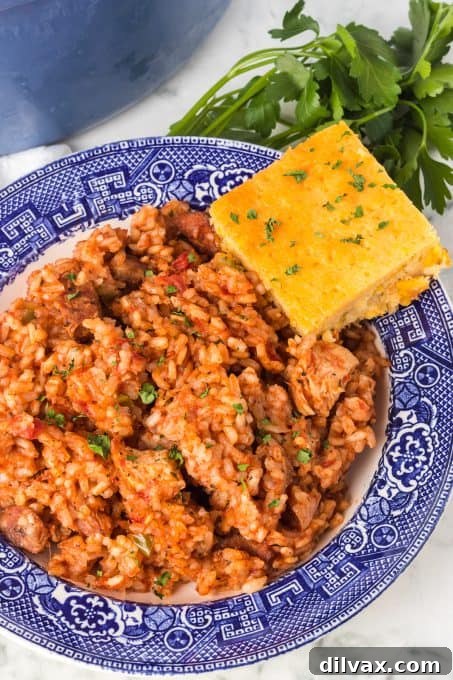
Despite its rich and complex flavor profile, making authentic Jambalaya at home is surprisingly straightforward. This one-pot wonder simplifies cleanup while delivering a restaurant-quality meal right to your dining table. Forget bland weeknight dinners; prepare to impress your family and friends with a truly sensational Creole Jambalaya that captures the vibrant spirit of New Orleans in every bite. For an even more authentic experience, consider serving it alongside a generous slice or two of my Corn Spoon Bread, as showcased in the accompanying images.
The Rich History and Cultural Roots of Jambalaya
Jambalaya is more than just a meal; it’s a vibrant narrative woven into the fabric of Louisiana’s diverse culinary heritage, particularly within the historic city of New Orleans. This beloved dish is a testament to the cultural “melting pot” that defines the region, a harmonious blend of Spanish, French, and West African culinary traditions, with influences from Native American ingredients. Its origins can be traced back to the Spanish settlers in New Orleans, who attempted to recreate their cherished paella but lacked saffron, a key ingredient. They ingeniously adapted the dish by incorporating local ingredients and French techniques, leading to the birth of Creole Jambalaya.
Initially, Jambalaya was a practical, economical one-pot dish designed to utilize leftover ingredients, making it a staple for families seeking to create a satisfying meal from what was available. Over time, it evolved and diversified into two main styles: Creole Jambalaya and Cajun Jambalaya. Creole Jambalaya, often referred to as “red Jambalaya,” typically includes tomatoes or a tomato base, reflecting its European and urban New Orleans roots. Cajun Jambalaya, originating from the rural areas of southwest Louisiana, traditionally does not include tomatoes and often begins with browning meat to create a rich, dark roux, lending it a more rustic, brown appearance. Our recipe, with its robust tomato presence, firmly falls into the delicious Creole category.
Today, Jambalaya stands as a cornerstone of Louisiana cuisine, cherished not only within the state but celebrated worldwide. It has transcended its humble beginnings to become a culinary icon, enjoyed at Mardi Gras celebrations, family gatherings, and everyday dinners. Every cook, it seems, brings their own unique twist and personal touch to this adaptable recipe, ensuring its legacy continues to evolve while honoring its storied past.
SAVE THIS CREOLE JAMBALAYA RECIPE TO YOUR FAVORITE PINTEREST BOARD!
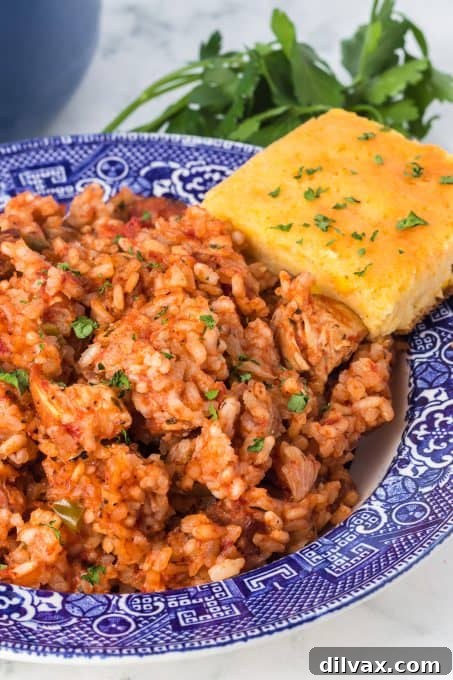
I genuinely cannot emphasize enough how truly exceptional this Jambalaya recipe is. It’s a culinary triumph – hearty, deeply satisfying, and brimming with the bold flavors of Louisiana. This one-pot meal generously serves a crowd, making it ideal for sharing with friends and family, or for enjoying delicious leftovers the following day. Just thinking about its comforting aroma and incredible taste makes me want to head straight back to the kitchen and whip up another batch!
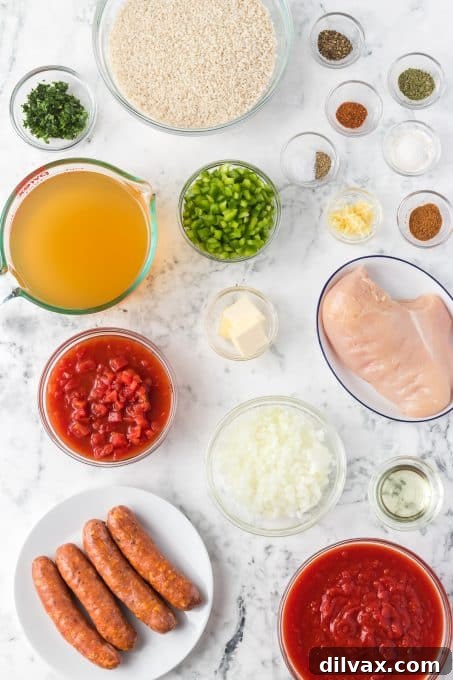
Essential Ingredients for Crafting Authentic Creole Jambalaya
Creating this authentic Creole Jambalaya requires a thoughtful selection of ingredients that build layers of complex flavor. While the list may seem extensive, each component plays a crucial role in achieving the rich, spicy, and savory character of this beloved dish. Here’s a breakdown of what you’ll need to gather to bring this hearty meal to life:
- Oil: 2 tablespoons canola oil or olive oil. Used for browning the meats and sautéing vegetables, forming the flavor base.
- Chicken: 1 pound boneless, skinless chicken breasts, cut into bite-sized pieces. Provides lean protein and a mild flavor that absorbs the spices beautifully. Chicken thighs can also be used for richer flavor.
- Seasoning: 1 teaspoon salt and ½ teaspoon black pepper. Essential for seasoning the chicken and enhancing the overall taste of the dish.
- Sausage: 1 pound Andouille pork sausage, chopped. This is a crucial ingredient for authentic Louisiana flavor, offering a smoky, spicy kick. Ensure it’s good quality for the best results.
- Flour: 1 tablespoon of all-purpose flour. Used to create a light roux, which helps to thicken the sauce and add depth of flavor.
- The Holy Trinity (partially):
- 1 medium yellow onion, diced.
- 1 green bell pepper, diced.
- 3 cloves garlic, minced.
These three form the aromatic base of many Cajun and Creole dishes. While celery completes the “Holy Trinity,” our recipe uses onion and bell pepper to build a robust foundation.
- Tomatoes:
- 28-ounce can of stewed tomatoes.
- 14.5-ounce can of diced tomatoes.
These tomatoes are key to our Creole-style Jambalaya, providing tanginess, sweetness, and a rich red color to the sauce.
- Liquid: 4 cups chicken broth (or chicken stock). The primary cooking liquid for the rice and source of additional savory depth.
- Herbs: 1 teaspoon dried thyme and 1 teaspoon dried basil. Classic herbs that contribute to the aromatic complexity of Creole cuisine.
- Fresh Garnish: 2 tablespoons fresh flat-leaf parsley, chopped. Adds a fresh, bright finish and visual appeal.
- Spice: ¾ teaspoon Cajun spice. This is where the characteristic heat and unique flavor profile come from. Adjust to your preferred spice level.
- Rice: 4 cups uncooked medium-grain white rice. Medium-grain rice is ideal for Jambalaya as it absorbs liquid well and retains a pleasant chew without becoming mushy.
- Butter: 3 tablespoons butter, cut into pieces. Adds richness and a luxurious finish, melting into the dish as it bakes.
- Optional Seafood: 1 pound raw shrimp, peeled and deveined. A fantastic addition for seafood lovers, offering a sweet counterpoint to the spicy meats.
- Finishing Touch: 1 teaspoon Old Bay seasoning. Sprinkled at the end, it adds another layer of classic Southern flavor, especially if including shrimp.
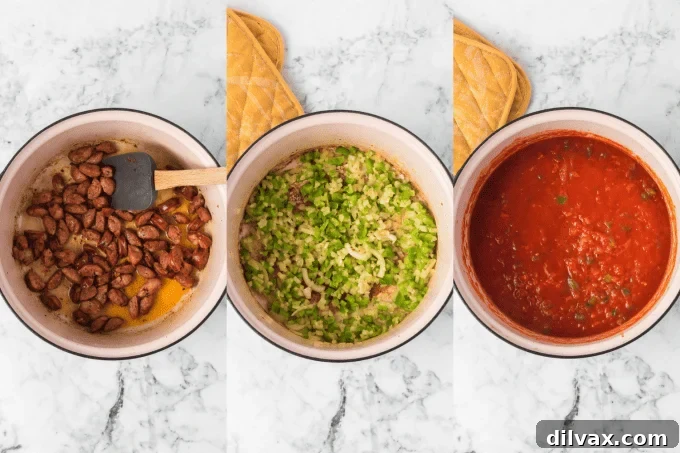
Your Guide to Crafting Perfect Creole Jambalaya
With all your ingredients prepped and ready, it’s time to bring this magnificent Creole Jambalaya to life. Follow these step-by-step instructions carefully to ensure a delicious and authentic result:
- Prepare the Meats: Begin by preheating your oven to 350°F (175°C). In a large, heavy-bottomed Dutch oven (a crucial tool for even cooking) or a sturdy large pot, drizzle the canola or olive oil and heat over medium-high heat until shimmering. Season your chicken breasts generously with salt and pepper. Carefully place the seasoned chicken into the hot oil and cook until beautifully browned on all sides, typically about 5-7 minutes. Once browned, remove the chicken from the pot and set it aside to cool slightly. While it cools, chop the chicken into bite-sized pieces. Next, add the chopped Andouille sausage to the same pot, using the rendered fat to brown it evenly. Cook for about 5-7 minutes until the sausage develops a nice color and releases its aromatic oils. Remove the sausage and set it aside with the chicken.
- Build the Flavor Base (Roux and Aromatics): Reduce the heat to medium. Add the tablespoon of all-purpose flour to the bottom of the pot, stirring constantly with a wooden spoon or spatula. Scrape up any browned bits from the bottom of the pot (this is called deglazing and adds immense flavor). Cook the flour for 2-3 minutes until it turns a light golden-brown, forming a light roux. This step helps thicken the sauce. Immediately add the diced yellow onion and green bell pepper to the pot and sauté, stirring occasionally, until they soften and become translucent, about 5-7 minutes. Stir in the minced garlic and both cans of stewed and diced tomatoes, including their juices. Continue to cook for at least 5 minutes, allowing the flavors to meld and the tomatoes to break down slightly.
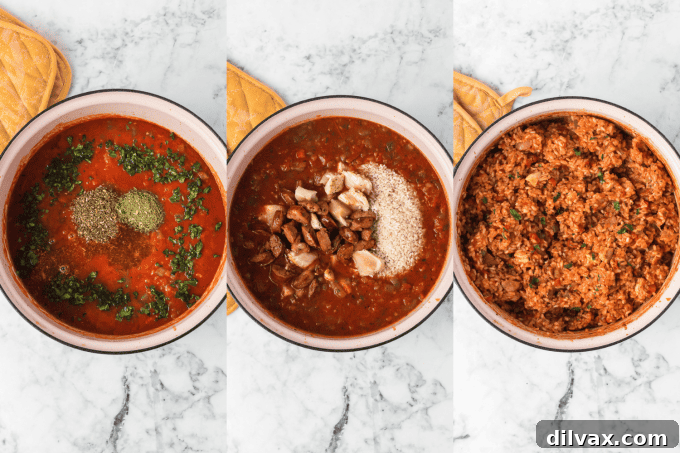
- Combine and Simmer: Pour in the chicken broth, then add the dried thyme, dried basil, chopped fresh parsley, Cajun spice, and the remaining salt and pepper. Stir everything well to combine, ensuring no clumps remain. Bring the mixture to a rolling boil over medium-high heat.
- Add Rice and Bake: Once boiling, add the uncooked medium-grain white rice, chopped chicken, and browned sausage back into the pot. Stir gently just to combine and evenly distribute the ingredients. Bring the mixture back to a boil, then immediately reduce the heat to low. Dot the top of the Jambalaya with pieces of butter. Cover the pot tightly with a lid and carefully transfer it to your preheated oven. Bake for 30 minutes, or until most of the liquid has been absorbed by the rice. Cooking times may vary slightly based on your oven and the type of rice used, so check for doneness.
- Finish with Shrimp (Optional) and Serve: Remove the fragrant Jambalaya from the oven. Carefully lift the lid, stir gently, and sprinkle with Old Bay seasoning. If you’re adding shrimp, nestle the peeled and deveined raw shrimp into the hot Jambalaya at this point. Return the pot to the oven for an additional 5-7 minutes, or until the shrimp turn opaque and are cooked through. Do not overcook the shrimp, as they can become rubbery. Once done, remove from the oven and let it rest for a few minutes before serving. Garnish with extra fresh parsley if desired.
Expert Tips for Crafting the Best Jambalaya
Making Jambalaya might seem daunting at first, but with a few key tips and techniques, you can confidently create a delicious, show-stopping meal every time. Here’s how to ensure your Jambalaya turns out perfectly:
- Choose the Right Pot: Always use a heavy-bottomed pot or Dutch oven. Its thick construction distributes heat evenly, preventing the rice from sticking to the bottom and burning while allowing for proper caramelization of the meats and vegetables, which is crucial for flavor development.
- Don’t Over-Stir the Rice: Once the rice is added and the pot is covered, resist the urge to stir it frequently. Excessive stirring releases starch, which can lead to a mushy, gluey texture rather than distinct, fluffy grains. A gentle stir before adding shrimp and serving is sufficient.
- Select the Correct Rice: For authentic Jambalaya texture, opt for medium or long-grain white rice. These varieties absorb liquid effectively while maintaining their shape and a pleasant chewiness. Short-grain rice can become too sticky, and brown rice requires different cooking times and liquid ratios.
- Quality Cajun Seasoning is Key: The soul of Jambalaya lies in its seasoning. Invest in a good-quality Cajun (or Creole) seasoning blend. These blends typically contain a mix of paprika, cayenne pepper, garlic powder, onion powder, oregano, and thyme, providing a complex and balanced flavor. Taste and adjust the amount to your preferred spice level.
- Proper Browning Builds Flavor: Don’t rush the browning of your chicken and sausage. This step is essential for developing deep, savory flavors through the Maillard reaction, contributing significantly to the overall richness of the dish.
- Mise en Place: Prepare all your ingredients (chop vegetables, measure spices) before you start cooking. Jambalaya cooks relatively quickly once you begin, and having everything ready will make the process smooth and enjoyable.
- Taste and Adjust: Always taste your broth mixture before adding the rice. This is your last chance to adjust the seasoning, salt, and spice level. Remember, rice will absorb the flavors, so make sure the liquid is well-seasoned.
- Rest Before Serving: After cooking, let the Jambalaya rest, covered, for 5-10 minutes off the heat. This allows the steam to redistribute, resulting in more evenly cooked and flavorful rice.
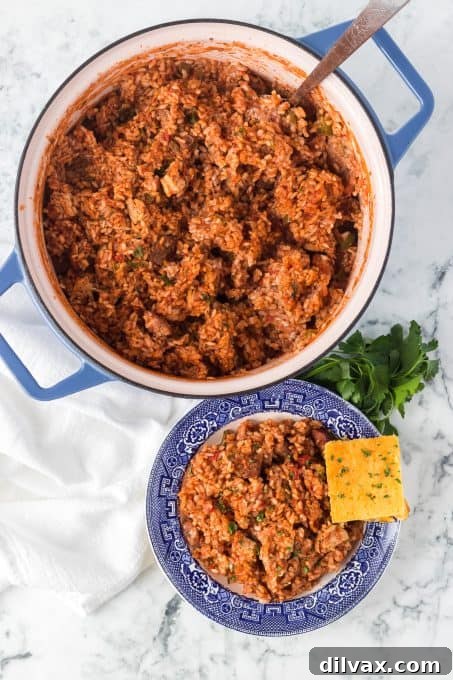
Personalize Your Jambalaya: Endless Customization Options
One of the most appealing aspects of Jambalaya is its incredible versatility. It’s a forgiving dish that welcomes experimentation, allowing you to tailor it perfectly to your taste preferences or whatever ingredients you have on hand. Here are some fantastic ways to make this Jambalaya recipe uniquely your own:
- Vary the Meats and Seafood: While chicken and Andouille sausage are classic, feel free to get creative.
- Other Sausages: Explore different smoked sausages like kielbasa, chorizo, or even a spicy Italian sausage.
- Alternative Meats: Instead of chicken breasts, try boneless, skinless chicken thighs for a richer, more tender texture. Pork shoulder, duck, or even ham can also be excellent additions.
- Seafood Extravaganza: Beyond shrimp, consider adding crawfish tails, oysters, or even scallops for a luxurious seafood Jambalaya. For a truly authentic experience, add them towards the end of cooking to prevent overcooking.
- Amplify the Vegetables: Our recipe already includes onions and bell peppers, but you can enhance the vegetable content.
- The Holy Trinity Complete: Add diced celery along with the onion and bell pepper to complete the traditional “Holy Trinity” aromatic base, adding another layer of classic flavor.
- Other Veggies: Okra, corn kernels, or even sliced mushrooms can add texture and nutritional value. Add harder vegetables earlier in the cooking process, and softer ones later.
- Adjust the Spice Level: Whether you prefer a mild warmth or a fiery kick, customizing the spice is easy.
- For Spice Lovers: Increase the amount of Cajun seasoning, add a pinch of cayenne pepper, a dash of hot sauce (like Tabasco or Crystal), or some crushed red pepper flakes during the sautéing process.
- For Milder Palates: Reduce the amount of Cajun seasoning. You can always add a mild paprika for color and a subtle smoky flavor without the heat.
- Experiment with Rice Varieties: While medium-grain white rice is traditional, other types can be used with slight adjustments.
- Brown Rice: If using brown rice, note that it requires more liquid and a longer cooking time. You might need to add an extra cup of broth and extend the baking time by 15-20 minutes. The texture will also be chewier.
- Basmati or Jasmine Rice: These long-grain varieties are less starchy and can yield a fluffier Jambalaya. However, they might absorb less liquid, so monitor carefully and adjust broth as needed.
- Enhance Flavor with Broth: For an even deeper flavor, use homemade chicken stock instead of store-bought broth. You can also add a splash of white wine or beer to the liquid for an extra layer of complexity before adding the rice.
Serving Suggestions and Smart Storage for Your Creole Jambalaya
This magnificent Jambalaya is truly best enjoyed hot and fresh, scooped generously straight from the pot. Its vibrant flavors and hearty texture make it a complete meal on its own, but a few accompaniments can elevate the experience even further. Garnish your serving with a sprinkle of extra chopped fresh parsley or thinly sliced green onions for a pop of color and a fresh, herbaceous note. A wedge of lemon or a bottle of your favorite hot sauce on the side allows everyone to customize their plate.
Jambalaya is the perfect dish for any occasion, from a festive Mardi Gras feast to a comforting weeknight dinner. Its communal nature and robust flavors make it a crowd-pleaser that fosters shared enjoyment around the table.
Storing Leftovers: Any leftover Jambalaya can be stored safely in an airtight container in the refrigerator for up to 3 days. Ensure the dish cools down before transferring it to the container to prevent condensation and maintain freshness. We absolutely adore the leftovers – often, the flavors deepen and meld even further overnight, making for an even more delicious meal the next day!
Reheating Instructions:
- Microwave: For individual portions, microwave on high, stirring halfway through, until thoroughly heated. You may add a tablespoon of chicken broth or water to prevent drying.
- Stovetop: For larger quantities, transfer the Jambalaya to a pot or skillet. Add a splash of chicken broth or water (about 1/4 to 1/2 cup) to help rehydrate the rice and prevent sticking. Heat over medium-low heat, stirring occasionally, until heated through.
Can You Freeze Jambalaya? The Ultimate Make-Ahead Solution
Absolutely! Jambalaya freezes remarkably well, making it an excellent candidate for meal prepping and enjoying homemade convenience on busy days. You can safely freeze cooked Jambalaya for up to three months without significant loss of flavor or texture. This makes it a perfect dish to prepare in larger batches.
Freezing Process:
- Allow the cooked Jambalaya to cool completely at room temperature, then transfer it to an airtight freezer-safe container or heavy-duty freezer bags. For best results, consider freezing it in individual portions. This makes thawing and reheating much quicker and more convenient.
- Label the containers with the date so you can keep track of how long it’s been stored.
Reheating Frozen Jambalaya:
- Thaw First: For optimal results, it’s best to thaw frozen Jambalaya in the refrigerator overnight. Once thawed, reheat it in a pot on the stove over medium-low heat, adding a small amount of chicken broth or water to rehydrate the rice and prevent it from drying out. Stir occasionally until it’s piping hot throughout.
- Reheating from Frozen (Directly): If you’re short on time, you can reheat frozen Jambalaya directly on the stovetop in a skillet or Dutch oven. Add a splash of broth or water, cover, and cook over low heat, stirring occasionally and breaking up the frozen block, until it’s heated through. This method might take a bit longer and require more attention to prevent scorching.
- Slow Cooker Reheating: For a hands-off approach, place thawed Jambalaya in a slow cooker with a little extra broth or water. Heat on low until warm, stirring occasionally.
Be careful not to overcook when reheating, as this can make the rice mushy or dry. The goal is to gently warm it back to its delicious original state.
I genuinely hope you’ll take the opportunity to try making this delicious, hearty Creole Jambalaya. My entire family absolutely adores it, and it has firmly secured its place as a cherished staple in our regular menu rotation. Please do let me know how you enjoy it – I love hearing about your culinary adventures!
More Flavorful Weeknight Dinner Recipes
Busy schedules often call for efficient yet delicious dinner solutions. While Jambalaya is a fantastic one-pot option, I have a collection of other easy-to-make recipes, including several slow cooker delights, that are perfect for those nights when you need a helping hand in the kitchen. Explore these convenient and tasty ideas for your next meal:
- Slow Cooker Beef Chili Verde Polenta: A zesty and comforting chili served over creamy polenta, perfect for a cozy evening.
- Slow Cooker Sloppy Joes: A classic American comfort food, made effortless in the slow cooker.
- Crockpot BBQ Root Beer Shredded Chicken Sandwiches: Sweet and savory shredded chicken, ideal for satisfying sandwiches.
- Crockpot Pork Ragu: A rich, slow-cooked pork ragu that’s perfect over pasta or polenta.
- Sausage Alfredo Rigatoni: A creamy and indulgent pasta dish featuring flavorful sausage.
- Skillet Spinach Lasagna: All the flavors of lasagna, simplified and cooked in a single skillet.
STAY CONNECTED AND FOLLOW ME
FACEBOOK ~ PINTEREST
INSTAGRAM ~ TWITTER
YOUTUBE
Don’t Miss Out on More Easy and Delicious Recipes Each Week!
Classic Creole Jambalaya
Created by: Lynne Feifer
Course: Dinners
Cuisine: American, Creole
Prep Time: 15 minutes
Cook Time: 1 hour 15 minutes
Total Time: 1 hour 30 minutes
Servings: 8 servings
This Creole Jambalaya recipe is a perfect way to bring vibrant Louisiana flavors to your dinner routine. A hearty, Cajun-inspired dish packed with savory meats, fresh vegetables, fragrant rice, and bold spices, it’s cooked to perfection in a single pot and is sure to impress everyone at your table. For an extra treat, feel free to add succulent shrimp!
Ingredients
- 2 tablespoons canola oil or olive oil
- 1 pound boneless, skinless chicken breasts, cut into bite-sized pieces
- 1 teaspoon kosher salt
- ½ teaspoon freshly ground black pepper
- 1 pound Andouille pork sausage, chopped
- 1 tablespoon all-purpose flour
- 1 medium yellow onion, diced
- 1 green bell pepper, diced
- 3 cloves garlic, minced
- 28-ounce can stewed whole tomatoes
- 14.5-ounce can diced tomatoes
- 4 cups chicken broth (or chicken stock)
- 1 teaspoon dried thyme
- 1 teaspoon dried basil
- 2 tablespoons fresh flat-leaf parsley, chopped
- ¾ teaspoon Cajun spice (adjust to taste)
- 4 cups uncooked medium-grain white rice
- 3 tablespoons butter, cut into small pieces
- 1 teaspoon Old Bay seasoning
- 1 pound raw shrimp, peeled and deveined (optional, and not included in nutritional information)
Instructions
- Preheat your oven to 350°F (175°C). Heat a large Dutch oven or heavy-bottomed pot over medium-high heat and add the canola oil.
- Season chicken on both sides with some of the salt and pepper. Brown the chicken on all sides in the Dutch oven, then remove and set aside to cool, then chop into bite-sized pieces.
- Add the chopped Andouille sausage to the pot and brown it, stirring occasionally. Remove and set aside with the chicken.
- Add the flour to the bottom of the pot, stirring constantly over medium heat until it turns a light golden-brown (creating a roux). Add the diced onion and bell pepper and sauté until soft, about 5-7 minutes. Stir in the minced garlic and both cans of tomatoes, cooking for at least 5 minutes.
- Pour in the chicken broth, then add the dried thyme, dried basil, chopped parsley, Cajun spice, and the remaining salt and pepper. Bring the mixture to a boil.
- Add the uncooked rice, chopped chicken, and browned sausage back into the pot. Stir gently and return the mixture to a boil.
- Dot the top of the Jambalaya with the pieces of butter. Cover the pot tightly and place it in the preheated oven. Bake for 30 minutes, or until most of the liquid has been absorbed by the rice.
- Remove the pot from the oven. Gently stir the Jambalaya. If desired, add the raw shrimp at this point and sprinkle with Old Bay seasoning.
- Return the pot to the oven for an additional 5-7 minutes, or until the shrimp are cooked through and opaque. Do not overcook. Serve hot.
Nutrition
Serving: 1 serving | Calories: 799kcal | Carbohydrates: 107g | Protein: 33g | Fat: 26g | Saturated Fat: 9g | Polyunsaturated Fat: 5g | Monounsaturated Fat: 11g | Trans Fat: 0.3g | Cholesterol: 99mg | Sodium: 1515mg | Potassium: 887mg | Fiber: 6g | Sugar: 7g | Vitamin A: 650IU | Vitamin C: 28mg | Calcium: 84mg | Iron: 8mg
Did you make this delicious Jambalaya recipe?
Share your culinary creations with me on Instagram and be sure to follow me on Pinterest for even more easy and inspiring recipes!
This post was originally published on March 3, 2012. It has been thoroughly updated in format and with new pictures on August 30, 2023, to provide the best possible experience.