Indulge in Holiday Cheer: The Ultimate Eggnog Crème Brûlée Recipe
A warm welcome back to our kitchen! It’s been quite a whirlwind since Christmas Eve, and I sincerely apologize for the radio silence. The holiday season brought with it a delightful chaos of family, festivities, and of course, plenty of baking. We’re finally back in the swing of things, and I’m thrilled to reignite our culinary adventures and share new, exciting recipes with you all. First on the agenda: fixing that stubborn oven! The thought of baking a full batch of cookies, rather than just three or four at a time, is pure bliss and a goal I’m determined to achieve tomorrow. But before that much-anticipated repair, let’s dive into a seasonal delight that recently filled our home with festive aromas.
Embracing the Holiday Spirit with Eggnog
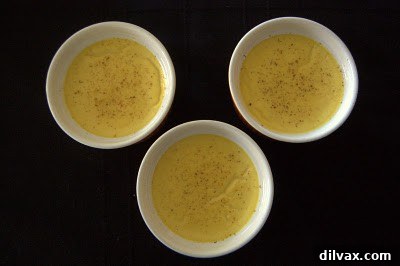
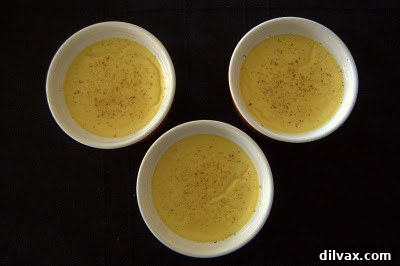
This time of year, eggnog transforms from a simple drink into a beloved staple, synonymous with warmth, comfort, and celebration. Its rich, creamy texture and distinct spiced flavor make it incredibly versatile, inspiring countless culinary creations beyond just a festive beverage. I’ve been hearing whispers of so many innovative eggnog recipes, from lattes to cakes, and it sparked a craving to incorporate it into something truly special. We’ve previously gone absolutely “NUTS” over our classic Crème Brûlée, a recipe that garnered rave reviews, so naturally, the idea of infusing that decadent dessert with the unmistakable taste of eggnog felt like a stroke of genius. The challenge was irresistible.
My culinary exploration led me to an intriguing recipe on Barber’s Dairy website, which served as the perfect foundation. To fit our smaller gathering, I decided to adapt and halve the original recipe, meticulously adjusting proportions to ensure that classic crème brûlée perfection, but with a festive twist. While I regret not having step-by-step process photos this time around (blame it on the forgotten SD card in my husband’s laptop!), I assure you, the journey to this delightful dessert is worth every moment. Let’s get to crafting this exquisite holiday treat!
Festive Eggnog Crème Brûlée Recipe
(Serves 3)
Ingredients:
- 3/4 cup eggnog (full-fat for best richness)
- 3/4 cup whole milk
- 1 tablespoon granulated sugar
- 3 large eggs (2 whole eggs and 1 yolk)
- 1/2 teaspoon pure vanilla extract
- 1/2 teaspoon dark rum (optional, but enhances flavor)
- Light brown sugar for caramelizing the top
Equipment You’ll Need:
- Three 4-ounce ramekins
- Small saucepan
- Electric mixer with whisk attachment
- Fine-mesh strainer
- Baking dish large enough to hold the ramekins
- Small kitchen torch or broiler
Step-by-Step Instructions for Culinary Perfection:
- Prepare Your Oven: Begin by preheating your oven to 300 degrees F (150 degrees C). This ensures a stable and gentle cooking environment, crucial for a smooth, creamy custard.
- Heat the Dairy: In a small saucepan, combine the eggnog and whole milk. Place it over medium-high heat and bring the mixture just to a gentle boil, stirring occasionally to prevent scorching. As soon as you see small bubbles forming around the edges, reduce the heat to low.
- Whip the Eggs: In the bowl of an electric mixer fitted with the whisk attachment, combine the granulated sugar, two whole eggs, and one additional egg yolk. Beat the mixture on medium-high speed until it becomes frothy, light in color, and slightly thickened. This process incorporates air, contributing to the custard’s texture.
- Temper with Care: This is a critical step to prevent curdling. With the mixer running on low speed, slowly add the warm eggnog-milk mixture to the frothy egg mixture, one large spoonful at a time. This gradual addition, known as tempering, slowly raises the temperature of the eggs without cooking them instantly. Continue until thoroughly combined.
- Strain for Silkiness: For the ultimate silky-smooth custard, pour the entire mixture through a fine-mesh strainer directly back into the previously used saucepan. This removes any potential lumps or bits of cooked egg, ensuring a refined texture. Heat on low.
- Thicken the Custard: Continue heating the strained mixture over low heat, stirring constantly with a wooden spoon. The custard is ready when it thickens enough to coat the back of the spoon, leaving a clear trail when you run your finger across it. Do not let it boil; gentle heating is key.
- Infuse Flavors: Remove the saucepan from the heat. Stir in the vanilla extract and rum (if using) until well combined. The warmth of the custard will help these flavors meld beautifully.
- Divide and Prepare for Baking: Carefully divide the warm custard mixture evenly among your three ramekins. Place these ramekins into a larger baking dish.
- Create a Water Bath (Bain-Marie): Pour enough hot water into the baking dish so that it comes about two-thirds of the way up the sides of the ramekins. This water bath creates a moist, even-heat environment, preventing the custard from cracking and ensuring a wonderfully smooth set.
- Bake to Perfection: Transfer the baking dish with the ramekins to your preheated oven. Bake for approximately 40 minutes, or until the custard is set but the centers still have a slight wiggle when gently shaken. A toothpick inserted into the edge should come out clean, but the very middle should still be slightly moist.
The Art of Caramelization: Achieving that Signature Crunch
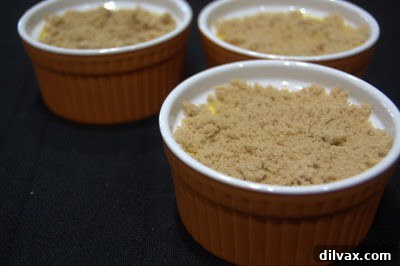
Once baked, carefully remove the ramekins from the water bath and allow them to cool slightly on a wire rack at room temperature. This initial cooling helps stabilize the custard. Afterward, transfer them to the refrigerator and chill for at least 2 hours, or ideally, overnight. Proper chilling is paramount, as it allows the custard to fully set and ensures the crème brûlée achieves its characteristic cold, creamy interior contrasting with the hot, crisp topping.
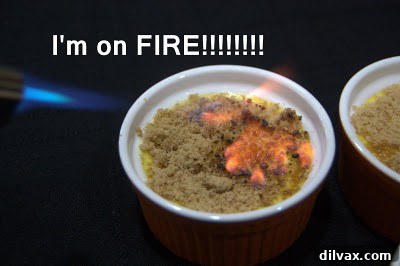
Now comes the moment of truth: creating that iconic caramelized sugar crust. Sprinkle about 1 to 2 teaspoons of light brown sugar evenly over the surface of each chilled crème brûlée. The amount is crucial here; too much sugar can lead to burning rather than melting and hardening, which significantly impacts the taste. For the best results, use a small hand torch, moving the flame in a circular motion until the sugar melts, bubbles, and transforms into a beautiful, amber-colored, hard candy shell. Alternatively, you can use your oven’s broiler: place the ramekins on a baking sheet under a preheated broiler for a minute or two, watching it *very* closely to prevent burning.
A Word of Caution: The Pitfalls of Over-Caramelization
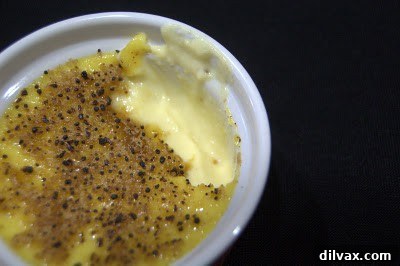
Be extremely careful not to burn the sugar! A moment of inattention can quickly turn that delightful crisp into a bitter, acrid mess. As you can see from my own experience, exemplified below, an overcooked top can severely detract from the overall enjoyment. The key is a balance between heat and vigilance.
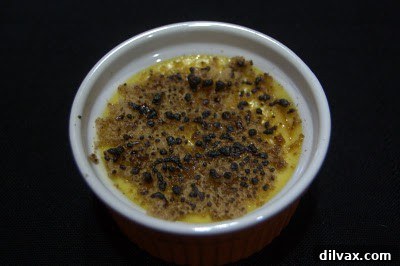
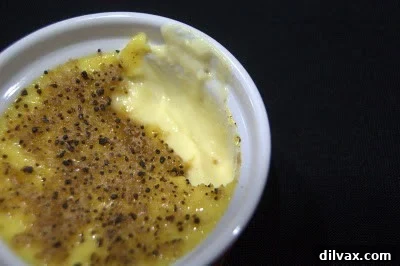
While the goal is a perfect golden crust, sometimes mishaps happen. The finished product you see below, despite my best efforts, ended up only slightly burnt around the edges. A valuable lesson learned!
The Verdict: An Honest Review and Lessons Learned
In my personal rating system, where 4 rolling pins represent the pinnacle of baking success, this Eggnog Crème Brûlée earned a solid 2 rolling pins. The custard itself was wonderfully creamy and had that delightful richness you expect from a classic crème brûlée. It certainly delivered on the texture front, but honestly, it didn’t quite reach the sublime deliciousness of the original recipe I’ve perfected over time. I found myself thinking it was “just okay,” lacking that certain “wow” factor that makes a dessert truly memorable. Perhaps the eggnog flavor, while present, didn’t pop as much as I’d hoped, or perhaps the balance of spices needed a slight adjustment.
Furthermore, the slightly burnt brown sugar topping, as you saw in the images, unfortunately, didn’t do any favors for the overall taste. It introduced a subtle bitterness that clashed with the creamy sweetness of the custard. My experience has shown me that when caramelizing, using too much sugar on top tends to lead to burning rather than an even, crisp melt. For future attempts, I highly recommend using a minimal amount of light brown sugar or, even better, opting for granulated white sugar, which I’ve found tends to caramelize more consistently without burning, producing a cleaner, sweeter crunch. Live and learn, right? Every bake is a chance to refine and improve!
Thank You for Joining Our Culinary Journey!
Thank you so much for reading and for your patience during my busy season! I hope this detailed recipe and my honest reflections inspire you to try this festive Eggnog Crème Brûlée for yourself, or perhaps to experiment with your own holiday dessert creations. Don’t be afraid to adjust ingredients to your taste; maybe a pinch of nutmeg or a dash of brandy would elevate the eggnog flavor for you!
I send you BIG baking hugs and delicious muffins, and I can’t wait to share more culinary adventures with you soon!