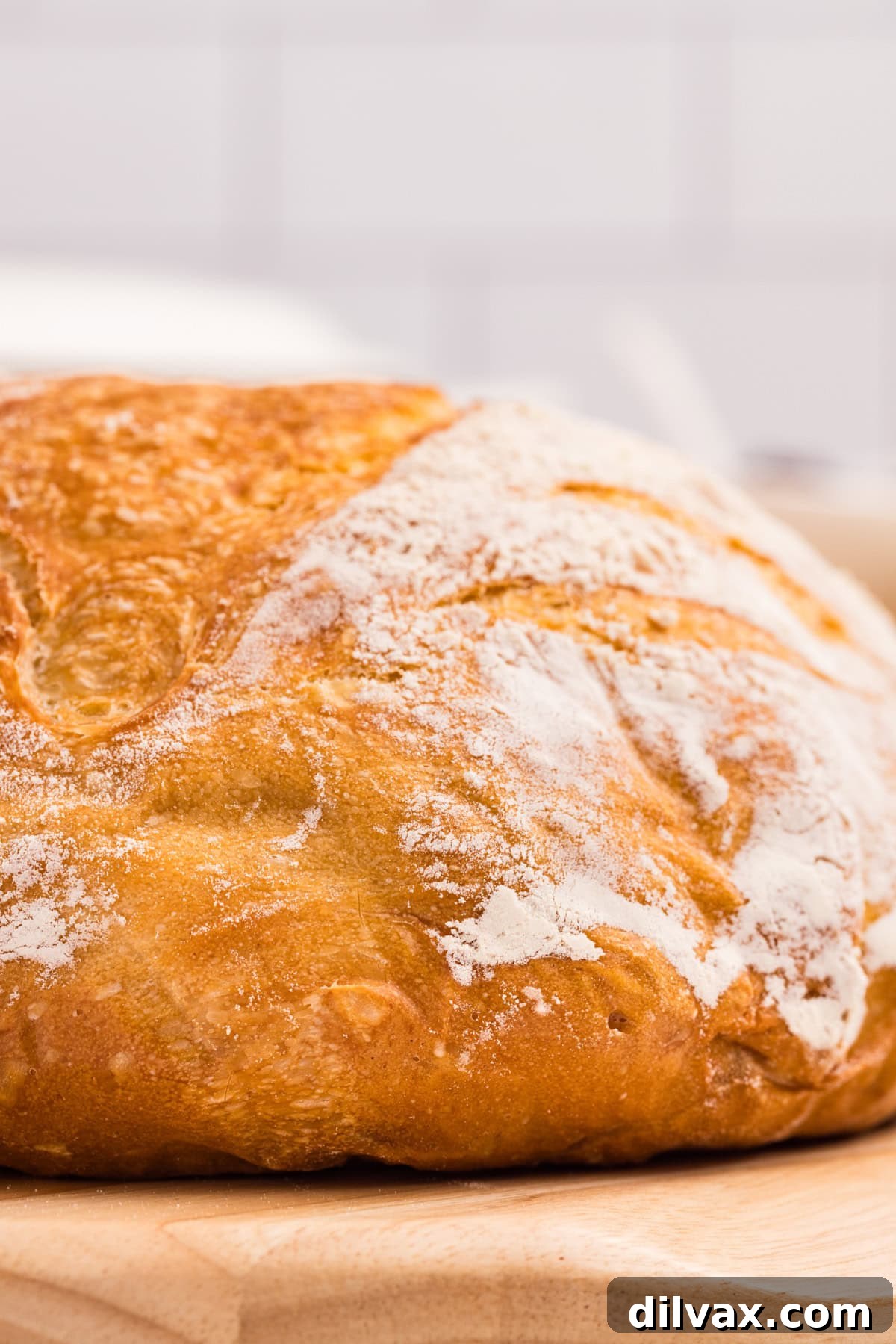
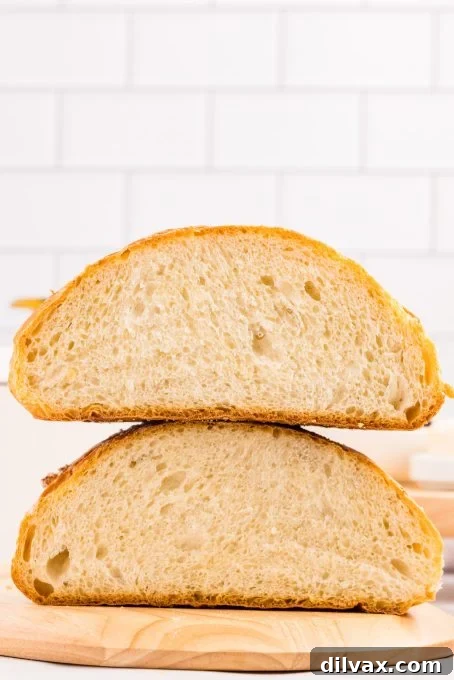
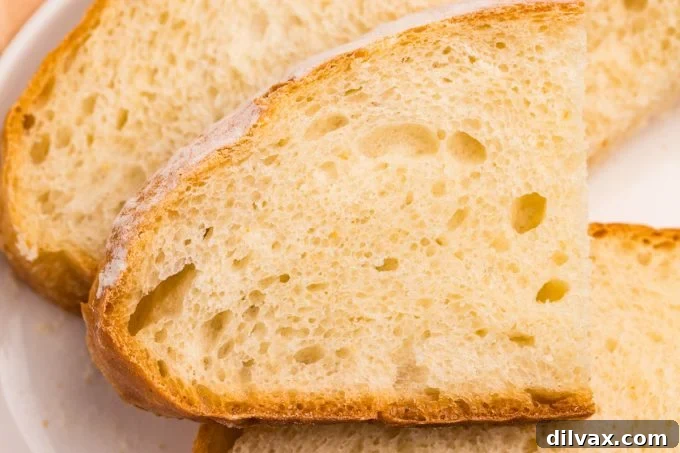
Dutch Oven Bread is a rustic, artisan-style crusty bread with a golden, chewy crust and a soft, airy interior. This easy no-knead bread recipe makes a flavorful bread that’s perfect for sandwiches, toasting, or simply enjoying with butter!
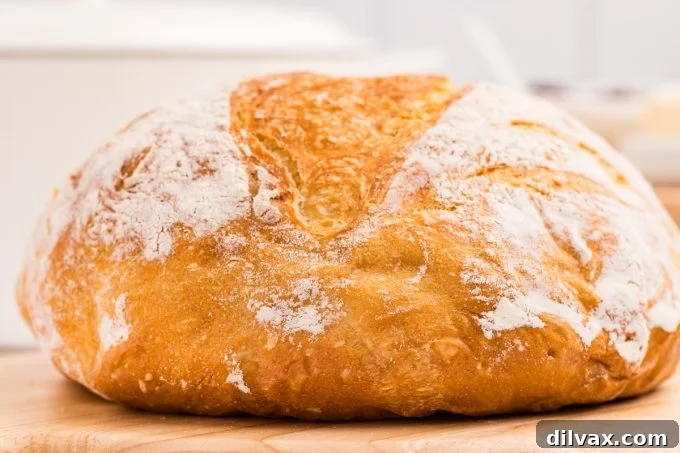
There’s an undeniable magic in the aroma of freshly baked bread filling your home. It’s a sensory experience that promises comfort, warmth, and deliciousness. This Dutch Oven Bread delivers all that and more, transforming simple ingredients into a loaf with a perfectly golden, chewy crust and a beautifully soft, airy interior. It’s not just a recipe; it’s an invitation to bring the artisan bakery experience right into your kitchen with minimal effort. Imagine serving this alongside a hearty dinner or enjoying it the next day, toasted or slathered with butter. It’s especially delightful during soup season, pairing wonderfully with a creamy tomato basil soup or a comforting instant pot pizza soup.
SAVE THIS DUTCH OVEN BREAD RECIPE TO YOUR FAVORITE PINTEREST BOARD!
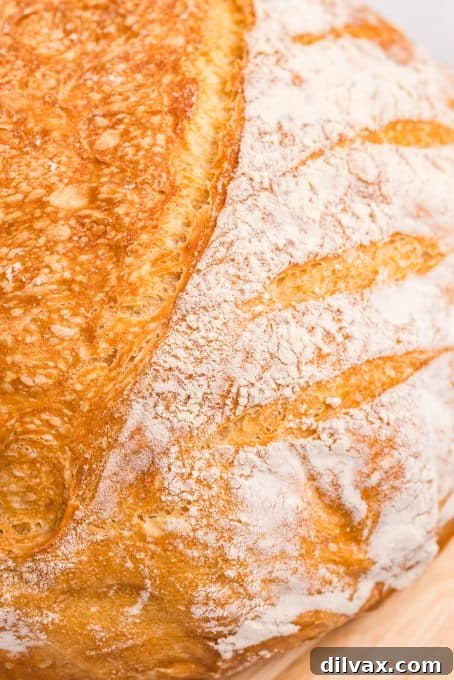
Discover the Magic of No-Knead Dutch Oven Bread
The Simplicity of No-Knead Bread
No-knead bread revolutionizes traditional bread making by offering a “hands-off” approach that yields impressive results without the strenuous effort of kneading. Instead of relying on manual manipulation to develop gluten, this method leverages a longer fermentation (rise) time. During this extended period, the enzymes in the flour naturally break down proteins, and the yeast activity slowly builds up the gluten network, creating strength and elasticity in the dough. This process develops exceptional flavor and a desirable open crumb structure that can be hard to achieve with conventional quick-rise methods. It’s an ideal recipe for busy schedules, allowing you to prepare the dough the night before and wake up to the delicious prospect of freshly baked bread.
Understanding the Dutch Oven: Your Secret to Artisan Bread
A Dutch oven is far more than just a large, heavy pot with a lid; it’s an indispensable tool for achieving bakery-quality bread at home. Traditionally made from cast iron, many modern versions feature enamel coatings or are crafted from materials like aluminum or ceramic. Its heavy construction and tight-fitting lid create a unique cooking environment that is absolutely perfect for baking bread.
For years, I associated Dutch ovens with campfire cooking or considered them a luxury item, deterred by the perceived high cost. While some premium Dutch ovens can indeed be an investment, there are also many affordable options that will fit various budgets. More importantly, think of a Dutch oven not as a single-use gadget, but as a versatile kitchen workhorse. Beyond baking exquisite bread, it excels at slow-cooking a myriad of dishes in your oven or on the stovetop, from comforting soups and hearty stews to succulent meats and even decadent desserts. It’s an investment that promises to bring countless delicious recipes to your table for years to come.
Why a Dutch Oven is Perfect for Bread Baking
The magic of baking bread in a Dutch oven lies in its ability to mimic a professional steam oven. Here’s why it’s so effective:
- Creates a Steamy Environment: The thick walls and heavy lid trap steam released from the dough during the initial baking phase. This steam keeps the crust soft, allowing the dough to expand maximally (oven spring) before the crust sets. This results in a lighter, airier interior.
- Even Heat Distribution: Cast iron, in particular, is excellent at retaining and distributing heat evenly, ensuring your loaf bakes uniformly from all sides, preventing burnt bottoms or underbaked centers.
- Achieves a Superior Crust: Once the lid is removed, the bread is exposed to dry heat, allowing the steam to dissipate and the crust to become beautifully golden brown and delightfully crispy—a hallmark of artisan bread.
- Versatility: Any rustic, crusty, or artisan-style bread, from sourdough to this simple no-knead recipe, will thrive in a Dutch oven. For this particular recipe, a 4 to 6-quart Dutch oven is ideal.
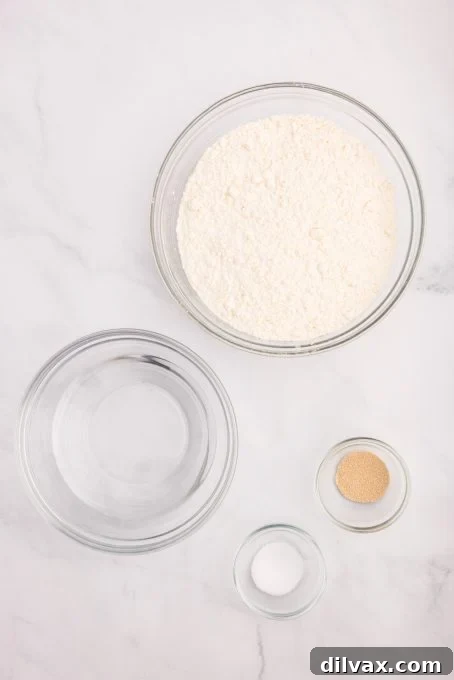
Essential Ingredients for Your No-Knead Dutch Oven Bread
This incredibly easy bread recipe relies on just four fundamental ingredients, proving that extraordinary flavor doesn’t require a complicated pantry:
- Active Dry Yeast: The leavening agent responsible for the bread’s rise and airy texture. Warm water awakens the yeast, allowing it to feed on the flour’s sugars and produce carbon dioxide, creating those desirable pockets in the dough.
- Warm Water: Crucial for activating the yeast. The temperature is key – too cold, and the yeast won’t activate; too hot, and it will kill the yeast. Aim for around 105-110°F (40-43°C), similar to bathwater.
- Salt: More than just a seasoning, salt plays a vital role in bread making. It enhances flavor, regulates yeast activity (slowing it down for better flavor development), and strengthens the gluten structure. Sea salt is often preferred for its pure taste.
- All-Purpose Flour: The primary structural component of the bread. All-purpose flour provides the necessary protein to form gluten, which gives the bread its chewiness and ability to hold its shape.
You’ll find detailed ingredient amounts and step-by-step instructions in the full recipe card below.
Recipe Substitutions and Variations
While the basic recipe is foolproof, you can experiment with a few substitutions:
- Yeast: You can substitute instant yeast for active dry yeast in a 1:1 ratio. Instant yeast can often be mixed directly with the flour without proofing, but for consistency with this recipe, you can still bloom it in warm water.
- Flour: For a slightly chewier bread, bread flour can be substituted for all-purpose flour. Bread flour has a higher protein content, which leads to stronger gluten development.
- Beyond the Basics: I have NOT personally tested this no-knead bread recipe with whole wheat or gluten-free flour. These flours behave differently due to their protein structure and require adjustments in hydration and fermentation times. If you venture into these substitutions, please share your results in the comments below! Your input would be incredibly valuable to other bakers.
- Flavor Enhancements: Feel free to add herbs like rosemary, garlic powder, dried oregano, or even cheese during the final shaping stage for a flavored loaf.
Essential Equipment for Homemade Dutch Oven Bread
Gathering the right tools will make your bread-making experience smooth and enjoyable:
- Measuring cups and spoons: For accurate ingredient measurements. Precision is key in baking!
- Large bowl: Essential for mixing the dough and allowing ample space for its significant rise.
- Sturdy wooden spoon or whisk: For initial mixing. A Danish dough whisk can be particularly effective for sticky doughs.
- Plastic wrap or tea towel: To cover the dough during its long fermentation, keeping it from drying out.
- Dutch oven (4-6 quart): The star of the show! A crucial piece of equipment for achieving that signature crust and crumb.
- Parchment paper or silicone bread mat: For easy transfer of the dough into and out of the hot Dutch oven. The Kirkland brand parchment paper is a personal favorite for its quality and value.
- Digital scale: Highly recommended for precise ingredient measurements, especially flour, which can vary significantly when measured by volume. This ensures consistent results every time.
Step-by-Step Guide to Baking Perfect Dutch Oven Bread
While the instructions might seem lengthy, don’t be intimidated! This bread is genuinely simple to make. My goal is to provide you with clear, detailed steps so you can confidently recreate this delicious artisan-style loaf in your own home.
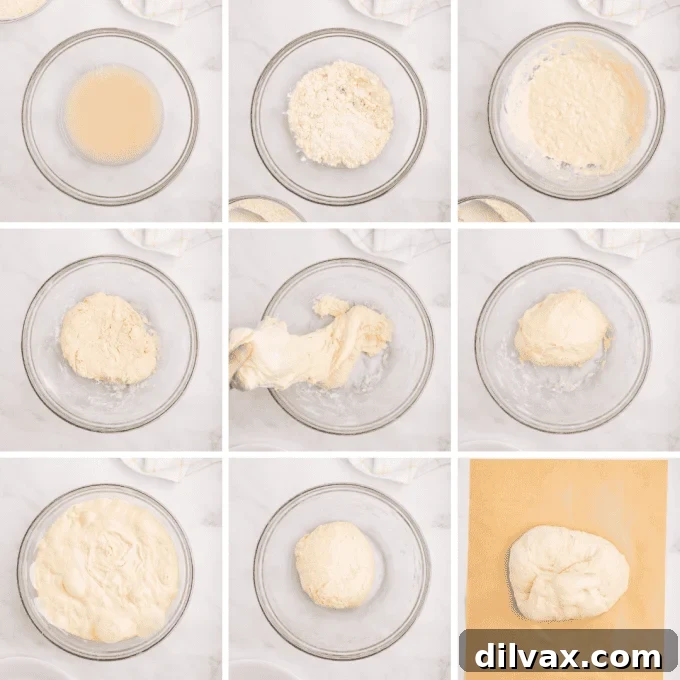
Phase 1: Making the Dough
- In a large mixing bowl, combine the warm water, active dry yeast, and salt. Stir gently until the yeast and salt begin to dissolve. The water should be warm to the touch (around 105-110°F or 40-43°C), but not hot, to avoid killing the yeast.
- Add in the first cup of all-purpose flour. Stir thoroughly until it is just incorporated and forms a shaggy paste. Allow this mixture to sit undisturbed for 5 minutes. This brief rest period helps the yeast fully activate and ensures a better rise.
- Gradually add the remaining flour, about ½ cup at a time, stirring well after each addition until no dry flour spots remain. The dough will become increasingly sticky. The final ½ to ¾ cup of flour may take a bit more effort to fully incorporate. Resist the urge to add too much flour; a sticky dough is crucial for the characteristic open, airy crumb of no-knead bread.
- Once all the flour is incorporated, cover the bowl tightly with plastic wrap or a clean tea towel. Let the dough rest on the counter at room temperature for 30 minutes. This initial rest allows the gluten to relax and makes the subsequent ‘stretch and fold’ process much easier.
Phase 2: The Stretch and Fold Technique
The stretch and fold technique is the no-knead bread’s secret to developing gluten without strenuous effort. It’s a gentle yet effective way to build structure and strength in the dough.
- After the initial 30-minute rest, it’s time for the first of three stretch and fold sessions. Lightly wet your hands with water to prevent the sticky dough from adhering to your fingers. Gently pull one side of the dough up from the edge of the bowl and fold it over towards the center and top of the dough.
- Rotate the bowl a quarter turn. Take the next section of dough (still attached to the sides of the bowl) and repeat the stretch and fold motion. Continue this process, turning the bowl and folding the dough into the center, until all sides have been folded. This typically takes 4-6 folds. Recover the bowl and allow the dough to rest for another 30 minutes.
- Repeat this stretch and fold process two more times, for a total of three sessions, with 30-minute rest periods in between each. These repeated, gentle movements are essential for building the gluten structure.
- After the third stretch and fold and final 30-minute rest, you have two options for the main fermentation (proofing) period:
- Room Temperature Proof: Allow the dough to sit on your kitchen counter for approximately 4 hours, or until it has noticeably increased in volume and appears bubbly.
- Overnight Cold Proof: For deeper flavor development and convenience, place the covered dough in the refrigerator overnight (8-12 hours). If refrigerating, remember to pull the dough out in the morning and let it come to room temperature for about 30 minutes to 1 hour before proceeding to the baking stage. This ensures a more even bake.
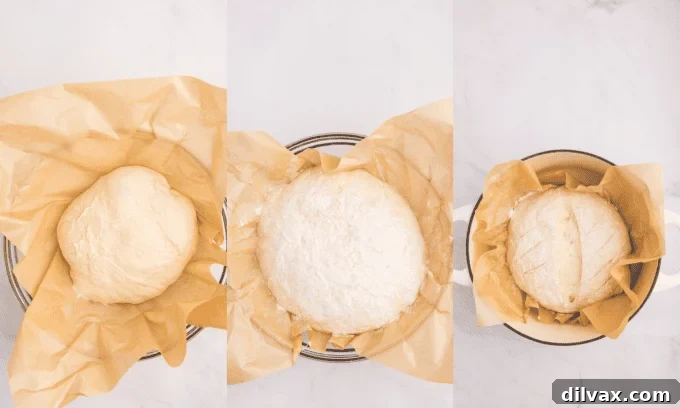
Phase 3: Prepare and Bake Your Artisan Loaf
- Approximately 30 minutes before your dough is ready to bake, place your Dutch oven (with its lid) on the lowest rack of your oven. Preheat the oven to 425°F (220°C). It is crucial to allow your Dutch oven to heat up along with the oven. This prevents thermal shock, which could damage your Dutch oven, and ensures it’s piping hot for maximum oven spring.
- Gently remove the proofed bread dough from the bowl. Flour your hands lightly if needed. Carefully form the dough into a round ball. Do this with a light touch, trying not to deflate the precious air bubbles that have developed. Place the shaped dough onto a piece of parchment paper. The parchment paper acts as a sling, making it easy to transfer the dough into the scorching hot Dutch oven.
- Once your oven has reached the target temperature and your Dutch oven is thoroughly preheated, carefully (and using oven mitts!) remove the hot lid. Using the parchment paper as handles, gently lower the dough ball into the preheated Dutch oven. Replace the lid securely. Bake with the lid on (covered) for 20 minutes. This initial covered bake traps steam, promoting incredible oven spring and a tender crust.
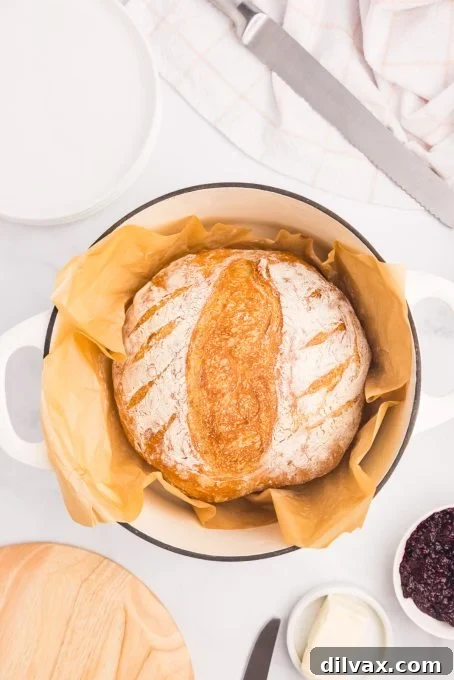
- After 20 minutes, reduce the oven temperature to 375°F (190°C) and carefully remove the lid from the Dutch oven. Continue to bake for another 20-30 minutes, or until the top of the bread is a beautiful deep golden brown. You can also test for doneness by carefully tapping the bottom of the loaf – it should sound hollow.
- Once baked to perfection, carefully remove the bread from the hot Dutch oven and transfer it to a wire rack to cool completely. Resist the temptation to cut into it immediately! Allowing the bread to cool for at least 15-30 minutes is vital for the internal structure to set and for the flavors to fully develop. Slice with a serrated knife and serve warm with butter, or as a delightful accompaniment to your favorite soup, pasta, or main dish!
Tips for Perfect Dutch Oven Bread Every Time
Working with yeast and baking bread might seem daunting, but with these expert tips, you’ll master this no-knead Dutch oven bread and feel like a seasoned baker in no time. Precision and patience are your best friends here!
- Embrace the No-Knead Philosophy: This recipe is designed to be hands-off. The “stretch and fold” process, along with the extended rise time, is what develops the gluten, not traditional kneading. Trust the process!
- Yeast Activation is Key: Ensure your warm water is no hotter than 110°F (43°C). Water that is too hot will kill the active yeast, preventing your bread from rising. If your yeast doesn’t become bubbly after 5-10 minutes in the warm water and a pinch of sugar (if using), it might be inactive, and you’ll need to start with fresh yeast.
- Preheat Your Dutch Oven Properly: Always allow your Dutch oven to warm up with the oven during preheating. This gradual heating prevents thermal shock and ensures the pot is scorching hot, which is critical for that initial burst of steam and oven spring.
- Handle Sticky Dough with Damp Hands: This dough is intentionally sticky! When performing the stretch and folds, always wet your hands with water. This prevents the dough from sticking to your fingers and allows for smoother manipulation.
- Yeast Quantity Matters: This recipe makes one loaf of bread and uses just 1 teaspoon of active dry yeast, which is roughly half of a standard yeast packet. You can easily double the batch to use a full packet for two loaves, or simply store the opened packet of yeast in an airtight container in the freezer for future baking projects.
- Measure with Precision: For the best accuracy and consistent results in all your baking endeavors, I highly recommend measuring your ingredients, especially flour, using a digital kitchen scale. Volume measurements can be inconsistent.
- Don’t Rush the Cool Down: Allowing the bread to cool completely on a wire rack is essential. Slicing into hot bread can release steam too quickly, resulting in a gummy interior and a less developed flavor.
Frequently Asked Questions About Dutch Oven Bread
How do I store my Dutch oven bread to keep it fresh?
To maintain its rustic charm and delicious flavor, store your Dutch oven bread at room temperature in an air-tight container or a breathable bread bag for up to 3 days. For slightly longer storage, you can keep it in the refrigerator (still in an airtight container) for up to 5 days. Only slice what you need, as pre-sliced bread tends to dry out faster. This bread makes fantastic toast, sandwiches, and even French toast!
Can I make this bread ahead of time and freeze it?
Absolutely! This easy Dutch oven bread is an excellent candidate for making ahead and freezing. Once baked, allow the loaf to cool completely to room temperature. To prevent freezer burn and preserve its quality, wrap the loaf tightly in plastic wrap, then an additional layer of aluminum foil. Place the double-wrapped loaf into a resealable freezer bag. It will keep well in the freezer for 2-3 months. When ready to enjoy, simply thaw at room temperature and refresh in a warm oven for a few minutes. This is also a perfect recipe to double, allowing you to enjoy one loaf now and freeze a second one for later convenience!
Why is my loaf of Dutch oven bread dense and heavy?
A dense or heavy loaf is typically an indication that your dough didn’t have enough time to rise adequately. No-knead bread, as the name implies, relies heavily on a longer fermentation period to develop gluten and create those desirable air pockets. A minimum of 6 hours is generally necessary for proper gluten development and aeration, but a longer rise window of 12 hours (often achieved through an overnight cold proof) is ideal. This extended time allows the yeast to work slowly, producing more flavorful compounds and a more robust gluten structure, leading to a lighter, airier crumb. Ensure your yeast is active and your water temperature is correct.
What are the best ways to serve Dutch oven bread?
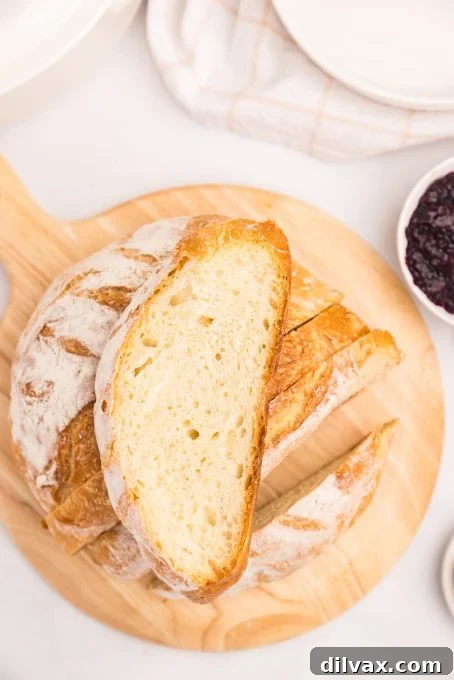
The versatility of Dutch oven bread means it pairs beautifully with an array of dishes and accompaniments. Its crusty exterior and soft interior make it perfect for soaking up sauces or simply enjoying on its own. Here are some of my favorite ways to serve this homemade delight:
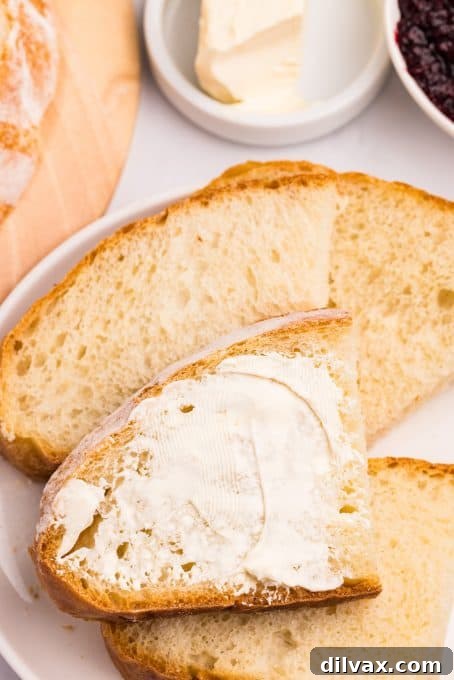
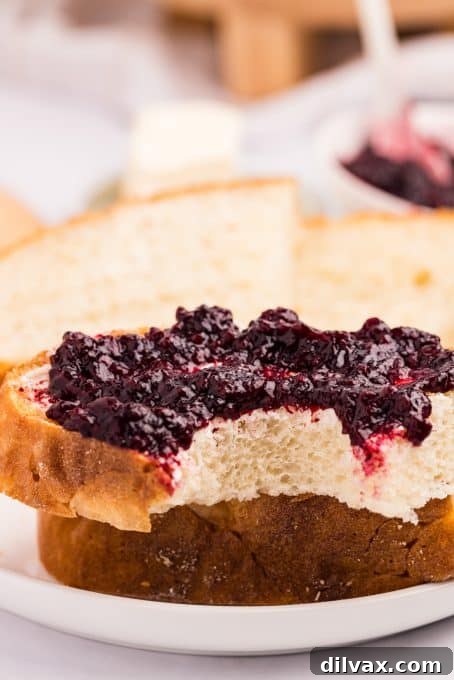
- Simple Spreads: Enjoy it with room-temperature salted butter, creamy jams, rich nut butters, or a selection of artisan cheeses.
- Pasta Companion: This bread is ideal for “sopping up” every last drop of delicious sauce from your favorite pasta dishes. It’s a must-have alongside my Homemade Lasagna!
- Elegant Charcuterie: Slice this soft bread into bite-sized pieces and feature it on your charcuterie board alongside delights like Baked Brie and Whipped Goat Cheese to impress your guests.
- Hearty Sandwiches: The robust crust and pillowy soft interior make this bread perfect for creating hearty and satisfying sandwiches. Try it with my Leftover Turkey Sandwich or any of your favorite fillings.
- Soup’s Best Friend: There’s nothing quite like a warm slice of crusty bread dipped into a comforting bowl of soup or stew.
- Decadent French Toast: The sturdy yet soft texture of Dutch oven bread makes it an excellent choice for soaking up custard, transforming it into a luxurious French toast casserole or classic French toast slices.
Explore More Easy Bread Recipes
If you loved the simplicity and deliciousness of this Dutch Oven Bread, you’re sure to enjoy these other freshly baked bread recipes:
- Grandma’s Italian Bread
- Traditional Challah Bread
- Fragrant Rosemary Garlic Focaccia
- Perfect Thanksgiving Rolls
FOLLOW ME
FACEBOOK ~ PINTEREST
INSTAGRAM ~ TWITTER
YOUTUBE
Keep an eye out for more of my easy recipes each week!
Want to Save This Recipe?
Enter your email & I’ll send it to your inbox. Plus, get great new recipes from me every week!
By submitting this form, you consent to receive emails from 365 Days of Baking and More.

Dutch Oven Bread Recipe
Created by: Lynne Feifer
Recipe Details
- Course: Breads
- Cuisine: American
- Prep Time: 10 minutes
- Cook Time: 40 minutes
- Total Time: 6 hours 50 minutes (includes rise time)
- Servings: 12
Summary
Dutch Oven Bread is a rustic, artisan-style crusty bread with a chewy crust and a soft interior. This easy no-knead bread recipe makes a tasty bread that’s perfect for sandwiches or just spread with butter!
Ingredients
- 1 cup warm water (110 degrees F)
- 1 teaspoon active dry yeast
- 1 teaspoon salt
- 3 cups all-purpose flour
Instructions
Make the Dough
- In a large bowl, combine the water, yeast and salt. Stir to combine.
- Add in 1 cup of flour. Stir to combine and allow to sit for 5 minutes. (This will help soften the yeast.)
- Slowly add in the rest of the flour, ½ cup at a time. Pausing between each time to stir in the flour and fully incorporate. Once the last ¾-½ cup of flour is added, it will take a little longer to incorporate.
- Once all of the flour has been added, cover the bowl with a tea towel or plastic wrap and allow it to sit on the counter for 30 minutes.
Stretch and Fold
- After 30 minutes it’s time to start the first batch (of 3) of stretch and folds. Wet your hands with water and pull one side of the dough up and over towards the center. Turn the bowl ¼ turn and take the next side of the dough (that’s attached to the side of the bowl) and repeat the stretch and fold. Repeat this process until all of the dough has been folded towards the center. Cover and allow the dough to sit for 30 minutes.
- Repeat the stretch and fold process 3 times (once every 30 minutes).
- Set the dough on the counter for 4 hours or place in the refrigerator overnight. (Note: If you place the dough in the refrigerator overnight, follow this step: In the morning, pull out the dough from the refrigerator and allow it to come to room temperature for about 30 minutes to 1 hour.)
Prepare and Bake
- About 30 minutes before the dough is ready to be baked, prepare your Dutch oven by placing it on the lowest rack of your oven. Preheat the oven to 425°F (Note: You will want to allow your dutch oven to warm up with the oven to prevent damage to your dutch oven.)
- Gently form the dough into a ball and place it onto a piece of parchment paper.
- Once the oven has come to temperature, place the dough with the parchment paper inside the Dutch oven and bake with the lid on (covered) for 20 minutes.
- Reduce the heat to 375°F and remove the lid of the Dutch oven. Cook for another 20 minutes or until the top of the bread is golden brown and when you tap on the top of the bread it sounds hollow.
- Remove the bread from the Dutch oven and place on a cooling rack. Allow the bread to cool for at least 15 minutes before cutting into it. Serve with butter or as a side with your favorite soup, pasta, or main dish!
Notes
- You can store your Dutch oven bread at room temperature in an air-tight container for up to 3 days or in the refrigerator (in an airtight container) for up to 5 days.
- Or bake as directed and cool to room temperature. Wrap the loaf in plastic wrap or aluminum foil (to prevent freezer burn) and place it into a resealable bag in the freezer for 2-3 months.
Nutrition Information (per serving)
- Calories: 115 kcal
- Carbohydrates: 24g
- Protein: 3g
- Fat: 0.3g
- Saturated Fat: 0.1g
- Polyunsaturated Fat: 0.1g
- Monounsaturated Fat: 0.04g
- Sodium: 196mg
- Potassium: 36mg
- Fiber: 1g
- Sugar: 0.1g
- Vitamin C: 0.001mg
- Calcium: 5mg
- Iron: 1mg
Did you make this recipe?
Share it with me on Instagram and make sure to follow me on Pinterest for more recipes.
Pin Recipe
Share Recipe