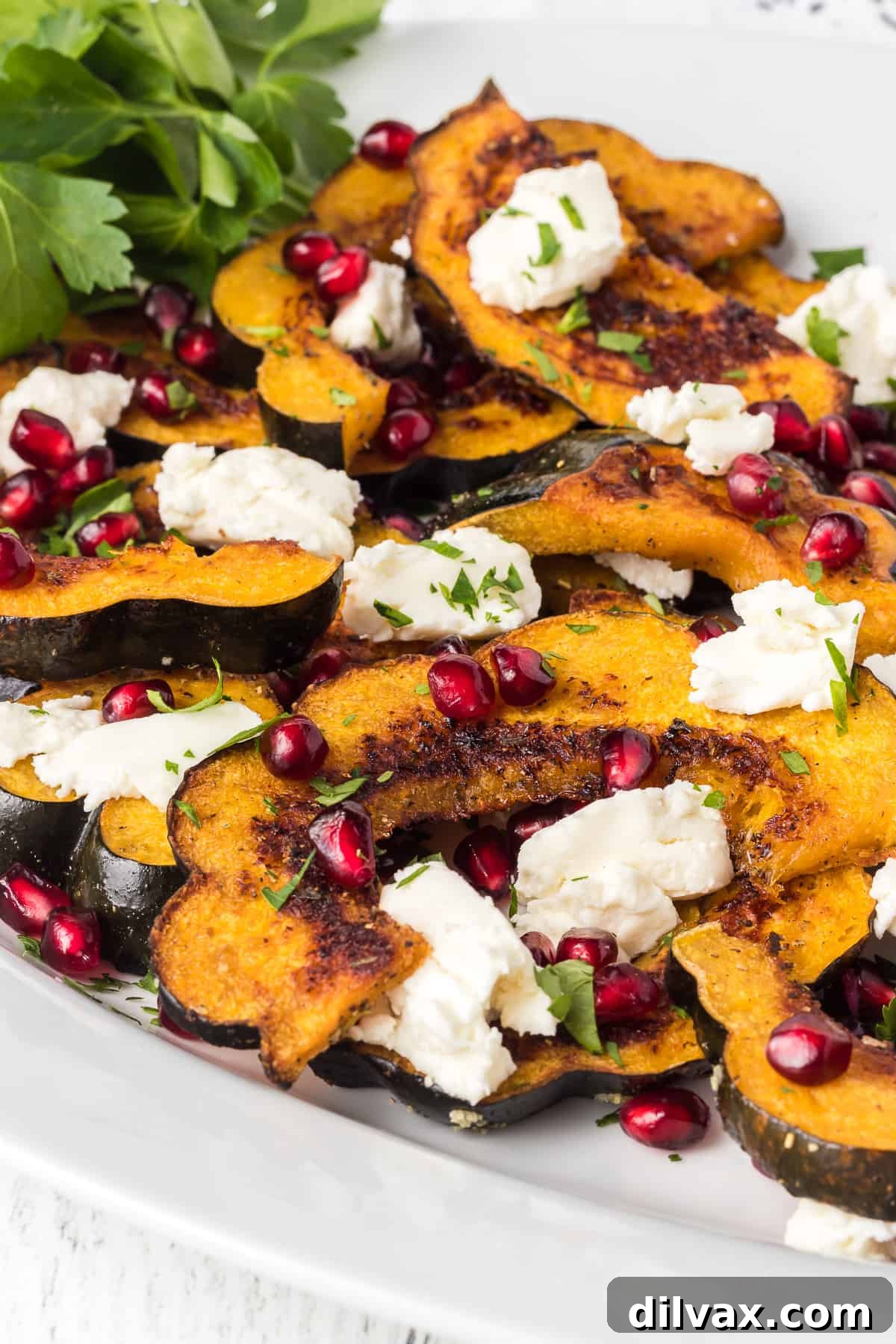
Indulge in the vibrant flavors of the season with this incredibly easy Roasted Acorn Squash recipe! Expertly tossed with premium olive oil and a blend of aromatic spices, then elegantly finished with creamy goat cheese and a scattering of ruby-red pomegranate arils, this dish is more than just a side; it’s a celebration of fall and winter produce. It’s the perfect companion for any family meal, a show-stopping addition to your holiday table, or a delightful dish to share with cherished friends.
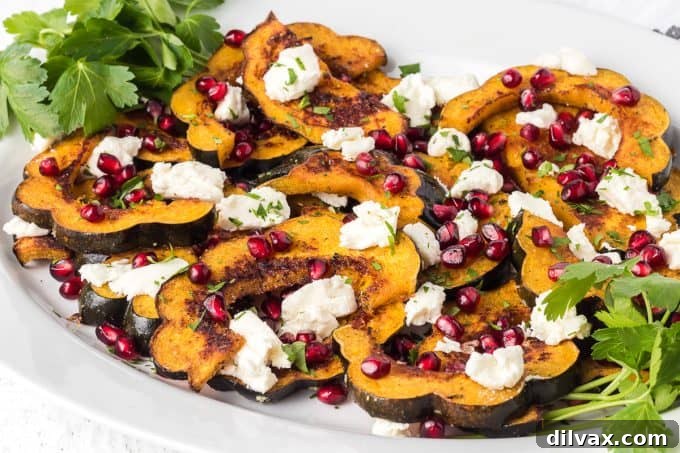
Easy Roasted Acorn Squash with Goat Cheese & Pomegranate: Your New Favorite Holiday Side
As the crisp air of autumn descends and winter approaches, it signals the perfect time to embrace the bounty of nature’s pantry: winter squashes! These versatile, nutrient-dense vegetables, including popular varieties like butternut, spaghetti, and the star of our recipe today, acorn squash, are not only delicious but also packed with impressive health benefits. Rich in dietary fiber, essential vitamins like C, and vital minerals such as potassium, they offer a wholesome foundation for countless dishes. Beyond their robust nutritional value, winter squashes boast an excellent shelf life and an adaptability that makes them a go-to ingredient for a wide array of recipes, from comforting soups and hearty stews to elegant side dishes and even desserts.
Why You’ll Adore This Roasted Acorn Squash Recipe
This particular roasted acorn squash recipe transcends the ordinary. It transforms simple, seasonal ingredients into an extraordinary culinary experience that is both comforting and sophisticated. Here’s why it’s destined to become a cherished staple in your autumn and winter kitchen repertoire:
- Effortlessly Elegant: Despite its gourmet appearance, this dish is surprisingly simple to prepare, requiring minimal hands-on time. This makes it an ideal choice for busy weeknights when you crave something special, or when you need a stress-free yet impressive holiday side dish.
- Flavor Harmony: The natural, subtly sweet flavor of perfectly roasted acorn squash is beautifully complemented by the tangy creaminess of fresh goat cheese. This delightful pairing is then elevated by the bright, juicy pop of ruby-red pomegranate arils, creating a symphony of textures and tastes that dance on your palate.
- Nutrient Powerhouse: Acorn squash is a nutritional gem. It’s an excellent source of dietary fiber, which aids digestion and promotes satiety. It also provides significant amounts of Vitamin C, crucial for immune support, and potassium, vital for heart health and maintaining fluid balance. It’s a truly delicious way to boost your daily nutrient intake without compromising on flavor.
- Seasonal Perfection: Embracing seasonal produce means enjoying ingredients at their peak freshness and often at more affordable prices. Acorn squash shines brightest in the fall and winter months, making this recipe perfectly timed to celebrate the harvest season.
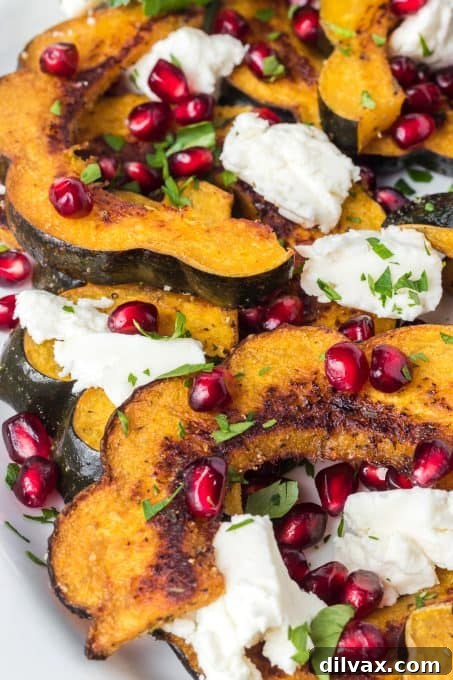
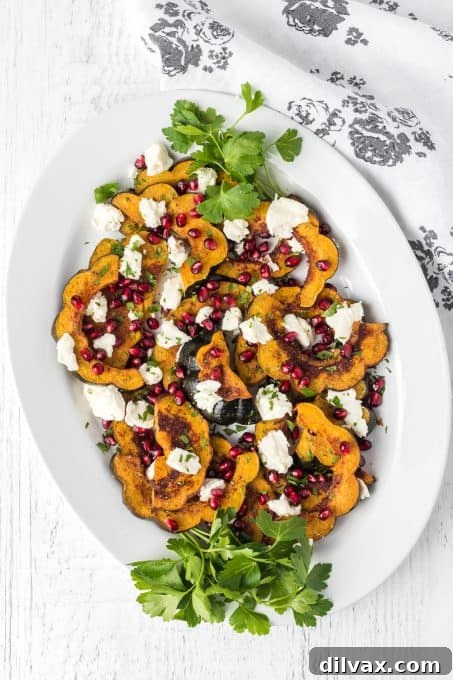
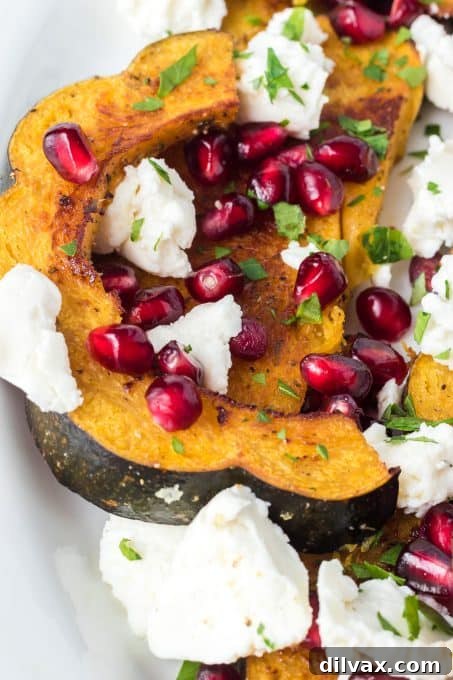
- Visually Stunning: The deep greens and rich oranges of the squash, the pristine white of the goat cheese, and the jewel-like reds of the pomegranate create a visually appealing dish that will undoubtedly impress your family and guests. It’s a feast for both the eyes and the stomach.
- Versatile Pairing: This side dish pairs wonderfully with a variety of main courses, from roasted chicken or turkey to pork tenderloin or a hearty vegetarian main. Its balanced flavor profile makes it adaptable to many meal plans.
Understanding Acorn Squash: Selection and Storage for Optimal Flavor
Choosing the right acorn squash is the first step to unlocking the best flavor and texture in your roasted dish. Acorn squashes are typically small, distinctively round with ridges, and characterized by a dark green rind, often flecked with subtle patches of orange or yellow. Follow these expert tips for selecting and storing your squash to ensure maximum freshness and taste:
- Weight Matters: Always pick a squash that feels notably heavy for its size. This is a crucial indicator of a high moisture content and a denser, more flavorful flesh, which translates to a richer taste when roasted.
- Skin Inspection: Look for squash with smooth, dull skin. A dull finish suggests ripeness, while a shiny skin might indicate that the squash was picked too early. Avoid any squash that has soft spots, deep blemishes, cuts, or mold, as these are signs of spoilage.
- Color Balance: While some orange or yellow flecking is natural and indicates ripeness, aim for an acorn squash that is predominantly dark green with a healthy balance of green to orange. A squash that is too orange might be overripe and could result in a stringy texture or an overly sweet, less balanced flavor.
- Stem Integrity: Check the stem. It should be firm, dry, and intact. A soft or moldy stem can indicate that the squash is past its prime.
- Proper Storage: Acorn squash boasts an impressive shelf life when stored correctly. Keep whole, unwashed acorn squash in a cool, dry place, away from direct sunlight, such as a pantry or cellar. Under these conditions, it can last for up to one month, or even longer. Once cut, any unused portions should be wrapped tightly in plastic wrap or stored in an airtight container in the refrigerator and ideally used within 3-4 days to maintain freshness.
Essential Ingredients for Your Roasted Acorn Squash with Goat Cheese
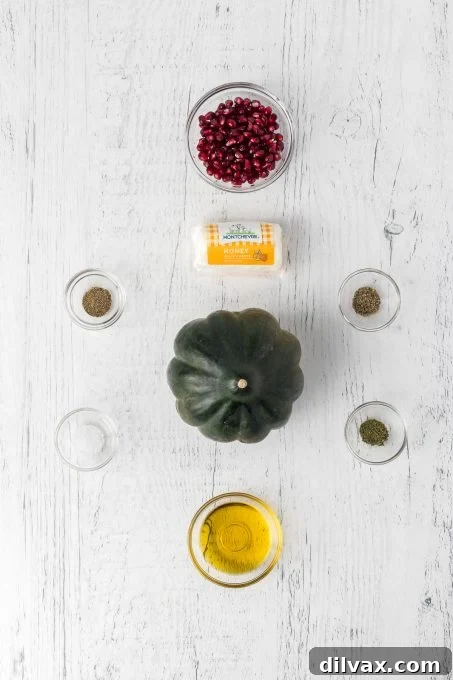
This delightful fall and winter side dish requires just a handful of high-quality ingredients to achieve truly remarkable flavor. Each component plays a crucial role in creating the perfect balance of sweet, savory, and tangy notes that make this dish so irresistible. Gather the following fresh and flavorful items:
- 1 small to medium acorn squash: The foundational ingredient, offering a subtly sweet and earthy base that caramelizes beautifully when roasted.
- 2 tablespoons extra virgin olive oil: A good quality olive oil is essential for coating the squash, promoting a beautiful caramelization, and infusing a rich, fruity note that complements the squash’s natural flavors.
- ½ teaspoon kosher salt: Essential for seasoning the squash evenly, enhancing all the other flavors, and helping to draw out moisture for better roasting.
- ¼ teaspoon freshly ground black pepper: Adds a subtle warmth and a gentle aromatic depth that balances the sweetness.
- ¼ teaspoon dried sage: Imparts an earthy, slightly peppery, and piney flavor that is a classic pairing with all types of winter squash.
- ¼ teaspoon dried thyme: Contributes a delicate, aromatic, and slightly minty or lemon-like note, adding complexity to the spice blend.
- 4 ounces goat cheese, crumbled: This creamy, tangy cheese is a star player, providing a luxurious mouthfeel and a zesty counterpoint that cuts through the richness of the squash and elevates the entire dish.
- ½ cup pomegranate arils: These vibrant, juicy gems offer a burst of sweet-tart flavor and a delightful textural crunch, making the dish visually stunning and incredibly refreshing.
- Freshly chopped parsley for garnish: A final flourish of fresh herbs not only adds a beautiful pop of vibrant green color but also a clean, herbaceous finish that brightens the overall flavor.
Ingredient Variations & Creative Substitutions:
While this recipe is absolutely perfect as written, don’t hesitate to experiment with these suggested variations to tailor the dish to your personal taste or what you have available in your pantry:
- A Touch of Sweetness: For those who prefer a slightly sweeter profile, drizzle a tablespoon of pure maple syrup, brown sugar, or honey over the squash slices along with the olive oil before roasting. This enhances the natural sugars and creates an even richer caramelization.
- Alternative Herb Blends: If dried sage and thyme aren’t readily available, other aromatic herbs can work wonderfully. Consider using finely chopped fresh rosemary, a pinch of smoked paprika for depth, or a dash of nutmeg and cinnamon for a warmer, spicier twist.
- Cheese Swaps: If goat cheese isn’t your preference or is unavailable, crumbled feta cheese can offer a similar salty and tangy punch. For a milder, nuttier flavor, try shaved Parmesan or a soft blue cheese for a bolder profile.
- Add a Nutty Crunch: Toasted chopped pecans, walnuts, or even slivered almonds can add another layer of delightful texture and earthy flavor, complementing both the squash and the pomegranate. Add them during the last 5-10 minutes of roasting or sprinkle them on before serving.
- A Hint of Heat: For a gentle spicy kick, sprinkle a pinch of red pepper flakes along with the other spices when tossing the squash.
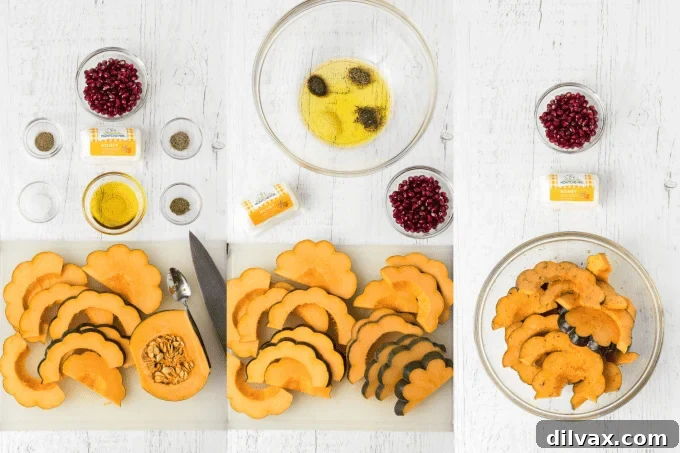
Step-by-Step Guide: Roasting Acorn Squash to Tender Perfection
Roasting vegetables is hands down one of the simplest, most versatile, and most flavor-intensive cooking methods. It consistently brings out the natural sweetness of vegetables and creates a lovely caramelized exterior that adds incredible depth. This easy roasted acorn squash side dish is no exception, and you’ll be amazed at how quickly it comes together from start to finish! Here are the detailed, easy-to-follow instructions for making this delectable dish:
- Prepare Your Oven and Baking Sheet: Begin by preheating your oven to a robust 425°F (220°C). While the oven heats, prepare a large baking sheet by either lightly spraying it with cooking spray or, for even easier cleanup, lining it with a sheet of parchment paper. This crucial step prevents the squash from sticking and promotes better browning.
- Prep the Acorn Squash: Place your whole acorn squash on a sturdy cutting board. Using a sharp, heavy-duty chef’s knife, carefully slice off both ends of the squash (about ¼ to ½ inch from each end). Then, stand the squash upright on one of its cut ends and slice it in half lengthwise, right through the middle. Use a sturdy spoon to scrape out all the seeds and any fibrous strands from the center cavities. Finally, cut each of the squash halves into uniform ½-inch to 1-inch thick slices. Consistency in slice thickness is paramount for ensuring that every piece cooks evenly and at the same rate.
- Season the Squash to Perfection: In a large mixing bowl, combine the extra virgin olive oil, kosher salt, freshly ground black pepper, dried sage, and dried thyme. Add the prepared acorn squash slices to the bowl. For the absolute best and most even coating, I highly recommend using your clean hands to gently toss, massage, and rub the oil and spice mixture onto each individual slice. This ensures every surface is thoroughly seasoned, which is key to a flavorful roast.
- Arrange and Roast: Arrange the seasoned acorn squash slices in a single layer on your prepared baking sheet. It is vital to ensure they are not overlapping; each slice needs its own space to roast properly. Overcrowding the pan will cause the squash to steam rather than roast, preventing that desirable caramelization and tender-crisp texture. If necessary, use two baking sheets. Bake for approximately 25 minutes, or until the squash is tender when pierced easily with a fork and has achieved a beautiful golden-brown color around the edges. Keep in mind that all ovens cook a bit differently, so your exact cooking time may differ slightly.
- Finish and Serve: Once the acorn squash is roasted to tender perfection, carefully transfer the warm slices from the baking sheet onto a festive serving dish. Artfully dot small chunks of creamy goat cheese among the warm squash slices. The heat from the squash will slightly soften the cheese, making it wonderfully decadent. Generously sprinkle with the vibrant, ruby-red pomegranate arils and a scattering of fresh chopped parsley for a final pop of color and herbaceous freshness. Serve immediately and savor the delightful harmony of flavors and textures!
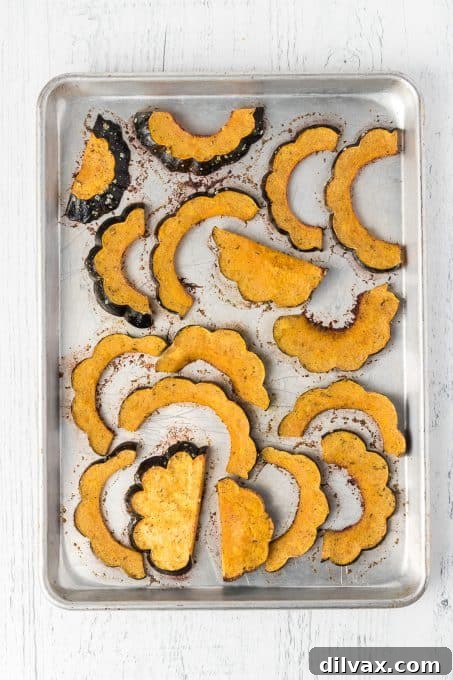
Expert Tips: Elevate Your Dish and Master Pomegranate Preparation
Tips for Perfect Roasted Squash Every Time:
- Uniform Slices are Key: This cannot be stressed enough! Try to cut your squash slices as uniformly as possible. Uneven slices will cook at different rates, leading to some pieces being overcooked and mushy while others are still firm.
- Avoid Overcrowding the Pan: This is a golden rule for successful roasting. Give your squash slices plenty of space on the baking sheet. If you have too many slices for a single layer on one sheet, use two baking sheets. Overcrowding traps steam, preventing the squash from browning and caramelizing properly. Rotate pans if using two to ensure even cooking.
- High Heat is Your Friend: Roasting at a higher temperature, like 425°F (220°C), helps achieve that desirable caramelization and tender interior without the squash becoming soggy.
- Check for Doneness: The squash should be easily pierced with a fork, indicating it’s tender. Look for beautiful golden-brown, slightly crispy edges, which signify delicious caramelization. If it’s still firm, give it a few more minutes, checking frequently.
- Taste and Adjust: Before serving, always taste a piece of the roasted squash. Adjust seasoning if needed – a little extra salt or a fresh grind of pepper can make a big difference.
Helpful Tip: How to Effortlessly and Cleanly Cut a Pomegranate
Pomegranates are truly one of nature’s most beautiful and flavorful fruits, offering a burst of sweet-tart goodness and a stunning visual appeal. However, extracting those precious ruby arils (seeds) can seem daunting and messy if you’ve never tackled it before. Fear not! I’ve discovered a simple, effective method that is both easy and remarkably clean. Just a practical heads-up, you might want to wear an apron, as pomegranate juice can, indeed, stain your clothes.
- Prepare a Water Bath: The secret weapon for a mess-free aril extraction is water. Fill a large bowl with cool water. This will be where you do most of your work.
- Top Off the Crown: On a sturdy cutting board, carefully slice off a small portion (about ¼ inch) from the crown (the top, flowery end) of the pomegranate.
- Score the Sides: Observe the natural ridges that run down the sides of the pomegranate from top to bottom. Using your knife, make shallow slits along these ridges, extending from the trimmed top towards the bottom, being careful not to cut all the way through to the center of the fruit. You’re essentially scoring the skin to create easy-to-separate segments.
- Gentle Separation: With your hands, gently pull the pomegranate open from the scored top, dividing it into several equal parts or segments along the cuts you just made.
- Submerge and Detach: Take each segment separately and submerge it completely into the large bowl of water. While submerged, use your hands and fingers to gently separate the seeds (arils) from the white pith and membrane. You’ll find that by gently rubbing and bending the segments underwater, the arils will detach easily from the membrane without splashing juice everywhere. The beautiful arils will sink to the bottom of the bowl, while the lighter white membrane pieces will conveniently float to the top.
- Strain and Enjoy: Once all the arils are separated, skim off all the floating white membrane pieces from the surface of the water using your hands or a fine-mesh strainer. Then, drain the vibrant pomegranate arils using a colander. Rinse them briefly under cold water if desired, and they’re perfectly clean and ready to add a burst of flavor and stunning color to your roasted acorn squash or any other dish!
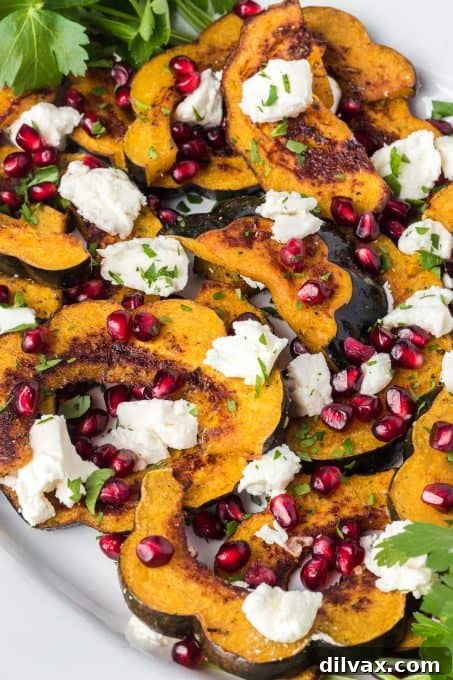
Frequently Asked Questions About Roasted Acorn Squash
Can I use fresh herbs in this simple side dish?
Absolutely! Fresh herbs can add an even more vibrant and complex flavor profile to your roasted acorn squash. If you wish to use fresh thyme and sage instead of their dried counterparts, a general culinary rule of thumb is a 3:1 ratio (fresh to dried). So, for every ¼ teaspoon of dried herb listed in the recipe, you would use ¾ teaspoon of fresh, finely chopped herb. Be sure to chop them finely to distribute their potent flavors evenly.
How do I store Roasted Acorn Squash?
To keep your roasted acorn squash fresh and delicious, allow it to cool completely to room temperature before transferring it to an airtight container. Store it in the refrigerator, where it will remain fresh for 2-4 days. For the best reheating results, if necessary, you might gently separate the acorn squash slices from the goat cheese and pomegranate arils. The arils can sometimes soften upon reheating, and the goat cheese will melt more evenly if added fresh or reheated separately. Reheat the squash in a preheated oven at 350°F (175°C) for about 10-15 minutes until warmed through, or in a microwave for quicker reheating (though the oven yields better texture).
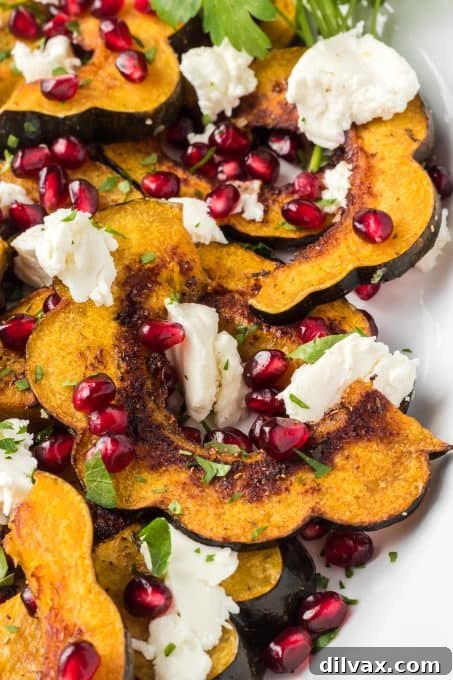
Can I freeze this squash side dish?
While you can technically freeze roasted acorn squash, I generally do not recommend freezing this particular dish with the goat cheese and pomegranate arils. Due to the high water content in squash, it tends to become quite mushy and lose its desirable tender-crisp texture when thawed. The goat cheese texture can also become crumbly or watery, and the delicate pomegranate arils will soften considerably, losing their signature juicy burst. However, if you have plain roasted acorn squash leftovers (without the cheese and pomegranate), you could easily puree them and freeze the puree in an airtight container for up to 3 months. This frozen puree is excellent for use later in soups, sauces, baked goods, or smoothies, making it a fantastic way to minimize food waste!
More Delicious Squash Recipes to Explore
If you’ve fallen in love with this Roasted Acorn Squash with Goat Cheese and Pomegranate, then you’re in for a treat! Winter squashes offer endless culinary possibilities, bringing warmth and nutrition to countless dishes. Here are a few more delightful squash dishes from our collection that you might enjoy, perfect for expanding your seasonal cooking:
- Oven Roasted Butternut Squash Risotto – Elevate classic risotto with the rich, creamy flavors of tender oven-roasted butternut squash, beautifully complemented by crispy fried sage leaves. A sophisticated and comforting addition to any dinner table, perfect for a cozy evening.
- Twice-Baked Acorn Squash – A truly fantastic and impressive way to enjoy acorn squash! First, roast the squash until tender, then scoop out the delicate insides, mix with creamy seasonings and savory fillings, and bake again until golden and bubbly. Absolutely delicious and a meal in itself!
- Stuffed Zucchini – While technically a summer squash, this hearty recipe for cooking zucchini and generously stuffing it with a savory meat and tomato filling, then topped with crunchy breadcrumbs, is a great way to utilize your garden’s bounty or fresh market finds throughout the year.
- Butternut Chicken Pinwheels – Discover the delightful combination of flavorful mashed butternut squash and succulent chicken rolled inside delicate puff pastry dough. These versatile pinwheels make an impressive appetizer for gatherings or a unique, light side dish.
What is your favorite winter squash recipe? Share your culinary creations and tips with us in the comments below! We’d love to hear from you.
~ FOLLOW ME ~
~ FACEBOOK ~ PINTEREST ~
~ INSTAGRAM ~ TWITTER ~
~ YOUTUBE ~
Keep an eye out for more of my easy and inspiring recipes each week!
Roasted Acorn Squash with Goat Cheese & Pomegranate Recipe
This easy Roasted Acorn Squash recipe, expertly tossed with olive oil and aromatic spices, and elegantly finished with creamy goat cheese and vibrant pomegranate arils, is the perfect holiday side dish to share with your family and friends!
Course: Side Dish
Cuisine: American
Prep Time: 10 minutes
Cook Time: 25 minutes
Total Time: 35 minutes
Servings: 4
Ingredients
- 1 small to medium acorn squash
- 2 tablespoons extra virgin olive oil
- ½ teaspoon kosher salt
- ¼ teaspoon freshly ground black pepper
- ¼ teaspoon dried sage
- ¼ teaspoon dried thyme
- 4 ounces goat cheese, crumbled
- ½ cup pomegranate arils
- Freshly chopped parsley, for garnish
Instructions
- Preheat oven to 425°F (220°C). Prepare a large baking sheet by lightly spraying it with cooking spray or lining it with parchment paper.
- On a sturdy cutting board, carefully slice off both ends of the acorn squash. Slice the squash in half lengthwise. Use a spoon to scoop out and discard the seeds and fibrous strands. Cut each squash half into uniform ½-inch to 1-inch thick slices.
- In a large mixing bowl, combine the olive oil, kosher salt, black pepper, dried sage, and dried thyme. Add the squash slices and toss thoroughly with your clean hands to ensure each piece is evenly coated with the seasoning blend.
- Arrange the seasoned squash slices in a single layer on the prepared baking sheet, ensuring they do not overlap. Overcrowding will steam the squash instead of roasting it.
- Bake for 25 minutes, or until the squash is fork-tender and lightly caramelized around the edges. Cooking time may vary slightly depending on your oven and slice thickness.
- Transfer the warm roasted squash slices to a serving dish. Artfully place chunks of creamy goat cheese among the slices. Sprinkle generously with fresh pomegranate arils and a scattering of freshly chopped parsley. Serve warm and enjoy this delightful combination of flavors and textures!
Recipe Notes
For more detailed tips on selecting the perfect acorn squash, mastering the art of cutting pomegranates, and exploring ingredient variations, please refer to the comprehensive blog post above!
Nutrition Information (Approximate per serving)
(Based on 4 servings)
- Serving Size: 1 serving
- Calories: 154 kcal
- Carbohydrates: 4 g
- Protein: 6 g
- Fat: 13 g
- Saturated Fat: 5 g
- Polyunsaturated Fat: 1 g
- Monounsaturated Fat: 6 g
- Cholesterol: 13 mg
- Sodium: 396 mg
- Potassium: 59 mg
- Fiber: 1 g
- Sugar: 3 g
- Vitamin A: 297 IU
- Vitamin C: 2 mg
- Calcium: 44 mg
- Iron: 1 mg