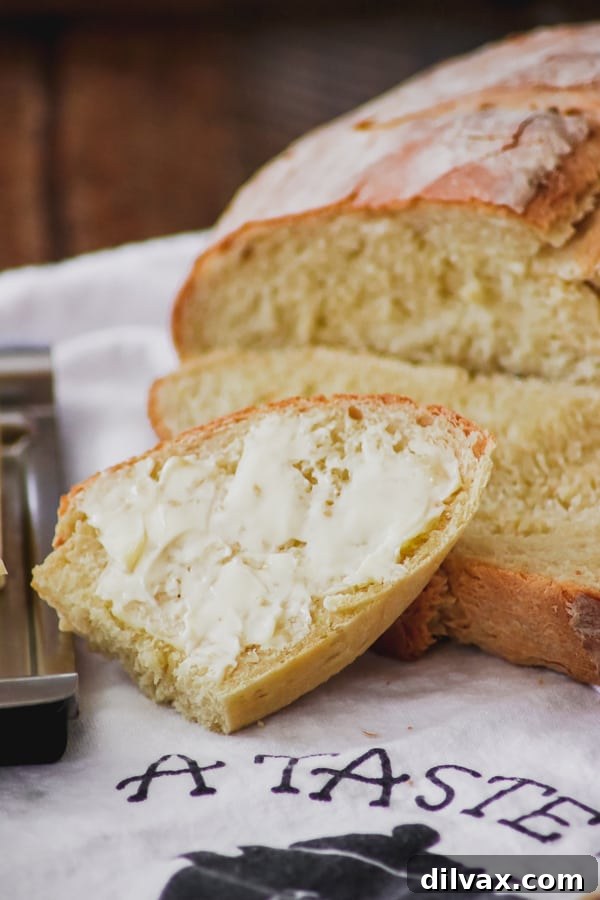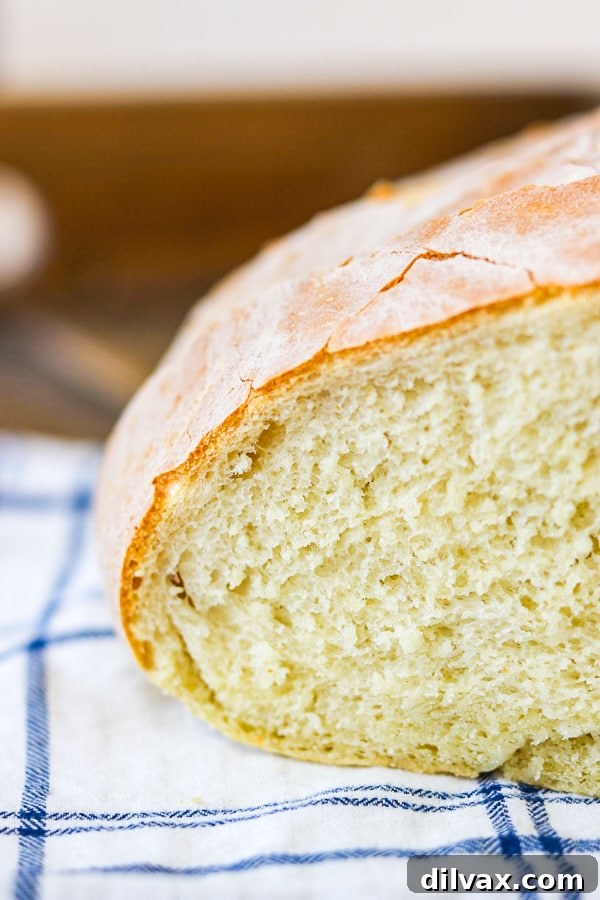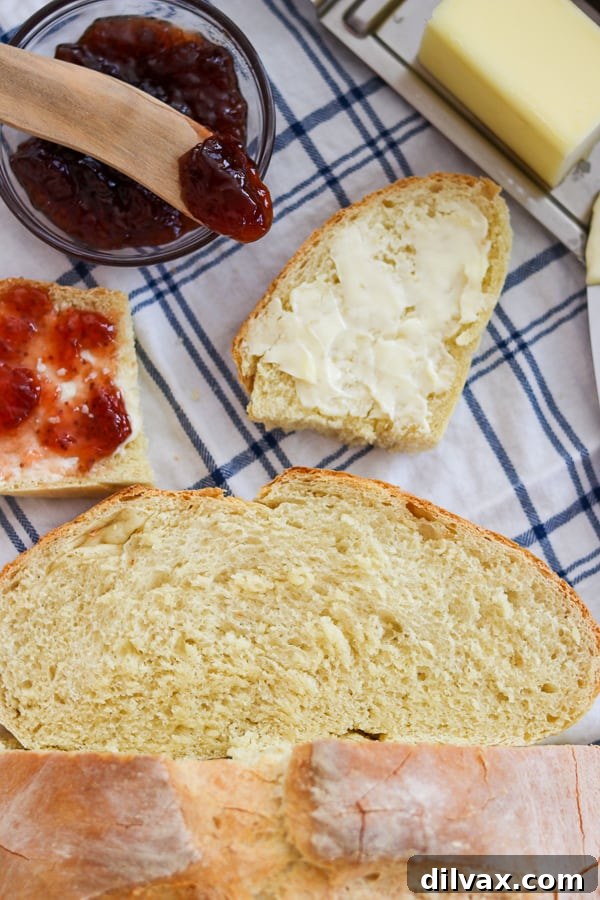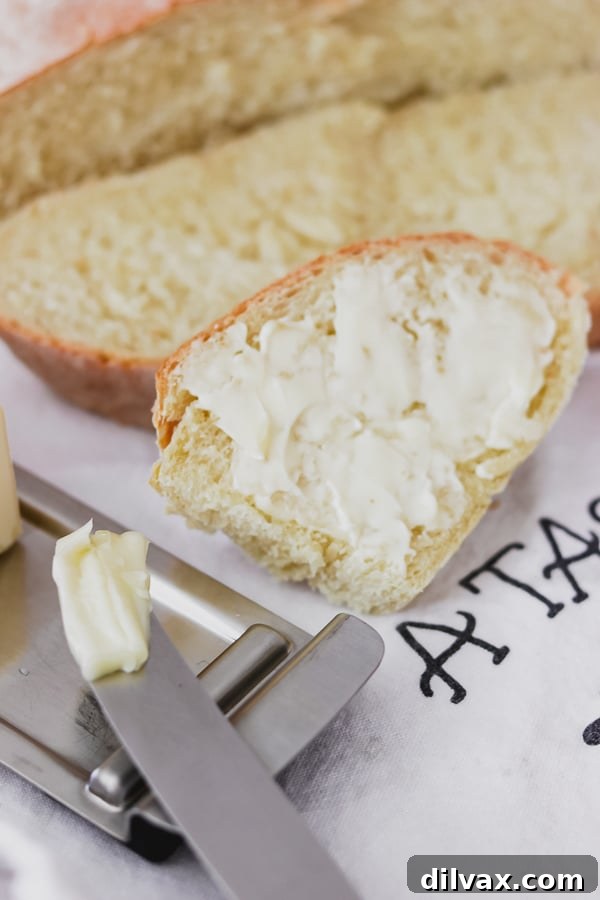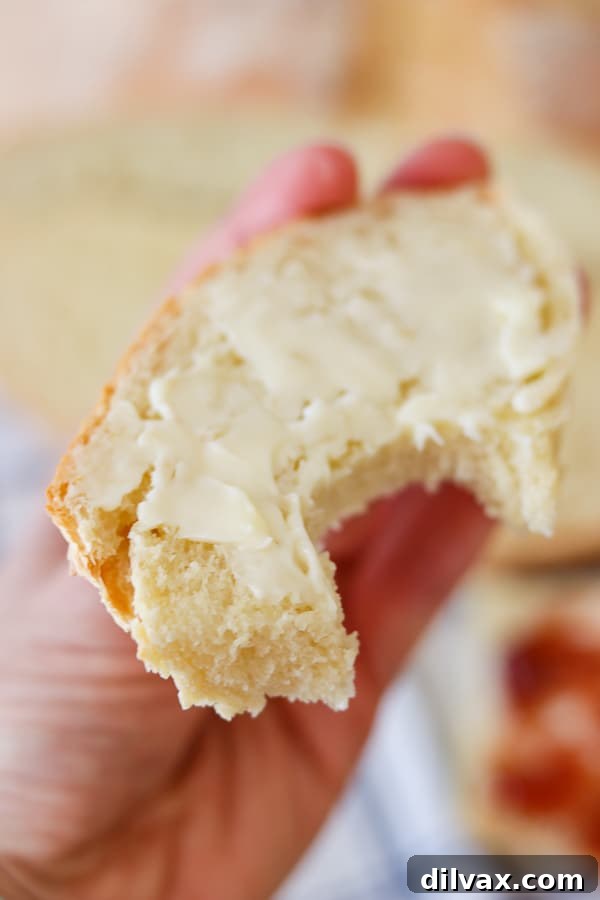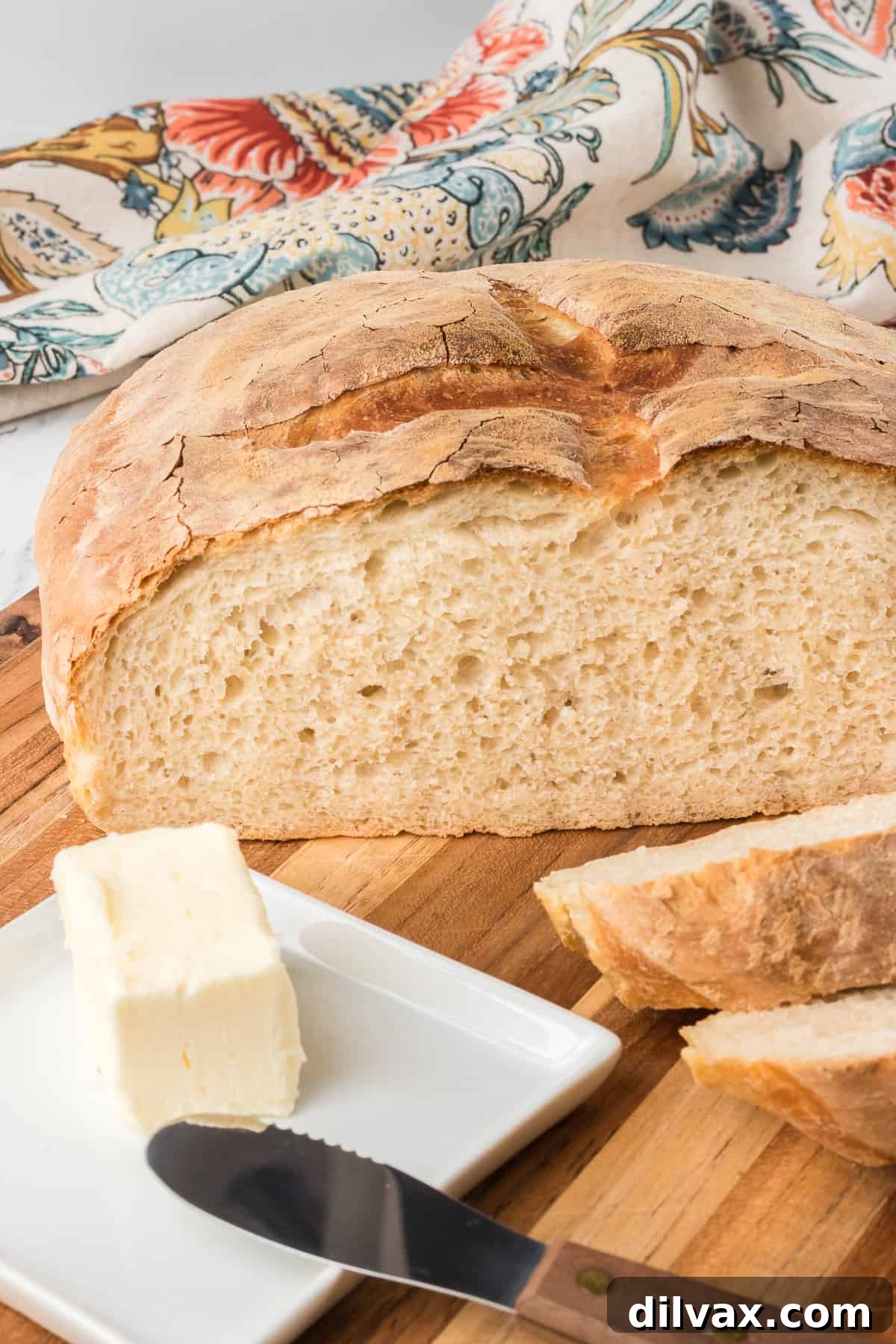
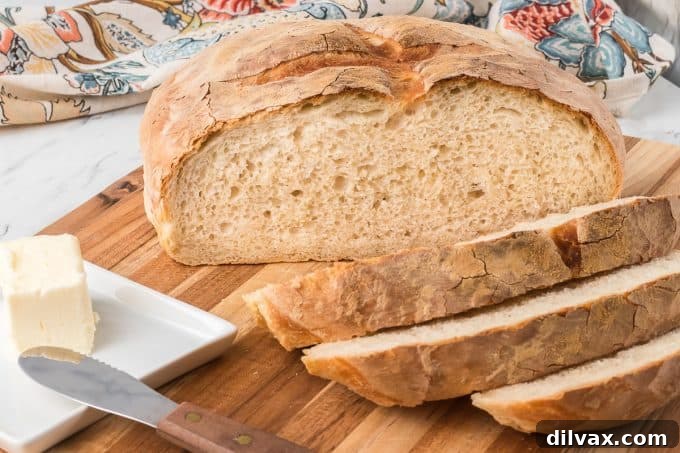
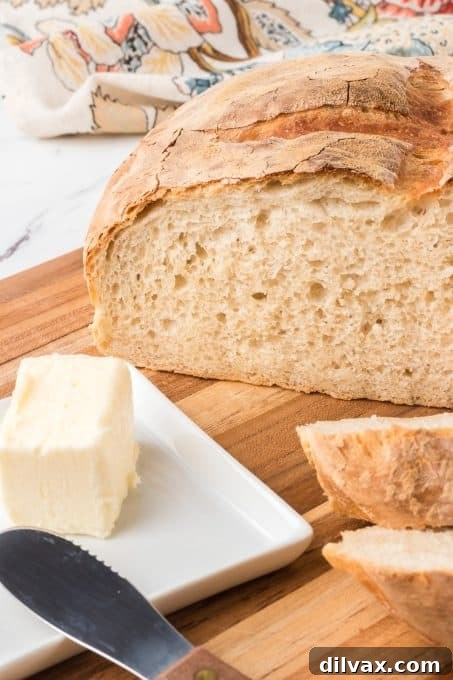
There’s nothing quite like the aroma of freshly baked bread filling your home, and this recipe for Grandma’s Authentic Italian Bread delivers that and so much more. With its perfect crunchy, chewy crust and an interior that is incredibly soft and delightful, this homemade bread is a culinary masterpiece that evokes warmth and tradition. It’s wonderfully versatile, fantastic straight out of the oven slathered with butter, serving as a robust side with your favorite pasta dinner, an excellent choice for a hearty panini sandwich at lunch, or even toasted for a comforting breakfast.
Grandma’s Authentic Homemade Italian Bread Recipe: A Taste of Tradition
A Treasured Family Legacy: The Comfort of Homemade Bread
For me, the taste of this Italian bread is deeply intertwined with cherished childhood memories. I grew up savoring this bread at my grandparent’s house so frequently that I honestly don’t recall a time when a warm, fragrant loaf wasn’t waiting in her kitchen. The simple act of breaking off a piece of the crusty exterior, revealing the soft, airy interior, was a ritual of pure joy.
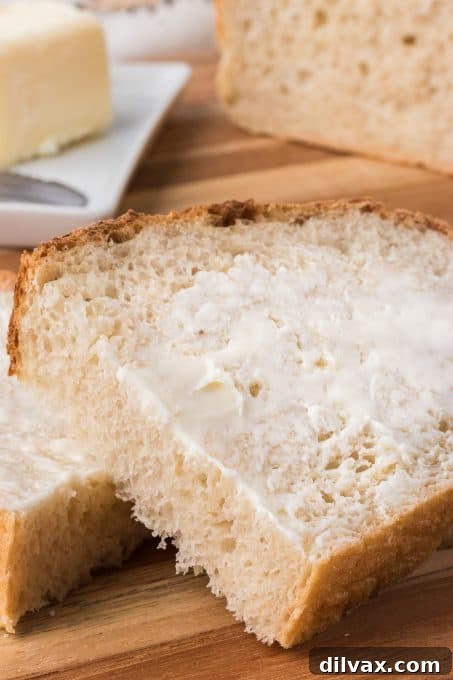
My grandmother would meticulously bake two loaves every other week, carefully freezing the second one to ensure we always had a fresh supply ready for the following week. It was a staple at every family meal, often accompanying her renowned Chicken Cacciatore (which I adorably mispronounced as “Kitchen Chakatore” as a child) and even hearty Manhattan Clam Chowder. While it complemented nearly every dinner, my absolute favorite way to enjoy it was undoubtedly right out of the oven, generously smothered in melting butter. That first bite of warm, buttery bread remains a comforting memory to this day.
Baking bread at home is more than just following a recipe; it’s about creating an experience. The process, from mixing the ingredients to watching the dough rise, and finally pulling golden loaves from the oven, is incredibly rewarding. This recipe not only delivers an outstanding loaf of bread but also allows you to share a piece of this heartfelt tradition with your own family.
SAVE MY GRANDMA’S ITALIAN BREAD RECIPE TO YOUR FAVORITE PINTEREST BOARD!
Understanding Italian Bread: A Culinary Staple
What Defines Authentic Italian Bread?
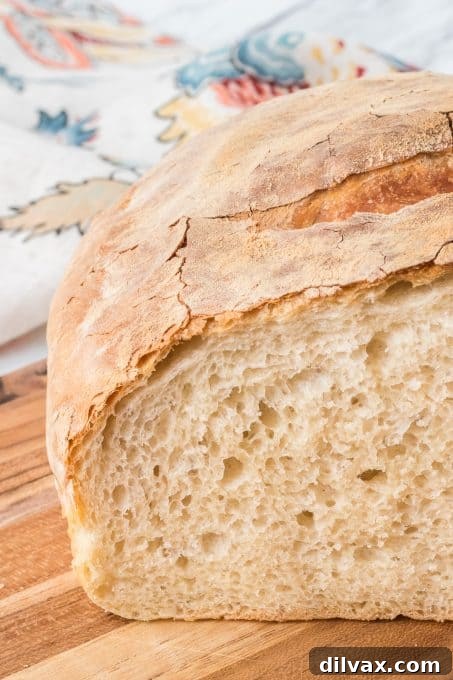
While bread is undeniably a cornerstone of Italian cuisine, it’s crucial to appreciate that “Italian bread” isn’t a single, uniform entity. Italy boasts an astonishing diversity of regional bread varieties, each with its unique characteristics shaped by local ingredients and traditions. However, as a general principle, traditional Italian bread is typically crafted using a handful of very simple ingredients: flour, water, yeast, and salt. This minimalistic approach allows the quality of these basic components to shine through, resulting in a naturally savory flavor profile.
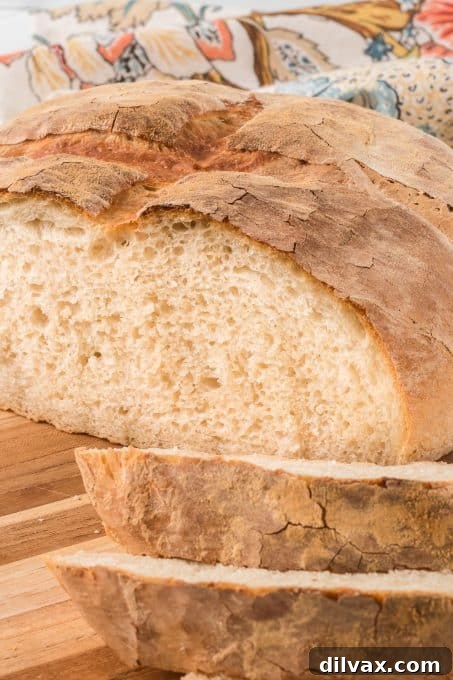
The hallmark of classic Italian bread, especially the rustic loaves, is its distinctive crust. To achieve this desired crunchy, chewy exterior and a tender, airy crumb, the bread is traditionally baked in a very hot oven, often on a flat stone. This high heat, combined with steam during the initial baking phase, is what creates that perfect, desirable crust.
This particular recipe embodies the essence of a classic, rustic Italian loaf. It focuses on simplicity and technique to bring you a bread that is both robust in texture and subtly rich in flavor, perfect for pairing with a multitude of dishes or enjoying on its own.
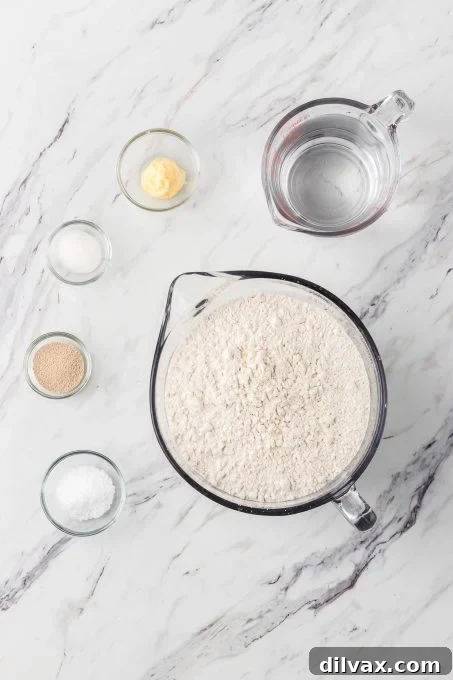
Essential Ingredients for the Perfect Rustic Italian Loaf
Crafting this delicious, homemade Italian bread requires just a few basic ingredients, yet the magic lies in how they come together. This recipe is designed to yield two substantial loaves, perfect for enjoying one now and freezing the other for later, or sharing with a friend. Here’s a breakdown of what you’ll need and why each component is vital:
Ingredients Breakdown: Crafting Two Beautiful Loaves
- 2 ¼ teaspoons of dry instant yeast (or 1 packet): This is the leavening agent that gives our bread its wonderful rise and airy texture. Instant yeast can be mixed directly with dry ingredients, but we’ll “bloom” it in warm water first to ensure it’s active and ready to work its magic.
- 3 ½ cups warm water: The ideal temperature for activating yeast is crucial. It should be warm to the touch (around 105-115°F or 40-46°C), but not hot, which could kill the yeast. Water also hydrates the flour to form gluten, giving the bread its structure.
- 8 cups all-purpose flour, divided: All-purpose flour is versatile and works beautifully for this recipe, providing a tender crumb. Dividing it ensures proper incorporation, first creating a loose batter, then adding the rest to form the full dough.
- 1 tablespoon shortening: Shortening contributes to the bread’s tender crumb and slightly richer texture. It helps prevent the bread from drying out and enhances its keeping qualities.
- 3 teaspoons salt: Salt is more than just a seasoning; it plays a critical role in controlling yeast activity, strengthening the gluten structure, and, of course, enhancing the overall flavor of the bread. Don’t skip or significantly reduce it!
- 1 teaspoon granulated sugar: Sugar provides initial food for the yeast, helping it activate more quickly and vigorously. It also contributes to a lovely golden-brown crust during baking.
- 1 cup of hot water for baking: This water isn’t mixed into the dough; it’s used to create steam in the oven during baking. Steam is essential for developing that desirable crispy, chewy crust and allowing the bread to fully expand before the crust hardens.
Mastering Your Tools: Equipment for Baking Homemade Bread
While you might already have most standard baking supplies, a few specific items are highly recommended to achieve the best results for this rustic Italian bread. These tools are key to creating that signature crust and overall quality:
- Flat Stone (like a pizza stone) or Inverted Baking Sheet: A pizza stone is ideal as it retains and radiates high heat evenly, mimicking a brick oven and contributing significantly to a crisp bottom crust. If you don’t have one, an inverted, heavy-duty metal cookie sheet can serve as a good substitute, providing a flat, hot surface. Avoid flimsy baking sheets.
- Broiler Pan or Similar Metal Pan (NOT glass!): This pan is absolutely essential for generating steam in the oven. It must be a metal pan capable of withstanding very high temperatures without shattering, as glass can break under extreme thermal shock when hot water is added to it in a blazing hot oven. A cast iron skillet can also work.
- Large Mixing Bowl (or Stand Mixer with Dough Hook): For mixing and rising the dough. A stand mixer simplifies the kneading process significantly.
- Measuring Cups and Spoons: For accurate ingredient measurements.
- Clean Kitchen Towel or Plastic Wrap: For covering the dough during rising.
- Parchment Paper: Makes transferring the delicate dough to the hot baking surface much easier and prevents sticking.
- Sharp Knife or Bread Lame: For scoring the top of the loaves, which helps control expansion and creates an attractive pattern.
- Wire Rack: For cooling the baked loaves, allowing air circulation to prevent a soggy bottom.
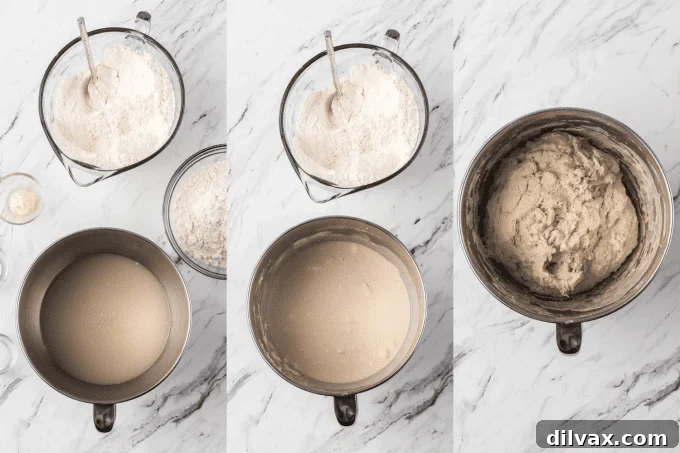
The Art of Italian Bread Making: A Step-by-Step Guide
Baking with yeast, especially a truly satisfying loaf like this Italian bread, requires patience and a good understanding of the process. While it may seem like a long endeavor with two distinct rise times plus mixing and baking, the actual hands-on work is minimal, and the process unfolds quite quickly. The wait is, without a doubt, entirely worth the incredible reward!
Preparing the Dough: Activation, Mixing, and Kneading
- Activate the Yeast: Begin by placing the dry instant yeast in a large mixing bowl. If you’re using a stand mixer, use its bowl. Pour the warm water (around 105-115°F / 40-46°C) over the yeast. Give it a gentle stir and let it sit undisturbed for about 5 minutes. You’ll know the yeast is active and healthy when a foamy layer forms on the surface. This “blooming” step ensures your bread will rise properly.
- Combine Initial Ingredients: To the activated yeast mixture, add 3 cups of the all-purpose flour, the shortening, salt, and granulated sugar. These initial ingredients will form a basic batter.
- Mix and Incorporate Flour: Using an electric mixer (or stand mixer with a paddle attachment), beat the mixture for 2 minutes on medium speed. This helps develop some initial gluten. Then, gradually add the remaining 5 cups of flour, one cup at a time, continuing to beat until all the flour is fully incorporated and a sticky, shaggy ball of dough begins to form.
- Kneading for Elasticity: Turn the sticky dough out onto a lightly floured surface. Lightly dust the top of the dough with a small amount of flour to prevent it from sticking to your hands. Knead the dough for approximately 7 minutes. The goal is to develop the gluten, making the dough smooth and elastic. Add flour sparingly, only a teaspoon at a time, if the dough becomes excessively sticky. Over-flouring can lead to dry, dense bread.
- Pro Tip: I often find it much easier and more efficient to use the dough hook attachment on my stand mixer for this kneading process, especially for the full 7 minutes. It saves a lot of arm work!
First Rise: Allowing the Magic to Happen
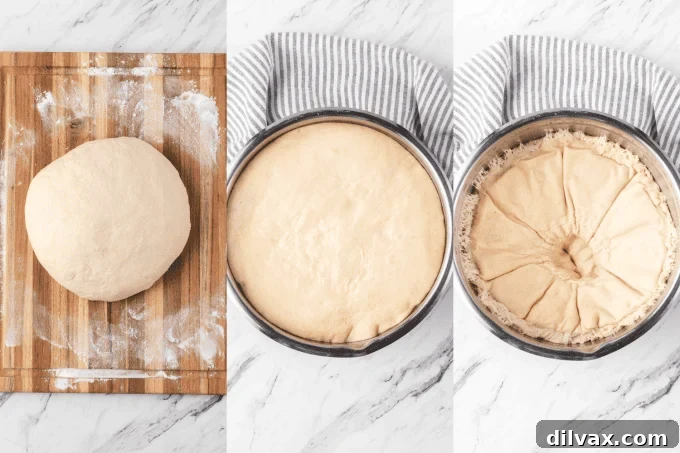
- Rest and Transfer: After kneading, let the dough rest on the counter for 5 minutes. This allows the gluten to relax. Then, transfer the dough to a large, well-greased bowl. Turn the dough over once in the bowl to ensure all sides are coated with the grease, preventing a dry skin from forming.
- The First Proof: Cover the bowl lightly with a clean kitchen towel or plastic wrap. Place the bowl in a warm, draft-free spot and let the dough rise for at least two hours, or until it has visibly doubled in size. This is a crucial step where the yeast ferments, producing gases that create the bread’s airy structure.
Shaping and Second Proof: Preparing for the Oven
- Punch Down and Divide: Once the dough has doubled, gently punch it down to release the trapped gases. This redistributes the yeast and prepares the dough for shaping. Then, divide the dough in half, creating two equal portions.
- Shape the Loaves: Lightly flour your hands and the work surface as needed. Take each half of the dough and gently form it into a short, thick, oval-shaped loaf. Avoid overworking the dough here. Place each shaped loaf onto a separate sheet of parchment paper.
- The Second Proof: Allow both shaped loaves to rest and rise again for another 40 minutes. This shorter rise allows the gluten to relax once more and the yeast to produce a final burst of gas, ensuring a light and airy interior.
Baking Your Italian Masterpiece: Achieving That Golden Crust
Baking this Italian bread involves creating a high-heat, steamy environment, which is key to developing its characteristic crunchy crust and soft interior. Follow these steps carefully to ensure a perfectly baked loaf every time:
- Preheat Oven Setup: While your shaped loaves are undergoing their second rise, prepare your oven. Place a pizza stone or an inverted metal baking sheet on the middle rack. On the lower rack, position your broiler pan or another sturdy metal pan (reiterate: NOT glass!). This pan will be used to hold water and generate steam during the baking process.
- Intense Preheat: Heat your oven to a high temperature of 450 degrees F (232°C). It’s crucial to allow ample time for your baking surface to reach the desired temperature. If you are using a baking stone, let it sit in the oven for a full 20 minutes once the oven reaches temperature before you place the loaves on top. If you’re using an inverted metal baking sheet, it only needs about 10 minutes to adequately preheat. This intense heat sets the crust quickly.
- Score the Loaves: Once the loaves have completed their second rise, lightly dust the top of the first loaf with a small amount of flour. Using a very sharp knife or a specialized bread lame, carefully score an “X” or a few diagonal slashes into the top of the dough. This scoring allows the bread to expand predictably in the oven and creates a beautiful, rustic appearance.
- Introduce Steam: Carefully transfer the parchment paper with the first loaf of dough onto the preheated pizza stone or inverted baking sheet in the hot oven. Quickly pour one cup of hot water into the broiler pan on the lower rack. Immediately and swiftly shut the oven door to trap all the steam inside. This initial burst of steam is vital; it keeps the crust soft long enough for the bread to achieve its maximum volume, resulting in a lighter, airier interior and a crispier crust.
- Baking to Golden Perfection: Bake the bread for 24-28 minutes. The exact time may vary slightly depending on your oven. The loaf should develop a beautiful golden-brown color. To confirm doneness, carefully remove the loaf from the oven and tap firmly on the bottom; it should sound hollow. This indicates that the interior is fully cooked.
- Repeat and Cool: Remove the first baked loaf from the oven and place it on a wire rack to cool. Repeat the entire baking process (steps 13-17) with the second loaf. For the absolute best texture and flavor, allow the loaves to cool completely on a wire rack before attempting to slice them. Slicing warm bread can compress the crumb and make it gummy.
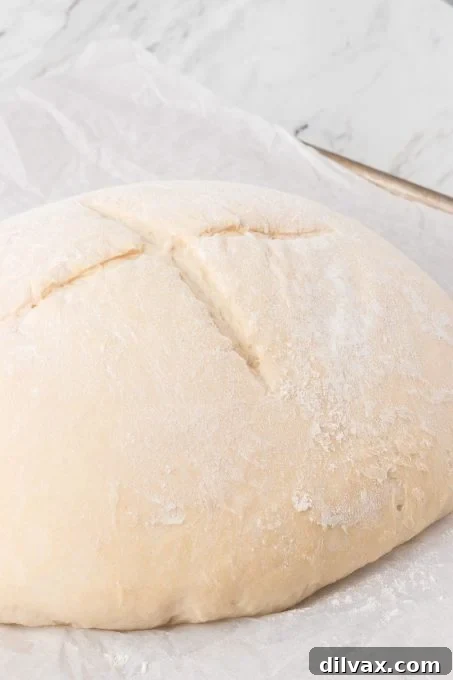
Expert Tips for Baking Flawless Italian Bread Every Time
Baking bread is a joyful experience, and with a few key tips, you can ensure your Grandma’s Italian Bread turns out perfectly every single time. These insights will help you navigate the process like a seasoned baker:
- Patience is a Virtue: This recipe is incredibly easy to follow, but it does demand patience, particularly during the resting and rising phases of the dough. It can be challenging to wait, but I promise you, the results are well worth every minute of anticipation. Rushing these steps will compromise the final texture and flavor of your bread.
- Pre-Measure for Precision: To streamline your baking process and prevent errors, measure out the 3 cups of flour into a separate bowl before you begin. This way, you won’t have to pause and re-measure when it’s time to add it to the yeast mixture, making the process smoother and more enjoyable.
- The Ideal Rising Environment: Yeast loves warmth! If you struggle to find a sufficiently warm, draft-free spot in your kitchen for the dough to rise, here’s a trick: turn your oven to its lowest setting (around 170°F/75°C) for just a few minutes while you’re mixing and kneading the dough, then turn it off completely. Once it’s off, place your covered dough into the warm oven. The residual warmth provides a consistent, cozy environment for optimal rising. Remember, warm (but not hot!) temperatures are crucial for yeast activity.
- Baking Surface Choice: I’ve had fantastic success baking this bread both on a preheated pizza stone and on an inverted metal cookie sheet. Both methods work wonderfully to create a crisp bottom crust. Feel free to experiment to discover which baking surface you prefer and which yields the best results with your specific oven.
- The “Hollow Sound” Test for Doneness: This is an absolutely critical indicator for perfectly baked bread. When you tap on the bottom of a finished loaf, it should produce a distinct hollow sound. There have been many times, in my eagerness to bite into a fresh slice, that I’ve taken the bread out of the oven too early. The middle needs to be thoroughly cooked, and that hollow sound is your foolproof guide to ensuring it’s done without having to cut into the loaf prematurely.
- Don’t Rush the Cool-Down: Once your beautiful loaves are out of the oven, resist the temptation to slice into them immediately. Allowing the bread to cool completely on a wire rack is essential. This process allows the internal structure to set, prevents a gummy texture, and ensures the crust maintains its crispness.
- Understanding Your Yeast: Ensure your yeast is fresh. If your yeast doesn’t foam when mixed with warm water and sugar, it might be expired, and your bread won’t rise. A quick check can save you from a disappointing bake.
Preserving Freshness: Storage and Freezing Your Italian Bread
Once you’ve experienced the joy of baking and tasting this incredible Italian bread, you’ll want to ensure any leftovers stay as fresh and delicious as possible. Proper storage is key to extending its life and maintaining its delightful texture.
How to Store Leftover Bread
To keep your bread loaves fresh for longer, allow them to cool completely before storing. Once cool, they should be wrapped tightly to prevent drying out. You can wrap them snugly in aluminum foil or place them in an airtight container or a large resealable plastic bag. When properly stored at room temperature, this homemade Italian bread should remain wonderfully fresh for 2-3 days.
Can You Freeze Italian Bread?
Absolutely! If you find yourself with two loaves and don’t anticipate devouring both within the first week (a rare occurrence in my house!), freezing is an excellent option. To freeze your Italian bread, ensure it is completely cooled first. Then, wrap it tightly in plastic wrap, making sure there are no exposed areas. Follow this with another layer of protection, wrapping it again securely in aluminum foil. Label with the date. Frozen bread retains its quality best when consumed within three weeks. To enjoy, simply thaw at room temperature and refresh in a warm oven for a few minutes to bring back that just-baked crust.
Perfect Pairings: What to Serve with Homemade Italian Bread
There’s an undeniable comfort that comes with making a loaf of homemade bread – the rhythmic kneading, the anticipation of baking, and the intoxicating aroma that fills your kitchen. It’s a comforting endeavor, isn’t it? This versatile Italian bread isn’t just a side dish; it’s an experience in itself, capable of transforming any meal into something truly special.
- Enjoy it simply: This bread is so incredibly good on its own, perhaps with a generous smear of butter. For a more gourmet touch, serve it with a high-quality dipping oil, such as this Restaurant-Style Olive Oil and Balsamic Dipping Oil. Or, elevate your butter game by making this flavorful Cowboy Butter recipe and spreading that rich blend on top!
- Classic Italian Companions: Place a whole loaf on the table as an indispensable side for classic Italian dishes. It pairs magnificently with One-Pot Sausage Linguini or traditional spaghetti served alongside delicious Mozzarella Stuffed Meatballs.
- Hearty Pasta Dishes: Slices of homemade Italian bread are also excellent with Pepperoni Pizza Pasta and Chicken Mozzarella Pasta. Don’t forget to try it with my extremely popular Baked Stuffed Shells, these Easy Cottage Cheese Stuffed Shells, a zesty Chicken Piccata, or truly any Italian food you can imagine!
- Perfect for Soups and Sauces: The sturdy yet tender crumb of this bread makes it perfect for dipping into rich sauces and comforting soups. We especially love enjoying it when I prepare this wholesome Homemade Chicken Noodle Soup. The crust holds up beautifully, soaking up every last drop of flavorful broth.
- Creative Uses: Leftover Italian bread (if there is any!) can be transformed into incredible bruschetta, homemade croutons for salads, or even used to make a savory bread pudding.
More Irresistible Bread Recipes to Try
If you’ve fallen in love with the joy of baking homemade bread, you’re in for a treat! The world of bread making is vast and rewarding. Next time you’re ready to fill your kitchen with the comforting aroma of baking, consider trying one of these other delicious and easy-to-follow recipes:
- Copycat Texas Roadhouse Rolls
- Corn Spoon Bread
- English Muffin Bread
- Asiago Herb Biscuits
- Coca Bread
Connect With Us!
Join our vibrant community of home bakers and food enthusiasts! Follow us on social media for daily inspiration, new recipes, behind-the-scenes glimpses into our kitchen adventures, and helpful baking tips.
FACEBOOK ~
PINTEREST
INSTAGRAM ~
TWITTER
YOUTUBE
Keep an eye out for more of my easy, comforting recipes each week!
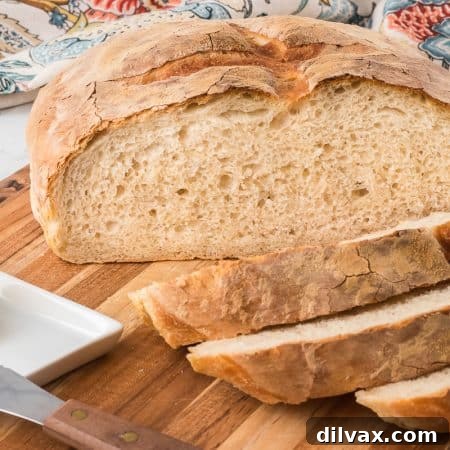
Grandma’s Italian Bread
Created by: Lynne Feifer
This timeless recipe for Grandma’s Italian Bread delivers a wonderfully crunchy, chewy crust with a soft, airy interior. It’s an easy homemade bread that makes two generous loaves, perfect for sharing, freezing, or simply enjoying with every meal. A true taste of homemade comfort and tradition.
Course: Side Dish
Cuisine: Italian
Prep Time: 20 minutes
Cook Time: 24-28 minutes
Total Time: Approximately 3 hours 33 minutes (includes all resting and rising times)
Yields: 2 Loaves (approximately 24 servings)
Ingredients
- 2 ¼ teaspoons dry instant yeast (or 1 standard packet)
- 3 ½ cups warm water (around 105-115°F / 40-46°C)
- 8 cups all-purpose flour, divided
- 1 tablespoon shortening
- 3 teaspoons salt
- 1 teaspoon granulated sugar
- 1 cup of hot water for baking (for steam, not for dough)
Instructions
- In a large mixing bowl (or the bowl of a stand mixer), sprinkle the dry yeast over the 3 1/2 cups warm water. Let it sit for about 5 minutes until it becomes foamy, indicating the yeast is active.
- Add 3 cups of the all-purpose flour, the shortening, salt, and sugar to the yeast mixture.
- Beat with an electric mixer on medium speed for 2 minutes. Gradually add the remaining 5 cups of flour, beating until all the flour is incorporated and a sticky ball of dough forms.
- Turn the dough out onto a lightly floured surface. Dust the top with a little more flour to prevent sticking. Knead the dough for about 7 minutes, adding flour sparingly (a teaspoon at a time) only if necessary to prevent excessive stickiness. The dough should become smooth and elastic. (Alternatively, use a stand mixer with a dough hook attachment for kneading.)
- Allow the kneaded dough to rest for 5 minutes. Then, transfer it to a well-greased large bowl, turning the dough once to coat it completely with grease.
- Cover the bowl lightly with a clean kitchen towel or plastic wrap and let the dough rise in a warm, draft-free place for at least two hours, or until it has doubled in size.
- Once risen, gently punch the dough down to release the air.
- Divide the dough in half.
- On a lightly floured surface, and with floured hands, gently form each half into a short, thick, oval-shaped loaf. Place each shaped loaf on a separate sheet of parchment paper.
- Let both loaves rest for an additional 40 minutes for a second rise.
- While the loaves are resting, prepare your oven: Place a pizza stone (or an inverted metal baking sheet) on the middle rack. On the lower rack, place a broiler pan or another sturdy metal pan (do not use glass!).
- Preheat your oven to 450°F (232°C). Allow the pizza stone to preheat for 20 minutes once the oven reaches temperature. If using a baking sheet, preheat it for 10 minutes.
- Lightly dust the top of the first loaf with flour. Using a sharp knife or bread lame, score an “X” or several diagonal slashes into the top of the loaf.
- Carefully transfer the parchment paper with the scored loaf onto the preheated pizza stone or baking sheet in the oven.
- Quickly pour the one cup of hot water into the broiler pan on the lower rack, then immediately shut the oven door to contain the steam.
- Bake for 24 – 28 minutes, or until the loaf is golden brown and sounds hollow when tapped on the bottom.
- Remove the first loaf and place it on a wire rack to cool. Repeat steps 13-17 for the second loaf.
- For the best texture and flavor, allow the loaves to cool completely before slicing and serving.
Recipe Notes
- This recipe reliably yields two delicious loaves of Italian bread.
- One standard 0.25-ounce (7g) packet of dry instant yeast is equivalent to 2 ¼ teaspoons.
- For an optimal warm spot for rising, briefly preheat your oven to its lowest temperature (around 170°F/75°C) and then turn it off before placing the covered dough inside. This provides consistent, gentle warmth.
- Both a pizza stone and an inverted metal baking sheet work well for baking, providing a good crust. Experiment to see which you prefer!
Nutrition Information
(Per 1 serving, approximately 1/24th of recipe)
- Calories: 158 kcal
- Carbohydrates: 32g
- Protein: 4g
- Fat: 1g
- Saturated Fat: 0.2g
- Polyunsaturated Fat: 0.3g
- Monounsaturated Fat: 0.3g
- Trans Fat: 0.1g
- Sodium: 294mg
- Potassium: 47mg
- Fiber: 1g
- Sugar: 0.3g
- Vitamin C: 0.001mg
- Calcium: 8mg
- Iron: 2mg
Note: Nutritional values are estimates and may vary based on specific ingredients, preparation methods, and serving sizes.
Did you bake this incredible bread?
We’d love to see your delicious creations! Share your photos with us on Instagram and make sure to follow us on Pinterest for endless recipe inspiration, baking tips, and more family favorites.
If you enjoyed making Grandma’s Italian Bread, please consider leaving a review or sharing your feedback!