While many of you might have anticipated a celebratory cheesecake recipe, given that it was National Cheesecake Day, my day unfolded quite differently. Instead of baking, I spent a truly delightful day shopping with my daughters – an experience that left me no time for elaborate dessert preparations, let alone dinner!
Our primary mission was to gather a few essential items for dorm life. Our eldest, having already established herself last year, only needed a few storage solutions to make her space more functional. Of course, no shopping trip with my girls is complete without a little retail therapy for ourselves, so we each found a few new pieces for our wardrobes. These shared shopping excursions hold a special place in my heart, echoing similar traditions I cherished with my own mother.
Reflecting on those times with my mother brings a bittersweet nostalgia. Our shopping trips weren’t frequent, often hindered by her chronic health struggles. From a young age, I remember the immense pain she endured due to a pinched nerve in her neck, a lingering consequence of a car accident when I was only three. This pain was a constant companion throughout her life. Later, she faced a battle with cancer, undergoing various rounds of chemotherapy and radiation treatments that further limited her ability to participate in many activities.
As a child, I recall a profound sense of anger and frustration when her illness dictated our lives. Plans would be canceled, outings postponed, and life, it seemed, was perpetually on hold because Mom wasn’t feeling well. Looking back now, with the wisdom of adulthood and motherhood, I am struck by the raw selfishness of those childhood emotions. Yet, delving deeper, I realize my anger wasn’t truly about missing out on what *I* wanted to do. It was born from a much deeper, more primal fear: these relentless ailments were stealing my mother from me, piece by agonizing piece. And I hated that with every fiber of my being.
I loathed the unpredictability, the broken promises, the way excitement would quickly dissolve into disappointment. I hated that she often had to retreat to her bed, overcome by pain or exhaustion, leaving me helpless. More than anything, I hated that there was absolutely nothing I could do to make her better, to make the suffering vanish. As a child, unable to grasp the complexities of illness, I unfairly blamed her, convinced it was somehow her fault. This simplistic, yet deeply ingrained, belief only intensified as I entered my teenage years. By then, chronic illness had become my norm, the defining characteristic of my mother’s existence. I admit, I didn’t even *want* to try and understand, choosing instead to harbor a significant amount of resentment.
Today, I see those feelings for what they truly were: a child’s desperate reaction to a situation far beyond her comprehension. I was angry, bitter, and impatient, completely lacking the perspective to understand the immense battle my mother was fighting daily. I often wished for someone to shake me to my core, to jolt me into reality and plainly state, “Open your eyes! She is sick, and above all else, she needs your love and your patience. This isn’t your fault.”
Yet, in a twisted, child-like logic, I blamed myself for the cancer. I can still vividly recall being five years old, perched on her lap. I looked into her kind brown eyes, tracing the gentle lines on her face. With both hands, I pushed back her thick, dark hair from her forehead and, with innocent curiosity, mused aloud, “I wonder what you’d look like without any hair.” She simply smiled and replied, “I don’t know, but I’d look pretty funny, don’t you think?” Four years later, the chemotherapy took her hair, and with it, my childhood innocence transformed into a profound sense of guilt. For years, I carried the heavy burden of that innocent remark, convinced I had somehow willed it into existence. Did I manifest it into the universe? I knew, intellectually, there were countless other factors at play, but the gnawing question persisted: had I, in some inexplicable way, initiated the whole devastating process? It was a secret fear I never dared to share with her, too terrified to even utter the words aloud. That unspoken guilt, combined with the raw anger I felt about her illness, festered within me, a wonder I wasn’t utterly consumed by it.
The journey to forgiveness has been nothing short of immense, a truly transformative process. It wasn’t a single event but a gradual, deliberate release that has worked wonders on my soul. Letting go of that blame, that resentment, and that self-imposed guilt was essential; without it, there could be no forward movement, and I can scarcely imagine where I’d be today. I have a loving family who needs me to be present, fully engaged. It wouldn’t be fair to them if I remained shackled to the past, unable to release these feelings and forgive myself, or indeed, to forgive my mother for circumstances entirely beyond her control. True peace, I’ve discovered, is a profound and wonderful gift, immeasurably beneficial for the spirit.
It’s quite remarkable, isn’t it? This narrative has taken an entirely unexpected turn. When I initially mentioned shopping with my girls, I certainly didn’t foresee this deep dive into my past and the complex tapestry of family emotions. Yet, my thoughts simply flowed through my fingers, and here we are.
Later that day, as my daughters and I were enjoying lunch, a truly heartwarming moment unfolded. A woman, likely in her late fifties, approached our table from around the corner, her face beaming with an enormous smile. She made direct eye contact with each of us, her warmth radiating. “I just have to tell you how beautiful each of you are,” she began, her voice full of genuine admiration. “You’re all smiling, and you’re clearly having so much fun together. I simply had to come over and tell you that because, nowadays, people often see such lovely things but don’t say anything, and it means so much. So, I just had to stop and share that.” Her words touched me deeply. I thanked her profusely, feeling utterly blessed not only by her kind observation but also by the profound and precious relationship I share with my daughters. What an incredible gift it was to have that woman not only perceive the intimacy and joy of our bond but to also verbally acknowledge and affirm it. She truly felt like an angel in that moment. I only wish I had thought quickly enough to ask her name, but she departed as swiftly and gracefully as she had appeared.
In time, I know my daughters will come to understand more of the depth and intimacy that defines our relationship. Perhaps they won’t fully comprehend its true significance until they become mothers themselves, or perhaps, some aspects may remain a mystery. And that, I’ve come to accept, is perfectly alright. For now, we are each exactly where we are meant to be: growing, changing, and learning about each other, but, more importantly, learning about ourselves. And it is precisely this journey – this evolving dance of love, forgiveness, and the unbreakable bond – that makes the relationship between a mother and her daughter so incredibly beautiful.
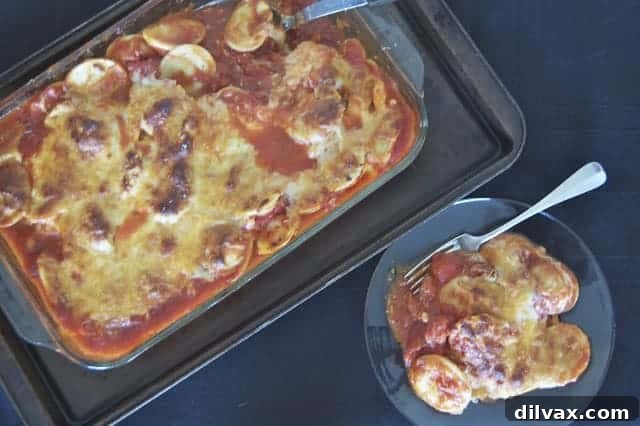
Shifting gears to dinner, tonight’s creation was a hearty and comforting pasta dish. This time, I drew inspiration from Martha Stewart’s Everyday Food’s Great Food Fast, specifically page 313. The recipe, from The Kitchens of Martha Stewart Living, was published by Clarkson Potter/Publisher, an imprint of Crown Publishing Group, a division of Random House, Inc. (ISBN 978-0-307-35416-7).
Baked Ravioli – serves 4-6
Ingredients:
2 tablespoons olive oil
1 medium onion, chopped
3 garlic cloves, minced
Coarse salt
Freshly ground black pepper
1 1/2 teaspoons dried oregano
1 can (28 ounces) whole peeled tomatoes
2 pounds fresh or frozen ravioli (Note: The bag I used was 1 lb. 14 oz., slightly less than 2 lbs.)
1 1/2 cups shredded mozzarella cheese
1/2 cup grated Parmesan cheese
Instructions:
Preheat your oven to 425°F (220°C).
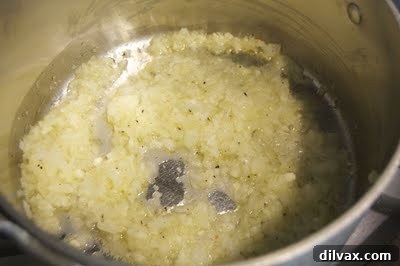
Heat the olive oil in a large saucepan over medium heat. Add the chopped onion and minced garlic, then season generously with salt and pepper. Cook, stirring occasionally, until the onion softens and becomes translucent, which usually takes about 5 minutes.
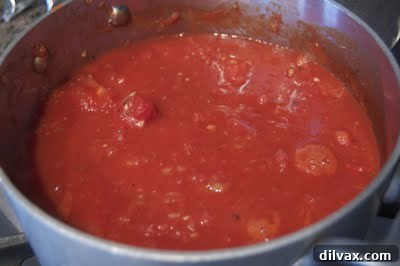
Stir in the dried oregano and add the whole tomatoes to the saucepan. Bring the sauce to a boil, then reduce the heat to a simmer. Using a spoon, break up the whole tomatoes as the sauce cooks. Continue to simmer, stirring occasionally, until the sauce has thickened and reduced to approximately 5 1/2 cups, which should take 20 to 25 minutes.
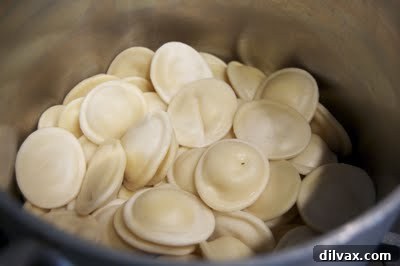
Meanwhile, prepare the ravioli. In a large pot of boiling salted water, cook the ravioli just until they float to the top. Be careful not to overcook them, as the pasta will continue to cook in the oven. Drain the ravioli thoroughly and return them to the large pot.
Pour the prepared sauce over the cooked ravioli in the pot and toss gently to ensure all the pasta is evenly coated. Transfer the sauced ravioli mixture into a greased 9×13-inch baking dish, spreading it out evenly.
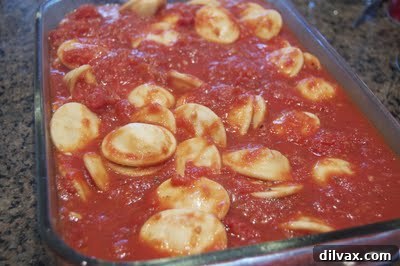
Evenly sprinkle the shredded mozzarella cheese over the top of the ravioli, followed by the grated Parmesan cheese.
Bake for 20 to 25 minutes, or until the cheese is melted, bubbly, and lightly golden.
Allow the baked ravioli to cool slightly before serving to prevent burning and allow the sauce to set.
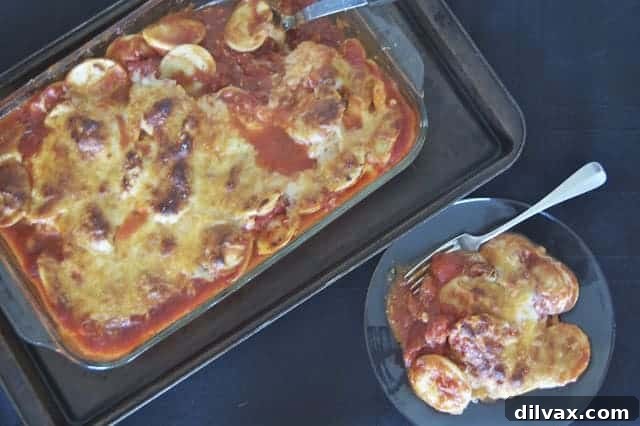
As regular readers know, every dish I bake is rated on a scale of 1 to 4, with 4 representing the absolute pinnacle of deliciousness. This Baked Ravioli proudly earned a solid 3 rolling pins. My family, particularly the men, are enthusiastic pasta lovers and have a special fondness for ravioli. Knowing this, I decided to prepare the full recipe amount, rather than halving it as I did with the baked rigatoni last night, anticipating they’d happily devour the leftovers tomorrow. I must say, I personally preferred this baked rendition to the simpler boiled ravioli I typically prepare. The baking process truly infused it with more depth of flavor, and the homemade sauce was undeniably delicious. While everyone enjoyed the dish and offered positive feedback, there were no over-the-top raves, making the 3-rolling-pin rating a unanimous and fair assessment. Happy baking, and may your kitchen be filled with warmth and wonderful aromas!