
The Ultimate Guide to Perfect Chocolate Peppermint Shortbread (and My Baking Adventure Gone Awry!)
There’s nothing quite like the aroma of freshly baked cookies wafting through your home, especially during the holiday season. Shortbread, with its delicate, buttery texture and melt-in-your-mouth goodness, is a timeless classic. When you introduce the festive duo of chocolate and peppermint, you elevate this simple cookie into a truly magical treat. Today, we’re diving deep into the world of Chocolate Peppermint Shortbread – a recipe that promises to be a staple in your holiday baking repertoire, provided you learn from my humble, yet educational, baking misadventure.
Before we embark on this delicious journey, I must confess: my recent attempt at this delightful cookie took an unexpected turn. Had I meticulously followed the brilliant recipe shared by Brenda on Meal Planning Magic, I am absolutely certain the resulting shortbread would have been nothing short of spectacular. Brenda’s original recipe, a testament to classic shortbread perfection, undoubtedly yields a delightful treat. However, in a moment of confident (and perhaps overconfident) improvisation, I strayed from the path. This post serves as both a guide to making truly exceptional Chocolate Peppermint Shortbread and a cautionary tale about the critical importance of specific ingredients, particularly when it comes to chocolate.
My culinary detour began with a crucial ingredient substitution. The recipe called for bittersweet chocolate, a choice that contributes a specific depth and balance to the flavor profile. Alas, my pantry lacked this precise ingredient. In a familiar internal debate that often arises in the midst of baking enthusiasm, I found myself pondering the nuances of chocolate:
“How vastly different can bittersweet chocolate truly be from unsweetened chocolate?
Perhaps semi-sweet would be a better alternative? No, that might introduce an excessive sweetness, clashing with the intended ‘bitter’ note in ‘bittersweet.’
Since bittersweet isn’t on hand, what’s my best bet?”
Usually, my gut instincts in the kitchen serve me well. They whisper sagely, guiding me through substitutions and tweaks that often enhance a dish. But on this particular occasion, my gut played a mischievous trick, leading me down a path of misguided assumption. “Unsweetened chocolate,” I reasoned, “must be the closest kin to bittersweet. Unsweetened, bittersweet, unsweet, bitter… surely, they’re interchangeable, right?” Oh, how wrong I was. The distinction, as I soon discovered through a rather unpalatable batch of cookies, is monumental.
The Critical Difference: Unsweetened vs. Bittersweet Chocolate in Baking
For those new to the intricacies of baking with chocolate, understanding the spectrum is key to success. Here’s a quick breakdown:
- Unsweetened Chocolate (Baking Chocolate): This is 100% chocolate liquor, meaning it contains no added sugar. It’s intensely bitter and primarily used for baking, where sugar is added separately to achieve the desired sweetness. Its strong, pure chocolate flavor requires careful balancing with other ingredients.
- Bittersweet Chocolate: This type typically contains 35-50% cocoa solids and a moderate amount of sugar. The exact percentage can vary, but it’s designed to offer a complex, deep chocolate flavor with a subtle bitterness that is balanced by some sweetness. It’s ideal for recipes where a rich, dark chocolate flavor is desired without being overly sweet.
- Semi-Sweet Chocolate: Similar to bittersweet, but generally with more sugar and a cocoa content typically ranging from 35-60%. It’s often sweeter than bittersweet, making it a popular choice for chocolate chips and many dessert recipes.
The lesson here, a hard-won one for me, is that substituting unsweetened chocolate for bittersweet fundamentally alters the sugar-to-cocoa ratio of a recipe. Shortbread, known for its delicate balance of butter, sugar, and flour, is particularly sensitive to such changes. The robust bitterness of unsweetened chocolate, without the balancing sugar found in bittersweet varieties, completely overwhelmed the other flavors, resulting in a cookie that was, frankly, inedible.
Therefore, I implore you: do yourself the greatest favor and faithfully adhere to Brenda’s original recipe on Meal Planning Magic. I have no doubt that your cookies will emerge from the oven far superior to my ill-fated batch! While I am tempted to withhold my modified recipe, considering its less-than-stellar outcome, I believe there’s value in transparency and sharing the exact steps I took. Consider it a learning tool, a roadmap of what not to do.
My Version: Chocolate Peppermint Shortbread (A Learning Experience)
This recipe aims to yield approximately 32 pieces of shortbread. Remember, this is the version where I used unsweetened chocolate. For a truly delicious result, please refer to Brenda’s original!
Ingredients:
- 1 cup (2 sticks) unsalted butter, softened to room temperature
- 1 1/4 cups granulated sugar (I even added a bit more, which still wasn’t enough!)
- 4 oz. (4 squares) unsweetened chocolate (This is where the recipe went astray. Use bittersweet!)
- 1/2 teaspoon peppermint extract
- 2 1/4 cups all-purpose flour
- 1/3 cup unsweetened cocoa powder
The Missing Glaze & Why It Matters:
This shortbread is traditionally meant to be finished with a delightful glaze, often adorned with crushed peppermint candies. However, given the overwhelming bitterness of my shortbread, I decided against adding the glaze. It felt like putting a beautiful hat on a cookie that needed a complete flavor overhaul. The full glaze recipe, which would truly complement a properly made shortbread, is included in Brenda’s original post on Meal Planning Magic. A well-executed glaze adds not only sweetness but also a beautiful sheen and an extra layer of peppermint flavor and texture, transforming the cookie into a festive masterpiece.
Instructions:
Precision and patience are key for perfect shortbread. While my results were imperfect due to the chocolate choice, these steps outline the fundamental process:
- Prepare for Baking: Begin by preheating your oven to 325 degrees F (160 degrees C). Lightly spray two 9-inch pie plates with cooking spray. This will prevent sticking and ensure your shortbread releases cleanly after baking.
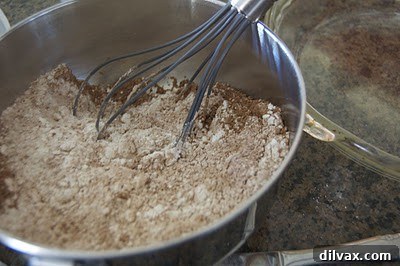
- Combine Dry Ingredients: In a medium-sized bowl, whisk together the flour and unsweetened cocoa powder until thoroughly combined. Set this mixture aside for later use.
-

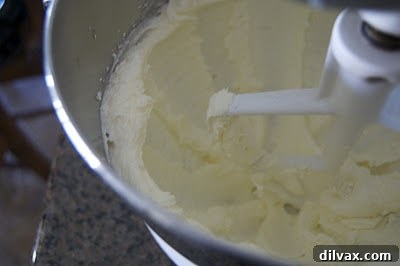
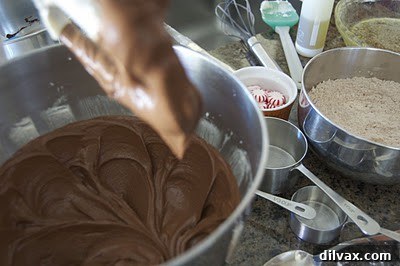
Cream the Butter: In the bowl of a stand mixer fitted with a paddle attachment, add the softened butter. Beat on medium speed until the butter is smooth and creamy. Softened butter is crucial for achieving the proper texture and aeration in shortbread.
-
Add Sugar Gradually: Gradually add the granulated sugar to the creamed butter. Continue beating on medium-high speed until the mixture becomes light, fluffy, and noticeably paler in color. This process incorporates air, which contributes to the shortbread’s tender crumb.
-
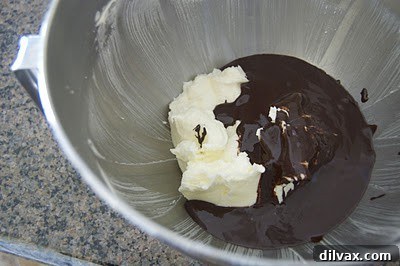
Incorporate Chocolate and Peppermint: Add the unsweetened chocolate (or, ideally, melted bittersweet chocolate as per Brenda’s recipe) and the peppermint extract to the butter and sugar mixture.
-
Mix Until Combined: Continue beating until all ingredients are thoroughly combined and the mixture is uniform in color and consistency. Scrape down the sides of the bowl as needed to ensure everything is incorporated.
-
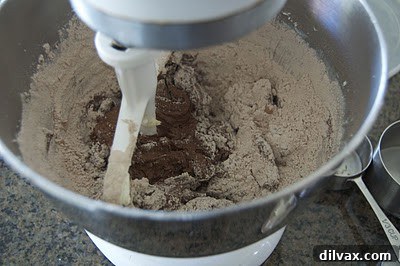
Add Dry Ingredients: With the mixer on low speed, gradually add the reserved flour and cocoa mixture to the wet ingredients. Mix only until just combined. Overmixing at this stage can develop gluten, leading to tough shortbread.
-
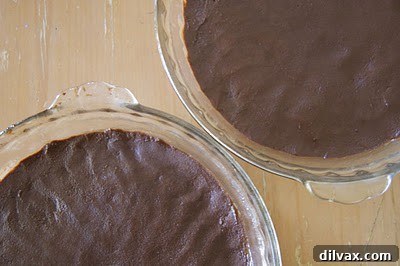
Form the Dough: Divide the shortbread dough evenly into two halves. Press each half into one of the prepared 9-inch pie plates, ensuring the dough reaches all edges and is evenly distributed. You can use your fingers or the back of a spoon for this.
-
Bake: Bake in the preheated oven for 22-24 minutes, or until the edges are lightly golden and the center appears set. Be careful not to overbake, as shortbread should remain pale for its characteristic tender texture.
-
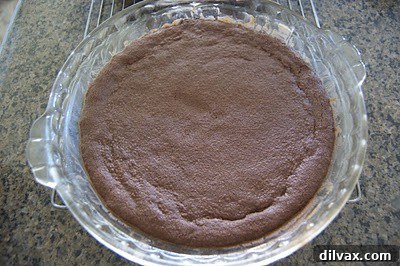
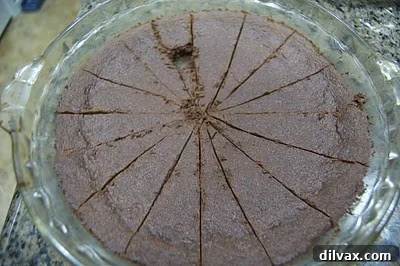
Cool and Cut: Allow the shortbread to cool completely in the pie plates on a wire rack. Cooling fully is essential before cutting to prevent crumbling. Once cooled, carefully cut each round into 16 wedges.
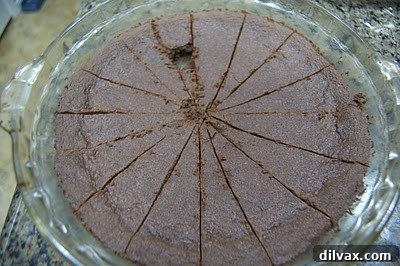
- The Glaze & Decoration (If You Made It Right!): *This is the moment where, had I used bittersweet chocolate, you would lovingly apply the glaze and sprinkle with crushed peppermint candies.* That missing piece from the image above? That was my taste-testing bite, a stark reminder of the importance of ingredient accuracy.
My Honest Verdict: A Hard-Won Lesson
As is my tradition, I rate everything I bake on a scale of 1-4, with 4 being the pinnacle of deliciousness. My particular version of the Chocolate Peppermint Shortbread, unfortunately, earned a solitary rolling pin, a disheartening 1 out of 4. It simply wasn’t edible. The extreme bitterness from the unsweetened chocolate, combined with an insufficient amount of sugar to counteract it, resulted in a cookie that lacked the intended harmony of flavors.
Even though I sensed the batter needed more sugar during tasting and added extra beyond the original recipe’s call, it was still not enough to salvage the fundamental imbalance. The powerful, raw cocoa flavor of the unsweetened chocolate demanded a far greater sugar content to be palatable in this application. This experience was a vivid demonstration that some substitutions, particularly with ingredients as foundational as chocolate, can critically undermine a recipe’s success. It reinforced the golden rule of baking: when a recipe specifies a particular type of chocolate, stick to it!
So, please, for the sake of your taste buds and your holiday baking spirit, make Brenda’s original Chocolate Peppermint Shortbread recipe. It’s designed for perfection.
Beyond the Fail: Embracing the Baking Journey
While this particular cookie batch was a bust, the journey of baking is filled with triumphs and occasional missteps. This experience was a valuable reminder that even seasoned bakers can learn new lessons. It underscores the importance of not only following recipes diligently but also understanding the role each ingredient plays. This year, as we dive into the festive season, I’m committed to bringing you more successful and delightful recipes for your cookie swaps and gift-giving endeavors.
My promise to myself, and to you, is that from now on, I will consult reliable sources and thoroughly research ingredient substitutions *before* I even begin the baking process. Knowledge, as it turns out, is just as crucial as a good oven.
Thank you for joining me on this honest baking journey, complete with its humble learnings. I hope my experience saves you from a similar fate and guides you towards making truly memorable Chocolate Peppermint Shortbread. Happy baking, and I look forward to sharing more culinary adventures with you tomorrow!
Sending you BIG baking hugs and delicious muffins!