As I write these words, the gentle murmur of my son’s voice drifts from the bathroom, a symphony of self-reflection. He isn’t singing; he’s conversing, working through the day’s events. Tonight, his monologue is particularly animated, fueled by the sting of an unexpected defeat. His undefeated baseball team, a powerhouse of young talent, fell to an opponent with a modest 3-3 record. He admits his bat wasn’t at its best, but he held his own defensively. The game was a rollercoaster: a disheartening 7-1 deficit transformed into an exhilarating 8-7 lead. But fate, and the home team advantage, meant the final ups belonged to the opposition. In the bottom of the last inning, a collision at second base, while he was making a crucial catch, left him slightly injured. It was more than just a physical bruise; I could sense the frustration, the disappointment of the loss and his own perceived underperformance, amplifying the pain. It’s a familiar feeling, isn’t it, when emotional weight deepens a physical ache? I see him now, processing it all, laying bare his thoughts and feelings in the privacy of his own mind, a ritual of emotional processing that brings him back to equilibrium. I often find myself lingering outside his door, captivated by the raw honesty of these moments. He does this in bed too, whispering his day’s adventures and woes, only to be utterly mortified if he catches the faintest glimpse of my shadow in the hallway. But I can’t help myself. I am his mother, and I know these precious, fleeting moments of unguarded honesty are numbered. So, I listen, soaking in every word, every nuance of his young spirit. It’s in these quiet, personal reflections that we often find our deepest truths, much like the journey to discover and perfect a beloved recipe.
Speaking of cherished memories and the pursuit of perfection, my mind drifts back to our days in Rhode Island, and the wonderful visits from our dear friends, Mary and Eddy. They often journeyed back to their native New York, returning with a treasure trove of Italian delicacies. One particular time, they arrived bearing a vibrant, unmistakable PINK BOX! Oh, how I adore those iconic pink boxes, not just for their charming presentation, but for the irresistible culinary delights nestled within them. This specific box held a revelation: Pignoli cookies. It was an ‘Oh My Goodness’ moment that truly etched itself into my memory. These weren’t just cookies; they were an experience. The exterior offered a delightful chewiness, yielding to an interior so soft, so tender, that it practically dissolved on the tongue. Each bite was a delicate balance of almond and pine nut, a symphony of textures and flavors that left me utterly captivated. They were so extraordinarily good that I would, perhaps not so subtly, beg Mary to bring them back on every subsequent trip to New York. They belonged to that rare category of culinary masterpieces – so perfect, so seemingly unattainable, that I was genuinely intimidated to attempt to recreate them. The fear of failure, of not being able to do justice to such a divine creation, kept me from trying. Yes, I, a seasoned home baker, was genuinely intimidated by a cookie. For over 12 years, this delicious challenge remained on my mental back burner. But today, that changed. Today, I finally baked a batch of Pignoli cookies so remarkably close to my cherished memory that I believe even *I* could proudly place them in one of those fabled pink boxes! The sheer excitement of this accomplishment is truly exhilarating!
And for this monumental baking triumph, we owe a debt of gratitude to the incomparable Martha Stewart. Her meticulously curated “Baking Handbook” proved to be my guide. I discovered the recipe on page 93 of this invaluable resource, published by Clarkson Potter/Publishers, a division of Random House, Inc., with ISBN 0-307-23672-2. Martha Stewart’s reputation for precision and perfection in the culinary world is well-deserved, and this recipe is a testament to her expertise. The confidence I gained from her clear instructions finally allowed me to overcome my long-standing apprehension and dive into the creation of these exquisite Italian treats. It just goes to show that with the right guidance, even the most intimidating culinary dreams can become a delicious reality.
Pignoli Cookies: A Taste of Italian Tradition
These classic Italian Pignoli cookies are a true delight, offering a delicate balance of almond sweetness and the earthy crunch of pine nuts. They are surprisingly simple to make, yet elegant enough for any special occasion. Their tender, chewy texture and rich flavor make them utterly irresistible. Prepare to be amazed as you bring a piece of Italian baking tradition into your own kitchen.
Ingredients:
- 7 ounces almond paste (preferably in a tube, for freshness and consistency)
- ½ cup granulated sugar (for structure and sweetness)
- ½ cup confectioners’ sugar, plus extra for dusting (contributes to tenderness and the traditional finish)
- 2 large egg whites (provides lift and binding, crucial for the cookie’s texture)
- ½ teaspoon vanilla extract (enhances the overall flavor profile)
- 3 tablespoons all-purpose flour (adds just enough body without making them heavy)
- 1/8 teaspoon salt (balances the sweetness and brings out the flavors)
- ¾ cup pine nuts (the signature crunch and flavor)
Instructions:
Step 1: Prepare Your Baking Environment
Begin by preheating your oven to a precise 350ºF (175ºC). Position your oven racks in the center and lower third positions to ensure even baking across multiple sheets. Next, line two large baking sheets with parchment paper. This non-stick surface is essential for preventing the cookies from sticking and making cleanup a breeze. Set these prepared sheets aside, ready for your cookie dough.
Step 2: Combine Almond Paste and Sugars
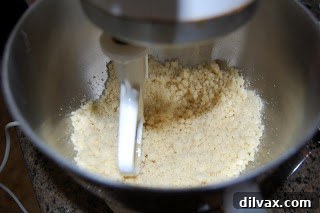
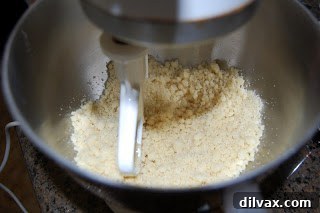
In the spacious bowl of an electric mixer, fitted with the paddle attachment, combine the almond paste with both the granulated sugar and the ½ cup of confectioners’ sugar. Beat these ingredients on medium speed for approximately 2 minutes. The goal here is to break down the dense almond paste and incorporate the sugars thoroughly, resulting in a mixture that resembles coarse, sandy crumbs. This step ensures an even distribution of sweetness and almond flavor throughout the dough.
Step 3: Create a Smooth Paste
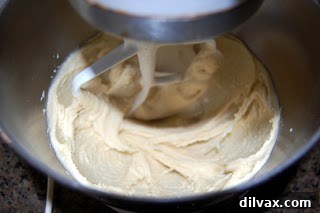
Now, introduce the egg whites and the vanilla extract to your mixture. Increase the mixer speed to medium-high and continue beating for 3 to 4 minutes. During this stage, a remarkable transformation occurs: the crumbly mixture will come together, forming a smooth, cohesive, and incredibly glossy paste. The egg whites activate, creating the structural foundation that will give these cookies their signature chewy yet tender texture. Ensure the mixture is completely uniform before proceeding.
Step 4: Incorporate Dry Ingredients
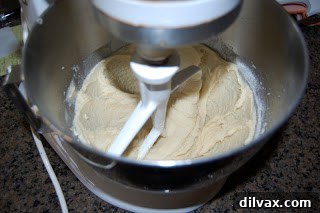
Reduce the mixer speed to low, then gradually add the all-purpose flour and salt to the almond paste mixture. Beat until these dry ingredients are just combined, usually about 1 minute. Be careful not to overmix at this stage; overmixing can develop the gluten in the flour, leading to a tougher cookie. The resulting dough will be notably soft and quite tacky to the touch. This sticky consistency is normal and desired for Pignoli cookies, so don’t be alarmed.
Step 5: Form and Coat the Cookies
Pour the pine nuts into a small, shallow bowl; this will be your coating station. Now for the fun part: using a tablespoon (or a teaspoon for smaller cookies, as I learned), scoop out portions of the incredibly sticky dough. To make handling easier, lightly dampen your fingers with water. Gently drop each dollop of dough into the bowl of pine nuts, rolling it around to coat one side completely. Carefully transfer these rounds, pine-nut-coated side facing up, onto your prepared baking sheets, ensuring they are spaced approximately 2 inches apart to allow for proper air circulation and expansion during baking. Repeat this process with the remaining dough. If any areas on the dough rounds appear sparse, gently press extra pine nuts onto the bare spots with your fingers to ensure a beautiful, full coating.
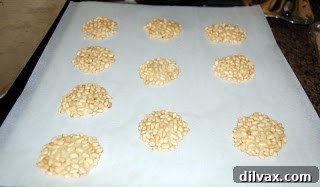
Step 6: Bake to Golden Perfection
Place the baking sheets into your preheated oven. Bake for 13 to 15 minutes, rotating the sheets halfway through the baking time. Rotating ensures that all cookies bake evenly, preventing some from browning too quickly while others remain pale. The cookies are ready when their edges and the pine nuts scattered on top have turned a beautiful golden brown. This indicates they are perfectly cooked through, achieving that ideal chewy exterior and tender interior.
Step 7: Cool and Finish
Once baked, immediately transfer the cookies, still on their parchment paper, to a wire rack. Allow them to cool completely. This cooling process is crucial for the cookies to set and firm up properly. Once fully cooled, use an offset spatula to carefully and gently loosen them from the parchment paper. They will be delicate, so take your time. For a traditional finish, and to add a touch more sweetness, use a fine sieve to delicately dust the cooled cookies with additional confectioners’ sugar. These delightful cookies can be stored, stacked between layers of waxed or parchment paper, in an airtight container at room temperature for up to 4 days. While they rarely last that long, it’s good to know they’ll stay fresh!
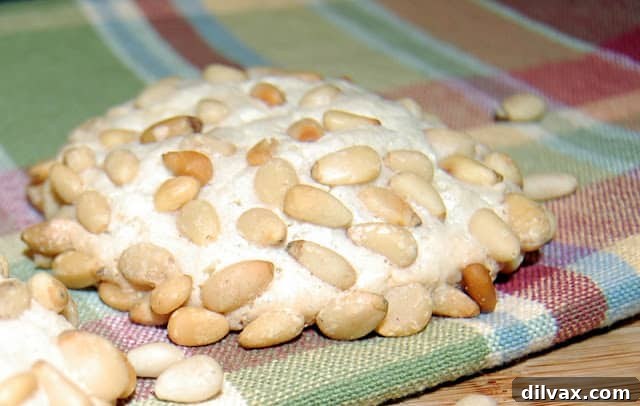
Yes, in my excitement, I confess I completely forgot to dust them with confectioners’ sugar. But here’s the astounding truth: they absolutely, unequivocally, did not even need it. They were simply that yummy, that delicious, on their own. Each bite confirmed my initial ‘Oh. My. Goodness.’ reaction. My husband, often a man of few words when it comes to culinary critiques, was genuinely amazed by their quality. He declared, quite emphatically, that they were the absolute best thing I had ever baked. Naturally, I had to challenge him. “Better than the crème brûlée?” I probed, referencing a dessert that has always been a household favorite and a source of particular pride for me. He paused, thoughtful for a moment, and then, with a definitive nod, replied, “Yeah, even better than the crème brûlée.” Now, *that* is saying something significant because his praise for the crème brûlée has always been effusive. I think I might be subtly spoiling him with these newfound baking feats, but honestly, it’s a joy to see his face light up with such genuine delight.
Reflecting on the baking process, I’ve already earmarked a few adjustments for next time. Instead of using a tablespoon for scooping the dough, which resulted in quite large cookies (and required a knife to scrape the sticky dough out!), I’ll definitely opt for a teaspoon. This will create smaller, more delicate cookies, which I personally prefer, and will naturally lessen the baking time slightly. The dough, as warned, was incredibly soft and tacky. While the recipe suggests dampening fingers to handle the dough in the pine nuts, I found an even more effective method. Instead of using my fingers, which became quite messy, I used a larger tablespoon to scoop the dough directly into the pine nuts. This technique, while occasionally grabbing a few extra pine nuts in the process, made transferring the coated rounds to the parchment paper significantly easier. It also helped maintain a more consistently rounded shape for the cookies, as opposed to the somewhat misshapen ones I initially produced by hand. I then simply removed any excess pine nuts with my fingers once they were on the baking sheet. Ultimately, I would prefer to have two perfectly proportioned, smaller cookies for every larger one I made this time. In the end, my batch yielded about 23 cookies, while the recipe estimated around 18. This slight discrepancy, combined with the size factor, definitely influences the overall experience.
My personal rating system for recipes is based on a scale of 1 to 4, with 4 representing the absolute pinnacle of culinary achievement. I’m quite certain you’ve already anticipated the verdict for these Pignoli cookies: a resounding 4 rolling pins! Yes, they were truly *that* good, exceeding all expectations and finally conquering that 12-year intimidation. I wholeheartedly recommend that you don your finest Italian apron, gather your ingredients, and embark on this delightful baking adventure. I am absolutely confident that you will not regret it. These Pignoli cookies are more than just a sweet treat; they are a celebration of tradition, a testament to overcoming culinary fears, and a truly unforgettable taste experience.
Happy baking, and enjoy every exquisite bite!