Walking into a Barnes & Noble always feels like coming home. It’s an experience that transcends mere shopping; for me, it’s a full sensory immersion. Some people are visually oriented, drawn by sights and colors, while others are auditory, moved by sounds. But I? I am undeniably olfactory, my world often defined by scent. And this morning, the aroma that greeted me as I crossed the threshold was nothing short of divine. It wasn’t just a faint whisper; it was a symphony of paper, coffee, and subtle, comforting sweetness that wrapped around me, instantly uplifting my spirit.
This powerful scent didn’t just awaken my sense of smell; it acted as a catalyst for all my other senses. Colors around me seemed to gain a new vibrancy, the soft murmur of conversations blended harmoniously with the gentle, velvety tones of Michael Bublé playing softly, inviting an unconscious sway. A profound sense of happiness welled up, manifesting as an involuntary smile. I had arrived, not just at a bookstore, but at a sanctuary. I’m sure many of you can relate, having experienced similar moments of pure contentment upon entering a cherished space. For years, Barnes & Noble has been that place for me—a love affair born the very first time I stepped inside. Here, I could easily lose myself for hours, forgetting the outside world, enveloped in the quiet hum of knowledge and creativity.
Barnes & Noble. Those three simple words conjure a world of meaning. Perhaps it’s my lifelong love of books, ignited in childhood, or perhaps it’s the aspiring writer in me, envisioning myself at one of those cozy brown tables, signing copies of my own book for an eager reader (a delightful fantasy!). These dreams, no matter how whimsical, are essential. As the saying goes, if you don’t have dreams or a sense of humor, what’s the point? So, the next time you find yourself in the inviting embrace of a Barnes & Noble, take a moment. Breathe deeply. Allow your senses to fully engage with the atmosphere. Experience the pure joy of being there, and carry that sense of wonder and calm into other facets of your life. Find inspiration in the quiet corners, let your imagination roam free, and embrace the simple pleasures that ignite your spirit.
The Sweet Allure of Cookbooks and a Quest for Homemade Whole Wheat Bread
My sensory journey this morning eventually led me, as it often does, to the cookbook section. This area of the store is a treasure trove of culinary dreams, each spine holding the promise of new flavors and delicious adventures. I completely lost myself amidst the vibrant pages, flipping through beautifully photographed dishes and imagining the stories behind each recipe. The sheer variety, from international cuisine to classic comfort foods and innovative baking guides, is always intoxicating. Cookbooks, for me, are more than just instruction manuals; they are gateways to new experiences, cultural explorations, and the comforting traditions of home.
Surprisingly, despite the overwhelming temptation, I walked out without a single purchase. I knew that if I picked up one, another would inevitably follow, and I’d likely leave with an armful of at least four new culinary guides. Their artistry and the sheer deliciousness of the recipes within were captivating. But prudence won the day; I’m patiently waiting for a specific gift card to arrive before indulging in a full cookbook haul. Until then, my ever-growing mental wishlist of baking books continues to expand, fueled by every visit.
Today’s baking inspiration, however, didn’t require a new purchase. It came from a timeless classic: the Fannie Farmer Cookbook, Thirteenth Edition, specifically page 516, authored by Marion Cunningham, and published by Alfred A. Knopf, Inc. (ISBN 0-394-56788-9). This venerable cookbook is a cornerstone for many home cooks, known for its reliable recipes and clear instructions, a true testament to enduring culinary wisdom. My focus today was a hearty and wholesome creation: Whole-Wheat Oatmeal Bread, a perfect blend of rustic texture and comforting flavor.
Crafting Wholesome Goodness: The Whole-Wheat Oatmeal Bread Recipe
There’s an unparalleled satisfaction in making bread from scratch. The simple act of combining basic ingredients and transforming them into something warm, fragrant, and utterly delicious is truly rewarding. This recipe, adapted from the classic Fannie Farmer, yields two loaves of wholesome goodness, perfect for sandwiches, toast, or simply enjoyed fresh with a slather of butter. It’s a wonderful way to bring the comforting aroma of a bakery into your own home, with the added benefit of knowing exactly what goes into every slice.
Ingredients:
- ½ cup water (for initial boiling)
- 1 cup milk
- ¼ cup sugar
- 2 teaspoons salt
- ½ cup warm water (ideally between 105-115°F or 40-46°C for yeast activation)
- 1 package (2¼ teaspoons or 7 grams) active dry yeast
- 2 cups whole-wheat flour
- Approximately 4 cups all-purpose white flour (you may need slightly more or less)
- For Whole-Wheat Oatmeal Bread variation: 1 cup uncooked rolled oats
Instructions:
Step 1: Prepare the Liquid Base. In a small saucepan, bring ½ cup of water to a rolling boil. Once boiling, remove from heat and carefully pour it into a large mixing bowl. Immediately add the milk, sugar, and salt to the hot water. Stir thoroughly with a whisk or sturdy spoon until the sugar and salt are completely dissolved. It’s crucial to let this mixture cool down significantly until it reaches a lukewarm temperature, roughly 105-115°F (40-46°C). You can test this by dipping a clean finger; it should feel comfortably warm, not hot. If the mixture is too hot, it will unfortunately kill the yeast, preventing your bread from rising.
Step 2: Activate the Yeast. In a separate small container or bowl, measure out ½ cup of warm water, ensuring it’s within the optimal temperature range of 105-115°F (40-46°C). Sprinkle the package of active dry yeast evenly over the surface of the warm water. Gently stir it in once or twice, then let this mixture stand undisturbed for about 5 to 10 minutes. During this time, the yeast will begin to “bloom”—you should observe a foamy, creamy layer forming on the surface. This foam is a clear indicator that your yeast is alive and active, ready to leaven your bread. If, after 10 minutes, no foam appears, your yeast may be old or expired, or the water temperature was incorrect. In this case, it’s best to discard it and start again with fresh yeast to ensure successful baking.
Step 3: Combine Dough Ingredients. Once your yeast is visibly active, pour the dissolved yeast mixture into the lukewarm liquid base (from Step 1). Next, add the 2 cups of whole-wheat flour and 2 cups of the all-purpose white flour to the bowl. If you are specifically making the delightful Whole-Wheat Oatmeal Bread variation, this is the perfect moment to incorporate 1 cup of uncooked rolled oats. These oats will add a wonderful texture and a subtle nutty flavor. Beat the mixture thoroughly with a sturdy wooden spoon or, for easier mixing, use a stand mixer fitted with a dough hook on a low speed until all the ingredients are well combined and form a shaggy, somewhat sticky dough.
Step 4: Initial Kneading and Dough Rest. Lightly flour a clean, spacious work surface, such as a large cutting board or countertop. Turn the dough out onto this floured surface. Begin to gently knead the dough, gradually adding small amounts of the remaining white flour (from your approximate 4 cups) only as needed to prevent the dough from sticking excessively to your hands and the surface. Knead the dough just enough to bring it together into a cohesive ball, which typically takes a few minutes. Once it’s generally combined, cover the dough loosely with a clean kitchen towel and let it rest for 10 minutes. This crucial resting period allows the gluten strands to relax, making the dough much easier and more pliable for the subsequent, more intensive kneading.
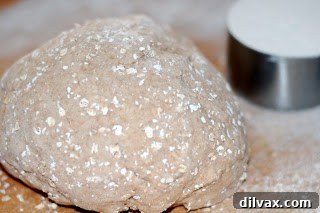
Step 5: Develop the Dough (Second Kneading). After the brief rest, resume kneading the dough with renewed vigor. Continue to incorporate small amounts of the remaining white flour, only if the dough becomes too sticky to handle. This stage is vital for developing the gluten, which gives your bread its structure, elasticity, and characteristic chew. Knead vigorously for a full 10 minutes, or until the dough transforms into a smooth, elastic, and satiny ball that is no longer sticky to the touch. A classic test for proper kneading is the “poke test”: gently depress the dough with your fingers; if it springs back quickly and holds its shape, it has been kneaded sufficiently. Don’t be afraid to put your whole body into it—kneading is an excellent workout and paramount for achieving a light, airy texture in your finished bread.
Step 6: First Rise (Bulk Fermentation). Lightly grease a large, clean bowl with a small amount of vegetable oil or cooking spray. Place the thoroughly kneaded dough into the bowl, turning it once to ensure the entire surface is lightly coated with oil. This prevents the dough from drying out and sticking to the bowl during its rise. Cover the bowl loosely with plastic wrap or a clean, damp kitchen towel. Place the covered bowl in a warm, draft-free spot. An ideal temperature is around 75-80°F (24-27°C). Let the dough rise undisturbed until it has doubled significantly in bulk, which can take anywhere from 1 to 2 hours, depending on the warmth of your environment and the activity of your yeast.
Step 7: Punch Down and Shape Loaves. Once the dough has proudly doubled in size, gently “punch it down” to release the accumulated gases. This step helps to redistribute the yeast and creates a finer, more even texture in the finished bread. Turn the deflated dough out onto a lightly floured surface. Divide the dough into two equal portions. Work with one portion at a time, gently shaping each into a neat, uniform loaf. Aim for a tight, smooth surface to ensure an even rise and an aesthetically pleasing final appearance. There are various techniques for shaping, but a simple method is to flatten the dough into a rectangle, roll it tightly from one short end to the other, then pinch the seam closed and tuck the ends underneath.
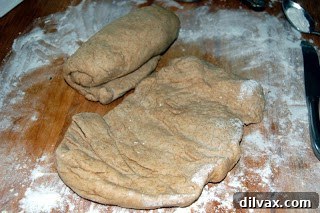
Note: This image captures a common challenge in bread making – sometimes the dough has a mind of its own! Learning from these moments is part of the baking journey.
Step 8: Second Rise (Proofing in Pans). Generously grease two standard loaf pans with butter, shortening, or cooking spray. Carefully place each shaped loaf into its respective greased pan. Cover the pans loosely with plastic wrap or a clean towel and return them to a warm, draft-free spot. Let them rise again until they are almost doubled in size and look visibly puffy, typically about 45-60 minutes. While the dough is on its second rise, preheat your oven to 375ºF (190ºC). This ensures the oven is at the correct temperature when the bread is ready to bake.
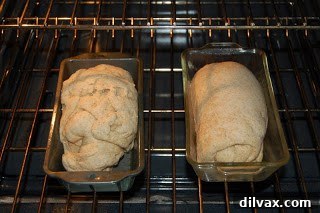
Step 9: Bake to Golden Perfection. Once the loaves have completed their second rise, carefully place the loaf pans into the preheated oven. Bake for approximately 45 minutes. The bread is typically done when the crust is a deep, golden brown and, when removed from the pan and tapped on the bottom, it sounds hollow. If the tops begin to brown too quickly before the interior is fully cooked, you can loosely tent them with a piece of aluminum foil for the remaining baking time to prevent over-browning.

Step 10: Cool and Enjoy. As soon as the bread is baked, immediately remove the loaves from their pans. Transfer them to a wire cooling rack and allow them to cool completely. This step is often the hardest part, as the irresistible aroma will tempt you! However, it is crucial to allow the bread to cool for at least an hour, or even longer, before slicing. Slicing hot bread can result in a gummy, dense texture. Patience will be rewarded with the best possible crumb and flavor. The comforting aroma filling your kitchen will be the ultimate reward for your efforts!
My Baking Journey: The Trials and Triumphs of Homemade Bread
Baking, like any craft, is a journey of learning, practice, and sometimes, a little frustration. This particular baking session was certainly a testament to that! The kneading part, in particular, proved to be quite an ordeal. I truly put my whole body into it, as the Fannie Farmer Cookbook advises, which is excellent for developing gluten, but perhaps a bit much for my unprepared muscles! I literally felt a twinge in my left wrist and forearm – a testament to the effort required. Waking up the next morning with an aching wrist solidified my suspicion that I had indeed given it my all. Perhaps it’s just “growing pains” on my path to becoming a master baker – at least it’s my wrist and not my muffin-top, right?
The second kneading session was where I truly overexerted myself. It became an unexpected workout! I was sweating, and I fully anticipated my arms feeling quite sore the following day. When I thought I was nearing the end of the kneading process, a familiar doubt crept in: had I over-kneaded it? This is a common concern for novice bakers. It’s easy to worry about doing too much. Consulting my trusty Fannie Farmer, I found incredibly reassuring advice in the comprehensive section preceding the bread recipes, where it discusses the nuances of kneading: “Knead the dough for 10 minutes, until the dough holds together, becomes smooth and satiny, and is no longer sticky but elastic to the touch. Depress the dough with your fingers: if it springs back, it has been kneaded enough. SHUCKS!!! Don’t worry about kneading too much – it can never hurt. If dough is not well kneaded, the resulting loaf may be heavy.” This affirmation was exactly what I needed.
Armed with this wisdom, I returned to the dough, pushing through the initial resistance. At times, frustration mounted. As I continued to incorporate the oats and more flour, the dough initially resisted, seeming to flake rather than coalesce, making me question if it would ever come together. But I persevered, kneading and kneading and kneading… until finally, success! The dough transformed under my hands, becoming smooth, elastic, and responsive. I poked the dough, and it sprung back with satisfying resilience, just as the book described. I was ecstatic! The initial struggles gave way to a surge of accomplishment and a deep sense of satisfaction.
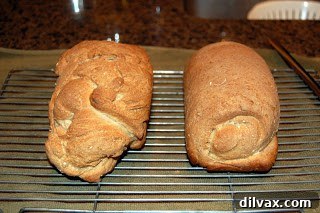
However, my excitement was somewhat dampened when it came time to shape the dough into loaves and place them into the pans. As the picture attests, one of the dough balls seemed to cooperate reasonably well, forming a respectable shape, but the other… well, it truly tested my patience. I admit, I became quite frustrated with that second one. I tirelessly tried to coax it into a proper loaf shape, folding and tucking, but it stubbornly insisted on resembling something closer to a pita than a traditional bread loaf, replete with numerous cracks and an unwillingness to hold its form. As I rolled it together for the pan, a nagging worry lingered: would it be riddled with unsightly air pockets once baked? I recall making wheat bread about ten years ago, but I don’t remember encountering such difficulties with shaping back then. Perhaps my memory is selective, or perhaps my technique has simply atrophied without regular practice.
Despite the visual imperfections and my exasperation with the shaping, the proof, as they say, is in the tasting. And taste it did – wonderfully so! Fresh out of the oven, still warm and fragrant, with a generous spread of melted butter, it was absolutely delicious and, thankfully, not filled with air as I had feared. The rich, wholesome flavor of the whole wheat and oats, combined with the homemade warmth, made every bite a delight. This experience, challenging as it was, only reinforces my commitment to improving my baking skills. I plan to make more breads requiring diligent kneading throughout the year, turning these challenges into opportunities for growth. After all, I “knead” more practice! (Okay, I know, that was a terrible pun, but I couldn’t resist.) I have made this exact bread in the past, and it turned out magnificently, so I know the recipe itself is a winner. This time, perhaps it was simply a lapse in practice that led to the shaping woes, but the memory of its past deliciousness assures me that I will conquer its challenges with more experience.
The Benefits of Baking Your Own Bread
Beyond the immediate satisfaction of a warm, delicious loaf, baking your own bread offers a multitude of benefits that extend far beyond the kitchen. It’s an act of creation, self-sufficiency, and well-being.
- Health and Transparency: When you bake at home, you have complete control over every single ingredient. You can consciously choose high-quality, organic flours, minimize added sugars and unhealthy fats, and entirely avoid the artificial preservatives, additives, and high-fructose corn syrup commonly found in mass-produced commercial breads. For those with specific dietary restrictions, allergies, or health goals, this ingredient control is absolutely invaluable. You know exactly what nourishing goodness goes into every slice.
- Cost-Effectiveness: While the initial purchase of ingredients like flour, yeast, salt, and water might seem like a small outlay, homemade bread is often significantly more economical in the long run, especially if you bake regularly. A single bag of flour can yield many loaves, making it a budget-friendly option compared to buying artisan bread from a bakery or even standard loaves from the supermarket.
- Therapeutic Experience: The entire process of baking bread, from the rhythmic, tactile sensation of kneading dough to the comforting, evolving aroma that fills your home, can be incredibly therapeutic and meditative. It provides a wonderful, tangible escape from daily stresses, allowing you to engage in a mindful, hands-on activity that connects you to an ancient culinary tradition. It’s a form of edible self-care.
- Unmatched Freshness and Flavor: There’s simply no comparison to the taste, texture, and aroma of freshly baked bread. The crust is perfectly crisp, offering a delightful crackle with each bite, while the interior remains soft, tender, and airy. The flavor profile is deep, complex, and robust in a way that pre-packaged, store-bought bread rarely achieves. The difference is truly astounding.
- Aromatherapy for the Home: The scent of baking bread is one of the most universally beloved and comforting aromas known to humankind. It instantly transforms a house into a warm, inviting, and cozy home. This natural aromatherapy creates an atmosphere of hospitality and well-being that no air freshener can replicate.
- Skill Development and Creativity: Baking bread is a rewarding skill that improves with consistent practice. Each loaf offers a new learning opportunity – perhaps perfecting your kneading, experimenting with different types of flours (like rye or spelt), incorporating new additions like nuts, seeds, or herbs, or mastering various shaping techniques. It’s a culinary art form that allows for endless creativity and personal expression.
- The Joy of Sharing: Sharing a warm, freshly baked loaf of homemade bread with friends, family, or neighbors is a profoundly delightful gesture of generosity and warmth. It’s a gift that speaks volumes, always appreciated, and universally enjoyed. There’s a special connection forged over breaking bread together.
So, whether you’re a seasoned baker seeking new challenges or a complete novice looking to embark on your first bread-making adventure, I wholeheartedly encourage you to dive into the world of homemade bread. The journey, complete with its minor setbacks and major triumphs, is incredibly rewarding, nourishing not just your body, but your soul as well.
Happy baking!