Exploring the Enigma of Indian Pudding: A Classic Recipe from the Fannie Farmer Cookbook and a Culinary Conundrum
As the week winds down, the thought of leisurely weekend pursuits fills the air. While the concept of “Friday” might be relative across time zones, the universal appeal of comfort food and kitchen experiments remains constant. For many, weekends are a cherished time for household chores, catching a game, or diving into a new baking project. This past weekend, a familiar call from the garden—a ripe zucchini—promised a future culinary creation. But before that, an intriguing journey into the past beckoned: a traditional dessert, Indian Pudding, sourced from a culinary institution.
Embarking on a baking adventure can often lead to delightful discoveries, rekindling a love for time-honored recipes, or sometimes, to unexpected and memorable culinary missteps. This particular tale revolves around the latter, offering a candid and perhaps humorous look at how even the most reputable cookbooks can sometimes present a challenge. Join us as we delve into the history of Indian Pudding, follow its recipe meticulously, and then recount a taste-testing experience that left our family—and possibly our taste buds—perplexed.
A Culinary Journey into New England Tradition: What is Indian Pudding?
Indian Pudding is a quintessential American dessert, deeply rooted in the culinary traditions of New England. Far from a contemporary creation, this humble pudding boasts a history stretching back to the colonial era, making it a true testament to early American ingenuity and resourcefulness. Its name, “Indian,” refers to the primary ingredient: Indian meal, which is another term for cornmeal. When European settlers arrived in the New World, they quickly learned from Native Americans how to cultivate and utilize corn, which became a staple food. Lacking wheat flour, early colonists ingeniously adapted English puddings by substituting cornmeal, giving birth to this distinctly American treat.
The essence of Indian Pudding lies in its simple yet profound flavors. It’s a slow-baked pudding, characterized by a unique combination of cornmeal, milk, molasses, and spices like ginger and cinnamon. The molasses is particularly significant, not only providing a dark, rich sweetness but also imparting a depth of flavor that is distinctly New England, harking back to a time when cane sugar was less accessible and molasses was a common sweetener and by-product of the rum trade. The long, slow baking process allows the cornmeal to soften and the flavors to meld beautifully, resulting in a dense, creamy, and wonderfully comforting dessert, traditionally served warm, often topped with a dollop of vanilla ice cream or whipped cream. It’s a dish that embodies the spirit of comfort and tradition, a taste of history in every spoonful, and a reminder of how culinary traditions evolve through cultural exchange and adaptation.
The Source of Our Culinary Adventure: The Fannie Farmer Cookbook
The recipe for our Indian Pudding expedition hails from a truly iconic text in American gastronomy: The Fannie Farmer Cookbook, Thirteenth Edition. Published by Alfred A. Knopf, Inc., a division of Random House, Inc., and penned by the esteemed Marion Cunningham, this particular edition carries on a legacy that began with Fannie Merritt Farmer’s original 1896 publication. The Fannie Farmer Cookbook is more than just a collection of recipes; it’s a culinary institution, often regarded as one of the foundational texts of American home cooking. Known for its precise measurements and clear instructions, it has guided generations of cooks through the preparation of classic American dishes.
Marion Cunningham, a celebrated culinary author and editor, revitalized the Fannie Farmer legacy, bringing its timeless recipes to a new generation while preserving its original spirit. Her work on the Thirteenth Edition, found on page 677 with ISBN 0-394-56788-9, solidifies the cookbook’s standing as a reliable and comprehensive resource for traditional American fare. Given this esteemed lineage, one naturally approaches any recipe from its pages with a sense of reverence and high expectation. It’s precisely this reputation that often makes a deviation from culinary success so much more surprising and, indeed, memorable.
Crafting Classic Comfort: Indian Pudding Recipe
Steeped in tradition, Indian Pudding offers a unique taste experience. Here is the recipe as presented in the venerable Fannie Farmer Cookbook, promising a comforting, spiced dessert perfect for a cool evening.
Essential Ingredients for Authentic Indian Pudding
Gathering the right components is the first step to unlocking the classic flavors of this New England staple. Each ingredient plays a crucial role in developing the pudding’s distinctive texture and molasses-sweetened profile.
- 4 cups milk
- ½ cup yellow cornmeal
- 1/3 cup dark brown sugar
- 1/3 cup granulated sugar
- 1/3 cup molasses
- 1 teaspoon salt
- 4 tablespoons butter
- ½ teaspoon ground ginger
- ½ teaspoon cinnamon
Step-by-Step Baking Instructions
The preparation for Indian Pudding involves a combination of stovetop cooking and a lengthy, gentle bake. Following these steps carefully should lead you to a classic result, provided all elements align as intended.
- Prepare Your Oven: Begin by preheating your oven to a modest 275ºF (approximately 135ºC). This low temperature is key to the pudding’s slow, even cooking and its ultimate creamy texture.
- Heat the Milk: In a saucepan, heat 2 cups of the milk until it is very hot, but not boiling. Watch for small bubbles forming around the edges.
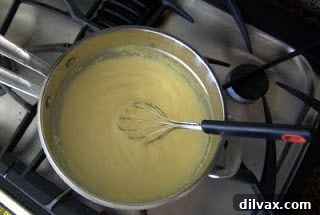
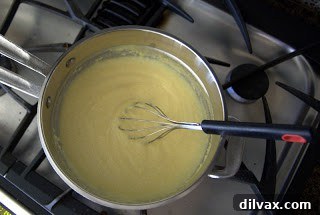
- Combine with Cornmeal: Slowly and carefully pour the hot milk over the ½ cup of yellow cornmeal in a heatproof bowl, stirring constantly with a whisk or spoon. This constant stirring is essential to prevent lumps and ensure the cornmeal is thoroughly moistened.
- Cook in a Double Boiler: Transfer the cornmeal and milk mixture to the top part of a double boiler. Place it over simmering water (ensure the bottom of the top pot does not touch the water). Cook for 10-15 minutes, stirring occasionally, until the cornmeal mixture thickens and becomes wonderfully creamy. This gentle cooking method prevents scorching and allows the cornmeal to hydrate fully.
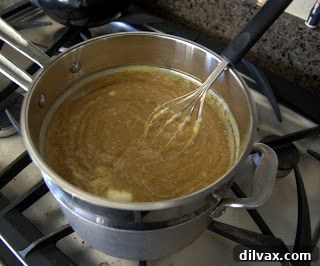
- Incorporate Remaining Ingredients: Once creamy, remove the cornmeal mixture from the double boiler. Add the remaining ingredients: the dark brown sugar, granulated sugar, molasses, salt, butter, ground ginger, and cinnamon. Mix all these components thoroughly until they are well combined and the butter has melted into the warm mixture.
- Prepare for Baking: Generously butter a 1½ quart baking dish. Spoon the entire cornmeal mixture into this prepared dish, spreading it evenly.
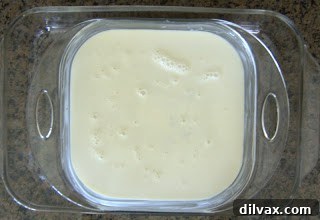
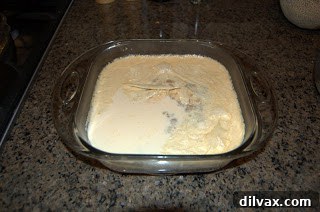
- Add the Final Milk Layer: This step is critical and specific: pour the remaining 2 cups of cold milk directly over the top of the cornmeal mixture in the baking dish. The recipe states explicitly to pour it “on the top,” without any instruction to stir it in.
- Bake in a Water Bath: Carefully place the baking dish into a larger pan of hot water (a water bath or bain-marie). This water bath helps to regulate the temperature and ensures a moist, even bake, preventing the edges from drying out.
- Long, Slow Bake: Transfer the pan with the water bath and pudding into the preheated oven. Bake for approximately 2½ to 3 hours, or until the pudding is set. It’s important to note that Indian Pudding tends to firm up considerably as it cools, so don’t expect it to be completely solid straight out of the oven.
The Unvarnished Truth: A Candid Recipe Review
With the recipe meticulously followed and the anticipation building, the moment of truth arrived. Despite the esteemed source and the historical allure of Indian Pudding, the experience that unfolded was, to put it mildly, not what was expected. This review delves into the highs (or rather, the lack thereof) and the very noticeable lows of this particular culinary endeavor.
High Hopes and Unexpected Disappointment
Having successfully tackled nearly 98% of the recipes from the Fannie Farmer Cookbook with consistently delightful results, there was a profound sense of confidence approaching this Indian Pudding. The cookbook has almost always delivered either a fantastic dish or something well worth revisiting. This track record fostered an expectation of classic comfort, a heartwarming dessert that would embody the rich history it represents. However, from the very first glance post-baking, it became clear that this experience would diverge significantly from the usual success stories. The promise of a creamy, spiced pudding began to fade, replaced by a growing sense of skepticism and, ultimately, a significant disappointment.
The “Milk on Top” Conundrum: A Critical Analysis
The most glaring and ultimately problematic instruction in this recipe was the directive to “pour the remaining 2 cups of milk on the top” without any subsequent mention of stirring. As the cold milk settled on the surface of the already buttered cornmeal mixture, a feeling of unease began to creep in. Common sense in baking suggests that liquids should integrate, especially in a pudding. Despite hopes that the long baking time—a substantial 2½ to 3 hours—would somehow facilitate absorption, the visual evidence during and after baking painted a different picture. The milk remained stubbornly separate, forming a distinct layer atop the pudding, even after three hours in the oven. For someone who isn’t a fan of warm milk to begin with, this visual and textural separation was particularly off-putting, creating a significant barrier to enjoying the dish. It leads one to wonder if a crucial step was inadvertently omitted in the printed recipe, or perhaps if a specific, unstated technique was assumed.
A Family Affair: The Tasting Panel’s Verdict
The true test of any recipe lies in the tasting, and in this case, the family served as an unwitting panel of critics. The initial attempts by both myself and my middle daughter were met with an immediate and unequivocal aversion; we simply couldn’t bring ourselves to eat it. The husband, observing our reactions, wisely decided to abstain entirely, refusing even a sample. The most telling, and frankly hilarious, moment arrived when our son, blissfully unaware of the culinary drama that had just transpired, entered the kitchen. Spotting the pudding on the counter, he eagerly dished himself a bowl. The rest of us watched in silent anticipation, feigning interest in the television, as he took his first bite. The immediate and visceral reaction—a distinct gag—spoke volumes. While the pudding did possess a faint, almost gingerbread-like spice flavor, it was irrevocably overshadowed by the pervasive, unabsorbed milkiness, rendering it entirely unpalatable for our family.
Rating the Culinary Misadventure: A 1-Rolling Pin Experience
In the spirit of honest culinary reviews, I adhere to a rating system for all baked goods shared with my readers, utilizing a scale of 1 to 4, with 4 being the pinnacle of baking perfection. My daughter, ever candid, declared this Indian Pudding worthy of “0 rolling pins.” While her sentiment perfectly encapsulated our experience, the established rating system doesn’t accommodate such a low score. Therefore, compelled to assign a numerical value within the given parameters, I must reluctantly award this Indian Pudding a 1 out of 4. This score reflects its profound failure to deliver on the promise of a comforting, delicious dessert. As a final, lighthearted but firm note: I accept absolutely no responsibility for anyone who chooses to bake this particular recipe. Should you attempt it, you do so entirely at your own culinary risk. My (fictional) lawyers have been duly notified. 😉
Learning from Experience: Beyond the Recipe
Even a less-than-successful recipe can offer valuable lessons. This particular Indian Pudding adventure served as a potent reminder that not every culinary journey leads to a delicious destination, and that sometimes, even from the most trusted sources, recipes can present unexpected challenges. It reinforces the importance of critical thinking in the kitchen—questioning instructions that seem unusual, and being prepared for outcomes that deviate from expectations.
Moreover, it highlights the subjective nature of taste and how personal preferences, like an aversion to warm milk, can profoundly impact one’s perception of a dish. For those still curious about cornmeal-based desserts but seeking a more reliably delicious outcome, there are numerous other recipes worth exploring, from various cornmeal puddings that integrate milk differently to sweet corn breads or polenta cakes. Alternatively, if a truly comforting, rich, and cold dessert is what you’re after, perhaps the author’s sudden craving for a Wendy’s Frosty offers a universally appealing palate cleanser after such an experience.
Ultimately, baking is an exploration, a creative pursuit filled with both triumphs and occasional missteps. Each experience, good or bad, adds to a baker’s knowledge and repertoire. It’s an encouragement to keep trying new things, to learn from every attempt, and to not be disheartened by an occasional culinary misadventure.
Concluding Thoughts on Culinary Exploration
Our journey with Indian Pudding from the Fannie Farmer Cookbook has been nothing short of a fascinating, albeit unexpected, culinary adventure. It began with the promise of a time-honored New England dessert and concluded with a memorable family taste test that left much to be desired. This experience underscores the reality that even with the most reputable sources, baking can be an unpredictable art. It reminds us to approach each recipe with a blend of enthusiasm and a healthy dose of critical thinking, especially when instructions seem to defy conventional wisdom.
While this particular rendition of Indian Pudding might not earn a place in our family’s regular rotation, the story behind it certainly will. It’s a testament to the joy and occasional perplexity that baking brings. So, whether your next kitchen endeavor is a resounding success or a humorous tale to tell, remember that every moment spent creating in the kitchen is a learning experience. Happy baking, and may your culinary adventures be filled with more triumphs than, well, unexpected milk layers!