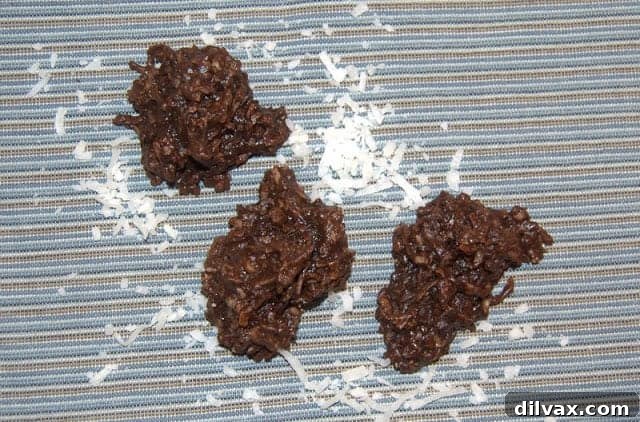
Irresistible Chocolate Macaroons: Your Ultimate Guide to Decadent Baking
Welcome, dear reader, to a delicious corner of the internet where baking dreams come to life! We’re incredibly grateful you’ve chosen to spend a few moments of your valuable time with us today. In a world brimming with distractions and demands, your presence here truly makes us smile, and for that, we thank you from the bottom of our hearts.
Today, we’re diving into the delightful world of chocolate and coconut, two flavors that, when combined, create a symphony of taste in the form of classic macaroons. This particular recipe draws its inspiration from a trusted culinary source, The Martha Stewart Living Cookbook, specifically page 510. While the original blueprint was impeccable, we’ve introduced a few thoughtful adaptations to enhance the flavor profile and texture, making them even more accessible and enjoyable for the home baker.
Our goal was to strike a perfect balance of sweetness and rich chocolate intensity. By opting for sweetened shredded coconut and slightly reducing the sugar, we’ve crafted a macaroon that is moist, chewy, and exquisitely balanced. We believe these simple modifications elevate the experience, offering a wonderfully satisfying treat for any occasion. Whether you’re a seasoned baker or just starting your culinary journey, this recipe promises a rewarding experience. Get ready to create some magic in your kitchen!
The Allure of Chocolate Macaroons
Before we delve into the recipe, let’s appreciate what makes chocolate macaroons such a beloved classic. Often confused with their delicate French cousins, the macarons, macaroons are a distinct and equally charming confection. Typically made from shredded coconut, egg whites, and sugar, they boast a wonderfully chewy interior and a lightly crisp exterior. When chocolate is introduced, as in this recipe, it adds a layer of rich indulgence that is simply irresistible.
Historically, macaroons trace their origins back to Italian monasteries in the 8th century, with the word “macarone” meaning “paste” in Italian, referring to the almond paste that was often a primary ingredient. Over centuries, the recipe evolved, traveling to France and eventually gaining popularity across Europe and North America. The coconut version, in particular, rose to prominence in the late 19th and early 20th centuries, becoming a staple in bakeries and home kitchens alike. These humble cookies offer a fantastic gluten-free alternative and are surprisingly easy to make, delivering maximum flavor with minimal fuss.
Our adapted version of Martha Stewart’s recipe ensures a reliable and delicious result. We’ve fine-tuned the balance to highlight the natural sweetness of coconut while allowing the deep notes of cocoa and semi-sweet chocolate to shine through. This isn’t just a recipe; it’s an invitation to experience the joy of baking a timeless treat.
Unveiling the Recipe: Ingredients You’ll Need
Crafting these delectable chocolate macaroons requires a handful of common ingredients. Quality matters here, so choose the best you can find to ensure the richest flavor and most satisfying texture. Below is the precise list of ingredients we used for our adapted version:
- 4 ounces semi-sweet chocolate, broken into small pieces
- ¼ cup unsweetened cocoa, sifted
- ¼ cup granulated sugar
- 2½ cups sweetened shredded coconut
- 3 large egg whites
- 1 teaspoon vanilla extract
- A pinch of salt
Ingredient Spotlight: Why Each Component Matters
Each ingredient plays a crucial role in the final texture and flavor of our chocolate macaroons:
- Semi-Sweet Chocolate: This forms the foundational chocolate flavor. Using good quality semi-sweet chocolate ensures a deep, rich taste without being overly bitter or sweet. Breaking it into small pieces helps it melt evenly and quickly.
- Unsweetened Cocoa: Sifting the cocoa powder is essential to prevent lumps and ensure it fully incorporates into the mixture, contributing to both the chocolatey depth and the overall structure. Unsweetened cocoa balances the sweetness from the coconut and sugar.
- Granulated Sugar: Beyond sweetness, sugar contributes to the macaroon’s chewiness and helps create that desirable slightly crisp exterior. Our reduced amount still provides ample sweetness when combined with sweetened coconut.
- Sweetened Shredded Coconut: This is the star ingredient! Using sweetened coconut, as opposed to unsweetened, adds an extra layer of moisture and a more pronounced sweet coconut flavor, which we find pairs beautifully with chocolate. It also contributes significantly to the macaroon’s characteristic chewy texture.
- Large Egg Whites: Egg whites are the binder that holds everything together. When whisked into the mixture, they create structure and contribute to the macaroon’s light, airy yet chewy consistency. Using large eggs is important for consistent volume.
- Vanilla Extract: A splash of vanilla extract enhances and rounds out all the flavors, particularly the chocolate and coconut, adding a warm, aromatic note.
- Pinch of Salt: Never underestimate the power of salt in baking! A small pinch balances the sweetness, intensifies the chocolate flavor, and brings all the ingredients into harmony.
Step-by-Step Baking Guide: Crafting Your Macaroons
Now that you have your ingredients ready, let’s move on to the fun part: baking! Follow these detailed instructions to create perfect chocolate macaroons.
- Preparation is Key: Begin by preheating your oven to 350°F (175°C). Ensure your oven rack is positioned in the center for even baking. Line a standard baking sheet with parchment paper. This crucial step prevents sticking and makes for easy cleanup and transfer of your delicate cookies.
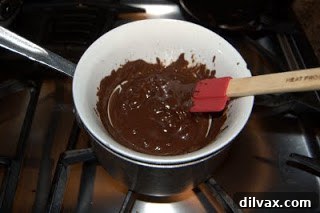
- Melt the Chocolate with Care: Set up a double boiler. You can do this by placing a heat-proof bowl over a pan of simmering water, ensuring the bottom of the bowl does not touch the water. Alternatively, if you have a dedicated double boiler, use that. Add the broken semi-sweet chocolate pieces to the bowl. Stir occasionally with a rubber spatula until the chocolate is completely smooth and glossy. Once melted, remove the bowl from the heat and set it aside to cool slightly. It should still be liquid but not piping hot, as extreme heat can scramble the egg whites later.

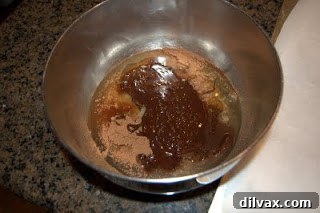
- Combine the Ingredients: In a medium-sized mixing bowl, combine the cooled melted chocolate, sifted unsweetened cocoa, granulated sugar, sweetened shredded coconut, egg whites, vanilla extract, and pinch of salt. This is where the magic truly begins!
- Mix by Hand for Perfect Consistency: Using your clean hands (or a sturdy spatula if preferred, but hands work best for even distribution), mix all the ingredients thoroughly. Continue mixing until everything is completely combined and uniformly moistened. The mixture should feel cohesive and sticky. This tactile approach ensures that every strand of coconut is coated in the chocolate mixture, leading to a perfectly chewy macaroon.
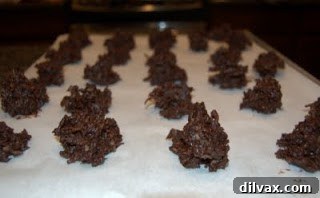
- Form the Macaroons: Scoop out approximately 1½ tablespoons of the mixture for each macaroon. Gently form the mixture into a loose haystack shape. Don’t press them too firmly; a slightly loose formation will yield a better texture. Place them on the prepared baking sheet, spacing them about 1 inch apart to allow for slight spreading during baking.
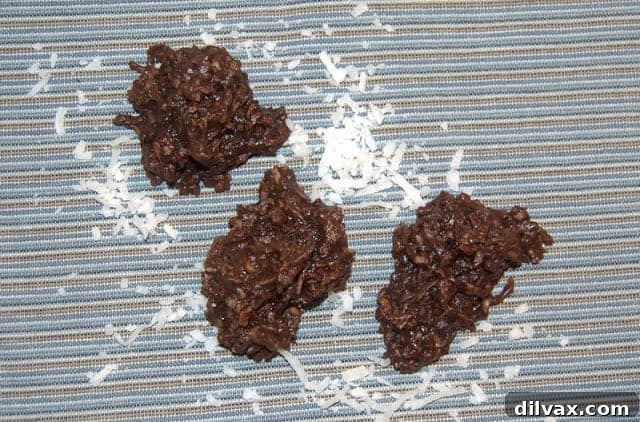
- Bake to Perfection: Transfer the baking sheet to your preheated oven. Bake for approximately 15 minutes. The original recipe suggests baking until “golden brown,” but with chocolate macaroons, assessing this can be tricky due to their dark color. Instead, look for macaroons that are set, firm to the touch, and have slightly crisp edges. They should appear mostly dry on the surface and hold their shape well. The coconut strands might show a hint of toasting, but the overall color will remain dark.
- Cooling is Crucial: Once baked, carefully transfer the entire baking sheet to a wire rack. Allow the macaroons to cool completely on the baking sheet. They will firm up considerably as they cool. Attempting to move them while warm can cause them to break apart.
Tips for Macaroon Perfection
Achieving consistently delicious macaroons can be made easier with a few expert tips:
- Use Room Temperature Egg Whites: While not strictly necessary for macaroons (unlike meringues), room temperature egg whites can sometimes integrate more smoothly into the mixture.
- Don’t Overcrowd the Pan: Give your macaroons enough space on the baking sheet to bake evenly. Overcrowding can lead to uneven cooking and can steam rather than bake the cookies.
- Trust Your Senses for Doneness: As mentioned, judging “golden brown” for chocolate macaroons is hard. Rely on the firmness to the touch and the setting of the cookies. They should feel stable and not wobble when gently nudged.
- Parchment Paper is Your Best Friend: Seriously, don’t skip the parchment paper. It prevents sticking and ensures easy removal of your delicate macaroons.
- Cool Completely: Patience is a virtue, especially with macaroons. They develop their final texture and firmness as they cool. Resist the urge to bite into a warm one immediately!
Serving & Storage Suggestions
These chocolate macaroons are wonderfully versatile. Serve them as an after-dinner treat, a delightful accompaniment to your afternoon tea or coffee, or pack them in a lovely box as a homemade gift. They pair beautifully with a strong cup of coffee or a cold glass of milk.
For optimal freshness, store your chocolate macaroons in an airtight container at room temperature. They will retain their delightful chewiness and flavor for up to 3 days. If you wish to extend their shelf life, they can also be frozen in an airtight container for up to 2-3 months. Thaw them at room temperature before serving.
Troubleshooting Common Macaroon Miseries
Baking can sometimes present challenges, but most macaroon issues are easily fixable:
- Macaroons are too dry/crumbly: This often happens if they were overbaked or if the mixture was too dry to begin with. Ensure you don’t bake them beyond the specified time and check for firmness rather than just color.
- Macaroons are spreading too much: If your macaroons are flattening out, the mixture might be too wet, or your oven might not be at the correct temperature (too low). Ensure the chocolate is cooled before mixing, and your oven thermometer is accurate.
- Macaroons are too soft/underbaked: They might need a few more minutes in the oven. Look for slightly toasted edges and a firm texture.
Customizing Your Chocolate Macaroons
While delicious as is, this recipe serves as a fantastic base for experimentation! Feel free to customize your macaroons to your taste:
- Nutty Twist: Fold in ¼ cup of finely chopped toasted nuts like pecans, walnuts, or almonds for added crunch and flavor.
- Chocolate Drizzle: For an extra decadent touch, melt an additional 2 ounces of semi-sweet or dark chocolate and drizzle it over the cooled macaroons.
- Citrus Zest: A teaspoon of orange or lime zest can add a bright, refreshing counterpoint to the rich chocolate and coconut.
- Spiced Delights: A tiny pinch of cinnamon or a dash of chili powder can introduce an intriguing complexity to the chocolate flavor.
- Extract Variations: Try replacing half a teaspoon of vanilla with almond extract for a different aromatic profile. Peppermint extract is also wonderful for a holiday twist!
A Candid Review and Invitation to Experiment
In the spirit of honest baking, we believe in providing genuine feedback. When we first tested this adapted recipe, the macaroons were, to put it simply, “adequate.” They were certainly enjoyable, especially for those who appreciate the classic combination of chocolate and coconut. However, we’ve had cookies that left a more profound impression.
Our family, a tough but fair panel of tasters, enjoyed them but weren’t entirely swept off their feet. This isn’t a critique of the recipe’s potential, but rather an encouragement for you, our esteemed baker, to make it your own! The original recipe called for ¾ cup sugar and 2½ cups unsweetened coconut. Our adjustments to use sweetened coconut and less sugar certainly improved the balance, but perhaps the foundational texture or flavor profile might benefit from further personal touches.
Baking is an art of discovery, and every recipe is a starting point. If you decide to experiment with the original ingredients, or even introduce your own creative changes – perhaps different types of chocolate, a dash of espresso powder, or a sprinkle of flaky sea salt on top – we would absolutely love to hear about your results! Your insights and variations could inspire countless other bakers.
On our personal scale of 1-4 rolling pins, with 4 being the absolute best, these Chocolate Macaroons earned a respectable 2½ rolling pins. They are a solid, reliable recipe, and a good base for anyone looking for a simple chocolate coconut treat. We encourage you to try them, tweak them, and most importantly, enjoy the process of bringing something delicious into existence.
Frequently Asked Questions (FAQ)
What is the difference between a macaroon and a macaron?
This is a common question! Macaroons (like this recipe) are typically dense, chewy cookies made primarily from shredded coconut, egg whites, and sugar. They often have a rustic, “haystack” appearance. Macarons are delicate French sandwich cookies made from almond flour, egg whites, and sugar, with a smooth, crisp shell and a chewy interior, usually filled with ganache or buttercream. They are distinct in ingredients, texture, and preparation.
Can I use unsweetened coconut instead of sweetened?
Yes, you can, but you may need to adjust the sugar content slightly. If using unsweetened coconut, we recommend increasing the granulated sugar by 1-2 tablespoons, or to taste, to compensate for the lack of sweetness in the coconut itself. The texture might also be slightly drier, so ensure not to overbake.
Can I substitute the semi-sweet chocolate with another type?
Certainly! For a richer, less sweet macaroon, you could use dark chocolate (60-70% cacao). If you prefer a sweeter cookie, milk chocolate could be an option, but be aware it might make the mixture softer and potentially very sweet. White chocolate is also an option for a different flavor profile, but ensure it’s high quality to avoid a waxy texture.
How long do homemade macaroons last?
When stored in an airtight container at room temperature, these chocolate macaroons will stay fresh and chewy for up to 3 days. For longer storage, they can be frozen for up to 2-3 months. Just thaw them at room temperature before enjoying.
Do I need any special equipment to make these macaroons?
Not really! The most “special” equipment would be a double boiler setup for melting the chocolate, but you can easily improvise this with a heat-proof bowl over a saucepan of simmering water. Basic baking tools like a baking sheet, parchment paper, mixing bowls, and a spatula are usually sufficient.
Happy baking, and may your kitchen be filled with wonderful aromas!