Cincinnati Coffee Bread: A Tale of Kitchen Mishaps and Delicious Discoveries
Welcome back to the blog, dear readers! Today’s entry could very well be titled “365 Days of Baking and Lynne’s Endearing Mishaps in the Kitchen.” If you’re a seasoned home baker, you know that sometimes, despite your best intentions and a seemingly straightforward recipe, the kitchen decides to throw you a curveball. My recent attempt at crafting a classic Cincinnati Coffee Bread was one such day, a true testament to the unpredictable, yet ultimately rewarding, world of baking. Join me as I recount a morning filled with flour-dusted chaos, unexpected humor, and the eventual triumph of a delightful homemade coffee bread.
Baking, for many, is a serene and therapeutic activity. The gentle hum of the mixer, the fragrant aroma of rising dough, the satisfying creation of something delicious from simple ingredients. However, even the most enthusiastic bakers experience days when the stars simply refuse to align. This particular morning, battling a throbbing headache, I found myself in a comedic battle against my own kitchen appliances and a recipe that seemed to have a mind of its own. It’s on these days that the journey becomes as memorable as the destination, reminding us that every spill, every unexpected turn, adds to the rich tapestry of our culinary adventures.
When Baking Goes Wild: A Morning of Unforgettable Kitchen Chaos
The recipe for Cincinnati Coffee Bread seemed innocuous enough: combine milk, sugar, butter, and salt in a large bowl, then cool to lukewarm. Sounds simple, right? My headache-induced fog, likely amplified by the Excedrin, had other plans. I blame it entirely on a temporary lapse in judgment, a genuine “brain fart” as I like to call it. I had the milk warming on the stove, while the other ingredients — including a stubborn, unmelted chunk of butter — were already in the KitchenAid mixer bowl. This was my first critical error, a clear sign that the baking gods were perhaps not smiling upon me.
Confident (or perhaps delusional), I poured the warm milk into the mixer bowl. The moment I flipped the switch, my kitchen transformed into an unexpected culinary war zone. It wasn’t just a gentle stirring; it was a full-blown eruption of ingredients. Milk, sugar, and salt, propelled by the spinning whisk, began to fly in every conceivable direction. Large, solid chunks of butter became airborne projectiles, darting across the countertop and even making a direct hit on our unsuspecting cat, who, quite understandably, bolted for cover under the nearest piece of furniture. Droplets of this milky, sugary, salty, and semi-melted butter concoction coated every surface imaginable: the floor, the kitchen table, the mixer itself, the countertops, and, of course, me. I was practically drenched in the nascent beginnings of coffee bread batter.
In a frantic attempt to halt the chaotic whirlwind, I reached for the mixer’s control knob. This marked my second “brain fart” of the morning. Instead of turning it off, my befuddled mind twisted the knob in the wrong direction, inadvertently cranking the speed even higher! OH! MY! GOSH! The mixer roared, amplifying the liquid spray and solid projectiles. It was a scene straight out of a slapstick comedy, and while I advocate for embracing mistakes as learning opportunities, I must confess, cleaning up a physical mess of this magnitude was not on my list of preferred educational experiences.
Looking back, it’s truly comical. But in that moment, all I could envision was finding greasy spots in unexpected corners for days to come. Resigned, I started from scratch. This time, a moment of clarity prevailed. I melted the butter directly with the milk while it was heating, ensuring a smooth, cohesive liquid base. Mixing everything together with a simple spoon proved to be a far more controlled and mess-free approach. Much, much better! Or so I thought, until the next minor catastrophe struck: while adding the flour, the entire bowl slipped from my grasp and plunged into the liquid mixture with a resounding thud. Another mess, albeit a smaller one, to clean up. It truly felt like the baking gods were conspiring against me this morning, determined to test my patience and my cleaning supplies. Nevertheless, the batter eventually came together, and now it’s rising in the oven, a silent promise of what’s to come. I’m just hoping no more surprises lie in wait.
A Moment of Levity: My Husband, The Prankster
Just when I thought the morning couldn’t get any more eventful, my husband, who had been out for a run during my kitchen escapades, decided to add a touch of mischief to my day. I was using his laptop to type out this very blog post when he subtly took his remote mouse and placed it on the counter. While pretending to dry his hands with a towel, he was expertly using the mouse to move my cursor and scroll the page up and down. It completely freaked me out! My hands were firmly in my lap, yet the screen was moving erratically. MEANIE! It’s a good thing that after over two decades together, I still find his antics incredibly humorous. I wouldn’t trade him for anything, not even for a mess-free baking day.
Discovering the Classic: Cincinnati Coffee Bread from a Cherished Cookbook
My quest for delicious coffee bread led me to a treasured classic: the Cincinnati Coffee Bread recipe, found on page 523 of my beloved Fannie Farmer Cookbook Thirteenth Edition. This culinary gem was authored by Marion Cunningham and published by Alfred A. Knopf, Inc., a division of Random House (ISBN 0-394-56788-9). The Fannie Farmer Cookbook is renowned for its comprehensive collection of traditional American recipes, offering timeless guidance for home cooks and bakers alike. It’s a testament to the enduring appeal of classic comfort food, and this particular coffee bread is no exception, promising a delightful treat perfect for breakfast, brunch, or a leisurely afternoon snack.
Cincinnati Coffee Bread: The Complete Recipe
Ready to try your hand at this delightful yeast bread? Despite my initial struggles, the Cincinnati Coffee Bread truly is a rewarding bake. The rich, sweet dough combined with a fragrant cinnamon filling creates an irresistible aroma and a wonderfully satisfying texture. Here’s how to make it, with a few extra tips gleaned from my own learning curve!
Ingredients for the Bread:
- 1 cup hot milk: Scalded and then cooled is best for activating yeast.
- 1/3 cup sugar: Provides sweetness and helps feed the yeast.
- 5 tablespoons butter: For richness and tender crumb. Ensure it’s melted with the milk!
- 1 teaspoon salt: Balances sweetness and enhances flavor.
- 1 package dry yeast (2¼ teaspoons): The leavening agent for a light, airy loaf.
- ¼ cup warm water (105-115°F / 40-46°C): Optimal temperature for yeast activation.
- 2 eggs, well beaten: Adds richness, color, and structure to the dough.
- 4 cups white flour: All-purpose flour is suitable for this recipe, providing the necessary structure.
Ingredients for the Filling:
- 1 cup bread crumbs: Fresh bread crumbs are ideal for texture and absorption.
- 3 tablespoons sugar: For sweetness in the cinnamon swirl.
- 1 tablespoon cinnamon: The star spice that defines the classic coffee bread flavor.
- 4 tablespoons butter, melted: Helps bind the filling and adds moisture.
Step-by-Step Instructions:
- Prepare the Base Mixture: In a large, heatproof bowl, combine the hot milk, 5 tablespoons of melted butter, 1/3 cup sugar, and salt. Stir well until the sugar dissolves and the butter is fully incorporated. Allow this mixture to cool down to a lukewarm temperature (around 105-115°F or 40-46°C). This temperature is crucial; too hot will kill the yeast, too cold won’t activate it properly.
- Activate the Yeast: In a separate small bowl, stir the dry yeast into the warm water. Let it stand for about 5 minutes. You should observe it becoming foamy or bubbly, indicating the yeast is active and ready to work its magic.
- Combine and Beat: Add the dissolved yeast mixture, the well-beaten eggs, and the 4 cups of white flour to the lukewarm milk mixture. Using a sturdy spoon or a stand mixer with a paddle attachment, beat the mixture very well. You’re aiming for a smooth, somewhat thick batter. Don’t worry if it seems a bit wet at this stage; it will firm up as it rises.
- First Rise: Once thoroughly mixed, cover the bowl with plastic wrap or a clean kitchen towel. Place it in a warm, draft-free spot. Let the batter rise until it has doubled in bulk. This typically takes 1 to 1.5 hours, depending on your kitchen’s temperature. Patience is key for a good rise, which contributes to a light, airy texture.
- Prepare the Filling: While the dough is undergoing its first rise, prepare your delectable filling. In a medium bowl, combine the bread crumbs, 3 tablespoons of sugar, and cinnamon. Drizzle in the 4 tablespoons of melted butter and mix until all the crumbs are moistened and evenly coated. This will create a fragrant, crumbly mixture that will be swirled into your bread.
- Punch Down and Form: Once doubled, gently “punch down” the risen batter with a spoon or your hand to release the air. Beat it thoroughly again for a minute or two. The original recipe suggests it should be “spoonable,” but as I discovered, it’s more likely to have a thick dough-like consistency, similar to a soft yeast dough.
- Assemble the Loaf: Lightly butter a standard loaf pan. Spoon about half of your bread batter into the prepared pan, spreading it as evenly as possible. Now, for the filling: sprinkle about half of the cinnamon-sugar bread crumb mixture over the batter in the pan. Top with the remaining batter, then sprinkle the remaining filling over the top. Gently swirl the filling into the batter using a knife or spoon, aiming for an even distribution. My experience taught me that it’s more of a gentle “poking” or “folding” motion than a true swirl with this thick dough, especially if your filling is crumbly.
- Second Rise: Cover the loaf pan with plastic wrap or a kitchen towel and let it rise again in a warm, draft-free place until it has doubled in bulk. This second rise usually takes about 45 minutes to an hour. It’s important not to rush this step, as it contributes significantly to the final texture and lightness of your bread.
- Preheat and Bake: While your bread is undergoing its second rise, preheat your oven to 350°F (175°C). Once the bread has doubled, place it in the preheated oven. Bake for approximately 40-50 minutes, or until the top is golden brown and a wooden skewer inserted into the center comes out clean. If the top browns too quickly, you can loosely tent it with aluminum foil to prevent over-browning.
- Cooling: Once baked, remove the loaf pan from the oven and let it cool in the pan for about 10-15 minutes before carefully transferring it to a wire rack to cool completely. Cooling on a rack prevents the bottom of the bread from becoming soggy due to trapped steam, ensuring a perfect crust.
Visual Guide to the Baking Process:
After the initial thorough mixing, your batter should look something like this. Cover the bowl and let it rise until it doubles in bulk, typically in a warm, draft-free spot.
Once doubled in size, gently “punch down” the batter to release the air. Stir it down thoroughly, and then it’s time to prepare it for the loaf pan and the delicious filling.
Spoon the batter into a buttered loaf pan, layering and gently swirling the filling through. Remember, with a thicker dough, it might be more of a gentle poke or fold than a traditional swirl!
Cover the pan and let it rise again until doubled in bulk. This second rise is crucial for the bread’s final texture and volume.
Once your loaf reaches this impressive stage, it’s ready for baking. Preheat your oven to 350ºF.
Bake the loaf for about 40-50 minutes until beautifully golden brown. Remove from the pan and cool completely on a wire rack to ensure a perfect texture.
Reflections and Refinements: My Thoughts on the Cincinnati Coffee Bread
After all the morning’s excitement, the moment of truth arrived as the Cincinnati Coffee Bread emerged from the oven, golden and fragrant. However, my observations during the baking process and the final outcome brought a few insights that I’d love to share, especially regarding the filling. The recipe stated the batter should be “spoonable” after the first rising, allowing for a gentle swirling of the filling. In reality, my batter had the definite consistency of a thick dough, making a true “swirl” as imagined, quite challenging.
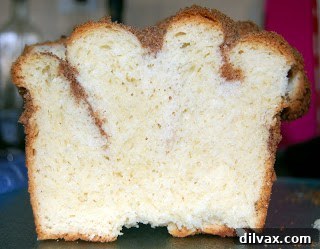
Instead of elegantly swirling, my technique morphed into more of a “poking” and “folding” motion to incorporate the cinnamon-sugar bread crumb filling. As a result, much of the filling simply settled on top of the loaf rather than integrating throughout. I had a premonition during the second rise, observing the generous layer of crumbs resting on the surface, and sure enough, during baking, a good portion of it spilled onto the cookie sheet I wisely placed underneath. This wasn’t entirely a bad thing – it meant less mess in the oven, but it certainly impacted the intended aesthetics and distribution of the filling within the bread.
Upon tasting, the bread was undeniably good. It possessed a lovely, slightly sweet flavor that wasn’t overwhelming, and the texture was soft and tender, as expected from a well-risen yeast bread. The filling, however, was indeed more of a topping than an embedded swirl. While delicious, the cinnamon, sugar, and bread crumb combination tended to fall off quite easily when slicing, creating a bit of a crumbly counter situation. This made cutting somewhat challenging and left many slices with a plainer appearance than anticipated, rather than the distinct swirl I had envisioned.
Tips for Future Attempts (and for your bake!):
- Optimizing Filling Integration: If your dough is thick like mine, consider these alternative methods for incorporating the filling more effectively:
- Roll and Swirl Method: After the first rise, gently turn out the dough onto a lightly floured surface. Roll it out into a large rectangle (approximately 12×18 inches). Spread the cinnamon-sugar bread crumb filling evenly over the entire surface. Then, starting from one of the longer sides, carefully roll up the dough into a tight log, much like you would for a cinnamon roll. Pinch the seam closed and carefully transfer the log to your prepared loaf pan. This technique ensures a beautiful, even swirl throughout the baked loaf.
- Layering Method: Alternatively, divide the dough into three equal portions. Press one portion into the bottom of the loaf pan. Sprinkle with half of the prepared filling. Add the second dough portion, gently spreading it over the filling, then sprinkle with the remaining filling. Top with the final dough portion. This creates distinct layers of filling within the bread.
- Moister Filling: You might also experiment with a slightly moister filling by adding an extra tablespoon or two of melted butter to the bread crumb mixture. This extra moisture can help the crumbs adhere better to the dough, reducing their tendency to fall off.
- Serving Suggestions: While excellent on its own, this Cincinnati Coffee Bread truly shines when toasted. The warmth brings out the cinnamon notes and lightly crisps the edges, creating a delightful contrast of textures. It pairs wonderfully with a fresh cup of coffee or tea, transforming a simple breakfast into a comforting ritual. For an added touch of indulgence, consider a dollop of cream cheese, a light drizzle of simple glaze (made from powdered sugar and a touch of milk), or a sprinkle of chopped nuts.
In terms of overall satisfaction, I’d say this Cincinnati Coffee Bread is “okay.” It’s a decent homemade bread, offering a pleasant sweetness and soft texture, but not quite the showstopper I had envisioned with a perfect internal swirl. My rating, on a scale of 1-4 rolling pins (with 4 being the absolute best), would be 2½ rolling pins. It’s certainly worth trying, especially if you enjoy classic yeast breads and don’t mind a little kitchen adventure. I’m already contemplating my next attempt, perhaps with a revised strategy for that elusive filling swirl!
Happy Baking Adventures!
Every baking experience, whether it goes smoothly or involves a few splashes and spills, is an adventure. It teaches us patience, problem-solving, and the sheer joy of creating something by hand. I hope my tales of kitchen chaos have brought a smile to your face and perhaps even inspired you to try this Cincinnati Coffee Bread recipe yourself. Don’t be afraid to experiment, adapt, and make it your own. After all, the best recipes are often those we’ve learned to master through a bit of trial and error. Happy baking, and may your kitchen remain (mostly) mess-free!