The Honest Truth About Holiday Peppermint Meringues: A Festive Baking Journey (and What Not To Do!)
Baking during the holidays is often envisioned as a picture-perfect scene: delightful aromas filling the air, beautiful treats emerging from the oven, and happy faces enjoying sweet delights. However, the reality of the kitchen can sometimes be far less glamorous, even for experienced bakers. Today, I’m sharing a very candid account of my recent attempt at creating festive peppermint meringues – a baking experience that, frankly, was more of a misadventure than a triumph. Consider this a cautionary tale, a lesson in humility, and perhaps, a guide on what pitfalls to avoid when chasing meringue perfection.
My Meringue History: From Halloween Haunts to Holiday Hurdles
Before diving into the details of this particular baking debacle, it’s worth noting that I’m not entirely new to the world of meringues. In fact, just last Halloween, I embarked on a successful project creating charming Ghost Meringues. Those ethereal treats, adorned with mini chocolate chip eyes and infused with a subtle vanilla extract, were not only adorable but also genuinely delicious. They stood as a testament to what meringues could be: light, airy, and a joy to behold and consume. That positive experience undoubtedly fueled my optimism for these festive holiday ones, believing I could easily replicate that success with a peppermint twist.
However, as I soon discovered, not all meringues are created equal, and some recipes present unique challenges. These red and green peppermint meringues? They were, without exaggeration, the most disappointing batch I’ve ever produced. Let me be blunt: I will not be making them again. Not ever. Not even if I were to tweak the recipe significantly. While the idea of vibrant, candy-cane-inspired swirls held immense appeal, the execution and the final product left much to be desired. So, as a heads-up, if you decide to take on this recipe, you do so at your own peril. This is my official disclaimer – I take absolutely no responsibility for the outcome! You have been warned.
The Allure and the Albatross: Why I Attempted These Meringues
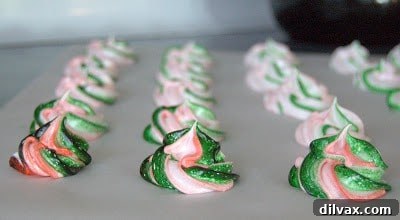
I’d seen countless versions of these festive meringues scattered across the internet, their vibrant red and green swirls promising a visually stunning addition to any holiday dessert spread. They looked so incredibly pretty, so perfectly seasonal, that I simply couldn’t resist the urge to try my hand at them. The thought of little peppermint clouds melting in your mouth, adorned with cheerful holiday colors, was a vision I desperately wanted to bring to life in my own kitchen.
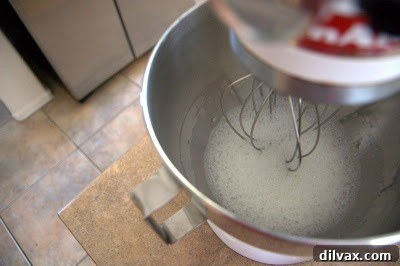
The first ominous sign that things might not go according to plan emerged rather early in the process. It took an unusually long time – what felt like an eternity, perhaps three hours, though certainly “far longer than needed” – for the egg whites to achieve the desired stiff peaks. They were stubbornly uncooperative, refusing to transform into the fluffy, stable foundation necessary for meringues. I suspect the culprit might have been a minuscule amount of egg yolk that inadvertently found its way into the bowl. Despite my best efforts to meticulously remove every speck from the three egg whites, it’s notoriously difficult to achieve complete separation, and even a trace of fat can derail the meringue-making process. This stubborn refusal to stiffen was, in hindsight, a clear foreshadowing of the troubles to come.
Balancing Acts: Life, Work, and Baking Aspirations
On a personal note, I also wanted to share that I’ve recently returned to full-time work. This new chapter means I’m actively working on finding a sustainable balance between my family responsibilities, my career, maintaining this blog, and managing my active 365 Facebook page. It’s a juggling act, and sometimes, as evidenced by these meringues, things don’t always go perfectly in the kitchen or in life. I deeply appreciate your continued support and understanding as I navigate this period of adjustment. Your patience means the world to me.
A Festive Attempt: Peppermint Meringue Recipe
Despite my personal misgivings about the final outcome, I believe in sharing the full journey – including the recipes that challenged me. Perhaps with your own precise execution and a bit of meringue magic, yours will turn out beautifully! This recipe aims to create about 20 meringues, offering a potential holiday treat for many.
Ingredients You’ll Need:
- 3 large egg whites: Crucially, these should be at room temperature. Egg whites whip up to greater volume when not cold, making them easier to incorporate air into. Ensure absolutely no trace of yolk is present, as any fat will prevent them from stiffening.
- 1/8 teaspoon kosher salt: A small amount of salt can help stabilize the egg whites and improve their whipping ability, as well as enhance the overall flavor.
- 1/4 teaspoon cream of tartar: This acidic ingredient is a meringue’s best friend. It acts as a stabilizer, helping the egg whites whip faster, achieve greater volume, and hold their stiff peaks more reliably. Don’t skip it!
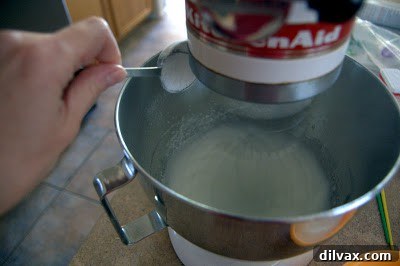
- 3/4 cup superfine sugar: This is a critical component for successful meringues. Superfine sugar dissolves more quickly into the egg whites than regular granulated sugar, preventing a gritty texture and ensuring a smooth, glossy meringue. If, like me, you can’t find superfine sugar, you can make your own by pulsing granulated sugar in a food processor for about 3 minutes until it reaches a fine consistency. Allow the dust to settle for 30 seconds before carefully measuring and using.
- 1 teaspoon peppermint extract: Here’s where I made a critical error. My strong recommendation, based on my experience, is to use no more than 1/2 teaspoon. Peppermint extract is potent, and 1 teaspoon resulted in an overwhelming, almost medicinal flavor that completely overpowered any delicate sweetness. Start with less, you can always add a drop more if needed, but you can’t take it away.
- Red and green gel food coloring: For vibrant, consistent colors in meringues, gel food coloring is essential. Liquid food coloring adds too much moisture, which can destabilize the meringue and result in a less appealing, watery look. Trust me on this – gel is the way to go for bold, true colors without compromising texture.
Step-by-Step Baking Instructions:
- Prepare Your Oven and Baking Sheet: Begin by preheating your oven to a low 250 degrees F (120 degrees C). Meringues bake slowly at a low temperature to dry out rather than cook, ensuring a crisp texture. Line a large baking sheet with parchment paper, which prevents sticking and makes for easy removal of the delicate meringues.
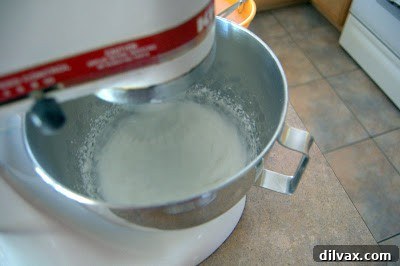
- Start Whipping Egg Whites: In the impeccably clean bowl of a stand mixer, fitted with the whisk attachment (ensure no grease or residue is present!), combine the room temperature egg whites and kosher salt. Beat on medium speed until the mixture becomes frothy and slightly bubbly.
- Add Cream of Tartar: Once frothy, add the cream of tartar to the egg white mixture. Increase the mixer speed to medium-high. This is where the magic of stabilization begins.
- Gradually Incorporate Sugar: With the mixer still running on medium-high, begin adding the superfine sugar, one tablespoon at a time. This slow and steady addition is crucial for allowing the sugar to dissolve properly into the egg whites, creating a stable and glossy meringue. Rushing this step can result in a grainy meringue.
- Flavor and Finish Whipping: Once all the sugar has been incorporated, add your chosen (and carefully measured!) peppermint extract. Continue beating the mixture on high speed until the meringue becomes incredibly thick, visibly glossy, and holds very stiff peaks. When you lift the whisk, the peaks should stand firm and not droop. This process typically takes about 6 minutes, but can vary based on your mixer and egg whites.
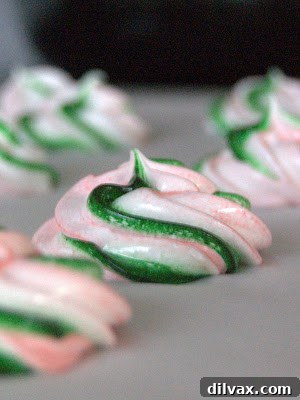
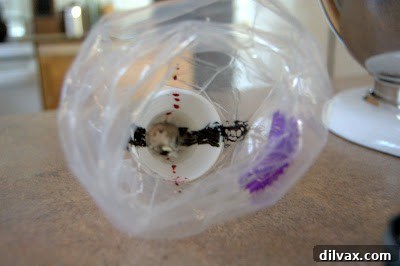
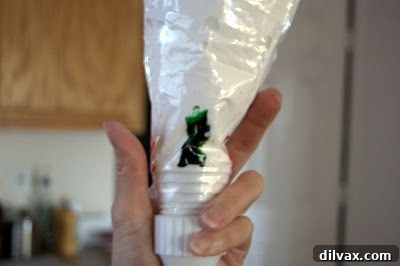
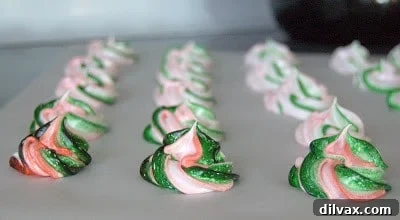
- Color Your Meringues: To achieve the beautiful striped effect, prepare a pastry bag fitted with your desired tip (a star tip works wonderfully for festive shapes). Using a small, clean paintbrush, paint four distinct strips of gel food coloring up along the inside of the pastry bag – two red, two green, alternating colors. This technique creates stunning swirls as you pipe.
- Fill and Pipe: Carefully spoon the prepared meringue mixture into the pastry bag, ensuring not to smudge the painted stripes too much.
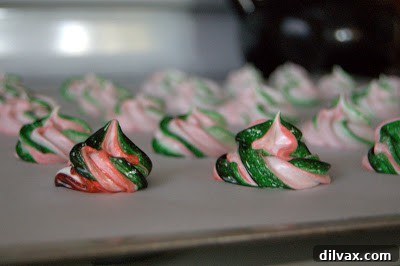
- Bake Your Meringues: Squeeze the meringue onto the prepared baking sheet, forming individual swirls or drops. Leave about 2 inches of space between each meringue to allow for any slight expansion and proper air circulation.
- The Long Dry: Bake for 1 hour. After 1 hour, turn off the oven completely but leave the meringues inside the oven for another 2 hours (or even longer, overnight is ideal for maximum crispness) with the oven door slightly ajar. This extended drying time is crucial for developing their characteristic crisp, melt-in-your-mouth texture without browning them. Resist the urge to open the oven door during this period.
The Disappointing Reality: A Tale of Two Tastes
Honestly, the finished product was such a profound disappointment that I couldn’t even bring myself to take pictures. The images you see accompanying this post are of the meringues before they entered the oven. And no, they didn’t look substantially different after baking – a few might have browned ever so slightly, but the aesthetic wasn’t the primary issue. The real problem lay in the taste.
I typically rate all my baking creations on a scale of 1-4, with a 4 indicating an absolute must-make recipe that exceeds all expectations. These peppermint meringues, unfortunately, barely scratched the surface of that scale. In my honest assessment, they deserved a meager 1.5. The overwhelming peppermint flavor, coupled with a texture that wasn’t quite right (likely due to the initial egg white struggles), made them truly unpalatable. It was a huge disappointment, especially after the visual promise.
Essential Tips for Meringue Mastery (Learned the Hard Way!):
Even though this particular recipe didn’t win any awards in my kitchen, the experience reinforced some fundamental principles for successful meringue making:
- Spotless Equipment is Key: Any trace of grease (from fingers, a dirty bowl, or a speck of yolk) will prevent egg whites from whipping properly. Use glass or metal bowls, and ensure they are sparkling clean.
- Room Temperature Egg Whites: Warmer egg whites whip up with more volume and stability. Plan ahead by separating eggs when cold (easier to separate) and then letting the whites sit at room temperature for 30 minutes.
- Superfine Sugar is Superior: While regular granulated sugar can work in a pinch if processed, superfine sugar truly yields the smoothest, most stable meringue. It dissolves faster, preventing graininess.
- Patience is a Virtue: Whipping egg whites takes time. Don’t rush the process, especially when gradually adding sugar.
- Know Your Extracts: Strong extracts like peppermint require a light hand. It’s always better to start with less and add more if needed, rather than overdo it.
- Low and Slow Baking: Meringues aren’t baked; they’re dried. A very low oven temperature for an extended period, followed by cooling in the turned-off oven, is crucial for crisp, hollow meringues.
- Humidity is the Enemy: Meringues absorb moisture from the air, which can make them sticky or soft. Bake on dry days if possible, and store them in an airtight container at room temperature once fully cooled.
Final Thoughts and Encouragement
So, as I mentioned, I’ll leave it entirely up to you whether you decide to embark on this peppermint meringue adventure. Perhaps with my warnings and tips in mind, you’ll achieve the stunning, delicious results I was hoping for. Baking is, after all, an art and a science, and sometimes experiments lead to unexpected outcomes – both good and bad.
Despite this particular setback, my passion for baking remains undimmed. Every failure is a lesson, a chance to refine techniques and understand ingredients better. I wish you the very best of luck if you choose to tackle these holiday treats, and I genuinely hope they turn out beautifully for you, bringing joy to your festive table.