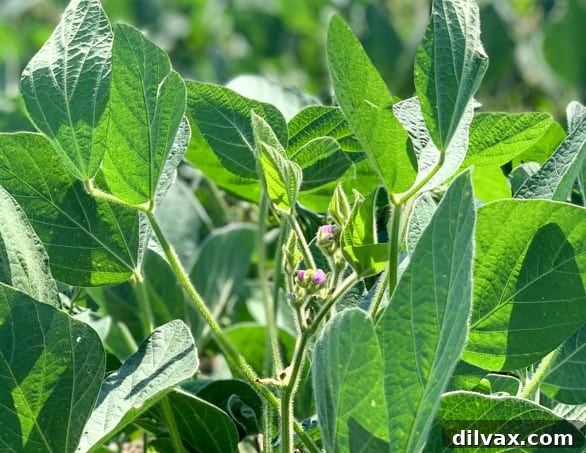
Embracing Sustainable Farming: Practices, Technology, and Stewardship for a Resilient Future
Sustainable farming stands as a cornerstone of modern agriculture, intricately weaving together good farming practices, cutting-edge technology, and a deep sense of stewardship. Its primary goal is to enhance and increase crop production while simultaneously boosting cost efficiency and, crucially, preserving the land for future generations. The imperative for sustainability is not merely a concern for today’s society; it is an essential commitment for the countless generations yet to come.
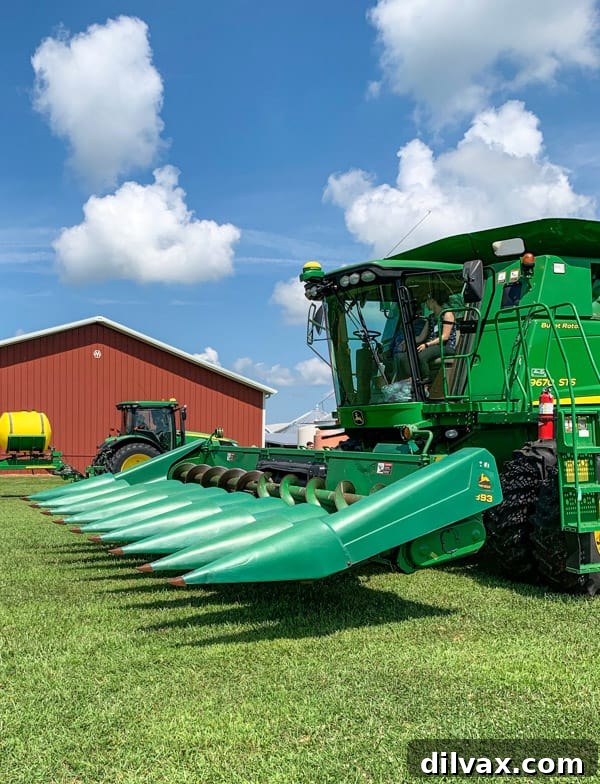
At the heart of agriculture lies the unwavering passion and profound commitment of farmers. They understand implicitly that their long-term sustainability and economic viability are inextricably linked to the health of the crops they cultivate and the well-being of the animals they raise. Every decision, from planting to harvest, is a testament to their dedication to both their livelihood and the land they depend on.
This exploration into the world of sustainable farming has been made possible through a valuable partnership with the United Soybean Board and BestFoodFacts.org. We highly recommend visiting Best Food Facts to delve deeper into various aspects of sustainable agriculture, including innovative farming practices, the latest technological advancements, and a wealth of other engaging information concerning the food we consume and its origins.
A Journey Through Modern Agriculture: Insights from the Field
One of the most rewarding aspects of my work is the opportunity to connect with individuals and listen to their unique stories. I’ve had the distinct privilege of touring diverse agricultural operations, gaining firsthand insights into the realities of modern farming. My experiences include visiting pig farms in Iowa, Michigan, and South Dakota, each offering a glimpse into responsible animal husbandry. I’ve also explored a micro farm in Arizona, a vast corn farm in Iowa, and a thriving soybean farm in Maryland.
Beyond the fields, I’ve engaged in stimulating conversations with doctors and scientists as part of a video series on CRISPR technology for Best Food Facts. Regardless of the location or the background of the individual, I am consistently humbled by the profound passion and unwavering desire each person possesses to contribute to a better world. This shared commitment to improvement forms the bedrock of the sustainable agriculture movement.
Recently, I had the invaluable opportunity to engage in a virtual discussion via Zoom with two dedicated soybean farmers from Iowa, Brent Renner and Dave Walton, focusing on the critical topic of farming sustainability. The conversation was further enriched by the presence of Janet Helms, Global Sustainability Developer for the Inter IKEA Group, and Shannon Tolliver, Social Responsibility and Environmental Sustainability Manager for White Castle System, Inc. It was truly inspiring to hear their individual perspectives on what sustainability means, and to learn about the impactful initiatives they are implementing within their respective farms and companies.
The Three Pillars of Sustainable Agriculture: Practices, Technology, and Stewardship
Sustainable farming is built upon a robust foundation comprising three interconnected pillars: implementing sound agricultural practices, harnessing the power of advanced technology, and upholding exemplary stewardship of the land. Each of these elements plays a crucial role in creating a resilient and productive agricultural system.
1. Good Farming Practices: Nurturing the Soil and Environment
Farmers employ a diverse array of methods when planting, cultivating, and harvesting crops, as well as in raising livestock. What proves effective in one geographical region may not be suitable for another, primarily due to variations in soil composition, temperature, weather patterns, and other environmental factors. Understanding these regional nuances is key to adopting truly sustainable approaches.
No-Till and Strip-Till Farming: Revolutionizing Soil Health
Across the nation, and exemplified by farmers like Brent and Dave, the adoption of no-till farming has gained significant traction. This innovative approach involves planting new crops directly into the residue of previous crops without disturbing the soil by turning it over. The profound benefit of this method is the preservation of the soil’s natural structure.
By leaving the soil undisturbed, its organic matter is allowed to improve naturally. This creates an optimal environment for beneficial organisms such as earthworms, insects, fungi, bacteria, and microorganisms to flourish and perform their vital work within the soil ecosystem. The result is increased water infiltration, which dramatically reduces soil erosion. Furthermore, minimizing surface runoff prevents pollutants from entering nearby water sources, thereby safeguarding delicate aquatic ecosystems. In essence, no-till farming empowers nature to operate at its best, fostering a healthier and more resilient soil.
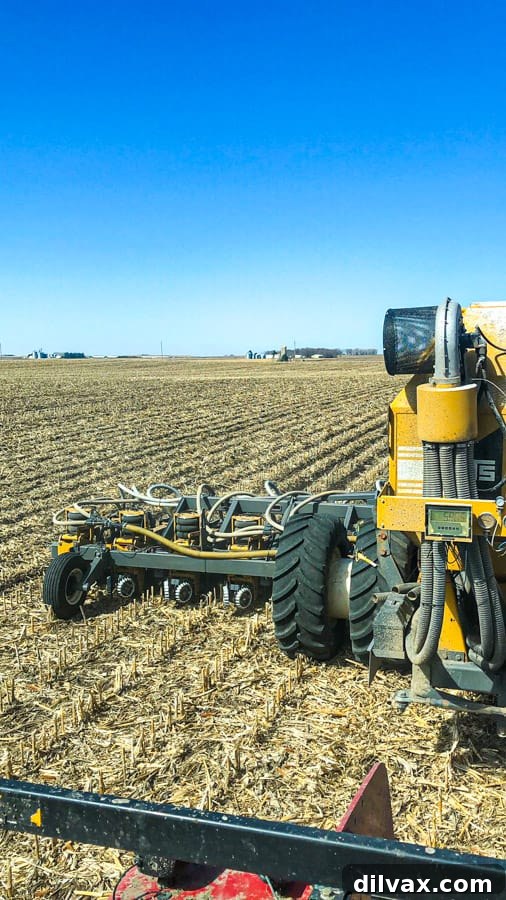
Brent further refines his practices by incorporating strip-tillage. Historically, conventional wisdom suggested that tilling the land would warm the ground, promoting crop growth in the spring. However, modern understanding has challenged this notion. Utilizing precision GPS guidance, Brent creates narrow strips, typically 8-10 inches wide, without disturbing the 20-inch areas between each strip. Once these targeted strips are prepared, he uses a planter to sow seeds directly into them. Simultaneously, fertilizer is applied with pinpoint accuracy within these strips, optimizing nutrient delivery and minimizing waste. This dual-action approach, effectively “killing two birds with one stone,” has shown Brent that strip-tillage significantly enhances seed vigor and crop establishment, particularly with soybeans.
Cover Crops: The Unsung Heroes of Soil Protection and Nutrient Cycling
Cover crops have emerged as an exceptionally beneficial practice for both land management and animal husbandry. These crops are planted not for harvest, but specifically to prepare and enrich the soil for subsequent cash crops. Their role is primarily protective and restorative.
On Dave’s farm, cover crops serve a dual purpose: they protect and nourish the soil, and they also provide a sustainable forage source for his sheep and cows. This innovative practice reduces the need for harvested hay, offering a significant economic and environmental advantage. After the animals graze, the consumed cover crop is naturally converted into valuable products such as meat, wool, and milk. This exemplifies a remarkable cycle of nutrient recycling, where every element contributes to the overall sustainability of the farm, showcasing sustainable practices at their finest.
2. Innovative Technology in Agriculture: Precision and Efficiency
The agricultural sector is undergoing a profound transformation driven by advancements in technology, leading to unprecedented levels of precision and efficiency. These innovations are not only enhancing productivity but also significantly reducing the environmental footprint of farming operations.
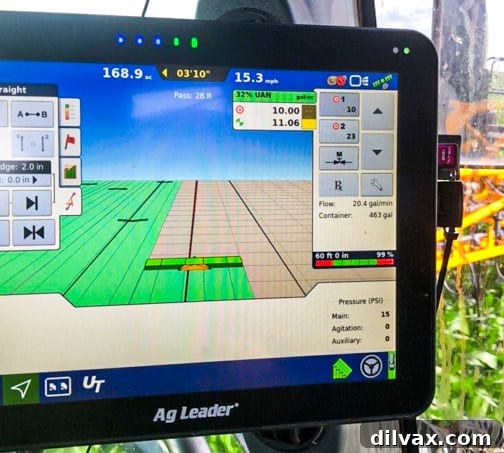
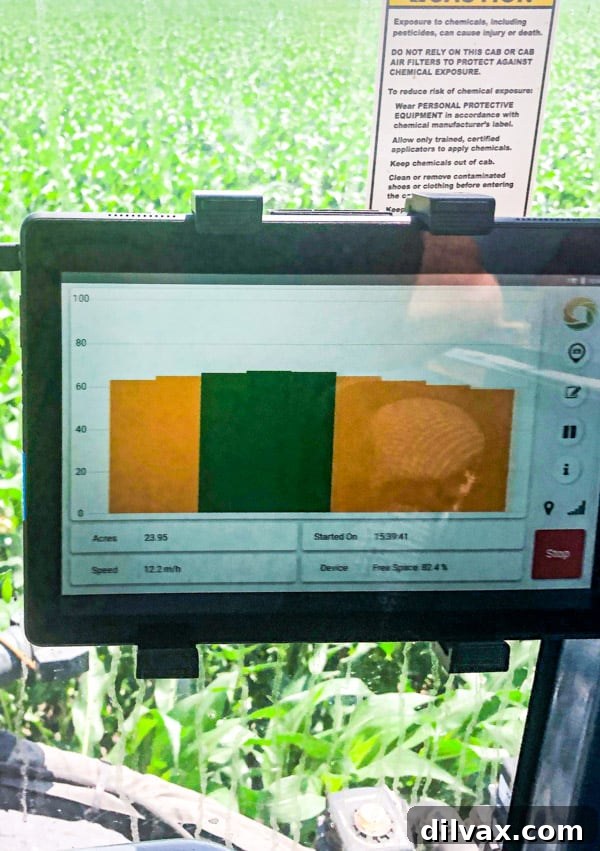
On his farm, Brent utilizes a sophisticated system involving a camera mounted high on his Hagie, a tall crop applicator. This specialized equipment allows him to drive through towering cornfields and apply fertilizers, herbicides, and/or insecticides without damaging the crops. The camera possesses the remarkable ability to capture images of the crop up to 60 feet ahead. This real-time visual data is instantly transmitted to his monitor, enabling him to precisely regulate the amount of product applied. This fine-tuned application process optimizes resource usage, minimizes waste, and ensures that chemicals are only used where absolutely necessary.
The future of farming technology promises even greater precision. Imagine the ability to identify individual weeds and apply herbicide directly to them as the machinery passes overhead, rather than treating a larger, indiscriminately sprayed area. This targeted approach represents a massive leap forward for environmental protection, dramatically reducing chemical runoff and exposure, while simultaneously delivering substantial cost efficiencies for farmers. Modern farming technology is becoming so incredibly precise that management is shifting from acre-by-acre decisions to foot-by-foot measurements, allowing for unparalleled resource optimization. Each year, I am continually astonished by the innovative tools and strategies that men and women in agriculture are adopting to advance sustainability on their farms.
3. Good Stewardship: A Legacy of Land Preservation
The actions farmers take on their land have far-reaching implications, directly impacting both the ecological health of the soil and the broader society around them. It is therefore paramount that agricultural practices are rooted in good stewardship—approaches that not only improve but also ensure the long-term viability and retention of the land for generations to come.
For Brent, instilling the importance of being a responsible steward is a core value he imparts to his immediate family and the next generation. He emphasizes that understanding and practicing good stewardship is not just an ethical imperative but also a practical necessity for maintaining a profitable livelihood. This intergenerational transfer of knowledge and values is crucial for sustained agricultural success.
Dave views himself as a “link in a chain” within his family’s 120-year-old farm. Each generation has diligently learned from its predecessors, striving to leave the land in an even better condition than they found it. Their guiding philosophy is profoundly simple yet powerful: “to leave the land in better shape than the way we received it.” Dave observes that as public awareness and concern for environmental issues grow, farmers are now investing more thought and effort than ever before into how they manage their land. While the necessity of maintaining profitability remains, there is an increasingly strong desire among farmers to implement practices that benefit society as a whole.
Sustainable Practices from a Company Perspective: Beyond the Farm Gate
The endeavor to preserve our planet extends far beyond the agricultural community. Increasingly, corporations are recognizing their vital role in this global effort, with a growing number of companies actively integrating sustainability into their core business models. This shift is evident in the burgeoning trend of hiring dedicated sustainability managers—professionals specifically tasked with overseeing and implementing environmentally responsible practices across all facets of a business. These roles ensure that companies are adopting best practices, actively reducing their carbon footprints, implementing robust recycling programs, meticulously capturing data to track resource usage (like electricity), and continuously seeking ways to improve and optimize their environmental performance.
White Castle System, Inc.: Crafting a Greener Footprint
White Castle, a venerable 100-year-old family-owned company, is at the forefront of creating goods and services with a focus on generating less waste and pollution while utilizing fewer resources. Their commitment to sustainability extends throughout their supply chain, as they actively collaborate with suppliers to foster mutual improvements in environmental performance. Shannon, their Social Responsibility and Environmental Sustainability Manager, meets monthly with other restaurant sustainability managers. These gatherings serve as crucial forums for discussing industry best practices, identifying areas for improvement, and collectively strategizing on how to advance sustainable initiatives across the food sector. Shannon emphasizes the critical importance of industry-wide alignment to move forward with new, impactful practices, acknowledging that while progress may take time, it is an essential collective journey.
Inter IKEA Group: A Holistic Approach to People and Planet
Janet, from the Inter IKEA Group, articulates a profound philosophy: “plant health, human health, animal health, wildlife health is all connected. We have an obligation to ourselves, our children, and the planet to leave this planet better than when we started.” This holistic view underpins IKEA’s comprehensive sustainability strategy.
IKEA is committed to maximizing efficiency and effectiveness in its manufacturing processes, with the ultimate goal of passing those savings and environmental benefits on to its consumers. Their adopted “people and planet positive” strategy encompasses a broad range of initiatives. This includes diligently working to reduce their carbon footprint, promoting a healthy and sustainable living platform, implementing systems to capture food waste and divert it to co-generation plants for energy production, and establishing robust recycling programs for products like mattresses and furniture. Beyond their direct operations, IKEA also extends support to its suppliers by providing loans to those who wish to incorporate alternative energy solutions, such as solar panels or methane regenerators. Furthermore, in Africa, the company actively invests in the communities surrounding the small farmers who supply its coffee and cocoa, fostering local growth and development.
A Collective Path Forward: Collaboration for a Sustainable Tomorrow
The collective sentiment shared by Brent, Dave, Janet, and Shannon is clear: the dialogue surrounding sustainability and the actions we take to improve our planet for future generations must continue to move forward with urgency and dedication. Maintaining open lines of communication throughout the entire supply chain—between end-users, suppliers, and producers—is absolutely essential. Shannon perhaps summarized it best: “It takes a village to make everything work, from farming, from recycling to sustainable sourcing. It’s humbling that I can’t change one thing, but if I work with a group of people to work together to move toward a goal then we can make it happen. It may take some time…(but it will happen).” This powerful message underscores the collaborative spirit and enduring commitment required to achieve our shared sustainability goals.
I extend my sincerest gratitude to Brent, Dave, Janet, and Shannon for generously dedicating their valuable time to provide such insightful perspectives. My thanks also go to the United Soybean Board and Best Food Facts for facilitating this important and enlightening conversation on the future of sustainable farming.