
The satisfying scent of a freshly cleaned home is truly unparalleled. Today marked a significant milestone in my ongoing battle against disarray, as I finally managed to tackle a sizable portion of my house. While the journey to complete organization is far from over, the sense of accomplishment from this initial push is incredibly motivating. I confess, I have a long-standing habit—one I affectionately attribute to my dear mother—of enthusiastically embarking on new projects only to find myself drawn to another before the first is fully realized. This delightful characteristic often leaves a trail of unfinished endeavors scattered throughout my living space, creating an environment that feels perpetually in flux.
However, a new energy has recently taken hold. I find myself in a powerful “nesting” phase, driven by an almost primal urge to sort, organize, and decisively declutter every corner of my home. The mantra “out with the old, in with the new” rings loudly, though a more practical voice reminds me that perhaps the “new” should patiently wait until the “old” is gracefully and thoroughly handled. This renewed focus on order isn’t just about aesthetics; it’s about creating a more functional and peaceful environment, especially in the heart of the home: the kitchen. A well-organized kitchen, free from clutter, transforms cooking from a chore into a joy, enhancing efficiency and inspiring creativity.
The Enduring Charm of Vintage Cookbooks: A Culinary Companion
Amidst this organizational whirlwind, a delightful realization recently struck me. The very cookbook I often turn to, a cherished culinary companion, can be acquired for a mere $.77! While it would undoubtedly be a pre-loved copy, potentially two decades old, its value far transcends its monetary price tag. This isn’t just any cookbook; it’s a treasure trove. Brimming with a multitude of recipes—many of which have already proven to be family favorites—it also offers invaluable insights into fundamental kitchen techniques, baking principles, and cooking wisdom. What truly sets it apart for me are the indispensable little hints and comprehensive equivalent charts thoughtfully printed on the inside covers, which I consult almost constantly. Such practical aids are often missing from modern recipe collections and are a testament to the enduring quality of classic culinary texts.
Over the years, as my culinary journey has deepened, especially after becoming a parent, I developed a habit that once felt almost sacrilegious: writing in my cookbooks. I used to view books as pristine objects, not to be marred by ink. Yet, the practicalities of a busy family kitchen soon outweighed my old inhibitions. How else would I remember which recipes were successful, which ones needed tweaking, or which were met with universal family acclaim? Now, every time I use a recipe, I make notes—recording adjustments, comments from tasters, and overall ratings. This transforms each cookbook into a living document, a personal culinary diary. By the time I complete my current cooking challenge, I anticipate this particular volume will be richly adorned with a tapestry of personal markings, reflecting countless experiments and family meals. This practice not only personalizes the cookbook but also makes it an even more useful tool for future cooking endeavors, ensuring consistent results and cherished memories.
This shift in perspective reminds me of another quirky habit-breaking moment. For years, I rigidly adhered to buying only two types of cereal, a self-imposed culinary minimalism. Then came ‘Seinfeld,’ and suddenly, it felt as though I had received permission to embrace culinary abundance. The sheer exhilaration of opening the pantry each morning to a diverse array of cereal choices was surprisingly liberating. It’s these small, often eccentric, personal quirks—like my inexplicable urge to sniff pizza crust before taking a bite—that truly define our individuality and add spice to life, both literally and figuratively. They remind us that joy can often be found in the simplest of deviations from routine.
Unveiling a Classic: Baking Powder Biscuits from The Fannie Farmer Cookbook
Today’s culinary endeavor brings us to a timeless classic: Baking Powder Biscuits. This foundational recipe is meticulously detailed in The Fannie Farmer Cookbook, Thirteenth Edition, on page 544. This esteemed edition was authored by Marion Cunningham and published by Alfred A. Knopf, Inc., a distinguished division of Random House. Its enduring legacy is underscored by its ISBN: 0-394-56788-9. The Fannie Farmer Cookbook is more than just a collection of recipes; it is an institution, a cornerstone of American culinary education, renowned for its clear instructions and reliable results. Marion Cunningham, through her meticulous work on later editions, breathed new life into this classic, ensuring its relevance for generations of home cooks. This particular recipe for biscuits is a testament to the cookbook’s dedication to foundational techniques, offering a simple yet incredibly versatile base for countless meal possibilities, from breakfast to dinner accompaniments.
The Art of the Perfect Biscuit: Ingredients and Method
Creating light, fluffy, and tender biscuits at home is a rewarding experience, and this recipe provides an excellent starting point. The key lies in understanding the role of each ingredient and the precision of the technique. Achieving that perfect flaky crumb requires attention to detail, especially when it comes to temperature and handling the dough. Let’s dive into the classic method.
Baking Powder Biscuits Recipe
- 2 cups all-purpose flour (for a tender crumb, avoid bread flour)
- ½ teaspoon fine sea salt (enhances flavor and balances sweetness)
- 4 teaspoons baking powder (ensure it’s fresh for optimal rise and lightness)
- 1 tablespoon granulated sugar (adds a subtle sweetness and aids browning)
- ½ cup vegetable shortening, very cold and cut into small pieces (for flakiness)
- 2/3 cup whole milk, very cold (cold liquids are crucial for tender biscuits)
Begin by preheating your oven to a robust 425ºF (220ºC). This high temperature is crucial for a quick rise, which helps the biscuits achieve a beautiful, flaky texture by rapidly expanding the steam trapped within the dough. Lightly grease two 8-inch cake pans; this preparation will help the biscuits brown evenly on the bottom and sides while preventing any sticking. In a large mixing bowl, combine the dry ingredients: flour, salt, baking powder, and sugar. Whisk them together thoroughly for about 30 seconds to ensure the leavening agent is evenly distributed throughout the mixture. This step is vital to prevent pockets of unmixed baking powder and ensures a uniform, consistent rise across all your biscuits.
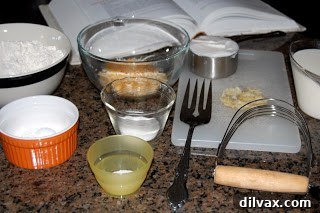
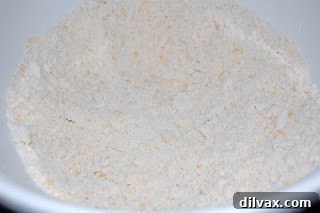
Next, introduce the very cold vegetable shortening. It’s imperative that the shortening is cold, as this prevents it from fully incorporating into the flour, instead creating small pockets of fat. Using two knives, or preferably a pastry blender, systematically cut the shortening into the dry ingredients. Work quickly and efficiently to prevent the shortening from melting from the warmth of your hands. Continue this process until the mixture resembles coarse meal, with pea-sized bits of shortening still visibly present. These discrete pockets of fat are essential for creating steam in the hot oven, which separates the layers of dough and produces that highly desirable flaky texture characteristic of excellent biscuits.
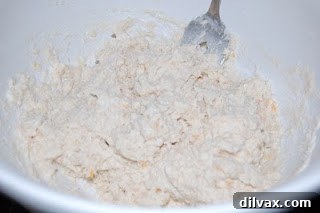
Now, add the very cold milk all at once to the dry ingredients. Using a fork, gently stir the mixture just until the dough comes together and forms a cohesive ball around the fork. It’s crucial not to overmix at this stage; overworking the dough develops the gluten in the flour, which will inevitably lead to tough, chewy biscuits rather than light and tender ones. A few dry spots in the bowl are perfectly fine; they will hydrate adequately during the brief kneading process that follows, ensuring a delicate crumb.
Turn the dough out onto a lightly floured surface, such as a clean countertop or a pastry board. Gently knead the dough precisely 14 times. This minimal kneading helps to bring the dough fully together without overdeveloping the gluten, maintaining its tenderness. After kneading, gently pat the dough evenly until it is approximately ½ inch thick. Using a 2-inch round cookie cutter, cut out the biscuits. For tall, soft-sided biscuits with pillowy edges, arrange them so they are touching each other in the prepared cake pans. This encourages them to rise upwards rather than spreading out, creating those beautiful, plush sides. Alternatively, for biscuits with crispier edges, space them slightly apart on a baking sheet. Bake for 15-20 minutes, or until the tops are golden brown and the biscuits are cooked through. Serve warm with butter, jam, or as an accompaniment to savory dishes.
Delicious Variations to Elevate Your Biscuits
The beauty of a classic biscuit recipe lies in its remarkable versatility. Once you’ve mastered the basic technique, it’s incredibly easy to adapt it to suit various tastes, meals, and occasions. These variations allow for creative expression in the kitchen, transforming simple biscuits into something truly special and personalized.
- Cheese Biscuits: For a savory, irresistible twist, incorporate ½ cup of grated sharp Cheddar cheese directly into your dry ingredients along with the flour, salt, baking powder, and sugar. The cheese melts into the biscuit as it bakes, creating delightful pockets of savory flavor and imparting a wonderfully cheesy aroma throughout your kitchen. Other hard, flavorful cheeses like Gruyere, Parmesan, or even a spicy pepper jack can also be used to explore different flavor profiles and add an exciting kick. These are perfect with chili or soup.
- Drop Biscuits: If you prefer a more rustic, less fuss approach, or simply find yourself without a cookie cutter handy, turn your dough into easy drop biscuits. To achieve the right consistency, increase the milk by an additional 1/3 cup, making the dough softer and more pliable, akin to a thick batter. Instead of the traditional kneading and cutting, simply drop spoonfuls of the dough onto a buttered baking sheet. These biscuits will have a charmingly irregular shape and often boast a slightly different, often more tender, crumb due to less handling. They are ideal for serving alongside hearty stews, rich gravies, or comforting soups where a less formal presentation is desired.
- Herbed Biscuits: For an aromatic experience, mix 1-2 tablespoons of finely chopped fresh herbs such as rosemary, thyme, chives, or parsley into the dry ingredients. These are fantastic with roasted chicken or a Sunday pot roast.
- Sweet Biscuits: Add an extra tablespoon of sugar and perhaps a teaspoon of vanilla extract to the dough. These can be served with fresh berries and whipped cream for a simple dessert.
A Baker’s Honest Review: Learning from Kitchen Experiments
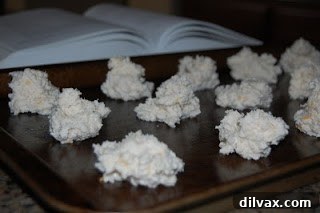
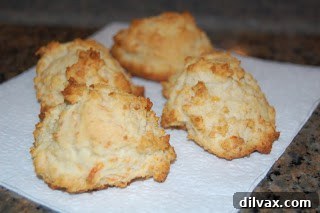
My intention for this particular baking session was to craft the classic round biscuits, nestled snugly in a cake pan, aiming for that iconic soft-sided rise and tender interior. However, a quick check of my cookie cutter collection revealed only a 3-inch option, a size too large for the recipe’s specified 2-inch rounds to fit properly in the pan. Not wanting to free-form circles, which can often result in uneven baking and varied textures, I pivoted to the drop biscuit technique. This spontaneous change of plans often happens in a busy kitchen, teaching us adaptability and problem-solving on the fly.
To enhance the flavor profile and add a personal touch, I decided to incorporate some exciting additions. Instead of the sharp cheddar specified in the cheese biscuit variation, I opted for a readily available Mexican cheese blend, which offered a medley of mild, creamy, and slightly tangy notes. Furthermore, I decided to infuse the biscuits with the rich, mellow flavor of roasted garlic. I took three cloves of fresh garlic, roasted them in our toaster oven at a precise 425ºF for 20 minutes until they were beautifully caramelized and soft, then crushed them into a paste and added them to the dry ingredients before introducing the milk. The intoxicating aroma filling the kitchen was absolutely divine, promising a delicious outcome and building anticipation for the first bite.
However, as often happens when juggling multiple tasks—especially during the bustling dinner hour—I became sidetracked with preparing the main course. The biscuits, unfortunately, languished in the oven for a bit longer than they should have. Consequently, the bottoms developed a darker hue than I would have preferred, suggesting they were slightly overbaked. This overbaking also impacted their delicate texture. While undeniably tasty, thanks to the robust flavors of the cheese and roasted garlic, they were also a little drier than my family and I typically enjoy for a biscuit. This experience highlighted a crucial aspect of baking: timing is everything, and even a few extra minutes can significantly alter the final product, especially when dealing with quick breads like biscuits.

Reflecting on the outcome, I can’t help but wonder if the dryness was solely due to the extended baking time, or if this particular drop biscuit variation inherently yields a drier result compared to cut biscuits. I also strongly suspect that baking them in the cake pan, as originally intended, would have made a considerable difference in moisture retention and overall texture. The close arrangement in a pan often traps steam, creating a more humid baking environment that results in a softer, more tender crumb. While these garlic cheese drop biscuits were an interesting experiment and certainly edible, they didn’t quite achieve the “wow” factor with the family to warrant a repeat in this specific form. Therefore, I’ve rated this attempt 2½ rolling pins, acknowledging both the positive flavor additions and the less-than-ideal texture. It was a valuable learning experience in the ongoing journey of home baking.
Lessons learned are invaluable, however. For my next attempt, I am committed to using the cake pan and will make a dedicated trip to purchase a 2-inch round cookie cutter to achieve the recipe’s intended form and potentially its ideal texture. I also plan to experiment with a different cheese—perhaps a sharp Parmesan for its nutty, salty kick—and a fragrant blend of fresh herbs, such as finely chopped rosemary or thyme, to complement the garlic. The journey of baking is one of continuous learning, adaptation, and joyful experimentation. Every ‘fail’ is simply a stepping stone to a future success, refining skills and building confidence in the kitchen!
Happy baking, and may your kitchen always be filled with delicious aromas and delightful discoveries!