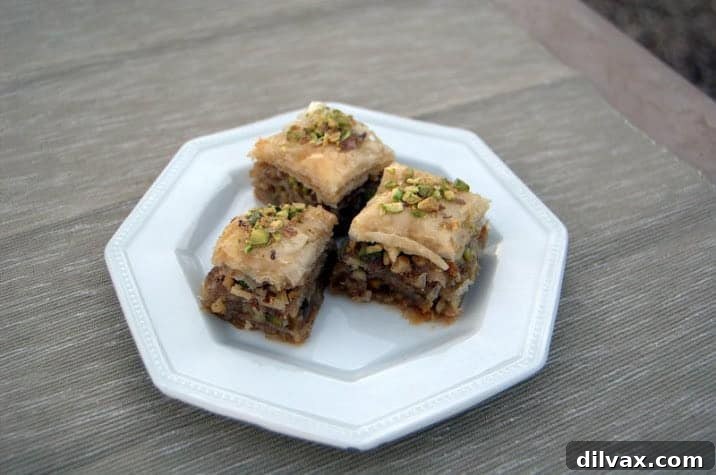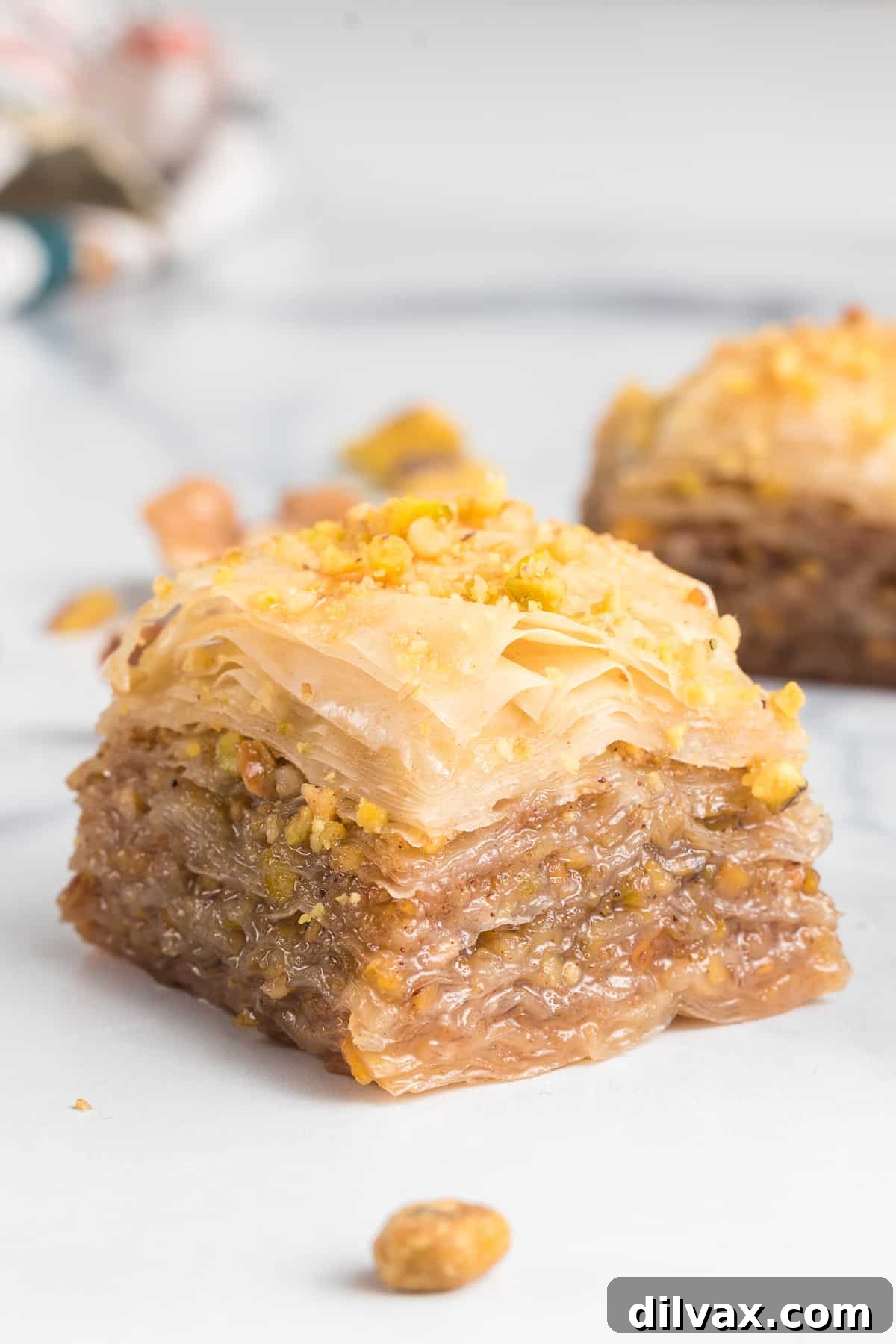
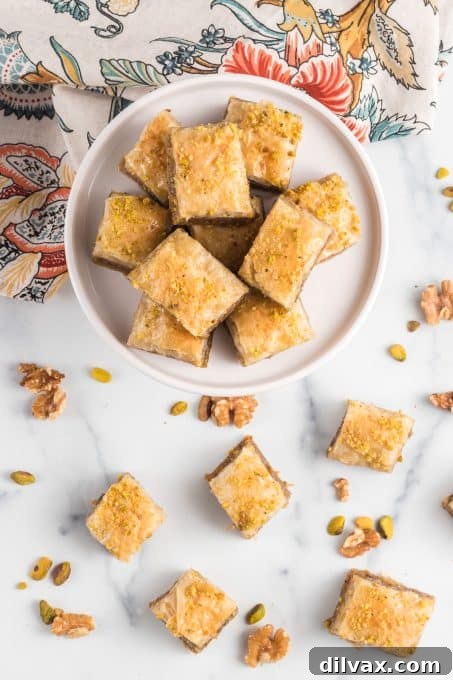
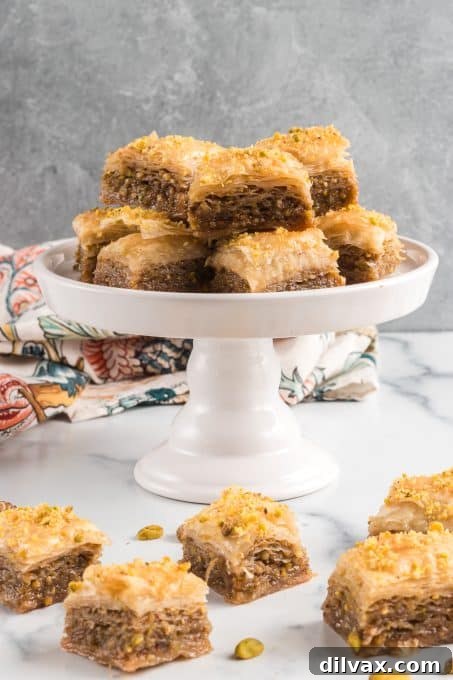
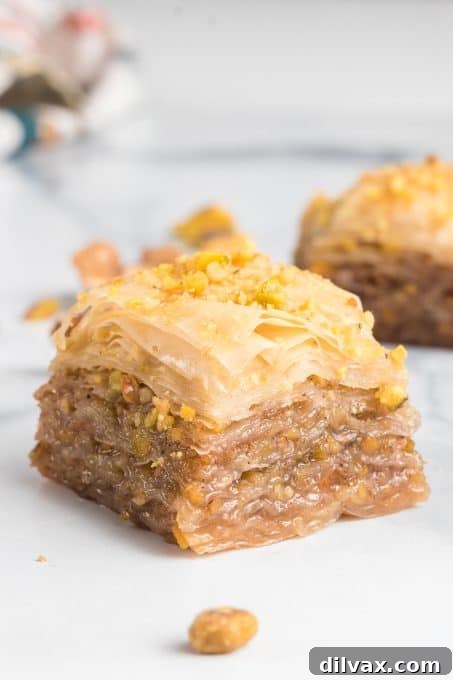
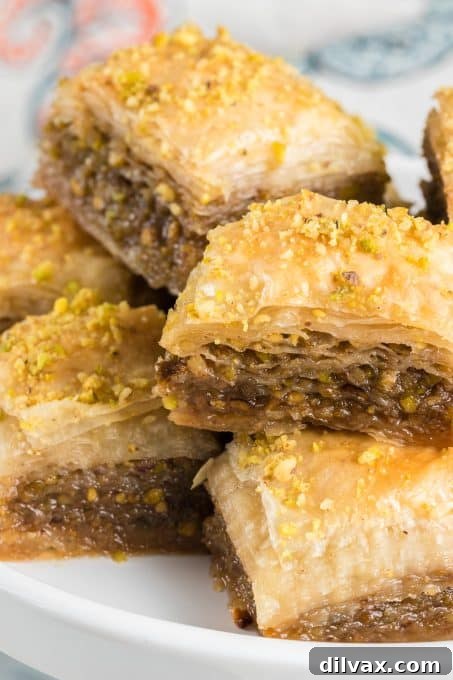
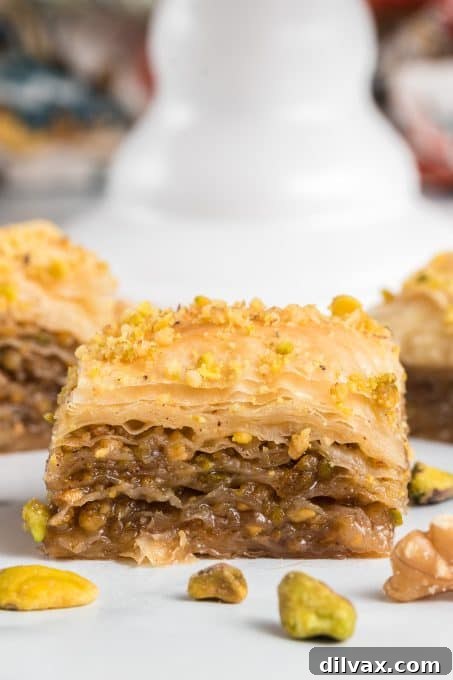
Baklava is an exquisite dessert crafted from dozens of delicate, buttery layers of phyllo dough, generously filled with a delectable mix of chopped pistachios and walnuts, then drenched in a fragrant, sweet honey-lemon syrup. It’s truly an unforgettable culinary experience!
The Irresistible Charm of Homemade Baklava: A Sweet Journey
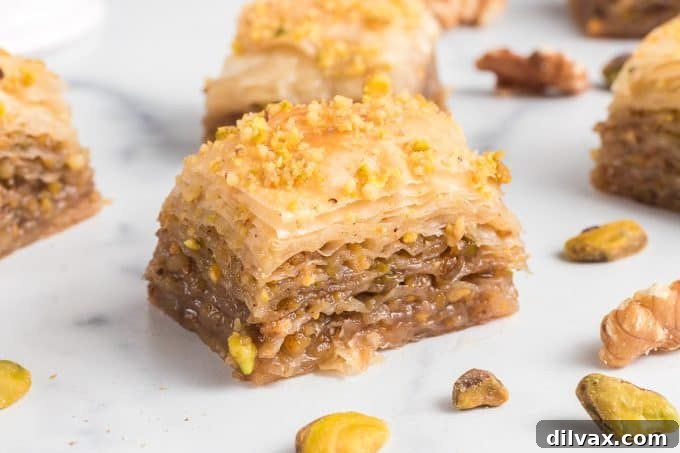
There’s an undeniable magic in the sweet, sticky embrace of Baklava, a dessert that instantly transports you to sun-drenched Mediterranean shores. For me, the joy of Baklava goes beyond its incredible taste; it’s intricately woven with cherished memories of family gatherings, shared laughter, and the warmth of hospitality. Every forkful, rich with honey and nuts, feels like a celebration. While its intricate appearance might seem daunting, especially for first-timers, I promise you, crafting homemade Baklava is a deeply rewarding experience. It doesn’t demand perfection; the beauty lies in its rustic charm, and the end result is always spectacularly delicious and absolutely worth every moment of effort. This is not just a dessert; it’s a centerpiece, a conversation starter, and a true standout for any special occasion.
SAVE THIS HOMEMADE BAKLAVA RECIPE TO YOUR FAVORITE PINTEREST BOARD!
Unraveling the Rich History and Cultural Origins of Baklava
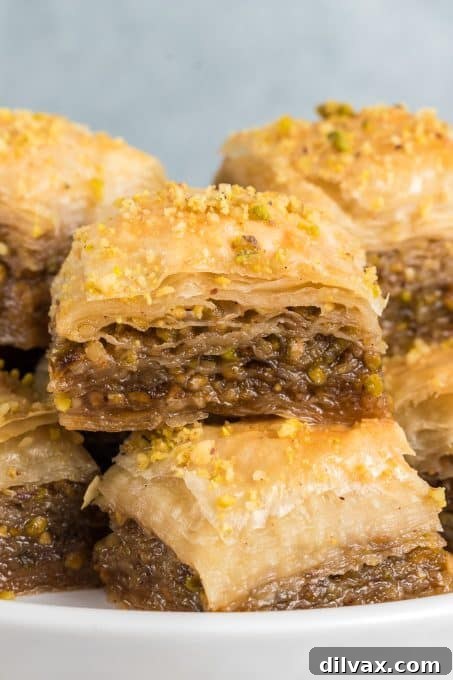
Is Baklava a Greek dessert? This is a question often debated among food enthusiasts and historians alike. I vividly recall dining with a Turkish couple who proudly served their native Baklava for dessert, much to my surprise, as I had always associated it primarily with Greek cuisine! It turns out that Baklava boasts a fascinating, multi-cultural heritage, with several nations laying claim to its origins. The consensus points towards its roots in the Ottoman Empire, spreading throughout the region and adapting to local tastes and ingredients. Therefore, while you’ll find incredible Baklava in Greece, you’ll also discover equally authentic and delightful versions across Turkey, the Balkans, and the Middle East.
Each culture adds its unique touch to this sweet pastry. For instance, Turkish Baklava often features finely ground pistachios and can come in various shapes, while Greek Baklava commonly uses walnuts, sometimes combined with almonds, and is frequently spiced with cinnamon and cloves. There isn’t a single “right” way to make it; rather, a spectrum of delicious interpretations exists, each reflecting the culinary traditions of its people. Don’t be surprised if your Mediterranean friends fiercely advocate for their country’s rendition as the undisputed best!
Is Making Baklava at Home Difficult? Debunking the Myth
One of the biggest misconceptions about Baklava is that it’s incredibly difficult to make. While traditional recipes that involve making phyllo dough from scratch can be quite labor-intensive, this homemade Baklava recipe simplifies the process significantly by utilizing pre-made phyllo dough. This readily available ingredient is a game-changer, making this exquisite dessert perfectly achievable in your home kitchen. Of course, the Baklava you find in specialized Middle Eastern or Greek bakeries might appear more elaborate due to professional techniques and equipment, but our homemade version promises all the incredible flavor with less fuss.
I promise, this recipe comes together much more easily than you might imagine and is absolutely worth the effort! There might be moments when working with the delicate phyllo dough can feel a bit frustrating – a sheet might tear, or spreading butter evenly might seem challenging. But stick with it! Think of it like making a Lasagna; it requires a bit of assembly, and it might look a little messy as you build the layers, but once baked, everything harmonizes beautifully. Plus, a little secret: no one will ever know if you used a few slightly ripped pieces or missed a tiny spot with butter. The layers, once baked and saturated with syrup, hide any imperfections, leaving you with a glorious, golden dessert.
Is Traditional Baklava Gluten-Free?
Unfortunately, for those with gluten sensitivities, traditional Baklava is not gluten-free. The star ingredient, phyllo dough, is typically made from wheat flour and other components that contain gluten. However, the good news is that the culinary world is incredibly innovative! A quick search online will reveal a plethora of fantastic gluten-free Baklava recipes that utilize alternative flours and specialty gluten-free phyllo doughs, allowing everyone to enjoy this magnificent dessert. Just be sure to source your ingredients carefully if you’re aiming for a truly gluten-free version.
Essential Ingredients for Your Homemade Baklava
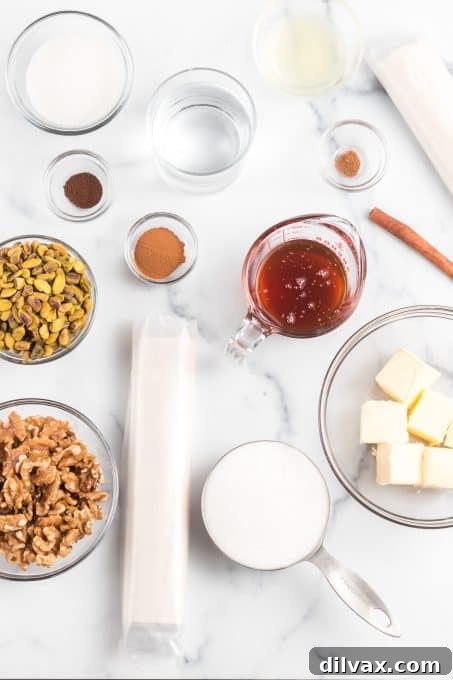
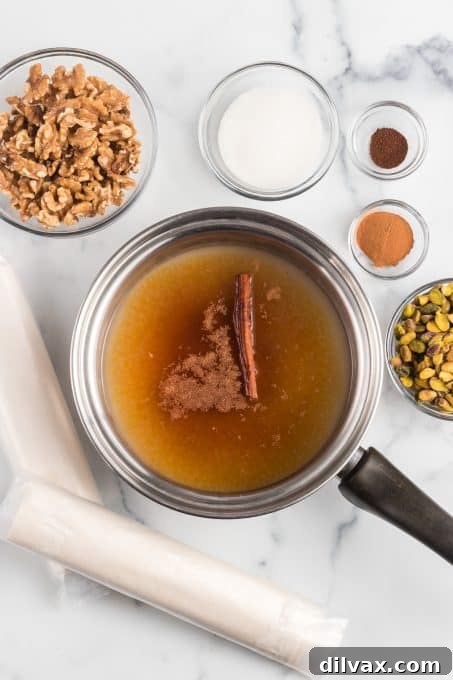
Crafting the perfect Baklava requires a balance of rich flavors and textures. Here’s a breakdown of the key ingredients you’ll need for both the delightful nut filling and the aromatic citrus syrup:
For the Spiced Nut Filling:
- 1 cup pistachios, finely chopped: Pistachios lend a vibrant color and a distinct, slightly sweet flavor.
- 1 cup walnuts, finely chopped: Walnuts provide a deeper, more robust, and earthy flavor, often considered traditional in many Baklava variations.
- 1 pound phyllo dough: This is the foundation of Baklava. Ensure it’s fully thawed according to package directions. Remember, this is *not* puff pastry, which has a different texture and leavening. You can find high-quality phyllo dough here.
- ¾ cup unsalted butter, melted: Melted butter is crucial for creating those signature crispy, flaky layers. Using unsalted butter allows you to control the overall saltiness.
- ⅓ cup sugar: A touch of sugar enhances the sweetness and helps bind the nut mixture.
- 1 teaspoon ground cinnamon: Cinnamon is a classic spice that beautifully complements the nuts and syrup.
- ⅓ teaspoon ground cloves: Cloves add a warm, pungent note that provides depth to the filling.
For the Fragrant Citrus Syrup:
- 1 cup water: The base for your syrup.
- 1 cup sugar: Provides the primary sweetness and helps create the desired syrupy consistency.
- ½ cup honey: Honey is essential for Baklava’s iconic flavor and stickiness.
- 2 tablespoons lemon juice: Lemon juice adds a bright, refreshing tang that cuts through the sweetness and prevents the syrup from crystallizing.
- ⅛ teaspoon ground nutmeg: Nutmeg introduces a subtle, warm, and spicy aroma.
- 1 cinnamon stick: Infuses the syrup with a beautiful, rich cinnamon flavor as it simmers.
- Finely ground pistachios (for garnish): An optional but highly recommended touch for both visual appeal and an extra pop of pistachio flavor.
Step-by-Step Guide: How to Craft Your Perfect Baklava
Making Baklava is a labor of love, but each step is straightforward. Here’s how to bring this magnificent dessert to life:
1. Prepare the Spiced Nut Filling:
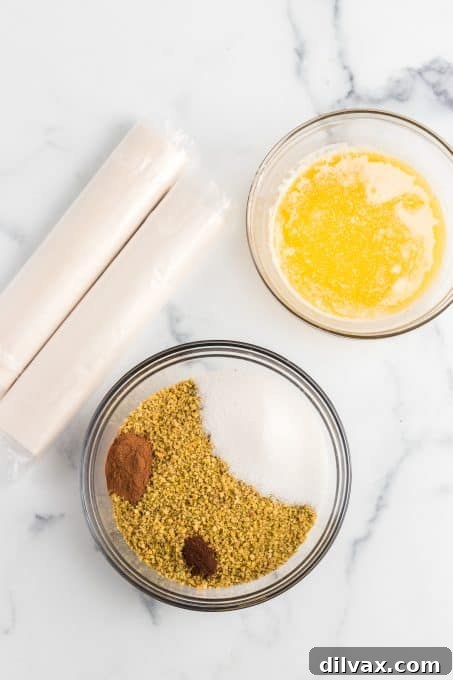
In a medium bowl, combine the finely chopped pistachios and walnuts with sugar, ground cinnamon, and ground cloves. Mix them thoroughly until the spices are evenly distributed. For an extra easy method to achieve the perfect texture for your nuts, simply place all the filling ingredients into a food processor and pulse about ten times. This quickly and efficiently chops the nuts to an ideal consistency, saving you significant time and effort.
2. Assemble the Delicate Layers:
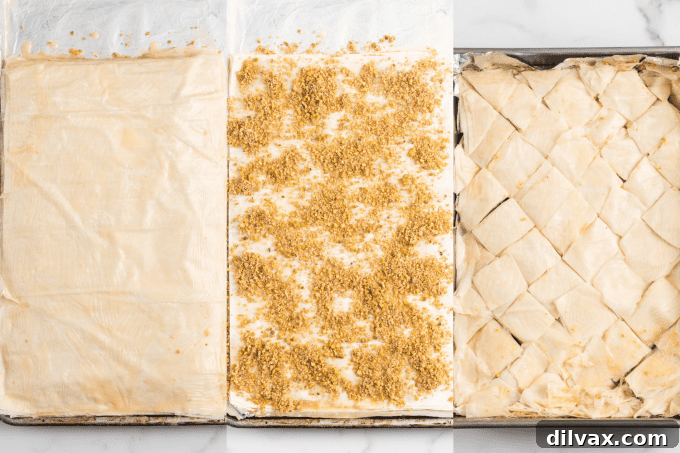
Gently unroll your thawed phyllo dough. It’s crucial to keep the dough covered with a slightly damp towel at all times while you work, as it dries out very quickly and can become brittle. Prepare a jelly roll pan (approximately 11×16 inches) by lining it with aluminum foil. Leave the foil edges long so you can fold them up later to encase the Baklava, which helps the syrup absorb into the sides. *Refer to the recipe notes below for instructions on using a 9×13-inch pan.
Place the first sheet of phyllo dough into the prepared pan and brush it generously with melted unsalted butter. Repeat this process seven more times, carefully layering each sheet and brushing it with butter, to create a robust eight-sheet-thick base layer.
Evenly spoon a thin, even layer of your spiced nut mixture over the buttered phyllo sheets. Cover this nut layer with two more sheets of phyllo dough, ensuring each one is brushed with melted butter. Continue this alternating pattern: a layer of nut mixture, followed by two buttered phyllo sheets, until all of your nut mixture is used. Make sure your final top layer consists of phyllo sheets thoroughly brushed with butter.
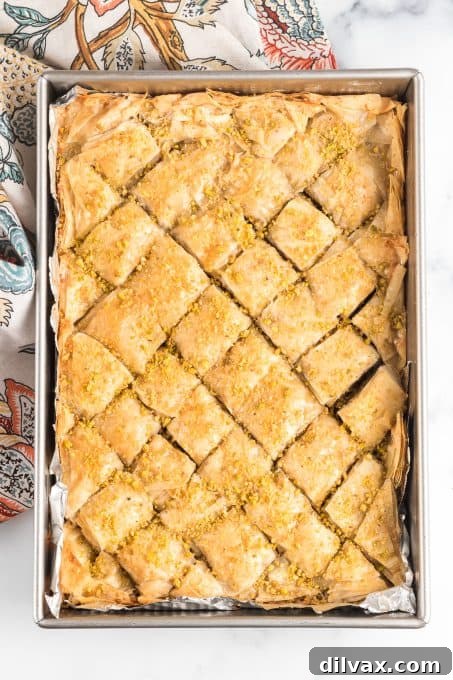
Once all layers are assembled, use a very sharp knife to carefully cut the Baklava. Start at one corner and gently make diagonal cuts all the way through the layers of dough. Then, repeat this process in the opposite direction, creating a beautiful crisscross pattern that forms classic diamond shapes. This precise cutting before baking is vital for achieving uniform pieces and allowing the syrup to penetrate deeply. Bake your Baklava in a preheated oven at 350°F (175°C) for 30-35 minutes, or until the top is a beautiful golden brown and the edges appear slightly crisp.
3. Craft the Aromatic Syrup:
While your Baklava is baking to golden perfection, prepare the citrus sugar syrup. In a medium saucepan, combine the water, sugar, honey, lemon juice, ground nutmeg, and the cinnamon stick. Bring this mixture to a rolling boil over medium heat, stirring constantly to ensure the sugar fully dissolves. Once boiling, reduce the heat to low and allow the syrup to gently simmer for about 7 minutes. You can test if the sugar has dissolved by carefully dipping a clean index finger into the cooled syrup and rubbing it against your thumb; it should feel smooth, not grainy.
Once the simmering is complete, remove the saucepan from the heat and let the sweet syrup cool completely to room temperature. Remember to remove the cinnamon stick before proceeding. This cooling step is crucial: the general rule for perfect Baklava is cooled syrup + hot Baklava = fantastic dessert, ensuring maximum absorption and flakiness. Pour the cooled syrup evenly over the freshly baked, still-warm Baklava. Let the entire dessert cool and rest for a minimum of 4 hours to allow the syrup to fully saturate the layers. For truly optimal flavor and texture, I honestly believe it’s best enjoyed the next day.
Essential Baklava Tips for Success
- Thawing Phyllo Dough: Always thaw your frozen phyllo dough in the refrigerator overnight. This slow thawing prevents the dough from sticking together or tearing easily. You’ll typically find it in your grocer’s freezer section.
- Handling Tears and Breaks: Phyllo dough is incredibly delicate and, especially if you’re new to working with it, it *will* likely break or tear. Don’t get frustrated! Just gently piece the torn sections back together as best as you can and continue layering. The beauty of Baklava is that once baked and soaked in syrup, any imperfections in the individual sheets become invisible within the glorious layers. Just like a homemade lasagna, the final taste is what truly matters, not the absolute perfection of each component.
- Preventing Dryness: To keep your phyllo dough pliable and prevent it from drying out and becoming brittle, roll it out onto a clean, flat surface, and immediately cover it with a slightly damp tea towel. Only remove the sheets you need one at a time as you butter and assemble, recovering the stack promptly. This moisture is key to workability.
- Syrup Temperature Rule: For the best results – meaning perfectly crisp, flaky layers that aren’t soggy – always ensure your syrup is completely cooled to room temperature when you pour it over the hot, freshly baked Baklava. The contrast in temperatures is essential for the syrup to be absorbed efficiently and create that signature texture.
- Even Butter Distribution: Don’t skimp on the butter! Brushing each phyllo sheet thoroughly helps create the distinct separation and flakiness that Baklava is known for. Use a good quality pastry brush for best coverage.
Frequently Asked Questions About Baklava
Can I Make Greek Baklava Ahead of Time?
Absolutely! Baklava is one of those rare desserts that actually benefits from being made in advance. It requires at least 4-8 hours for the syrup to fully permeate and soften the layers, allowing the flavors to meld beautifully. In fact, many people, myself included, find that Baklava tastes even better on the second day. This makes it an ideal dessert for entertaining, as you can prepare it well before your guests arrive, leaving you free to enjoy their company without last-minute stress. There’s no need to refrigerate it immediately; simply let it rest at room temperature to absorb the syrup.
Do I Need to Refrigerate My Baklava?
For short-term storage, Baklava keeps exceptionally well at room temperature. Stored in an airtight container, it will remain fresh and delicious for up to a week. The high sugar and honey content in the syrup acts as a natural preservative. If you wish to extend its shelf life, you can store it in the refrigerator, where it will keep for up to three weeks. Just be sure to bring it back to room temperature before serving for the best texture and flavor.
Should I Eat Baklava Hot or Cold?
Baklava is traditionally served at room temperature. When cold, the syrup can firm up slightly, making the dessert a bit tougher to cut and chew, and dulling some of its aromatic qualities. Allowing it to come to room temperature softens the syrup and phyllo layers, enhancing its delicate texture and allowing its fragrant spices and honey notes to truly shine. If you’ve stored yours in the refrigerator, simply take it out an hour or so before serving to let it reach the ideal temperature.
Can Baklava Be Frozen?
Yes, Baklava freezes beautifully, making it an excellent dessert to prepare in larger batches. To freeze, ensure the Baklava has completely cooled and absorbed all the syrup. Then, place the individual pieces or the entire tray (if wrapped well) in an airtight container. It can be stored in the freezer for up to 3 months. When you’re ready to enjoy it, thaw it overnight in the refrigerator and then bring it to room temperature before serving. Freezing can sometimes slightly alter the texture, but it will still be incredibly delicious.
Can I Change Which Nuts I Use for This Recipe?
Absolutely! The beauty of homemade Baklava is its adaptability. While this recipe uses a classic combination of pistachios and walnuts, your taste buds are the ultimate guide. Some people prefer only walnuts for a more earthy flavor, while others might favor pistachios for their distinct color and buttery texture. You can even incorporate almonds for a different dimension of flavor. Feel free to use a single type of nut or any combination you desire. The key is to use a total of 2 cups of finely chopped nuts, regardless of your chosen variety.
Explore More Greek-Inspired Delights!
If the rich flavors of Greek cuisine captivate your palate, then you’re in for a treat! Here are some other fantastic recipes that celebrate the vibrant tastes of Greece:
- Turkey Gyro Pockets with Tzatziki Sauce: These delightful pockets combine the savory flavors of a gyro, made healthier with turkey, all nestled in a convenient, bite-sized crescent roll. They are absolutely perfect for parties or a quick, flavorful meal!
- Greek Quinoa Chicken Salad: A light, refreshing, yet incredibly satisfying salad that makes an excellent choice for lunch or a lighter dinner. It’s wonderfully versatile, tasting delicious whether served warm or chilled.
- Spanakopita: Another brilliant application of delicate phyllo dough! This savory “Greek lasagna” features layers of a flavorful filling made with spinach, sautéed onion, and herbed Feta cheese. It’s an absolute must-try.
- Greek Honey Walnut Cookies: These sweet, filled cookies echo the beloved flavors of Baklava in a delightful, handheld format. They are incredibly sweet, aromatic, and truly tasty!
Craving Other Delectable Desserts? Here Are a Few More Highly Recommended Recipes:
- Doughboys: Simple yet satisfying, these fried dough treats are a comforting classic.
- 2-Ingredient Nutella Cinnamon Rolls: An incredibly easy and quick way to satisfy your sweet tooth with minimal effort.
- Caramel Apple Cheesecake Bars: A perfect autumnal dessert combining creamy cheesecake with the sweet tartness of apples and rich caramel.
- Funfetti Oreo Cheesecake Bars: A fun, colorful, and indulgent dessert, perfect for celebrations or when you need a little extra cheer.
- Viennese Crescents: Elegant and delicate, these crescent-shaped cookies are a delightful treat for any occasion.
Homemade Baklava Recipe Card
This Baklava recipe is adapted from Simply Recipes by Garret McCord of Vanilla Garlic.
Baklava
Course: Dessert
Cuisine: Turkish (Widely enjoyed across Mediterranean & Middle Eastern cultures)
Prep Time: 40 minutes
Cook Time: 35 minutes
Total Time: Approximately 5 hours 15 minutes (includes cooling time)
Servings: 24 pieces
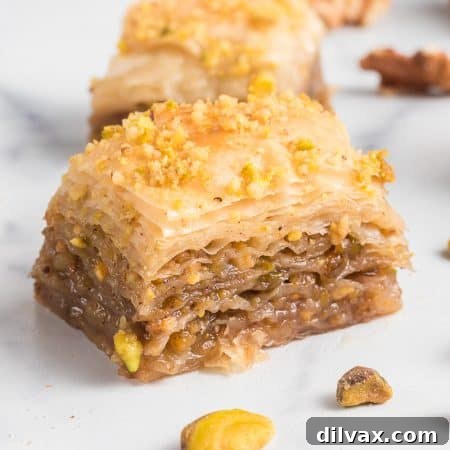
Baklava is a delightful dessert composed of rich, buttery phyllo dough layers, a sumptuous filling of chopped pistachios and walnuts, all generously coated in a sweet, fragrant honey syrup. A truly delicious treat!
Ingredients
Filling
- 1 cup finely chopped pistachios
- 1 cup finely chopped walnuts
- 1 lb phyllo dough (not puff pastry)
- ¾ cup unsalted butter, melted
- ⅓ cup sugar
- 1 teaspoon ground cinnamon
- ⅓ teaspoon ground cloves
Syrup
- 1 cup water
- 1 cup sugar
- ½ cup honey
- 2 tablespoons lemon juice
- ⅛ teaspoon ground nutmeg
- 1 cinnamon stick
- Finely ground pistachios for garnish (optional)
Instructions
- In a small saucepan, combine the syrup ingredients: water, sugar, honey, lemon juice, ground nutmeg, and cinnamon stick.
- Bring the mixture to a boil, stirring constantly until sugar dissolves. Reduce heat to low and allow the syrup to simmer for 7 minutes, stirring occasionally.
- Set the syrup aside and let it cool completely to room temperature. Remove the cinnamon stick before use.
- Preheat oven to 350°F (175°C). Prepare an 11×16-inch jelly roll pan by lining it with aluminum foil and brushing the foil with melted butter. (See notes below for using a 9×13-inch pan.)
- In a medium bowl, combine the finely chopped nuts with sugar, cinnamon, and cloves.
- Gently unroll the phyllo dough and keep it covered with a damp towel to prevent drying out.
- Place the first sheet of phyllo dough into the prepared pan. Brush it with melted butter. Repeat this 7 more times, brushing each sheet, to create an 8-layer base.
- Spoon a thin, even layer of the nut mixture over the buttered phyllo.
- Cover with two more sheets of phyllo, brushing each with butter. Continue this pattern: nut mixture, then two buttered phyllo sheets, until all nut mixture is used. Ensure the top layer is buttered phyllo.
- Using a very sharp knife, make diagonal cuts across the Baklava from one corner. Then repeat in the other direction to create diamond shapes.
- Fold the aluminum foil up along the sides and ends to encase the Baklava. This helps the syrup soak into the sides after baking.
- Bake for 30-35 minutes, or until golden brown and the edges appear slightly crisp.
- Immediately after baking, spoon the completely cooled syrup over the hot Baklava.
- Allow the Baklava to cool and rest for at least 4 hours to fully absorb the syrup. Garnish with finely ground pistachios, if desired.
Notes
This recipe can also be made in a 9×13-inch baking dish. I recommend using a deep dish, like a lasagna pan. The phyllo dough sheets might be slightly larger than the pan, so you’ll need to either trim them or gently bunch them to fit. You also might not use all of the phyllo dough by the time you reach the top of the pan in a smaller dish. My initial assembly was in a jelly roll pan, then I carefully transferred it to a 9×13-inch pan – it worked fine, but the transfer was a bit tricky! For the easiest experience, stick with either the jelly roll pan or a 9×13-inch pan from the start.
Nutrition Information (Approximate per serving)
Serving: 1 piece | Calories: 233kcal | Carbohydrates: 29g | Protein: 3g | Fat: 12g | Saturated Fat: 5g | Polyunsaturated Fat: 3g | Monounsaturated Fat: 4g | Trans Fat: 0.2g | Cholesterol: 15mg | Sodium: 93mg | Potassium: 96mg | Fiber: 1g | Sugar: 17g | Vitamin A: 200IU | Vitamin C: 1mg | Calcium: 17mg | Iron: 1mg
Did you make this delicious Baklava recipe?
Share your culinary creation with me on Instagram! And for more delightful recipes and inspiration, make sure to follow me on Pinterest.
Pin Recipe
Share Recipe on Facebook
This post was originally published on August 23, 2011. It has been significantly updated with new pictures, enhanced content, and improved formatting on February 24, 2023, to provide a richer and more comprehensive guide to making homemade Baklava.