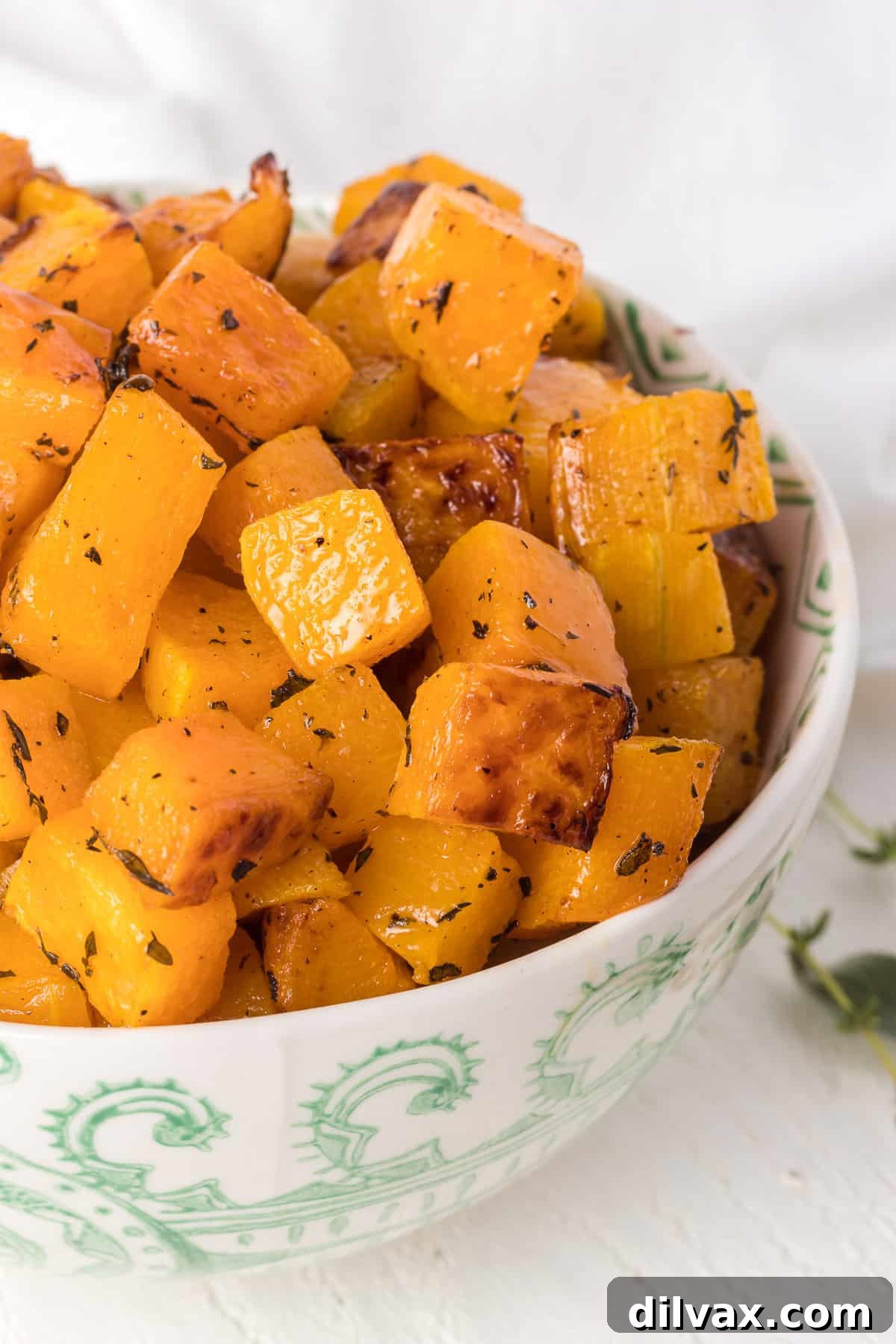
Perfectly Roasted Butternut Squash with Herbs
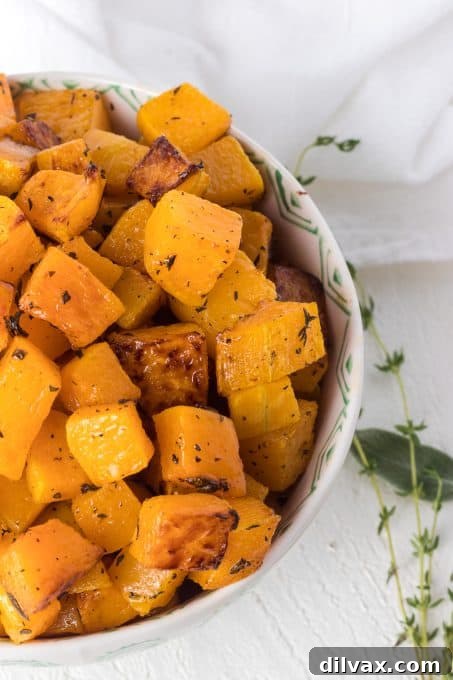
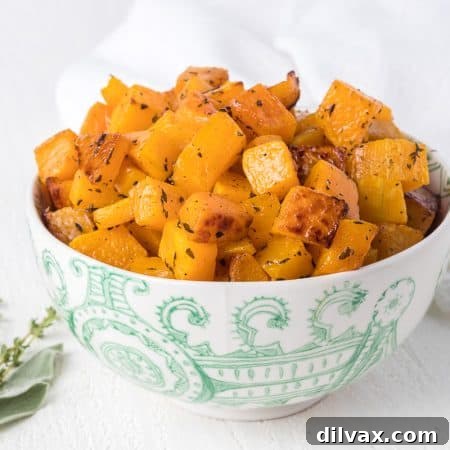
Roasted Butternut Squash is an incredibly simple yet profoundly flavorful side dish that will elevate any meal. Coated in a vibrant blend of fresh herbs like sage and thyme, each cube of butternut squash emerges from the oven perfectly tender on the inside with wonderfully crisp, caramelized edges. This recipe is your go-to for a healthy, comforting, and utterly delicious side dish, brimming with the quintessential flavors of autumn, perfect for the entire family.
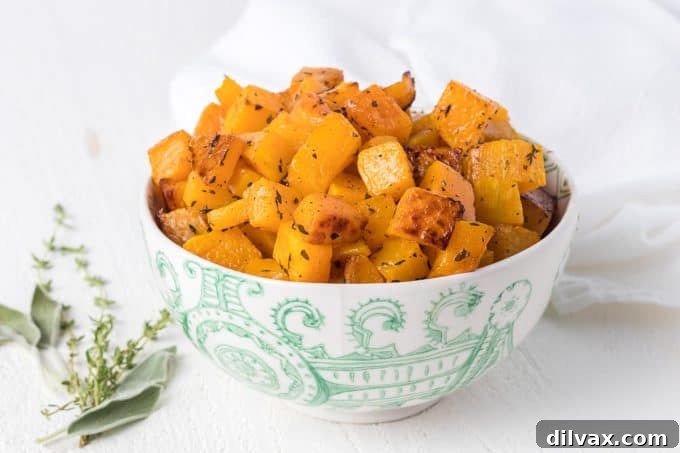
There are countless ways to enjoy butternut squash, but in my culinary opinion, the absolute best method for unlocking its full potential is through roasting. This simple technique intensifies its naturally sweet, slightly nutty flavor, creating a depth that makes it utterly delicious even on its own, straight from the oven. Beyond the enhanced taste, roasting butternut squash is remarkably quick and easy to prepare, making it an ideal choice for busy weeknights or elaborate holiday feasts. What’s not to love about a healthy, versatile, and incredibly tasty vegetable that requires minimal effort?
Butternut squash holds a special place in seasonal cooking due to its delightful sweet and earthy profile. Its mild, buttery flavor beautifully complements a wide array of seasonings, making it suitable for both sweet and savory dishes. The autumn months, specifically from September through December, mark the peak harvest season for butternut squash. This is when they are at their freshest, most flavorful, and most abundant. Now is the perfect time to head to your local market or grocery store, pick up a beautiful squash, and get ready to transform it into a culinary masterpiece with this foolproof roasting method!
SAVE THIS ROASTED BUTTERNUT SQUASH RECIPE TO YOUR FAVORITE PINTEREST BOARD!
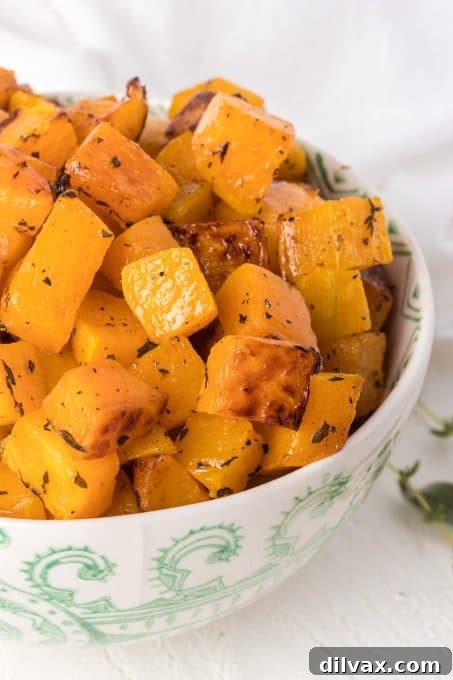
To Peel or Not To Peel Butternut Squash?
One of the fantastic attributes of butternut squash is its edible skin. This means you technically don’t have to peel it, which can save a significant amount of prep time. When roasted, the skin softens considerably, becoming tender and perfectly enjoyable, offering a slight textural contrast and a boost of fiber. However, if you prefer a silkier texture or simply don’t care for the skin, peeling is an option.
Should you decide to peel, I highly recommend using a sturdy vegetable peeler. The skin of a raw butternut squash can be quite tough, so a sharp peeler is essential for safety and efficiency. Always make sure to peel the squash *before* cooking. Trying to peel it after roasting, once it has softened, would be an unnecessarily messy and difficult task. Whether you peel or not, rest assured that your roasted butternut squash will be absolutely delicious!
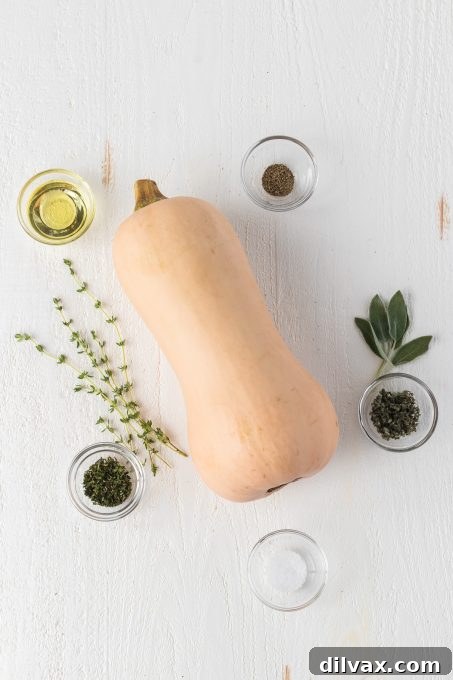
Essential Ingredients for Roast Butternut Squash
This recipe prides itself on its simplicity, requiring just a handful of basic ingredients that come together to create an extraordinary flavor profile. You likely already have most of these pantry staples on hand, making this a perfect last-minute side dish. Here’s what you’ll need to gather:
- 2 tablespoons extra virgin olive oil: The key to achieving those coveted crispy edges and a rich, golden-brown exterior. It also helps the seasonings adhere to the squash.
- 2 teaspoons freshly chopped sage: Sage lends a warm, earthy, slightly peppery aroma that is quintessential to fall flavors and pairs exceptionally well with the sweetness of butternut squash.
- 1 ½ teaspoons freshly chopped thyme: Thyme adds a delicate, subtle herbaceous note that complements the sage without overpowering the natural sweetness of the squash.
- ½ teaspoon kosher salt: Essential for enhancing all the flavors and ensuring the squash is seasoned throughout. Adjust to taste.
- ¼ teaspoon ground black pepper: Provides a gentle hint of warmth and balances the other flavors.
- 8 cups butternut squash cubes (from a 3-pound squash): The star of our dish! Aim for uniform 1-inch cubes for even roasting.
Using fresh herbs truly makes a difference in this recipe, infusing the squash with a brighter, more aromatic flavor that dried herbs can’t quite replicate. However, if fresh herbs aren’t available, you can certainly substitute with dried, adjusting the quantities as noted in the FAQs below.
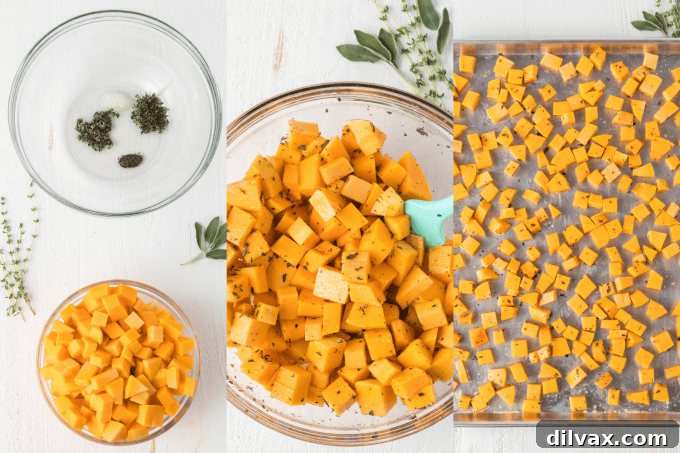
How to Roast Butternut Squash: A Step-by-Step Guide
This recipe is incredibly straightforward and takes less than an hour from start to finish, making it an ideal option for any meal. Be warned: once it’s done, you might find yourself eating it right off the pan before it even makes it to the table!
- Preheat Your Oven & Prepare Your Pan: Begin by preheating your oven to a robust 425 degrees F (220 degrees C). A high temperature is crucial for achieving that desirable caramelization and crisp exterior. As your oven heats up, prepare a large baking sheet. To prevent sticking and ensure easy cleanup, either spray the baking sheet generously with cooking spray or, for even better results, line it with a piece of parchment paper. A single large baking sheet is preferred to avoid overcrowding.
- Craft the Herb & Oil Mixture: In a spacious mixing bowl, combine the extra virgin olive oil, freshly chopped sage, freshly chopped thyme, kosher salt, and ground black pepper. Whisk or stir these ingredients together thoroughly until they are well combined. This aromatic mixture will form the flavorful coating for your squash.
- Prepare the Butternut Squash: Place your butternut squash on a sturdy cutting board. Using a sharp, heavy-duty knife, carefully trim off both ends of the squash. Then, slice the squash in half lengthwise. With a spoon (a grapefruit spoon with its serrated edges works wonderfully for this), scoop out and discard the seeds and fibrous pulp. Once cleaned, cut the squash halves into uniform 1-inch cubes. Consistency in size is important for even cooking.
- Coat the Squash: Transfer the prepared butternut squash cubes into the mixing bowl with the herb and oil mixture. Using a large spoon or your clean hands, toss the cubes thoroughly until each piece is completely and evenly coated with the fragrant seasoning. Ensure every surface is glistening with oil and herbs.
- Roast to Perfection: Pour the coated squash cubes onto your prepared baking sheet. Spread them out into a single, even layer. It’s crucial not to overcrowd the pan; if necessary, use two baking sheets to ensure the squash roasts rather than steams. Place the baking sheet(s) in the hot oven and bake for 25-35 minutes, or until the squash is fork-tender on the inside and beautifully golden brown and caramelized on the edges.
Chef’s Note: My personal preference is to roast the squash for approximately 35 minutes. This extended time allows for a deeper caramelization, which intensifies the sweetness and creates a more complex flavor. However, the exact cooking time can vary based on your oven and the size of your squash cubes. You can remove it as early as 25 minutes if you prefer it less caramelized, or continue baking until it reaches your desired level of tenderness and golden-brown perfection.
Delicious Recipe Variations to Explore
While this classic roasted butternut squash recipe is fantastic on its own, it also serves as an excellent canvas for culinary creativity. Don’t hesitate to experiment with these variations to suit your taste or impress your guests:
- Spice It Up: For those who love a little heat, a generous sprinkle of chili powder, a pinch of cayenne pepper, or even a dash of smoked paprika tossed with the squash cubes before roasting can add a wonderful kick.
- Sweet & Savory Delight: Enhance the natural sweetness of the squash by drizzling a tablespoon or two of maple syrup or honey over the cubes before they go into the oven. This creates a delightful glaze that caramelizes beautifully.
- Root Vegetable Medley: Create a vibrant and hearty roasted vegetable medley by combining your butternut squash with other root vegetables. Cubed sweet potatoes, parsnips, carrots, or even regular russet potatoes roast wonderfully alongside butternut squash for a colorful and nutritious side.
- Aromatic Additions: Consider adding other aromatics to your roasting pan. A few cloves of smashed garlic, thinly sliced red onion, or even some rosemary sprigs can infuse the squash with additional layers of flavor.
- Nutty Crunch: For added texture and a boost of healthy fats, toss in some chopped pecans, walnuts, or pumpkin seeds during the last 10-15 minutes of roasting.
- Citrus Brightness: A squeeze of fresh orange or lemon juice after roasting can brighten the flavors and add a zesty finish.
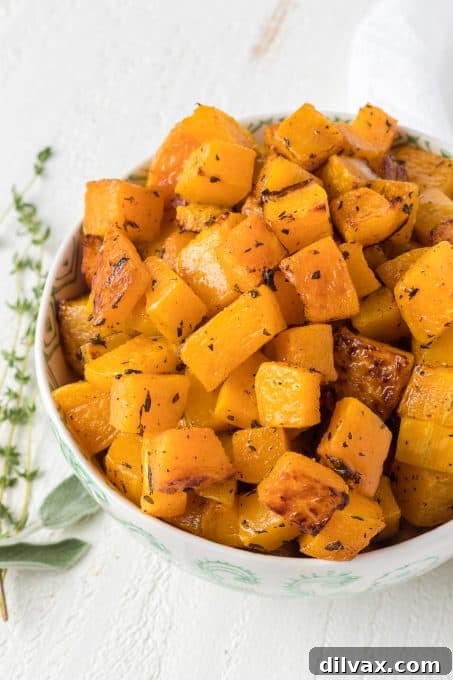
Frequently Asked Questions (FAQs) About Roasted Butternut Squash
What is Butternut Squash?
Butternut squash is a type of winter squash known for its distinctive hourglass shape, pale yellow-tan skin, and bright orange flesh. It has a sweet, nutty flavor, similar to that of a pumpkin but milder, and a creamy texture when cooked. It’s incredibly versatile and a favorite in fall and winter cooking.
Can I use dried herbs instead of fresh herbs?
Absolutely! While fresh herbs offer a brighter, more vibrant flavor, dried sage and thyme can certainly be used. Keep in mind that dried herbs are more concentrated than fresh ones. A good general rule of thumb is to use 1 teaspoon of dried herbs for every tablespoon of fresh herbs called for in a recipe. For this specific recipe, you could use about ¾ teaspoon of dried sage and ½ teaspoon of dried thyme.
How do I safely cut butternut squash?
Cutting a hard squash like butternut can be intimidating, but safety is key. First, ensure your knife is sharp. Trim a small slice off the top and bottom to create flat, stable surfaces. Stand the squash upright on one of the flat ends. Carefully cut the squash in half lengthwise. Then, use a spoon to scoop out the seeds and stringy bits. Once halved, you can either peel it with a vegetable peeler (if desired) or cut it into slices and then cubes. Always keep your fingers tucked away from the knife blade.
How do I store leftover Roasted Butternut Squash?
Once your roasted butternut squash has cooled completely to room temperature, transfer it to an airtight container or a resealable plastic bag. Stored properly in the refrigerator, it will maintain its quality and flavor for 3-5 days. It’s excellent for meal prep!
Does Roasted Butternut Squash freeze well?
Yes, roasted butternut squash freezes beautifully! To freeze, ensure the squash is completely cool. Spread the roasted cubes in a single layer on a baking sheet and flash freeze for about 1-2 hours until solid. This prevents them from clumping together. Then, transfer the frozen cubes to a freezer bag or another freezer-safe, airtight container. It can be stored in the freezer for up to 10-12 months.
To thaw, simply place the frozen squash in the refrigerator overnight. You can then reheat it using various methods: gently warm it on the stovetop, crisp it up in an air fryer, or microwave it until heated through.
Can you roast the seeds from butternut squash?
Absolutely! Much like pumpkin seeds, the seeds from any winter squash, including butternut, are not only edible but also incredibly nutritious and delicious when roasted. After scooping them out, rinse them well to remove any pulp, then pat them thoroughly dry. Toss them with a little olive oil and a pinch of salt (or your favorite seasonings). Roast them in a 325-degree F (160 degrees C) oven for about 10-15 minutes, or until golden brown and crispy. Let them cool before enjoying them as a healthy snack or a crunchy salad topping.
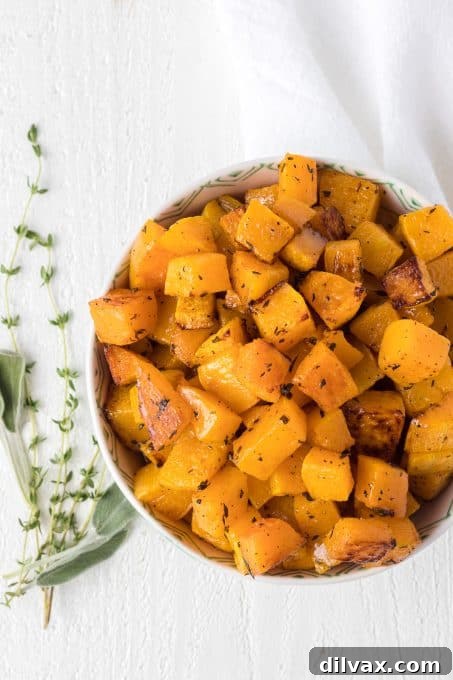
What Can I Make with Roasted Butternut Squash?
If you find yourself with an abundance of roasted butternut squash or simply want to explore its incredible versatility beyond a simple side dish, you’re in luck! There are tons of fantastic recipes that highlight its sweet and creamy nature. Here are some inspiring ideas to get you started:
- Roasted Butternut Squash Risotto: This classic Italian comfort food takes on an even richer, more luxurious dimension with the addition of silky roasted butternut squash, often pureed with cream and white wine. It’s an indulgent, deeply satisfying dish perfect for a cozy evening.
- Roasted Butternut Squash and Chicken Ravioli: Elevate your pasta game with homemade ravioli. Imagine tender roasted butternut squash and savory shredded chicken nestled inside delicate wonton wrappers, all generously coated in a luscious garlic Alfredo sauce. A truly gourmet experience at home.
- Butternut Squash and Chicken Pinwheels: These charming little pastries offer an elegant touch to any meal. Typically served over a bed of tender sautéed spinach and smothered in a rich white wine mushroom sauce, they strike the perfect balance between simple preparation and sophisticated presentation.
- Butternut Squash Spinach Multi-Grain Medley: For a vibrant and wholesome side, combine roasted butternut squash with fresh sautéed spinach and onion, then toss with glistening pomegranate arils and Minute® Multi-Grain Medley Rice. This colorful fall side dish is an absolute showstopper for any holiday table.
- Twice Baked Butternut Squash: Move over, potatoes! This ingenious dish takes baked butternut squash to the next level. Stuffed with savory prosciutto, tangy goat cheese, and sweet shallots, then topped with melty Gruyere cheese, it’s a side dish so flavorful and satisfying, you’ll want to make it again and again.
Beyond these specific recipes, roasted butternut squash is incredibly adaptable. I love transforming it into creamy butternut squash soup, blending it with chickpeas to make a unique hummus, or adding it to salads for extra sweetness and texture. It’s also fantastic in stir-fries, tacos, savory tarts, casseroles, and essentially any dish where you’d welcome a touch of autumnal sweetness and a beautiful, vibrant color!
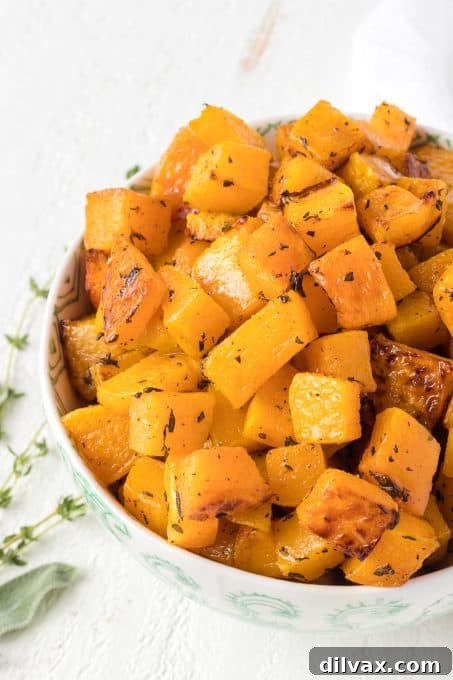
Butternut Squash: A Nutritional Powerhouse
Beyond its delicious taste and versatility, butternut squash is a nutritional superstar, making it an excellent addition to a healthy diet. It’s low in calories and fat, yet packed with essential vitamins, minerals, and fiber. Here’s a quick look at some of its remarkable health benefits:
- Rich in Vitamin A: Butternut squash is an excellent source of beta-carotene, which the body converts into Vitamin A. This vitamin is crucial for maintaining healthy vision, boosting immune function, and promoting skin health.
- High in Vitamin C: This powerful antioxidant helps protect your cells from damage, supports a robust immune system, and is essential for collagen production, contributing to healthy skin and tissues.
- Good Source of Fiber: The dietary fiber in butternut squash aids in digestive health, helps regulate blood sugar levels, and can contribute to a feeling of fullness, which is beneficial for weight management.
- Abundant in Potassium: This vital mineral is important for maintaining healthy blood pressure, fluid balance, and proper nerve and muscle function.
- Antioxidant Properties: In addition to Vitamins A and C, butternut squash contains other antioxidants that help combat oxidative stress and inflammation in the body.
Incorporating roasted butternut squash into your meals is an easy and delicious way to boost your nutrient intake and enjoy the health benefits of this incredible vegetable.
Looking for More Easy Side Dishes?
Over the years, I’ve curated a wonderful collection of quick and easy side dish recipes on the blog, designed to complement any main course. You can explore them all right here. If you’re in need of inspiration for a speedy and flavorful accompaniment, these are a few of my top recommendations:
- Crispy Air Fryer Baby Potatoes: Achieve perfectly crispy potatoes with minimal oil and effort.
- Roasted Parmesan Broccoli: A simple yet addictive way to enjoy your greens, with a savory, cheesy crust.
- Skillet Mexican Street Corn: A vibrant and zesty side that brings the flavors of Mexico to your table.
- Maple Bacon Brussels Sprouts: The irresistible combination of sweet maple and smoky bacon transforms humble Brussels sprouts.
- Brown Sugar Glazed Carrots: Sweet, tender carrots with a beautiful glaze – a classic crowd-pleaser.
Connect With Me!
FACEBOOK ~
PINTEREST
INSTAGRAM ~
TWITTER
YOUTUBE
Keep an eye out for more of my easy recipes each week!
Lynne Feifer
Roasted Butternut Squash
Pin Recipe
Ingredients
- 2 tablespoons olive oil
- 2 teaspoons freshly chopped sage
- 1 ½ teaspoons freshly chopped thyme
- ½ teaspoons kosher salt
- ¼ teaspoon pepper
- 8 cups butternut squash cubes (I used a 3 lb. squash)
Instructions
-
Preheat oven to 425°F, and prepare a large baking sheet by spraying it with cooking spray or lining it with a piece of parchment.
-
In a large mixing bowl, combine the olive oil, sage, thyme, salt and pepper. Mix well.
-
Trim the ends off the butternut squash and slice in half. Remove the seeds, and cut into 1-inch cubes. Place into mixing bowl and toss to completely coat.
-
Pour onto the prepared baking sheet and spread so that it is an even single layer. Bake for 25-35 minutes or until squash is cooked to desired doneness.
Notes
Nutrition
Calories: 190 kcal |
Carbohydrates: 33 g |
Protein: 3 g |
Fat: 7 g |
Saturated Fat: 1 g |
Polyunsaturated Fat: 1 g |
Monounsaturated Fat: 5 g |
Sodium: 302 mg |
Potassium: 996 mg |
Fiber: 6 g |
Sugar: 6 g |
Vitamin A: 29800 IU |
Vitamin C: 60 mg |
Calcium: 145 mg |
Iron: 2 mg
Did you make this recipe?
Share it with me on Instagram and make sure to follow me on Pinterest for more recipes.
Pin Recipe
Share Recipe