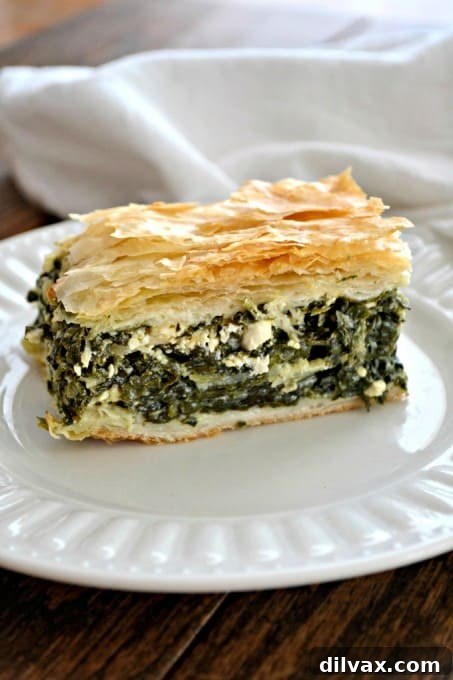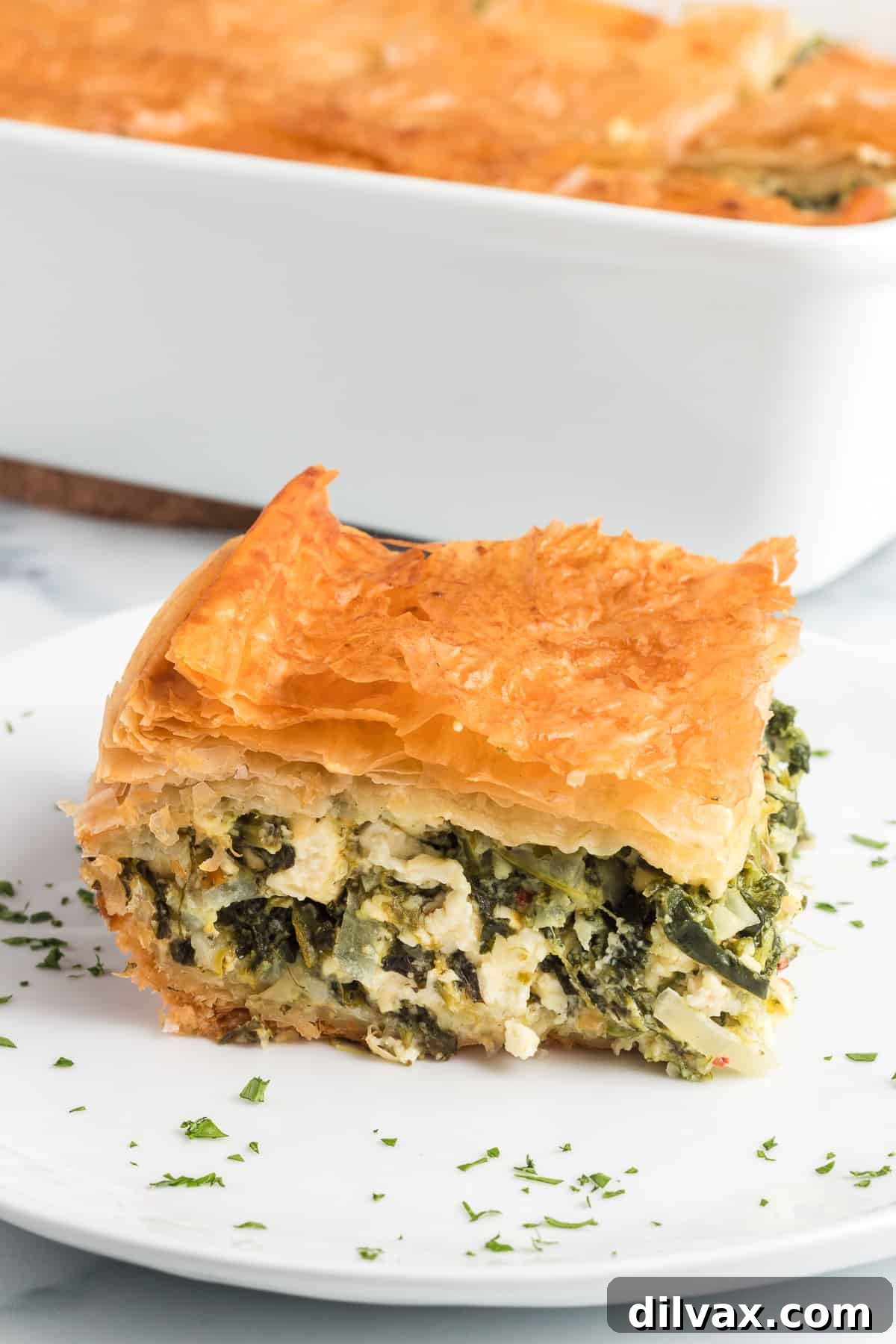
Spanakopita – a classic Greek spinach pie featuring a rich, savory filling of fresh spinach, fragrant sautéed onions, and crumbled herbed Feta cheese, all exquisitely layered between countless sheets of golden, flaky phyllo dough. This iconic dish offers an easy yet impressive Greek dinner that promises to delight everyone at your table.
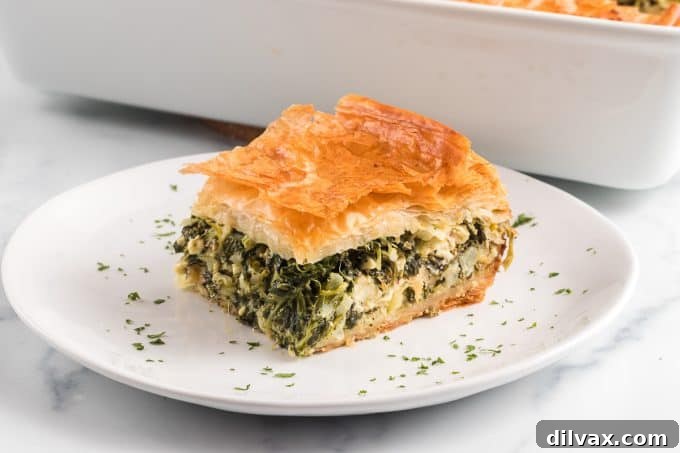
Authentic Spanakopita: A Timeless Greek Spinach Pie Recipe from the Heart
Life often surprises us with unexpected gifts, and sometimes, those gifts arrive in the form of cherished friendships and the delicious recipes they bring along. When my family and I resided in Rhode Island, we were incredibly fortunate to forge an extraordinary bond with a family who lived directly across the street. It’s a rare and beautiful thing when every single member of one family connects deeply with every member of another. Yet, this was precisely the case with my family and Mary’s. Our connection wasn’t just strong; it was instantaneous, profound, and quickly blossomed into something akin to kinship. We became family, sharing in life’s joys and challenges, creating memories that would last a lifetime and be recounted with fondness for years to come.
I distinctly recall the day Mary first arrived in our lives, a moment that feels as fresh today as it did years ago. With my three-year-old happily playing nearby and a one-year-old nestled securely on my hip, I answered the door to find a radiant woman standing on our front steps. She was accompanied by her own beautiful three-year-old boy, radiating a warmth that instantly put me at ease. She introduced herself and her son, explaining that they had just purchased the house across from ours. They hadn’t yet moved in and were living about 40 minutes away, making a preliminary visit to their new neighborhood and, serendipitously, to us.
Feeling an immediate sense of kinship, I invited her in. We conversed at length, discovering a natural rapport and an easy flow to our conversation, as if we’d known each other for ages. To our pleasant surprise, our children, despite their young age, played together beautifully, a wonderful sign of things to come. Mary mentioned she wasn’t feeling well, having recently discovered she was pregnant, and expressed a desire to lie down for a short while before making the long drive back home. Without a moment’s hesitation or a second thought, I suggested I take all three children – hers and mine – to the playground just down the street, offering her a much-needed moment of peace and quiet in our home. It was an act of spontaneous trust, a reflection of the profound connection that had already begun to form.
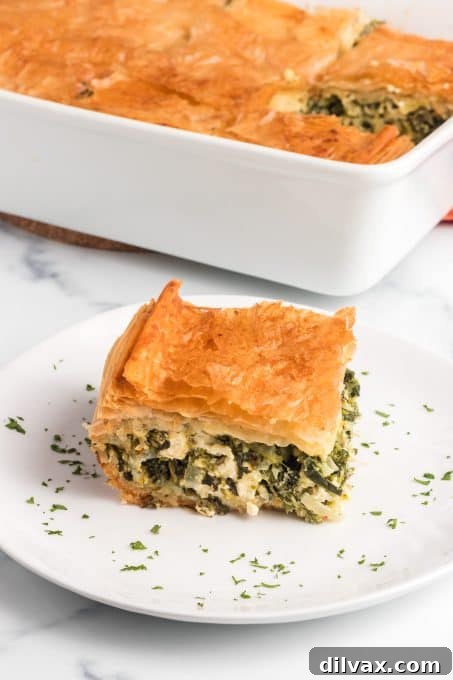
Have you ever experienced that undeniable “gut feeling” about someone, a sense that you’ve known them forever even upon your first meeting? That’s precisely how it felt with Mary. There was an instant, comfortable connection between our families, a rare and precious bond. I found myself completely at ease, allowing a relative stranger to rest in my home without me being present. Equally remarkable, she entrusted her son to me, a person she had just met, for a trip to the park! While it might seem unconventional to some, neither of us harbored any concerns. Some connections in life are simply destined, born of an intrinsic understanding that transcends time, and this was undeniably one of them. Our initial encounter forever brings to mind a powerful Bible verse, a beautiful sentiment that perfectly encapsulates the moment:
“Do not forget to entertain strangers, for by so doing, some people have entertained angels without knowing it.”
Hebrews 13:2 (NIV 1984 ed.)
Indeed, Mary was, and continues to be, an angel in our lives. Her family entered ours at the most serendipitous moment, filling our days with warmth, laughter, and an unwavering sense of support. Over the years, we shared countless tears during challenging times, an endless amount of laughter that echoed through our homes during joyous occasions, and innumerable late-night hours playing cards, sharing stories, and simply enjoying each other’s company after the children were finally tucked into bed. These precious memories are etched into our hearts, forming a rich tapestry of shared experiences, and we will cherish them for the rest of our lives.
As life naturally unfolded, both our families eventually moved from that beloved old neighborhood, each embarking on new chapters. Our children grew up, started their own families, and ventured out on their independent journeys into the world. The days of seeing each other daily, as we did when our kids were small and our lives were intricately woven together, naturally faded as geographical distances grew. Yet, one comforting truth remains constant, a testament to the enduring strength of our friendship: whenever we reconnect, whether through a simple phone call, a heartfelt message, or a rare get-together, it feels as if no time has passed at all. We seamlessly pick up exactly where we left off, a genuine bond unbroken by distance or time. This unwavering connection is a true blessing, and a reminder of the power of genuine human connection.
Mary was an exceptional cook, a gifted culinary artist whose kitchen always smelled of wonderful things. Her Spanakopita was a staple, a signature dish in her repertoire that she prepared often, especially for family gatherings and potlucks. From the very first bite, my family fell completely in love with it – the crispy phyllo, the savory spinach, the tangy feta – it was perfection. It’s more than just a recipe; it’s a dish that embodies comfort, tradition, and the warmth of shared meals and enduring friendship. This recipe, passed down through her hands, is a testament to the love and connection we share. I am confident that your family and friends will adore it just as much as mine does. To my dear “sister,” Mary, thank you not only for introducing this incredible Spanakopita into our lives, but more importantly, for being the remarkable, kind, and generous person you are. I am truly blessed to have you in my life and will forever cherish our beautiful, unbreakable relationship.
SAVE THIS AUTHENTIC GREEK SPINACH PIE RECIPE TO YOUR FAVORITE PINTEREST BOARD!
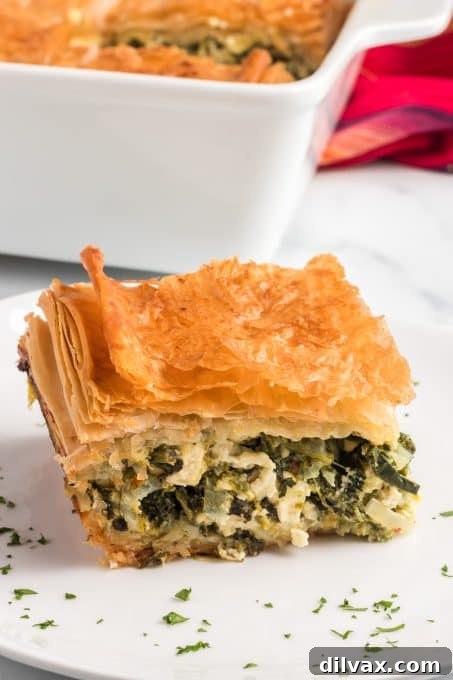
What is Spanakopita? Unveiling the History and Cultural Significance of Greek Spinach Pie
Spanakopita, affectionately known as Greek spinach pie, is far more than just a dish; it’s a culinary cornerstone deeply embedded in Greek culture and gastronomic tradition. This savory pie has graced Greek tables for centuries, a testament to its enduring popularity and deliciousness. While its exact origins are shrouded in the mists of time, historical records and culinary historians often trace many popular spanakopita recipes back to the northwest region of Greece, particularly areas known for their rich agricultural lands and strong culinary heritage where resourceful cooks utilized abundant local ingredients. It is also believed to be closely related to ispanakli, a similar Turkish dish, reflecting the rich exchange of culinary traditions throughout the Mediterranean and Ottoman empires, where savory pastries filled with greens and cheese were common.
Historically, various forms of savory pies, known broadly as “pites” (πίτες), have been a staple in Greek cuisine, varying by region and available ingredients. Spanakopita, with its signature combination of nutrient-rich spinach, tangy feta cheese, and fragrant herbs like dill and parsley, all encased in incredibly delicate phyllo dough, represents a harmonious blend of flavors and textures. It’s a dish that symbolizes hospitality, nourishment, and comfort, deeply ingrained in the fabric of Greek family life. Often prepared for festive family gatherings, religious celebrations, and holidays like Lent (when a dairy-free version, called nistisimi spanakopita, is enjoyed), it holds a special place in the hearts of many. Today, Spanakopita’s appeal extends far beyond the borders of Greece, making it a beloved dish found in Greek restaurants, bakeries, and homes worldwide. Its versatility, satisfying taste, and relative ease of preparation have secured its place as a global favorite, bringing a taste of Greece to kitchens everywhere.
Serving Spanakopita: The Art of Enjoying Your Greek Spinach Pie
One of the many delightful aspects of Spanakopita is its incredible versatility when it comes to serving temperature, making it suitable for almost any occasion. Truly, there are no strict rules – this delicious Greek spinach pie is fantastic however you choose to enjoy it! You can serve it piping hot, fresh out of the oven, allowing the melted cheese and fragrant herbs to release their intoxicating aromas. This is often the preferred method for a cozy family main course, where the crispy, golden phyllo and warm, creamy filling create a truly comforting and satisfying experience.
Alternatively, Spanakopita is equally delightful, if not more convenient, served at room temperature. This makes it an ideal dish for picnics, elegant cocktail parties as an appetizer, or as a hearty addition to a potluck spread, as it holds up beautifully and maintains its complex flavor profile without needing to be kept warm. Many Greeks enjoy it this way, packed in lunchboxes for work or school, or as a quick, wholesome snack throughout the day. Leftovers, too, are a treat directly from the refrigerator! While the phyllo might lose some of its initial oven-fresh crispness when cold, the flavors of the spinach and feta meld and deepen even further, offering a rich and satisfying bite. For the absolute best reheating experience, especially if you want to restore some of that characteristic crispy texture, a few minutes in a preheated oven (around 300-350°F or 150-175°C) is highly recommended over a microwave, which, while convenient, tends to make the delicate phyllo dough soft and soggy.
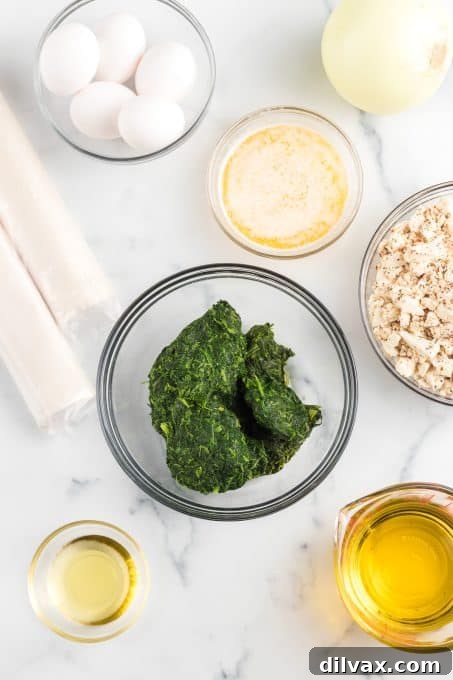
Essential Ingredients for Your Easy and Authentic Spanakopita Recipe
Crafting this easy and authentic Spanakopita recipe requires a few key components, many of which are readily available in most well-stocked grocery stores. To save yourself a considerable amount of time and effort, we highly recommend purchasing pre-made phyllo pastry dough. This delicate dough can be tricky and time-consuming to make from scratch, so store-bought is an excellent convenience that doesn’t compromise on flavor or authenticity. Beyond the phyllo, here’s a detailed look at what you’ll need to create this culinary masterpiece:
- Phyllo Dough: You’ll need one standard package, typically found in the frozen section of your supermarket. Ensure it’s fully thawed in the refrigerator for at least 8-10 hours, preferably overnight, before you plan to use it.
- Frozen Spinach: Two 16-ounce packages (totaling 32 ounces or about 900 grams). The quality of your spinach is crucial, and frozen is often preferred for its convenience, minimal shrinkage, and consistent texture compared to fresh. Remember, the most critical step is to thaw it completely and then thoroughly drain all excess moisture!
- Red Onion: One very large red onion, meticulously minced. Red onions offer a slightly sweeter, milder flavor when sautéed, complementing the earthy spinach and salty feta beautifully. Their vibrant color also adds a subtle visual appeal to the filling.
- Feta Cheese: Three 6-ounce packages of tomato and basil spiced feta cheese. This specific blend adds an incredible depth of savory, herbaceous flavor that elevates the pie. If you can’t find this exact variety, a Mediterranean blend works wonderfully, or you can use plain crumbled feta and enhance it with about a teaspoon of dried oregano, a pinch of dried basil, and a dash of black pepper.
- Olive Oil: You’ll need a total of 1 cup plus an additional 2 tablespoons. High-quality extra virgin olive oil is a hallmark of Greek cuisine and is absolutely essential for both sautéing your onions and enriching the spinach filling, contributing to its authentic flavor and moistness.
- Eggs: 5 large eggs. Eggs serve as a vital binder, holding the savory spinach and feta filling together perfectly as it bakes, ensuring a cohesive and satisfying slice.
- Unsalted Butter: 1 stick (equivalent to 8 tablespoons), which should be cold initially, then melted. Butter is critical for brushing between the delicate phyllo layers, creating that characteristic golden crispness, rich aroma, and incomparable flavor. Using unsalted butter allows you precise control over the overall saltiness of your dish.
- Optional Fresh Herbs: For an even more authentic Greek flavor profile and an extra layer of freshness, consider adding a quarter cup of finely chopped fresh dill or parsley to your spinach mixture. These herbs elevate the aroma and taste, adding a bright, herbaceous note.
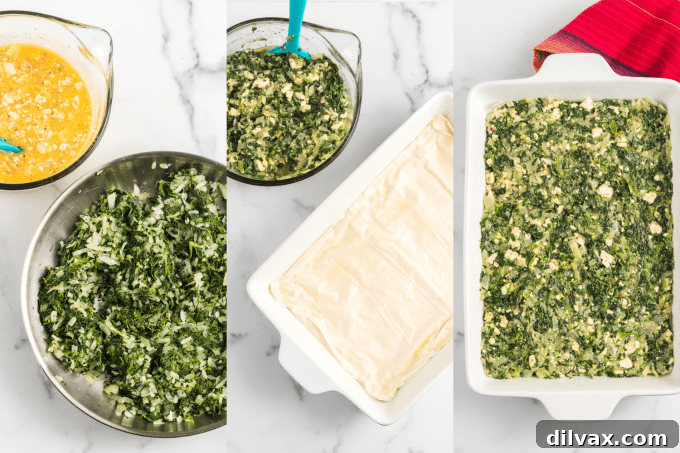
Crafting Your Own Authentic Spanakopita: A Detailed Step-by-Step Guide
Making homemade Spanakopita might initially seem daunting due to the delicate nature of phyllo dough, but with a few careful steps and attention to detail, you’ll achieve a spectacular, truly authentic result. Follow this detailed guide to create a Greek spinach pie that tastes just like it came from a traditional Greek kitchen, complete with a golden, flaky crust and a rich, savory filling.
Preparation is Key: Thawing and Thorough Draining
Before you even begin the cooking process, ensure your phyllo pastry dough and frozen spinach are completely thawed. This usually requires placing them in the refrigerator overnight to thaw gradually. Once thawed, the most crucial step for a non-soggy, perfectly textured Spanakopita is removing *all* excess moisture from your spinach. You can achieve this by placing the thawed spinach into a clean, damp kitchen towel and squeezing out as much liquid as humanly possible, twisting and pressing firmly. Alternatively, a potato ricer works wonders for this task, extracting moisture efficiently. Do not under any circumstances skip or rush this step – excess water is the primary enemy of crispy phyllo and will lead to a soggy pie! While you’re working on the spinach, preheat your oven to a steady 350 degrees F (175 degrees C).
Creating the Flavorful Spinach Filling
- Sauté the Onion: Heat a large pot or a deep skillet on your stovetop over medium-high heat. Add 2 tablespoons of high-quality olive oil. Once the oil is shimmering, add your finely minced red onion and sauté, stirring occasionally, until it becomes soft, translucent, and wonderfully fragrant, typically about 5-7 minutes. Avoid browning the onion too much; we want it soft and sweet.
- Combine with Spinach: Add the thoroughly drained, squeezed-dry spinach to the pot with the sautéed onions. Mix well to combine, allowing any residual moisture to evaporate slightly for another minute or two. Remove the mixture from the heat and set it aside in a bowl to cool completely. It’s absolutely essential that the spinach mixture is cool before you proceed to the next step and combine it with the eggs, as warm spinach can begin to cook the eggs prematurely.
- Prepare the Egg and Feta Mixture: In a separate large mixing bowl, crack and beat the 5 large eggs until they are well combined and slightly frothy. Pour in the remaining 1 cup of olive oil and crumble in the three packages of spiced feta cheese. Mix gently but thoroughly to combine all ingredients, ensuring the feta is evenly distributed.
- Final Filling Assembly: Once the cooked spinach and onion mixture has cooled down to room temperature, add it to the large bowl with the egg and feta mixture. Stir everything together until all ingredients are evenly distributed, forming a cohesive and well-seasoned filling. This is also the ideal time to incorporate any optional fresh dill or parsley you might be using, gently folding them into the mixture.
Assembling Your Spanakopita Layers: The Delicate Art of Phyllo
- Prepare Baking Dish: Using a pastry brush, generously spread a small amount of melted unsalted butter across the bottom and up the inner sides of a standard 9×13-inch baking dish. This crucial step prevents sticking and contributes significantly to the irresistible golden, crispy crust of your pie.
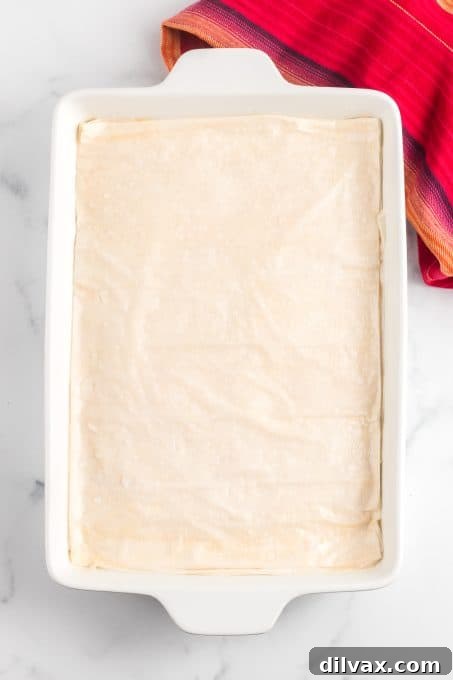
- Layer the First Half of Phyllo: Carefully unroll your thawed phyllo dough. Remember that phyllo dries out remarkably quickly, so it is imperative to keep any unused sheets continuously covered with a slightly damp tea towel or plastic wrap while you are actively assembling your Spanakopita. This moisture barrier will prevent the delicate dough from becoming brittle and cracking. Place three sheets of phyllo into the bottom of the baking dish, allowing any overhang to drape gracefully over the edges of the dish. Lightly but thoroughly brush the top of these three phyllo sheets with melted unsalted butter, ensuring even coverage. Repeat this layering process, laying down sheets three at a time and brushing each set with melted butter, until approximately half of your phyllo dough package has been used for the bottom layers. Be gentle, as phyllo is notoriously fragile! If a sheet tears, do not fret or stress; simply patch it together as best as you can – it will be completely hidden by other layers and will bake up perfectly, leaving no visible imperfections in the final product.
- Add the Spinach Filling: Evenly spread the entire spanakopita filling mixture over the meticulously layered phyllo dough in the baking dish. Gently smooth the top of the filling with the back of a spoon or spatula to create an even layer from edge to edge.
- Layer the Top Half of Phyllo: Now, carefully place three more sheets of phyllo dough over the spinach mixture, aligning them as before. Brush the top surface of these three sheets with melted butter. Continue this layering and buttering process, again using three sheets at a time, until all the remaining phyllo dough from the package is used for the top layers, creating a substantial and flaky crust.
- Final Touches Before Baking: Once all the phyllo is layered, brush the very top layer generously with melted butter, ensuring it is well coated for maximum crispness and golden color. To further ensure an extra-crispy texture and a beautifully even golden-brown finish, very lightly sprinkle a small amount of cold water evenly over the entire top surface of the pie. Finally, carefully tuck in any overhanging edges of phyllo dough all around the perimeter of the dish, creating neat, defined borders for your pie and preventing them from burning.
Baking to Golden Perfection and Serving Your Masterpiece
- Bake: Carefully place the prepared baking dish into your preheated 350 degrees F (175 degrees C) oven. Bake for approximately one hour, or until the top layer of phyllo dough achieves a beautiful, deep golden-brown color and the filling is visibly set, firm, and heated throughout. If you notice the top browning too quickly before the center is cooked, you can loosely tent the pie with aluminum foil to prevent over-browning.
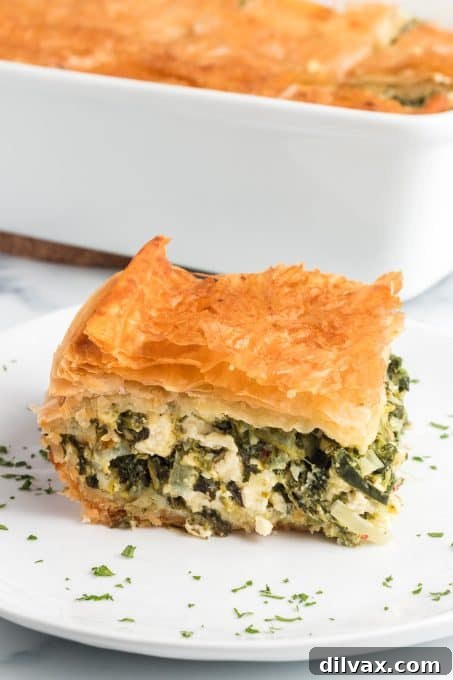
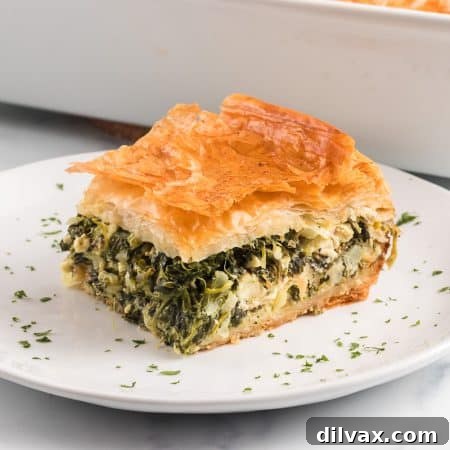
- Rest and Serve: Once baked to perfection, remove the Spanakopita from the oven and allow it to rest for at least 10-15 minutes on a wire rack before cutting. This crucial resting period allows the filling to set further, making for cleaner, more intact slices. Use a very sharp knife to cut the spanakopita into individual squares or traditional triangles to serve. Enjoy this warm, savory, and incredibly satisfying Greek pie as a main course, appetizer, or a delicious snack!
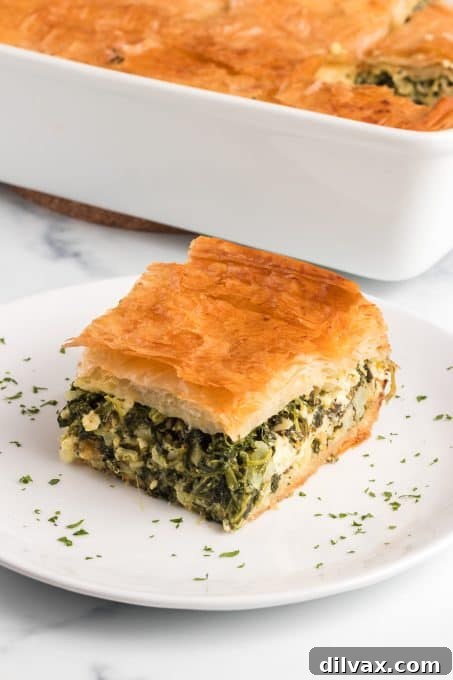
PRO TIPS FOR SPANAKOPITA SUCCESS
- Handle Phyllo with Utmost Care: Phyllo dough is notoriously delicate and can dry out and become brittle very quickly when exposed to air. The absolute key to working with it successfully is to work efficiently but gently, and always keep any unused sheets covered with a slightly damp (not wet!) tea towel or plastic wrap while you are actively assembling your Spanakopita. This constant moisture barrier will prevent the dough from becoming brittle, cracking, and becoming unworkable.
- Don’t Fear the Tears: It’s completely normal for phyllo sheets to tear or break apart during handling – even seasoned chefs encounter this! If pieces rip, do not get discouraged. Simply place them together as best you can on the baking dish, overlapping slightly if needed. Think of it much like making a lasagna; it might not look perfectly uniform and pristine during the assembly process, but once baked, all the layers will meld beautifully together, and no one will ever know about those minor imperfections. The end result will still be utterly delicious and visually appealing.
- Generous, Even Buttering: Don’t be shy with the melted butter between layers; this is precisely what creates that signature flaky, golden crust and contributes immensely to the rich flavor. However, ensure you’re applying a light, even brush, avoiding excessive soaking of the dough, as this can make it greasy rather than perfectly crisp. A fine balance is key.
- Achieve Maximum Dryness for Spinach: As reiterated, the most critical factor for a non-soggy Spanakopita is removing all excess liquid from your spinach. After thawing and cooking (if using fresh), aggressively squeeze the spinach dry. This step cannot be emphasized enough, as any remaining moisture will compromise the phyllo’s crispness.
- Resting is Essential: Allow the Spanakopita to rest for at least 10-15 minutes after it comes out of the oven. This helps the filling to set properly, resulting in cleaner, more structured slices and allowing the flavors to fully meld.
Fresh vs. Frozen Spinach for Spanakopita: A Guide to Preparation
While this recipe conveniently calls for frozen spinach, which is often preferred for its ease of use and consistent moisture content, you absolutely can use fresh spinach to make your Spanakopita! However, there are a few important considerations and additional steps you’ll need to follow meticulously to ensure the best possible results. The primary difference between fresh and frozen lies in their initial volume and water content; fresh spinach contains significantly more moisture.
If opting for fresh spinach, it must first be cooked down, or wilted, to reduce its massive raw volume. Raw spinach contains a surprising amount of water and will reduce drastically in quantity when exposed to heat. As a general rule of thumb, approximately 4 to 4 ½ pounds of fresh spinach will yield the same usable amount as 32 ounces (two 16-ounce packages) of frozen spinach once it’s cooked, wilted, and all excess liquid has been thoroughly removed. To prepare fresh spinach for your Spanakopita, follow these essential steps:
- Wash Thoroughly: Begin by washing the fresh spinach leaves thoroughly under cold running water to remove any dirt or grit.
- Wilt the Spinach: Place the washed spinach in a very large pot or deep skillet with just the water clinging to its leaves after washing. Cover the pot and cook over medium heat, stirring occasionally, until the spinach wilts down completely and its volume significantly reduces. This usually takes only a few minutes, so keep a close eye on it.
- Cool and Drain: Once wilted, immediately transfer the cooked spinach to a colander and allow it to cool slightly, making it safe to handle.
- Remove Excess Liquid: This is the most crucial step, even more so with fresh spinach, as it tends to retain more water than frozen. Using a clean kitchen towel, a cheesecloth, or a potato ricer, aggressively squeeze out as much liquid as physically possible from the cooked and cooled spinach. Continue squeezing until the spinach forms a relatively dry, compact ball.
Failing to remove adequate moisture from either fresh or frozen spinach will inevitably lead to a soggy pie, compromising the delicate, crispy phyllo layers and negatively affecting the overall texture and delicious taste of your Spanakopita. Whether you choose fresh or frozen, meticulous draining is paramount to Spanakopita success!
Phyllo vs. Puff Pastry: Why Phyllo is Non-Negotiable for Authentic Spanakopita
It’s a very common question, particularly for those new to Greek baking, but for an authentic Spanakopita, you absolutely need to use phyllo dough. Puff pastry dough and phyllo dough (also sometimes referred to as filo pastry dough) are fundamentally different in composition, preparation, and the texture they yield, and therefore, they are not interchangeable in this classic Greek recipe. While both types of dough are renowned for producing flaky results, their distinct characteristics are crucial to the integrity and traditional essence of Spanakopita.
- Puff Pastry: This dough is a laminated pastry, meaning that generous amounts of butter are repeatedly folded into the dough, creating numerous distinct layers. During baking, the water content in the butter rapidly creates steam, which dramatically puffs up the dough into hundreds of airy, relatively thick, and rich layers. Puff pastry has a distinctive buttery, somewhat bread-like, and tender texture. It is commonly used for dishes like croissants, fruit turnovers, vol-au-vents, and certain types of pie crusts.
- Phyllo Dough: In stark contrast, phyllo dough is an incredibly thin, almost paper-like, unleavened dough made primarily from simple ingredients: flour, water, and sometimes a tiny bit of oil or vinegar. Its signature flakiness and crispness come from layering many individual, transparent sheets, each meticulously brushed with melted butter or olive oil. When baked, these numerous ultra-thin layers become exquisitely crisp, shatteringly delicate, and almost ethereal, creating a light, airy, and distinctively crunchy texture that is the hallmark of traditional Spanakopita. The unique crunch and delicate mouthfeel of properly baked phyllo simply cannot be replicated by the heavier, richer puff pastry.
Using puff pastry instead of phyllo in Spanakopita would result in a pie that tastes entirely different – more akin to a heavy, buttery quiche crust rather than the light, crisp, and traditionally Greek Spanakopita. For an authentic and truly satisfying experience, always stick with phyllo dough!
Troubleshooting: Why Your Spanakopita Might Be Soggy (and How to Achieve Perfect Crispness!)
A perfectly baked Spanakopita is a culinary delight, boasting a beautiful golden-brown, irresistibly crisp phyllo crust and a flavorful, moist, yet firm filling. However, one of the most common issues home bakers encounter, and a source of much frustration, is a soggy pie. The delicate nature of phyllo dough means it can quickly absorb moisture, leading to a less-than-ideal, unappetizing texture. Let’s thoroughly explore the primary reasons behind a soggy Spanakopita and, more importantly, how to prevent it and ensure a wonderfully crispy pie every single time:
- Excess Moisture in Spinach: The Undisputed Primary Culprit! This is, without a doubt, the most frequent cause of soggy Spanakopita. Spinach, whether fresh or frozen, contains a surprising amount of water. If you don’t thoroughly squeeze out every last drop of moisture from your cooked and cooled spinach mixture, that excess liquid will inevitably seep into the delicate phyllo layers during baking. This process turns them soft, gummy, and mushy instead of gloriously crisp and flaky. Always dedicate ample time and effort to draining your spinach meticulously, using a clean kitchen towel or a potato ricer until it is as dry and compact as humanly possible. This step is non-negotiable for a perfect pie.
- Over-Basting with Butter/Oil: While melted butter (or olive oil, for some variations) is absolutely essential for creating the characteristic flakiness of phyllo, overdoing it can lead to a pie that is not only greasy but also heavy and may not crisp up properly. Use a pastry brush to apply a light, even layer of melted butter to each phyllo sheet, ensuring thorough coverage without saturating the dough. A delicate touch is key here.
- Under-Baked: If your Spanakopita isn’t baked for a sufficient duration, the phyllo layers won’t have enough time to fully crisp up and dry out completely. Ensure the top crust achieves a beautiful, deep golden-brown color, and the filling appears visibly set and bubbly. While an hour is a good general guideline, oven temperatures can vary, so always keep a watchful eye on your pie and adjust baking time as needed.
- Improper Cooling: Once your Spanakopita emerges from the oven, it’s tempting to cut into it immediately. However, allowing the pie to cool completely on a wire rack after baking is crucial. This step prevents condensation from forming on the bottom of the dish, which can lead to an unfortunately soggy base. The steam needs a place to escape.
- Inadequate Ventilation During Storage: Storing warm Spanakopita in an airtight container immediately after baking will trap steam and lead to rapid sogginess. Always allow it to cool completely before covering and refrigerating.
Reheating Leftovers Without the Soggy Factor
The delicate nature of phyllo dough means it tends to get soggy relatively quickly, especially when stored. Leftovers are best enjoyed within a day or two, even when kept in an airtight container in the refrigerator. To best preserve the texture and revive its deliciousness, avoid reheating Spanakopita in the microwave, which inevitably makes the phyllo soft, chewy, and rubbery. The absolute best way to reheat leftovers is in a preheated oven (around 300-350°F or 150-175°C) until it is warmed through and, crucially, the phyllo is crisp again. This method effectively helps to re-crisp the layers and bring your delicious pie back to its original glory.
Make-Ahead & Freezing Spanakopita: Convenience for Busy Lives
One of the fantastic and most convenient benefits of Spanakopita is its freezer-friendly nature, making it an excellent dish for strategic meal prepping or for preparing for future gatherings and special occasions. Yes, this spinach pie freezes exceptionally well, and the key to ensuring the best quality and flavor upon serving is to freeze it *before* baking. This method allows the phyllo to maintain its delicate structure, ensuring that when you finally bake it, you get the freshest, crispiest result possible, just as if it were freshly assembled.
Here’s how to prepare and freeze your unbaked Spanakopita for maximum convenience:
- Assemble (Unbaked): Follow all the recipe steps meticulously to assemble your Spanakopita in the baking dish, including the final generous buttering of the top layer and tucking in the edges. At this stage, do not bake it.
- Wrap Tightly: Once assembled, carefully wrap the entire baking dish tightly with at least two layers of plastic wrap. Ensure the plastic wrap creates an airtight seal to prevent any freezer burn, which can compromise the dough and filling.
- Add Foil Protection: For an extra layer of protection against freezer burn and to maintain structural integrity, wrap the plastic-covered dish with a layer of heavy-duty aluminum foil.
- Label Clearly: Label the package with the date of freezing and the name of the dish (e.g., “Spanakopita – Feb 2024”). This helps with freezer organization and ensures you use it within its optimal time frame.
- Freeze: Place the tightly wrapped Spanakopita in the freezer. It can be safely frozen for up to two months without significant loss of quality in terms of taste or texture.
Baking Your Frozen Spanakopita for a Delicious Meal
When you’re ready to enjoy your make-ahead Spanakopita, there’s no need to thaw it beforehand, though you certainly can if you prefer. Baking directly from frozen is perfectly fine and highly recommended for convenience!
- Preheat Oven: Preheat your oven to 350 degrees F (175 degrees C).
- Uncover: Carefully remove all the plastic wrap and aluminum foil from the frozen Spanakopita. Place the uncovered dish directly into the preheated oven.
- Bake: Bake for approximately 1 hour and 15 minutes. It’s important to monitor the pie during baking; if the top phyllo layers start to brown too quickly before the center appears cooked through, you can loosely tent the dish with aluminum foil to slow down the browning process.
- Check for Doneness: After 1 hour and 15 minutes, check the pie. The phyllo should be a beautiful, deep golden brown and exquisitely crispy, and the filling should be visibly bubbling and heated through to the center. If it doesn’t seem fully cooked or crispy enough to your liking, continue to bake for an additional 10-15 minutes, or until the desired doneness is reached.
Freezing Spanakopita ahead of time is a brilliant and efficient way to enjoy a homemade, authentic Greek meal with minimal effort on busy weeknights or for unexpected guests, ensuring you always have a taste of Greece ready to go!
If You Love Spanakopita, You’ll Adore These Greek-Inspired Recipes!
If the savory delight of Spanakopita has captured your heart and palate, then you’re surely eager to explore more flavors from the vibrant and rich tapestry of Greek cuisine. Greek food is celebrated worldwide for its fresh ingredients, robust flavors, and healthy Mediterranean influences. Here are some other delicious Greek-inspired recipes that promise to transport your taste buds straight to the sunny shores of the Mediterranean, offering a diverse range of tastes from sweet to savory:
- Baklava: Indulge in this iconic, exquisitely rich, and sweet pastry. Baklava features countless layers of crispy, buttery phyllo dough generously filled with finely chopped nuts (typically walnuts or pistachios) and drenched in a fragrant, aromatic honey syrup. It’s a true masterpiece of Greek desserts.
- Greek Quinoa Chicken Salad: For a lighter yet incredibly satisfying meal, try this refreshing and healthy salad. It combines tender grilled chicken, fluffy quinoa, a medley of fresh vegetables (like cucumbers, tomatoes, and bell peppers), salty feta cheese, and is all tossed in a vibrant, zesty lemon-herb dressing. Perfect for a summer lunch or a light dinner.
- Greek Honey Walnut Cookies (Melomakarona): Discover these delightful, delicate, and sweet cookies, traditionally enjoyed during holidays. Often spiced with cinnamon and cloves, these cookies are typically soaked in a rich honey syrup and sprinkled with chopped walnuts, offering a perfect end to any meal or a delightful treat with your coffee or tea.
Lynne Feifer
Spanakopita
Course
Dinners
Cuisine
Greek
Prep Time
45 minutes
Cook Time
50 minutes
Total Time
1 hour
35 minutes
10
people
Ingredients
-
1
package of phyllo dough
thawed -
32
ounces
frozen spinach
thawed. If using fresh you’ll need about 4 ½ lbs. – *See Note below about both! -
1
very large sweet onion
minced -
3
packages of tomato & basil spiced feta cheese -
1
cup
olive oil + 2 tablespoons -
5
eggs -
8
tablespoons
1 stick unsalted butter, melted
Instructions
-
Preheat oven to 350 degrees F.
-
Heat large pot on stove top on medium high heat. Put in the 2 tablespoons of olive oil, add minced onion and sauté until soft. Add spinach and mix together. Remove from heat and set aside to cool.
-
In a large bowl, beat eggs. Add remaining cup of olive oil and crumbled feta cheese. Combine cooled, cooked spinach mixture with egg mixture.
-
Gently unroll the thawed phyllo dough and place it on a cookie sheet. Cover with a damp tea towel to keep it moist. If the pieces should break while making, no biggie, just put together as best you can. Once it’s baked, no one will be able to tell that it wasn’t completely perfect.
-
Brush a small amount of melted butter on bottom of a 9 x 13-inch baking dish. Place three pieces of Phyllo dough into the bottom of the baking dish.
-
Brush gently with melted butter (don’t be shy, but don’t overdo). Continue with process until half of the Phyllo dough is on the bottom.
-
Pour spinach mixture over Phyllo dough.
-
Place three pieces of Phyllo dough over mixture and brush with butter. Continue with Phyllo dough and butter. Butter top layer and sprinkle a small amount of cold water on top. Tuck in edges.
-
Bake for 1 hour.
Notes
Nutrition
Did you make this recipe?
Share it with me on Instagram and make sure to follow me on Pinterest for more recipes.
Pin Recipe
Share Recipe
*This is an updated post in both format and with pictures. The previous post was published as Day 48 as my original 365 Days of Baking. It was republished on November 3, 2015, and again on February 8, 2023.