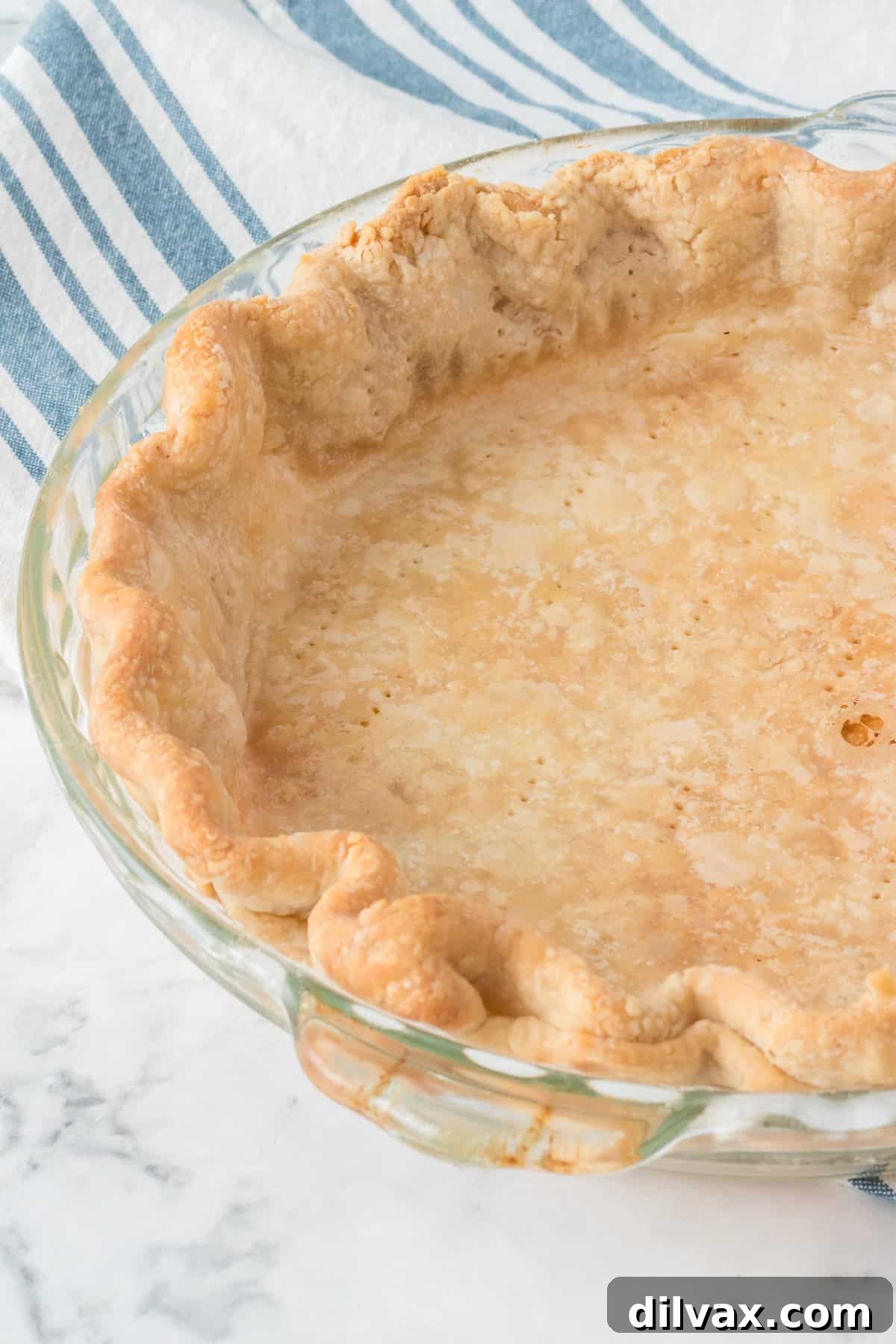
Unlock the secret to extraordinary pies with this ultimate guide to crafting a Flaky Homemade Pie Crust. Forget store-bought shortcuts; using just five fundamental ingredients, this easy-to-follow recipe promises a perfectly tender, golden, and flaky crust that will elevate every sweet or savory pie you bake. Prepare to impress with a truly homemade foundation that tastes as incredible as it looks!
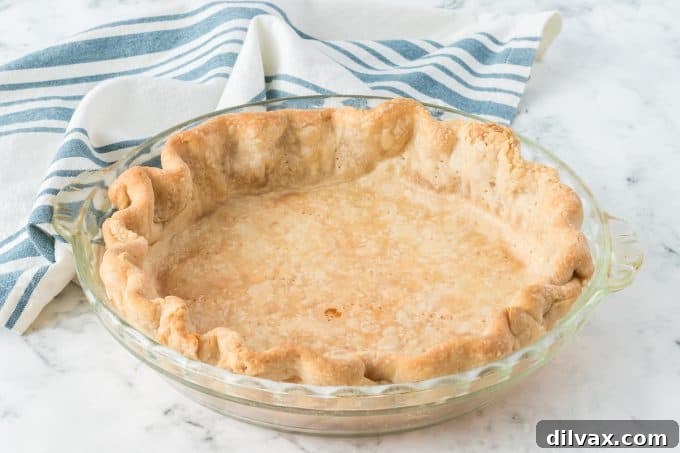
In the culinary world, everyone seems to have their cherished “best pie crust recipe.” While many boast about their methods, I’ve discovered a truly superior technique that consistently delivers an exceptionally flaky and tender homemade pie crust. This particular recipe masterfully combines the best attributes of both shortening and butter, resulting in a dough that’s not only a dream to work with but also bakes up to golden perfection every single time. It’s the ideal foundation for any pie, whether you’re dreaming of a sweet apple delight or a hearty savory creation.
The Secret to Success: Why Shortening and Butter Make the Best Pie Crust
While an all-butter pie crust certainly has its charm and rich flavor, the combination of shortening and butter offers a distinct advantage that makes this recipe a true standout. I wholeheartedly recommend this blended approach for several compelling reasons:
- Unbeatable Ease and Simplicity: With just five straightforward ingredients, this recipe demystifies pie crust making. It’s designed for simplicity, ensuring even novice bakers can achieve impressive results without feeling intimidated.
- Superior Flakiness: The marriage of shortening and butter creates pockets of steam during baking, leading to an incredibly flaky texture that practically melts in your mouth. Shortening contributes to tenderness and prevents gluten development, while butter adds its signature rich flavor and further promotes flakiness.
- Effortless Handling and Perfect Shape: Shortening is a baker’s best friend when it comes to dough manageability. It makes the pie crust remarkably easy to roll out without excessive sticking or tearing. This means less frustration and a beautifully shaped crust that holds its form during baking, yielding a professional finish.
- Prepare Ahead for Enhanced Flakiness: One of the brilliant aspects of this recipe is that it benefits significantly from being made ahead of time. Chilling the dough for an extended period allows the fats to solidify and the gluten to relax, resulting in an even flakier and more tender crust when baked. Planning ahead not only saves time on baking day but also guarantees an superior outcome.
- Versatile, Neutral Flavor Profile: Unlike an all-butter crust which can sometimes overpower delicate fillings, this shortening and butter blend offers a wonderfully neutral taste. This versatility makes it the perfect canvas for a wide array of fillings, ensuring it complements both sweet fruit pies and robust savory quiches or pot pies without competing for attention.
Gather Your Essentials: Simple Ingredients for a Perfect Pie Crust
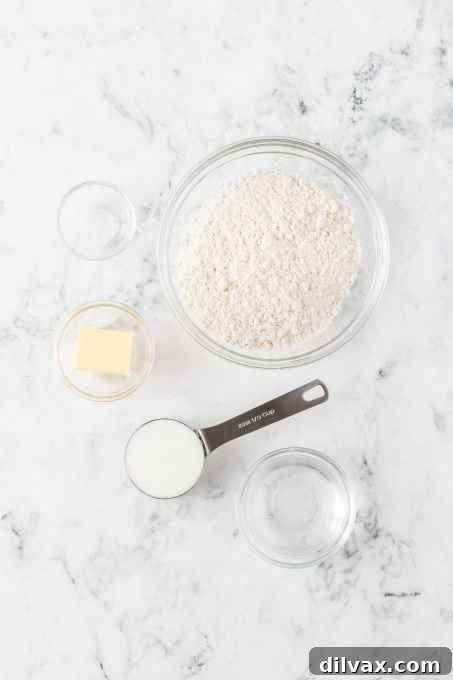
As promised, you only need five basic ingredients to create this magnificent homemade pie crust. Each plays a vital role in achieving that coveted flaky texture and rich flavor:
- All-Purpose Flour: The foundation of our crust. Use a good quality all-purpose flour for consistent results.
- Salt: Essential for enhancing the flavor of the crust and balancing the richness of the fats. Don’t skip it!
- Vegetable Shortening: Choose unflavored vegetable shortening or butter-flavored shortening, depending on your preference. Shortening is key for tenderness and ease of handling, creating tender pockets within the crust.
- Cold Unsalted Butter: Ensure your butter is unsalted and very cold, preferably cut into small cubes or grated, to create those desirable flaky layers. Unsalted butter allows you to control the overall saltiness of your crust.
- Ice Water: The colder, the better! Ice water helps keep the fats solid, preventing the dough from becoming tough by inhibiting gluten development. Have a cup of ice water ready before you begin.
For precise measurements and detailed instructions, scroll down to the comprehensive recipe card located at the bottom of this post!
Crafting Perfection: A Step-by-Step Guide to Homemade Pie Crust
Many home bakers find the idea of making pie crust from scratch a bit daunting, fearing a finicky process. However, this recipe is specifically designed to be forgiving and straightforward, largely thanks to the inclusion of shortening and the critical refrigeration steps. Follow these detailed instructions, and you’ll be amazed at how easily you can create a truly spectacular crust:
- Prepare Your Tools and Ingredients: Before you even start mixing, fill a measuring cup with water and add a few ice cubes. This ensures you have genuinely ice-cold water on hand when you need it. Gather all your other ingredients and have them ready on your workspace.
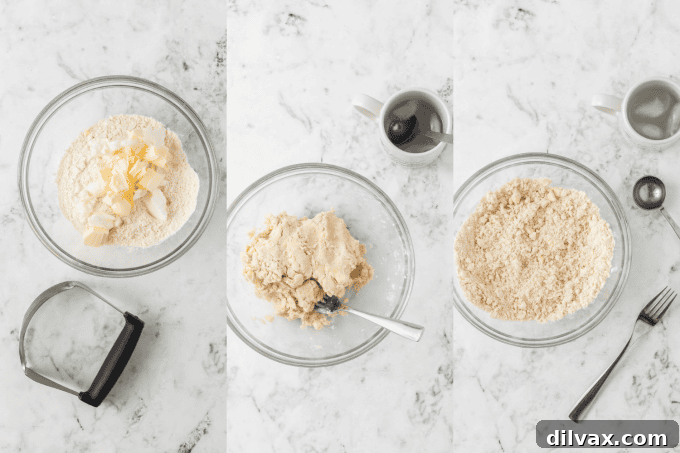
- Combine Dry Ingredients and Cut in Fats: In a spacious medium bowl, whisk together the all-purpose flour and salt until well combined. Next, add the cold vegetable shortening and the cubed or grated cold unsalted butter to the flour mixture. Using either two forks, a pastry blender, or your fingertips, swiftly cut the fats into the flour. Your goal is for the mixture to resemble coarse meal, with some larger pea-sized pieces of fat still visible. This texture is crucial for achieving flakiness, as these small pockets of fat create steam during baking. Avoid overworking the mixture at this stage; warm hands can melt the butter, which is detrimental to flakiness.
- Gradually Add Ice Water: Begin adding the ice-cold water, one tablespoon at a time. After each addition, gently stir the mixture with a fork or a rubber spatula. Continue this process until the dough just barely starts to come together. The key is to add only enough water for the dough to form; if you add too much, the dough will become sticky and difficult to handle. Conversely, be cautious not to over-mix or knead the dough excessively, as this will develop the gluten and result in a tough, rather than tender, pie crust.
- Shape and Chill the Dough: Once the dough has formed into a cohesive mass, gently gather it and shape it into a ball. Wrap this ball tightly in plastic wrap, then gently flatten it into a disc shape. This disc shape makes it easier to roll out later. Now comes a crucial step: refrigerate the dough for a minimum of 24 hours. While it might be tempting to shorten this chilling time to two hours or skip it entirely, doing so is insufficient. A shorter chill time means the dough will be cold on the outside but still warm and sticky in the center, making it incredibly challenging to roll. Trust me on this: a well-chilled dough, one that has been kept cold for at least a full day, is exponentially easier to roll out and far less prone to tearing. Furthermore, it’s imperative that you DO NOT allow the dough to warm up or come to room temperature before rolling; keep it as COLD as possible right up until you’re ready to use it!
- Prepare for Rolling: When you’re ready to roll out your perfectly chilled dough, remove it from the refrigerator and unwrap it from the plastic. Lightly flour a clean work surface. Place the dough disc in the center. To make the dough more pliable and prevent cracking, use a lightly floured rolling pin to evenly distribute 10-15 firm but controlled smacks across the dough. This helps to relax the dough and evenly distribute the cold fats.
- Mastering the Roll: Begin rolling the dough from the center outwards, working in short, even strokes. Aim to roll the dough into a large circle that is approximately two inches larger than your pie pan. As you roll, always stop before you reach the very edge of the dough to prevent the edges from becoming too thin. Turn the dough 180 degrees and roll again from the 12 o’clock to 6 o’clock positions. Lightly add more flour to your work surface or rolling pin if the dough begins to stick. Then, turn the dough 90 degrees and repeat the rolling motion. Continuously rotating the dough is essential to prevent it from sticking to your surface and to ensure an even thickness. If your dough is sufficiently cold and you work quickly and efficiently, you should only need a minimal amount of flour to prevent sticking. Too much added flour will make the finished crust tough. Continue rotating and rolling until you achieve a circle at least 2 inches larger than your pie plate. Should any edges appear somewhat straight, use the end of your rolling pin to gently curve them outwards from the middle of the dough. If minor cracks form at the edges, gently push the dough back together by cupping your hand around the edge and pushing towards the middle, then carefully roll again as directed.
- Transferring to the Pie Dish: Once your dough is rolled to the desired size and thickness, ensure it’s lightly floured enough to prevent sticking. You can transfer it to your pie dish by either gently rolling it up and over your rolling pin or carefully folding it in half. Drape the dough loosely over the pie pan. Then, working gently, fit the dough into the pan by slightly lifting the edges to allow it to settle naturally at the bottom and along the sides. Avoid pressing or forcing the dough, as this can cause it to tear and compromise its flakiness.
- Finishing the Edges:
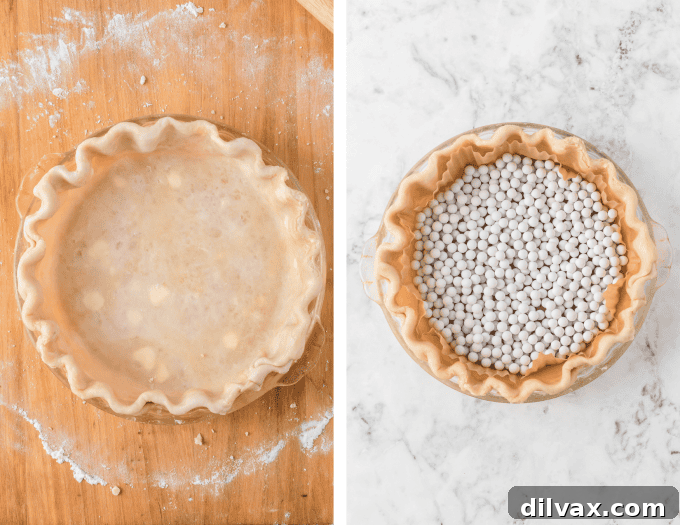
- For a One-Crust Pie: Do not trim any excess dough hanging over the side of the pan. Instead, fold this excess dough underneath itself to create a thicker, reinforced base. This thicker edge is perfect for crimping or fluting, giving your pie a beautiful, defined rim.
- For a Double-Crust Pie: After placing your filling and topping with the second crust, fold the top crust under the bottom overhanging crust to form a neat, enclosed edge. Then, proceed to crimp or flute as desired to seal the two crusts together and create a decorative finish.
- Final Chill Before Baking: Using the tines of a fork, gently prick holes over the bottom and up the sides of the dough in the pie pan. This step, known as “docking,” helps prevent the crust from puffing up unevenly during baking. Once docked, place the pie dish with the prepared crust into the refrigerator for at least 15 minutes to chill thoroughly once more. This final chill before it enters the oven is paramount: the colder your dough is when it goes into the oven, the flakier and more tender your final crust will be. This cold shock also helps significantly in preventing the crust from shrinking as it bakes. You can then proceed with blind-baking or filling the pie as your recipe dictates.
- Bake According to Your Recipe: Once your crust is prepared and chilled, follow the specific baking instructions provided by your chosen pie filling recipe for optimal results.
Important Note: This recipe yields enough dough for one single pie crust. If your pie recipe calls for a double crust (a bottom and a top crust), simply double the entire recipe ingredients and divide the prepared dough into two equal halves before chilling.
Mastering the Art of Fluting: Adding a Decorative Touch to Your Pie Crust
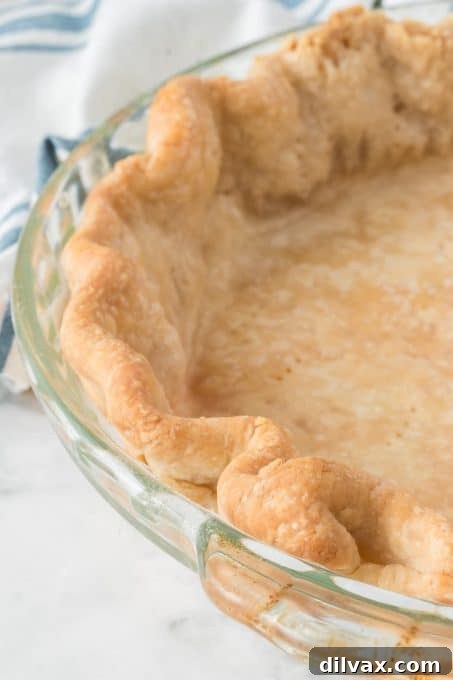
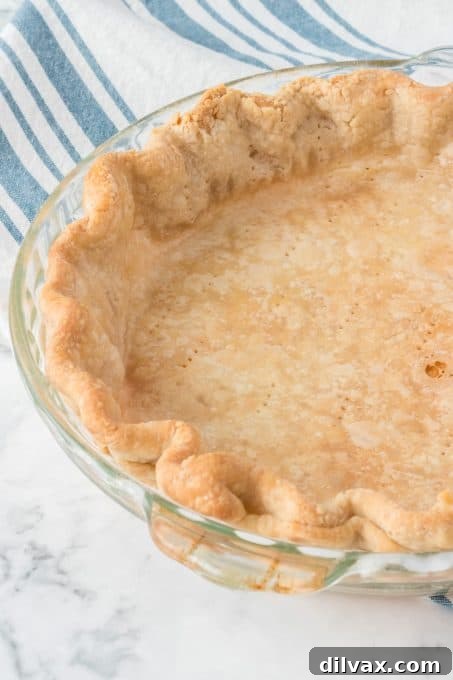
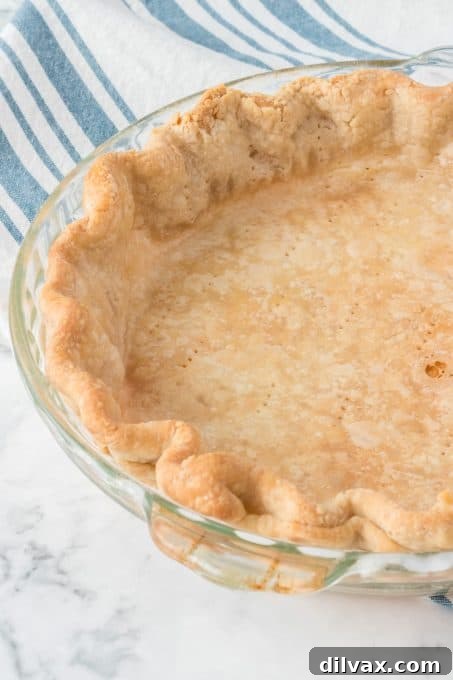
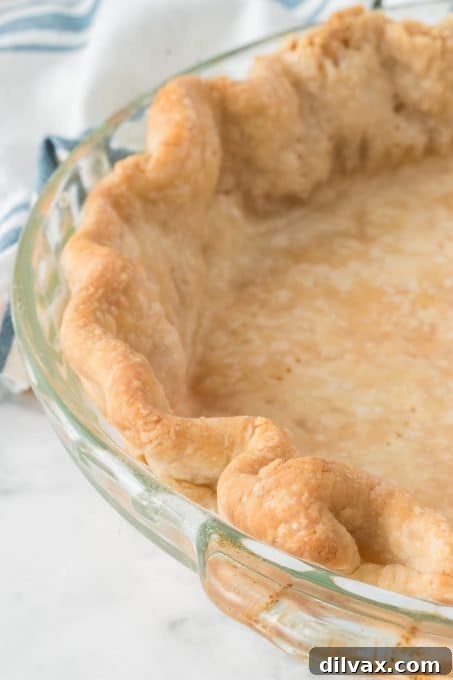
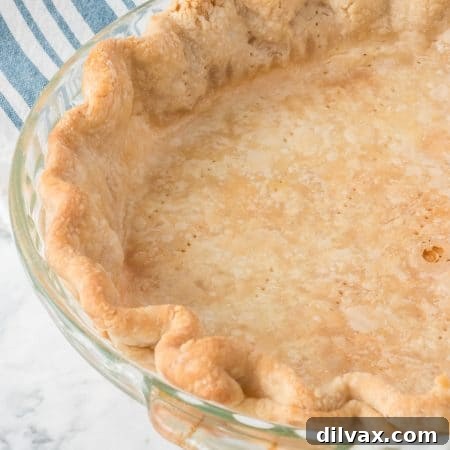
A beautifully finished pie crust elevates any pie from simple dessert to a work of art. There are numerous ways to create decorative edges, but fluting is a classic and elegant technique that adds a homemade charm. You can use a fork to create a simple crimped edge, or for a more refined look, employ your fingers to create a beautiful fluted design.
Remember, when making a single-crust pie, resist the urge to trim any excess dough. Instead, fold the overhanging dough underneath itself, directly onto the rim of the pie plate. This creates a thicker, more substantial edge that will hold its shape beautifully and provide a perfect foundation for crimping or fluting. For a double-crust pie, you’ll fold the top crust under the overhanging bottom crust to create a sealed edge before crimping.
To achieve a classic fluted pie crust using your fingers, you’ll need both hands. Position the index finger of one hand on the inside of the pie crust, pushing gently outwards. Simultaneously, place the thumb and index finger of your opposite hand on the outside of the crust, pinching the dough around your first index finger. This action will create a distinctive “U” or “V” shape in the dough. Continue working your way around the entire circumference of the pie crust, spacing each flute approximately an inch apart, until you have a consistently beautiful, decorative edge.
Convenient Planning: Refrigerating and Freezing Your Homemade Pie Crust
One of the many benefits of this homemade pie crust recipe is its excellent make-ahead potential. Preparing the dough in advance not only saves time on baking day but also often leads to an even flakier final product. Proper storage is key to maintaining its quality:
Refrigeration: Once you’ve shaped your dough into a disc and wrapped it tightly in plastic wrap, it can be safely refrigerated for up to three days. Ensure it’s well-sealed to prevent it from drying out or absorbing any odors from your refrigerator.
Freezing for Longer Storage: For extended storage, homemade pie crust freezes exceptionally well. After shaping the dough into a disc, double wrap it securely in plastic wrap, then place it in a freezer-safe bag or an airtight container. Your pie dough can be stored in the freezer for up to 6 months. When you’re ready to use it, transfer the frozen dough disc to the refrigerator and allow it to thaw overnight before proceeding with rolling and baking. This slow thawing process helps maintain the dough’s texture and prevents it from becoming overly sticky.
Frequently Asked Questions About Homemade Pie Crust
Here are answers to some common questions bakers have when making pie crust from scratch:
When is Blind Baking Necessary for a Pie Crust?
Blind baking, also known as pre-baking, refers to baking an unfilled pie crust before adding the filling. This technique is crucial for certain types of pies and can also improve the texture of others.
- Full Blind Baking: This is when you completely bake the pie crust until it’s golden brown and cooked all the way through. It is absolutely necessary for pies with fillings that are not baked, such as no-bake cream pies, lemon meringue pie, or fresh fruit tarts where the filling is added after the crust has cooled. A fully baked crust ensures structural integrity and prevents a soggy bottom.
- Par-Baking (Partial Baking): This involves baking the crust for a shorter period until it’s set but not fully browned. Many bakers opt to par-bake crusts for pies with very wet or runny fillings, like pumpkin pie, pecan pie, or quiches. Par-baking creates a protective barrier that helps prevent the crust from becoming soggy during the final bake with the filling. Some bakers even prefer to par-bake all their pie crusts, regardless of the filling, to ensure a consistently crisp base.
How to Blind Bake Your Crust:
The process for blind baking (whether full or partial) is straightforward:
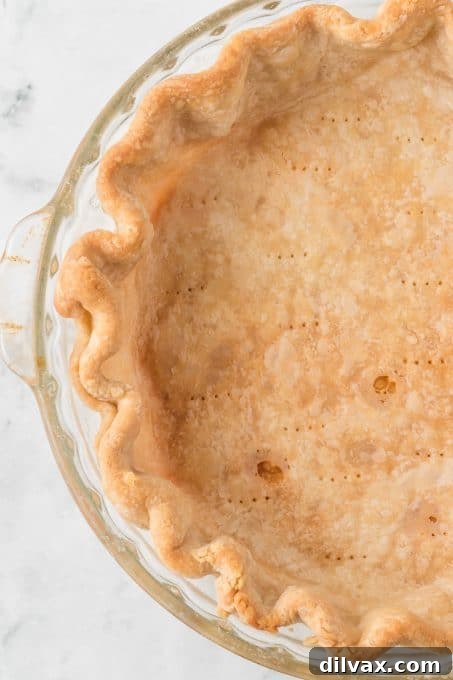
- Once your pie crust is neatly trimmed and fluted in the pie dish, use the tines of a fork to generously prick holes all over the bottom and up the sides of the dough. This docking prevents steam from building up and causing the crust to puff.
- Chill the docked crust in the refrigerator for 15-20 minutes. This helps the fats firm up again, further preventing shrinkage during baking.
- Next, loosely line your chilled pie crust with a pre-formed pie parchment liner or a piece of crumpled parchment paper. The crumpling helps it fit snugly into the contours of the crust.
- Fill the parchment-lined crust with ceramic pie weights, dried beans, or even uncooked rice. These weights prevent the crust from bubbling up and shrinking. If you use dried beans or rice, remember that they can be reused many times as pie weights but should not be cooked for consumption afterward; store them in an airtight container for future blind baking.
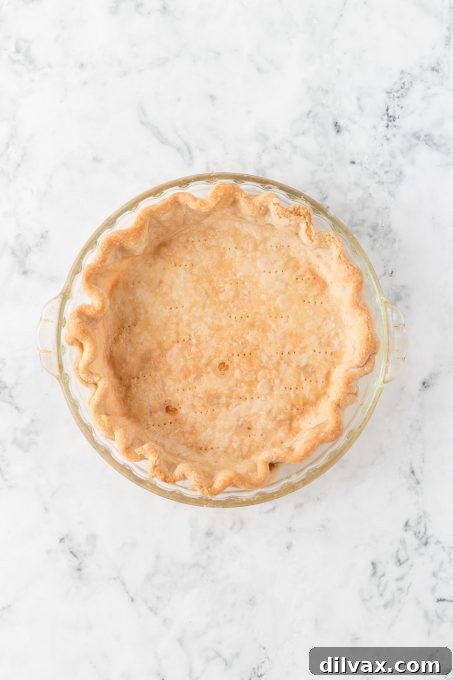
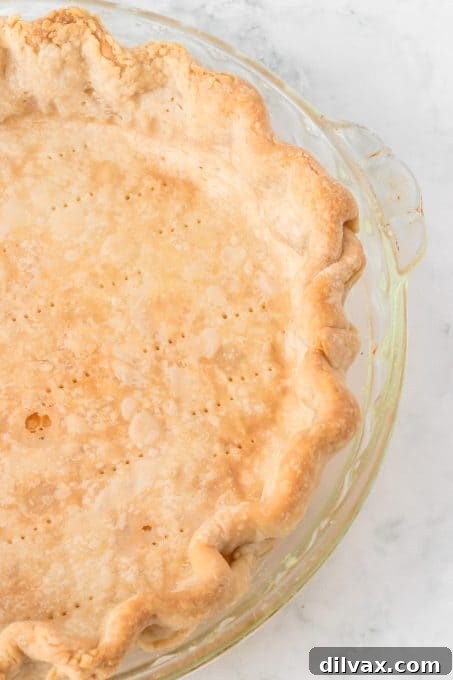
- Bake the pie crust according to the specific temperature and time directions in your recipe for blind-baking. Typically, this involves baking at a relatively high temperature (around 400-425°F or 200-220°C) for 15-20 minutes with the weights, then removing the weights and parchment and continuing to bake until golden for a full blind bake, or until just set for a par-bake.
Should I Use an Egg Wash on My Pie Crust?
Absolutely! An egg wash is an excellent, optional step that can significantly enhance the appearance and even the texture of your homemade pie crust. Typically made by whisking a beaten egg (or just the yolk/white) with a small amount of water or milk, an egg wash serves several beneficial purposes:
- Golden Brown Finish: It provides a beautiful, glossy, deep golden brown color to the crust, making your pie look incredibly appetizing and professionally finished.
- Enhanced Crispness and Prevents Sogginess: The egg wash creates a thin, protective barrier on the surface of the dough. This barrier can help to make the crust crispier and, for open-faced pies, can even help to prevent moisture from the filling from seeping into the crust and making it soggy.
- Adds a Subtle Sheen: The protein in the egg gives the baked crust a lovely, appealing sheen.
To apply, simply brush a thin, even layer of the egg wash over the surface of your unbaked pie crust before it goes into the oven. It’s a simple step that yields impressive visual results.
Essential Tips for Successfully Rolling Out Your Pie Crust
Achieving a perfectly rolled pie crust can feel like an art form, but with a few key techniques, you can master it. While detailed instructions are provided in the numbered steps above, here’s a recap of the most crucial tips for a smooth rolling process:
- Keep Everything Cold: This cannot be stressed enough. Cold fat (shortening and butter) is the secret to a flaky crust. Ensure your dough is thoroughly chilled (preferably for 24 hours) and your work surface and rolling pin are cool. Work quickly to prevent the butter from warming.
- Use Minimal Flour: A lightly floured surface and rolling pin are necessary to prevent sticking, but too much extra flour can be absorbed by the dough, leading to a tough, dry crust. Dust just enough to prevent sticking.
- Start with a Disc: Shaping your dough into a flattened disc before chilling makes it easier to start rolling into an even circle.
- Smack the Dough: Before rolling, gently but firmly smack the chilled dough disc 10-15 times with your rolling pin. This helps to make the dough more pliable and less prone to cracking.
- Roll from the Center Out: Always begin rolling from the center of the dough towards the edges. Avoid pressing down too hard, as this can squeeze out the fat and make the dough stick.
- Rotate Frequently: After every few rolls, turn your dough 90 or 180 degrees. This ensures you’re rolling an even circle, prevents sticking to your surface, and helps maintain a consistent thickness.
- Don’t Roll to the Very Edge: Stop your rolling pin just before you reach the edge of the dough. Rolling over the edges excessively can make them too thin and fragile.
- Handle Cracks Gently: If small cracks appear at the edges, especially with very cold dough, gently press them back together with your fingers, cupping your hand to reshape the edge, then continue rolling.
- Work Efficiently: The less time the dough spends at room temperature, the better. Work steadily and confidently.
Delicious Pairings: Filling Suggestions for Your Flaky Pie Crust
Now that you’ve mastered the art of making a truly flaky homemade pie crust, it’s time to put it to good use! This versatile crust is the perfect partner for an endless variety of fillings. Here are some of my all-time favorite pie suggestions that truly shine with this delicious base:
- Classic Blueberry Pie: Imagine warm, bursting blueberries encased in a soft, beautifully decorated crust. This Blueberry Pie is a timeless, irresistible family favorite that needs no introduction.
- Tropical Pineapple Pie: Perfect for a sunny day or anytime you crave a taste of the tropics. This Pineapple Pie features a delicious, flaky double crust generously filled with sweet crushed pineapple. Serve it with a scoop of vanilla ice cream for an extra special treat!
- Comforting Apple Cream Pie: A holiday staple that’s too good to reserve for special occasions. With tender apples coated in a cinnamon sugar mixture and bathed in rich heavy cream, this Apple Cream Pie is a delightful indulgence year-round.
- Decadent Chocolate Peppermint Cream Pie: Guaranteed to be a crowd-pleaser, especially during the festive season. This Chocolate Peppermint Cream Pie boasts a smooth, creamy chocolate filling infused with peppermint extract, topped with fluffy whipped cream and a sprinkle of crushed peppermint candy.
- Zesty Lemon Chess Pie: A bright and creamy dessert that perfectly captures the essence of spring and summer. If you adore the tangy flavor of lemon, this Lemon Chess Pie will satisfy every single one of your cravings with its rich, custard-like texture.
- The Ultimate Pecan Pie: Another holiday classic that’s truly a splurge-worthy delight any time of year. The BEST Pecan Pie with its sweet, gooey pecan filling is an absolute must-try.
Beyond the sweet, this robust homemade crust is also fantastic for savory applications. Imagine a rich Turkey Pot Pie or a classic Chicken Pot Pie nestled within this flaky base – it truly elevates these comforting dishes to an entirely new level of deliciousness.
We’d love to hear from you! What’s your absolute favorite pie to bake or enjoy? Share your thoughts and preferred fillings in the comments section below!
STAY CONNECTED! FOLLOW ME
FACEBOOK ~ PINTEREST
INSTAGRAM ~ TWITTER
YOUTUBE
Don’t Miss Out! Keep an Eye Out for More Easy Recipes Each Week!
Want to Save This Recipe?
Enter your email and we’ll send this incredible recipe directly to your inbox. Plus, get fantastic new recipes from me every week!
By submitting this form, you consent to receive emails from 365 Days of Baking and More.
Rate this recipe:
★★★★★
Homemade Flaky Pie Crust
Equipment
-
1 Parchment pie liner
-
Ceramic Pie Weights
Ingredients
- 1 ½ cup all-purpose flour
- ¼ teaspoon kosher salt
- ½ cup shortening
- 3 tablespoons unsalted butter chilled
- 3-4 tablespoons cold water
Instructions
-
Fill a cup with water and add a bit of ice to it before starting and gathering all your ingredients.
-
Combine the dry ingredients (flour and salt) in a medium bowl. Add the shortening and butter to the flour mixture, then use two forks or a pastry cutter to cut it into the flour until the mixture resembles a coarse meal with some pea-sized pieces. It should have a uniform texture but will be a combination of crumbs and small bits and pieces.
-
Add the ice-cold water one tablespoon at a time and stir gently with a fork or rubber spatula until the dough starts to hold together. If you add too much water, the dough will be sticky. Also, be careful not to over-mix it or it will be tough!
-
Once the dough forms, shape it into a ball, wrap it tightly in plastic wrap, and then pat it down into a disc. Refrigerate it for at least 24 hours. Two hours, a shorter amount of time, or not refrigerating at all is not sufficient as the dough will be chilled on the outside and still warm inside, making it sticky when you work it. A really COLD dough is SO much easier to work with and reduces its’ ability to tear. Also, DO NOT allow it to warm up or come to room temperature before rolling, keep it COLD!
-
When ready to roll it out, unwrap it from the plastic and place the dough on a clean work surface that’s been lightly floured. Using a lightly floured rolling pin, evenly distribute hard smacks on the dough 10-15 times to make it more pliable.
-
Roll the dough into a large circle about two inches larger than your pie pan. Do this by rolling a couple times from the 12 o’clock to 6 o’clock positions. Always stop rolling before you get to the edge, as doing so will make the edges too thin. Turn the dough 180 degrees and roll again from 12 to 6, lightly adding flour to your work surface, if needed. Then turn the dough 90 degrees and roll the same way. Rotating the dough will also help prevent it from sticking. If the dough is cold enough, and by working quickly and efficiently, you should only need a minimal amount of flour to keep it from sticking to your work surface and rolling pin. Adding too much flour will make the dough tough. Continue rotating 90° and rolling until you have created a circle that is at least 2-inches larger than your pie plate. If there are edges that are a bit straight, use the end of the rolling pin to curve from the middle of the dough out to the edge. Also, if cracks form at the edges, push the dough together by cupping your hand, helping to form the outer edge of the circle, and gently push towards the middle. Then roll again as directed.
-
To transfer to the pie dish, roll it up and over the rolling pin or fold it in half. Drape it loosely over, then fit it into the pan by gently lifting the edges of the dough so that it settles at the bottom and along the sides, never pressing or forcing as that will tear it.
-
When making a one-crust pie, do not trim the edges. Just fold the excess dough under, creating a thicker base to crimp or flute the crust (see above section on fluting). When making a double-crust pie, fold the top crust under the bottom overhanging crust to form your edge, and then crimp.
-
Use the tines of a fork to place holes over the bottom and sides of the dough. Place into the refrigerator for at least 15 minutes to chill again before proceeding with blind-baking or filling the pie and refrigerating. The colder your dough is when it goes into the oven, the flakier it will be, and it will also help prevent shrinking as it bakes.
-
Follow baking instructions according to your desired recipe.
Notes
- This recipe makes enough dough for a single pie crust. If a double pie crust is needed, simply double the recipe and divide the dough evenly in half.
- To Blind-Bake: Place a pre-formed pie parchment in the pan, and fill with ceramic pie weights, so that the crust stays flat when baking.
- See the main article for additional tips and details on storage, fluting, and more.
Nutrition
Did you make this recipe?
Share it with me on Instagram and make sure to follow me on Pinterest for more recipes.
📌 Pin Recipe
👍 Share Recipe