
Discovering Deliciousness: My Journey with the Unexpected Carrot and Raisin Bread
Every baker knows that moment of discovery – finding a recipe that initially raises an eyebrow, then completely wins you over. This particular Carrot and Raisin Bread recipe from The New Doubleday Cookbook (p. 667; authors, Jean Anderson and Elaine Hanna; publisher Doubleday, a division of Random House, Inc.; ISBN 0-385-19577-X) was exactly that for me. At first glance, the combination of “eew” came to mind, a common reaction to anything that might hint at hidden vegetables in a sweet treat. However, upon closer inspection, the generous two cups of shredded carrots and half cup of raisins hinted at something potentially wholesome and nourishing, at least by baked goods standards. This wasn’t just another bread; it promised a delightful balance of earthiness and sweetness, wrapped in a surprisingly healthy package.
Joining me on this baking adventure is more than just a recipe; it’s a learning experience. As someone deeply passionate about baking, I’m constantly refining my techniques and understanding the nuances that make a significant difference in the final product. This specific recipe offered an unexpected lesson, bringing to light a fundamental aspect of baking that I, surprisingly, had overlooked for years.
The Unveiling Truth About Flour: Sift Before You Measure? Or Measure Before You Sift?
Before diving into the deliciousness of carrot and raisin bread, let’s talk flour. Until I embarked on this grand baking project, I genuinely didn’t realize the critical distinction between “1 cup sifted flour,” “1 cup flour,” and “1 cup flour, sifted.” If you’re nodding along, feeling a sense of recognition, rest assured, you are not alone! For years, I just scooped and leveled, blissfully unaware of the subtle yet profound impact these differing methods have on baked goods. Perhaps it was a hurried approach, or maybe it simply wasn’t emphasized during my formative baking years – no memories of mom, grandma, or even my 8th-grade Home Ec teacher, Mrs. Rathbun (wow, I can’t believe I remembered her name!), explaining this vital detail.
The revelation came recently, courtesy of the Martha Stewart Baking Book, and it was a true “aha!” moment. Understanding these distinctions is crucial for achieving consistent results in baking:
- 1 cup sifted flour: This means you sift the flour *first*, allowing it to aerate and become light, *then* gently spoon it into your measuring cup and level it with a straight edge. This method ensures you’re measuring only the flour itself, without compacting it, leading to a lighter, more tender crumb in your baked goods. It results in less flour by weight compared to simply scooping.
- 1 cup flour: This is the most common and straightforward method. You simply scoop your measuring cup directly into the flour container and then level it off with a knife or straight edge. This method compacts the flour somewhat, resulting in a denser measurement by weight compared to sifted flour.
- 1 cup flour, sifted: For this, you scoop the flour into your measuring cup, level it, *then* sift it into your mixing bowl. While it still breaks up lumps, it doesn’t achieve the same aeration and precise measurement as sifting before measuring. The flour was already compacted in the cup before sifting.
To put it simply: Sift before measuring for the lightest results; just plain old measure for general recipes; and measure then sift if a recipe explicitly specifies it, though it’s less common for precise flour control. I admit, trying to simplify it might have over-explained it to the point of self-confusion! But the key takeaway is profound: sifting flour *before* measuring makes a remarkable difference in texture. I wonder how many dishes from my past could have been even better had I paid attention to this fundamental technique.
The Recipe: Wholesome Carrot and Raisin Bread
This recipe transforms simple ingredients into a surprisingly moist, flavorful, and satisfying bread that defies its initial “eew” factor. It’s perfect for breakfast, a snack, or even a light dessert. The natural sweetness from the carrots and raisins, combined with a hint of orange, creates a wonderfully aromatic and comforting loaf.
Ingredients:
- 2½ cups sifted unbleached flour (remember our discussion? Sift *then* measure for the best texture!)
- 1 tablespoon baking powder
- ½ teaspoon salt
- 1 cup firmly packed light brown sugar
- 2 large eggs, lightly beaten
- ½ cup melted butter or margarine or cooking oil (I opted for classic butter for richer flavor)
- ½ cup milk (whole milk or a dairy-free alternative works well)
- 1 tablespoon finely grated orange rind (optional, but highly recommended for an aromatic citrus lift – I decided to omit it this time, but next time, it’s a must!)
- ½ cup seedless raisins (I used plump golden raisins, which add a lovely sweetness and chewiness)
- 2 cups finely grated peeled carrots (about 3-4 medium carrots)
Instructions:
- Prepare Your Oven and Pan: Preheat your oven to a steady 350ºF (175ºC). Generously grease a 9″ X 5″ X 3″ loaf pan. This step is crucial to prevent sticking and ensure your beautiful loaf slides out effortlessly.
- Combine Dry Ingredients: In a large mixing bowl, meticulously sift together the 2½ cups of flour, baking powder, and salt. Sifting ensures these dry ingredients are evenly distributed, preventing pockets of baking powder and creating a uniform texture throughout the bread.
- Add Sugar: Incorporate the firmly packed light brown sugar into the dry ingredients. Use your fingertips to rub the sugar into the flour mixture, breaking up any stubborn lumps. This helps distribute the sugar evenly and prevents dense pockets in the final bread.
- Introduce Wet Ingredients: Add all the remaining ingredients to the bowl: the lightly beaten eggs, melted butter (or chosen fat), milk, finely grated orange rind (if using), seedless raisins, and the star of the show, the finely grated carrots.
- Mix Well: Using a sturdy spoon or spatula, mix all the ingredients thoroughly until just combined. Be careful not to overmix, as this can develop the gluten in the flour too much, leading to a tougher bread. A few streaks of flour are acceptable; the goal is a cohesive batter.

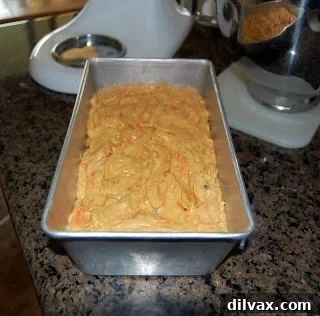
- Bake the Loaf: Spoon the prepared batter into your well-greased loaf pan. Smooth the top gently. Place it in the preheated oven and bake for approximately 50 minutes. The bread is ready when it begins to shrink slightly from the sides of the pan and feels springy to the touch when gently pressed in the center.
Pro Tips for the Perfect Loaf:
- Don’t Underbake: It’s better to bake a few minutes longer than to pull it out too soon. Test for doneness by inserting a toothpick or a cake tester into the very center of the loaf. It should come out clean, with no wet batter clinging to it.
- Cooling is Key: Once out of the oven, allow the bread to cool upright in the pan on a wire rack for about 20 minutes. This prevents the bottom from becoming soggy and allows the loaf to set.
- Complete Cooling: After 20 minutes, carefully turn the loaf out onto the wire rack and let it cool completely. This is crucial for its structure and flavor development. Resist the urge to cut into it while warm!
- The Overnight Secret: For the absolute best slicing experience and enhanced flavor, wrap the cooled loaf airtight and store it overnight at room temperature. The flavors meld beautifully, and the bread becomes much easier to cut into neat, presentable slices without crumbling. This step truly transforms the texture.
My Verdict: A Surprising Culinary Triumph!
I have to confess, my initial skepticism about this carrot and raisin bread was utterly unfounded. The outcome was not just good, it was genuinely delightful! It tasted *a lot* better than I had anticipated. The bread was perfectly sweetened, with the brown sugar complementing the natural sweetness of the carrots and raisins beautifully. Its texture was exceptionally moist, almost melting in the mouth, a testament to the finely grated carrots and the careful balance of ingredients. I had half-expected it to taste like a simplified carrot cake, but it possessed a unique, homely charm that stood on its own. It’s a bread, not a cake, maintaining a comforting density while still being incredibly tender.
The reception in my household was overwhelmingly positive. Both my husband and son, often my toughest critics, gave it enthusiastic thumbs up. My husband even declared it “one of the best recipes you’ve made so far.” That’s high praise indeed! While I thoroughly enjoyed it and would definitely make it again, it didn’t quite hit my personal “absolute perfection” mark (which is a lofty standard, I admit). So, based on my highly scientific rating system, which ranges from 1 (“save yourself the time, money, and effort”) to 4 (“this really takes the cake” – yes, I intended that pun; after all, it *is* a baking blog!), I’m happily giving this Carrot and Raisin Bread a solid 3½ rolling pins. It’s a firm contender for a regular spot in our baking rotation.

The Case of the Missing Slice: A Baker’s Battle
Now, a word of advice, a plea, if you will: if you learn nothing else from this post, please, for the love of all that is delicious, wrap this loaf airtight and let it sit overnight before you attempt to slice it. Trust me on this. I had meticulously waited, then carefully sliced a single, pristine piece, intending it for the perfect photograph to showcase its beautiful crumb. It sat there, alone, on the cutting board, a beacon of perfection. Then, from seemingly nowhere, my husband appeared, eyes gleaming. “Oh, is this my piece?” he innocently queried.
“NO!” I practically shrieked, my heart sinking.
“Oops, too late,” he mumbled, already halfway through my perfectly posed slice.
Son of a… I stood there, aghast. What does one have to do to protect a photographic masterpiece? Do I need to cordon it off with yellow tape? Erect a giant orange cone screaming “DON’T TOUCH”?! Is hiding my baked goods now a mandatory part of the process? Oy vey!
The subsequent attempts to procure another photo-worthy slice involved me hacking through half the loaf, unintentionally creating various misshapen pieces in my desperate quest for perfection. The slice pictured above is the absolute best I could salvage before I threatened to consume the *entire* loaf myself out of sheer frustration. There had to be a point where I stopped before the whole thing was massacred. I’m genuinely intrigued to see how much more neatly it cuts tomorrow after a full night’s rest.
Final Thoughts: Happy Baking and Smart Sifting!
This journey with the Carrot and Raisin Bread was a delightful one, full of surprising flavors and valuable baking lessons. Remember the golden rule: To sift, or not to sift? And when? It truly makes a difference in the lightness and tenderness of your final product. Don’t underestimate the power of proper flour measurement! And perhaps, hide your baked goods from eager family members if you plan on photographing them.
I hope this recipe brings as much joy (and perhaps a little less photographic drama) to your kitchen as it did to mine. Give it a try, and let me know your thoughts! Happy baking!