Unveiling the Power of Iowa Corn: More Than Just a Sweet Treat
Did you know that only a mere 1% of the corn cultivated across the vast farmlands of Iowa is the sweet variety we enjoy on the cob? This surprising statistic highlights a profound truth: the remaining 99% is field corn, a cornerstone of countless products that touch our lives every single day. From a myriad of food items gracing our tables to essential animal feed, renewable fuel, and industrial ingredients, field corn serves as an indispensable agricultural powerhouse.
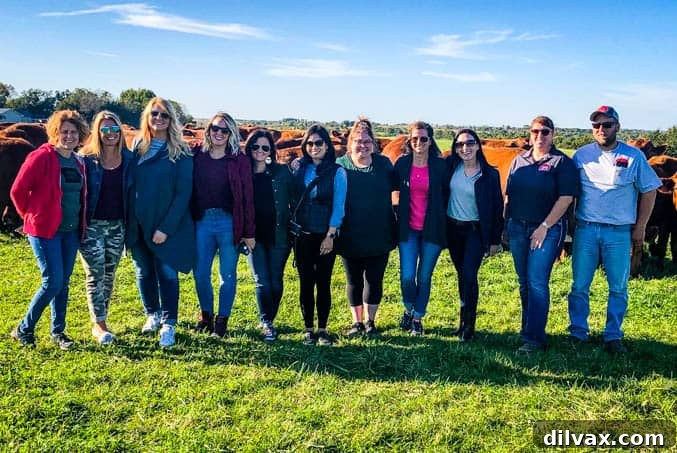
This fascinating insight, alongside a wealth of knowledge, was just the beginning of what I discovered during my recent immersion in the Iowa Corn-Fed Tour. Joining a group of fellow food bloggers earlier this month, I embarked on an unforgettable journey deep into the heart of America’s corn country. The most impactful aspect of this experience was undoubtedly the opportunity to connect with the incredible individuals who dedicate their lives to cultivating this vital crop.
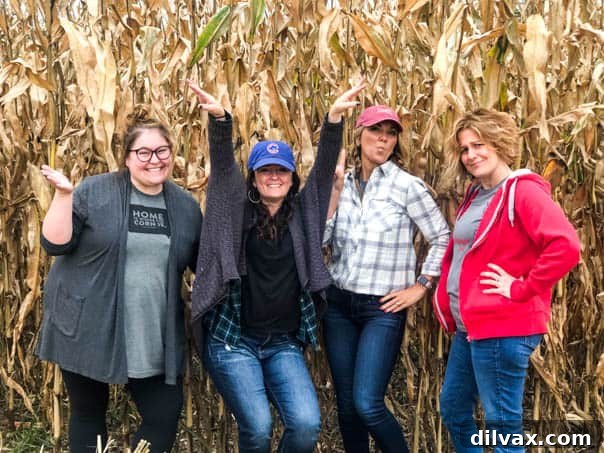
I am immensely proud to be collaborating with Iowa Corn to share the invaluable lessons and inspiring stories from my recent trip. Every opinion expressed here is, as always, 100% my own, born from genuine curiosity and firsthand experience.
Having visited Iowa several times since I began my blogging journey, I’ve developed a deep affection for the state – its dedicated farmers, breathtaking scenery, and the iconic, seemingly endless cornfields. Yet, until this particular tour, I truly underestimated the profound impact and sheer importance of this crop on our daily existence. It was a humbling realization that field corn, a staple I had perhaps taken for granted, underpins so much of our modern world.
Explore the Essence of Iowa: Pin This Insightful Corn Journey!
Crafting Spirits with Iowa’s Golden Grain: A Visit to Iowa Distilling Company
Our immersive journey began on our first evening in Iowa, where we had the distinct pleasure of visiting the Iowa Distilling Company. Here, we enjoyed a delightful dinner catered by Cyd’s Catering, set against the backdrop of a thriving craft distillery. The evening offered a unique opportunity to converse with Gary Petersohn and his wife, Teena, who shared insights into their half-century legacy of farming. Their dedication underscored the deep roots agriculture has in this region, extending beyond just cornfields to the very ingredients of our beverages.
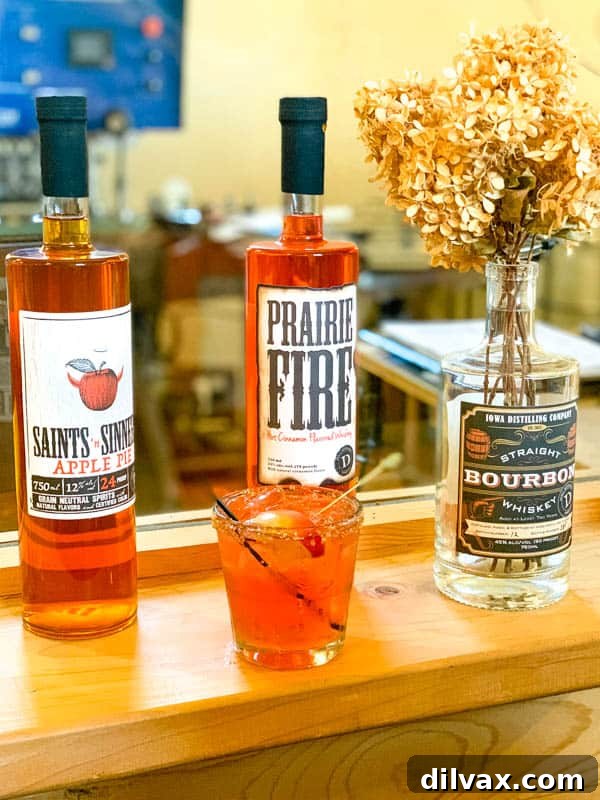
Naturally, we also savored some expertly crafted cocktails featuring bourbon and whiskey produced right there at the distillery. I particularly enjoyed the Distillery’s Cider Fire (pictured below), a delicious concoction made with their signature Prairie Fire Cinnamon Whiskey. It was a perfect blend of local produce and artisanal skill.
Did you know the science behind your favorite spirits?
Whiskey, in general, is created from a fermentable grain mixture known as a “mash bill.” This blend typically includes a combination of corn, barley, rye, and wheat, each contributing distinct flavor profiles. The fascinating distinction arises when we talk about Bourbon. For a whiskey to officially earn the esteemed title of Bourbon, its mash bill must comprise at least 51% corn. This high corn content is what often gives Bourbon its characteristic sweetness and smooth finish. Before this tour, this was certainly a revelation to me!
Breathing Easier with Corn: The Role of Ethanol and the American Lung Association
Our educational tour continued with an enlightening lunch and discussion featuring Angela Tin from the American Lung Association. Her presentation shed critical light on the pervasive issue of air pollution, emphasizing that mobile sources – primarily emissions from vehicles and refueling at service stations – represent the most dangerous and urgent areas for improvement in air quality. These pollutants, often invisible, are significant triggers for respiratory conditions like asthma, which remains an extremely serious lung ailment. The insidious nature of poor air quality is that it affects everyone, and the tiniest, unseen particles often pose the greatest threat to our health.
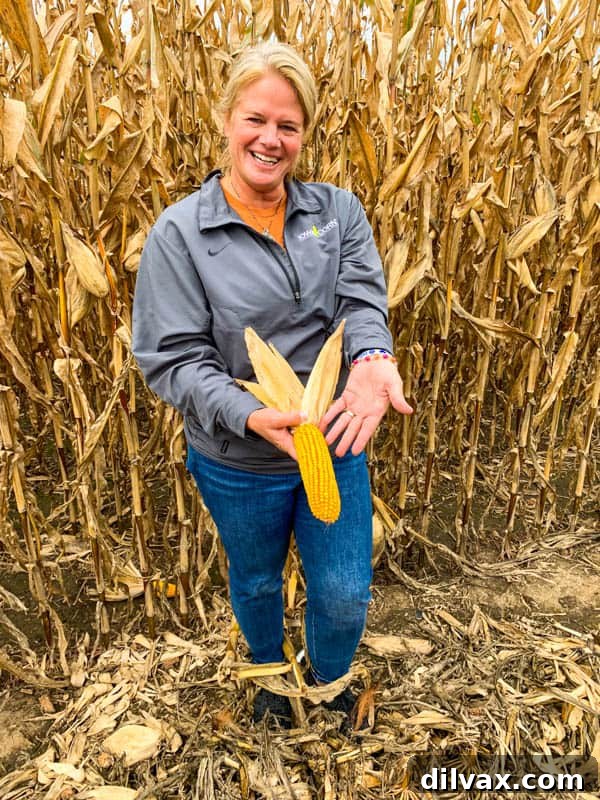
So, how precisely are corn and air pollution intertwined in this vital health conversation?
The answer lies in ethanol, a renewable fuel derived from field corn. Ethanol is a key component of what is known as Flex Fuel. By making a conscious decision to choose gasoline blends containing 10% ethanol (E10), which are widely available at fuel stations across the United States, we can collectively contribute to a significant improvement in our air quality. Ethanol burns cleaner than conventional gasoline, leading to reduced emissions of harmful pollutants like carbon monoxide and particulate matter. This simple choice at the pump can make a tangible difference in fostering cleaner air and promoting better lung health for communities nationwide. It’s a prime example of how agriculture directly contributes to environmental stewardship and public well-being.
Generational Dedication: Insights from Farmer Steve Kuiper
Our tour then brought us to the heart of Iowa’s agricultural landscape, to the century-old family farm of Steve Kuiper in Marion County. Steve, a proud 4th generation farmer, embodies the enduring legacy and forward-thinking spirit of American agriculture. For him, the deep satisfaction of farming comes alive in the planning and harvesting seasons. Driven by an unwavering commitment to improvement, Steve continually seeks innovative ways to enhance his farm’s output, ensuring that consumers receive the highest quality products. This dedication extends to his proactive choice to minimize insecticide use, reflecting a careful balance between productivity and ecological responsibility.
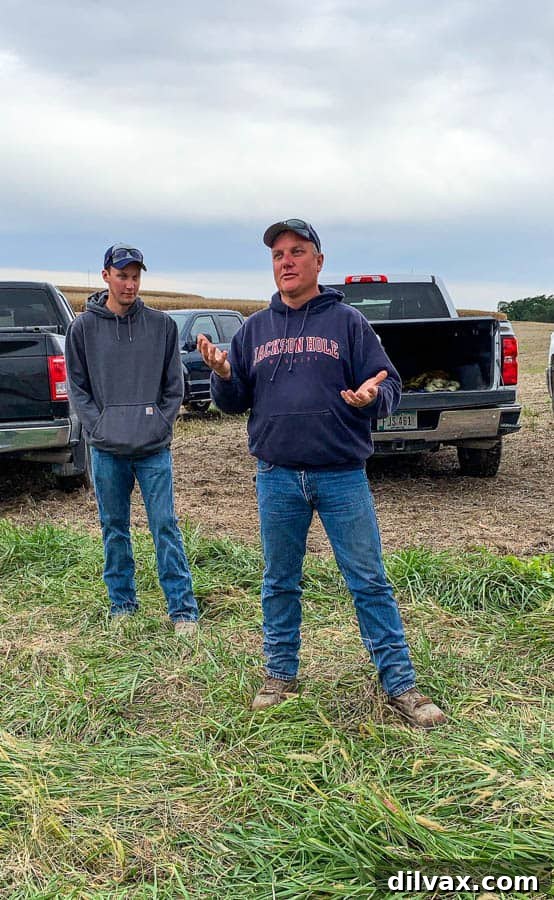
Steve’s passion is to communicate a vital message: modern farmers are simultaneously the best stewards of the land and astute business operators, striving for both environmental health and economic viability. His ultimate aspiration is to leave the farm in an even better, more sustainable condition for his sons, securing a future where both the land and the family legacy can thrive.
The Art of the Harvest: Understanding Corn Maturity
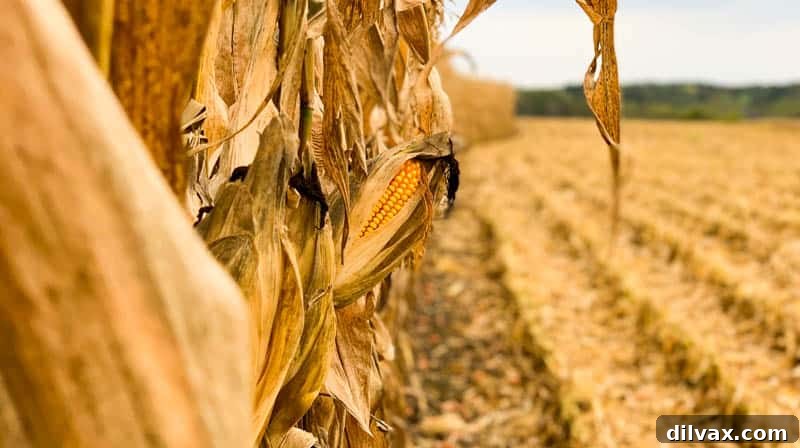
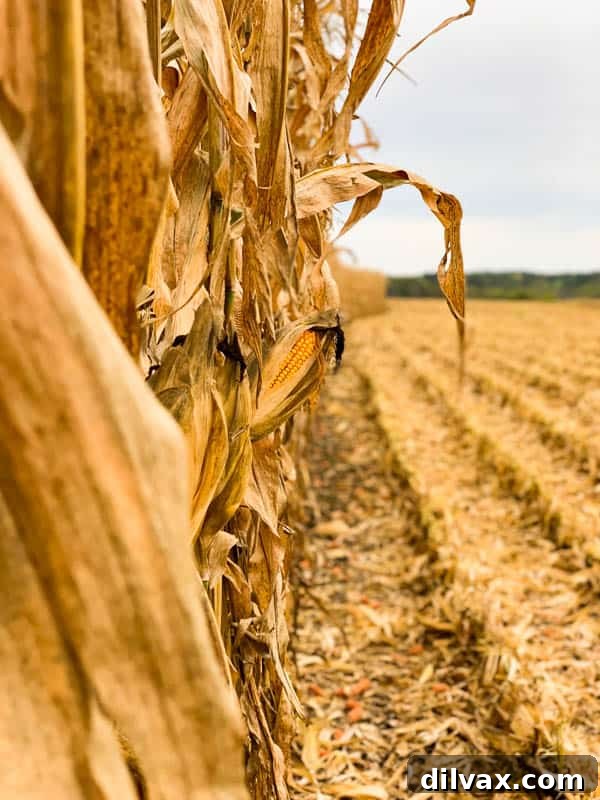
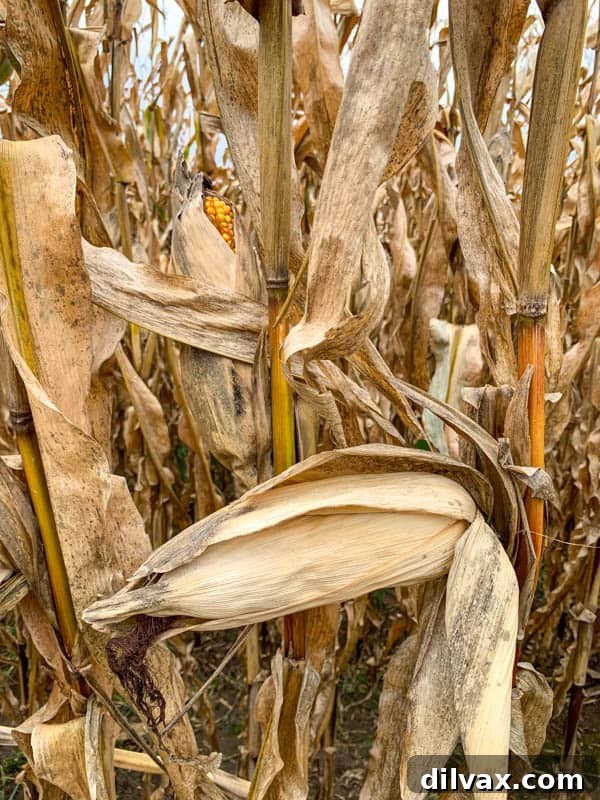
One of the intriguing aspects of our visit was learning how corn farmers determine the optimal time for harvest. As a general rule, farmers rely on visual cues, largely exemplified by the state of the corn stalks, as pictured below. When the corn ears are still standing upright on the stalk, it’s an indicator that the kernels retain a higher moisture content. Conversely, if an ear has begun to drop or hang downwards, like the one prominently displayed in the foreground of the image, it signifies that the corn is drier and ready for harvest.
This seemingly small detail carries significant economic implications. Drier corn requires less time and energy in mechanical dryers, directly translating to reduced fuel costs for farmers. This efficiency is crucial for profitability and highlights the meticulous decision-making involved in modern farming operations. Steve’s sophisticated approach includes grid sampling, a technique that allows him to precisely map the fertility of each distinct area of his fields. This detailed understanding enables him to select and plant specific corn seed varieties perfectly suited to different soil types, optimizing yield and resource utilization.
Furthermore, Steve is a fervent advocate for **no-till farming**. This revolutionary practice minimizes soil disturbance, dramatically reducing erosion and preserving the valuable organic matter from previous crops as residue on the surface. No-till farming is not just about environmental protection; it actively enhances soil health, making it more robust and productive for both immediate profitability and long-term sustainability. It’s a testament to the innovative and environmentally conscious strategies employed by today’s farmers.
Navigating Food Science and Nutrition: An Interview with Dr. Ruth MacDonald
On the final day of our educational excursion, we were privileged to engage in a conversation with Dr. Ruth MacDonald, PhD, RD. As a distinguished Professor and Chair of the Department of Food Science and Human Nutrition at Iowa State University College of Human Sciences, Dr. MacDonald provided invaluable insights into the complex world of food production and consumer perception. She eloquently addressed the prevailing skepticism surrounding scientific advancements, particularly in agriculture, urging us to remember that farming is, fundamentally, a business operating within economic realities.
A significant portion of our discussion revolved around Genetically Modified Organisms (GMOs). Dr. Ruth firmly stated that, despite widespread debate, there has never been any scientifically substantiated evidence linking diseases or adverse health effects to GMO crops. This critical point underscores the importance of relying on credible scientific consensus rather than anecdotal claims.
She further cautioned that consumers seeking information must exercise critical judgment, as many internet sources may be subtly influenced or funded by various companies and food boards, all with their own agendas to sway public opinion. To combat misinformation, Dr. MacDonald recommended several unbiased resources for reliable information, including Best Food Facts and GMO Answers. For those interested in an even deeper dive, the National Academy of Sciences offers a comprehensive GMO report available for download.
Dr. Ruth also emphasized a crucial need for collaboration between organic and conventional food suppliers. Her vision is a future where everyone, regardless of economic standing, can access and afford a healthy, nutritious diet. This sentiment resonated deeply with me; ensuring food security and accessibility for all is a universal goal that transcends specific farming methodologies.
Science is a dynamic field, constantly evolving and driving continuous improvements. This ongoing progress gives us profound confidence that we will continue to provide our families with food that is not only safe and nutritious but also sustainably produced, nourishing them for generations to come.
My heartfelt gratitude goes out to Iowa Corn for orchestrating this incredible journey and for providing me with the opportunity to connect with so many inspiring farmers. Every single farmer we met underscored their unwavering commitment to environmental stewardship. They articulated how profoundly important it is to them to supply consumers with the highest quality product possible while simultaneously working to improve their soil health for enduring sustainability. These dedicated men and women, along with countless others, form the indispensable backbone of America. Without their tireless efforts and the vital role of farms, our tables would be empty and our communities would falter.
Stay tuned in the coming weeks for more fascinating insights into this incredible crop, along with some exciting corn-related recipes that celebrate the versatility of Iowa’s golden grain!