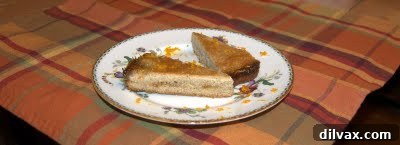
Delightful Jam or Marmalade Bars: A Classic Fannie Farmer Recipe Revisited
Baking can be a wonderful journey, sometimes spurred by a craving, other times by a simple desire to use up ingredients lurking in the pantry. Today, we embark on the latter, diving into the classic world of homemade dessert bars. While my heart, and probably my family’s, yearned for the sweet comfort of strawberry jam bars, fate, or rather, a jar of untouched orange marmalade in the fridge, had a different plan for our baking adventure. This quest isn’t just about creating a delicious treat; it’s about transforming a forgotten ingredient into something truly special.
The Unexpected Culinary Detour: Embracing Orange Marmalade
Many of you might recall the sophisticated Orange Marmalade Soufflé with Grand Marnier from way back on Day 73. A dish that always sounds so wonderfully elegant to pronounce! Well, that very same jar of orange marmalade has been patiently waiting its turn, untouched by eager spoons, primarily because its distinct, slightly bitter tang isn’t my personal favorite. The dilemma was clear: let it linger, destined for the back of the shelf, or give it a new lease of life? The thought of waste propelled me forward, even if it meant venturing into flavors less preferred.
I can almost hear the good-natured chuckles. The irony isn’t lost on me: setting out to save the marmalade, only to potentially risk wasting both the marmalade *and* the resulting bars if they don’t hit the mark. But such is the spirit of culinary experimentation! Sometimes, the most unexpected ingredients lead to the most surprising and satisfying results. And who knows, these humble orange marmalade bars might just become a new favorite after all.
A Timeless Recipe from the Fannie Farmer Cookbook
Our inspiration for today’s baking endeavor comes from a true classic in the culinary world: the Fannie Farmer Cookbook, specifically the Thirteenth Edition, page 632. Penned by the esteemed Marion Cunningham and published by Alfred A. Knopf, Inc., a division of Random House, Inc. (ISBN 0-394-56788-9), this cookbook is a treasure trove of reliable, home-style recipes that have delighted generations. It’s a testament to simple, wholesome ingredients and straightforward methods, promising delightful results even for the most hesitant baker.
Classic Jam or Marmalade Bars: A Versatile Treat
This recipe for Jam or Marmalade Bars yields approximately 16 delightful bars, wedges, or whatever creative shapes you desire. It’s a wonderfully adaptable base that allows you to customize the fruit filling to your heart’s content. While we’re focusing on orange marmalade today, feel free to substitute with your favorite jam – strawberry, raspberry, apricot, or even lemon curd would be equally fantastic. This versatility makes these bars a perfect candidate for using up those jars in your pantry.
Ingredients:
- ½ cup shortening
- ½ cup granulated sugar
- ½ teaspoon vanilla extract
- ½ teaspoon almond extract
- 1 large egg
- 1½ cups all-purpose flour
- 1 teaspoon baking powder
- ½ teaspoon ground cinnamon
- ¼ teaspoon ground cloves
- ½ teaspoon salt
- Jam or Marmalade (amount not specified in original recipe; roughly ⅔ to 1 cup should suffice)
Preparation Instructions:
Before you begin, gather all your ingredients and ensure they are at room temperature for optimal blending. This simple step can make a big difference in the texture of your dough.
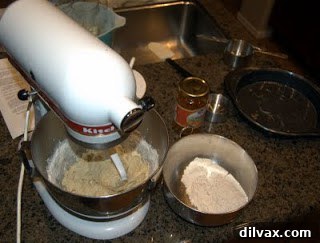
- Preheat Oven and Prepare Pan: Begin by preheating your oven to a steady 400ºF (200ºC). Next, lightly grease an 8-inch square baking pan. If you don’t have an 8-inch square pan, don’t fret! Baking pan substitutions are common. I found myself in a similar situation, opting for an 8-inch round pan over a 9-inch square, knowing that a larger pan could lead to a thinner crust and potential burning. For more guidance on pan sizes and substitutions, I highly recommend consulting resources like the Joy of Baking’s Pan Sizes guide. It’s an invaluable tool for any home baker!
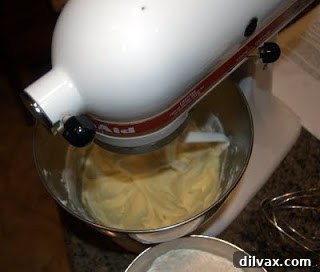
- Cream Wet Ingredients: In a medium mixing bowl, combine the ½ cup shortening with the ½ cup granulated sugar. Using an electric mixer (or a sturdy whisk), cream these together until the mixture is light, fluffy, and pale in color. This process incorporates air, contributing to a tender crumb in your finished bars. Stir in the ½ teaspoon vanilla extract and ½ teaspoon almond extract, blending until fragrant.
- Incorporate the Egg: Add the single large egg to the creamed mixture. Continue to blend well until the egg is fully incorporated and the mixture is smooth and cohesive.
- Combine Dry Ingredients: In a separate bowl, whisk together the 1½ cups all-purpose flour, 1 teaspoon baking powder, ½ teaspoon ground cinnamon, ¼ teaspoon ground cloves, and ½ teaspoon salt. Ensure these dry ingredients are thoroughly combined to distribute the leavening and spices evenly.
- Add Dry to Wet: Gradually add the dry ingredient mixture to the wet mixture, mixing on low speed (or by hand with a spatula) until just combined. Be careful not to overmix, as this can lead to tough bars. The dough will be thick and slightly crumbly.
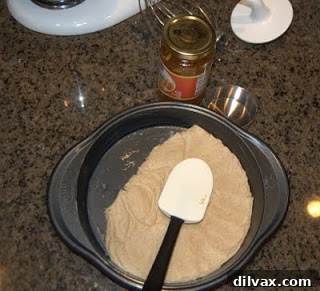
- Form the Base Layer: Take approximately half of the dough and spread it evenly into the bottom of your prepared 8-inch pan. You can use your fingers, a spatula, or the back of a spoon to press it down firmly, creating a uniform base for your bars.
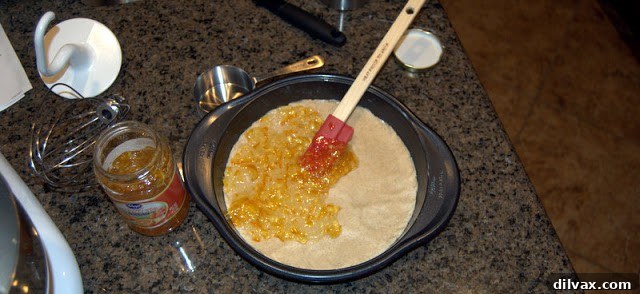
- Apply the Fruit Layer: Carefully spread a generous layer of your chosen jam or marmalade over the dough base. Aim for an even coating, leaving a small border around the edges to help contain the filling during baking. For orange marmalade, about ⅔ to 1 cup works well, depending on your preference for a richer fruit layer.
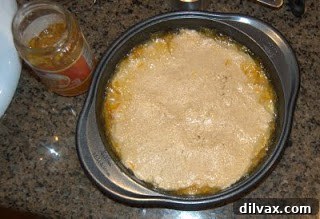
- Add the Top Dough Layer: Now for the trickiest part! Distributing the remaining dough evenly over the marmalade can be a bit of a challenge. I found that attempting to push it from the center outwards often results in the marmalade migrating to the edges. A helpful tip is to flatten the remaining dough ball as much as possible, almost like a small pizza crust, before gently placing it on top of the marmalade layer. Then, use a rubber spatula or your floured fingertips to carefully pat and spread the dough to the edges, minimizing the disturbance to the marmalade beneath. Don’t worry if it’s not perfectly even; the rustic charm adds to the homemade appeal!
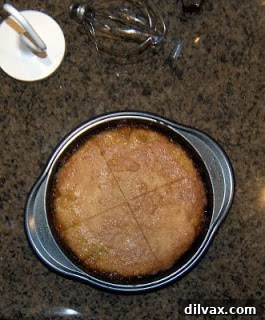
- Bake to Golden Perfection: Place the pan in your preheated oven and bake for approximately 25 minutes. The bars are ready when the top layer is golden brown and the edges appear set. Keep an eye on them, especially if you’ve used a different sized pan, as baking times can vary.
- Cool and Cut: Once baked, remove the pan from the oven and allow the bars to cool completely on a wire rack before cutting. Cooling is crucial, as it allows the bars to set properly and prevents them from crumbling when sliced.
- Serve and Enjoy: For traditional bars, cut into 4×1 inch rectangles. However, if you used an 8-inch round pan, wedges are a natural choice – cut them as big or as small as you like! And remember, these are your homemade creations; feel free to unleash your inner artist and cut them into pretty designs without being confined to strict bars or wedges. Live a little, experiment with shapes, and truly make them your own. It’s all part of the joy of baking!
The Verdict: An Honest Review of the Orange Marmalade Bars
After the baking and cooling, the moment of truth arrived. My personal rating system, on a scale of 1-4 with 4 being the best, awarded these particular orange marmalade bars a solid 2½ rolling pins. This places them squarely in the “could be better, but certainly could be worse” category. Or, as we so eloquently put it in my high school French class, “Comme ci, comme ça” – pronounced “come-see comme-saah.” It’s a perfect phrase for those moments when things are just… okay.
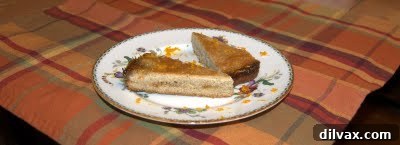
The main challenge, as anticipated, was the application of the top layer of dough over the sticky marmalade. Despite my best efforts to flatten the dough before placing it, the act of pushing it to the edges with a rubber spatula inevitably caused the marmalade to redistribute itself. Consequently, a significant portion of the marmalade ended up concentrated around the outer edges of the pan, leading to an uneven distribution between the layers. This unevenness might have contributed to the initial dryness I experienced.
At first bite, the bars indeed felt quite dry. However, a funny thing happened with each subsequent chew – they became surprisingly addictive. And to my pleasant surprise, there wasn’t an overwhelming orange marmalade taste, which, given my initial hesitation, was a welcome development. The reason for this less-intense marmalade flavor was quickly apparent: most of it had migrated to the outer edges during baking. There, it transformed into delightfully crunchy and chewy caramelized bits, which, I must admit, were rather good and quite irresistible.
So, while these orange marmalade bars weren’t a show-stopping 4-rolling-pin triumph, they certainly weren’t a disaster. They were an interesting experiment, a lesson in dough handling, and a testament to the fact that even less-favored ingredients can find new life and pleasant surprises in the kitchen. They proved to be a simple, homely treat, perfect with a cup of tea or coffee.
Your French Lesson for the Day:
Next time someone asks you how you’re doing, try replying with “Comme ci, comme ça”! You’ll either impress them with your sophisticated French flair, or they’ll just look at you with bemusement, wondering what on earth you just said. Either way, it’s a conversation starter!
Tips for Baking Perfect Jam or Marmalade Bars
Based on this baking experience, here are a few tips to help you achieve even better results with your homemade jam or marmalade bars:
- Dough Handling: If you find the top dough layer challenging to spread, try chilling the dough for 15-20 minutes before attempting to place it. Alternatively, roll out the remaining dough between two sheets of parchment paper to your pan’s dimensions, then invert it carefully onto the marmalade layer, peeling off the top parchment. This can help achieve a more even distribution.
- Marmalade Distribution: To prevent the marmalade from migrating to the edges, consider leaving a slightly larger border of dough around the perimeter when applying the fruit layer. You could also lightly score the bottom dough layer to create small “wells” that hold the marmalade in place.
- Flavor Variations: Don’t limit yourself to orange marmalade! This recipe is incredibly adaptable. Try it with apricot jam for a classic taste, raspberry for a burst of tartness, or even a lemon curd for a zesty twist.
- Pan Size Adjustments: If using a 9-inch square pan, your bars will be thinner, so reduce the baking time by a few minutes to prevent overbrowning. For a smaller or deeper pan, you might need to increase baking time slightly. Always look for that golden-brown crust and set edges.
- Storage: Store these delightful bars in an airtight container at room temperature for up to 3-4 days, or in the refrigerator for up to a week. They make an excellent grab-and-go snack or a simple dessert.
Conclusion: Happy Baking and Sweet Discoveries!
Making these Jam or Marmalade Bars was a journey of discovery – from the initial reluctance to the surprising addictiveness of those crunchy, caramelized edges. It reminds us that sometimes, the best recipes are those that encourage us to step outside our comfort zone and utilize what we already have. Whether you choose to follow this recipe exactly or experiment with your favorite jam, I hope you find as much joy in the process and the delicious outcome as I did.
Happy Baking, or as the French might say, Cuisson Heureux! May your kitchen be filled with wonderful aromas and delightful treats.