Welcome back to another candid entry in my year-long culinary journey, “365 Days of Baking and More.” Today’s story begins, as many do, with a dash of domestic humor and a pinch of marital banter – a testament to the unpredictable nature of life in our bustling kitchen. If my sharing of this personal anecdote causes any offense, I sincerely apologize in advance. However, the sheer hilarity of the situation compelled me to put pen to paper, or rather, fingers to keyboard, as it perfectly encapsulates the everyday charm and occasional absurdity of our home.
This morning, as the aroma of freshly brewed coffee began to fill our kitchen, my husband embarked on his daily ritual: retrieving milk for his cereal. Upon opening the refrigerator, his eyes immediately fixated on the vibrant, plump baked stuffed tomatoes I had lovingly prepared the day before. A wide grin spread across his face as he exclaimed, “Ooohh, the tomatoes! I’m absolutely having those for lunch today!”
Now, I must interject with a small detail for context. We had only shared one of these delectable creations, specifically the one featured in the final photograph of yesterday’s blog post. By my count, there should have been three perfectly good tomatoes remaining. Unless, of course, he had somehow managed to sneak one away in the dead of night – a scenario that, truthfully, would not surprise me in the least given his fondness for my cooking. With a playfully assertive tone, I quickly countered, “There are THREE of them left! You’re planning on eating all of them?! No! I’d certainly like to enjoy one myself.”
He turned to me, a knowing, sly little look dancing in his eyes, accompanied by a mischievous half-smile. “Well,” he began, drawing out the word for dramatic effect, “perhaps I’d be willing to make a trade for one tomato.” Ah, that familiar twinkle! At this point, any seasoned partner would instantly recognize the direction his thoughts were heading. Without missing a beat, and with a feigned exasperation, I retorted, “What, you want sex for a tomato? Yeah. Okay. No.”
A hearty laugh erupted from him. “Hey,” he chuckled, “that should honestly be the name of your blog! Sex for Tomatoes! Can you imagine how many hits you’d get when someone types the word ‘sex’ into Google?” The idea, I admit, was rather amusing, and undeniably provocative. While the concept of a blog named “Sex for Tomatoes” certainly has a memorable, albeit scandalous, ring to it, I couldn’t bring myself to make such a drastic change. After all, I’m only about a month shy of reaching the halfway point of this incredible year-long baking challenge. Changing the name now feels entirely out of the question. Besides, I strongly suspect that individuals actively searching for the word ‘sex’ on Google would likely have very little interest in navigating through a collection of recipes and baking adventures. So, for those who appreciate the humor, you can just think of the blog as:
365 Days of Baking
aka
Sex for Tomatoes (the unofficial, tongue-in-cheek title)
Day 147: A Culinary Pivot – From Sweet Treats to Savory Biscuits
My initial plans for today involved diving into the comforting world of homemade cookies. However, a quick inventory of my pantry revealed a critical oversight: I had no vanilla extract. A true baker’s dilemma! This unexpected hurdle meant postponing my cookie endeavors until tomorrow, necessitating a trip to the grocery store for that essential ingredient. Rather than letting the day go unbaked, I decided to shift gears and prepare something for dinner instead. This delightful pivot led me to explore a recipe for Soda Biscuits, promising a quick and satisfying bake.
The recipe I chose for today’s baking adventure comes directly from a renowned source: The Martha Stewart Living Cookbook, specifically found on page 555. Authored by the inimitable Martha Stewart herself, this culinary tome was published by Clarkson Potter/Publishers, an imprint of the Crown Publishing Group, a division of Random House, Inc. For those interested in tracking down this specific edition, the ISBN is 978-0-307-39382-1. Martha Stewart’s name is synonymous with impeccable standards and flawless execution, so I approached this recipe with high expectations and a keen desire to see if her simple biscuits could live up to the hype.
Classic Soda Biscuits: A Martha Stewart Recipe Reimagined (and Reviewed!)
These Soda Biscuits promise a quick, no-fuss approach to freshly baked bread, perfect for a weeknight meal or a weekend breakfast. The recipe focuses on simple ingredients and a straightforward method, ideal for both novice and experienced bakers alike. My aim was to follow Martha’s instructions meticulously, while also offering my honest insights into the process and, ultimately, the final product.
Yields: Approximately 8 biscuits
Prep time: 15 minutes
Bake time: 20 minutes
Ingredients:
- 1 ¾ cups all-purpose flour, sifted: Sifting the flour is a crucial step that helps aerate it, preventing lumps and ensuring a lighter, more tender biscuit. It also helps in evenly distributing the leavening agents.
- 1 teaspoon salt: Essential for enhancing the overall flavor and balancing the sweetness from the sugar.
- 1 ½ tablespoons granulated sugar: Adds a touch of sweetness and aids in browning the biscuits, contributing to a golden crust.
- 1 ½ teaspoons baking soda: A powerful leavening agent that reacts with the acidic buttermilk, creating carbon dioxide bubbles for a light and airy texture.
- 2 teaspoons baking powder: Another leavening agent, providing an extra lift and ensuring a fluffy biscuit. Using both baking soda and baking powder provides a balanced rise.
- 5 tablespoons unsalted butter, chilled and cut into small pieces: Keeping the butter very cold is paramount. When baked, these cold pockets of butter release steam, creating flaky layers within the biscuit. Small pieces integrate more easily without melting prematurely.
- ¾ cup buttermilk: The acidic component that activates the baking soda, contributing to the biscuit’s rise. Buttermilk also adds a distinctive tangy flavor and tenderness to the dough.
Equipment You’ll Need:
- Large mixing bowl
- Pastry cutter (or a food processor, as per Martha’s original suggestion)
- Baking sheet
- Parchment paper
- Sharp knife
Instructions:
- Preheat Your Oven and Prepare Your Baking Surface: Begin by preheating your oven to a precise 425°F (220°C). While the oven heats, line a standard baking sheet with parchment paper. This simple step prevents sticking and ensures easy cleanup, allowing the biscuits to brown evenly on the bottom.
- Combine Dry Ingredients: In a spacious large bowl, combine the sifted flour, salt, sugar, baking soda, and baking powder. Using a whisk or a fork, mix these dry ingredients thoroughly. This ensures that the leavening agents and flavorings are evenly distributed throughout the flour, setting the stage for a consistent rise and taste.
- Incorporate the Chilled Butter: Add the small, chilled pieces of unsalted butter to the dry ingredients. Using a pastry cutter, work the butter into the flour mixture until it resembles coarse meal, with some pea-sized pieces of butter still visible. This technique is vital for creating a flaky texture; avoid overworking the butter or letting it melt, as this will result in a tough biscuit.
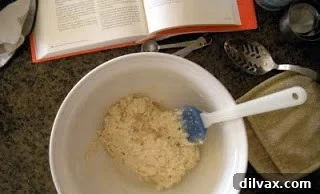
- Add Buttermilk and Form the Dough: Pour the ¾ cup of cold buttermilk into the butter-flour mixture. Using a fork or your hands, mix gently just until the dough comes together. The key here is to avoid overmixing. Overworking the dough develops the gluten too much, leading to a tough and chewy biscuit instead of a tender, flaky one. The dough should still be slightly shaggy, not perfectly smooth.
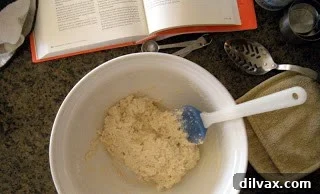
- Shape the Dough: Carefully transfer the dough onto the prepared baking sheet. With lightly floured hands, gently pat the dough into a cohesive 7-inch circle. Aim for a thickness of approximately 1 inch. Handling the dough minimally at this stage is crucial to maintain its tenderness and prevent gluten development.
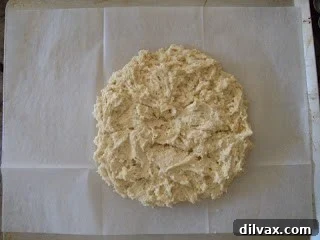 |
- Score for Easy Serving: Using a sharp knife, gently score the surface of the dough, cutting about ¼ inch deep, to mark 8 uniform wedges. Be careful not to cut all the way through the dough at this point; these lines are merely guides for easy separation once baked. This method ensures even baking and perfect portions.
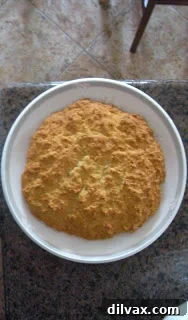
- Bake to Golden Perfection: Place the baking sheet into the preheated oven. Bake the biscuits for approximately 20 minutes, or until they achieve a beautiful golden-brown color on top and feel firm to the touch. The exact baking time may vary slightly depending on your oven, so keep an eye on them towards the end.
- Serve Warm: Once baked, remove the biscuits from the oven. Allow them to cool on the baking sheet for just a few minutes before breaking them apart into individual wedges along the scored lines. These biscuits are best enjoyed hot, straight from the oven, perhaps with a generous smear of butter or your favorite jam.
The Verdict: A Candid Review of Martha’s Soda Biscuits
Every recipe I attempt for “365 Days of Baking and More” undergoes a personal rating system, judged on a scale of 1 to 4 rolling pins, with 4 representing an absolute triumph. After carefully preparing and tasting these Soda Biscuits, I regret to report that they earned a rather disappointing score of 1 ½ rolling pins. This outcome was genuinely disheartening, especially considering the source of the recipe.
The primary issues I encountered were significant. The biscuits were notably dry, lacking the tender, moist crumb one expects from a well-made biscuit. Furthermore, the flavor was surprisingly bland, leaving much to be desired despite the presence of salt and a touch of sugar. Perhaps the most frustrating aspect was their tendency to crumble excessively. When we attempted to butter them – a simple act that should enhance a biscuit – they disintegrated rather than absorbing the spread, making for a messy and unsatisfying eating experience. The texture was undeniably tough, a clear sign that something had gone awry in the pursuit of tenderness.
I found myself pondering why a recipe from Martha Stewart, a paragon of culinary excellence, would yield such an underwhelming result. The original recipe in the cookbook explicitly suggested using a food processor for the entire process, from cutting in the butter to mixing the dough. However, my food processor is a compact model, and I quickly realized it wouldn’t accommodate the full volume of ingredients without overcrowding, potentially leading to uneven mixing. Consequently, I opted for the traditional method of using a pastry cutter and mixing by hand. I am now strongly convinced that this deviation may have been the crucial difference.
A food processor, with its rapid blades, can cut cold butter into flour much more efficiently and evenly than manual methods, minimizing the time the butter is exposed to warmth and thus preserving its chill. It also mixes the dough very quickly, reducing the risk of overworking, which can lead to a tough biscuit. My manual method, while careful, might not have achieved the same level of precise butter distribution or the swift incorporation of ingredients, leading to a less ideal texture. Seriously, would Martha Stewart, known for her meticulous standards, include a recipe in her cookbook that consistently turns out like this without the proper technique or equipment? I highly doubt it. This experience underscores the importance of not just ingredients, but also the tools and techniques specified by a recipe’s author.
Looking Ahead: From Baking Blunders to Future Triumphs
After this rather humbling biscuit debacle, I confess I’m in dire need of a culinary redemption. My palate is craving the comforting embrace of a truly satisfying baked good. I’m thinking a proper cookie fix or perhaps a batch of light, airy cupcakes will be just the ticket for tomorrow’s baking session. The first order of business will be that essential trip to the store to finally purchase some vanilla extract. Once that’s secured, we’ll see what sweet magic we can whip up to erase the memory of today’s crumbly disappointment.
This journey through “365 Days of Baking and More” is as much about learning from the less-than-perfect outcomes as it is about celebrating the successes. Every bake, whether a triumph or a challenge, offers valuable lessons and deepens my understanding of the craft. Thank you all so much for continuing to read and for joining me on this unpredictable, delicious, and sometimes hilariously frustrating adventure. Your support and engagement mean the world.
Happy Baking!