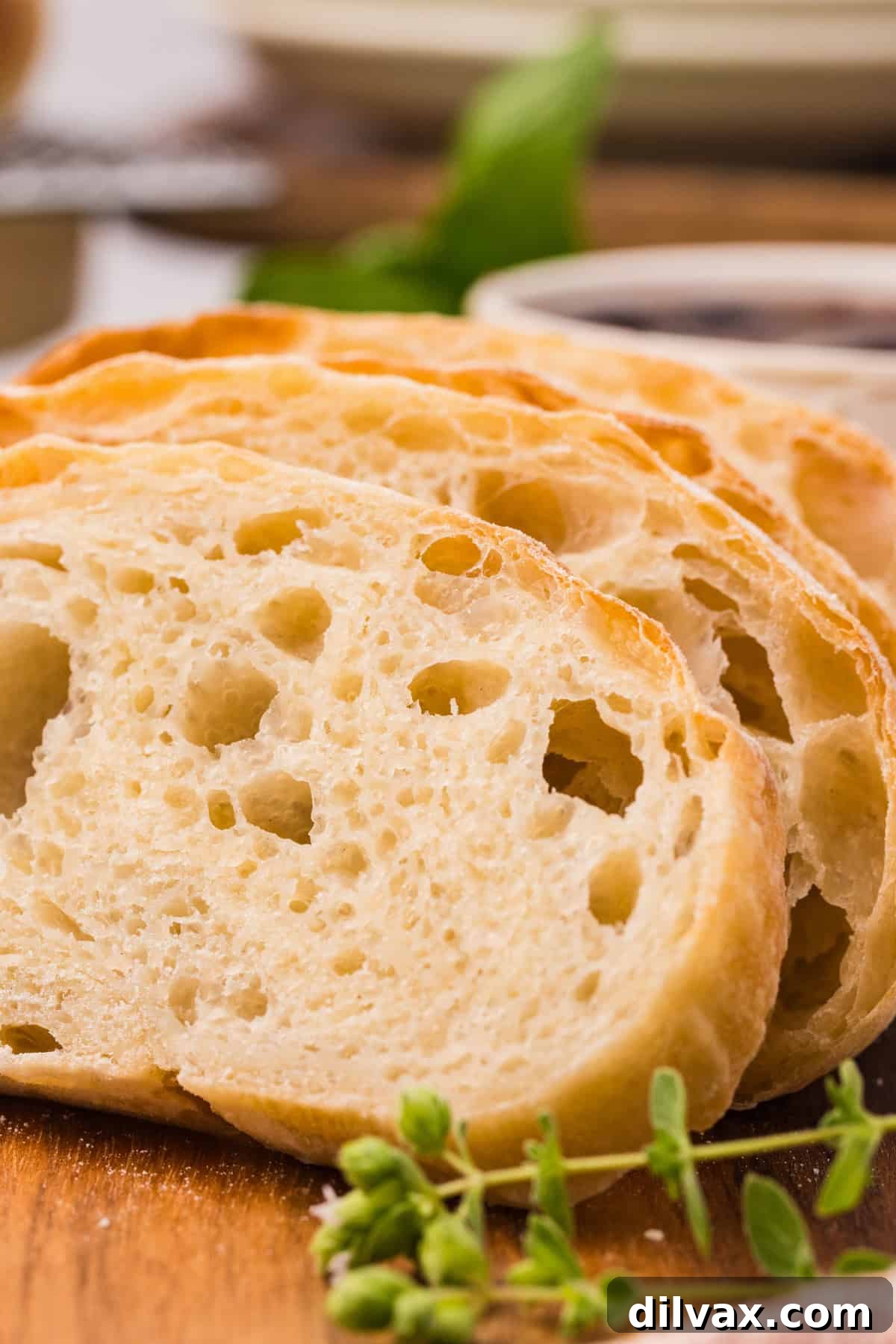
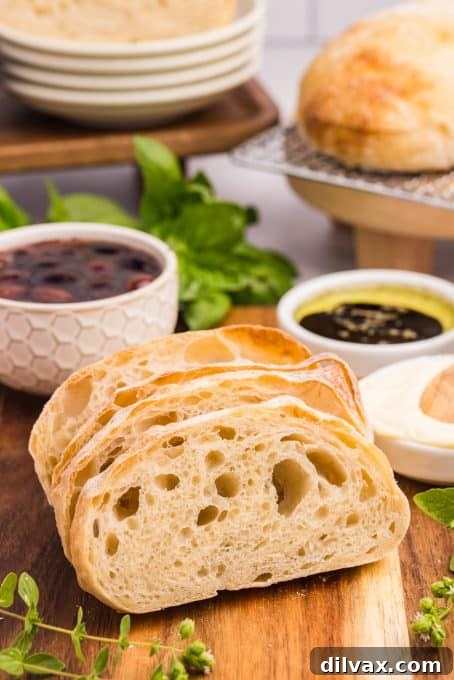
Discover the authentic taste of Italy with this incredible Homemade Ciabatta Bread Recipe. Known for its distinct crisp golden crust, wonderfully open, airy crumb, and delightful chewiness, ciabatta is more than just bread – it’s an experience. Perfect for creating gourmet sandwiches, soaking up rich olive oil, or simply savoring on its own, this bakery-quality loaf is surprisingly simple to achieve in your home kitchen. Whether you enjoy it fresh from the oven or lightly toasted, every bite promises an irresistible taste of tradition.
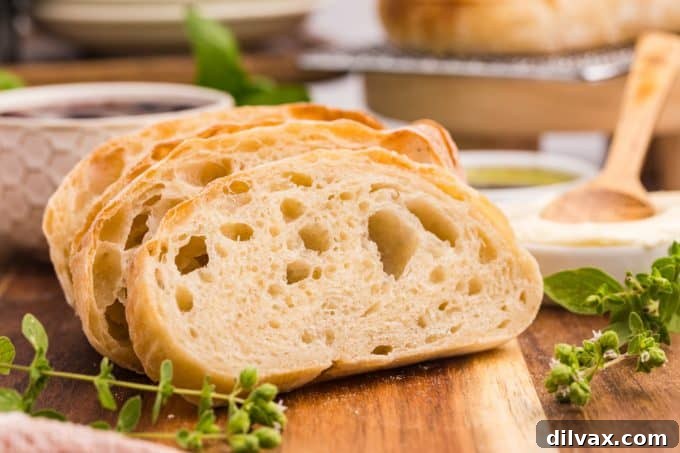
Ciabatta, meaning “slipper” in Italian, earns its name from its elongated, flattened shape. This rustic Italian classic offers a unique texture profile: a remarkably fluffy and open interior encased in a wonderfully crusty exterior. It provides the perfect balance of lightness and substance, making it an ideal companion for a myriad of culinary delights. Imagine tearing into a warm piece, the steam rising as you dip it into fragrant olive oil, or pairing it with your favorite robust soup. Its versatility and satisfying chew make it a staple for any bread lover.
SAVE THIS EASY CIABATTA BREAD RECIPE TO YOUR FAVORITE PINTEREST BOARD!
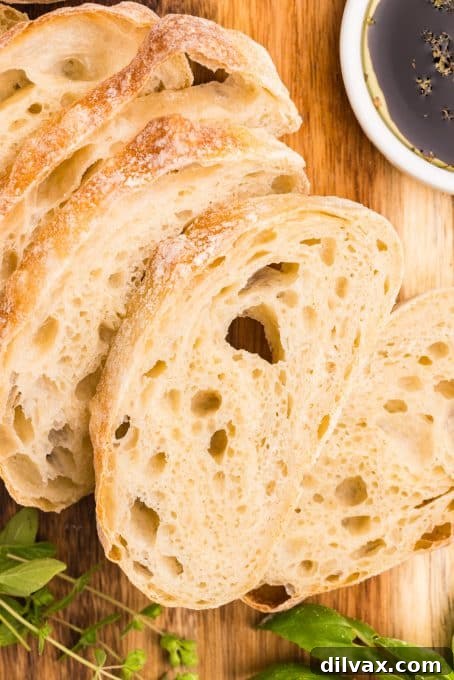
Mastering the Art of Ciabatta Baking
Baking ciabatta might seem daunting at first, primarily due to its signature high-hydration dough. This dough is exceptionally wet and sticky, which is precisely what contributes to the bread’s characteristic open and airy crumb. While it requires a slightly different handling technique than drier doughs, with a few key tips and a bit of patience, you’ll be creating professional-quality ciabatta in no time. The trick to managing this wet dough is to always keep your hands well-moistened when working with it, preventing it from sticking excessively to your fingers.
For the most accurate and consistent results, especially when dealing with precise baking measurements, we highly recommend using a digital kitchen scale. Measuring ingredients by weight rather than volume eliminates variability and ensures your dough has the perfect hydration ratio every single time. While this recipe involves several stages, rest assured that all the testing and fine-tuning have been done for you. By diligently following these detailed instructions, you will successfully bake truly delicious ciabatta bread that will impress family and friends alike. We’ve included helpful notes throughout the process to guide you every step of the way, making your baking journey smooth and enjoyable.
Essential Ingredients for Authentic Ciabatta Bread
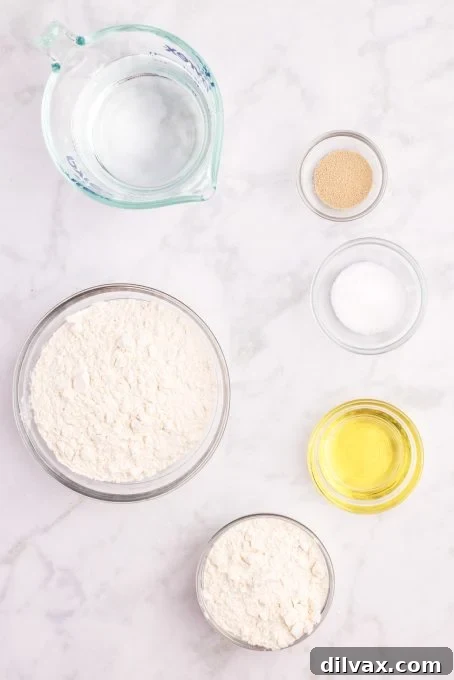
One of the most appealing aspects of this traditional Italian bread is its reliance on a minimal list of readily available pantry staples. You don’t need any exotic or hard-to-find components; just a few basic ingredients come together to form this remarkably rustic and flavorful loaf. The quality of these simple ingredients truly shines through in the final product. Here’s what you’ll need to gather:
- All-purpose flour: Used primarily for the initial sponge (yeast starter) to kickstart fermentation.
- Active dry yeast: The leavening agent responsible for the bread’s rise and distinctive airy texture.
- Bread flour: Higher in protein content than all-purpose flour, it develops strong gluten networks essential for ciabatta’s structure and chew.
- Sea salt: Enhances the flavor of the bread and also helps regulate yeast activity.
- Olive oil: Used to grease the bowl and the dough, adding subtle flavor and promoting a tender crust.
- Warm water: Crucial for activating the yeast and achieving the dough’s high hydration. Ensure it’s warm, not hot, to avoid killing the yeast.
- Ice: A clever trick used during baking to create steam, contributing to the signature crispy crust and excellent oven spring.
For precise measurements and detailed quantities, please refer to the comprehensive printable recipe card located at the very bottom of this post!
Step-by-Step Guide to Baking Ciabatta Bread
The journey to perfect ciabatta begins with a foundational step: creating a “biga” or yeast starter, also known as a sponge. This pre-ferment is vital for developing deeper flavors and enhancing the bread’s texture. It’s best prepared the evening before your baking day, allowing it ample time to ferment and mature.
Crafting the Sponge (The Night Before)
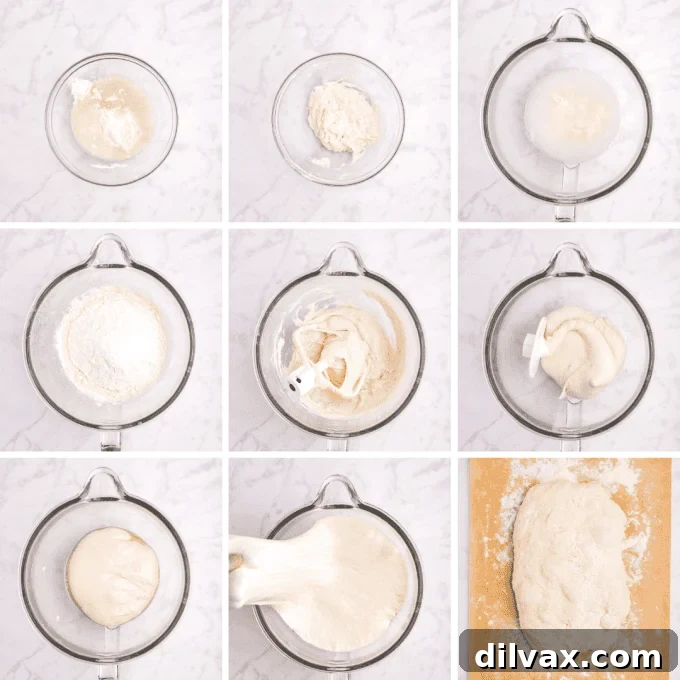
In a small mixing bowl, combine the all-purpose flour, active dry yeast, and warm water. Whisk these ingredients together thoroughly until you achieve a smooth mixture free of any lumps. This initial mixing ensures even distribution of the yeast. Once combined, cover the bowl tightly with plastic wrap or a clean tea towel. Let this sponge rest at room temperature on your kitchen counter overnight, or for a minimum of 12 hours. During this period, the yeast will become highly active, producing a bubbly, aromatic mixture that forms the flavor base of your ciabatta.
Preparing the Main Bread Dough
The following day, retrieve your activated sponge. In the bowl of your stand mixer, fitted with the paddle attachment, add the entire sponge along with one cup of fresh warm water. Use a whisk to gently stir and combine these ingredients until the sponge is fully dissolved into the water, creating a cloudy, milky liquid. This ensures the starter is evenly incorporated before adding the dry ingredients.
Next, add the bread flour and sea salt directly into the stand mixer bowl. Start the mixer on a low speed, allowing the paddle attachment to thoroughly incorporate the flour into the wet mixture. It’s crucial to ensure there are no dry pockets of flour remaining. Once the flour is mostly absorbed, increase the mixer speed to medium and let it work the dough for approximately 6 minutes. At this stage, the dough will appear extremely wet and sticky, which is entirely normal for ciabatta dough.
After the initial mixing, scrape down the ciabatta dough from the paddle attachment and switch it out for the dough hook. Continue mixing the dough on medium speed for another 8 minutes. During this kneading phase, you will observe a remarkable transformation: the dough will gradually begin to pull away from the sides of the bowl, developing elasticity and a shiny appearance. This indicates that the gluten structure is properly forming, which is essential for trapping the gases that create ciabatta’s signature open crumb. The dough will also start to hold its shape more effectively.
Once kneading is complete, prepare a large, clean bowl by greasing it generously with about 1 tablespoon of olive oil. Carefully transfer the sticky dough into this greased bowl. Drizzle an additional tablespoon of olive oil over the top of the dough. Using your fingers or a pastry brush, gently spread this olive oil to completely cover the entire surface of the dough with a thin, protective layer. This prevents the dough from drying out and forming a crust during its lengthy rise. Cover the bowl with plastic wrap or a clean tea towel and allow the dough to rise undisturbed for a significant period of 4 hours. This extended bulk fermentation is key to developing complex flavors and a superior texture.
The Stretch and Fold Technique
After the initial 4-hour rise, your dough should have visibly doubled in size and be filled with beautiful air bubbles. Now, it’s time to perform the gentle but crucial “stretch and fold” technique. This process further develops gluten, strengthens the dough, and helps redistribute the yeast, all while preserving the precious air pockets that create ciabatta’s signature open crumb. The key here is to be gentle; try to avoid deflating the dough too much by popping all the bubbles, as this contributes directly to a fluffier final bread.
To begin, lightly wet your hands. This prevents the very sticky dough from adhering to your fingers. Gently take a section of the dough from one side, stretch it upwards, and fold it over itself towards the center of the dough ball. Imagine folding a letter. Rotate the bowl a quarter turn and repeat this process for each of the four “sides” of the dough. Once all sides have been stretched and folded, cover the bowl again and let the dough rest for 30 minutes. This resting period allows the gluten to relax before the next fold.
You will repeat this entire stretch and fold process three more times, for a total of four stretch/fold/turn sequences. This repetitive, gentle handling builds strength in the dough without aggressive kneading, resulting in a bread with incredible structure and large, irregular holes.
Baking Your Beautiful Ciabatta Loaves
Once the final stretch and fold process is complete, allow the dough to rest for an additional 30 minutes. During this time, prepare your oven for baking. Arrange two oven racks: one in the center and one on the bottom. Place a sturdy baking sheet pan on the center rack and a cast iron skillet (or any other oven-safe, heavy-bottomed skillet) on the bottom rack. Preheat your oven to a high temperature of 425°F (218°C). The cast iron skillet will be used to create steam, which is critical for a beautiful crust.
While the oven preheats, prepare your workspace. Lay a piece of parchment paper, roughly the size of your baking pan, on a clean section of your counter. Lightly dust this parchment paper with all-purpose flour. Also, measure out 1 cup of ice and set it aside in a measuring cup; this will be added to the hot skillet.
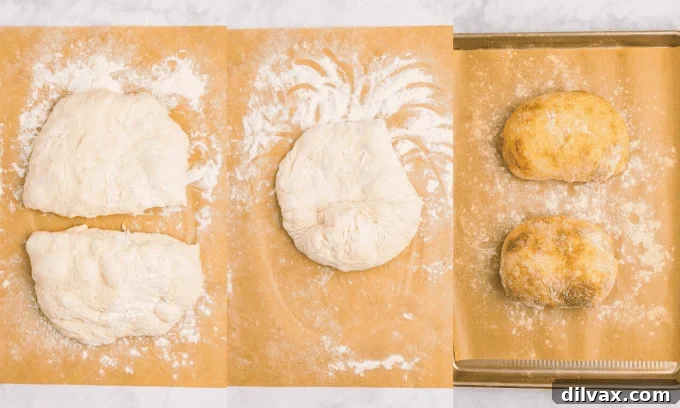
Next, generously sprinkle your main work surface (a clean kitchen counter) with flour. Carefully turn the risen dough out onto this floured surface. You have a choice here: cut the dough into two equal pieces for traditional ciabatta loaves, or divide it into 12 smaller pieces for individual ciabatta buns. Gently dust the tops of your dough pieces with more flour and carefully transfer them onto the prepared piece of parchment paper.
Once your oven has reached the specified temperature, carefully remove the preheated baking sheet from the center rack. Transfer the parchment paper with your shaped dough pieces onto this hot baking sheet. Promptly place the baking sheet, now holding your ciabatta, back into the center of the oven. Immediately and carefully, pour the 2 cups of ice into the hot cast iron skillet on the bottom rack. Close the oven door quickly to trap the steam.
Bake your ciabatta at 425°F (218°C) for approximately 25 minutes, or until the loaves achieve a beautiful golden-brown color and sound hollow when tapped on the bottom. The steam created by the ice will help the crust become wonderfully crisp and allow the bread to achieve maximum oven spring. Once baked, remove the ciabatta from the oven and transfer it to a wire rack to cool completely before slicing. This cooling step is crucial for the internal structure to set properly. Enjoy your perfect homemade ciabatta!
Expert Ciabatta Baking Tips for Success
Achieving bakery-quality ciabatta at home is within reach, especially when you pay attention to these crucial details. These tips will help you navigate the unique challenges of high-hydration dough and ensure your bread turns out perfect every time:
- Water Temperature is Key: Always ensure your water is warm, but never hot. Water that is too hot will kill the active dry yeast, preventing your bread from rising properly and resulting in a dense loaf. Aim for a temperature around 90°F (32°C). This temperature is ideal for activating the yeast without harming it.
- Keep Hands Wet: Ciabatta dough is intentionally very wet and sticky. This high hydration is what gives the bread its characteristic open crumb structure. To handle this dough effectively during the stretch and fold process and shaping, always wet your hands thoroughly. Moist hands prevent the dough from sticking excessively, making it much easier to work with and preserving those delicate air bubbles.
- Generous Olive Oil Coating: When placing your dough in the rising bowl, it’s essential to use enough olive oil to create a thin, even layer covering the entire surface of the dough ball. This protective barrier is vital to prevent the dough from drying out and forming a premature crust during its long fermentation period. A dry surface can inhibit proper rising and affect the final texture.
- Mindful Flour Dusting: When dusting your counter and dough with additional flour during shaping, be conservative. You can always add a little more if needed, but it’s very difficult to remove excess flour once it’s incorporated. Too much added flour can alter the dough’s hydration, leading to a drier, less airy ciabatta with a tougher texture. Use just enough to prevent sticking.
- Don’t Rush the Process: Ciabatta baking is a marathon, not a sprint. The long fermentation and resting periods are crucial for flavor development and gluten structure. Resist the urge to shorten these times, as patience will be rewarded with superior results.
- Oven Thermometer: While your oven dial might indicate a certain temperature, an independent oven thermometer can confirm its accuracy. This ensures your oven is truly at 425°F (218°C) when you introduce the bread, which is critical for optimal oven spring and crust development.
Frequently Asked Questions About Ciabatta Bread
Is the cast iron skillet and ice necessary for baking?
Absolutely, if at all possible, using a cast iron skillet with ice is highly recommended for baking ciabatta. Cast iron is an excellent heat conductor and retains heat exceptionally well in the oven. When you add ice to this preheated, scorching hot skillet, it immediately creates a vigorous plume of steam. This burst of steam plays a dual critical role in developing perfect ciabatta: Firstly, it creates a moist environment that delays the crust from setting too quickly, allowing the bread to achieve maximum “oven spring” (the final burst of rise in the oven), leading to a more voluminous and airy loaf. Secondly, this steam is essential for forming the traditional chewy, crisp, and golden-brown crust that ciabatta is famous for.
What is the best way to store homemade Ciabatta Bread?
To preserve the freshness and unique texture of your leftover ciabatta bread, proper storage is key. You have a couple of options: storing it at room temperature or in the refrigerator. Regardless of your choice, always ensure the bread is stored in a bread bag, wrapped in beeswax wraps, or placed within an airtight container. This protective barrier prevents the bread from drying out and becoming stale too quickly. At room temperature, your ciabatta will remain fresh for 1-2 days, retaining its best texture and flavor. If you need to extend its shelf life, storing it in the refrigerator can keep it fresh for up to a week, though it might lose a little of its crispness.
Can I prepare ciabatta bread in advance and freeze it?
Yes, absolutely! Ciabatta bread freezes beautifully, making it an excellent candidate for meal prep. Baking ahead of time and freezing means you can enjoy fresh, homemade bread whenever the craving strikes, with minimal effort on demand. To freeze, bake the ciabatta as directed in the recipe and allow it to cool completely to room temperature. Once cooled, wrap the entire loaf (or individual buns) tightly in plastic wrap, followed by a layer of aluminum foil. For extra protection against freezer burn, place the well-wrapped bread into a resealable freezer bag. Properly stored, your ciabatta will stay fresh in the freezer for 3-4 months. When you’re ready to enjoy it, simply thaw the bread at room temperature before slicing or reheating gently in the oven for a “freshly baked” experience.
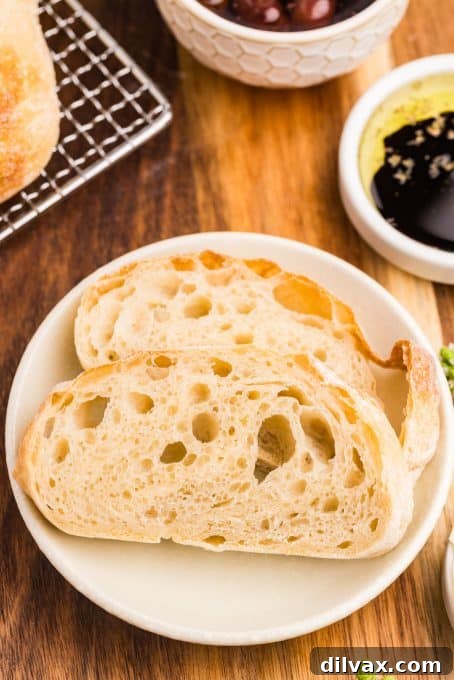
Serving Suggestions: What to Pair with Ciabatta Bread
Ciabatta bread is incredibly versatile and can elevate any meal, making you feel cozy and satisfied. Its robust flavor and excellent texture make it a perfect canvas for a wide range of pairings. Here are some delightful ideas to serve with your homemade ciabatta:
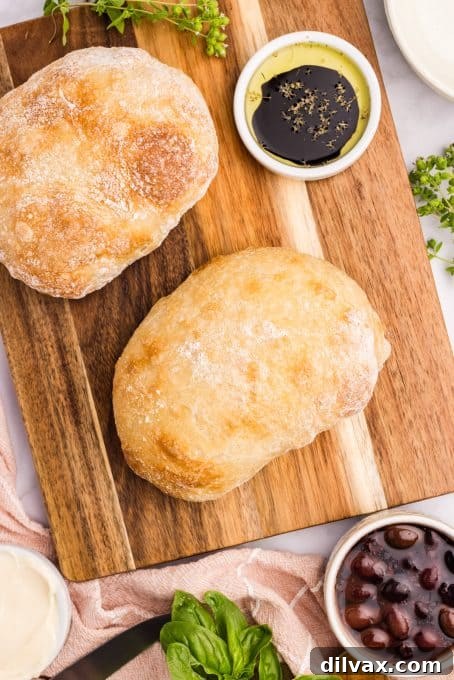
- Classic Olive Oil Dip: The quintessential pairing! Pour a high-quality extra virgin olive oil into a shallow dish. Add a splash of balsamic vinegar, a grind of black pepper, and a sprinkle of flaky sea salt for an added touch of crunch and flavor. Simply tear off a piece of warm ciabatta and dunk it in.
- Gourmet Sandwiches: Ciabatta’s sturdy yet airy structure makes it the ultimate bread for sandwiches. Its rustic charm complements both simple and elaborate fillings. Pile it high with your favorite cold cuts, cheeses, fresh vegetables, and spreads like pesto, hummus, or tapenade for a truly satisfying meal. It’s especially fantastic for panini.
- Decadent Garlic Bread: Transform your ciabatta into an irresistible side dish. Slice the loaf lengthwise, slather generously with softened butter mixed with minced garlic and a touch of fresh parsley. Top with grated Parmesan or shredded mozzarella cheese and bake until golden and bubbly.
- Hearty Soup Companion: There’s nothing more comforting than a warm bowl of soup accompanied by crusty bread. Ciabatta is excellent for soaking up all the delicious broths and flavors of any soup, from a rich tomato bisque to a chunky vegetable stew. Try it alongside this Stuffed Pepper Soup recipe or a comforting Homemade Turkey Soup.
- Bruschetta Base: Slice ciabatta into thick rounds, toast them lightly, rub with a garlic clove, drizzle with olive oil, and top with fresh diced tomatoes, basil, and a balsamic glaze for a vibrant appetizer.
- Cheese Board Essential: Arrange slices of ciabatta alongside an assortment of artisanal cheeses, cured meats, olives, and fruit for an elegant and easy entertaining option.
- Breakfast Toast: Don’t limit ciabatta to savory meals. Slice it, toast it, and spread with butter, jam, or even avocado for a delightful breakfast or brunch treat.
Versatile Ciabatta Bread Variations
This recipe offers wonderful flexibility, allowing you to tailor the yield to your specific needs. From a single batch of dough, you can choose to create either two substantial ciabatta loaves, perfect for family meals or larger gatherings, or twelve individual, personal-sized ciabatta buns. The buns are ideal for serving alongside individual salads, as mini-sandwich carriers, or for smaller portions. You can even enjoy the best of both worlds by making one large loaf and six smaller buns, offering a versatile assortment from a single baking session.
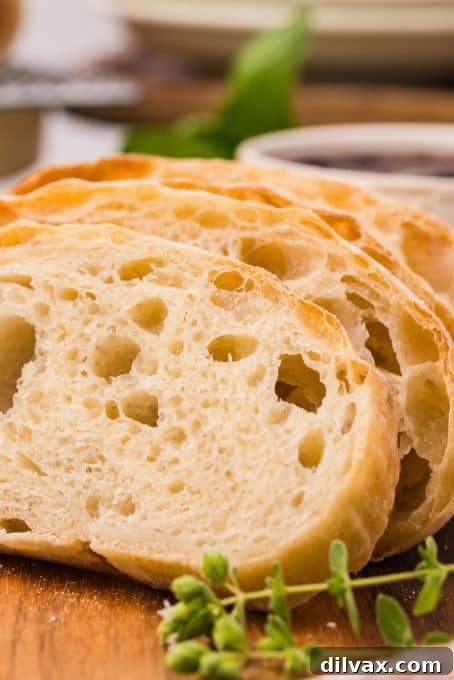
Explore More Delicious Homemade Bread Recipes
If you’ve enjoyed the rewarding experience of baking your own ciabatta, you’ll love exploring other delightful homemade bread recipes. There’s nothing quite like the aroma of freshly baked bread filling your kitchen. Expand your baking repertoire with these fantastic options for your next baking adventure:
- Pepperoni Bread: A savory delight packed with flavor, perfect for a hearty snack or party appetizer.
- Classic Italian Bread: A timeless recipe for a crusty, flavorful loaf that pairs well with any meal.
- Tropical Pineapple Bread: A sweet and tender loaf with a hint of tropical fruit, great for breakfast or dessert.
- Artisan Dutch Oven Bread: Achieve a beautiful, rustic loaf with minimal effort using a Dutch oven.
- Brown Butter Rum Banana Bread: A wonderfully moist and fragrant banana bread with a sophisticated twist.
- Coca Bread (Spanish Sweet Bread): A traditional Spanish sweet bread, perfect for a special treat.
- Cream Cheese Pumpkin Bread: A delightful seasonal bread, moist and spiced, with a creamy filling.
Don’t forget to Pin or print this incredible Ciabatta Bread Recipe so you can effortlessly recreate this homemade Italian classic anytime you desire!
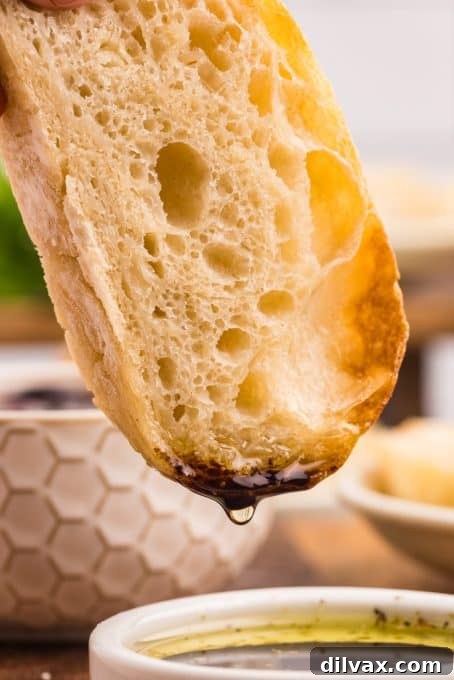
FOLLOW ME
FACEBOOK ~ PINTEREST
INSTAGRAM ~ TWITTER
YOUTUBE
Keep an eye out for more of my easy recipes each week!
Want to Save This Recipe?
Enter your email & I’ll send it to your inbox. Plus, get great new recipes from me every week!
By submitting this form, you consent to receive emails from 365 Days of Baking and More.
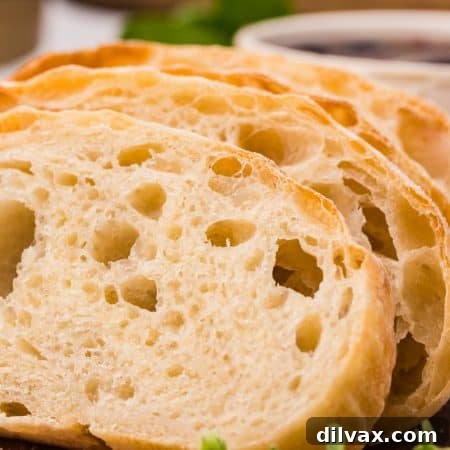
Ciabatta Bread Recipe
Ingredients
Sponge (Yeast Starter)
- ½ cup all-purpose flour
- ½ teaspoon active dry yeast
- ¼ cup warm water
Bread Dough
- 2 ½ cups bread flour
- 2 teaspoons sea salt
- 1 cup warm water
For Use in Shaping and Baking
- ½ cup all-purpose flour (or more if needed)
- 2 cups ice
- olive oil
Instructions
For the Sponge
-
In a small bowl, add the all-purpose flour, yeast, and warm water. Using a whisk, stir to combine until there are no lumps visible. Cover and allow to sit on the counter at room temperature overnight or for 12 hours.
For the Bread
-
In the bowl of your stand mixer with the paddle attachment, add the sponge that was created the night before and the warm water. Using a whisk, stir until fully combined. The mixture will look very cloudy.
-
To the bowl of the stand mixer, add the bread flour and salt. Turn the mixer to low and stir to fully incorporate the flour. Increase the speed to medium and allow the mixer to work the dough for 6 minutes.
-
Scrape the dough from the paddle and switch the paddle for the dough hook. Turn the mixer speed to medium and allow the machine to knead the dough for 8 minutes. At this point you will see the dough pulling away from the sides of the bowl. The dough will become shiny and start holding its shape.
-
Grease a large mixing bowl with about 1 tablespoon of olive oil and place the dough into the mixing bowl. Drizzle another tablespoon of olive oil on top of the dough and use your fingers or a brush to completely cover the surface of the dough with a thin layer of olive oil. Cover the dough with plastic wrap or a tea towel and allow to rise for 4 hours.
Stretch and Fold
-
Once the dough has doubled in size, it’s time to follow the stretch and fold process. **When doing this, just stretch and fold the dough over, try to avoid popping all of the bubbles in your dough, it will result in a fluffier bread. Wet your hands, take a small section of the dough from one side, and stretch the dough upwards, folding the dough over itself towards the center of the dough ball. Repeat this process stretching and folding all 4 “corners” of the dough. Cover and set aside for 30 minutes.
-
Repeat this process 3 more times for 4 stretch, fold, and turn times.
Rest and Bake
-
Once you’ve finished the last stretch and fold process, set the dough aside for 30 minutes. While you wait, arrange 2 racks in your oven into the center and bottom. Place a baking sheet in the center and a cast iron skillet on the bottom rack and preheat to 425°F (218°C).
-
Place a piece of parchment paper about thesize of your baking sheet on the counter (to the side) and dust with flour. Place 1 cup of ice in a measuring cup and set aside.
-
Sprinkle your clean kitchen counter with flour and turn out the dough onto your floured counter. Cut the dough into 2 pieces for loaves or 12 pieces for bun sizes. Dust the top of the dough with flour and place the dough pieces on the prepared piece of parchment paper.
-
Once the oven has come to temperature, remove the baking sheet from the oven, and place the piece of parchment paper with the dough on it onto the baking sheet. Place the baking sheet with the bread in the oven and 2 cups of ice in the cast iron skillet.
-
Bake at 425° F for 25 minutes or until the bread is golden brown.
Notes
- This dough is very wet and can be hard to handle. Make sure you wet your hands before working the dough.
- For best results, measure the ingredients with a digital scale.
- Store it either at room temperature or in the refrigerator. Either way, make sure to store the bread in a bread bag or an airtight container to preserve freshness. Your bread will stay fresh for 1-2 days at room temperature or up to a week in the refrigerator.
- This dough will make 2 loaves or 12 buns.
Nutrition
Did you make this recipe?
Share it with me on Instagram and make sure to follow me on Pinterest for more recipes.
Pin Recipe
Share Recipe