
What a day it’s been! I finally managed to tackle some serious house cleaning today. While it was only a portion of the endless tasks on my list, it feels like a monumental first step. There’s a particular satisfaction in seeing progress, even if the mountain of “to-dos” still looms large. I have this peculiar habit, inherited directly from my dear mother, of enthusiastically starting one project only to be irresistibly drawn to another before the first is anywhere near completion. This often leaves a trail of half-finished endeavors scattered throughout the house, creating a constant hum of disorganization in the background of my mind.
Lately, I’ve been experiencing a strong “nesting” instinct. It’s more than just wanting a clean house; it’s a deep-seated urge to sort, organize, and decisively declutter. The mantra “out with the old, in with the new” resonates deeply, though perhaps the “new” should patiently wait until the “old” is completely and thoroughly managed. This drive towards a more orderly living space isn’t just about aesthetics; it’s about creating a calm, functional environment that supports mental clarity and reduces daily stress. A well-organized home, especially the kitchen, can truly transform your daily routines and ignite a passion for productive living and creative pursuits.
Rediscovering Culinary Treasures: The Enduring Charm of Vintage Cookbooks
Speaking of new discoveries and old treasures, I was just scrolling online and noticed that the very cookbook I rely on so heavily is available for a mere $0.77! Yes, it’s a used copy, likely about 20 years old, but its value far exceeds that negligible price tag. This isn’t just any cookbook; it’s a culinary compendium packed with a wealth of recipes, many of which have already proven to be incredibly delicious. Beyond the dishes themselves, it contains invaluable information on kitchen basics, baking techniques, and general cooking wisdom that stands the test of time.
What truly elevates this book to indispensable status for me are the wonderful little hints, tips, and equivalent charts tucked inside the front and back covers. I consult them constantly for quick conversions or forgotten measurements. Over the years, I’ve developed the habit of writing directly in all my cookbooks, making detailed notes every time I try a recipe. This personal annotation system helps me track my culinary adventures: I know exactly when I’ve made a dish, what modifications I tried, and most importantly, how it was received by the family. These scribbled notes become a valuable historical record, guiding my future cooking decisions and ensuring I only revisit recipes that earned rave reviews.
Breaking the Rules: Personalizing Your Culinary Journey
It’s funny, I always had this deep-seated aversion to writing in books. It felt almost sacrilegious, a violation of the sanctity of the printed word. But when my cooking frequency increased dramatically after we had kids, practicality quickly superseded sentimentality. How else would I remember which chicken recipe everyone loved or which pie crust was a complete disaster? It seemed illogical not to make notations, yet I still had to consciously overcome that ingrained hangup about defacing my books.
It reminds me of a similar, albeit less profound, shift in perspective. For years, I only ever bought two kinds of breakfast cereal. That was my unspoken rule. Then, we started watching ‘Seinfeld,’ and suddenly, seeing Jerry’s pantry overflowing with a dizzying array of cereal boxes felt like an unofficial permission slip. From then on, I felt liberated to keep a multitude of different kinds of cereal in our pantry at any given time. It was genuinely exhilarating to open the cupboard each morning and have so many choices! It’s peculiar, I know, but it’s often these seemingly trivial things that highlight our unique quirks and personal journeys – like sniffing pizza crust, for example. These small acts of breaking self-imposed rules can lead to unexpected joys and greater freedom, both in life and in the kitchen.
A Timeless Classic: The Fannie Farmer Cookbook and Baking Powder Biscuits
Today’s featured recipe, Baking Powder Biscuits, is sourced from a true culinary institution: The Fannie Farmer Cookbook, Thirteenth Edition. This particular edition was authored by the esteemed Marion Cunningham, published by Alfred A. Knopf, Inc., a division of Random House, and carries the ISBN 0-394-56788-9. The Fannie Farmer Cookbook is celebrated for its clear, concise instructions and its dedication to providing foundational recipes that have shaped American home cooking for generations. Marion Cunningham’s revival of the classic made it accessible to new audiences, ensuring its legacy continues.
Baking powder biscuits are a quintessential American quick bread, cherished for their tender crumb, flaky layers, and incredible versatility. They’re a staple for breakfast, perfect alongside savory gravies, or as a comforting side to any meal. This recipe offers a straightforward approach to achieving perfectly delightful biscuits right in your own kitchen.
Classic Baking Powder Biscuits
From The Fannie Farmer Cookbook, Thirteenth Edition
Ingredients:
- 2 cups all-purpose flour: The foundational structure of our biscuits. Using a good quality, unbleached flour will yield the best results.
- ½ teaspoon salt: Crucial for enhancing flavor and balancing the sweetness.
- 4 teaspoons baking powder: The primary leavening agent, responsible for the biscuits’ rise and light texture. Ensure your baking powder is fresh for optimal lift.
- 1 tablespoon granulated sugar: Adds a touch of sweetness and helps with browning.
- ½ cup vegetable shortening: The key to flaky, tender biscuits. Cold shortening cut into the flour creates steam pockets during baking, resulting in those desirable layers.
- 2/3 cup whole milk: Provides moisture and helps activate the baking powder. Cold milk is often preferred to keep the shortening firm.

Instructions:
- Preheat Oven & Prepare Pans: Begin by preheating your oven to a steady 425ºF (220ºC). For classic round biscuits, lightly grease two 8-inch cake pans. This helps prevent sticking and promotes even browning on the bottom.
- Combine Dry Ingredients: In a large mixing bowl, thoroughly whisk together the flour, salt, baking powder, and sugar. This step ensures all the dry ingredients are evenly distributed before adding the fat.
- Cut in Shortening: Add the ½ cup of cold vegetable shortening to the dry ingredients. Using two knives or a pastry blender, cut the shortening into the flour mixture until it resembles coarse meal, with some pea-sized pieces of shortening remaining. This technique is vital for creating tender, flaky biscuits. Avoid overworking the mixture; quick, light strokes are best to keep the shortening cold.

- Add Milk: Pour in the 2/3 cup of cold milk all at once. Stir with a fork just until the dough comes together and forms a soft ball. Be careful not to overmix, as this can develop the gluten too much, resulting in tough biscuits.
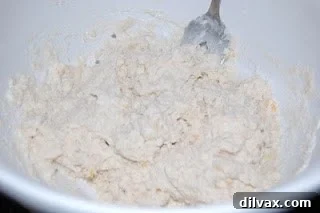
- Knead & Shape: Turn the dough out onto a lightly floured surface. Knead gently for exactly 14 times. This minimal kneading helps to bring the dough together without overworking it. Then, pat the dough evenly until it is about ½ inch thick.
- Cut Biscuits: Using a 2-inch round cookie cutter, cut out individual biscuits. For softer sides, place the cut biscuits touching each other in the prepared cake pans. This allows them to steam slightly as they bake, resulting in a more tender crumb.
- Bake: Transfer the cake pans to the preheated oven and bake for 15-20 minutes, or until the biscuits are beautifully golden brown on top and cooked through. The exact baking time may vary slightly depending on your oven.
Delightful Variations to Try:
- Cheese Biscuits: For a savory kick, simply add ½ cup of grated sharp Cheddar cheese to the dry ingredients along with the flour mixture. The cheese melts beautifully, infusing the biscuits with a rich, tangy flavor.
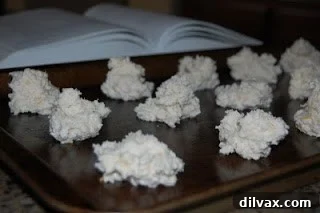
- Drop Biscuits: If you’re short on time or don’t have a cookie cutter, increase the milk to an additional 1/3 cup (making a total of 1 cup milk). The dough will be softer. Drop by spoonfuls onto a buttered baking sheet for rustic, irregularly shaped biscuits.
- Herbed Biscuits: Incorporate 1-2 tablespoons of finely chopped fresh herbs like chives, rosemary, or thyme into the dry ingredients for an aromatic twist.
- Sweet Biscuits: For a sweeter treat, add an extra tablespoon of sugar and perhaps a teaspoon of cinnamon to the dry ingredients. Serve with butter and jam for a delightful breakfast or dessert.
My Baking Adventure: Learning and Experimenting with Biscuits
For my first attempt at these classic biscuits, I had originally envisioned baking them in the cake pan as instructed, aiming for those perfectly rounded, soft-sided delights. However, I quickly discovered my cookie cutter was a 3-inch size, which would have yielded much larger biscuits than intended for the pan. Rather than attempting to free-form circles, which can often look less appealing, I decided to pivot and embrace the ease of the drop biscuit technique. This spontaneous decision often happens in home kitchens, forcing us to adapt and improvise.
I opted for the cheese biscuit variation, though I didn’t have sharp cheddar on hand. Instead, I used a flavorful Mexican cheese blend, which proved to be a delightful substitution. To elevate the savory profile, I also added three cloves of roasted garlic to the dry ingredients before introducing the milk. I roasted the garlic in our toaster oven at 425ºF for about 20 minutes until soft and caramelized, then crushed it into a paste. These additions promised a rich, aromatic twist to the traditional recipe.
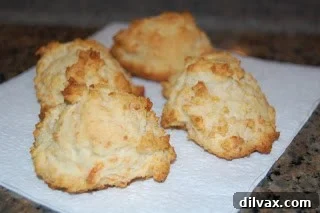
Unfortunately, as often happens in a busy kitchen, I got thoroughly sidetracked with preparing dinner while the biscuits were in the oven. The result? They ended up baking for longer than they should have. When I finally pulled them out, the bottoms were a little darker than I would have liked, indicating they were slightly overbaked.

While the flavor profile from the cheese and roasted garlic was certainly tasty, the extended baking time left the biscuits a bit drier than our family prefers. It’s always a learning curve with new recipes; I’m not entirely sure if the dryness was solely due to overbaking or if this particular drop biscuit variation tends to be on the drier side. I also suspect that baking them in a cake pan, allowing them to steam and support each other, would have made a significant difference in maintaining moisture and tenderness.
Overall, this particular iteration didn’t quite hit it out of the park with the family. We’re a tough crowd when it comes to biscuits, and these didn’t receive the enthusiastic thumbs-up I’d hoped for. Thus, I’ve decided this isn’t the method I’ll revisit for these biscuits.
My next attempt will definitely involve using the cake pan and, crucially, a proper 2-inch round cookie cutter, which I plan to purchase specifically for this purpose. I also envision experimenting with a different cheese, perhaps Parmesan, along with a medley of fresh Italian herbs like oregano and basil. This iterative process of baking, evaluating, and refining is what makes home cooking such a rewarding journey. For this particular batch, I’d give them a rating of 2½ out of 5 rolling pins – a solid effort, but with definite room for improvement.
Embrace the Joy of Home Baking!
Every kitchen adventure, whether a resounding success or a valuable learning experience, enriches our culinary repertoire and deepens our appreciation for homemade food. From tackling household clutter to mastering a classic biscuit recipe, the journey of cultivating a more organized and delicious life is one worth embracing. Don’t be afraid to experiment, make notes, and learn from every bake. The joy of creating something wonderful from scratch, tailored to your family’s tastes, is an unparalleled reward.
Happy baking, and may your kitchen always be filled with delightful aromas and successful creations!