
The Power of the Soybean: A Remarkable Whole Protein
In the vast world of nutrition, few ingredients stand out quite like the humble soybean. This tiny legume is a powerhouse of nutrients, offering a remarkable array of benefits for our bodies and playing a significant role in global consumption patterns. Uniquely among all plant-based proteins, soy is recognized as a whole protein. But what exactly does it mean for a protein to be “whole,” and why is this distinction so important?

A whole protein is defined as a food source that contains all nine essential amino acids in adequate proportions necessary for human dietary needs. These essential amino acids – histidine, isoleucine, leucine, lysine, methionine, phenylalanine, threonine, tryptophan, and valine – cannot be synthesized by the human body and must be obtained through diet. While many plant proteins offer a good profile of some amino acids, soy stands alone in providing a complete set, making it an invaluable resource for vegetarians, vegans, and anyone looking to enhance their nutritional intake. This comprehensive nutritional profile is just one reason why this versatile bean is so celebrated and forms the core of our exploration.
In Partnership with Best Food Facts
I am honored to collaborate with Best Food Facts to bring you this insightful article about soy. My recent trip, which inspired this post, was generously compensated, and I want to assure you that all opinions and perspectives shared here are 100% my own, born from a truly fascinating educational experience.
My journey into the world of soy was nothing short of eye-opening. Just last month, I had the incredible opportunity to visit a thriving soy farm, tour the advanced Perdue Oilseed crush plant, and engage in an informative discussion with a registered dietitian. The insights I gained were profound and utterly captivating. For instance, did you know that a single soybean can be transformed into three entirely distinct products? I’ll delve into that fascinating process shortly.
Before this immersive experience, I honestly hadn’t given much thought to soy beyond its common culinary applications. Of course, I’ve often used soy sauce in beloved recipes like my Easy Chicken Marinade, the delectable Pad See Ew, and my personal favorite, Pork Potstickers. Soy milk has also found its way into my kitchen, enriching recipes such as my Dairy-Free Lemon Poppy Seed Waffles and a refreshing Pineapple Coconut Silk Smoothie, not to mention its use in Cranberry Pancakes with Orange Cream Cheese Drizzle. However, it had largely remained just another ingredient, one I perhaps took for granted, until now.
Unlock the Power of Soy: Pin This Article for Future Reference!
As I prepared for this enlightening trip, several questions naturally arose in my mind, forming the foundation of my inquiry:
How is soy grown?
What are the diverse products made from soy?
What are the proven health benefits of soy?
Can soy foods really cause cancer, or are these myths?
I’m thrilled to report that I received comprehensive answers to all these questions and more, thanks to the invaluable assistance of Best Food Facts. My previous collaboration with them on a video series about CRISPR technology also provided a wealth of knowledge. Best Food Facts serves as an exceptional resource for all food-related inquiries. If you have any questions about food, its origins, its science, or its impact, chances are they’ll have the answer, or they’ll leverage their network of over 200 food experts to find it for you.
The Journey From Seed: How is Soy Grown?
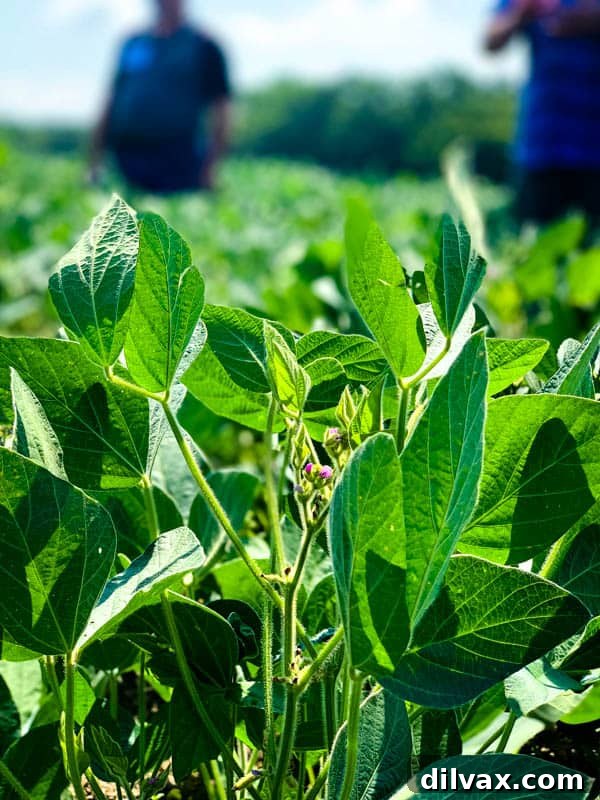
To truly understand the lifecycle of soy, our expedition took us to Lazy Day Farms in Vienna, Maryland. This generational family farm, a testament to dedication and sustainable practices, has been collaboratively managed by father Joseph Layton, Jr., and his son, William Layton, since 2003. Their commitment to efficient and environmentally friendly farming methods is truly inspiring.
The Laytons demonstrate remarkable productivity, yielding an impressive 35,000 bushels of soybeans per season, with the harvest typically taking place each November. A significant portion – approximately three-quarters – of their cultivated beans are dedicated to mill feed and oil production. The remaining quarter of their crop consists of non-GMO (genetically modified organism) high-protein beans, specifically grown for direct human consumption, destined for products like tofu, snack beans, and other food applications.
A Fascinating Fact About Soybeans:
Did you know that soybeans are legumes, a classification that brings with it a remarkable natural advantage? Unlike many other crops, soybeans have the unique ability to produce their own nitrogen. This means that soy farmers do not need to supplement the soil with additional nitrogen during the growing season. Nitrogen is a critical component of chlorophyll, the pigment essential for photosynthesis, which converts sunlight into the energy plants need to grow. This natural nitrogen fixation not only reduces the need for synthetic fertilizers, leading to cost savings, but also significantly lessens the environmental impact, contributing to healthier soil ecosystems.
Lazy Day Farms proudly operates as a no-till farm. This sustainable farming practice means the soil is never turned over or disturbed during preparation for planting. This method offers numerous environmental and economic benefits. It dramatically reduces soil run-off, particularly on hilly terrains, preventing erosion and preserving topsoil. No-till practices also enhance the soil’s ability to absorb and retain water, allowing it to move through the soil more easily, which benefits crop health. Furthermore, undisturbed soil fosters a thriving population of earthworms and beneficial microorganisms, which are crucial for natural aeration and nutrient cycling. From an economic perspective, no-till farming is more cost-effective as it requires less horsepower for plows, thereby reducing fuel consumption and equipment wear. It also mitigates soil impaction, leading to healthier root development.

The Laytons further bolster their soil health and ensure long-term sustainability through the strategic use of cover crops.
What is a Cover Crop?
A cover crop is a crop that is intentionally planted not for harvest, but specifically to prepare and enrich the soil for the subsequent main crop. These plantings are vital for maintaining soil fertility and structure. They provide essential nutrients for the next yield, prevent nutrient leaching, and contribute organic matter back into the soil, improving its overall composition. The physical covering provided by these crops also offers protection to the soil, especially during colder temperatures or periods of heavy rainfall. At Lazy Day Farms, Joe and William plant varieties such as peas and radishes. Radishes, in particular, are chosen for their long taproots, which effectively aerate the soil, breaking up compaction and allowing for better water and nutrient penetration.

The Laytons’ dedication to environmental stewardship extends to their use of precision farming methods. They employ site-specific soil sampling, leaf tissue sampling, fertigation (applying fertilizer through irrigation), and soil moisture testing. This advanced approach allows them to accurately determine exactly what nutrients are needed and precisely where they are required, minimizing waste and maximizing efficiency. By meticulously documenting their findings and adapting their methods each year, they are ensuring that Lazy Day Farms remains productive, resilient, and sustainable for many generations to come.
From Bean to Product: What is Made From Soy?
To uncover the incredible versatility of the soybean, our next visit was to the Perdue Oilseed Crush Plant. Here, in this largely automated facility, we witnessed firsthand the sophisticated processes involved in transforming soybeans primarily grown for mill feed and oil production. The sheer number of derivatives and products originating from soy truly amazed me.
Recall my earlier hint that one small soybean can yield three distinct products? This fascinating transformation begins with the outer layers of the bean, known as the hulls. These soy hulls are processed into mill feed, a valuable component used predominantly as cattle feed, contributing to livestock nutrition globally.
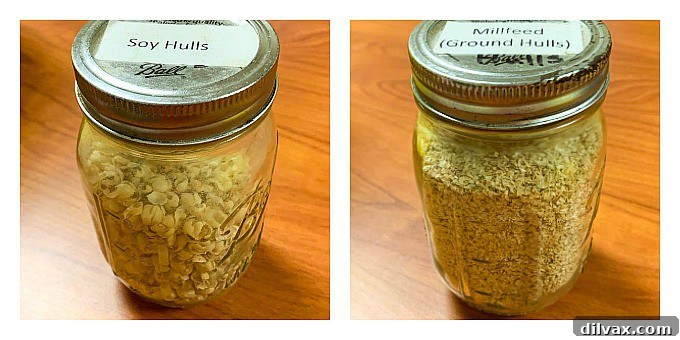
Once the hulls are removed, the cracked beans are then processed to produce soybean meal. This high-protein meal is a fundamental ingredient in animal feed for poultry, swine, and aquaculture, playing a critical role in the global food supply chain. It’s also sometimes processed further for human consumption in various food products.
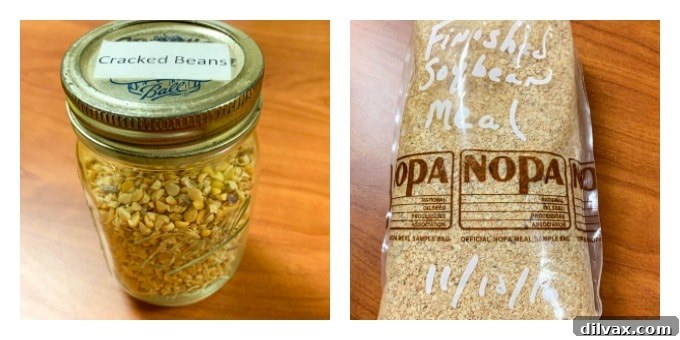
A portion of these cracked beans is flattened into flakes, from which soybean oil is extracted. This oil is incredibly versatile, serving a multitude of purposes. It is a popular cooking oil used worldwide, a key ingredient in many processed foods, and can even be utilized for industrial applications. Some of this extracted oil undergoes further processing to become biodiesel, an environmentally friendly alternative fuel source.

During the oil refinery process, another valuable product, soy lecithin, is extracted. Often referred to as the “gum” of the oil, soy lecithin acts as a powerful emulsifier and stabilizer. Its unique properties allow it to combine water and oil effectively, preventing separation. This makes it an indispensable functional additive in a vast array of products, from chocolate and baked goods to soaps and pharmaceuticals, ensuring consistent texture and quality.
Another surprising revelation was learning that much of the common cooking oil or vegetable oil found on grocery store shelves is, in fact, derived from soy. I was genuinely unaware of this until I checked the labels and, sure enough, “soybean oil” was prominently listed. This highlights how ubiquitous soy products are in our daily lives, often without us even realizing it.
Can I use Vegetable Oil if I’m allergic to soy?
For those with soy allergies, a common concern arises regarding the use of soybean oil. The good news is, yes, you generally can! Soybean oil is considered highly refined. This refining process effectively removes nearly all the protein components that typically trigger allergic reactions. Consequently, due to its highly purified nature, soybean oil is not typically required to be listed as an allergen on food labels in many regions, making it safe for most individuals with soy allergies.
Nourishing Our Bodies: What are the Health Benefits of Soy?
Our journey to understand soy wouldn’t be complete without addressing its profound impact on health. During our trip, we had the privilege of speaking with Julie Garden-Robinson, a distinguished registered dietitian, who provided invaluable insights into soy’s nutritional advantages.
She emphasized that legumes, including soybeans, are among the healthiest foods one can incorporate into their diet. Soybeans are particularly notable for being higher in both protein and healthy fats compared to many other legumes, which explains their widespread use in animal feed to promote robust growth. Naturally, these same nutritional benefits extend to human consumption.
Soy holds a unique position, being listed in both the vegetable and protein food groups. However, to achieve a healthy and well-balanced diet, it’s important not to view a single serving of soy as a “two birds with one stone” solution. Instead, aim to integrate soy as a vegetable alongside other diverse protein sources, or vice versa, ensuring a comprehensive intake of nutrients from various food categories.
At its core, soy is characterized as heart-healthy, safe, and sustainable. A truly remarkable fact is that soy is the only protein that carries an FDA-approved health claim specifically for heart health! This significant endorsement underscores its proven ability to contribute to cardiovascular wellness. Studies have consistently shown that incorporating soy protein into a diet can help lower LDL (“bad”) cholesterol levels and reduce the overall risk of heart disease, making it an excellent choice for maintaining a healthy heart.

Debunking Myths: Can Soy Foods Cause Cancer?
One of the most persistent concerns surrounding soy consumption revolves around its phytoestrogen content and the misconception that it might increase the risk of cancer, particularly breast cancer. However, extensive scientific research has provided reassuring clarity on this matter.
In fact, numerous studies have demonstrated that breast cancer survivors can safely consume soy foods. Far from causing harm, research suggests that regular soy consumption may actually improve their prognosis and reduce the risk of recurrence. Furthermore, emerging evidence indicates that regular intake of soy, such as a daily cup of soy milk, could potentially play a role in breast cancer prevention. These findings challenge old myths and underscore the importance of relying on evidence-based information.
My exploration into the world of soy has unequivocally shown that its health benefits are significant and far-reaching. As a result, I’ve enthusiastically incorporated more soy into my daily diet and encourage you to consider its benefits as well!
While I don’t claim to possess all the answers, I strongly advocate for personal research and critical evaluation to bust common myths surrounding food. Always consult with a registered dietitian in conjunction with your primary health care provider for personalized dietary advice. For credible and documented information, I highly recommend exploring the following reputable websites:
- Best Food Facts: An excellent resource for science-backed information on food and nutrition, featuring insights from leading experts.
- United Soybean Board: Provides comprehensive information on soybean farming, uses, and research.
- Soy Connection: A platform dedicated to the nutritional and health benefits of soy.
- Centers for Disease Control and Prevention (CDC): Offers reliable public health information and guidelines.
- USDA Food Composition Databases: A vast database for detailed nutritional information on various foods, including soy products.
Stay tuned! In an upcoming post, I’ll be sharing a delicious recipe featuring soy and discussing practical, easy ways to incorporate more of this incredible legume into your everyday meals. The journey of the soybean is truly a testament to nature’s bounty and human ingenuity, offering a sustainable, nutritious, and versatile solution for our plates and our planet.