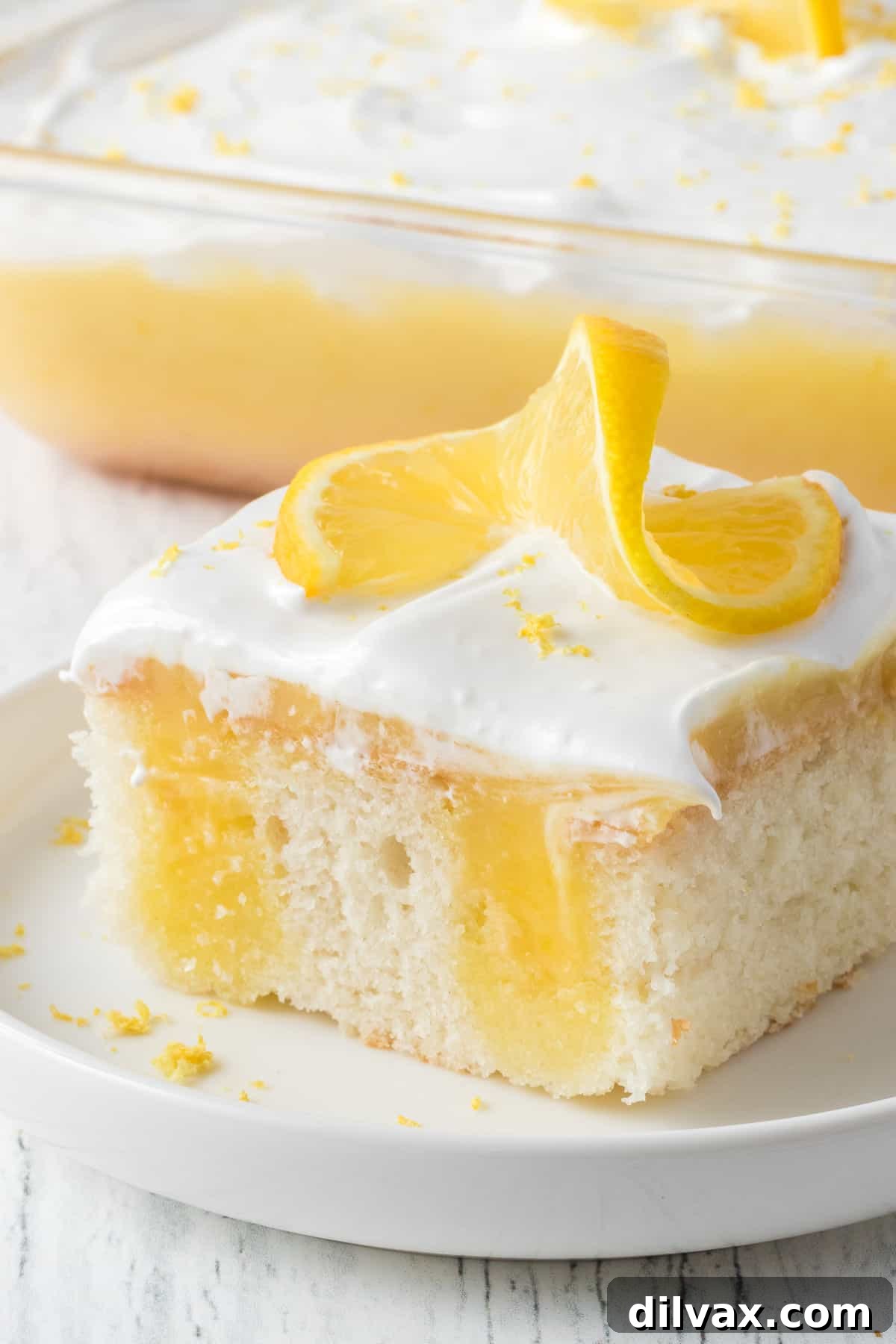
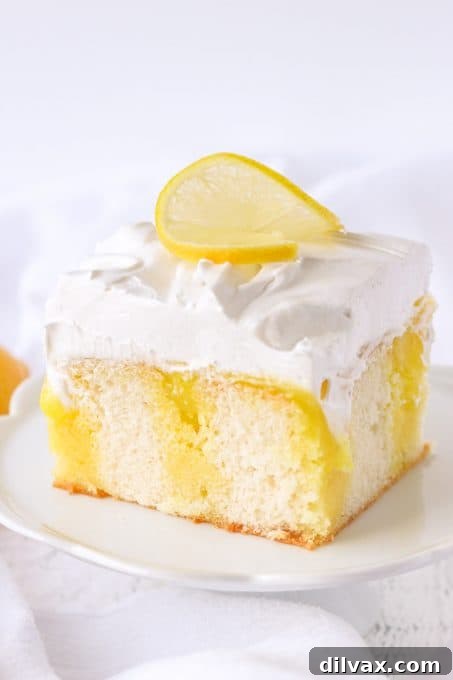
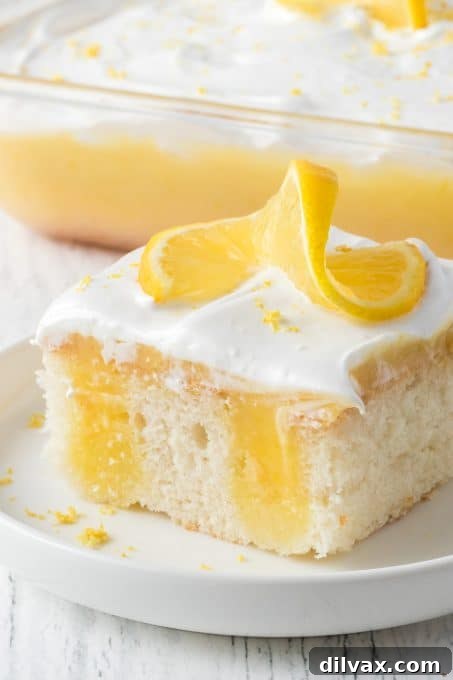
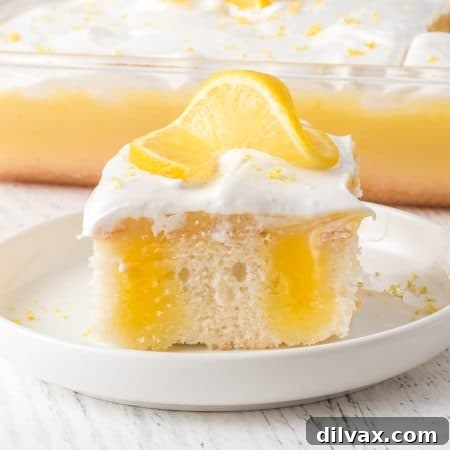
Indulge in a slice of pure sunshine with this delightful Lemon Poke Cake! Each bite offers an irresistible dance between tangy lemon and a wonderfully soft white cake. Elevated further with a luscious, homemade marshmallow frosting, this semi-homemade moist lemon cake is truly a dream come true. It’s the quintessential dessert to celebrate the vibrant energy of spring, making every occasion feel brighter and sweeter.
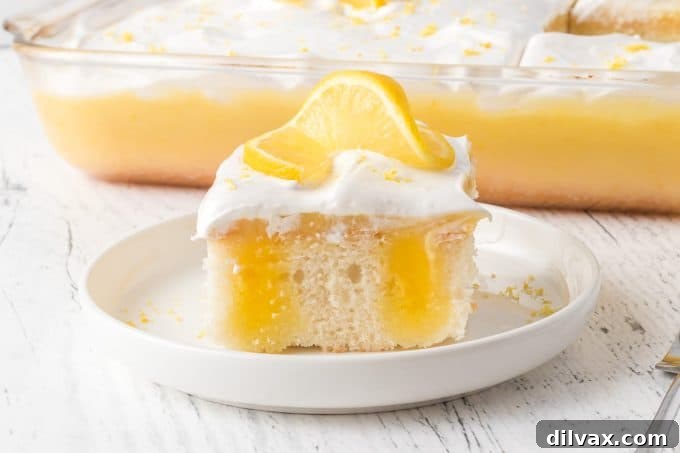
Do you ever feel that lemon desserts, particularly a fantastic lemon cake, don’t receive the appreciation they truly deserve? While my heart certainly holds a special place for rich chocolate cake, comforting peanut butter cake, or a classic yellow cake (let’s be honest, any cake is usually a good idea!), there’s something uniquely invigorating about the bright, zesty flavor profile of lemon.
Lemon transports you to sunny afternoons, breezy spring evenings, and moments of pure joy. It’s a flavor that promises freshness and light, making it a perennial favorite. For those who adore that citrusy kick, you know exactly what I mean. I find myself constantly craving all things lemon, from classic Lemon Bars to an elegant Lemon Ricotta Pound Cake. And today, we’re adding an incredible new recipe to your collection: the ultimate Lemon Marshmallow Poke Cake.
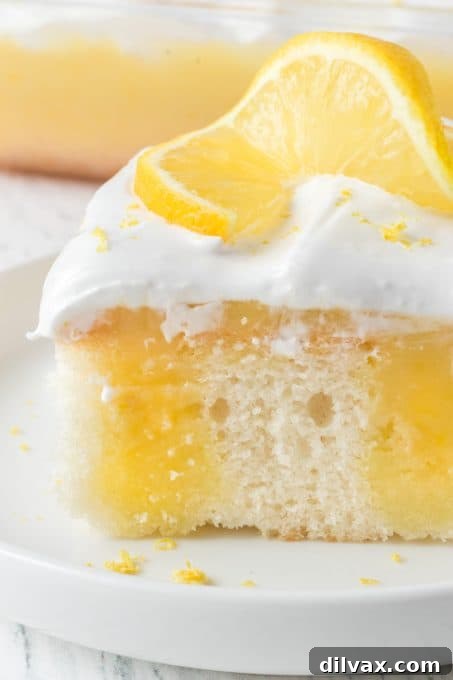
What is a Poke Cake? Your Guide to Ultimate Moistness
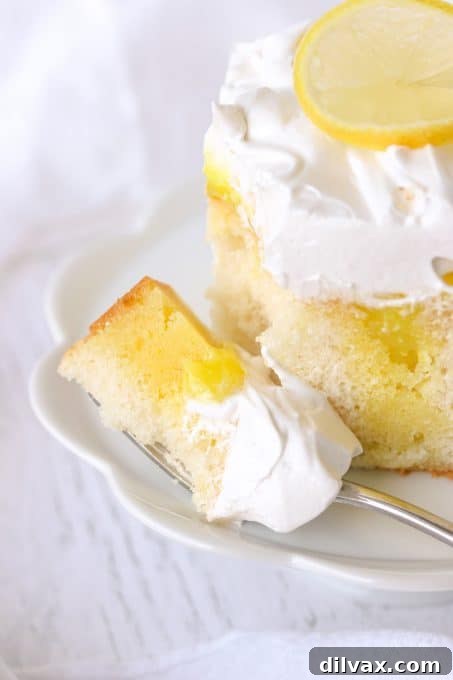
If you’re new to the world of poke cakes, prepare to have your dessert horizons expanded! A poke cake is a brilliant and incredibly simple baking technique designed to infuse maximum flavor and moisture into every single bite of your cake. The concept is straightforward yet ingenious: you bake a simple cake, and once it’s cooled slightly, you literally “poke” holes all over its surface. Into these holes, you pour a liquid deliciousness – typically gelatin, pudding, or even condensed milk – allowing it to seep deep into the cake’s crumb. This process creates an extraordinarily moist cake with bursts of flavor in every bite.
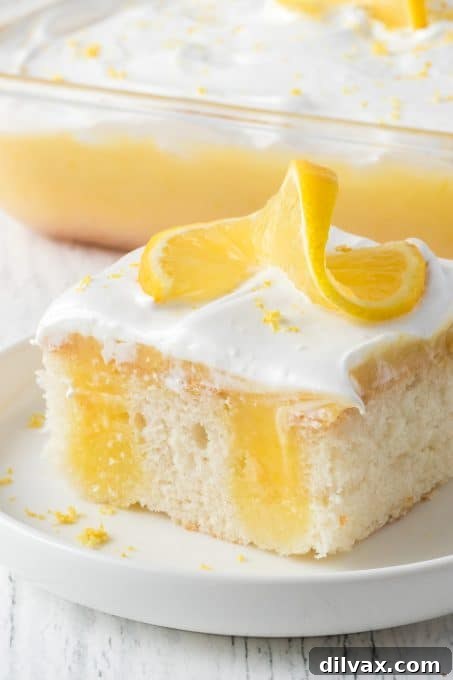
The beauty of a poke cake lies in its versatility. You can use almost any cake base and an endless variety of fillings. For example, a Patriotic Poke Cake might use red and blue gelatin, while a tropical Pineapple Poke Cake might feature vanilla pudding and pineapple juice. In our luscious lemon poke cake recipe, we’re taking the lemon flavor to the next level by using a vibrant lemon gelatin and either a store-bought lemon pie filling or, for an extra gourmet touch, a homemade lemon curd. This combination ensures that the bright, tangy essence of lemon permeates every single crumb, creating an explosion of sweet and zesty flavor that is simply unforgettable.
Why You’ll Fall in Love with This Lemon Poke Cake
This isn’t just another cake recipe; it’s an experience waiting to happen! Here’s why this Lemon Marshmallow Poke Cake will become your new go-to dessert:
- **Unmatched Moisture:** Thanks to the “poke” method, this cake is incredibly moist. The lemon gelatin and pie filling soak into the cake, preventing any dry spots and ensuring a tender texture.
- **Explosion of Lemon Flavor:** We’re not shy with the lemon here! From the gelatin-infused cake to the lemon pie filling (or homemade curd), every element is designed to deliver that irresistible bright, tangy lemon taste.
- **Dreamy Marshmallow Frosting:** The homemade marshmallow frosting isn’t just a topping; it’s a cloud-like blanket of sweet, airy perfection that complements the zesty cake beautifully. Its unique texture and flavor truly set this cake apart.
- **Semi-Homemade Simplicity:** Starting with a boxed cake mix makes this recipe incredibly approachable, even for novice bakers. It saves time without sacrificing flavor or quality, allowing you to enjoy gourmet results with minimal effort.
- **Perfect for Any Occasion:** Whether you’re celebrating spring, hosting a summer gathering, or simply craving a refreshing dessert, this cake is a crowd-pleaser that looks as impressive as it tastes.
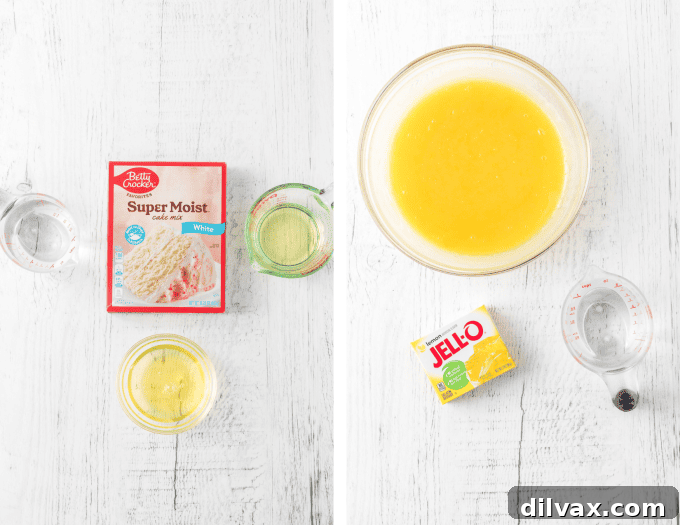
Essential Ingredients for Your Lemon Poke Cake
Crafting this delightful Lemon Poke Cake begins with a few simple, accessible ingredients. The beauty of this recipe lies in its ability to combine convenience with incredible flavor. Here’s what you’ll need for the cake itself:
- **White Cake Mix:** A 16.25-ounce box of white cake mix forms the convenient base of our cake. White cake mix typically yields a lighter, fluffier crumb, allowing the vibrant lemon flavor to shine through without competition from other strong flavors like butter in a yellow cake.
- **Vegetable Oil:** This is often called for in boxed cake mixes and contributes to a moist, tender cake texture.
- **Egg Whites:** Using only egg whites, as directed on most white cake mix boxes, ensures a pure white cake color, which creates a beautiful contrast with the yellow lemon filling.
- **Lemon Jell-O (Gelatin):** A 3-ounce box of lemon gelatin is crucial for infusing that tangy lemon flavor directly into the cake. Any brand of lemon gelatin will work perfectly.
- **Boiling Water:** Used to dissolve the gelatin, creating the liquid that will soak into the cake.
- **Lemon Pie Filling or Homemade Lemon Curd:** A 22-ounce can of lemon pie filling adds another layer of intense lemon flavor and moisture. For an even more luxurious and bright taste, I highly recommend using a batch of my homemade lemon curd. The curd provides a richer, more authentic lemon essence that truly elevates this dessert.
Crafting the Perfect Marshmallow Frosting
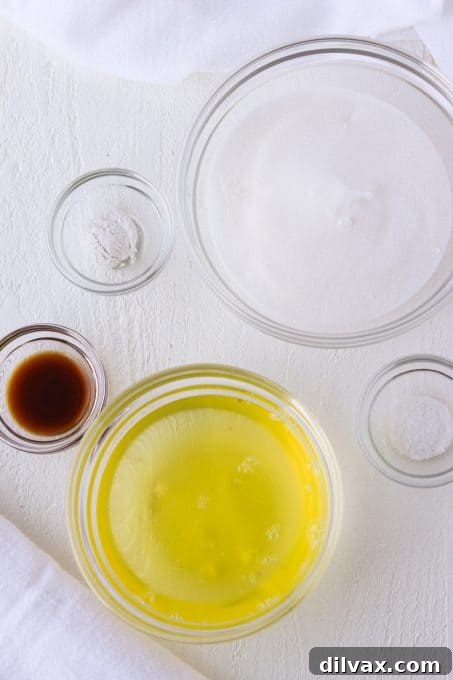
While the lemon poke cake is undoubtedly the star, the homemade marshmallow frosting is its perfect companion, adding an airy, sweet, and utterly delicious finishing touch. This frosting is surprisingly simple to make, but requires careful attention to detail for the best results. Here’s what you’ll need:
- **Egg Whites:** Five large egg whites, preferably at room temperature. It is absolutely critical that there are **NO** traces of yolk in the egg whites, as even a tiny amount can prevent them from whipping properly into stiff peaks.
- **Granulated Sugar:** Provides the sweetness and helps stabilize the meringue-like frosting.
- **Cream of Tartar:** This ingredient is a secret weapon in meringue-based frostings. It helps stabilize the egg whites, ensuring they whip up to their maximum volume and maintain a smooth, glossy texture.
- **Salt:** Just a pinch enhances all the flavors.
- **Pure Vanilla Extract:** Adds a lovely aromatic depth to the sweet marshmallow flavor.
Remember to consult the comprehensive recipe card below for precise measurements and detailed step-by-step instructions for both the cake and the frosting!
Choosing the Right Baking Pan for Your Poke Cake
For this recipe, as with most poke cakes, a standard 9×13 inch baking pan is ideal. A glass baking pan is particularly useful as it conducts heat evenly and allows you to see the beautiful layers of your poke cake as it comes together. Ensure your pan is clean and ready for baking to guarantee a perfect foundation for your delicious dessert.
How to Prepare Your Lemon Poke Cake with Marshmallow Frosting
Making a poke cake is wonderfully straightforward, and once you master the technique, you’ll be eager to experiment with endless flavor combinations. This recipe breaks down the process into easy-to-follow steps:
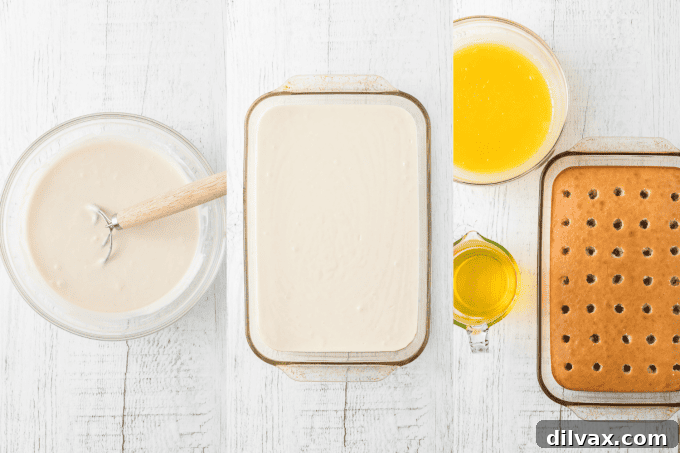
- **Prepare and Bake the Cake:** Begin by preheating your oven to 350°F (175°C) for a shiny metal or glass pan, or 325°F (160°C) for dark or coated non-stick pans. Lightly spray the bottom of your 9×13 inch baking dish with cooking spray. In a large mixing bowl, combine the boxed white cake mix with 1 cup of water, vegetable oil, and egg whites as directed on the cake mix package for a 9×13 inch cake. Beat the batter at medium speed or vigorously by hand for about 2 minutes until smooth. Pour the batter evenly into your prepared pan and bake for 29-34 minutes, or until a toothpick inserted into the center comes out clean. Once baked, transfer the cake to a wire rack to cool for at least 20 minutes before proceeding.
- **Poke the Holes:** This is the signature step of a poke cake! Once your cake has cooled completely (this is important for proper absorption), use the rounded handle of a wooden spoon (or a similar utensil like a dowel or even a meat thermometer) to poke holes evenly over the entire top surface of the cake, about 1-inch apart and halfway through the cake’s depth.
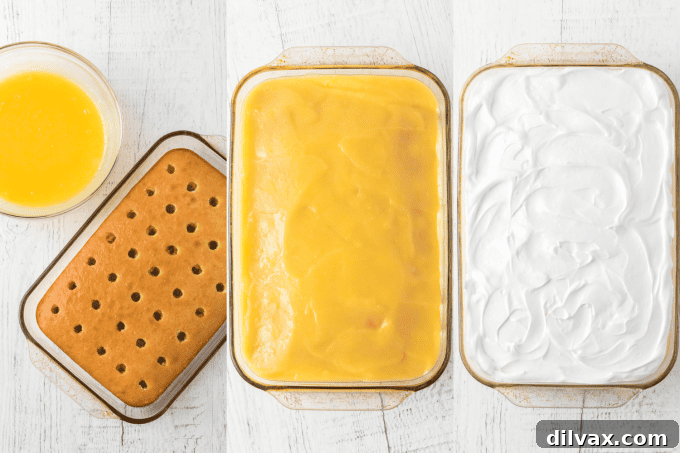
- **Infuse with Lemon Gelatin:** In a separate bowl, combine the lemon gelatin powder with precisely 1 cup of boiling water. Stir until the gelatin has completely dissolved and no granules remain. Carefully and evenly spoon or pour this dissolved lemon gelatin mixture over the entire cake, ensuring it seeps into all the poked holes.
- **Layer with Lemon Filling:** Next, gently spread your lemon pie filling (or homemade lemon curd, if using) over the gelatin-soaked cake with the back of a spoon. Cover the cake tightly with plastic wrap to prevent it from drying out and to encourage optimal absorption of the flavors.
- **Chill for Perfection:** Transfer the covered cake to the refrigerator. Chilling for several hours, or ideally overnight, allows the gelatin and pie filling to fully set within the cake, creating that incredibly moist texture and intense lemon flavor. This step is crucial for the best results.
- **Frost and Serve:** Once thoroughly chilled, remove the cake from the refrigerator. Prepare your homemade marshmallow frosting (instructions below). Once the frosting is ready, generously cover the top of the cake. Serve immediately to enjoy the frosting at its best!
The Art of Making Fluffy Marshmallow Frosting
This light and airy marshmallow frosting isn’t just for this lemon poke cake; it’s a versatile topping that can elevate almost any dessert. The key to its success lies in careful temperature control and whipping technique. You’ll need a double boiler for this process. If you don’t have one, you can easily create a makeshift double boiler by placing a heat-proof large mixing bowl over, but not directly into, a medium pot of simmering water. The steam from the simmering water will gently heat the contents of the bowl without direct contact, preventing the egg whites from scrambling.
- **Heat the Egg White Mixture:** In the top portion of your double boiler (or your heat-proof bowl set over simmering water), combine the egg whites, granulated sugar, salt, and cream of tartar. Whisk this mixture constantly and gently over the simmering water. The goal here is to warm the egg whites and completely dissolve the sugar. This should take approximately 3-4 minutes. Test by rubbing a small amount of the mixture between your fingers; it should feel perfectly smooth, with no gritty sugar crystals. The mixture should be warm to the touch, but not hot or steaming.
- **Whip to Stiff Peaks:** Once the sugar is dissolved and the mixture is warm, immediately transfer it to the bowl of a stand mixer (if you weren’t already using it as your heat-proof bowl). Attach the whisk attachment. Start beating the mixture on low speed, then gradually increase the speed to high. Continue beating for about 7-9 minutes, or until stiff, glossy peaks form. The frosting should be thick, voluminous, and hold its shape beautifully.
- **Add Vanilla and Finish:** Reduce the mixer speed to low and add the pure vanilla extract. Mix just until combined. Your fluffy marshmallow frosting is now ready!
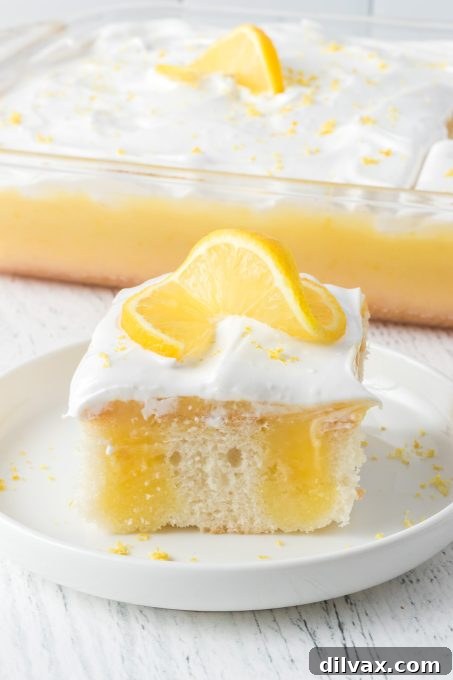
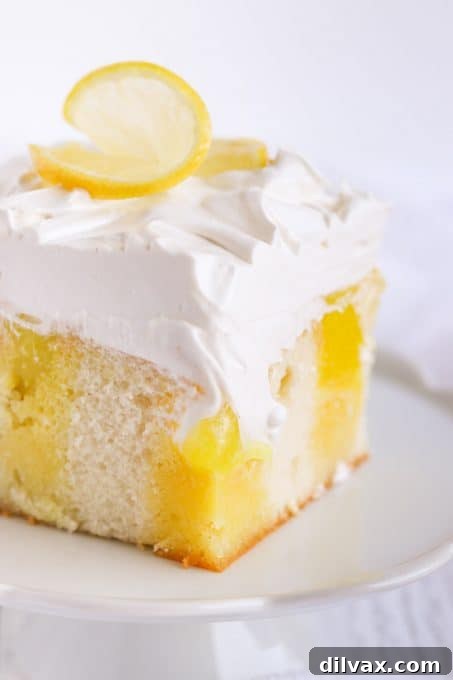
- **Frost and Serve:** Dollop generous amounts of the marshmallow frosting over your chilled lemon poke cake. Using an offset spatula, gently spread the frosting evenly across the top, creating delightful swirls. For an extra touch of elegance, you can lightly brown the frosting with a small hand blow torch, creating a beautiful toasted marshmallow effect. Garnish with fresh lemon slices, a sprinkle of fresh lemon zest, or yellow sprinkles for a festive look, if desired. Serve immediately to enjoy the freshest, fluffiest frosting.
And there you have it – simple steps leading to truly delicious and impressive results!
Expert Tips for Your Perfect Lemon Marshmallow Poke Cake
Achieving poke cake perfection is easier with a few insider tips:
- **Poking Perfection:** Don’t be afraid to poke liberally! You can use the rounded handle of a wooden spoon, a dowel, or even the back of a meat thermometer. Aim for holes that are about 1 inch apart and go halfway into the cake to ensure optimal absorption of the lemon goodness.
- **Even Absorption is Key:** Try to distribute the holes as evenly as possible across the cake’s surface. This ensures that every slice gets a burst of tangy lemon flavor and consistent moisture.
- **Patience with Chilling:** The cake will seem very soft after you pour the gelatin and filling. This is completely normal! The refrigeration step is crucial; it allows the gelatin to set and the flavors to fully meld, resulting in a firm yet incredibly moist cake. Don’t rush it!
- **Marshmallow Frosting Wisdom:** This is where attention to detail pays off.
- **No Yolk Allowed:** Absolutely ensure there are **NO** traces of egg yolk in your egg whites. Yolk is fat, and fat will prevent egg whites from whipping into stiff peaks.
- **Gentle Heat, Dissolved Sugar:** When heating the egg white mixture over the double boiler, the goal is warmth and dissolved sugar, **NOT** to cook the eggs. Keep whisking constantly, and remove it from the heat as soon as the mixture feels warm to the touch and completely smooth between your fingers (no grittiness from sugar). Overheating or failing to dissolve the sugar will result in a flat, grainy frosting. My personal anecdote: In some of the updated photos, you’ll notice a flatter frosting. This was entirely due to my own distraction – a tiny bit of yolk slipped in, and I overheated the mixture. Learn from my mistake! You’ll achieve a much fluffier, true marshmallow texture by following these steps precisely. Also, double-check the expiration date on your cream of tartar; an old batch can also hinder whipping.
- **Serve Promptly for Frosting:** If you’re using the homemade marshmallow frosting, plan to serve the cake immediately or as soon as possible after frosting it. This type of frosting is at its absolute best right after it’s made, offering that amazing, fresh marshmallow flavor and ethereal texture. It doesn’t hold its perfect fluffiness for extended periods like a buttercream.
Creative Recipe Variations to Explore
This Lemon Marshmallow Poke Cake is fantastic as is, but it’s also a wonderful canvas for culinary creativity. Feel free to experiment with these delicious variations:
- **Amp Up the Lemon:** For an even more intense lemon flavor, consider using a lemon cake mix instead of a white cake mix. This will add another layer of citrusy brightness to the cake base.
- **From Scratch Option:** Prefer to bake from scratch? Absolutely! You can substitute the boxed cake mix for your favorite homemade vanilla or lemon cake recipe. Just ensure it bakes to a 9×13 inch size and follow the poking and filling steps as directed.
- **Frosting Alternatives:** If marshmallow frosting isn’t your preference, or you’re short on time, there are other delightful toppings:
- **Cool Whip:** A classic, easy topping that’s light and refreshing.
- **Homemade Whipped Cream:** Try my Stabilized Whipped Cream recipe for a topping that holds its shape longer, or a simple Fresh Whipped Cream for a delicate, fresh taste.
- **Cream Cheese Frosting:** A tangy cream cheese frosting would beautifully complement the lemon cake.
- **Citrus Swap:** While this is a lemon cake, you could experiment with other citrus flavors! Lime gelatin and lime curd would make an amazing Key Lime Poke Cake. Orange gelatin and orange marmalade could create a vibrant orange version.
- **Garnish Galore:** Beyond lemon slices and zest, consider garnishing with toasted coconut flakes, candied lemon peel, or a dusting of powdered sugar for an extra visual appeal and textural contrast.
White vs. Yellow Cake Mix: Which is Best for Lemon Poke Cake?
You can certainly use either a white or yellow cake mix for this recipe, and both yield delicious results. However, there are subtle differences:
- **White Cake Mix:** This is my preferred choice for this specific recipe. It typically results in a lighter, purer white cake that provides a stunning visual contrast with the bright yellow lemon filling and gelatin. The neutral flavor of the white cake also allows the tangy lemon notes to truly pop and become the star of the show.
- **Yellow Cake Mix:** If you prefer a slightly richer, more buttery base flavor, a yellow cake mix works well. It will still absorb the lemon goodness, but the overall color contrast won’t be as striking. The choice often comes down to personal preference for cake base flavor.
How to Properly Store Leftover Lemon Poke Cake
To keep your leftover Lemon Poke Cake fresh and delicious, ensure it’s properly stored. Cover the cake pan tightly with aluminum foil or transfer any remaining slices to an airtight container. Store the cake in the refrigerator for up to 3-4 days. The chilling actually enhances the poke cake’s texture, making it even more delightful on subsequent days.
Can You Freeze Poke Cake?
Generally, I don’t recommend freezing this particular cake once it’s fully assembled with the gelatin, filling, and especially the marshmallow frosting. The texture of the gelatin and frosting can change significantly upon thawing, potentially becoming watery or losing its fluffy consistency. However, if you need to prepare parts of the cake ahead of time, you can certainly bake the plain white cake and freeze it *before* adding the gelatin and fillings. Wrap the cooled, unfrosted cake tightly in plastic wrap and then in aluminum foil, and freeze for up to 1-2 months. When you’re ready to assemble, simply let the cake thaw to room temperature, then proceed with poking, filling, and frosting as directed in the recipe.
More Irresistible Poke Cake and Cake Recipes
Once you dive into the wonderful world of poke cakes, it’s hard to stop! Their moistness and intense flavors are truly addictive. If you’re looking for more cake inspiration, be sure to bookmark or pin these other fantastic recipes to your favorites board:
- Strawberry Poke Cake
- Easy Tiramisu Poke Cake
- Pineapple Rum Cake
- Patriotic Poke Cake
- Citrus Layer Cake
- No-Bake Lemon Cheesecake
- Lemon Meringue Cheesecakes
- Easy Blueberry Crumb Cake Recipe
- Pineapple Upside-Down Cake
- Key Lime Creme Poke Cake
Calling All Lemon Lovers: More Zesty Recipes!
If the bright, tangy flavor of lemon is your culinary obsession, then you’re in for a treat! Beyond this incredible poke cake, there’s a whole world of zesty lemon desserts waiting to be explored. Indulge your citrus cravings with these fantastic lemon-focused recipes:
- Lemon Dream Bars
- Lemon Sugar Snaps
- Lemon Cake Mix Cookies
- No-Bake Lemon Cheesecake
- Gigi’s Easy Lemon Cake
Created by: Lynne Feifer
Lemon Marshmallow Poke Cake
Course: Dessert
Cuisine: American
Prep Time: 20 minutes
Cook Time: 34 minutes
Total Time: 2 hours 54 minutes (includes chilling)
One bite of this Lemon Marshmallow Poke Cake and you’ll fall in love. The combination of tangy lemon and soft white cake is simply irresistible. Cover your semi-homemade cake with marshmallow frosting and it’s even better!
Pin Recipe
Rate This Recipe
Servings: 12 people
Ingredients
Cake Mix
- 16.25 ounces boxed white cake mix
- 1 cup water
- ½ cup vegetable oil
- 3 egg whites
Lemon Gelatin
- 3 ounces lemon gelatin
- 1 cup boiling water
- 22 ounces lemon pie filling (or this lemon curd recipe)
Marshmallow Frosting
- 5 egg whites (room temperature)
- ¾ cup granulated sugar
- ¼ teaspoon cream of tartar
- ⅛ teaspoon salt
- 1 teaspoon pure vanilla extract
Instructions
Cake
- Preheat oven to 350°F (175°C) for a shiny metal or glass pan or 325°F (160°C) for dark or coated non-stick pans. Prepare your 9×13 inch baking dish by spraying the bottom with cooking spray.
- In a mixing bowl, combine the cake mix, 1 cup water, egg whites, and vegetable oil. Beat at medium speed or vigorously by hand for 2 minutes.
- Pour batter into pan and bake for 29-34 minutes or until a toothpick inserted into the middle comes out clean. Place the cake on a wire rack to cool for at least 20 minutes. Ensure the cake is completely cool before proceeding.
- When the cake has completely cooled, poke holes halfway into the cake about 1-inch apart with the rounded handle of a wooden spoon.
Lemon Gelatin
- Combine the cup of boiling water and gelatin and stir until gelatin has dissolved. Spoon evenly over the entire cake, ensuring it penetrates the holes.
- Spread the lemon pie filling (or curd) evenly over the cake and cover tightly with plastic wrap. Refrigerate for a minimum of two hours, or preferably overnight, for best results.
Marshmallow Frosting
- In the pot of a double boiler, bring some water to a boil, then lower the heat to a simmer. In the top portion of the double boiler (or a heat-proof mixing bowl placed over, but not into, the simmering water), mix together the egg whites, sugar, salt, and cream of tartar.
- Heat the egg white mixture while whisking constantly until warm and the sugar has completely dissolved. The mixture should feel smooth when rubbed between your fingers. This should take about 3-4 minutes; avoid overheating.
- Transfer the mixture to your mixing bowl (if not already using it), and using the whisk attachment, beat the mixture starting on low speed and gradually increasing to high speed until stiff, glossy peaks form. This will take approximately 7-9 minutes.
- Add the vanilla extract and mix until just combined. Place dollops of the frosting over the chilled cake and spread with an offset spatula. Serve immediately. Top with lemon slices, fresh lemon zest, or yellow sprinkles, if desired. You can also lightly brown the marshmallow frosting with a small hand blow torch for a toasted effect!
Notes
- Refer to the blog post above for comprehensive tips and tricks to ensure your success.
- If your frosting appears flatter than expected, it’s likely due to traces of yolk in the egg whites or overheating the mixture. Ensure egg whites are yolk-free and heated gently until just warm with sugar dissolved for a light, fluffy marshmallow frosting.
Nutrition Facts
- Serving: 1g
- Calories: 378kcal
- Carbohydrates: 67g
- Protein: 4g
- Fat: 11g
- Saturated Fat: 8g
- Polyunsaturated Fat: 1g
- Monounsaturated Fat: 1g
- Trans Fat: 1g
- Cholesterol: 9mg
- Sodium: 487mg
- Potassium: 68mg
- Fiber: 1g
- Sugar: 50g
- Calcium: 87mg
- Iron: 1mg
Did you make this recipe?
Share it with me on Instagram and make sure to follow me on Pinterest for more recipes!
Pin Recipe
Share Recipe
This post was originally published on August 13, 2021. It has been updated with enhanced content and new photos on March 27, 2024.