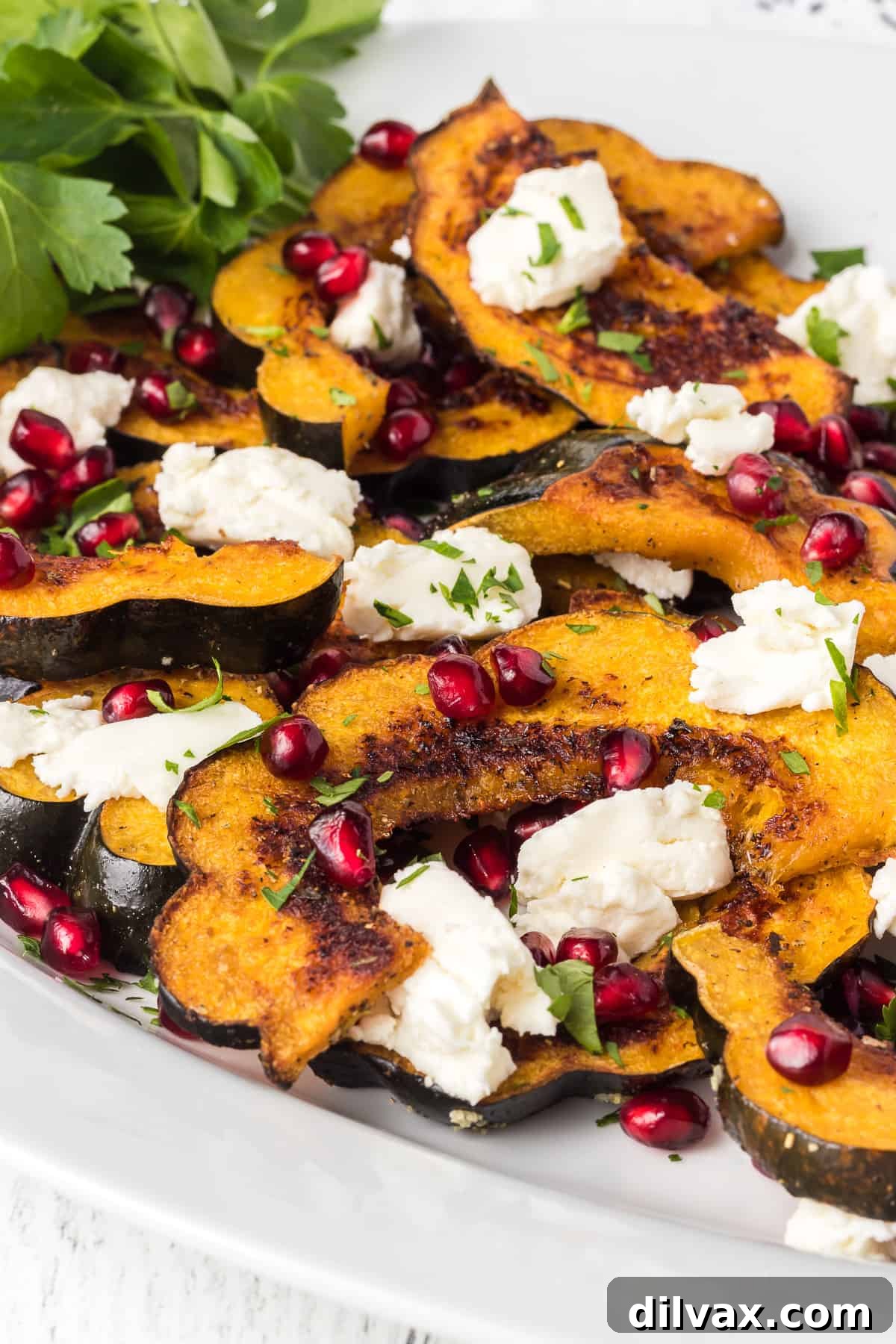
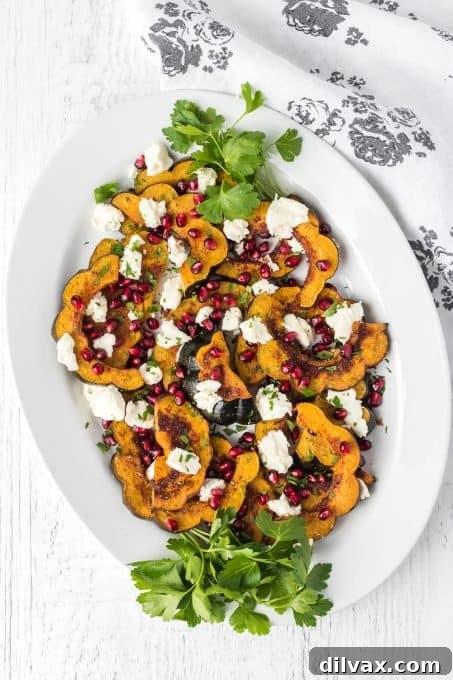
Indulge in the wholesome goodness of autumn with this incredibly simple and flavorful Roasted Acorn Squash with Goat Cheese and Pomegranate recipe! Bathed in rich olive oil and fragrant herbs, then beautifully finished with creamy goat cheese and vibrant pomegranate arils, this dish transcends a mere side item to become a culinary centerpiece. It’s the ideal accompaniment for any family meal, a show-stopping addition to your holiday spread, or a delightful dish to share with cherished friends. Prepare to impress with its stunning presentation and captivating flavors!
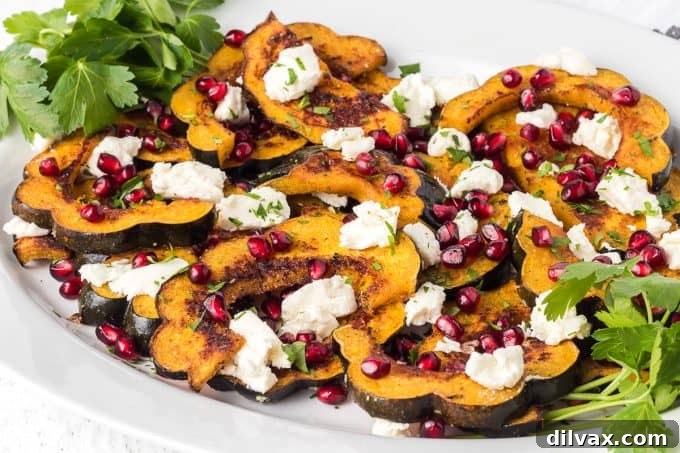
Roasted Acorn Squash with Goat Cheese & Pomegranate: A Festive Side Dish
As the days grow shorter and the air turns crisp, there’s no better time to embrace the comforting and versatile world of winter squashes. From the beloved butternut and delicate spaghetti squash to our star, the acorn squash, these autumnal gems are more than just pretty produce. They are nutritional powerhouses, packed with essential vitamins, minerals, and dietary fiber that support overall health and well-being. Rich in Vitamin C, potassium, and beneficial antioxidants, they offer a delicious way to boost your immune system during colder months.
Beyond their health benefits, winter squashes boast an impressive shelf life, making them a fantastic staple to keep on hand. Their robust nature means they can be stored for weeks, even months, in a cool, dark pantry, ready to transform into countless culinary creations. Their adaptability shines through in a myriad of recipes, whether you’re pureeing them into soups, cubing them for roasts, or stuffing them for a hearty main course. This particular recipe highlights the acorn squash, celebrating its unique texture and slightly sweet, nutty flavor that truly comes alive when roasted.
SAVE THIS EASY RECIPE FOR ROASTED ACORN SQUASH TO YOUR FAVORITE PINTEREST BOARD!
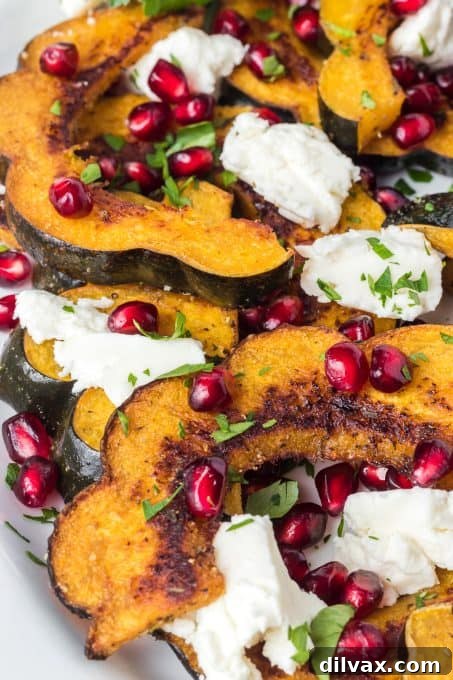
Selecting the Perfect Acorn Squash
Choosing the right acorn squash is key to achieving the best flavor and texture in your roasted dish. Acorn squashes are easily recognizable by their distinctive small, round to oval shape and deep green rind, often flecked with patches of vibrant orange or yellow. But what exactly should you look for at the market to ensure you’re picking a prime specimen?
- Weight for Size: Always pick up the squash and feel its weight. A good acorn squash should feel surprisingly heavy for its size. This indicates a dense flesh with plenty of moisture, leading to a richer flavor and better texture when cooked.
- Smooth, Dull Skin: Inspect the skin thoroughly. You want a squash with a smooth, dull rind, free from any shiny spots. A shiny appearance can sometimes indicate that the squash was picked prematurely or has been waxed. Avoid squashes with soft spots, bruises, or cuts, as these can lead to spoilage and affect the overall quality.
- Balanced Coloration: While some orange flecks are natural and even desirable, indicating ripeness, avoid squashes that are excessively orange. A healthy balance of deep green with some orange patches suggests a squash that is perfectly mature and will offer the best, most complex flavor profile – subtly sweet with earthy undertones. Too much green can mean it’s underripe, while too much orange might mean it’s overripe.
- Stem Condition: Look for a firm, intact stem, preferably dry. A soft or moldy stem can be a sign that the squash is old or starting to rot.
- Storage Savvy: One of the many advantages of acorn squash is its excellent keeping qualities. Whole, uncooked acorn squash can be stored on your kitchen counter or in a cool, dark pantry for up to one month. This makes it convenient for meal planning and ensures you always have a wholesome vegetable ready for your next culinary adventure.
The Ingredients: Simple, Fresh, Flavorful
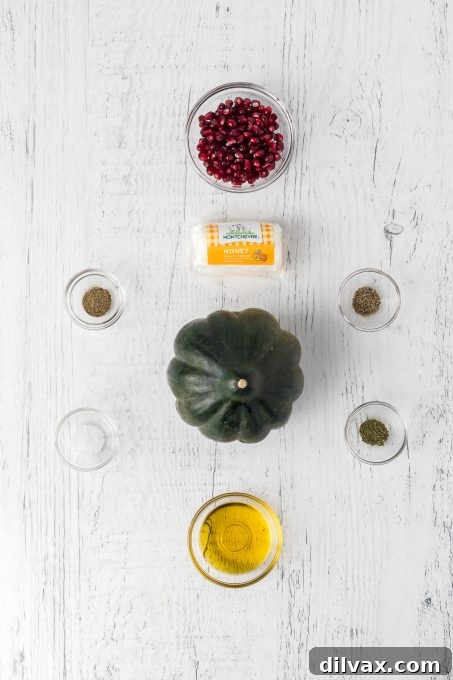
This roasted acorn squash recipe proves that incredible flavor doesn’t require a long list of exotic ingredients. Instead, it relies on the natural sweetness of the squash, enhanced by a thoughtful blend of common spices, and elevated by the luxurious finishing touches of goat cheese and pomegranate. Each component plays a crucial role in creating a harmonious and unforgettable side dish. Gather these simple yet impactful ingredients:
Essential Ingredients List
- 1 small to medium acorn squash: The star of our dish, providing a naturally sweet and earthy base.
- 2 tablespoons olive oil: Essential for achieving that perfect golden-brown crispness and carrying the flavors of the spices.
- ½ teaspoon kosher salt: Enhances the natural flavors and helps tenderize the squash.
- ¼ teaspoon ground black pepper: Adds a subtle warmth and balances the sweetness.
- ¼ teaspoon dried sage: A classic herb that pairs exceptionally well with winter squash, offering an earthy, slightly peppery aroma.
- ¼ teaspoon dried thyme: Contributes a delicate, woody, and slightly floral note, complementing the sage beautifully.
- 4 ounces goat cheese: Crumbled goat cheese introduces a creamy texture and a tangy, savory counterpoint that contrasts wonderfully with the roasted squash.
- ½ cup pomegranate arils: These jewel-like seeds burst with a sweet-tart flavor and add a delightful crunch, along with a stunning pop of color.
- Freshly chopped parsley for garnish: Provides a final touch of freshness, a subtle herbaceous note, and a vibrant green visual appeal.
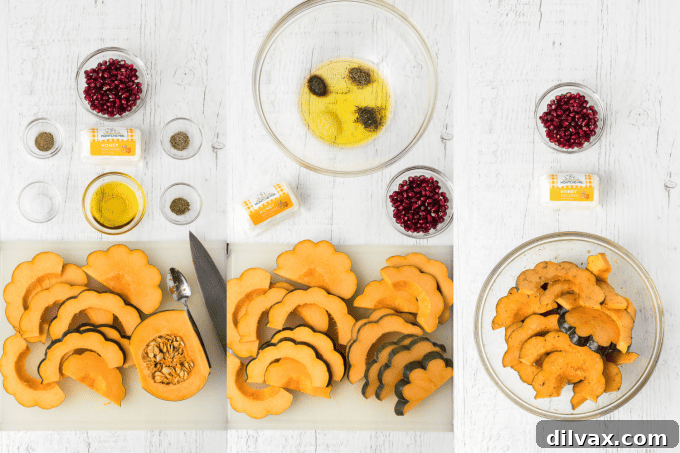
How to Make Roasted Acorn Squash with Goat Cheese and Pomegranate Arils
Roasting is, without a doubt, one of the best and easiest ways to bring out the natural sweetness and tender texture of vegetables. It caramelizes their sugars, creating a depth of flavor that boiling or steaming simply can’t match. This particular recipe for acorn squash is a shining example, offering a straightforward process that yields impressive results. It’s a method I frequently turn to for other roasted vegetables because of its simplicity and the sheer deliciousness it produces. Here’s how you can prepare this stunning and simple side dish in just a few easy steps:
Step-by-Step Roasting Guide
- Prepare Your Oven and Baking Sheet: Begin by preheating your oven to a robust 425°F (220°C). This high temperature is crucial for achieving beautifully caramelized and tender squash. While the oven heats, prepare a large baking sheet. You can either lightly spray it with cooking spray to prevent sticking or, for even easier cleanup, line it with parchment paper. This ensures your squash slices don’t adhere to the pan and makes transfer a breeze.
- Prep the Acorn Squash: Place your chosen acorn squash on a stable cutting board. Using a sharp, sturdy knife, carefully trim off both ends of the whole squash. This creates flat surfaces, making it much safer to slice. Next, stand the squash upright on one of the cut ends and carefully slice it in half lengthwise. Once halved, use a spoon to scoop out the stringy pulp and seeds from the center of each half. Now, lay the squash halves cut-side down and slice each into uniform ½-inch to 1-inch thick pieces. Consistency in thickness is important for even cooking.
- Season the Squash: In a large mixing bowl, combine the olive oil, kosher salt, ground black pepper, dried sage, and dried thyme. Add the sliced acorn squash to this bowl. Now, toss everything together. I find the most effective way to ensure every single slice is perfectly coated with the oil and spices is to use my clean hands. This allows you to gently massage the mixture onto the squash, ensuring maximum flavor penetration and even roasting.
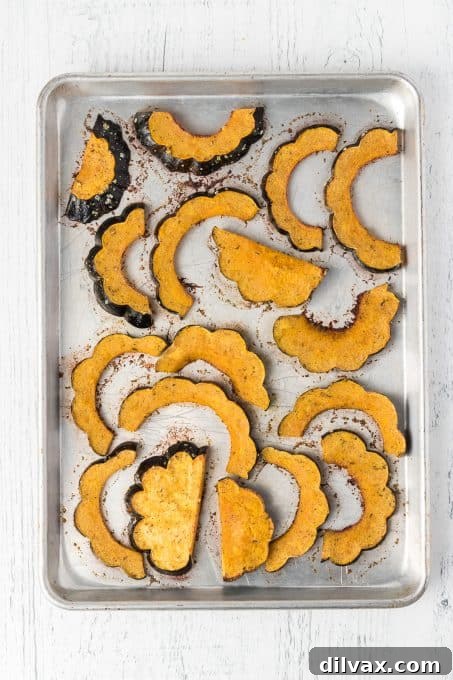
- Roast to Perfection: Arrange the seasoned squash slices in a single layer on your prepared baking sheet. It’s important not to overcrowd the pan; leave a little space between each piece to allow for proper air circulation, which promotes browning and prevents steaming. Place the baking sheet in the preheated oven and roast for approximately 25 minutes. The exact cooking time may vary slightly depending on your oven’s calibration and the thickness of your squash slices, so look for the squash to be fork-tender and lightly caramelized at the edges.
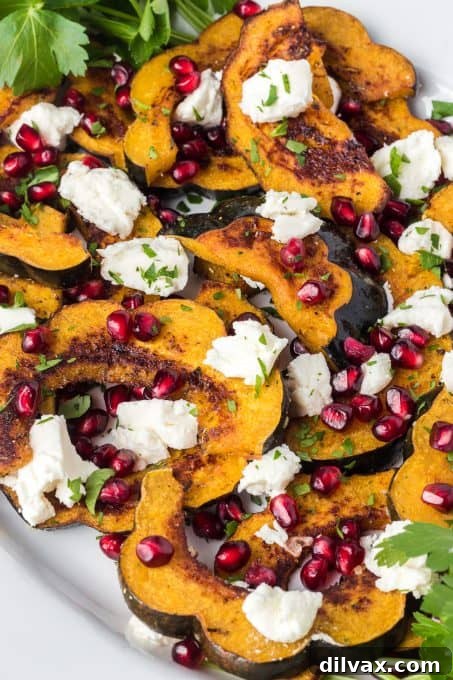
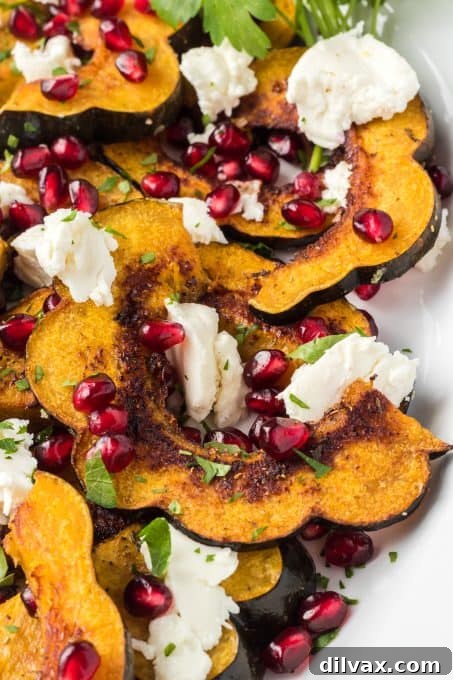
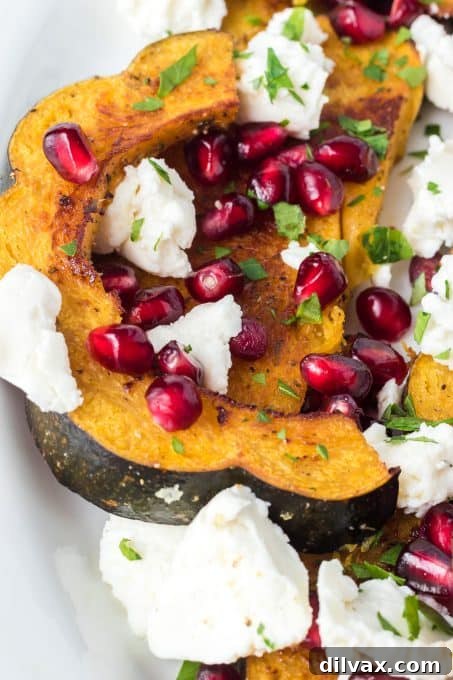
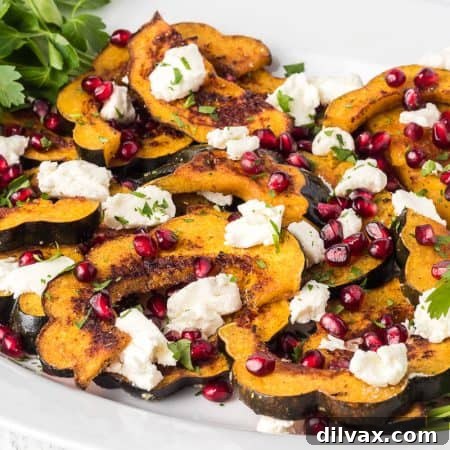
- Garnish and Serve: Once roasted, carefully transfer the tender, golden-brown squash slices from the baking sheet onto your chosen serving dish. Artfully arrange chunks of creamy goat cheese among the warm squash slices. The heat from the squash will slightly soften the cheese, making it even more delicious. Finish by generously sprinkling with glistening pomegranate arils and a scattering of fresh chopped parsley. The vibrant colors and contrasting textures make this dish incredibly appealing. Serve immediately and enjoy the harmonious blend of flavors and textures!
Mastering the Pomegranate: Easy Aril Removal
Pomegranates are a true delight – those vibrant, juicy arils are bursting with sweet-tart flavor and packed with antioxidants. They add an incredible pop of color and crunch to so many dishes, and they’re one of my absolute favorite fruits! However, I know that for many, the thought of cutting into a pomegranate and extracting those precious arils can be a little intimidating, and notoriously messy. But fear not! I’ve discovered a method that makes removing the arils surprisingly easy and remarkably clean. Just a heads-up: those beautiful red juices can stain, so you might want to consider wearing an apron before you begin.
The Water Method for Pomegranate Arils:
- Prepare Your Workspace: Start by filling a large bowl with cool water. This will be your secret weapon against the mess!
- Top Trim: On a cutting board (to protect your surfaces), carefully slice off a small portion from the very top of the pomegranate – about ¼ inch. You’re aiming to expose the internal membranes slightly.
- Score the Rind: Observe the natural ridges that run down the sides of the pomegranate. Use your knife to score down these ridges, making shallow cuts through the skin, but do not cut all the way through the fruit. Imagine you’re dividing the pomegranate into several equal segments, like an orange.
- Gently Open Under Water: Submerge the scored pomegranate into the bowl of water. While underwater, use your hands to gently pull and peel it open along your scored lines. The pomegranate should separate into several segments.
- Separate the Arils: Still keeping the segments submerged in the water, use your fingers to gently rub and separate the seeds (arils) from the white pith and skin. The beauty of this method is that the arils will sink to the bottom of the bowl, while the lighter pith and membrane pieces will float to the surface. This prevents juice from splashing everywhere and makes the separation process incredibly efficient – no need to painstakingly pluck each aril one by one!
- Rinse and Enjoy: Once all the arils are separated, skim off any floating white membrane pieces from the water. Then, carefully drain the water, leaving you with a bowl full of perfectly cleaned, ready-to-use pomegranate arils.
Frequently Asked Questions (FAQs)
Can I use fresh herbs in this simple side dish?
Absolutely! Fresh herbs can elevate the flavors even further. If you prefer to use fresh thyme and sage instead of dried, simply adjust the ratio. A general rule of thumb for converting from dried to fresh herbs is to use a 3:1 ratio (three times the amount of fresh herbs for every one part of dried herbs). So, for this recipe, you would use ¾ teaspoon of fresh chopped sage and ¾ teaspoon of fresh chopped thyme.
How do I store Roasted Acorn Squash?
To keep any leftovers fresh, allow the roasted acorn squash to cool completely. Then, transfer it to an airtight container and store it in the refrigerator. It will maintain its best quality for 2-4 days. For optimal reheating results, it’s a good idea to separate the acorn squash slices from the goat cheese and pomegranate arils if possible, as the cheese might become less creamy and the arils less crisp when reheated together.
Can I freeze this squash side dish?
I generally do not recommend freezing roasted acorn squash if you intend to serve it in slices or chunks after thawing. Due to its high water content, the squash tends to become mushy and lose its texture once frozen and then thawed. However, if you have leftovers, don’t let them go to waste! A fantastic alternative is to puree the roasted squash. You can then freeze this puree in an airtight container or freezer-safe bags for up to 3 months, and use it later in soups, sauces, or even baked goods like muffins or bread.
Can I eat acorn squash skin?
Yes, the skin of acorn squash is edible once cooked until tender. When roasted at high temperatures as in this recipe, the skin becomes soft and palatable, adding a slight chewiness and extra fiber to the dish. Many people enjoy it, while others prefer to remove it. It’s entirely a matter of personal preference!
What are some serving suggestions for this dish?
This Roasted Acorn Squash with Goat Cheese and Pomegranate is incredibly versatile and pairs beautifully with a variety of meals. It makes a stunning side for holiday roasts like turkey, ham, or prime rib. For a weeknight meal, serve it alongside grilled chicken, pan-seared fish, or a simple pork tenderloin. It’s also delicious as part of a vegetarian spread, perhaps with a grain salad or a hearty lentil dish. The vibrant colors and flavors make it a perfect addition to any fall or winter gathering.
Explore More Winter Squash Recipes
If you’ve fallen in love with this delightful Roasted Acorn Squash with Goat Cheese and Pomegranate, then you’re in for a treat! Winter squashes offer a spectrum of flavors and textures, making them ideal for a wide array of comforting and delicious dishes. Here are a few more squash recipes that are sure to become new favorites in your kitchen:
- Oven Roasted Butternut Squash Risotto: Elevate your classic risotto with the sweet, nutty notes of oven-roasted butternut squash and crispy fried sage leaves. This creamy, indulgent dish is an impressive yet approachable addition to any dinner table, perfect for a cozy evening or an elegant gathering.
- Twice-Baked Acorn Squash: A truly comforting and satisfying dish! First, roast the acorn squash until tender. Then, scoop out the caramelized insides, mix them with a rich blend of cream, butter, and seasonings, before stuffing them back into their shells and baking again until golden and bubbly. It’s a hearty and delicious presentation that doubles as both a side dish and a vegetarian main.
- Stuffed Zucchini: While zucchini is technically a summer squash, this recipe offers a similar hearty, vegetable-centric meal concept. Hollowed-out zucchini halves are cooked until tender, then filled with a savory mixture of seasoned ground meat and tomatoes, and topped with crunchy breadcrumbs before baking. It’s an excellent way to use up garden fresh zucchini or simply enjoy a flavorful, balanced meal.
- Butternut Chicken Pinwheels: For a more adventurous and elegant dish, try these delightful pinwheels. Flavorful mashed butternut squash and tender shredded chicken are rolled inside flaky puff pastry dough, then baked until golden. These make a fantastic appetizer for a party or a unique and delicious side dish that’s sure to be a conversation starter.
What is your favorite winter squash recipe? Share your thoughts in the comments below!
Recipe Card: Roasted Acorn Squash with Goat Cheese
Roasted Acorn Squash with Goat Cheese
Created by: Lynne Feifer
This easy Roasted Acorn Squash recipe tossed with olive oil and spices and served with goat cheese and pomegranate arils makes it the perfect holiday side dish to share with your family and friends!
Course: Side Dish
Cuisine: American
Prep Time: 10 minutes
Cook Time: 25 minutes
Total Time: 35 minutes
Servings: 4 servings
Ingredients
- 1 small to medium acorn squash
- 2 tablespoons olive oil
- ½ teaspoon kosher salt
- ¼ teaspoon ground black pepper
- ¼ teaspoon dried sage
- ¼ teaspoon dried thyme
- 4 ounces goat cheese
- ½ cup pomegranate arils
- Freshly chopped parsley for garnish
Instructions
- Preheat oven to 425°F (220°C), and prepare a baking sheet by spraying it with cooking spray or lining with parchment paper.
- Cut both ends of the acorn squash off and slice in half. Remove the seeds and cut each half of the squash into slices that are between ½-inch and 1-inch in thickness.
- In a large bowl, combine the olive oil, salt, pepper, sage, and thyme. Add the squash slices and toss to coat thoroughly, using your hands for best coverage.
- Place slices in a single layer on the prepared baking sheet. Bake for 25 minutes, or until the squash is tender and lightly caramelized.
- Transfer the roasted squash to a serving dish. Artfully arrange chunks of goat cheese among the slices. Sprinkle generously with pomegranate arils and fresh chopped parsley. Serve warm and enjoy!
Notes
For more detailed tips on choosing the perfect squash and an easy method for opening and removing pomegranate arils, please refer to the sections earlier in this post!
Nutrition Information
Serving: 1 serving | Calories: 154 kcal | Carbohydrates: 4g | Protein: 6g | Fat: 13g | Saturated Fat: 5g | Polyunsaturated Fat: 1g | Monounsaturated Fat: 6g | Cholesterol: 13mg | Sodium: 396mg | Potassium: 59mg | Fiber: 1g | Sugar: 3g | Vitamin A: 297IU | Vitamin C: 2mg | Calcium: 44mg | Iron: 1mg
Did You Make This Recipe?
I would love to see your creations! Share your photos with me on Instagram. Don’t forget to follow me on Pinterest for more delicious and easy recipes!