Authentic Louisiana Jambalaya Recipe: A Flavorful One-Pot Wonder
Embark on a culinary journey to the vibrant heart of Louisiana with this mouthwatering Jambalaya recipe. More than just a meal, this iconic Cajun and Creole-inspired dish is a celebration of rich flavors, hearty ingredients, and a storied history. Perfect for spicing up your dinner routine, our authentic recipe promises to impress even the most discerning palates with its savory blend of meats, aromatic vegetables, and fragrant spices, all simmered to perfection in a robust tomato-based sauce. Whether you’re a seasoned chef or a home cook looking for a delicious adventure, this easy-to-follow guide will help you create a restaurant-quality meal right in your own kitchen. And for those who love seafood, a generous addition of succulent shrimp elevates this dish to new heights of deliciousness!
While the ingredient list may seem extensive, don’t let it deter you. We’ve simplified the process to ensure that even a novice can confidently prepare this Southern masterpiece. Forget bland weeknight dinners; it’s time to gather your family and friends around the table and transport them to the colorful streets of New Orleans with every flavorful bite of this classic Creole Jambalaya. Get ready to experience true comfort food that tells a story of cultural fusion and culinary passion.
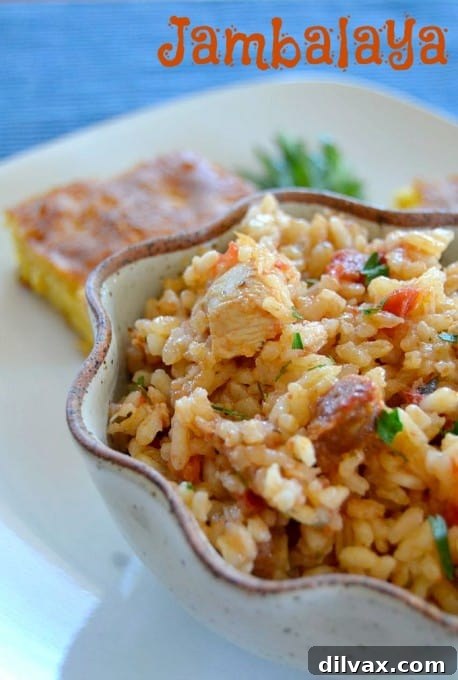
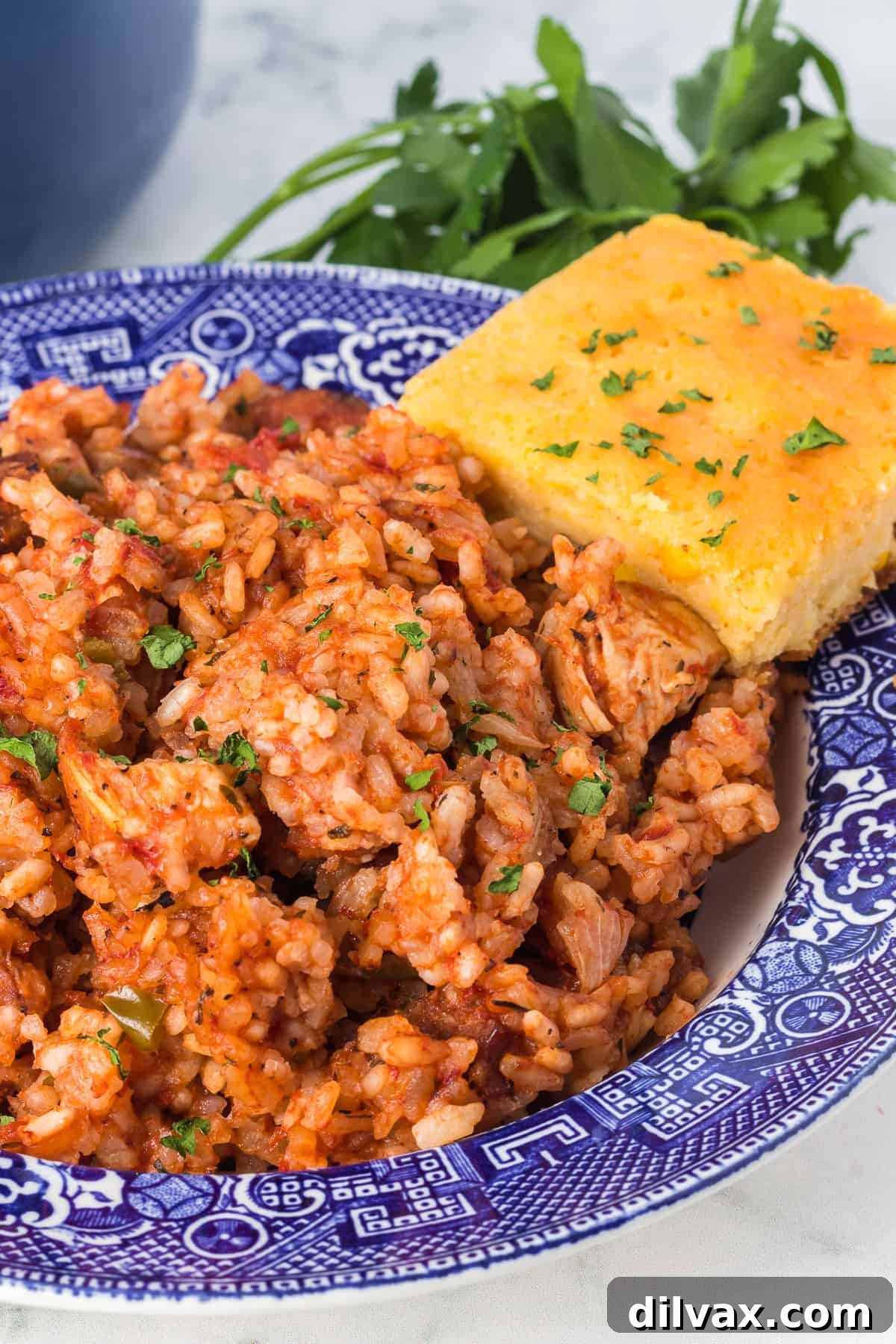
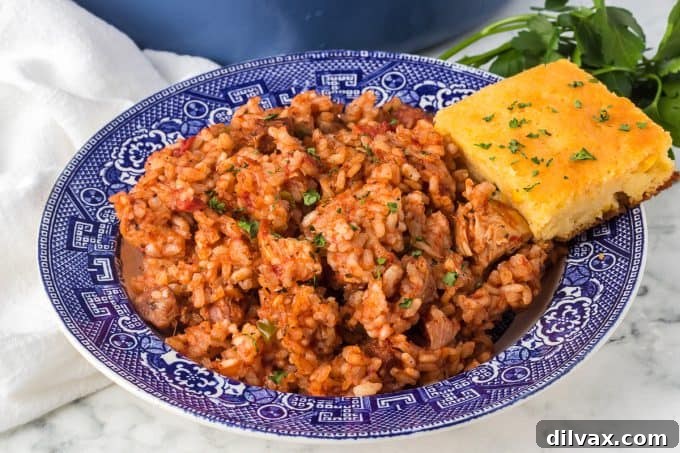
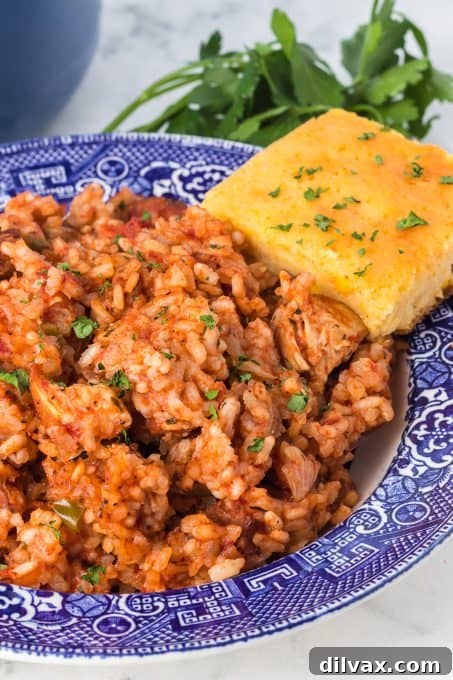
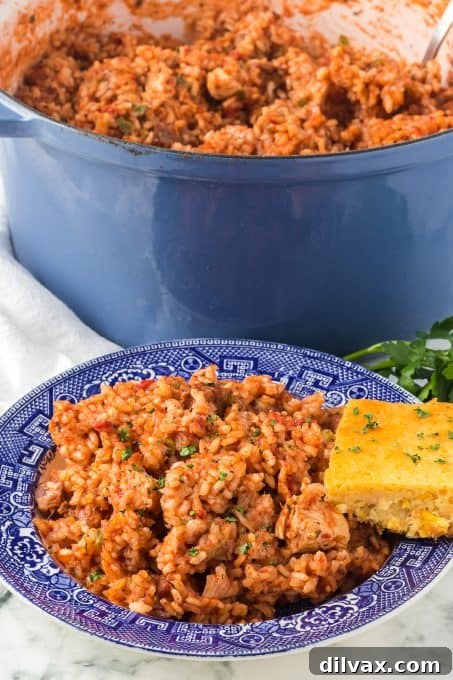
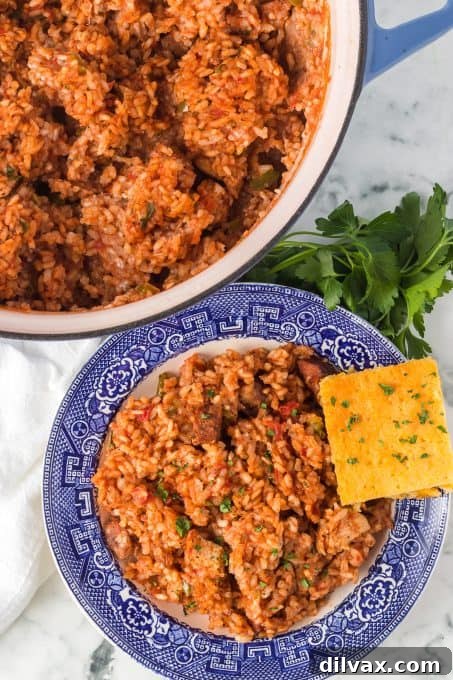
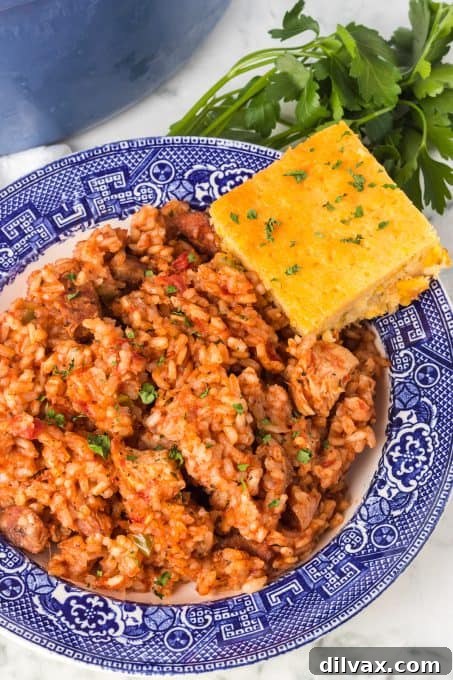
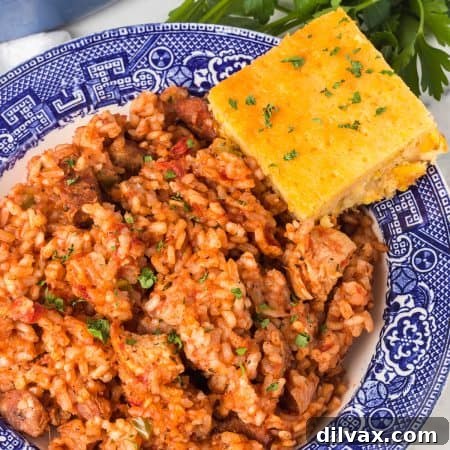
For an authentic Southern spread, we highly recommend serving your Jambalaya alongside a warm slice or two of Corn Spoon Bread, as beautifully pictured with this dish.
The Rich History and Cultural Roots of Jambalaya
Jambalaya, a dish synonymous with Louisiana, boasts a fascinating origin story deeply intertwined with the state’s diverse cultural tapestry. Born in the vibrant city of New Orleans, this iconic meal is a culinary representation of the “melting pot” that is Louisiana, drawing influences from Spanish, French, and West African cuisines. Its creation was a testament to resourcefulness, traditionally devised as a one-pot meal to utilize available ingredients and make an economical, satisfying dish for families.
The earliest versions of Jambalaya are believed to have emerged when Spanish settlers in New Orleans attempted to recreate their beloved paella. Lacking saffron, a key ingredient in paella, they adapted the recipe with local ingredients and spices, giving birth to what we now know as Jambalaya. Over time, French culinary techniques and African spices and cooking methods were incorporated, further shaping the dish into the rich and complex flavor profile we enjoy today.
There are two primary styles of Jambalaya: Creole and Cajun. Creole Jambalaya, often referred to as “red Jambalaya,” originated in New Orleans and typically features tomatoes, which contribute to its distinctive reddish hue and richer, more layered flavor. This style often includes a broader range of ingredients, reflecting the city’s port status and access to diverse provisions. Cajun Jambalaya, on the other hand, hails from the rural areas of Louisiana and is known as “brown Jambalaya” because it omits tomatoes. Instead, it relies on browning the meat (especially sausage) and developing a rich base, often with a darker roux, to achieve its deep color and robust flavor.
Regardless of its regional variation, Jambalaya remains a cherished staple in Louisiana cuisine, celebrated in homes, restaurants, and festivals worldwide. Each cook brings their unique touch, creating an endless array of delicious interpretations that continue to evolve while honoring its deep historical roots. It’s a dish that embodies community, comfort, and the enduring spirit of Louisiana.
SAVE THIS CAJUN JAMBALAYA TO YOUR FAVORITE PINTEREST BOARD!
I truly cannot emphasize enough how incredible this homemade Jambalaya recipe is. It’s a dish that consistently delivers on flavor, creating a hearty and satisfying meal that’s perfect for sharing with loved ones. One of its greatest advantages is that it’s a generous one-pot creation, meaning you’ll likely have delicious leftovers to enjoy for lunch the next day, which often taste even better as the flavors meld and deepen overnight. Just thinking about the rich aromas and the combination of tender meats, perfectly cooked rice, and vibrant spices makes me eager to get back into the kitchen and prepare this masterpiece all over again! It’s a dish that brings warmth and joy to any table, proving that truly great food doesn’t have to be complicated.
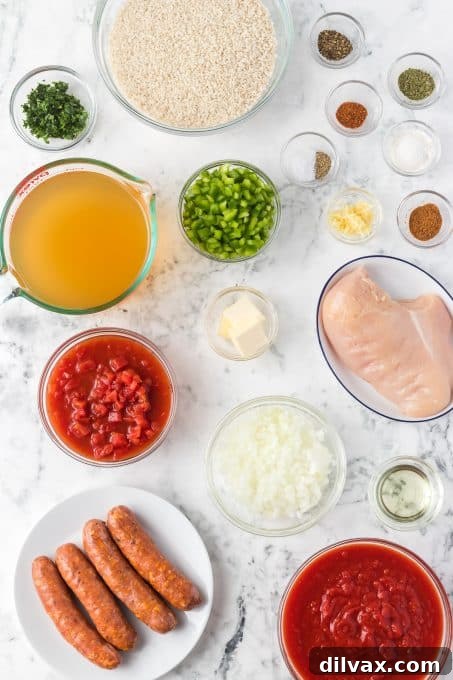
Essential Ingredients for Crafting Your Perfect Jambalaya
Creating an authentic and flavorful Jambalaya requires a thoughtful selection of ingredients. At its core, Jambalaya relies on a harmonious blend of rice, various meats, and a colorful array of vegetables, all brought together with a kick of Cajun seasoning. Here’s a detailed look at what you’ll need to assemble this hearty and unforgettable dish:
- 2 tablespoons canola oil or olive oil: Essential for browning your meats and sautéing vegetables, forming the foundational flavors of your dish.
- 1 pound boneless, skinless chicken breasts: Cut into bite-sized pieces, chicken adds lean protein and soaks up the rich flavors of the sauce. Feel free to use boneless, skinless chicken thighs for even more tenderness and flavor.
- 1 teaspoon salt & ½ teaspoon black pepper: Basic seasonings to enhance the natural flavors of the chicken and later, the entire dish. Adjust to your personal preference.
- 1 pound Andouille pork sausage, chopped: This smoked, spicy sausage is a cornerstone of authentic Jambalaya, providing a distinctive smoky depth and a welcome kick. Look for high-quality Andouille for the best results.
- 1 tablespoon of all-purpose flour: Used to create a light roux, which helps thicken the sauce and add another layer of savory flavor.
- 1 medium yellow onion, diced, 1 green bell pepper, diced, & 3 cloves garlic, minced: This trio, often referred to as the “holy trinity” in Cajun and Creole cooking, forms the aromatic base of the dish, providing essential depth and sweetness.
- 28-ounce can of stewed tomatoes & 14.5-ounce can of diced tomatoes: These provide the rich, tangy, and slightly sweet tomato base characteristic of Creole Jambalaya. Stewed tomatoes offer a softer texture, while diced tomatoes maintain some bite.
- 4 cups chicken broth (or chicken stock): The liquid base for cooking the rice and blending all the flavors together. High-quality broth is key for a deeply savory dish.
- 1 teaspoon dried thyme & 1 teaspoon dried basil: Classic herbs that contribute to the aromatic complexity and traditional taste of Jambalaya.
- 2 tablespoons fresh flat-leaf parsley, chopped: Adds a fresh, bright note and a touch of color, often stirred in at the end or used as a garnish.
- ¾ teaspoon Cajun spice: The soul of the dish! This blend brings the signature heat and robust flavor. Adjust the quantity to your preferred spice level, or opt for Creole seasoning for a slightly different profile.
- 4 cups uncooked medium-grain white rice: Medium-grain rice is ideal for Jambalaya as it absorbs flavors beautifully and maintains a slightly firm texture without becoming mushy, unlike long-grain rice which can dry out, or short-grain which can become too sticky.
- 3 tablespoons butter, cut into pieces: Added towards the end to enrich the dish, contributing to a silky texture and enhanced flavor.
- 1 pound raw shrimp, peeled and deveined (optional): For seafood lovers, shrimp adds a wonderful oceanic sweetness and another layer of texture. It cooks quickly, so it’s added at the very end.
- 1 teaspoon Old Bay seasoning: A versatile seasoning blend that adds an extra layer of savory, slightly spicy flavor, especially complementary if adding shrimp.
Gathering these quality ingredients is the first exciting step towards creating a truly memorable homemade Jambalaya that captures the essence of Louisiana’s culinary heritage.
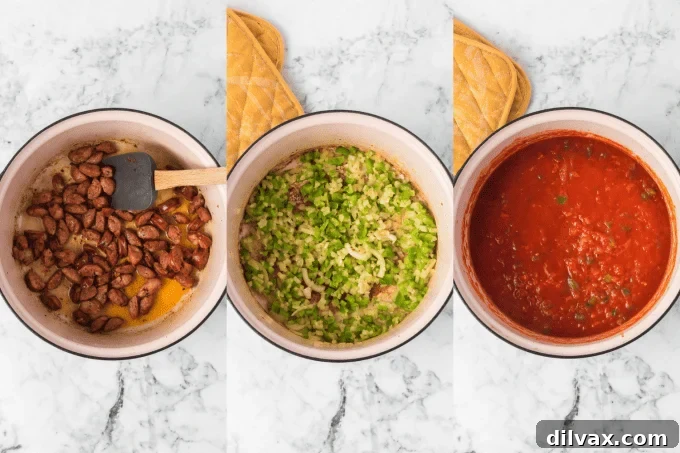
Your Guide to Crafting a Perfect Homemade Jambalaya: Step-by-Step Instructions
With all your ingredients prepped and ready, it’s time to bring this incredible Jambalaya to life! Follow these detailed steps to create a hearty and flavorful one-pot meal that will become a family favorite.
- Prepare and Brown the Meats: Begin by preheating your oven to 350°F (175°C). In a large, heavy-bottomed Dutch oven (like this recommended one) or a substantial pot, drizzle your chosen canola or olive oil over medium-high heat. Season your boneless, skinless chicken breasts generously with salt and pepper. Add the seasoned chicken to the hot oil and cook until beautifully browned on all sides, usually about 5-7 minutes. This browning step is crucial for developing deep flavor. Remove the chicken from the pot and set it aside to cool slightly. Next, add the chopped Andouille pork sausage to the same pot, using the residual fat and fond from the chicken. Brown the sausage thoroughly, stirring occasionally, for another 5-7 minutes. Once browned, remove the sausage and combine it with the chicken. The goal here is to build layers of flavor from the very start.
- Pro Tip: You can cook the chicken and sausage together if your pot is large enough and you prefer. However, browning them separately often allows each meat to develop a more intense crust and flavor, preventing the pot from becoming overcrowded and steaming the meat instead of searing it.
- Build the Flavor Base (Roux and Trinity): With the meats removed, you’ll find delicious browned bits (fond) at the bottom of the pot. Sprinkle the tablespoon of all-purpose flour into the pot, stirring constantly over medium heat. Cook the flour, scraping up those flavorful bits from the bottom, until it turns a light golden-brown color. This forms a quick, light roux that adds richness and helps to thicken the stew. Immediately add the diced yellow onion and green bell pepper to the pot, sautéing them until they soften and become translucent, which typically takes about 5-8 minutes. Finally, stir in the minced garlic and both cans of stewed and diced tomatoes, cooking this aromatic mixture for at least 5 minutes. This step allows the vegetables to release their sweetness and the tomatoes to develop a deeper flavor.
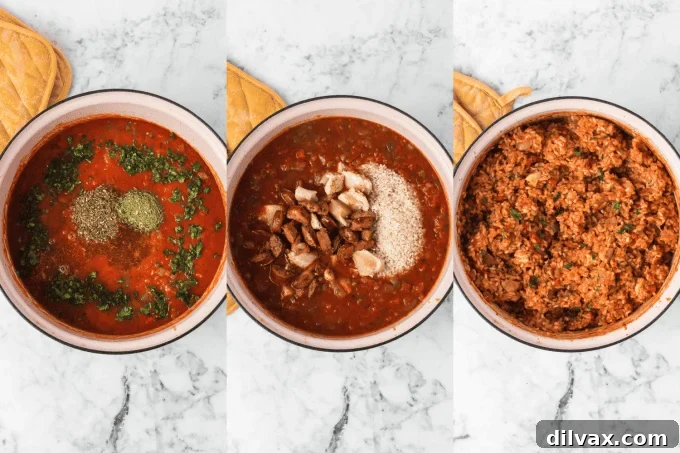
- Combine and Simmer: Pour in the chicken broth, then add the dried thyme, dried basil, chopped fresh parsley, Cajun spice, and any remaining salt and pepper. Stir everything together thoroughly, ensuring all the spices are well incorporated. Bring the mixture to a rolling boil. Once boiling, carefully add the uncooked medium-grain white rice, along with the browned chicken and sausage, back into the pot. Stir gently once or twice to distribute the ingredients evenly, then return the pot to a boil. It’s important not to over-stir at this stage, as it can release too much starch from the rice.
- Bake to Perfection: Reduce the heat slightly, then dot the top of the Jambalaya with small pieces of butter. Cover the pot tightly with its lid (or aluminum foil if your lid isn’t airtight). Transfer the Dutch oven to your preheated 350°F (175°C) oven. Bake for approximately 30 minutes, or until most of the liquid has been absorbed by the rice and the grains are tender. Keep in mind that cook times can vary based on your specific ingredients and oven calibration, so it’s always a good idea to check for doneness around the 25-minute mark.
- Optional Shrimp Addition & Finishing Touch: Carefully remove the fragrant Jambalaya from the oven. Gently stir the contents to fluff the rice and distribute the flavors. Now is the perfect time to add your peeled and deveined raw shrimp, if desired. Sprinkle the entire dish with Old Bay seasoning for an extra layer of authentic Southern flavor. If adding shrimp, return the covered pot to the oven for an additional 5-7 minutes, or until the shrimp are pink and cooked through. Be careful not to overcook the shrimp, as they can become rubbery. Once done, let the Jambalaya rest for a few minutes off the heat before serving to allow the flavors to fully meld.
Expert Tips for Crafting the Ultimate Jambalaya
While making Jambalaya is relatively straightforward, a few key tips can elevate your dish from good to absolutely outstanding. Don’t let the process intimidate you; with these suggestions, you’ll be making delicious, restaurant-quality Jambalaya every time:
- Choose the Right Pot: Always use a heavy-bottomed pot or a high-quality Dutch oven. These types of pots distribute heat more evenly, which is crucial for preventing the rice from sticking to the bottom and burning. Even heat distribution also ensures that the rice cooks uniformly, leading to a perfectly tender texture without mushiness.
- Resist the Urge to Over-Stir: Once the rice, chicken, and sausage are added and the pot is covered, it’s vital to resist stirring the Jambalaya too much. Frequent stirring releases starch from the rice grains, which can result in a gummy, mushy texture. Stir only when necessary, such as once after adding all ingredients and again gently after removing from the oven, if you’re adding shrimp. Let the rice absorb the liquid undisturbed for optimal results.
- Select the Ideal Rice: For the best texture in your Jambalaya, opt for medium or long-grain white rice. These varieties absorb the flavorful liquid beautifully while maintaining a distinct, slightly chewy texture. Short-grain rice tends to become too sticky and clumpy, while some very long-grain varieties can dry out. Medium-grain is often preferred for its ability to create a creamy but not mushy consistency.
- Quality Cajun Seasoning is Key: The flavor of your Jambalaya heavily relies on your Cajun seasoning. Invest in a good-quality blend, or better yet, make your own for a truly customized taste. A robust Cajun seasoning will provide the authentic spicy, savory, and aromatic notes that define this classic dish. Adjust the amount to match your desired level of heat.
- Don’t Skimp on the Browning: The initial browning of the chicken and especially the Andouille sausage is fundamental. This step creates a rich fond (the browned bits at the bottom of the pot) which, when deglazed, adds incredible depth of flavor to the entire dish. Don’t rush this process; allow a good crust to form on the meats.
- Taste and Adjust: Always taste your broth and sauce before adding the rice. This is your last chance to adjust the seasoning—salt, pepper, and Cajun spice—to your liking. Remember that the flavors will concentrate as the rice cooks, so aim for a slightly bolder taste in the liquid.
By keeping these simple yet effective tips in mind, you’re well on your way to creating a Jambalaya that rivals any you’d find in New Orleans!
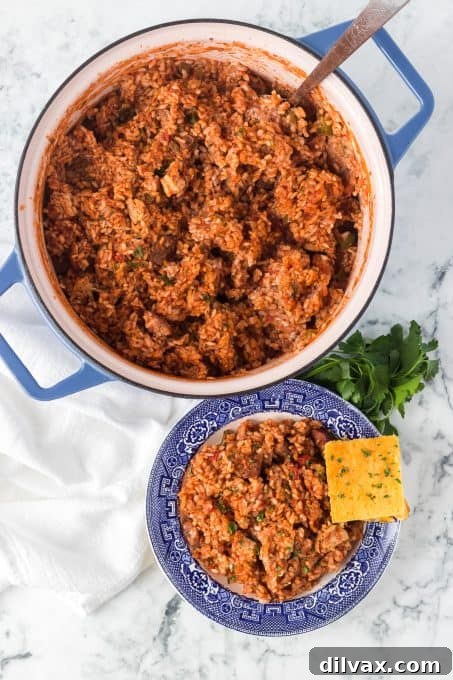
Unleash Your Creativity: Ways to Customize Your Jambalaya
One of the most appealing aspects of Jambalaya is its incredible versatility. It’s a dish that invites creativity and allows you to tailor it perfectly to your taste preferences and what you have on hand. Here are several exciting ways to customize your Jambalaya and make it truly your own:
- Experiment with Meats: While chicken and Andouille sausage are traditional, feel free to explore other proteins.
- Sausage Varieties: Try different types of smoked sausage if Andouille is hard to find or if you prefer a milder flavor. Kielbasa or another flavorful smoked pork sausage can be excellent substitutes.
- Seafood Additions: Beyond shrimp, consider adding crawfish tails or even chunks of firm white fish (like cod or snapper) for a rich seafood Jambalaya. Add seafood towards the end of cooking to prevent overcooking.
- Pork or Beef: Diced pork shoulder or beef can be slow-cooked until tender and incorporated for a heartier, richer stew.
- Chicken Options: Instead of boneless, skinless chicken breasts, use skinless chicken thighs for a more succulent and flavorful result, as they tend to stay juicier during cooking.
- Vary Your Vegetables: The “holy trinity” (onion, bell pepper, celery) is fundamental, but don’t hesitate to add more greens and garden fresh flavors.
- Okra: A classic Southern addition, okra not only adds a unique texture but also helps to thicken the stew naturally.
- Additional Tomatoes: If you love a richer tomato flavor, feel free to add an extra can of crushed or diced tomatoes.
- Other Veggies: Corn, peas, or even diced carrots can add sweetness and color to your Jambalaya. Add these closer to the end of the cooking process so they don’t become overcooked.
- Adjust the Spice Level: Jambalaya is known for its kick, but you can easily control the heat.
- Less Heat: If you prefer milder flavors, reduce the amount of Cajun spice or choose a mild variety.
- More Heat: For true spice lovers, amp up the heat with a dash of cayenne pepper, a few shakes of your favorite hot sauce, or a pinch of crushed red pepper flakes. Incorporating a Creole seasoning blend (which often contains more herbs and less direct heat than some Cajun blends) can also subtly alter the flavor profile.
- Experiment with Rice Types: While medium-grain white rice is traditional, you can try other varieties.
- Brown Rice: For a healthier, nuttier option, brown rice can be used, though it will require a longer cooking time and possibly more liquid.
- Basmati or Jasmine Rice: These aromatic long-grain rices can be used, but be mindful that they absorb liquid differently and may result in a slightly drier texture if not adjusted carefully.
Don’t be afraid to make this recipe your own! Jambalaya is all about using what you have and tailoring the flavors to your family’s preferences. Enjoy the process of creating your unique version of this timeless Southern dish.
Perfect Servings and Smart Storage for Your Delicious Jambalaya
Jambalaya is a dish best enjoyed hot and fresh, straight from the pot, allowing you to savor its full spectrum of flavors and aromas. It’s inherently a complete meal, packed with protein, vegetables, and carbohydrates, making it a perfect one-pot solution for any dinner. For an added touch of freshness and visual appeal, consider garnishing each serving with a sprinkle of freshly chopped parsley or thinly sliced green onions. These vibrant additions not only brighten the dish but also add a delicate, herbaceous counterpoint to the rich flavors.
While often associated with festive occasions like Mardi Gras, Jambalaya is truly a dish for all seasons and any time of the year. Its comforting warmth makes it ideal for chilly evenings, but its lively flavors are equally welcome at a summer gathering. Serve it as the star of your meal, perhaps alongside a simple green salad or a side of crusty French bread to soak up every last bit of the delicious sauce. And as mentioned before, a slice of sweet Corn Spoon Bread creates a delightful contrast!
One of the many joys of Jambalaya is that it often tastes even better the next day, as the ingredients continue to meld and deepen in flavor. If you find yourself with leftovers, store them in an airtight container in the refrigerator for up to 3 days. To reheat, simply microwave individual portions until heated through, or gently warm in a pot on the stovetop over low to medium heat, adding a splash of chicken broth or water if the rice seems a bit dry. We absolutely adore eating the leftovers; they’re a quick and flavorful meal solution!
Freezing and Reheating Jambalaya for Future Feasts
Yes, Jambalaya is an excellent candidate for freezing, making it a fantastic meal prep option for busy weeks! You can easily freeze leftover Jambalaya for up to three months without compromising its quality significantly. To do so, allow the Jambalaya to cool completely to room temperature after cooking. Then, transfer it into freezer-safe airtight containers or heavy-duty freezer bags. If using bags, flatten them to save space and ensure quicker thawing. Label with the date, and then place them in your freezer until you’re ready to enjoy a delicious, ready-made meal.
When it’s time to reheat your frozen Jambalaya, there are a few effective methods to choose from:
- Thaw in the Fridge: For best results, it’s recommended to thaw frozen Jambalaya in the refrigerator overnight. Once thawed, you can reheat it in a pot on the stove over medium-low heat, stirring occasionally and adding a little chicken broth or water to restore moisture, until it’s hot throughout.
- Microwave: For a quicker option, place a thawed (or even partially frozen) portion in a microwave-safe dish, cover it, and microwave on high, stirring every few minutes, until evenly heated. Add a tablespoon or two of liquid if needed.
- Slow Cooker Method: If reheating a larger batch, you can place thawed Jambalaya into a slow cooker and warm it on a low setting for 1-2 hours, stirring periodically. This method helps maintain moisture and prevents sticking.
- Directly in a Skillet: For a quicker stove-top reheat, especially for individual portions, you can place frozen Jambalaya directly into a large skillet with a lid. Add a quarter cup of water or broth, cover, and heat over medium-low, stirring every few minutes, until it’s heated through and steaming. The added liquid helps to create steam and prevent the rice from drying out.
I genuinely hope you’ll take the opportunity to try making this delicious and incredibly satisfying dinner dish. It has quickly become a beloved staple in my own menu rotation, and my entire family absolutely loves it. Please do let me know your thoughts and how much you enjoy it!
More Inspiring Weeknight Dinner Recipes
Busy weeks often call for clever planning when it comes to dinner ideas that are both delicious and manageable. Beyond this fantastic Jambalaya, I’ve got you covered with a selection of other easy-to-make recipes, perfect for those times when you’re looking for comforting meals with minimal fuss:
- Slow Cooker Beef Chili Verde Polenta
- Slow Cooker Sloppy Joes
- Crockpot BBQ Root Beer Shredded Chicken Sandwiches
- Crockpot Pork Ragu
- Sausage Alfredo Rigatoni
- Skillet Spinach Lasagna
STAY CONNECTED: FOLLOW US!
FACEBOOK ~ PINTEREST
INSTAGRAM ~ TWITTER
YOUTUBE
Don’t Miss Out! Discover More Easy Recipes Weekly!
Jambalaya
Ingredients
- 2 tablespoons canola oil
- 1 pound boneless skinless chicken breasts
- 1 teaspoon kosher salt
- ½ teaspoon freshly ground pepper
- 1 pound Andouille sausage chopped
- 1 tablespoon flour
- 1 medium onion diced
- 1 green pepper diced
- 3 cloves garlic minced
- 28 ounces stewed whole tomatoes
- 14.5 ounces diced tomatoes
- 4 cups chicken broth
- 1 teaspoon dried thyme
- 1 teaspoon dried basil
- 2 tablespoons fresh flat leaf parsley chopped
- ¾ teaspoon Cajun spice (Use more or less as preferred)
- 4 cups medium grain white rice uncooked
- 3 tablespoons butter cut into small pieces
- 1 teaspoon Old Bay seasoning
- 1 pound raw shrimp peeled and deveined (OPTIONAL)
Instructions
- Preheat oven to 350° F. Heat a large Dutch oven over medium-high heat and place the canola oil into it.
- Season chicken on both sides with some of the salt and pepper and then brown the chicken on both sides in the Dutch oven.
- Remove the chicken and set aside so that it is cool enough to handle and chop into bite-sized pieces.
- Place chopped sausage into the pot and brown. Remove and set aside with the chicken.
- Place flour in the bottom of the pot, stirring constantly until browned. Add onion and pepper and sauté until soft. Add garlic and tomatoes and cook at least 5 minutes.
- Add broth, thyme, basil, parsley, Cajun spice, and remaining salt and pepper, and bring to a boil.
- Add rice, chicken, and sausage and return to a boil.
- Dot the top with butter, cover the pot and place in oven. Bake for 30 minutes or until most of the liquid is absorbed.
- Remove from oven, stir, add shrimp now (if desired) and sprinkle with Old Bay seasoning.
- Return pot to oven for approximately 5 minutes until shrimp are cooked through.
Nutrition
Did you make this recipe?
Share it with me on Instagram and make sure to follow me on Pinterest for more recipes.
This post was originally published March 3, 2012. It has been updated in format and with pictures on August 30, 2023.