Mastering the Basics: The Essential Hand Sewing Knots You Need to Know
Welcome to a practical guide that might just change your approach to quick fixes and garment care! While “365 Days of Baking” might sound like a purely culinary journey, life often throws unexpected mending challenges our way. Today, we’re taking a delightful detour into the world of hand sewing – a skill that is incredibly empowering, surprisingly simple, and utterly essential for extending the life of your favorite clothes.
Have you ever found yourself in a bind with a loose button, a dropped hem, or an unraveled seam? Instead of consigning that item to the donation pile or a costly repair, imagine the satisfaction of a quick, confident mend. This article isn’t about complex tailoring; it’s about mastering two fundamental hand sewing knots that will serve as the bedrock for countless minor repairs. These are the “secret weapons” passed down through generations, making hand sewing not just feasible, but genuinely easy and enjoyable.
The Unsung Hero: Why Hand Sewing Matters in a Fast-Paced World
In our modern society, where convenience often trumps longevity, the art of mending can seem like a forgotten relic. Yet, hand sewing remains an incredibly valuable skill with numerous benefits. It’s not just about saving money on new clothes or professional repairs; it’s about fostering a sense of self-sufficiency and resourcefulness. Consider these advantages:
- Quick Fixes: Many minor repairs, like reattaching a button, mending a small tear, or securing a hook-and-eye closure, can be done by hand in minutes, often without even needing to get out a sewing machine.
- Portability: A small sewing kit can travel anywhere with you, making emergency repairs possible whether you’re at home, traveling, or at work.
- Quiet & Convenient: Hand sewing is quiet and requires minimal setup, allowing you to mend while watching TV, listening to a podcast, or simply enjoying a moment of calm.
- Sustainability: By repairing and extending the life of your garments, you contribute to a more sustainable lifestyle, reducing textile waste and your environmental footprint.
- Personal Satisfaction: There’s immense satisfaction in wearing something you’ve personally mended, knowing you’ve given it a new lease on life. It’s a small act of creation and care.
This journey into hand sewing starts with the most basic yet crucial elements: the knots. A strong, reliable knot at the beginning of your stitch ensures your work won’t unravel, and a secure knot at the end locks it all in place. These two techniques, once mastered, will unlock a world of simple mending possibilities.
A Personal Mending Moment: The Catalyst for This Guide
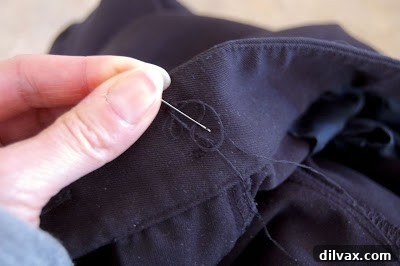
Just the other day, or more accurately, last Friday, I found myself in a familiar predicament. While at work, I noticed the hook-and-eye closure on my favorite pair of pants had come undone. A small, seemingly insignificant detail, but one that presented a significant challenge, especially since I’ve recently lost some weight and rely on every bit of help to keep my pants comfortably secure! It was a stark reminder of why having basic sewing skills is so important.
Like many, I tend to put off clothes shopping. It’s not the joyous experience it once was; in fact, I’d say I now detest it as much as I once loathed shoe shopping for my children when they were small. The endless trying-on, the complaints about fit or color, the mismatched sizes – it was an ordeal! So, the thought of replacing perfectly good pants just for a minor hardware issue was out of the question.
Though I possess a sewing machine and have a foundational understanding of its operation (emphasis on “foundational”), I immediately recognized this as a simple hand-mending task. It didn’t warrant the effort of setting up the machine. This was a job that could be done “in a jiffy” – a phrase that might sound old-fashioned today, but perfectly conveys the speed and ease of the task at hand.
I reached for my trusty needle and a spool of black thread, ready to tackle the repair. But the real “aha!” moment, the invaluable tip I want to share with you, isn’t about the act of stitching itself. That’s fairly straightforward. The true game-changers are the methods for tying a perfect, secure knot at the beginning and end of your sewing. This brilliant trick, taught to me by my dear sweet momma years ago (who likely learned it from my grandma, the sewing matriarch of our family), has always stuck with me and made hand sewing a breeze.
Mastering the Starting Knot: A Foundation for Success
A good, secure knot at the beginning of your hand sewing is paramount. It prevents your thread from pulling through the fabric and ensures your stitches stay firmly in place. While many attempt to simply tie the ends of the thread together, this method can often result in flimsy, easily unraveling knots. My momma’s technique is far superior for creating a robust and reliable starting point. Let’s walk through it:
Step-by-Step Guide to the Easy Starting Knot
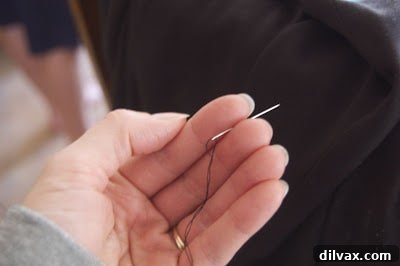
First things first, thread your needle. For this technique, you’ll want to work with a double strand of thread. This means pulling the thread through the needle’s eye and then bringing both ends together so they are even. This doubles the strength of your stitch and knot.
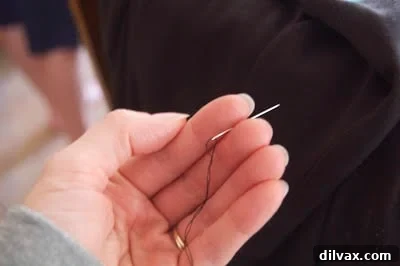
Step 1: Prepare Your Thread. With your needle threaded, hold both ends of the thread together between your thumb and forefinger. Ensure they are aligned and relatively taut.
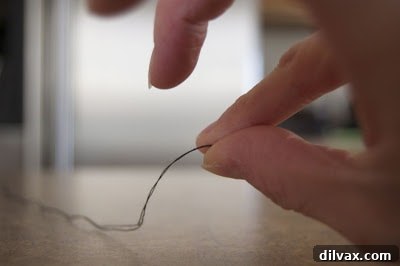
Step 2: Wrap Around Your Finger. Carefully roll the combined thread ends around the tip of your forefinger (or thumb, whichever feels more comfortable) two or three times. This creates the foundational loops for your knot. Ensure the wraps are snug but not overly tight.
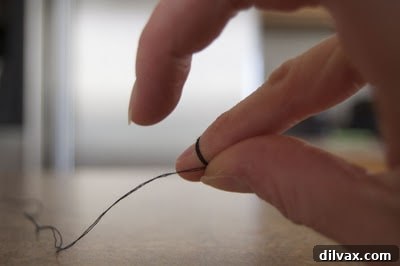
Step 3: Slide the Loop Off. Gently slide the rolled loops of thread off the tip of your finger, keeping them as intact as possible. You should now have a small coil of thread. It might look a bit messy, but that’s perfectly fine!
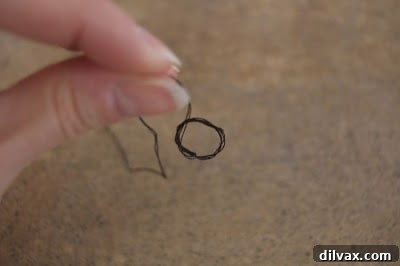
Step 4: Create the Knot. Now, using your thumb and forefinger, begin pulling the loops down towards the very end of the thread. As you pull, the loops will start to tangle and twist around themselves, forming a compact knot. Don’t worry if it looks a bit unruly at this stage; the goal is simply to get it to knot up.
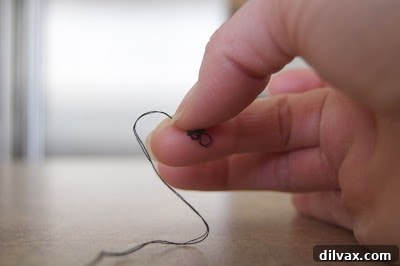
Step 5: Tighten and Secure. Continue pulling gently but firmly until the knot tightens completely at the very end of your thread. You’ll end up with a small, secure, multi-strand knot that is much more reliable than a simple overhand knot. See? It doesn’t have to be perfectly symmetrical; its effectiveness lies in its tightness and multiple twists. This knot will hold your thread securely in place as you begin stitching.
Securing Your Stitch: The Indispensable Finishing Knot
Just as a strong starting knot is crucial, an equally robust finishing knot is essential to ensure your hard work doesn’t unravel. Many beginners struggle with tying off their thread neatly and securely by hand. This simple loop-and-pull method will create a durable knot directly within your stitches, ensuring your repair lasts.
Step-by-Step Guide to the Secure Finishing Knot
Once you’ve completed your sewing – whether it’s mending a seam, attaching a button, or securing a hook-and-eye – you’ll need to lock your stitches in place. Here’s how to do it effortlessly:
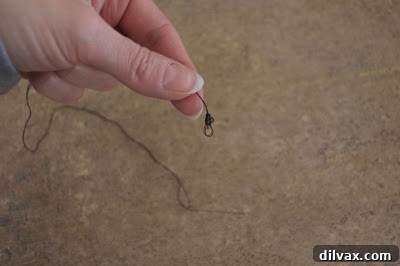
Step 6: Create the First Loop. With your sewing complete, bring your needle up through the fabric, just underneath a few of the existing stitches or loops you’ve already made. Don’t pull the thread all the way through; leave a small loop of thread visible on the fabric surface.
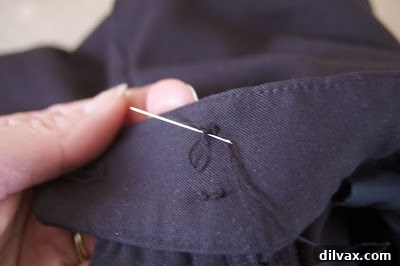
Step 7: Form the Knot Base. As your needle comes through, a small loop will naturally form in the tail of the thread that’s still attached to your work. This is the foundation for your finishing knot.
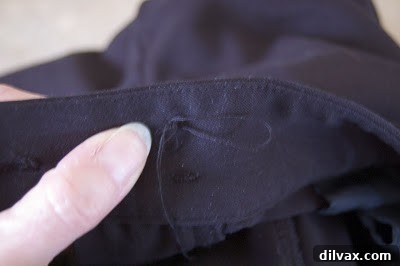
Step 8: Insert and Tighten. Before pulling the thread tight, insert your needle *through* this newly formed loop. Once the needle is through the loop, gently pull on the needle, drawing the thread taut. As you pull, the loop will cinch down, forming a neat and secure knot directly against your fabric. This method is much more effective than trying to tie a knot by hand, which can be clumsy and less secure.
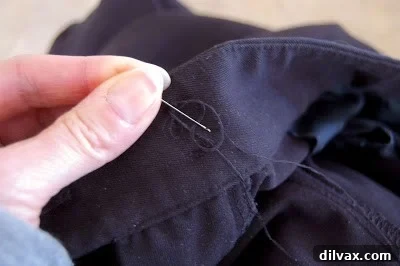
Step 9: Repeat for Security & Trim. For extra security and peace of mind, repeat steps 6-8 a couple more times, creating two or three knots stacked on top of each other. This ensures the thread is sufficiently locked in place and won’t come undone with wear. Once satisfied, carefully cut the excess thread close to the knot. Voila! Your sewing is neatly and securely finished.
Beyond the Knot: Essential Hand Sewing Toolkit & Tips
While mastering these knots is a significant step, having a few basic tools and tips can further enhance your hand sewing experience:
- Needles: A variety pack of hand sewing needles is ideal. Sharps are good all-purpose needles, while embroidery needles have larger eyes for thicker threads. Always choose a needle appropriate for your fabric and thread weight.
- Thread: All-purpose polyester thread is versatile and strong. For mending, try to match the color and weight of the original garment’s thread. For heavier fabrics, consider a stronger, thicker thread.
- Thimble: Protect your finger from needle pricks, especially when working with denser fabrics.
- Small Scissors/Snips: Sharp, small scissors are invaluable for precise thread cutting.
- Fabric Pencil/Chalk: Useful for marking repair areas or guidelines.
When mending, consider the type of stitch. A simple running stitch is good for reinforcing, while a backstitch offers a stronger, more continuous seam, ideal for areas under stress. For securing hooks, eyes, or buttons, a whipstitch or buttonhole stitch can provide durability. Remember, practice makes perfect. The more you use these simple techniques, the more intuitive and confident you’ll become.
Embracing the Art of Mending
These two knot-tying techniques are truly super easy and incredibly quick, making the entire hand sewing process far less intimidating. They remove the frustration of struggling with flimsy knots and provide a solid foundation for any small repair. It’s significantly easier and more reliable than trying to awkwardly tie two strands together at the beginning or end of your work.
By learning these basic hand sewing skills, you’re not just fixing a pair of pants; you’re cultivating a valuable life skill that fosters independence, creativity, and sustainability. You’re transforming potential waste into lasting wear, and that’s something to truly be proud of.
So, grab your needle and thread, give these knot techniques a try, and let me know what you think! You might just discover a new appreciation for the quiet, satisfying art of mending.
I give you BIG baking hugs and muffins (and now, sewing tips too)!