
Crafting Memories: A Delicious Lemon Meringue Cardamom Crepe Cake Recipe
Sometimes, the most unexpected triggers can unlock a flood of memories. Just yesterday, as I settled into my car, a particular scent enveloped me. It was an olfactory echo, instantly transporting me back to April 28th, 1981, with an intensity that felt like a physical jolt. I was only twelve, standing by my grandfather’s hospital bed alongside my mother, father, grandmother, and aunt, all silently witnessing his final moments. The smell was distinct, haunting, and intertwined with the solemnity of death—a scent truly indescribable unless you’ve experienced it.
I recall the profound discomfort of that day: watching his frail body struggle for each shallow breath, observing my grandmother’s brave facade that barely concealed her inner turmoil, and seeing the raw emotions of my mother and aunt. We simply waited. Yesterday, the sudden recurrence of that smell in my car, on my way to pick up my daughter, literally brought me to a standstill. It was profoundly bizarre. Tomorrow marks his birthday; he would have been 99. Next Saturday, the anniversary of his passing. This unexpected moment was a potent reminder of a truth we often overlook: our cherished loved ones are with us for a finite, precious time. It’s a powerful call to action: hug them tightly, tell them you love them, and savor every moment. Our journey here is wonderfully brief and immensely valuable.
And now, for something on a much lighter, yet equally comforting note! I had planned to share this delightful dessert recipe earlier this week, but a particularly persistent migraine (said with utmost sarcasm, of course) derailed my schedule. However, here we are on a beautiful Friday, and what better way to kick off your weekend than with an exquisite, homemade treat? This Lemon Meringue Cardamom Crepe Cake is perfect for brightening any day.
The Art of Crepes: A Foundation for Culinary Creativity
Making crepes is a culinary joy I wholeheartedly embrace, and contrary to popular belief, they are far from daunting once you master the technique. Think of them as delicate, thin pancakes, versatile enough to be a canvas for endless sweet or savory creations. While there are many tutorials available, including excellent videos that demonstrate the flipping finesse, I encourage you to follow the specific crepe recipe I’ve provided below. It’s perfectly tailored for this cake and ensures the ideal texture and flavor profile.

You might remember my recent guest post for Jane at The Heritage Cook, where I showcased our family-favorite Cheese Blintzes with Strawberry Sauce. That experience further solidified my love for these thin, delicate pancakes and sparked an idea. I’ve been captivated by the various crepe cakes I’ve admired online and in the pages of Food Network Magazine – a publication I absolutely adore and highly recommend (and no, this is not a sponsored endorsement, just genuine enthusiasm!). It was during the making of those blintzes that inspiration struck: I had to develop my very own unique crepe cake flavor combination. And so, the concept for this delightful Lemon Meringue Cardamom Crepe Cake was born.
Behind the Recipe: Trusted Sources and Smart Prep
The exquisite lemon curd and the luscious meringue topping featured in this recipe are adapted from my trusted Fannie Farmer Cookbook, Thirteenth Edition, specifically pages 642 and 677. This culinary classic, authored by Marion Cunningham and published by Alfred A. Knopf, Inc., a division of Random House, Inc. (ISBN 0-394-56788-9), is a treasure trove of reliable recipes. For the perfectly thin and pliable cardamom crepes, I turned to another favorite: Bon Appetit Favorites! Classic Recipes, adapting their foundational crepe recipe to suit our needs.
One of the best aspects of this dessert is its flexibility in preparation. Both the velvety lemon curd and the delicate crepes can be made up to two days in advance and stored in the refrigerator. This advance preparation is a lifesaver, especially if you’re not assembling the cake right away or, like me, find yourself unexpectedly battling a migraine. Prepping ahead ensures that when it’s time to assemble, the process is smooth and stress-free, allowing you to focus on the creative layering without feeling rushed.
Lemon Meringue Cardamom Crepe Cake: The Full Recipe
This recipe yields a stunning dessert, serving 6 generously. The harmonious blend of zesty lemon, aromatic cardamom, and sweet meringue creates an unforgettable experience that’s perfect for celebrations or a special weekend treat.
Part 1: Luscious Lemon Curd – The Heart of the Cake
This quantity should be more than sufficient for your crepe cake. I confess, I made three just in case and still had plenty leftover, which I strategically placed on different plates during my initial assembly attempts. You’ll understand why as we proceed!
- Grated zest of 2 large lemons (ensure no white pith for pure lemon flavor)
- 6-7 tablespoons of freshly squeezed lemon juice (approximately 2-3 lemons’ worth)
- 1/4 pound (1 stick) unsalted butter, cut into small pieces for quicker melting
- 1 cup granulated sugar
- 4 large eggs, at room temperature
Instructions for Homemade Lemon Curd:
- Combine the lemon zest, lemon juice, butter, and sugar in the top of a double boiler. Alternatively, use a heatproof bowl set over a saucepan of simmering water. The key is to avoid direct heat to prevent scorching and ensure the water in the saucepan does not boil vigorously, which could scramble your eggs later.
- Stir the mixture occasionally with a whisk until the butter is completely melted and the sugar has fully dissolved. You can test for dissolved sugar by rubbing a small amount between clean fingers – it should feel perfectly smooth, not gritty.
- While the lemon mixture is warming, lightly beat the four eggs in a separate medium bowl until they are thoroughly combined and no longer show distinct whites and yolks.
- Begin the tempering process: while continuously whisking the eggs, slowly ladle a small amount (about 1/4 cup) of the warm lemon mixture into the beaten eggs. This gradually raises the temperature of the eggs without cooking them, which is crucial for preventing a lumpy or curdled curd.
- Once tempered, gradually pour the egg mixture into the remaining lemon mixture in the double boiler, continuing to whisk constantly. This consistent whisking is essential for a smooth, homogenous, and creamy curd.
- Continue to cook, whisking frequently, until the curd thickens to a consistency similar to mayonnaise or hollandaise sauce. It should be thick enough to generously coat the back of a spoon. This process can take up to 20 minutes, so be patient and keep whisking!
- Remove the curd from the heat. To prevent a skin from forming as it cools, immediately press a sheet of plastic wrap directly onto the surface of the curd.
- Allow the lemon curd to cool completely at room temperature, then transfer it to an airtight container and refrigerate. It can be stored in the refrigerator for up to 2 weeks, making it an excellent component to prepare ahead of time.

Part 2: Aromatic Cardamom Crepes – The Delicate Layers
These crepes are infused with the warm, exotic notes of cardamom and brightened with lemon zest, making them incredibly flavorful on their own. The recipe is designed to yield thin, pliable crepes perfect for layering in a cake.
- 1 cup plus 2 tablespoons all-purpose flour
- 1/4 cup granulated sugar
- 1 tablespoon lemon zest (finely grated, from about 1-2 lemons)
- 3/4 teaspoon ground cardamom (freshly ground, if possible, for best aroma)
- 1/4 teaspoon salt
- 1 1/2 cups or more of whole milk (have extra on hand to adjust consistency)
- 3 large eggs, lightly beaten
- 2 tablespoons unsalted butter, melted and cooled slightly
Instructions for Cardamom Crepes:
- Prepare your workspace: Lay out several sheets of wax paper or parchment paper on a clean counter. This will be where your cooked crepes cool, preventing them from sticking together.
- In a large mixing bowl, whisk together the dry ingredients: flour, sugar, lemon zest, cardamom, and salt. Ensure they are well combined to distribute the flavors evenly throughout the batter.
- Create the batter: Add 1 1/2 cups of milk, the beaten eggs, and 1 tablespoon of the melted butter to the dry ingredients. Whisk thoroughly until the batter is smooth and completely free of lumps. For optimal texture and pliability, letting the batter rest for 30 minutes at room temperature (or up to overnight in the fridge) can greatly improve crepe quality by allowing the flour to fully hydrate.
- Heat your pan: Place a 6-inch diameter crepe pan or a good quality non-stick skillet over medium-high heat. Achieving the correct pan temperature is crucial for perfect crepes – it should be hot enough to sizzle slightly when a drop of water hits it, but not smoking excessively.
- First crepe: Lightly brush the hot pan with a small amount of the remaining melted butter. This first crepe often acts as a “tester” to adjust pan temperature and batter consistency. Don’t worry if it’s not perfect!
- Pour the batter: Working quickly, pour a *scant* 1/4 cup of batter into the center of the hot pan. Immediately tilt and swirl the pan in a circular motion to evenly coat the entire bottom with a very thin layer of batter. The term “scant” here means filling your 1/4 cup measuring spoon approximately 3/4 full. This ensures very thin crepes, which are essential for a delicate and elegant crepe cake.
- Cook the first side: Cook the crepe for about 2 minutes, or until the bottom is lightly golden brown and the edges begin to crisp and pull away from the pan.
- Flip and finish: Using a thin metal spatula, gently loosen the edges all around the crepe. Carefully flip the crepe over and cook for another 30 seconds to 1 minute, until it’s lightly golden on the second side.
- Cooling crepes: Transfer the cooked crepe to your prepared counter lined with wax paper. Continue this process with the remaining batter, placing cooked crepes in a single layer to cool before stacking.
- Adjusting batter and heat: If your batter thickens as you work, add a small amount of milk (1-2 tablespoons at a time) and whisk until it reaches the desired pouring consistency. Adjust the heat as needed and brush the pan with additional melted butter only if crepes begin to stick.
- Storage: These crepes can be made up to 3 days in advance. Stack them with squares of wax paper or parchment paper in between each crepe to prevent sticking, then place them in an airtight plastic bag or container, and refrigerate.
For the cake, you’ll likely use about 15 crepes, depending on how tall you want it. As for the rest… let’s just say they mysteriously disappeared throughout the day, one delicious bite at a time!

Part 3: Fluffy Meringue Topping – The Cloud-like Crown
A light, airy meringue provides the perfect sweet counterpoint and beautiful finish to the tart lemon curd and subtly spiced crepes. This recipe creates a stable, Italian-style meringue.
- 3 large egg whites, at room temperature (crucial for achieving maximum volume and stability)
- 5 tablespoons granulated sugar
- 1/8 teaspoon salt
Instructions for Meringue:
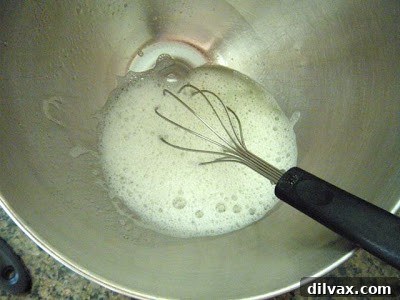
- Prepare the bain-marie: In the clean, dry bowl of an electric mixer (preferably a stand mixer), combine the egg whites and sugar. Place this bowl over a saucepan of simmering hot water, ensuring the bottom of the bowl does not touch the water. This creates a makeshift double boiler (bain-marie).
- Warm the whites: Stir the egg white and sugar mixture constantly with a whisk until the sugar has completely dissolved and the mixture feels warm to the touch (around 120°F or 49°C). You can test for dissolved sugar by rubbing a tiny bit between two fingers; it should feel perfectly smooth, without any grittiness. Warming the egg whites helps create a more stable, voluminous, and glossy meringue.
- Whip the meringue: Remove the bowl from the hot water and immediately attach it to your electric mixer fitted with the whisk attachment. Add the salt.
- Beat on high speed until the meringue is incredibly stiff, glossy, and holds firm peaks. When you lift the whisk, the peaks should stand straight up without collapsing. This process can take anywhere from 5-7 minutes, depending on your mixer.
Assembly: The Moment of Truth (and a Few Lessons Learned)
Alright, let’s talk assembly. And I’m going to be completely honest with you: this part was… a significant learning experience for me. Despite my best intentions and delicious components, my initial attempt at a perfectly stacked crepe cake proved quite challenging, leading to some memorable (and not entirely graceful) moments.

As you can see from the image above, it collapsed! This visual captured my first plating attempt. I then tried to salvage it by moving individual crepes to another plate, hoping to coax it into something that remotely resembled a cake. But alas, even that didn’t quite work out as planned.

I won’t sugarcoat it; putting this “puppy” together was far from a piece of cake. I encountered some serious structural issues, primarily, I suspect, due to overenthusiastic application of lemon curd between layers. The excess pressure applied during spreading caused the curd in the lower layers to ooze out, resulting in a rather unsightly and unstable stack. It was, frankly, quite unsightly.
But fear not! My struggles are your gain. I’ll share what I did, and more importantly, what I highly recommend to ensure your crepe cake looks like it belongs in a patisserie, not a comedy show. I am absolutely open to any and all suggestions for achieving that picture-perfect, movie-worthy crepe cake! While I haven’t actually *seen* a perfect one in a movie, I’m certain they exist, pristine and elegant – unlike my initial efforts.
Recommended Assembly Method for a Stable Crepe Cake:
To avoid the structural challenges I faced, here’s a refined approach to assembling your beautiful layered crepe cake:
- Choose your base: Place your first crepe directly onto your desired serving plate or cake stand. If you have a cake board, even better for easier transport.
- Layer the curd sparingly: Spread a *thin*, even layer of 1 to 2 tablespoons of lemon curd over the entire surface of the crepe, extending almost to the edges. Resist the urge to add too much; a thinner layer promotes greater stability and prevents oozing.
- Repeat the process with care: Gently place the next crepe on top and repeat with the lemon curd. Continue this layering process with the remaining 13-14 crepes. For a truly stable cake, especially if you’re making a very tall one, you might consider refrigerating the cake for 15-20 minutes after every 5-7 layers. This allows the curd to firm up slightly and helps prevent sliding.
- Crucial tip for stability: I strongly recommend spreading the curd onto *each individual crepe* while it’s on a flat surface (like a cutting board or parchment paper) before carefully transferring and placing it on the stack. The pressure applied when spreading curd onto a crepe that’s already sitting on top of the growing cake can cause the lower layers of curd to shift and ooze out, leading to instability. Spreading on a flat surface first gives you much more control.
- Finishing the stack: Once all layers are complete, you should have a beautiful, relatively straight stack of crepes with lemon curd.
Before applying the meringue, consider refrigerating the assembled crepe cake for at least 30 minutes to an hour. This chilling time allows the lemon curd to firm up significantly, creating a more stable structure that will better support the meringue topping and facilitate cleaner, more elegant slices.
The Meringue Finale: Toasting to Perfection
After your layered crepe cake has chilled and is firm, it’s time for the crowning glory – the meringue topping. This step adds both visual appeal and a delightful caramelized flavor.
- Apply the meringue: Carefully spoon the stiff, shiny meringue onto the very top layer of the crepe cake. You can spread it smoothly for a classic, polished look or create dramatic swirls and peaks using the back of a spoon or an offset spatula for a more rustic, artistic finish.
- Torch it: With a small kitchen torch, gently and evenly brown the peaks and surface of the meringue. Move the flame continuously to achieve a beautiful golden-brown color without burning any spots. This adds a delightful toasted flavor and enhances the visual appeal of the cake.


I opted for a kitchen torch for precision and control, and therefore, I won’t advise using a broiler. While it’s an option for some recipes, I cannot be held responsible should your delicate crepe cake decide to melt or slip into a gooey mess within your oven. Consider this your official waiver! I also considered a springform pan for assembly, but my crepes were about two inches smaller than the pan, meaning they still would have shifted, albeit on a smaller scale. A rigid collar around the cake might be another option if you wish to go for a truly perfect cylinder.
Brilliant Alternative: The Rolled Crepe Bake for Easy Elegance
You know what? I’ve had a truly brilliant idea that might save you a lot of potential assembly headaches while still delivering all the incredible flavors of this lemon meringue dessert! Instead of trying to stack a traditional cake, why not create a stunning rolled crepe bake? This method guarantees stability and makes serving a breeze.
Here’s how it works for a foolproof presentation:
- Spread and roll: Take one crepe, spread 1 to 2 tablespoons of lemon curd evenly over it, extending almost to the edges. Then, carefully roll it up into a tight, neat cylinder.
- Arrange in dish: Place the rolled crepe seam-side down in a 9×13-inch baking dish. Repeat this process with all your remaining crepes, arranging them snugly side-by-side in the dish. Fill the dish completely for a beautiful, cohesive look.
- Meringue and brown: Once all the crepes are rolled and nestled in the dish, generously spread the meringue topping over the entire surface. Ensure an even layer that covers all the rolled crepes. Then, use your kitchen torch to lightly brown the meringue until it’s beautifully golden and lightly toasted.
This rolled crepe method offers incredible stability and is much easier to prepare and serve. It might not be a “cake” in the traditional stacked sense, but it will hold together magnificently and eliminate a great deal of frustration during assembly. Plus, it looks wonderfully inviting! Trust me, you’ll thank me for this simple yet effective solution!
The Verdict: A Taste of Sweet Success (Even with a Wobbly Start)
I rate all my baked creations on a scale of 1-4 rolling pins, with 4 being the pinnacle of baking excellence. This Lemon Meringue Cardamom Crepe Cake, despite its initial assembly quirks, proudly earned a solid 3 rolling pins. And here’s a funny confession:
For three days, *nobody* touched it! I feel a bit silly admitting that, but it’s true. After my two-day migraine ordeal, even on the day I started feeling better, I had absolutely no desire to even *sample* it. Isn’t that ironic? Sometimes, even the most delicious treats can’t tempt you after a rough patch.
But then, the craving finally hit. I dove in, not devouring the whole thing, but enjoying a generous slice. And it was genuinely delicious! Yes, the crepes had become quite moist and tender from absorbing the lemon curd, and the meringue, after a few days, was delightfully chewy. But I happen to love chewy textures! Even a few days post-creation, its flavors remained vibrant and enjoyable, which is why I confidently stand by its 3-rolling-pin rating. The bright lemon and subtle cardamom truly sing together.

If you decide to embark on this delicious baking adventure, whether you choose the stacked cake or the rolled bake method, I would absolutely LOVE for you to share your creations! Please post pictures on the 365 Days of Baking Facebook page. Your beautiful bakes inspire me, and I can’t wait to see your lovely interpretations!
Sending you BIG baking hugs and delicious muffins! Happy baking, and may your kitchen be filled with wonderful aromas and joyful memories.