Zesty & Refreshing Lime Curd Tartlets: A Culinary Delight for Any Season
As the leaves begin to hint at a change and September ushers in a new season, there’s always a wonderful opportunity to embrace fresh flavors in the kitchen. For a while now, I’ve found myself craving something bright, tangy, and utterly refreshing – something distinctly limey, limony, truly limealicious! This yearning has finally culminated in a recipe that I’m thrilled to share: the vibrant Lime Curd Tartlet.
The Long-Awaited Tart: A Baking Journey Unveiled
It’s quite astonishing to realize that in the many days since I embarked on this “365 Days of Baking” adventure, a classic tart has somehow eluded my repertoire. Can you believe it? Over half a year of dedicated baking, and not a single tart has graced these pages! This oversight simply wouldn’t do. A tart, with its delicate pastry and luscious filling, represents a cornerstone of the baking world, and it was high time to rectify this omission.
The inspiration for these delightful tartlets began a few weeks ago, during a visit to a charming bakery shop in the bustling city. There, I discovered these incredibly cute, individual tart tins, and I knew instantly that their destiny was to hold a vibrant, citrusy creation. It was a purchase that sparked an idea, a promise of future deliciousness. And so, with these lovely tins in hand, the concept of the Lime Curd Tartlet was born.
Lime Curd Tartlet: A Recipe for Four 4-inch Tartlets or One 9-inch Tart
This recipe, meticulously adapted from “The Fannie Farmer Cookbook Thirteenth Edition” by Marion Cunningham (pp. 640, 677; publisher: Alfred A. Knopf, Inc., a division of Random House, Inc.; ISBN 0-394-56788-9), promises a perfect balance of flaky crust and zesty, creamy filling. It’s a testament to timeless baking principles, reimagined for contemporary enjoyment.
Part 1: Crafting the Flaky Tart Pastry
The foundation of any exceptional tart is its pastry. A truly great tart pastry is delicate, buttery, and melts in your mouth, providing the perfect counterpoint to the rich filling. Achieving this requires attention to detail, especially when it comes to temperature and handling.
Tart Pastry Ingredients:
- 1 cup all-purpose flour
- 1/4 teaspoon salt
- 1/4 pound (1 stick) cold unsalted butter, cut into small, 1/2-inch pieces
- 1 large egg yolk
- 2 tablespoons ice water (have an extra tablespoon or two ready)
Step-by-Step Pastry Instructions:
- Prepare the Dry Ingredients: In a large mixing bowl, thoroughly whisk together the flour and salt. This ensures an even distribution of flavor throughout the pastry.
- Incorporate the Cold Butter: Add the small pieces of cold butter to the flour mixture. Using a pastry blender or two knives, cut the butter into the flour until the mixture resembles coarse meal with some pea-sized pieces of butter still visible. The key here is to keep the butter as cold as possible; cold butter creates steam in the oven, which leads to a flaky crust.
- Add Wet Ingredients: In a small separate bowl, lightly whisk the egg yolk with the 2 tablespoons of ice water. Gradually add this mixture to the flour and butter, mixing gently with a fork or your fingertips until the dough just begins to come together.
- Form the Dough: The goal is to achieve a dough that is smooth enough to hold together in a ball without being overly sticky or dry. If the dough seems too crumbly and isn’t quite cohesive, add the third tablespoon of ice water, one teaspoon at a time, mixing minimally after each addition. Be cautious not to overmix, as this can develop the gluten in the flour, resulting in a tough crust. Even if it’s not perfectly smooth, a slightly shaggy dough will often bake beautifully.
- Chill the Dough: Gently gather the dough into a disc, wrap it tightly in plastic wrap, and refrigerate for at least 20 minutes. This chilling period allows the gluten to relax, making the dough easier to roll or press, and also helps to firm up the butter, which is crucial for flakiness.
- Preheat Oven & Prepare Pans: While the dough chills, preheat your oven to 425ºF (220ºC). Prepare your tartlet pans or a 9-inch tart pan. No need to grease if using non-stick pans.
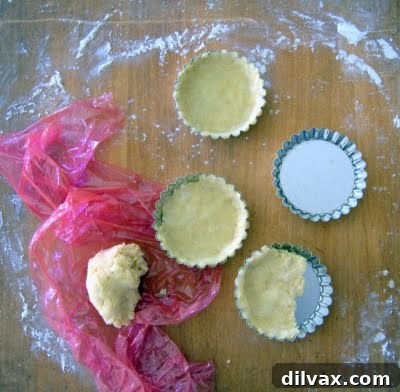
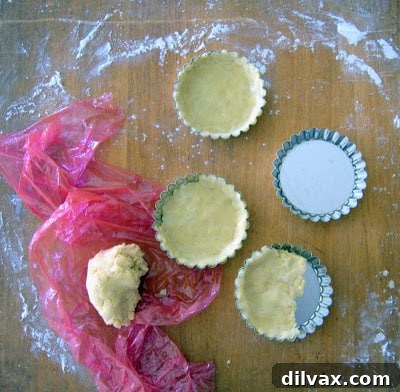
- Press into Pans (Blind Baking Prep): Remove the dough from the refrigerator. For individual tartlets, pull off pieces of dough and gently press them over the bottom and up the sides of your tartlet pans, using your fingers to achieve an even thickness. For a larger tart, you can roll out the dough between two sheets of parchment paper and then carefully transfer it to your tart pan. Ensure the dough is thick enough to hold the filling securely but not so thick around the bottom edge that the finished tart feels heavy or coarse. Aim for about 1/8 to 1/4 inch thickness.
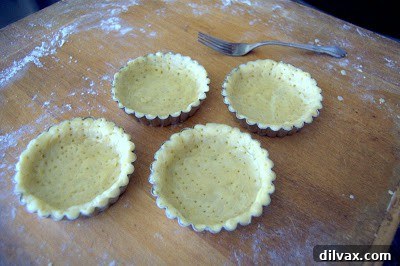
- Prick and Bake: Using a fork, prick the bottom and sides of the dough-lined pans multiple times. This step, known as “docking,” helps prevent the crust from puffing up excessively during baking. Bake the unfilled crusts (blind bake) for 12 minutes, or until they are lightly golden brown and appear set. This partial baking ensures a crisp crust that won’t become soggy once filled with the moist curd.
- Cool Completely: Carefully transfer the baked tart shells to a wire rack. Allow them to cool completely in their pans, and then gently remove them to continue cooling before adding the filling. This is important to maintain their structural integrity.
Part 2: Creating the Zesty Lime Curd
The lime curd is the star of these tartlets – a silky, intensely flavorful filling that balances sweetness with a delightful zing. The key to a perfect curd lies in gentle heating and constant stirring to prevent the eggs from scrambling and to achieve that signature smooth, thick texture.
Lime Curd Ingredients (Yields approximately 2 cups):
- 1 1/2 teaspoons finely grated lime zest (from about 2-3 limes), plus extra for garnish if desired
- 7 tablespoons fresh lime juice (from about 3-4 limes)
- 1/4 pound (1 stick) unsalted butter, cut into small pieces
- 1 cup granulated sugar
- 4 large eggs
Step-by-Step Curd Instructions:
- Prepare Double Boiler Setup: In a small heatproof bowl (preferably stainless steel or glass), combine the lime zest, fresh lime juice, butter pieces, and granulated sugar. Set this bowl over a small saucepan containing about an inch or two of simmering water. Ensure the bottom of the bowl does not touch the water. The gentle, indirect heat of a double boiler is crucial for cooking the curd evenly without scorching or scrambling the eggs. *Important: Do not allow the water in the saucepan to boil vigorously; maintain a gentle simmer.*
- Melt and Dissolve: Stir the mixture occasionally over the simmering water. Continue stirring until the butter has completely melted and the sugar has fully dissolved. This usually takes about 5-7 minutes.
- Temper the Eggs: In a separate medium-sized bowl, lightly beat the 4 eggs until they are thoroughly blended and no streaks of yolk or white remain. This ensures a uniform texture in the final curd.
- Combine Mixtures (Tempering): This is a critical step to prevent the eggs from cooking too quickly. Spoon a small amount (about 1/4 to 1/2 cup) of the warm lime-butter-sugar mixture into the beaten eggs, *stirring constantly and vigorously* with a whisk. This gradually raises the temperature of the eggs without cooking them, preparing them for the hotter mixture.
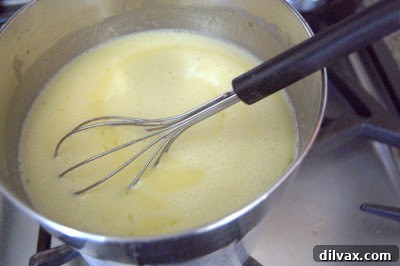
- Cook the Curd: Once tempered, slowly pour the egg mixture back into the bowl with the remaining lime mixture over the simmering water. Continue to whisk constantly and thoroughly. Cook, stirring non-stop, until the curd thickens significantly. It should coat the back of a spoon and register between 170-175ºF (77-79ºC) on an instant-read thermometer. This process can take anywhere from 10 to 20 minutes, depending on your heat level and stirring intensity. Be patient! The constant stirring prevents lumps and ensures a smooth, luscious curd.
- Strain for Silky Smoothness (Optional but Recommended): For an extra silky-smooth curd, remove the bowl from the heat and immediately pour the hot curd through a fine-mesh sieve into a clean bowl. This removes any tiny bits of cooked egg or zest, resulting in an impeccably smooth finish.
- Cool the Curd: Allow the curd to cool slightly at room temperature, then cover it with plastic wrap directly touching the surface of the curd to prevent a skin from forming. Refrigerate for at least 2-3 hours, or preferably until thoroughly chilled and firmly set. The curd will continue to thicken considerably as it cools.
Assembly and Serving Your Exquisite Tartlets
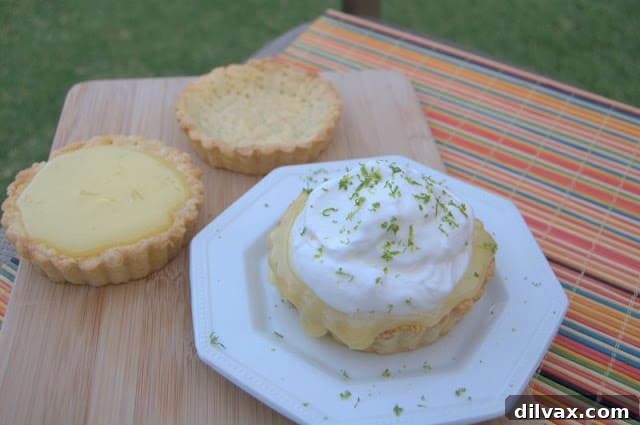
Once both your tart shells and lime curd are completely cooled, it’s time for the grand finale: assembly! Generously fill each cooled tart shell with the chilled, thick lime curd. You can pipe it in for a neater look or simply spoon it in, smoothing the top with the back of a spoon. For an extra touch of elegance and flavor, serve each tartlet topped with a generous dollop of freshly whipped cream and a sprinkle of additional grated lime zest. The creamy, light texture of the whipped cream beautifully complements the intense, tangy curd.
The Sweet Rewards: My Honest Review and Baking Reflections
I must admit, I *really* liked these tartlets! And when I say “these,” I confess I didn’t even manage to eat a whole one. A mere quarter of the finished tartlet that I offered to my daughter was enough for me. My excuse? I had already taste-tested one too many spoonfuls of the curd during its creation, just to ensure it was going to come out “just so.” This was, of course, after indulging in several spoonfuls of Nutella for lunch – a rather unbalanced culinary day, indeed!
However, in my defense, I did go for a vigorous run this morning! Ha! It looks like I’ll be repeating that exercise tomorrow, and likely the day after, to balance out the current sugar-induced haze. I have to admit, I’m feeling a touch unwell from all the sweetness today. Perhaps tomorrow’s baking challenge should be something savory? Is it even possible to “bake” a salad? Definitely no more desserts for a while!
Crust Perfection and Dough Management
The crust truly deserves a special mention. It was absolutely delicious, incredibly tender, and wonderfully flaky, thanks to the ample cold butter. When pressing the dough into the pans, being a novice to individual tartlets, I initially wasn’t sure how much dough to use for each. But by the fourth one (of course, it always takes a few tries!), the dough distribution seemed to even out perfectly. It might even have been possible to make a fifth tartlet with the remaining dough, but I erred on the side of caution, fearing the crusts would become too thin. Better to have slightly thicker, intact tartlets than burnt, fragile ones!
My Rolling Pin Rating System: 3 1/3 Rolling Pins!
On my personal baking scale of 1-4 (with 4 being the absolute best), these Lime Curd Tartlets proudly earned 3 1/3 rolling pins. This score reflects a truly satisfying dessert. The crust, as mentioned, was quite tasty and possessed that desirable flaky texture. It provided a lovely, sturdy base that perfectly complemented the sweetness and tartness of the lime curd. The curd itself was a triumph: thick, incredibly smooth, and bursting with a delightful balance of zesty lime and comforting sweetness. It truly captured the essence of a refreshing, bright dessert.
A Perfect Dessert for Any Occasion
Summer might be winding down, but there’s still plenty of time to whip up a batch of these! What a fantastic dessert they would be for a Labor Day cookout or any late-summer gathering. For a charming, bite-sized option, consider pressing the tart pastry into mini-muffin tins to create adorable, two-bite tarts. A little dollop of whipped cream on each mini-tartlet would make them utterly irresistible and incredibly cute!
A Baker’s Humorous Aside: The Photography Conundrum
Now, about the pictures… are they getting blurrier, or is it just my imagination? This is definitely something I plan to tackle and improve over the next few days. Please bear with me as I figure things out. It might take a little longer than just a few days, but rest assured, I am very much aware of it. There’s truly nothing worse on a food blog than blurry photos. Well, okay, maybe a recipe that omits crucial steps, like remembering to add the eggs (slowly ducking my head in embarrassment). So, perhaps I just need a new contact lens prescription, or maybe it’s a combination of both! 😉
Happy baking, everyone!
Thank you so much for stopping by and sharing in this delicious journey today. I hope these Lime Curd Tartlets bring as much joy to your kitchen as they did to mine.